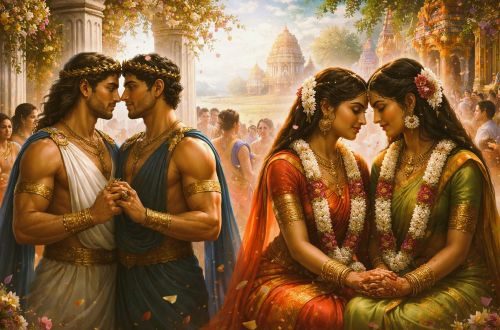
Same-sex relationships existed across ancient societies, yet they operated within cultural systems that recognized intimacy without equating it to marriage as a formal institution.

By Matthew A. McIntosh
Public Historian
Brewminate
Introduction: Defining “Marriage” across Time
Any attempt to discuss same-sex marriage in the ancient world must begin with a problem of definition. The modern concept of marriage, particularly in Western societies, is rooted in a combination of legal recognition, emotional partnership, and personal identity. It presumes a union between individuals defined by mutual consent, often framed in terms of love, companionship, and increasingly, equality. Yet these assumptions are historically contingent. In antiquity, marriage was rarely about personal fulfillment in the modern sense. Instead, it functioned as a social and economic institution, embedded in systems of kinship, inheritance, and civic obligation. To speak of “marriage” across time is not to invoke a stable category but to navigate a shifting and culturally specific set of meanings.
In classical Greece and Rome, marriage was primarily concerned with the production of legitimate heirs and the maintenance of household continuity. Athenian law, for example, defined marriage in terms of citizenship and lineage, ensuring that children born of such unions could inherit property and participate in civic life. Roman marriage, though more flexible in its legal forms, likewise centered on family structure, property transmission, and social status, particularly through institutions such as manus and sine manu marriage, which shaped the legal relationship between spouses and their families. These frameworks reveal that marriage was less about the individuals involved and more about the continuity of the household and the stability of the broader social order. Emotional attachment, while not absent, was secondary to these structural concerns, and literary evidence suggests that affection, when present, was often expressed within constraints shaped by duty and expectation rather than personal autonomy. Within such frameworks, same-sex relationships could exist, and often did, but they operated outside the institutional boundaries that defined marriage, lacking the legal recognition tied to reproduction, inheritance, and civic legitimacy. This distinction is critical, as it underscores the extent to which ancient societies separated sexual or emotional relationships from the legal and social functions of marital union.
The challenge, then, lies in how to interpret evidence of same-sex unions in antiquity without imposing modern categories onto fundamentally different social systems. Instances of ceremonial or publicly acknowledged same-sex pairings, particularly in the Roman imperial context, appear to resemble marriage in form. They include rituals, witnesses, and symbolic gestures that echo heterosexual weddings. Yet resemblance does not equate to equivalence. These events must be understood within their specific cultural and political contexts, where spectacle, power, and transgression often played a significant role. To label them simply as “marriages” risks flattening the complexity of ancient practices and obscuring the meanings they held for contemporaries.
This tension between recognition and anachronism lies at the heart of the historiography on ancient same-sex unions. Scholars have long debated whether such relationships should be understood as precursors to modern same-sex marriage or as distinct phenomena shaped by their own historical conditions. Some have emphasized continuity, seeking to recover a suppressed history of same-sex unions and to situate ancient practices within a longer narrative of same-sex intimacy, while others caution against retroactive labeling that risks imposing modern identity categories onto societies that operated without them. The debate is not merely semantic but reflects deeper disagreements about how to interpret evidence, particularly when sources are fragmentary, ambiguous, or shaped by hostile perspectives. Roman authors, for instance, often framed same-sex behavior in terms of moral decline or excess, complicating efforts to reconstruct lived experience from elite literary sources. A careful approach requires acknowledging both the presence of meaningful same-sex relationships and the limits of our terminology in describing them, while remaining attentive to the social, legal, and cultural structures that gave those relationships their meaning. Only by maintaining this balance can we begin to understand how love, desire, and social structure intersected in the ancient world without collapsing them into modern assumptions.
Roman Imperial Ceremonies: Spectacle, Power, and Transgression
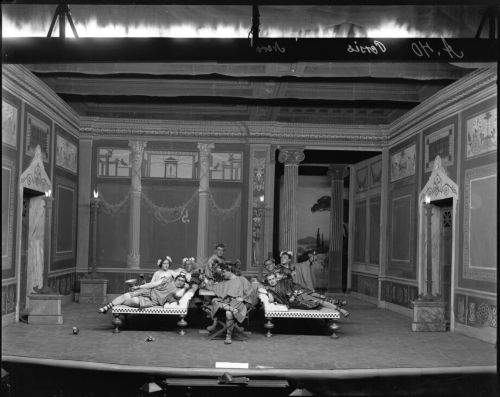
The most frequently cited examples of same-sex “marriage” in antiquity come not from ordinary social practice but from the Roman imperial court, where spectacle and personal authority blurred the boundaries of acceptable behavior. Roman emperors occupied a position that allowed them to test, invert, or openly disregard established norms, particularly in matters of sexuality and public display. Accounts of same-sex wedding ceremonies must be approached with caution. They are not evidence of widespread institutional recognition but rather exceptional cases shaped by the unique political and cultural environment of the imperial household. These events drew attention precisely because they transgressed expectations, making them both highly visible and deeply controversial.
The emperor Nero provides the most detailed and widely discussed examples. According to Suetonius and Cassius Dio, Nero entered into ceremonial unions with two male partners, first with the freedman Pythagoras, in which Nero reportedly assumed the role of a bride, and later with the youth Sporus, whom he had castrated and presented publicly as his wife. These ceremonies were not private affairs but staged events, complete with traditional wedding elements such as veiling, dowry symbolism, and public acknowledgment. The deliberate replication of marital ritual is striking, suggesting that Nero was not merely engaging in same-sex relations but consciously appropriating the formal language of marriage. Ancient authors emphasize the theatricality of these events, noting the presence of witnesses, the use of ceremonial language, and the expectation that observers would recognize and react to the inversion of established norms. These unions were not subtle or hidden but deliberately conspicuous, unfolding in ways that demanded attention and interpretation from Roman society. Yet this imitation must be understood as part of Nero’s broader pattern of performative self-fashioning, in which he blurred the boundaries between ruler, actor, and participant in his own staged realities. His engagement with marriage rituals reflects not only personal desire but also a calculated use of spectacle to assert imperial identity in unconventional and provocative ways.
The case of Sporus is particularly revealing, as it highlights the intersection of gender, power, and symbolism in these unions. By transforming Sporus into a feminized figure and presenting him as a wife, Nero effectively recreated a heteronormative structure within a same-sex context, preserving the hierarchical dynamics that defined Roman sexual ideology. Roman attitudes toward male same-sex relations were not based on the gender of the participants but on their roles, with social acceptability tied to the active or dominant position. Nero’s “marriage” did not challenge Roman sexual norms so much as it exaggerated and distorted them, reinforcing existing hierarchies even as it appeared to subvert them.
A similar dynamic is evident in the reign of Elagabalus, whose reported marriages to male partners further illustrate the relationship between imperial authority and sexual transgression. Ancient sources describe Elagabalus marrying a chariot driver and later an athlete, again in ceremonies that mimicked traditional weddings. These accounts also emphasize the emperor’s gender nonconformity, including his preference for being addressed as a woman and his adoption of roles typically associated with female partners. In some accounts, Elagabalus is said to have actively sought a husband who would treat him as a wife, further complicating Roman expectations of gender and status. These reported actions place Elagabalus at the extreme edge of Roman gender norms, where identity, performance, and power intersected in destabilizing ways. As with Nero, these actions were framed by contemporaries as signs of moral excess and political disorder, reflecting broader anxieties about the erosion of Roman values and the destabilizing potential of an emperor who rejected conventional masculine ideals. The reliability of these sources must be considered, as they were often written by hostile elites with clear political and moral agendas, yet their recurring emphasis on ritualized unions and gender inversion suggests that such behaviors, whether exaggerated or not, were widely perceived as shocking departures from accepted norms and worthy of sustained commentary.
The reactions of Roman society to these imperial ceremonies are as important as the events themselves. Satirical and historical accounts alike portray them as scandalous, unnatural, and emblematic of imperial decadence. Writers such as Suetonius and Dio used these episodes to critique not only the emperors in question but also the concentration of power that allowed such transgressions to occur. Same-sex “marriage” became a rhetorical tool, a way of illustrating the dangers of unchecked authority and moral decline. The emphasis on spectacle, excess, and inversion reveals that these unions were understood less as legitimate relationships and more as violations of the social and moral order.
These imperial examples do not provide evidence for the normalization of same-sex marriage in Rome but rather highlight the limits of what could be imagined and performed within the imperial system. They demonstrate that while the forms of marriage could be appropriated and reconfigured, their meanings remained tied to deeply ingrained social structures. The use of ritual did not confer legitimacy in the eyes of contemporaries; instead, it amplified the sense of transgression. These ceremonies occupy a complex space between imitation and inversion, revealing both the flexibility of symbolic forms and the rigidity of the cultural norms they sought to challenge.
Social Norms in Greece: Desire without Marriage
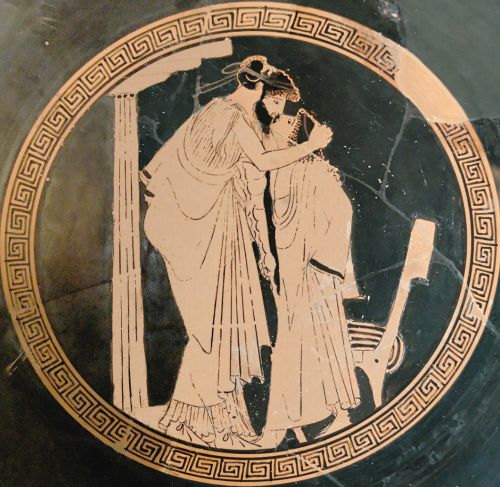
In classical Greece, same-sex desire was neither invisible nor uniformly condemned, yet it occupied a social and cultural space distinct from the institution of marriage. Greek society, particularly in Athens, structured relationships through a framework that emphasized status, age, and civic function rather than fixed sexual identities. Within this system, desire between males could be openly acknowledged and even socially integrated, provided it adhered to established norms. Marriage, by contrast, remained a civic institution tied to reproduction, inheritance, and the continuation of the household. The separation between these domains is crucial, as it reveals that the presence of same-sex relationships did not translate into their recognition as marital unions.
The most well-documented form of male same-sex relationship in Greece is pederasty, a socially regulated bond between an adult male, the erastes, and an adolescent youth, the eromenos. This relationship was not merely sexual but educational and social, embedded within broader systems of mentorship and elite formation. It functioned as a means of transmitting values, reinforcing social hierarchies, and integrating younger males into civic life. The erastes was expected to guide, instruct, and model the virtues of citizenship, while the eromenos occupied a position that combined admiration, receptivity, and eventual transition into adulthood. While such relationships were idealized in certain literary and artistic contexts, they were also constrained by expectations regarding age, behavior, and eventual transition into adult roles. The eromenos was expected to mature into a citizen who would, in turn, marry a woman and assume his place within the household structure, thereby reinforcing the centrality of heterosexual marriage to civic continuity. These relationships were not alternatives to marriage but part of a developmental and social process that ultimately led back to it.
Greek philosophical texts further complicate the picture by offering nuanced reflections on love and desire that extend beyond purely social practice. In Plato’s Symposium, for example, same-sex desire is elevated as a pathway to intellectual and spiritual fulfillment, with certain speakers presenting male-male love as superior to heterosexual attachment. These discussions reveal an environment in which desire could be theorized, idealized, and debated in ways that transcended immediate social utility. Yet even in these philosophical contexts, the concept of marriage remains largely absent from discussions of same-sex relationships. The emphasis lies instead on the nature of love itself, its relationship to beauty and truth, and its role in shaping the individual.
Despite the relative openness of Greek attitudes toward male same-sex desire, the boundaries of acceptable behavior were clearly defined. Social acceptance depended heavily on the maintenance of proper roles, with the adult male expected to remain dominant and the youth to occupy a receptive position appropriate to his age and status. These expectations were not merely informal but were reinforced through social pressure, public reputation, and legal consequences in certain cases. Deviation from these norms, particularly when it involved adult men adopting passive roles or appearing to relinquish their status, could result in social stigma, ridicule, and even political disadvantage. Such behavior was often associated with a loss of self-control, a key virtue in Greek ethical thought, and could undermine a man’s standing within the civic community. These norms underscore that Greek society did not conceptualize same-sex relationships in terms of mutual partnership between equals, but rather within a hierarchical framework that reinforced broader patterns of power, masculinity, and citizenship.
Marriage served a fundamentally different purpose. It was an institution designed to produce legitimate heirs, manage property, and ensure the stability of the polis. The household, or oikos, functioned as the basic unit of social and economic organization, and marriage was central to its continuity. Women, though essential to this system, were largely excluded from the public and intellectual spheres in which male same-sex relationships were discussed and enacted, creating a division between domestic and social life that shaped the experience of both. For male citizens, participation in same-sex relationships did not negate the expectation of marriage but existed alongside it, often preceding or overlapping with it in complex ways. This dual structure allowed for the coexistence of different forms of desire while maintaining the primacy of marriage as a civic obligation. The separation between marital and non-marital relationships was not simply a matter of preference but a reflection of deeply embedded social structures that defined gender roles, citizenship, and the organization of the household.
The absence of same-sex marriage in classical Greece is not evidence of repression in the modern sense, but of a different conceptual framework altogether. Relationships between men could be meaningful, socially recognized, and even celebrated, yet they operated within boundaries that distinguished them from the institution of marriage. To interpret these relationships as equivalent to modern same-sex marriage would be to overlook the specific cultural logic that shaped them. Instead, they should be understood as part of a broader system in which desire, status, and civic identity were intertwined, producing forms of intimacy that resist simple comparison with contemporary categories.
Egypt and the Problem of Interpretation: Khnumhotep and Niankhkhnum
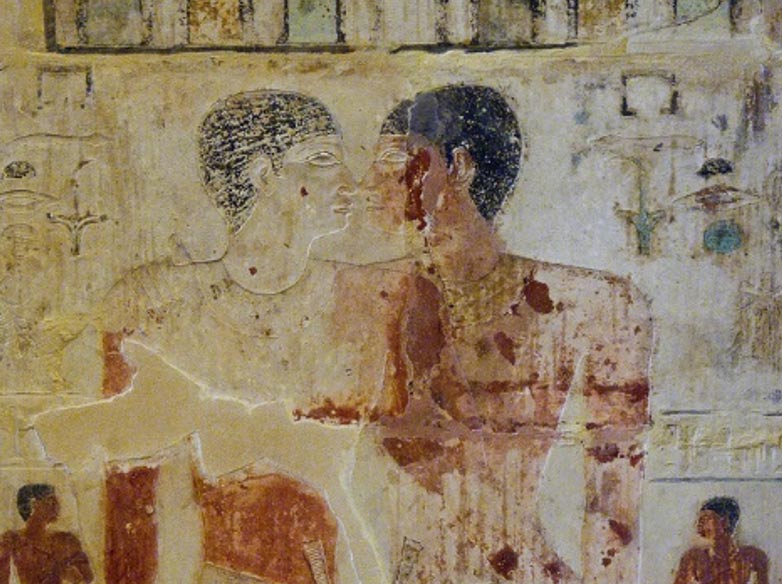
Evidence for same-sex relationships in ancient Egypt is far more limited and ambiguous than in the Greco-Roman world, presenting historians with a different kind of challenge. Rather than literary descriptions or legal discussions, the Egyptian case relies heavily on visual and archaeological material, which is often open to multiple interpretations and shaped by symbolic conventions that are not always fully understood. Tomb art, inscriptions, and burial arrangements were designed to communicate status, identity, and continuity into the afterlife, not to document personal relationships in a straightforward or literal way. Modern attempts to read these materials as evidence of emotional or sexual bonds must contend with layers of meaning that may not align with contemporary expectations. The absence of explicit textual references to same-sex unions does not necessarily indicate their absence in practice, but it does mean that any claims must be made cautiously and with an awareness of evidentiary limits. Egyptian society operated within its own symbolic and cultural frameworks, and modern categories of sexuality and marriage cannot be easily mapped onto its surviving evidence. This makes interpretation not only difficult but inherently contested, requiring historians to balance possibility with restraint.
The tomb of Khnumhotep and Niankhkhnum, dating to the Fifth Dynasty (c. 2400 BCE), has become the focal point of these debates. Discovered at Saqqara, the tomb depicts two high-ranking men, both royal servants, in poses that closely resemble those typically reserved for married couples in Egyptian art. They are shown embracing, holding hands, and even touching noses in what is often interpreted as a gesture of intimacy akin to a kiss. Their names are presented together, and their images are intertwined throughout the tomb’s decorative program, suggesting a close and significant bond. These visual elements have led some scholars to propose that Khnumhotep and Niankhkhnum were a same-sex couple, possibly representing one of the earliest known examples of such a relationship.
This interpretation is not universally accepted. Other scholars argue that the two men were brothers, perhaps even twins, and that their depiction reflects familial closeness rather than romantic or sexual intimacy. In Egyptian art, gestures of affection are not always strictly limited to conjugal relationships, and the symbolic language of tomb decoration can serve multiple purposes, including the expression of kinship, status, and shared identity within the framework of the afterlife. The positioning of figures, the repetition of paired imagery, and the integration of their names and titles may reflect an intention to present a unified social identity rather than a romantic partnership. Moreover, the presence of wives and children in other parts of the tomb complicates the interpretation, suggesting that these men participated in conventional family structures even as they were represented together in unusually intimate ways. The absence of explicit textual evidence identifying the nature of their relationship leaves room for competing interpretations, each grounded in different readings of the available material and shaped by broader assumptions about ancient social norms. This ambiguity highlights the limitations of relying on visual evidence alone to reconstruct social relationships in ancient contexts, particularly when those relationships do not conform neatly to modern categories.
The broader issue extends beyond this single tomb to the way historians approach evidence from cultures that do not articulate relationships in familiar terms. Egyptian society did not categorize individuals according to sexual orientation, nor did it leave behind clear records of same-sex unions as formal institutions. Instead, relationships must be inferred from patterns of representation, burial practices, and the spatial organization of tombs and households. This requires a careful balance between recognizing the possibility of same-sex intimacy and avoiding the projection of modern identities onto ancient individuals. The temptation to identify Khnumhotep and Niankhkhnum as a “married couple” reflects a desire for historical continuity, but it also risks oversimplifying the cultural context in which they lived.
The case of Khnumhotep and Niankhkhnum underscores the broader problem of interpretation in the study of ancient same-sex relationships. It demonstrates both the potential and the limits of the available evidence, reminding us that not all forms of intimacy were recorded or categorized in ways that align with modern expectations. While it is possible, and even plausible, that same-sex pairings existed in ancient Egypt, the nature of those relationships remains uncertain. Rather than forcing a definitive conclusion, the evidence invites a more nuanced approach, one that acknowledges ambiguity as an integral part of historical inquiry and resists the urge to impose clarity where the sources do not provide it.
Beyond the Mediterranean: China and Japan
Expanding the scope beyond the Mediterranean reveals that same-sex relationships were neither isolated nor uniform in the ancient world but instead emerged within diverse cultural frameworks that challenge any singular narrative. In both China and Japan, historical evidence points to socially recognized same-sex relationships, particularly among elite men, yet these relationships did not take the form of institutionalized marriage as understood in either ancient or modern Western contexts. Rather than being codified through legal structures, they were embedded within courtly culture, literary tradition, and systems of hierarchy. This broader perspective underscores the importance of examining local contexts rather than applying Greco-Roman models universally.
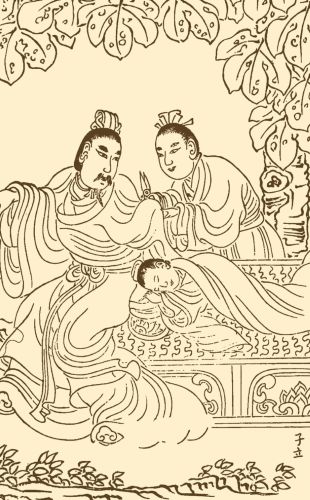
In ancient China, especially during the Han Dynasty, same-sex relationships among elite men were documented with a degree of openness that contrasts with later moral frameworks. Court records and literary sources preserve stories of emperors and nobles who maintained intimate relationships with male companions, often framed in ways that emphasized emotional attachment as well as physical intimacy. The most famous of these is the story of Emperor Ai of Han, who is said to have cut off his sleeve rather than disturb his sleeping male lover, a gesture that gave rise to the enduring phrase “the passion of the cut sleeve.” This anecdote, preserved in historical texts, became emblematic of male same-sex desire in Chinese cultural memory and was referenced in later literature as a symbol of refined affection. Other examples include the “shared peach” story associated with Mizi Xia, further demonstrating that such relationships were not isolated incidents but part of a broader narrative tradition. These accounts indicate that same-sex intimacy could be acknowledged and even commemorated within elite circles, particularly when it was expressed through gestures of loyalty, sacrifice, or aesthetic sensitivity. These relationships existed alongside, rather than in place of, heterosexual marriage, which remained essential for producing heirs and maintaining family lineage.
These Chinese examples reveal a pattern in which same-sex relationships were integrated into existing social structures without challenging the central role of marriage. Elite men were expected to marry women, secure descendants, and fulfill their obligations to family and state. Relationships with male companions could coexist as secondary or complementary bonds, often shaped by status, patronage, and personal affection. The absence of a formal category equivalent to marriage reflects not a lack of recognition but a different set of priorities, in which lineage and continuity outweighed the need to institutionalize same-sex unions. Literary and historical sources present a complex picture in which desire is acknowledged but not reorganized into a separate legal or social institution.
In Japan, particularly during the medieval and early modern periods, same-sex relationships developed within the context of wakashudō, often translated as “the way of youths.” This system, associated with samurai culture and later with monastic and theatrical communities, structured relationships between adult men and adolescent boys in ways that emphasized loyalty, mentorship, and aesthetic appreciation. These relationships were often formalized through codes of conduct that outlined expectations of behavior, emotional commitment, and even duration, giving them a degree of structure that extended beyond casual or purely personal arrangements. Literary works, theatrical traditions, and visual art from the period depict these bonds as honorable and, in some cases, exemplary, reinforcing their place within elite culture. As in Greece, these relationships were governed by conventions regarding age and role, and they were often idealized in literature and art, particularly within the context of warrior ethics and disciplined mentorship. Unlike in China, wakashudō evolved into a more explicitly codified cultural practice, with its own ethical expectations and social meanings, though it still did not constitute marriage in any formal sense.
The coexistence of same-sex relationships with heterosexual marriage in Japan further illustrates the flexibility of these social systems. Samurai and other elite men were expected to marry and produce heirs, fulfilling their duties within the household and lineage structure. Relationships with male partners did not negate these obligations but existed alongside them, often framed as expressions of loyalty, refinement, or emotional depth. The lack of institutionalization as marriage reflects a broader pattern in which same-sex intimacy was accommodated within existing frameworks rather than redefining them. This arrangement allowed for a range of relationships to be recognized and valued without altering the fundamental purposes of marriage as a social institution.
The examples from China and Japan reinforce the broader argument that same-sex relationships in antiquity and premodern societies cannot be understood through the lens of modern marriage. While these cultures provide clear evidence of recognized and sometimes celebrated same-sex bonds, they also demonstrate that such relationships operated within systems that prioritized lineage, hierarchy, and social continuity. The absence of formal same-sex marriage does not indicate repression or invisibility but rather reflects different cultural logics in which desire was integrated into, rather than separated from, existing social structures. By examining these traditions on their own terms, it becomes possible to appreciate both their similarities to and differences from Mediterranean practices, while avoiding the distortions of anachronistic interpretation.
Law and Prohibition: The Late Roman Shift
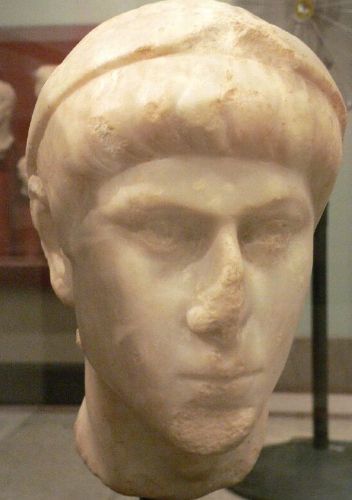
By the late Roman Empire, attitudes toward same-sex relationships underwent a significant transformation, shaped increasingly by legal codification and the growing influence of Christian moral thought. Earlier imperial excesses, such as the ceremonial unions of Nero and Elagabalus, had been framed as personal transgressions rather than systemic threats, often criticized in moralizing narratives but not uniformly regulated through law. As imperial governance became more closely aligned with Christian doctrine in the fourth century, behaviors once tolerated, ignored, or ambiguously situated within Roman social practice came under formal scrutiny. This transition was not abrupt but developed over time, reflecting broader shifts in religious authority, political legitimacy, and cultural identity within the empire. The increasing integration of Christian moral frameworks into imperial policy brought with it a redefinition of acceptable conduct, particularly in matters of sexuality and gender roles. The shift was not merely cultural but institutional, marking a transition from social regulation through custom, reputation, and informal norms to explicit legal prohibition backed by state authority.
One of the earliest clear legal interventions appears in the legislation of 342 CE, issued under the emperors Constantius II and Constans. Preserved in the Codex Theodosianus, this law condemned men who “marry as women” and subjected them to punishment, signaling an attempt to suppress practices that blurred established gender roles. The language of the law reflects both moral and social concerns, targeting not only same-sex relations but specifically the adoption of roles perceived as contrary to Roman masculinity. While the exact enforcement of such laws remains uncertain, their existence indicates a growing desire to regulate behavior that had previously existed in more ambiguous social spaces.
This legal shift intensified in subsequent decades, particularly under emperors who more fully embraced Christian authority as a foundation for governance. By the late fourth and early fifth centuries, imperial legislation increasingly framed same-sex relations as offenses not only against social order but against divine law, drawing explicitly on theological concepts of sin and moral corruption. The Codex Justinianus, compiled in the sixth century under Emperor Justinian I, contains some of the most explicit condemnations, linking same-sex acts to divine punishment, natural disaster, and societal decline. In these formulations, legal and religious discourses became deeply intertwined, with imperial authority presented as both a political and moral guardian of the Christian order. These laws did not merely prohibit specific behaviors but sought to redefine the moral boundaries of the Roman world, aligning them with a Christian vision of order, sexuality, and family structure. The language employed in these legal texts reflects a heightened sense of urgency and moral absolutism, indicating that same-sex relations were no longer viewed as isolated deviations but as threats to the stability of both society and the divine favor upon which it was believed to depend.
The implications of these legal changes extended beyond the immediate enforcement of penalties. They contributed to a broader reconfiguration of how relationships were understood and categorized, narrowing the range of acceptable expressions of intimacy. Marriage, already central to Roman social organization, became further entrenched as a heterosexual institution defined by procreation and moral legitimacy. Same-sex relationships, once accommodated within certain limits or practically ignored, were increasingly cast as deviant and subject to condemnation. This transformation reflects the power of law not only to regulate behavior but to reshape cultural norms.
The late Roman shift toward prohibition represents a turning point in the history of same-sex relationships. It marks the moment at which practices that had existed in varied and often tolerated forms were formally excluded from the boundaries of acceptable social life. While the extent to which these laws were enforced in daily practice remains debated, their symbolic significance is clear. They signal the consolidation of a moral framework that would persist into the medieval period and beyond, shaping attitudes toward sexuality and marriage for centuries. The transition from ambiguity to prohibition underscores the dynamic nature of social norms and the role of legal authority in defining them.
Historiography: Modern Debates and the Politics of Interpretation
The following video discusses sex, sexuality, and gender as themes in the works of Sappho:
Modern interpretations of same-sex relationships in the ancient world have been shaped as much by contemporary concerns as by the surviving evidence itself. Historiography in this field reflects shifting intellectual frameworks, from early moralizing readings to more recent efforts grounded in social constructionism and queer theory. Scholars have debated not only the nature of ancient relationships but also the language used to describe them, questioning whether modern categories such as “homosexuality” or “marriage” can be meaningfully applied to societies that operated under fundamentally different assumptions. These debates reveal that the study of ancient sexuality is not merely about reconstructing the past, but also about negotiating the relationship between past and present.
One of the most influential contributions to this field came from John Boswell, whose work argued for a greater degree of tolerance toward same-sex relationships in premodern societies than had previously been acknowledged. In Christianity, Social Tolerance, and Homosexuality, Boswell challenged the prevailing view that Western attitudes toward same-sex desire had been uniformly repressive, instead suggesting periods of relative acceptance and even institutional recognition. His later work, Same-Sex Unions in Premodern Europe, went further, proposing that certain Christian rituals may have functioned as forms of same-sex union analogous to marriage. Boswell drew on liturgical texts, historical records, and linguistic analysis to support his claims, arguing that the structure and language of certain ceremonies indicated a level of formal recognition that had been overlooked or misunderstood by earlier scholars. His work opened new avenues of inquiry by encouraging historians to reconsider sources that had long been interpreted through a strictly heteronormative lens. His conclusions proved controversial, with critics arguing that he overextended the evidence, misinterpreted ritual language, or projected modern concepts of marriage onto practices that served different social or spiritual functions. The debate surrounding Boswell’s work highlights the difficulty of interpreting ambiguous sources and the extent to which scholarly conclusions can be shaped by underlying assumptions about the past.
In contrast, scholars influenced by Michel Foucault have emphasized the importance of understanding ancient sexuality within its own conceptual framework rather than through modern identity categories. Foucault’s analysis of Greco-Roman sexual practices highlighted the role of power, status, and self-regulation, arguing that ancient societies did not categorize individuals based on sexual orientation in the way modern societies do. This perspective has led to a greater emphasis on the social and cultural contexts that shaped relationships, encouraging historians to move away from searching for direct equivalents to modern concepts such as same-sex marriage. Instead, the focus has shifted toward understanding how desire was structured, expressed, and regulated within specific historical settings.
More recent scholarship has sought to navigate between these positions, recognizing both the risks of anachronism and the value of identifying patterns of continuity across time. Historians and classicists have examined a wide range of evidence, from legal texts and philosophical writings to art and material culture, to reconstruct the diversity of same-sex relationships in the ancient world. This work has often highlighted the variability of these relationships across different societies, as well as the ways in which they intersected with issues of class, gender, and political power. Scholars in this vein tend to adopt a more cautious and methodologically self-aware approach, acknowledging the interpretive challenges while still engaging with the evidence in meaningful ways. Rather than seeking definitive classifications, they emphasize fluidity, context, and the limits of what can be known. This approach allows for a more nuanced understanding of ancient relationships, one that recognizes both similarities and differences without collapsing them into modern categories. It also reflects a broader shift within the discipline toward interdisciplinary methods, drawing on anthropology, gender studies, and literary analysis to enrich historical interpretation.
The historiography of ancient same-sex relationships reflects broader tensions within the discipline of history itself. It raises questions about how to balance empathy with critical distance, how to interpret fragmentary evidence, and how to avoid imposing modern frameworks onto past societies. The debate over whether ancient same-sex relationships can be understood as forms of “marriage” is ultimately less about finding definitive answers than about clarifying the terms of the discussion. By examining these issues critically, historians can better understand both the ancient world and the interpretive lenses through which it is viewed.
Conclusion: Recognition without Equivalence
The historical record makes clear that same-sex relationships were present across a wide range of ancient societies, from Rome and Greece to Egypt, China, and Japan. These relationships could be intimate, socially visible, and even, in certain cases, ritually expressed in ways that resemble aspects of marriage. Yet the evidence also demonstrates that they operated within cultural frameworks that differed fundamentally from modern understandings of marital union. Recognition, where it existed, did not imply equivalence. Instead, same-sex relationships were shaped by systems of hierarchy, gender roles, and civic expectations that defined their meaning and limits within each society.
A consistent pattern emerges across these cultures in which same-sex relationships coexisted with, rather than replaced, heterosexual marriage. Marriage itself was typically oriented toward procreation, inheritance, and the maintenance of social order, functions that same-sex unions were not structured to fulfill. Even in cases such as the Roman imperial ceremonies of Nero or Elagabalus, where marital rituals were appropriated, the result was not the normalization of same-sex marriage but its framing as spectacle, transgression, or excess, often used by contemporaries as evidence of moral decline or political instability. Similarly, in Greece, China, and Japan, same-sex relationships were integrated into existing social systems without altering the central role of marriage as a civic or familial institution. These relationships could carry emotional, social, and even symbolic weight, but they remained structurally distinct from the institution of marriage, which was deeply embedded in systems of lineage, inheritance, and social continuity. This distinction persisted across cultures, reinforcing the idea that while same-sex intimacy was often acknowledged, it did not fundamentally redefine the purposes or expectations associated with marriage.
The challenge for modern historians lies in how to interpret these relationships without collapsing them into contemporary categories. To describe ancient same-sex relationships as “marriage” risks imposing a framework that obscures more than it reveals, flattening cultural differences in the process. To deny their significance or visibility would be equally misleading. The task is to hold both realities in view: to recognize the presence and importance of same-sex intimacy in the ancient world while also acknowledging that it was understood and structured in ways that do not align with modern legal or social definitions of marriage. This approach requires careful attention to language, context, and the limits of the available evidence.
The study of same-sex relationships in antiquity underscores the diversity of human social arrangements and the dangers of assuming historical continuity where it does not exist. These relationships were real, meaningful, and, in some cases, publicly acknowledged, but they were not equivalent to modern marriage as a legal and institutional form. By approaching the evidence with both rigor and humility, historians can better appreciate the complexity of the past while avoiding the distortions of anachronism. Recognition without equivalence becomes not a limitation, but a methodological strength, allowing for a more accurate and nuanced understanding of ancient societies and the relationships that shaped them.
Bibliography
Affiliate disclosure: Amazon links on this site are paid links. As an Amazon Associate I earn from qualifying purchases.
- Baines, John, and Jaromir Málek. Atlas of Ancient Egypt. Oxford: Phaidon, 1946.
- Boswell, John. Christianity, Social Tolerance, and Homosexuality: Gay People in Western Europe from the Beginning of the Christian Era to the Fourteenth Century. Chicago: University of Chicago Press, 1980.
- —-. Same-Sex Unions in Premodern Europe. New York: Villard Books, 1994.
- Brown, Peter. The Body and Society: Men, Women, and Sexual Renunciation in Early Christianity. New York: Columbia University Press, 1988.
- Cassius Dio. Roman History. Translated by Earnest Cary. Cambridge, MA: Harvard University Press.
- Dover, Kenneth J. Greek Homosexuality. Cambridge, MA: Harvard University Press, 1978.
- Edwards, Catharine. The Politics of Immorality in Ancient Rome. Cambridge: Cambridge University Press, 1993.
- Eskridge, William N., Jr. “A History of Same-Sex Marriage.” Virginia Law Review 79:7 (1993), 1419-1513.
- Foucault, Michel. The History of Sexuality, Volume 2: The Use of Pleasure. Translated by Robert Hurley. New York: Vintage Books, 1985.
- Halperin, David M. One Hundred Years of Homosexuality and Other Essays on Greek Love. New York: Routledge, 1990.
- Hinsch, Bret. Passions of the Cut Sleeve: The Male Homosexual Tradition in China. Berkeley: University of California Press, 1990.
- Justinian I. The Code of Justinian. Translated by Samuel P. Scott. Cincinnati: Central Trust Company, 1932.
- Leupp, Gary P. Male Colors: The Construction of Homosexuality in Tokugawa Japan. Berkeley: University of California Press, 1995.
- Matić, Uroš. “Gender in Ancient Egypt: Norms, Ambiguities, and Sensualities.” Near Eastern Archaeology 79:3 (2016), 174-183.
- Meskell, Lynn. Private Life in New Kingdom Egypt. Princeton: Princeton University Press, 2002.
- Pflugfelder, Gregory M. Cartographies of Desire: Male-Male Sexuality in Japanese Discourse, 1600–1950. Berkeley: University of California Press, 1999.
- Plato. Symposium. In Plato: Complete Works, edited by John M. Cooper. Indianapolis: Hackett Publishing, 1997.
- Pomeroy, Sarah B. Goddesses, Whores, Wives, and Slaves: Women in Classical Antiquity. New York: Schocken Books, 1975.
- Reeder, Greg. “Same-Sex Desire, Conjugal Constructs, and the Tomb of Niankhkhnum and Khnumhotep.” World Archaeology 32, no. 2 (2000): 193–208.
- Ruan, Fang-fu. Sex in China: Studies in Sexology in Chinese Culture. New York: Plenum Press, 1991.
- Suetonius. The Twelve Caesars. Translated by Robert Graves. London: Penguin Classics, 2007.
- Theodosian Code. Codex Theodosianus. Translated by Clyde Pharr. Princeton: Princeton University Press, 1952.
- Treggiari, Susan. Roman Marriage: Iusti Coniuges from the Time of Cicero to the Time of Ulpian. Oxford: Oxford University Press, 1991.
- Williams, Craig A. Roman Homosexuality: Ideologies of Masculinity in Classical Antiquity. 2nd ed. Oxford: Oxford University Press, 2010.
Originally published by Brewminate, 04.15.2026, under the terms of a Creative Commons Attribution-NonCommercial-NoDerivatives 4.0 International license.
About the Author