The Dust Bowl was not simply a natural disaster. Drought triggered the crisis, but decades of human activity made the southern Plains catastrophically vulnerable.

By Matthew A. McIntosh
Public Historian
Brewminate
Introduction: A Disaster Made, Not Merely Suffered
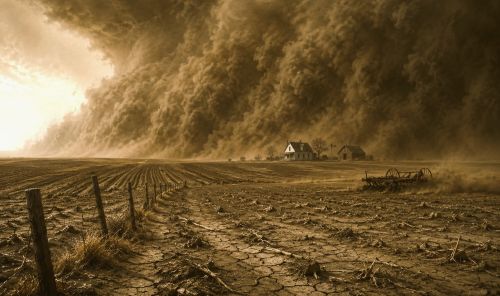
On April 14, 1935, a wall of dust rolled across the southern Great Plains with such force that daylight disappeared. In towns across the Oklahoma and Texas panhandles, southeastern Colorado, southwestern Kansas, and northeastern New Mexico, people watched the horizon turn black and then vanish altogether. The storm that later became known as Black Sunday was not the first dust storm of the 1930s, nor was it the last, but it gave terrifying visible form to a slower catastrophe already underway. Soil entered houses through cracks in walls and window frames, settled on beds and tables, contaminated food, damaged machinery, and lodged in human lungs. What had once been earth became atmosphere. What had once been a farm became a moving cloud. The Dust Bowl was remembered as a disaster of wind and drought, but its deeper history lay in the condition of the land before the wind began to blow.
The central fact of the Dust Bowl is not that drought struck the Great Plains. Drought was not new to the region, and neither were high winds, fragile rainfall patterns, or the periodic failure of crops. The Plains had always been a place where human ambition had to negotiate with climatic uncertainty. The disaster of the 1930s emerged because that uncertainty collided with a landscape that had been remade by plows, tractors, credit, wheat prices, livestock pressure, and faith in agricultural expansion. Millions of acres of native grassland had been broken for cultivation, especially during and after the wheat boom associated with World War I. Deep-rooted prairie grasses that had anchored topsoil for centuries were stripped away. Marginal lands were brought under cultivation during wet years and then expected to behave like permanently reliable farmland. When drought returned, failed crops left fields bare, and the exposed soil had little defense against the wind.
To call the Dust Bowl man-made does not mean that individual farmers deliberately created catastrophe or that drought was irrelevant. Most farmers were not villains in a simple morality play. They were families, tenants, migrants, smallholders, speculators, ranchers, and wheat growers trying to survive within constructs of debt, price collapse, technological change, and cultural expectation. Many had been encouraged by government policy, wartime demand, railroad promotion, land agents, banks, and a national mythology that treated plowing as improvement and grassland as unused potential. Their choices were often rational in the short term, even when destructive in the long term. The tragedy was that the economic logic of survival pushed people to intensify precisely the practices that made survival harder. As wheat prices fell, more land was often planted to make up for lost income. As drought reduced yields, fields remained exposed. As livestock grazed remaining cover, resilience diminished further. The Dust Bowl was not simply the result of ignorance; it was the result of a system that rewarded extraction until the land could no longer absorb the cost.
The Dust Bowl was a human-made ecological disaster triggered by drought but not caused by drought alone. Its origins lay in the transformation of the southern Plains from a drought-adapted grassland into an unstable agricultural frontier tied to commodity markets and technological expansion. The disaster revealed the danger of mistaking temporary abundance for permanent permission. Wet years, high wheat prices, mechanized plowing, and national hunger for production encouraged farmers and policymakers to believe that the Plains could be conquered by cultivation. The 1930s proved otherwise. The sky darkened because rain failed, but also because people had removed the living systems that held the soil in place. The Dust Bowl was not only something Americans suffered. It was something Americans made.
The Prairie Before the Plow
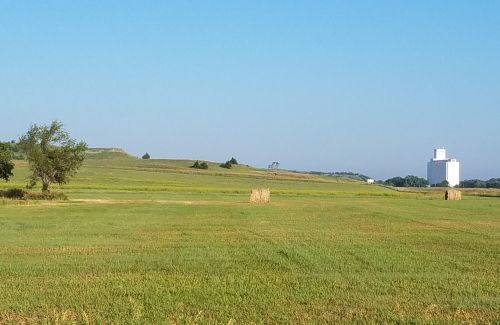
Before the Dust Bowl was a disaster of farms, banks, roads, lungs, and migration, it was a disaster of grass. The southern Great Plains did not become vulnerable in the 1930s because it had always been barren, lifeless, or agriculturally useless. It became vulnerable because an older ecological system had been stripped away and replaced by one far less able to endure drought. The native prairie was not empty land waiting for the plow. It was a living architecture of roots, stems, soil organisms, seasonal growth, fire, grazing, and dormancy, adapted over long periods to a region where rainfall was irregular and wind was a permanent force. To later settlers, grass could look like a surface feature, something merely covering the soil. In ecological terms, it was closer to infrastructure. It held the ground together.
The grasses of the Plains were important because much of their life lay below the surface. Shortgrasses and mixed grasses did not simply cover the soil; they bound it. Their roots penetrated deeply, spread laterally, and created dense networks that helped stabilize topsoil against wind and water erosion. These root systems also allowed prairie plants to survive conditions that annual grain crops could not. In wet years, the grasslands could appear lush and forgiving. In dry years, they could shrink, brown, and enter dormancy without disappearing altogether. The land’s resilience depended on that continuity. Even when the surface looked dead, the root systems remained alive, ready to respond when rain returned. The prairie’s strength, in other words, was not measured only by what stood above ground in a given season. It was stored in the underground structure that held moisture, organic matter, and soil in a functional relationship. Deep and fibrous root systems helped create porous soil that could absorb rainfall when it came and resist being carried away when it did not. Decaying roots added organic matter, which improved the soil’s capacity to retain water and nutrients. The grasses also left residues on the surface, slowing wind near the ground and reducing the direct force of sun and air on exposed soil. This was one of the crucial differences between prairie grass and wheat. Wheat could produce a profitable harvest in favorable years, but when drought killed or weakened the crop, the field could be left bare. Prairie grass, by contrast, was not merely a crop-like cover. It was a permanent ecological fabric.
That distinction matters because the Great Plains were never a climatically simple farming region. Rainfall varied sharply from year to year, and the boundary between adequate moisture and crop failure could shift with brutal speed. The same land that seemed productive during a run of wet seasons could become unforgiving when drought returned. This did not mean that agriculture was impossible everywhere on the Plains, nor that settlers were foolish to see opportunity there. The soils were often fertile, and farmers had good reasons to believe they could make a living if rain, prices, and credit aligned. But fertility was not the same thing as security. Prairie soils had developed under grass, not under continuous annual cultivation. Their productivity depended on ecological conditions that plowing disrupted.
Wind was the other constant. The Plains were not merely dry; they were open. In a grassland ecosystem, wind was powerful but usually not catastrophic because the soil surface was protected by vegetation, litter, and roots. Once that protection was removed, the same wind became a destructive agent on a much larger scale. Plowed soil, particularly when dry, broken, and unprotected by crop residue, could be lifted and carried across county and state lines. This was not a mysterious process. Farmers knew that bare fields could blow. Agricultural scientists and conservationists understood that exposed soil was vulnerable. The problem was that the scale of exposure became enormous. A single poorly protected field could damage a farm; thousands of square miles of exposed fields could alter the sky. Wind erosion worked through accumulation: one loosened field fed another storm, one failed crop exposed another surface, one gust carried soil into the next county, and repeated storms stripped away the most valuable layer of the land. The danger was not simply that soil moved, but that the soil most likely to move first was often the finest, richest, and most agriculturally important material. Once airborne, topsoil ceased to be a local possession and became a regional hazard. It crossed fences, property lines, county borders, and state boundaries, turning private land-use decisions into public disaster. What had once been local erosion became regional atmospheric disaster.
The transformation of prairie into cropland also changed the way drought operated. Drought in a native grassland was a hardship within an adapted system. Drought in a plowed wheat landscape was a crisis within a weakened one. Native grasses could endure dry years by reducing visible growth while maintaining root life. Wheat farming required a successful annual crop, and when that crop failed, the field did not simply rest in the same way prairie rested. It remained open, loosened, and exposed. Plowing converted climatic risk into structural fragility. The southern Plains did not need to become desert to become dangerous. It only needed to lose the plant systems that had made dryland conditions survivable.
This is why the phrase “breaking the sod” carries more ecological weight than its plain agricultural meaning suggests. To break the sod was to break a relationship between soil and vegetation. It was to cut into a protective mat that had accumulated over generations and replace perennial cover with annual crops dependent on timely rain, repeated tillage, and market demand. The change was not merely visual, from grassland to farmland. It altered water retention, soil structure, organic matter, surface roughness, and the land’s ability to resist erosion. In good years, the change could seem like triumph: wheat fields where grass had stood, harvests where cattle had grazed, cash income where boosters had promised prosperity. In bad years, the hidden cost appeared. The prairie’s old defenses had been removed before anyone fully understood how much they had been doing.
The Dust Bowl began before the dust storms. It began in the ecological misunderstanding of the prairie itself. Settlers and promoters often saw grassland as underused land, but the grass was not an obstacle to productivity in any simple sense. It was the system that made the soil durable. The tragedy of the 1930s was that drought revealed the value of the prairie only after much of it had been destroyed. Once the rains failed and the winds rose, the exposed fields of the southern Plains behaved not like a temporarily unlucky farm region, but like a dismantled ecosystem. The disaster was not caused by drought alone. It was caused by drought moving across land whose natural protections had been plowed under.
“Rain Follows the Plow”: Settlement Ideology and the Misreading of the Plains
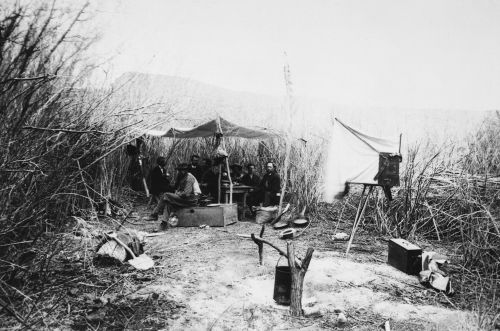
The ecological vulnerability of the southern Plains did not arise from plowing alone. It also arose from a way of seeing. Before the Dust Bowl became a physical catastrophe, the Great Plains had already been interpreted through a language of conquest, improvement, and agricultural destiny. Grassland was treated less as a functioning ecological system than as land awaiting proper use. In this view, the plow was not merely a tool but a civilizing instrument. It marked ownership, labor, permanence, and progress. To break sod was to transform “empty” or “waste” space into productive property. That assumption carried enormous cultural force in nineteenth- and early twentieth-century America. It joined older ideals of yeoman farming to newer forces of railroad promotion, land speculation, federal settlement policy, and commercial agriculture. The tragedy was that this ideology often mistook ecological restraint for backwardness and treated expansion itself as proof of wisdom.
The phrase “rain follows the plow” became the most famous expression of this confidence, though it should be understood less as a universal farmer’s creed than as a revealing slogan of expansionist optimism. Associated with western boosters and promoters of settlement, the idea suggested that cultivation, settlement, and civilization could actually improve the climate or at least make semi-arid lands reliably productive. The claim was scientifically dubious and is now long-discredited, but its power lay in how neatly it matched what many people wanted to believe. During wet cycles, the Plains seemed to confirm the promise. Crops grew, towns appeared, railroads carried harvests eastward, and families invested labor and hope in places that looked increasingly secure. Temporary rainfall could be read as permanent transformation. A run of favorable seasons made the old warnings about aridity seem pessimistic, even anti-progress. In that setting, caution could appear cowardly, while plowing appeared both economically rational and morally upright. The slogan also helped translate uncertainty into confidence. It offered settlers a story in which hardship was temporary, effort was redemptive, and environmental limits could be overcome by human industry. That story mattered because the decision to settle and farm the Plains required risk. Families had to believe not only that rain might come, but that their labor belonged within a larger pattern of improvement. The plow promised more than crops. It promised permanence. It suggested that the act of cultivation itself could domesticate the land, bind families to place, justify investment, and turn a marginal environment into a stable agricultural society. The danger was that the slogan converted a temporary correlation into a causal myth. Wet years made settlement possible, but ideology made those wet years seem prophetic.
This optimism was dangerous because it blurred the distinction between settlement and adaptation. John Wesley Powell had warned in the late nineteenth century that the arid and semi-arid West could not simply be organized according to humid eastern assumptions. He argued that rainfall, watershed, irrigation, and land use had to shape policy more than rectangular surveys or abstract dreams of small freehold farms. But Powell’s vision competed against much stronger political and cultural pressures. The Homestead tradition promised that land, labor, and family farming could produce independence. Railroads needed settlers and freight. Town boosters needed population. Banks and merchants needed borrowers and customers. Politicians preferred the language of opportunity to the language of limits. The result was not merely that people moved onto the Plains, but that they often arrived carrying expectations formed elsewhere. Land that required adaptation was instead folded into a national story of agricultural conquest.
The misreading of the Plains also depended on the visual simplicity of grassland. Forests looked like obstacles that had to be cleared; grasslands seemed already open. The absence of trees could be interpreted as an invitation, as if nature had conveniently prepared the region for the plow. Yet that openness was precisely what made the Plains ecologically distinct. Grass, not timber, was the dominant stabilizing system. Its apparent monotony disguised complexity below the surface. Settlers could see the soil’s richness when sod was cut, but they could not as easily see the relationships that had made that richness durable. Once prairie was translated into acreage, and acreage into potential wheat, the land’s ecological history disappeared beneath the language of production. A field was judged by what it could yield in the next season, not by what its vegetation had been doing for centuries. The result was a kind of agricultural tunnel vision: the soil was valued, but the grass that protected it was treated as expendable.
None of this means that settlers were irrational people blindly repeating slogans. Many were observant, hardworking, and painfully aware of risk. They watched the weather, counted debts, knew the difference between good and bad land, and understood that failure was possible. But individual knowledge operated inside a larger structure that rewarded expansion. A farmer who left grass unbroken might preserve resilience, but he also forwent income, land value, and perhaps the ability to pay debts. A community that accepted limits might be ecologically wiser, but it might lose population, investment, and political influence. The ideology of Plains settlement worked not only through belief but through institutions. It was embedded in credit systems, land policy, commodity markets, local boosterism, and the social respect granted to improvement. The plow became a measure of seriousness. A farmer proved his claim by changing the land. Even reluctance could be difficult to sustain under these pressures. A family that hesitated to break more sod might watch neighbors profit during a wet year, see land values rise nearby, or face bankers who measured viability by cultivated acreage. A tenant or mortgaged farmer had even less freedom to treat ecological caution as a long-term strategy. The demand for production was not abstract; it appeared in loan payments, equipment purchases, tax bills, seed costs, household needs, and the fear of losing the farm altogether. This is why the Dust Bowl cannot be explained only by bad ideas or false slogans. Ideas mattered because they were reinforced by material necessity. Settlement ideology gave moral and cultural meaning to expansion, while economic pressure made expansion difficult to refuse.
By the early twentieth century, the southern Plains had been drawn into a powerful cycle of expectation. Wet years encouraged settlement; settlement encouraged plowing; plowing encouraged more investment; investment required production; production made withdrawal harder when conditions changed. The idea that the Plains could be made permanently agricultural did not cause drought, but it helped ensure that drought would become disastrous when it came. The land was misread not because people saw nothing there, but because they saw only what their culture had taught them to value: acres, crops, towns, rails, markets, and proof of progress. The grasses that had once made the region resilient were reimagined as the prelude to something better. In that sense, the Dust Bowl began in the mind before it entered the sky. It began when Americans confused the power to plow the Plains with the ability to remake their climate.
Wheat, War, and the Great Plow-Up
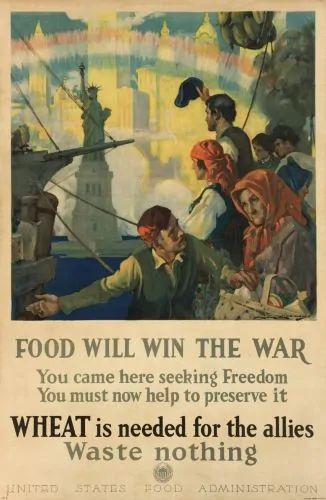
The ideology that misread the Plains as permanently conquerable became far more dangerous when it met the wheat market of the early twentieth century. Before the 1910s, much of the southern Plains remained in grass, grazing, mixed use, or relatively limited cultivation. Farming was expanding, but it had not yet transformed the region at the scale later associated with the Dust Bowl. World War I changed that balance. The war disrupted European agriculture, increased global demand for American grain, and turned wheat into both a commodity and a patriotic obligation. Farmers were encouraged to plant more, produce more, and treat their fields as part of the national war effort. In that atmosphere, the plow no longer symbolized merely household independence or local improvement. It became an instrument of national service and global supply. Wheat linked the southern Plains to soldiers, armies, export markets, federal appeals, railroad networks, and wartime prices.
The phrase often associated with the period, “food will win the war,” captured the moral pressure behind agricultural expansion. Farmers did not simply respond to prices, though prices mattered enormously. They also responded to patriotic language that cast production as duty. The federal government, agricultural colleges, newspapers, grain dealers, and local boosters helped create an atmosphere in which more wheat meant more loyalty, more prosperity, and more proof that the Plains could fulfill their promised destiny. High wheat prices made the message persuasive. Land that had seemed marginal in ordinary times could appear profitable when each bushel commanded wartime value. Fields that might once have been left in grass were broken. Farmers took on debt for machinery, seed, land, livestock, and buildings. The war boom encouraged the belief that cultivation was not only possible but urgent. It also compressed the time in which judgment had to operate. A farmer watching neighbors profit from wheat did not have the luxury of evaluating the Plains across centuries of climatic variability; he saw a market, a demand, a season, and a chance. The pressure to expand was reinforced by the visible success of those who had already done so. When harvests were good, they seemed to prove that the old grassland had been underused and that plowing had unlocked its real purpose. Wartime wheat did more than increase acreage. It gave ecological risk the appearance of common sense. The more the land produced, the more reasonable further expansion appeared.
This wartime expansion mattered because wheat farming fit the southern Plains in a seductive but unstable way. Wheat could grow in relatively dry conditions, and in good years it rewarded large acreages. Unlike diversified farming, wheat production favored scale, machinery, and exposure to distant markets. The crop could be planted across broad, open fields, harvested mechanically, and shipped by rail into national and international networks of trade. It was well suited to a region where land was abundant and labor could be scarce. Yet the very features that made wheat attractive also made it risky. A wheat field was not a prairie. It was an annual gamble. If the crop failed, the land could be left bare. If prices fell, farmers often needed to plant more, not less, to maintain income. The logic of wheat encouraged expansion beyond ecological caution, especially when short-term success seemed to validate the gamble. Wheat also narrowed the farmer’s relationship with the land. In a mixed system, risk might be spread among livestock, garden crops, hay, pasture, and grain. In a wheat-centered system, both household survival and local prosperity became increasingly dependent on a single crop, a single market, and a narrow range of weather conditions. The crop’s apparent simplicity was part of its danger. It could be sown widely, counted easily, mortgaged indirectly through expected income, and translated into cash more cleanly than many forms of mixed agriculture. But that clarity was economic rather than ecological. The market saw bushels; the land bore the consequences of exposure.
After the war, the danger sharpened. Wartime demand receded, European production recovered, and agricultural prices weakened. Many farmers who had expanded during the boom were left with debts based on expectations that could not be sustained. Land values, machinery purchases, and mortgages had been built around high prices. When wheat prices fell, the farmer’s problem was not simply that the crop brought less money. It was that the entire farm economy had been organized around producing enough grain to meet obligations. The rational response for many was to plant more acres in the hope of making up in volume what had been lost in price. This was the trap at the heart of the Great Plow-Up. The same market collapse that should have signaled caution instead pushed farmers to intensify production. Economic distress became an engine of ecological risk.
The Great Depression deepened that pattern. By the early 1930s, farmers were caught between low prices, accumulated debts, shrinking credit, tax burdens, and the need to keep families alive. A field left unplanted might be ecologically prudent, but it did not pay the bank, the merchant, or the tax collector. The farm household lived inside a calendar of payments as much as a calendar of seasons. Planting wheat became a desperate form of negotiation with both nature and the market. If rain came, a crop might save the farm for another year. If rain failed, the soil would lie exposed. This meant that ecological restraint became hardest precisely when it was most necessary. Farmers did not always plow because they were confident. Sometimes they plowed because they were afraid. The Dust Bowl was born partly from that grim arithmetic: when prices collapsed, survival demanded production; when production expanded, the land became more vulnerable; when drought came, vulnerability became catastrophe.
The Great Plow-Up was not a single event but a cumulative transformation. Acre by acre, grassland became wheatland. Tractors and one-way plows accelerated the process, but markets supplied the incentive. County landscapes changed as fields expanded, fences shifted, towns grew dependent on grain income, and local economies became tied to harvest expectations. The social meaning of the land changed as well. Grassland could be dismissed as idle, while plowed land appeared useful, improved, and financially legible. Banks could value it. Railroads could move its harvest. Merchants could sell equipment for it. Governments could count its production. Yet the apparent order of this agricultural system concealed its fragility. The more completely the region committed itself to wheat, the less room remained for ecological buffers. Grasslands that had once absorbed drought as part of a long cycle were replaced by fields that required annual success. This transformation also made vulnerability collective. One farmer’s exposed acreage did not remain his own private problem when the wind rose. Soil blown from one field could scour another, fill roadside ditches, damage neighboring crops, and contribute to storms that no property line could contain. The agricultural economy had encouraged farmers to think in terms of individual acreage and private production, but wind erosion revealed the Plains as a shared ecological system. The Great Plow-Up fragmented ownership while unifying consequence. The land had been divided into farms, mortgages, counties, and claims, but the dust moved as if those boundaries had never existed.
By the time drought settled over the southern Plains in the 1930s, the region had already been pushed into a dangerous dependency. The disaster that followed cannot be separated from the wartime and postwar wheat economy that preceded it. World War I helped turn wheat into a patriotic and profitable crop; the postwar price collapse made farmers plant more to survive; the Depression made withdrawal even harder; and drought exposed the consequences. The Dust Bowl was not simply the result of too many acres being plowed in a careless moment. It was the result of an agricultural system that transformed temporary demand into permanent land-use change. Wheat promised prosperity, loyalty, and security. Instead, under the pressure of war, markets, debt, and drought, it helped turn the southern Plains into a landscape where the soil itself could no longer stay home.
Machines on the Grassland

The Great Plow-Up was not simply a matter of farmers deciding to cultivate more land. It was also a matter of how quickly they could do it. Earlier generations had broken prairie with animal power, heavy labor, and time-consuming effort. Sod-busting was difficult work, and the physical limits of horses, mules, walking plows, and human endurance imposed a kind of accidental restraint. Mechanization weakened that restraint. By the early twentieth century, gasoline tractors, improved plows, grain drills, combines, trucks, and other machinery allowed farmers to cultivate, plant, harvest, and transport grain over far larger acreages than would have been practical only a few decades earlier. Technology did not create the desire to expand, but it transformed desire into capacity. It made possible a speed of land conversion that the prairie ecosystem could not absorb.
The tractor was central to this change because it altered the relationship between labor, land, and scale. A farmer using animal power had to feed, rest, and manage the animals that pulled the plow. Horses and mules were expensive to maintain, required pasture or feed, and limited the amount of land that could be worked within a given season. Tractors promised a different agricultural future. They did not tire in the same way, could pull heavier implements, and could work larger fields with fewer laborers. They fit well into wheat agriculture, where broad expanses, seasonal labor demands, and relatively standardized field operations rewarded mechanical power. The tractor encouraged a larger imagination of the farm itself. Land that once seemed too extensive for one household to manage could now be brought within reach. Marginal acres looked less marginal when a machine could break them quickly. The machine also changed the farmer’s sense of time. Prairie that had resisted conversion through the sheer difficulty of labor could now be treated as a seasonal project, something to be brought under cultivation before the next planting window or the next favorable market. This mattered profoundly on a landscape where ecological consequences often unfolded more slowly than economic incentives. The tractor compressed work that had once demanded prolonged effort, and that compression made caution easier to bypass. A farmer could respond to high prices, a wet year, a neighbor’s success, or a lender’s expectations by putting new acreage under the plow with unprecedented speed. What had once required a slow negotiation with grass, animals, weather, and labor could increasingly be accomplished through fuel, machinery, and debt.
Deep plowing and related tillage methods also mattered because they disturbed the soil system more aggressively than older, lighter, or more limited cultivation. Farmers did not merely scratch the surface; they cut into the sod, overturned root systems, buried vegetation, and exposed soil that had long been protected by perennial cover. Implements such as one-way disc plows could be useful in dryland farming because they prepared seedbeds and controlled weeds, but they also helped create a finely worked surface vulnerable to wind when moisture failed. The problem was not that every form of plowing was inherently reckless. The problem was repeated tillage across enormous areas of semi-arid land. Each pass could reduce protective residue, loosen soil structure, and leave fields more dependent on timely rain and crop growth. When drought prevented that growth, the land remained open to the wind. Deep plowing was consequential because the prairie sod was not a thin inconvenience lying on top of the soil. It was the product of long ecological formation, a dense mat of roots, organic material, and microbial life that had helped create and stabilize the very fertility farmers wanted to use. To cut through that mat was to interrupt the system that made the soil both rich and resistant. Tillage could temporarily make the land appear more orderly and agriculturally promising: weeds buried, seedbeds prepared, rows established, fields made legible. But order on the surface could mask disorder below. Repeated disturbance broke apart soil aggregates, reduced surface roughness, dried the upper layers, and weakened the relation between organic matter and moisture. The land was being prepared for wheat, but it was also being prepared, unintentionally, for wind.
Mechanization also changed the economics of risk. Machinery required investment. A tractor, plow, drill, or combine was not merely a tool; it was a financial commitment that had to justify itself through use. Once farmers purchased equipment, they had reason to cultivate more acres to spread the cost and generate enough income to make payments. Machinery encouraged expansion not only by making it physically possible but by making it economically necessary. A farmer who owned more equipment than his existing acreage required might rent, buy, or break additional land. A farmer in debt for machinery could not easily respond to falling prices or dry weather by simply producing less. Mechanization promised efficiency, but efficiency often depended on scale, and scale intensified ecological exposure.
The combine reinforced this pattern by helping make wheat farming more mobile, seasonal, and extensive. Harvesting grain no longer required the same labor arrangements or local rhythms that older methods had demanded. Custom crews, machines, trucks, and elevators linked fields to a wider wheat economy with increasing speed. Grain could move from field to market more efficiently, and this efficiency made large-scale wheat agriculture more attractive. Yet the system’s success depended on the assumption that annual production would continue. The machinery was most impressive in good years, when broad fields ripened and harvests seemed to vindicate the investment. In drought years, the same fields could fail across equally broad areas. Mechanization magnified both productivity and vulnerability. It allowed abundance to be gathered quickly, but it also allowed ecological mistakes to be made at industrial scale.
The speed of mechanized plowing is essential to understanding why the Dust Bowl became a regional disaster rather than merely a collection of local failures. Grasslands can be damaged slowly, but the southern Plains were transformed with startling rapidity. Wet years, wartime demand, postwar debt, Depression-era desperation, and machinery worked together to pull land into production faster than older ecological knowledge or conservation practice could restrain. The machine shortened the interval between decision and consequence. A tract that had taken decades to integrate into a cautious mixed-use landscape could be broken within a season. A farmer did not have to wait for a community to accumulate generations of experience before altering the land. He could act quickly, and so could his neighbors. Across thousands of farms, those quick decisions accumulated into a landscape-level crisis.
This does not mean that machines were uniquely to blame. Tractors did not decide what to plow, banks did not drive themselves across fields, and implements did not invent the market for wheat. Mechanization became destructive because it operated inside a culture and economy that prized expansion, production, and short-term survival. In another system, machinery might have supported conservation: contour plowing, strip cropping, terracing, shelterbelt planting, emergency tillage, and more careful residue management could all involve tools and machines. The same mechanical power that broke sod could later be used to stabilize land. The Dust Bowl’s lesson is not that technology itself was the enemy. It is that technology without ecological restraint can convert ordinary misjudgment into catastrophe.
By the 1930s, the southern Plains had become a mechanized agricultural landscape whose productive power concealed its fragility. Tractors had made it easier to break the prairie. Deep plowing had severed the soil from the root systems that had held it. Combines and market networks had rewarded large wheat fields. Debt had made machines demand use. The result was a landscape engineered for harvest but poorly prepared for failure. When rain came, machinery helped farmers turn the Plains into grain. When rain stopped, machinery had already helped turn grassland into exposed soil. The dust storms of the 1930s were not an accidental byproduct of modern agriculture. They were one of its possible outcomes when mechanical power outran ecological understanding.
The Exhaustion of Ecological Resilience
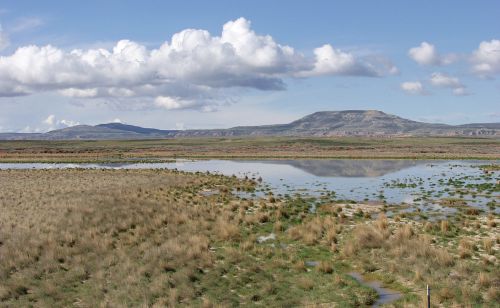
Plowing was the central act in the making of the Dust Bowl, but it was not the only way the southern Plains lost resilience. The disaster also depended on the cumulative weakening of vegetation across land that was not always under wheat. Grazing, drought, failed crops, abandoned fields, and the cultivation of marginal acreage all worked together to reduce the Plains’ capacity to absorb stress. Ecological collapse rarely comes from one blow. It comes when a landscape loses redundancy, when one protective layer after another is removed until ordinary hardship becomes catastrophe. On the southern Plains, grass had once served as the region’s stabilizing system. By the 1930s, that system had been weakened not only by sod-busting but by the broader pressure of using every available acre too hard, too often, and with too little margin for failure.
Overgrazing mattered because the grasslands that remained were not immune to damage. Cattle, sheep, horses, and other livestock had long been part of Plains economies, but grazing pressure became destructive when too many animals fed on too little recovering vegetation. In wet periods, grass might appear abundant enough to support heavy stocking. In dry periods, the same stocking rates could become ruinous. Animals cropped plants close to the ground, trampled fragile surfaces, disturbed soil crusts, and reduced the plant cover needed to slow wind at the surface. Grazing was damaging when drought had already limited regrowth. A pasture that might have recovered under lighter use could be pushed into exposure, with bare patches widening into erosion points. The damage was not always dramatic at first. It could begin as thinning cover, weakened root systems, compacted soil around water sources, or small areas of exposed ground where animals gathered repeatedly. But in a wind-prone environment, small openings mattered. Bare patches could expand, connect, and become channels through which erosion spread. The removal of grass also reduced the land’s ability to trap moisture, shade the soil, and protect young growth from heat and wind. Once vegetation was grazed down too severely, recovery required time, rain, and restraint, the very things often missing during economic crisis and drought. The danger was not simply that animals ate grass. It was that livestock converted an already stressed landscape into one with fewer living anchors.
The logic of overgrazing resembled the logic of overplowing. Both were intensified by short-term economic pressure. A farmer or rancher with debts, taxes, household needs, and uncertain prices could not always afford to reduce herds simply because the land needed rest. To sell too early might mean accepting low prices; to hold on might mean exhausting the grass. Livestock were capital, insurance, food, income, and status all at once. In hard times, they could keep a family afloat. Yet keeping too many animals on dry or marginal range transferred pressure from the balance sheet to the land itself. The result was another example of rational behavior producing irrational ecological consequences. Families trying to survive could make decisions that weakened the conditions of survival.
Marginal land made the problem worse because it blurred the line between opportunity and hazard. During wet years or high-price periods, farmers expanded into acreage that could produce a crop under favorable conditions but could not reliably withstand drought. Such land was not worthless and calling it “marginal” should not imply that those who farmed it were foolish. Its danger lay in its instability. It might reward cultivation just long enough to invite investment, then fail when rainfall returned to harsher patterns. Once broken, marginal land became difficult to retreat from. A farmer who had paid for seed, machinery, fencing, or taxes could not easily restore the prairie by will alone. Land that should have remained in grass or low-intensity use became tied to household survival and local economic expectation. When drought struck, these marginal acres often failed first, exposing soil across precisely the landscapes least able to endure exposure. The exhaustion of resilience was cumulative. A wheat field failed and lay bare. A pasture was grazed too closely. A marginal tract was broken during a wet spell and then abandoned or poorly covered when prices fell. Crop rotation, fallowing, residue protection, shelterbelts, contour plowing, and other conservation practices were unevenly used, often limited by custom, cost, knowledge, or immediate necessity. Each weakness intensified the others. Wind crossing a bare field gathered force and soil; moving soil damaged neighboring fields; damaged crops left more ground exposed; livestock pressed harder on remaining vegetation; and desperate farmers planted more acreage in hopes of recovering losses. The land did not collapse all at once. It lost its capacity to buffer disturbance. By the time the great dust storms came, the Plains had already been simplified into a landscape with too few defenses.
This is the key difference between environmental stress and ecological disaster. Drought, wind, and grasshopper outbreaks had challenged Plains agriculture before, but a resilient landscape can bend without entirely breaking. The southern Plains of the early 1930s had less capacity to bend. Its native vegetation had been reduced, its soils disturbed, its crop systems narrowed, its livestock pressures intensified, and its people bound to market demands that discouraged restraint. Resilience depends on diversity, cover, time, and recovery. The Dust Bowl landscape had been stripped of all four. It was less diverse because wheat and livestock dominated too much of the economy. It had less cover because plowing and grazing exposed the soil. It had less time because debts and markets demanded annual production. It had less recovery because drought arrived after decades of expansion had already narrowed the land’s options.
Overgrazing and marginal cultivation help explain why the Dust Bowl cannot be reduced to a single technological mistake or a single crop. Wheat mattered enormously, but the deeper problem was the conversion of a drought-adapted region into a landscape expected to produce continuously under conditions it could not control. The southern Plains were pushed beyond their ecological margin. Too much grass was plowed, too much remaining vegetation was grazed, too much fragile land was treated as dependable, and too little room was left for drought to pass through without disaster. When the rains failed, the region did not merely suffer a dry spell. It revealed the accumulated consequences of years in which the land had been asked to give more than it could safely lose.
The Drought Arrives: When Weather Exposed the Human System
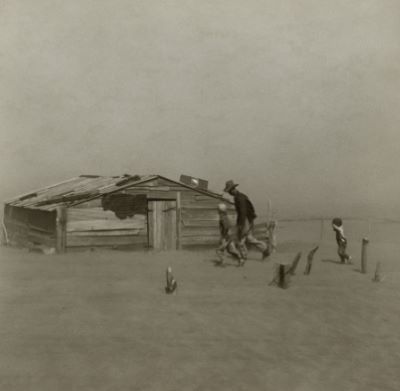
Drought did not create the Dust Bowl out of nothing. It arrived upon a landscape already made vulnerable by plowing, wheat dependence, overgrazing, mechanization, and the cultivation of marginal land. This distinction is essential. The 1930s drought was real, severe, and devastating, but drought alone does not explain why so much soil moved so violently across the southern Plains. Dry weather became disaster because it exposed the weaknesses of a human structure that had been built during wetter years and higher prices. The same fields that had seemed productive when rain came became liabilities when rain failed. The same machinery that had made large wheat acreages possible had helped remove the grasses that once held the soil. The same market logic that had encouraged production gave farmers few easy ways to retreat when conditions changed. Weather supplied the trigger, but the loaded weapon had been assembled over decades.
The drought that settled over the Plains in the early 1930s was not a single dry season but a prolonged climatic crisis. Rainfall declined, heat intensified, and normal agricultural uncertainty hardened into regional emergency. The southern Plains had always lived with climatic variability, but the dry years of the 1930s came after a period in which settlement and cultivation had expanded beyond the land’s safe margin. What had been treated as dependable farmland now revealed itself as a riskier environment. Crops withered or failed outright. Pastures weakened. Water sources diminished. Families who had planned around harvests found themselves confronting fields that could produce neither grain nor cover. The drought did not need to turn the Plains into a literal desert. It only needed to interrupt the crop cycle long enough for exposed soil to become unstable.
Annual wheat agriculture was vulnerable to this interruption. Wheat required germination, growth, and harvest within a seasonal rhythm dependent on moisture. When rain failed at critical moments, the crop did not simply yield less; it could fail to protect the ground at all. A thin stand of wheat, a failed planting, or an abandoned field left the soil exposed during precisely the months when wind could do the greatest damage. Native prairie grasses had evolved ways to persist through drought, even when their visible growth diminished. Wheat fields had no comparable resilience once the crop failed. The land had been organized around an annual promise: plant, grow, harvest, sell, pay. Drought broke that sequence. When it did, the agricultural system had no deep-rooted substitute waiting beneath it. This made crop failure more than an economic problem. It became an ecological opening. A failed wheat field was not simply a field without income; it was a field without armor. The loosened soil, already disturbed by repeated tillage, remained exposed to sun and wind. Without living roots, standing stems, or sufficient residue, the surface dried faster and lost cohesion. Farmers could sometimes attempt emergency measures, but drought limited their effectiveness and poverty limited their reach. The landscape had been simplified around a crop that could perform impressively in good years but offered little protection when the weather turned against it. The failure of wheat exposed the deeper failure of relying on an annual, market-driven crop to replace a perennial grassland system built for climatic uncertainty.
Wind then turned failure into movement. On the Plains, drought and wind were a devastating combination because dryness made soil light, loose, and mobile. The loss of vegetation reduced friction at the ground surface, allowing wind to lift particles that would otherwise have remained anchored. Fine topsoil became the first and most valuable material to leave. It rose from fields, crossed roads, darkened towns, and accumulated in houses, barns, fence lines, ditches, and lungs. Dust storms did not respect the boundaries through which agriculture had been organized. A farmer’s soil could become a neighbor’s burden. A county’s erosion could become another state’s haze. The disaster showed that land use was never merely private. The Plains had been divided into farms, mortgages, titles, and crop reports, but drought and wind revealed the region as one connected ecological body.
Black Sunday, April 14, 1935, became the most famous symbol of this transformation because it made the invisible history of land use suddenly visible. The storm was remembered not simply because it was large, but because it seemed apocalyptic. Daylight vanished. People were caught outdoors in choking darkness. Families sealed windows and doors, only to find dust entering anyway. The storm gave Americans an image powerful enough to stand for the whole disaster: the ground itself rising into the sky. Yet Black Sunday should be understood as more than a dramatic episode. It was the product of processes already explored here: grass removed, soil loosened, crops failed, fields exposed, wind set loose across a simplified landscape. The storm appeared sudden, but the conditions that made it possible were not sudden at all.
The arrival of drought clarified the real meaning of the Dust Bowl. It was not a freakish natural punishment visited upon an otherwise stable society. It was a test that the human-made agricultural system of the southern Plains failed. The region had been organized for production in favorable years, not for endurance in unfavorable ones. Its farms depended on wheat prices, credit, machinery, rainfall, and exposed acreage aligning often enough to sustain life. When that alignment collapsed, the land itself became the evidence against the system. The drought mattered profoundly, and any explanation that minimizes it becomes too neat. But the drought’s importance lies partly in what it revealed. It showed that the southern Plains had not been conquered by the plow. They had been made more fragile by it. This is why the Dust Bowl belongs in the history of both climate and capitalism, both weather and land use, both natural stress and human decision. The drought was the event that people could not command, but the vulnerability it exposed had been built through choices about crops, acreage, technology, debt, and conservation. To blame drought alone is to stop the analysis at the moment the crisis became visible. To understand the Dust Bowl historically is to see that the storm clouds carried more than dry soil. They carried the consequences of an agricultural order that had mistaken a series of favorable seasons for proof that ecological limits had been overcome.
Dust as Social Disaster

The Dust Bowl became a social disaster because the dust did not remain outside. It crossed the boundary between environment and household, between field and body, between economic failure and daily life. Soil entered homes through window frames, door cracks, roofs, walls, and floorboards. Families stuffed cloth around openings, hung wet sheets, swept constantly, covered food, shook dust from bedding, and still found grit on plates, in drawers, in clothing, and in children’s mouths. The farm home, which had been imagined as the stable center of rural independence, became porous and besieged. Dust turned domestic labor into a battle against invasion. It made ordinary acts (cooking, sleeping, washing, breathing) part of the disaster. The catastrophe was not confined to spectacular storms or ruined fields. It became intimate. It settled on furniture, in lungs, in milk pails, in bread dough, and in memory. This invasion of private space mattered because it destroyed one of the basic consolations of rural hardship: the idea that the home could remain a refuge even when the fields failed. During ordinary bad weather, a family might retreat indoors, wait, repair, and begin again. During the dust storms, there was no clean separation between outside and inside. The landscape entered the kitchen, the bedroom, the cradle, and the pantry. The disaster was not only seen on the horizon; it was tasted at meals and felt between teeth.
Health made that intimacy frightening. Dust was not only dirt in the air; it was a physical assault. Children, the elderly, and people already weakened by poverty or illness were particularly vulnerable. “Dust pneumonia” became one of the most feared expressions of the crisis, a phrase that captured both medical suffering and environmental helplessness. Fine particles irritated eyes, throats, and lungs, while repeated exposure made breathing difficult and sometimes deadly. People coughed dust, spat mud-colored phlegm, and tried to protect themselves with damp cloths or improvised masks. The air itself became untrustworthy. A storm could turn a school day, a church gathering, a trip to town, or chores in the yard into a struggle to see and breathe. The Dust Bowl destroyed more than crops. It damaged the basic confidence that the surrounding world could sustain life.
The home economy collapsed alongside the farm economy. Dust ruined machinery, buried fences, killed gardens, contaminated feed, and reduced already fragile livestock herds. Failed crops meant lost income, but the problem reached beyond a single bad harvest. Farmers had debts from land, tractors, seed, livestock, taxes, groceries, and earlier efforts to survive. Banks and merchants might extend credit for a time, but patience had limits, especially in the wider crisis of the Great Depression. A family could be land-rich in theory and desperate in practice, owning or renting acres that could no longer produce enough to meet obligations. The Dust Bowl exposed the vulnerability of rural independence when independence depended on credit, markets, weather, and soil cover all holding together at once. Even ordinary maintenance became difficult. Machinery clogged with dust or broke under abrasive conditions, but repair required money. Livestock needed feed, but feed required either pasture, cash, or credit. Gardens that might have supplemented a family’s diet failed under heat, drought, and drifting soil. Household economies that had once combined cash crops, animals, gardens, preserved food, barter, and neighborly exchange were strained from every side. The dust multiplied losses. It did not simply destroy the wheat crop and leave everything else intact. It attacked the supporting systems that made rural survival possible between harvests.
Debt also shaped the emotional experience of the disaster. The farmer facing foreclosure or forced sale did not merely lose income; he risked losing identity, inheritance, reputation, and future. Land carried meanings that cannot be reduced to accounting. It represented labor already spent, family hope, masculine responsibility, household sacrifice, and the promise of permanence. To watch that land blow away was to witness both ecological and personal failure, even when the causes were larger than any individual household. Shame, anger, denial, stubbornness, and endurance all belonged to the social history of the Dust Bowl. Some families stayed because they had nowhere else to go. Some stayed because leaving felt like defeat. Some left only after every other possibility had been exhausted. Disaster moved through pride as well as through soil. This emotional burden was sharpened by the American mythology of farming itself. Rural families had been taught to understand landownership, hard work, and persistence as signs of virtue. When those virtues failed to save them, the result could be psychologically devastating. The Dust Bowl made people confront a cruel contradiction: they could work constantly, sacrifice deeply, and still lose everything because the system around them had become untenable. Failure, in that context, was not simply personal, but it was often felt personally.
Migration became the most famous human consequence of the Dust Bowl, but it should be treated carefully. The popular image of “Okies” fleeing black blizzards for California captures part of the truth, yet it can flatten a more complicated movement of people. Many migrants came from Oklahoma, Texas, Arkansas, Missouri, Kansas, Colorado, and other states; not all came from the most dust-stricken counties; and not all were literally driven out by dust storms alone. Drought, foreclosure, tenancy, mechanization, unemployment, crop failure, and Depression-era poverty overlapped. For some families, dust was the final blow. For others, it was one pressure among several. Still, the Dust Bowl gave migration a powerful symbolic geography. It turned the road west into an emblem of rural dispossession and made the southern Plains a national image of environmental failure.
California did not simply receive migrants as heroic sufferers. It also received them as labor competitors, cultural outsiders, and political problems. Migrant families often encountered hostility, low wages, police harassment, poor camp conditions, and suspicion from residents who feared poverty arriving in visible form. The insult “Okie” became a social label that marked people as displaced, degraded, and supposedly inferior, whether or not they came from Oklahoma. The migrants carried with them not only hunger and belongings tied to trucks, but also the stigma of failure attached to rural poverty. Their experience revealed how environmental disaster could become social hierarchy. Dust displaced people from land, and then class prejudice tried to fix them in place as a degraded labor force. The journey west did not end the disaster; it changed its form. Families who had escaped drought and dust often entered a labor system that depended on their desperation. They moved from failed farms into seasonal agricultural work, roadside camps, relief lines, and contested public spaces. The same people who had once been celebrated as settlers and producers could be recast as burdens when they appeared as migrants. The Dust Bowl exposed a harsh limit in national sympathy. Americans could pity rural suffering in photographs and novels, but actual displaced families often met suspicion when they arrived in search of work.
The memory of the Dust Bowl was shaped by photographs, songs, government reports, journalism, letters, and literature as much as by meteorology. Images of gaunt families, abandoned farms, buried machinery, and migrant camps became part of the national imagination. Dorothea Lange and other Farm Security Administration photographers helped create a visual archive of suffering that remains inseparable from how the 1930s are remembered. John Steinbeck’s The Grapes of Wrath gave literary form to dispossession, even as historians have rightly distinguished between the novel’s symbolic power and the full complexity of migration. Caroline Henderson’s letters from the Plains offered another kind of witness: not the view from the road west, but the voice of someone enduring dust, drought, debt, and uncertainty in place. Together, such sources made the Dust Bowl more than an agricultural crisis. They made it a moral landscape in American memory.
Dust as social disaster matters to the larger argument because it shows the human cost of ecological simplification. The soil that blew away was not merely a natural resource measured in inches or tons. It was the basis of shelter, health, credit, community, inheritance, and belonging. When the land failed, every institution built upon it trembled. Homes became permeable, bodies became vulnerable, debts became unpayable, roads filled with migrants, and the nation acquired one of its most enduring images of environmental catastrophe. The Dust Bowl was man-made not only because human beings helped expose the soil, but because they had built social worlds that depended on that soil remaining stable. When the ground rose into the sky, it carried with it the broken promises of settlement, improvement, independence, and rural security.
The New Deal for the Land: Soil Conservation and the Admission of Human Responsibility
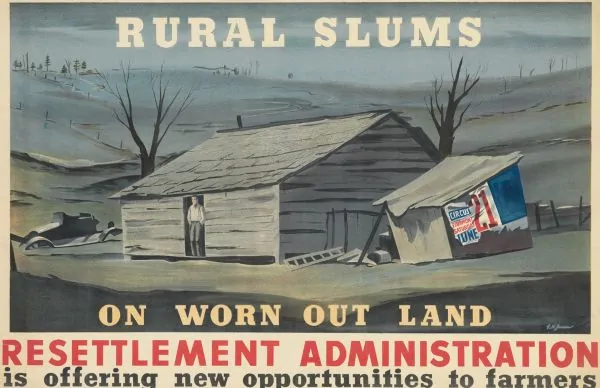
The Dust Bowl forced a political recognition that the land itself had become a national emergency. Earlier American agricultural policy had often emphasized settlement, production, credit, acreage, markets, and the expansion of farming into new territory. The crisis of the 1930s demanded a different language. Soil was no longer merely the farmer’s private resource or the hidden basis of local prosperity. It was a public concern, a national asset, and, when mishandled, a national liability. Dust storms made this impossible to ignore. When soil from the Plains darkened distant skies, clogged roads, threatened health, and entered cities far from the fields where it had originated, erosion ceased to look like a private misfortune. The movement of dust turned local land use into federal responsibility. The New Deal’s conservation programs represented more than technical assistance. They marked an admission that agricultural disaster had human causes and required collective repair.
Hugh Hammond Bennett became the most visible public advocate for this new conservation consciousness. A soil scientist and tireless campaigner against erosion, Bennett argued that the United States had treated soil as if it were inexhaustible when in fact it was a slow-forming, easily damaged foundation of civilization. His warnings gained urgency in the Dust Bowl years, when the consequences of erosion could no longer be dismissed as theoretical. Bennett’s argument was powerful because it joined science, policy, and moral drama. He insisted that erosion was not simply an act of nature but the result of land-use practices that could be changed. This was a crucial shift. If erosion was only weather, then Americans could do little but endure. If erosion was partly the result of plowing methods, cropping patterns, grazing practices, and the destruction of cover, then responsibility became unavoidable. The land had been damaged by human action; it would have to be protected by human action as well. Bennett’s genius as a public figure lay in making soil visible as a political subject. Most people rarely thought about soil unless it produced crops, failed to produce crops, or blew into their homes. Bennett forced Americans to see erosion as a national crisis unfolding in slow motion, one that threatened food security, rural stability, and the future of democratic landownership. He also understood that scientific argument alone was not enough. Soil conservation had to be made urgent, practical, and morally compelling. By presenting erosion as both a technical problem and a civic failure, Bennett helped move conservation from the margins of agricultural science into the center of New Deal policy.
The creation of the Soil Erosion Service in 1933 and its reorganization as the Soil Conservation Service in 1935 gave institutional form to that responsibility. These agencies did not merely study the problem; they attempted to change farming practice on the ground. Demonstration projects showed farmers how contour plowing, strip cropping, terracing, crop rotation, controlled grazing, and the maintenance of protective cover could reduce erosion. Conservationists emphasized that farming had to work with slope, soil, rainfall, wind, and vegetation rather than against them. The point was not to abandon agriculture on the Plains altogether, but to abandon the illusion that the same methods could be applied everywhere with equal safety. The Soil Conservation Service tried to make ecological knowledge practical: rows could follow contours rather than straight lines; strips of crops and fallow could interrupt wind; residues could be left to protect the surface; gullies could be checked; pastures could be managed rather than simply used until exhausted.
Shelterbelts and tree-planting campaigns extended this logic into the landscape itself. The Prairie States Forestry Project, launched in the mid-1930s, sought to plant long belts of trees across parts of the Plains to reduce wind velocity, protect fields and homes, and create living barriers against erosion. The project was ambitious, imperfect, and sometimes criticized, but it reflected the New Deal’s broader willingness to treat environmental repair as public infrastructure. Trees were not a complete solution to drought or dust, and they could not replace the lost prairie. But shelterbelts symbolized a new approach to land: protection had to be built into the agricultural environment rather than assumed to exist naturally after the grass was gone. Like contour plowing and strip cropping, shelterbelts acknowledged that production without protection had been part of the disaster. The Plains needed not only crops, but friction, cover, rootedness, and design. The significance of the shelterbelt program was as much conceptual as practical. It treated wind not as an unavoidable background condition but as a force that could be slowed, redirected, and managed through living structures. This was a major departure from the earlier habit of treating the Plains as an open surface to be maximized for cultivation. Rows of trees interrupted that openness. They made the agricultural landscape less efficient in the narrowest sense, because they occupied space that could otherwise have been planted, but they made it more durable in the broader sense. They expressed a conservation principle the Dust Bowl had made unavoidable: land use had to include buffers, barriers, and margins. A farm stripped to its most productive acreage could become less productive if it had no defenses against the forces that productivity itself had unleashed.
New Deal land policy also included more direct attempts to remove the most vulnerable land from destructive use. Through land-purchase programs, resettlement efforts, grazing controls, and the work of agencies such as the Resettlement Administration and later the Farm Security Administration, the federal government tried to address the social and ecological problem of families farming land that could not reliably support them. These policies were often controversial and unevenly implemented. They raised difficult questions about property, local autonomy, tenancy, federal power, and who had the authority to decide that land was “submarginal.” Yet the underlying premise was important. Some land had been placed under cultivation not because it was ecologically suitable, but because settlement policy, wartime prices, speculation, poverty, and desperation had pushed people there. Conservation was not only a matter of better technique. It also required admitting that some previous land-use decisions had been mistakes.
The New Deal did not solve the Dust Bowl by policy alone. Rain returned. Economic conditions changed. Farmers adapted in different ways, and some conservation measures succeeded more than others. Nor did the federal response erase the hardships of those who had already lost farms, health, income, or family stability. The conservation state that emerged in the 1930s was also paternalistic at times, and its programs could clash with local knowledge or fail to address the full structural pressures that had produced overproduction in the first place. Still, the New Deal response mattered because it changed the terms of the national conversation. Soil conservation became a public duty. Farmers were no longer imagined simply as isolated producers working private land, but as participants in a shared ecological system whose practices could harm or protect others. The Dust Bowl had shown that bad land use could travel with the wind. Conservation policy answered that responsibility also had to travel beyond the fence line.
The New Deal for the land stands as one of the clearest acknowledgments that the Dust Bowl was not merely suffered but made. Federal conservation programs did not deny drought; they responded to the fact that drought had revealed a damaged human system. The agencies, reports, shelterbelts, demonstration farms, and conservation campaigns of the 1930s all rested on the same basic recognition: the southern Plains had been farmed in ways that reduced their capacity to endure climatic stress. Repair required more than sympathy for farmers or relief for migrants. It required changing the relationship between agriculture and the land itself. In that sense, the Dust Bowl helped create a new American environmental politics. It taught, at terrible cost, that soil was not simply beneath history. Soil was history’s condition, and when abused, it could become history’s judgment.
Was the Dust Bowl Really Man-Made?
The following video from “Geographics” is a short overview of the Dust Bowl:
The challenge historically presented is that the Dust Bowl cannot be understood primarily as a human-made disaster because drought, heat, wind, and the natural variability of the Great Plains were not secondary details. They were fundamental causes. The 1930s drought was severe, prolonged, and geographically extensive. It arrived in a region where rainfall had always been uncertain and where environmental extremes long predated tractors, wheat booms, and New Deal conservation policy. Dust storms also did not begin in the 1930s. Travelers, settlers, soldiers, ranchers, and earlier farmers had witnessed blowing dust before the Dust Bowl became a national symbol. From this perspective, any interpretation that places too much weight on plowing and capitalism risks turning a complex climatic event into a moral drama. It can make farmers seem uniquely destructive, as if they invented aridity, wind, or soil movement through greed or ignorance. A fair interpretation has to begin by admitting that the Plains were never a stable garden ruined only by human foolishness. They were always a difficult, variable, wind-shaped environment.
This challenge does have a serious scholarly history. James C. Malin objected to interpretations that treated the grassland as a timeless ecological ideal and settlers as intruders who simply damaged it. He emphasized change, adaptation, climatic variability, and the danger of romanticizing the pre-agricultural Plains. Geoff Cunfer challenged the strongest version of Donald Worster’s interpretation by arguing that drought and weather deserve more explanatory weight than a purely human-centered account allows. Cunfer’s work complicates the image of a straightforward capitalist ecological tragedy by stressing regional variation and by questioning whether plowing alone can explain the geography and severity of dust storms. Climate studies have also reinforced the importance of atmospheric and oceanic conditions in producing the drought itself. These arguments matter because they prevent the Dust Bowl from becoming too neat. The disaster was not simply a punishment for bad farming. It was a convergence of human land use and climatic crisis in a region where risk had always been present.
This forces a more careful view of farmers themselves. Many Plains farmers were not reckless exploiters indifferent to the land. They were often trapped within narrow choices: debt, falling prices, tenancy, taxes, equipment costs, family needs, and the desperate hope that one more crop might prevent foreclosure. They did not control global wheat markets. They did not control rainfall. They did not control the Great Depression. Many inherited assumptions about settlement and improvement from a much larger national culture, one reinforced by government policy, banks, railroads, agricultural experts, and wartime demand. To say that human beings helped make the Dust Bowl should not mean that individual farm families should bear the full moral burden of the disaster. The people who plowed the land were also among those who suffered most when the land failed. Their decisions were made not from a position of abstract ecological freedom, but from within a system that often punished restraint. A farmer who reduced acreage, sold livestock, or left land in grass might have been acting wisely in environmental terms, yet that wisdom could bring immediate financial danger. Tenants and smallholders had even less room to maneuver, especially when landlords, lenders, or local expectations pressed for production. Even those who recognized the risks of drought and erosion could find themselves compelled to gamble on another crop because the alternative was certain loss. Any interpretation that turns them only into villains misses the tragedy of a system in which ordinary survival could require ecologically damaging choices.
Yet this modifies modifies rather than overturns my main argument. Drought explains why the crisis happened when it did, but it does not fully explain why the crisis took the form it did. Wind and drought had always belonged to the Plains, but the scale of exposed soil in the 1930s was historically produced. Native grasses had been removed across vast acreages. Wheat monoculture had expanded into marginal lands. Grazing pressure had weakened remaining cover. Machinery had accelerated the breaking of sod. Market pressures had encouraged farmers to plant more when restraint would have been ecologically wiser. These were not incidental background conditions. They shaped the drought’s consequences. The most balanced interpretation is not that the Dust Bowl was either natural or human-made, but that it was a natural hazard transformed into a social and ecological disaster by human decisions. People did not make the drought. They made the drought far more destructive.
The question is not whether the Dust Bowl was “really” man-made in an absolute sense. It is what kind of historical responsibility the phrase is meant to identify. If “man-made” means that people created the weather, then the term is obviously false. If it means that human beings created the conditions under which drought became catastrophic, then it remains essential. The Dust Bowl was made through interaction: climate acting upon exposed soil, wind moving through simplified landscapes, markets pressing upon indebted farmers, technology expanding cultivation faster than conservation could restrain it, and federal policy arriving only after disaster had revealed the cost of earlier assumptions. The counterpoint strengthens the final interpretation by preventing exaggeration. It reminds us that nature was not passive and that farmers were not omnipotent. But it also clarifies the central claim here: the Dust Bowl was a disaster of weather striking a human-made vulnerability.
Conclusion: Drought as Nature and Disaster as Human History
The Dust Bowl was born from drought, but it was not explained by drought alone. Dry years had come to the Great Plains before, and they would come again. Wind, heat, and rainfall uncertainty were part of the region’s environmental reality long before the 1930s. What made the Dust Bowl different was the condition of the land when drought arrived. Millions of acres of native grass had been plowed under. Wheat had expanded into marginal country. Livestock had weakened remaining vegetation. Machinery had accelerated the conversion of prairie into cropland. Debt and collapsing prices had pushed farmers to produce more when the land needed cover and restraint. The drought was natural; the disaster was historical because it emerged from the meeting of climate with a human-made landscape.
That historical judgment does not require treating Plains farmers as villains. Many were victims of the same system they helped enact. They had been encouraged to settle, plow, borrow, expand, and produce by policies, markets, patriotic appeals, banks, railroads, land agents, agricultural experts, and the broader American faith in improvement. They made decisions within constraints, often under conditions of fear and desperation. But sympathy for those choices does not erase their consequences. The Dust Bowl reveals how ecological disaster can be produced by ordinary decisions that seem rational in isolation. One farmer breaking more sod, one rancher holding too many cattle, one banker extending credit for expansion, one government celebrating production, one community equating plowed land with progress, each act could appear reasonable. Together, they dismantled the resilience of a grassland.
The Dust Bowl’s deepest lesson is not simply that people should have known better. It is that societies often build systems that make knowing better difficult to act upon. The southern Plains had been organized around wheat, credit, mechanization, private property, and market survival, while the land itself required cover, diversity, recovery, and limits. When those needs conflicted, the economy usually won until the ecology failed. The New Deal conservation response mattered because it admitted, however imperfectly, that soil was not merely private property but public inheritance. Wind erosion crossed fence lines, county lines, and state lines; responsibility had to cross them as well. The dust storms forced Americans to see that land use was never only local and never only economic. It was a relationship between climate, soil, technology, policy, culture, and time.
To call the Dust Bowl man-made is not to deny nature. It is to take history seriously. Drought supplied the pressure, but human beings had weakened the structure that might have absorbed it. The prairie had once held the soil through deep roots, perennial cover, and ecological adaptation. Wheat farming, overgrazing, mechanized plowing, and market dependence replaced that system with one that could prosper in wet years but fail catastrophically in dry ones. When the rains stopped, the southern Plains did not merely suffer bad weather. They revealed the accumulated cost of mistaking temporary abundance for permanent permission. The Dust Bowl was the skyward flight of a broken landscape, and in that darkened sky Americans saw the consequences of having confused the power to use the land with the wisdom to live within it.
Bibliography
Affiliate disclosure: Amazon links on this site are paid links. As an Amazon Associate I earn from qualifying purchases.
- Benedict, Murray R. Farm Policies of the United States, 1790–1950: A Study of Their Origins and Development. New York: Twentieth Century Fund, 1953.
- Bennett, Hugh H. Soil Conservation. New York: McGraw-Hill, 1939.
- Bennett, Hugh H., and W. C. Lowdermilk. “The Erosion Menace.” In Soils and Men: Yearbook of Agriculture, 1938, 1–22. Washington, DC: Government Printing Office, 1938.
- Campbell, John L. Campbell’s Soil Culture Manual: A Complete Guide to Scientific Agriculture as Adapted to the Semi-Arid Regions. Lincoln, NE: Campbell Soil Culture Publishing Company, 1907.
- Clements, Frederic E. Plant Succession: An Analysis of the Development of Vegetation. Washington, DC: Carnegie Institution of Washington, 1916.
- Cook, Benjamin I., Ron L. Miller, and Richard Seager. “Amplification of the North American ‘Dust Bowl’ Drought through Human-Induced Land Degradation.” Proceedings of the National Academy of Sciences 106:13 (2009), 4997–5001.
- Cronon, William. “A Place for Stories: Nature, History, and Narrative.” Journal of American History 78:4 (1992), 1347–1376.
- Cunfer, Geoff. On the Great Plains: Agriculture and Environment. College Station: Texas A&M University Press, 2005.
- Danbom, David B. Sod Busting: How Families Made Farms on the Nineteenth-Century Plains. Baltimore: Johns Hopkins University Press, 2014.
- Egan, Timothy. The Worst Hard Time: The Untold Story of Those Who Survived the Great American Dust Bowl. Boston: Houghton Mifflin, 2006.
- Farm Security Administration and Office of War Information. Farm Security Administration/Office of War Information Black-and-White Negatives. Prints and Photographs Division, Library of Congress, Washington, DC.
- Fite, Gilbert C. American Farmers: The New Minority. Bloomington: Indiana University Press, 1981.
- Fitzgerald, Deborah. Every Farm a Factory: The Industrial Ideal in American Agriculture. New Haven, CT: Yale University Press, 2003.
- Gordon, Linda. “Dorothea Lange: The Photographer as Agricultural Sociologist.” The Journal of American History 93:3 (2006), 698-727.
- Great Plains Committee. The Future of the Great Plains. Washington, DC: Government Printing Office, 1936.
- Gregory, James N. American Exodus: The Dust Bowl Migration and Okie Culture in California. New York: Oxford University Press, 1989.
- —-. “Dust Bowl Legacies: The Okie Impact on California, 1939-1989.” California History 68:3 (1989), 74-85.
- Gutmann, Myron P., et.al. “Migration in the 1930s: Beyond the Dust Bowl.” Social Science History 40:4 (2016), 707-740.
- Henderson, Caroline. Letters from the Dust Bowl. Edited by Alvin O. Turner. Norman: University of Oklahoma Press, 2001.
- Hurt, R. Douglas. “Agricultural Technology in the Dust Bowl, 1932–1940.” In The Great Plains: Environment and Culture, edited by Brian W. Blouet and Frederick C. Luebke, 139–156. Lincoln: University of Nebraska Press, 1979.
- —-. The Dust Bowl: An Agricultural and Social History. Chicago: Nelson-Hall, 1981.
- Long, Jason, and Henry E. Siu. “Refugees from Dust and Shrinking Land: Tracking the Dust Bowl Migrants.” Journal of Economic History 78:4 (2018), 1001–1033.
- Lowitt, Richard. The New Deal and the West. Bloomington: Indiana University Press, 1984.
- Maher, Neil M. Nature’s New Deal: The Civilian Conservation Corps and the Roots of the American Environmental Movement. New York: Oxford University Press, 2008.
- Malin, James C. The Grassland of North America: Prolegomena to Its History. Lawrence, KS: James C. Malin, 1947.
- McLeman, Robert A., et.al. “What We Learned from the Dust Bowl: Lessons in Science, Policy, and Adaptation.” Population and Environment 35:4 (2014), 417–440.
- McWilliams, Carey. Factories in the Field: The Story of Migratory Farm Labor in California. Boston: Little, Brown and Company, 1939.
- —-. Ill Fares the Land: Migrants and Migratory Labor in the United States. Boston: Little, Brown and Company, 1942.
- Olmstead, Alan L., and Paul W. Rhode. Creating Abundance: Biological Innovation and American Agricultural Development. New York: Cambridge University Press, 2008.
- Opie, John. Ogallala: Water for a Dry Land. 3rd ed. Lincoln: University of Nebraska Press, 2018.
- Phillips, Sarah T. This Land, This Nation: Conservation, Rural America, and the New Deal. New York: Cambridge University Press, 2007.
- Powell, John Wesley. Report on the Lands of the Arid Region of the United States, with a More Detailed Account of the Lands of Utah. 2nd ed. Washington, DC: Government Printing Office, 1879.
- Resettlement Administration. First Annual Report of the Resettlement Administration. Washington, DC: Government Printing Office, 1936.
- Schubert, Siegfried D., et.al. “On the Cause of the 1930s Dust Bowl.” Science 303:5665 (2004), 1855–1859.
- Shantz, H. L., and Raphael Zon. Atlas of American Agriculture. Washington, DC: Government Printing Office, 1917.
- Siler, Carl R. “Using ‘The Grapes of Wrath’ to Teach the Great Depression.” The Steinbeck Review 2:1 (2005), 37-48.
- Steinbeck, John. The Grapes of Wrath. New York: Viking Press, 1939.
- United States Department of Agriculture. Agricultural Statistics, 1936. Washington, DC: Government Printing Office, 1936.
- —-. Soils and Men: Yearbook of Agriculture, 1938. Washington, DC: Government Printing Office, 1938.
- Webb, Walter Prescott. The Great Plains. Boston: Ginn and Company, 1931.
- Worster, Donald. Dust Bowl: The Southern Plains in the 1930s. 25th anniversary ed. New York: Oxford University Press, 2024.
Originally published by Brewminate, 07.06.2026, under the terms of a Creative Commons Attribution-NonCommercial-NoDerivatives 4.0 International license.
About the Author