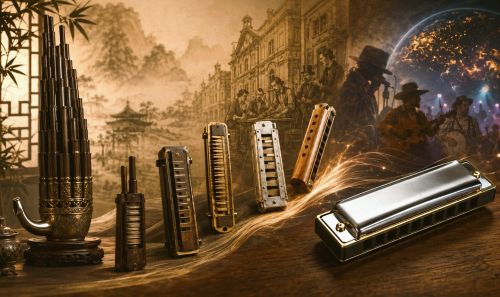
The harmonica’s history stretches from ancient Chinese free-reed technology to German factories, migration, blues, country, gospel, and global popular music.

By Matthew A. McIntosh
Public Historian
Brewminate
Introduction: A Small Instrument with a Long Memory
The harmonica seems, at first glance, almost too modest to bear the weight of history. It fits in a pocket, disappears in the palm of a hand, and asks for no concert hall, no formal training, no elaborate ritual of performance. A child can coax sound from it; a traveler can carry it across an ocean; a blues player can bend its reeds until the instrument appears to speak in grief, defiance, or laughter. Yet this smallness is deceptive. The harmonica belongs to one of the oldest and most consequential families of sound-making technology in the world: the free-reed aerophones, instruments in which moving air sets a flexible reed vibrating to produce tone. Its modern form emerged in nineteenth-century Europe, but the principle that made it possible reaches back to ancient East Asia, especially to the Chinese sheng, whose breath-driven reeds helped establish a musical technology that would eventually travel, change, and reappear in radically different cultural worlds.
That history must be told carefully. The sheng is often described as the direct ancestor of the harmonica, and there is truth in the phrase if it is understood technologically rather than simplistically. The harmonica did not descend from the sheng as a copied object, nor did Chinese court music simply become European folk song by way of a portable metal instrument. What traveled was more subtle and more powerful: a principle of sound. The sheng demonstrated that free reeds could be organized into a compact wind instrument capable of sustained tones, multiple notes, and a musical intimacy governed by breath. When European missionaries, scholars, collectors, and instrument makers encountered Chinese instruments and descriptions of Chinese music, they did not receive a complete blueprint for the harmonica. They received fragments, models, curiosities, and mechanical possibilities. Those possibilities were then reworked through European craft, experimental organ building, pitch devices, tuning systems, and the expanding commercial culture of the nineteenth century.
The harmonica belongs to two histories at once. It is part of the long global history of musical technology, in which mechanisms move across regions and are transformed by new materials, workshops, markets, and ears. It is also part of the social history of popular music, for the harmonica became important not merely because it could be manufactured, but because it could be possessed. Unlike the piano, the pipe organ, or the orchestra’s more expensive instruments, the harmonica required little money, little space, and no institutional permission. Its democratic character was not accidental. German manufacturers, especially in the nineteenth century, made the harmonica cheap, durable, standardized, and exportable, turning what might have remained a workshop curiosity into a global commodity of breath and song. That transformation mattered because availability changes culture. An instrument that can be purchased cheaply, carried easily, repaired simply, and learned informally invites kinds of music that elite instruments often exclude. It can travel with migrants, soldiers, sailors, prisoners, farmhands, factory workers, and children. It can enter camps, porches, streets, railcars, boardinghouses, churches, and front rooms. Industrial production made the instrument available; ordinary players made it meaningful. In their hands, the harmonica became not only a device for producing notes, but a portable companion, a substitute voice, and a small democratic machine for turning breath into memory.
I follow that long movement from ancient Chinese free-reed technology to the modern harmonica’s place in global music. It begins with the sheng, not as a primitive prelude to a Western invention, but as a sophisticated instrument with its own ritual, symbolic, and musical world. It then traces how the free reed entered European knowledge, how instrument makers experimented with the mechanism, how the modern harmonica emerged amid contested claims of invention, and how mass production turned it into a portable commodity. From there, the story moves into migration, folk music, blues, country, gospel, film, and modern performance, where the harmonica became an instrument of memory, motion, loneliness, humor, and resistance. The result is not a straight line from China to Germany to America, but a winding history of breath and reed, of technology and human need, of a small instrument carrying a surprisingly large past.
Before the Harmonica: Ancient Chinese Sound and the Birth of the Free Reed
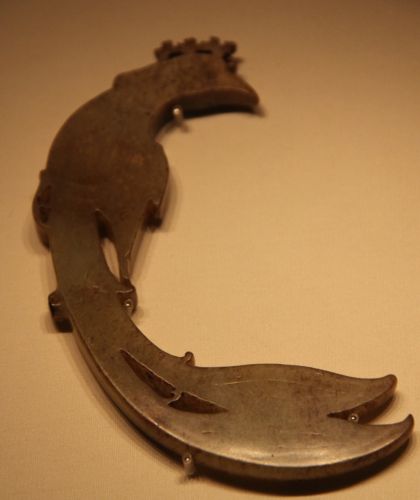
Long before the harmonica became a pocket instrument of sailors, soldiers, blues players, and wandering singers, the free reed had already found a sophisticated home in ancient China. The sheng, a Chinese mouth organ made from a wind chamber and vertical pipes, stands among the most important early instruments in the history of reed technology. Its antiquity is often described through legendary chronology, with some traditions placing its origin deep in the third millennium BCE, but the safer historical claim is that the sheng belongs to a very old Chinese musical tradition whose presence is securely visible in early Chinese material and literary culture. That distinction matters because the instrument’s history sits partly at the border between myth, archaeology, courtly memory, and later textual interpretation. Origin legends tell us how Chinese thinkers imagined music’s sacred antiquity, while surviving instruments, images, and descriptions tell us how free-reed technology actually entered musical practice. The sheng should be approached not as a quaint relic from an indistinct ancient past, but as an instrument whose long development reveals the technical sophistication of early Chinese sound culture. It was not a crude beginning, nor merely an ancestor waiting to be improved by later European makers. It was a fully meaningful instrument in its own world, shaped by ritual sound, courtly performance, cosmological imagination, and the technical intelligence of builders who understood how breath, bamboo, metal, and resonance could be brought into disciplined relation.
Chinese tradition connected the sheng with origin stories that gave the instrument symbolic as well as musical authority. One legend associated musical invention with Ling Lun, the ancient culture hero said to have fashioned pitch pipes in imitation of birdsong, while later descriptions often linked the sheng’s shape to the folded wings of the fenghuang, the mythic phoenix-like bird of Chinese tradition. Whether these stories preserve historical memory or retrospective mythmaking, they reveal something essential about how the instrument was understood. The sheng was not merely an object for entertainment. It belonged to a world in which music could mirror cosmic order, natural harmony, dynastic refinement, and the disciplined joining of human craft to the patterns of heaven and earth. Its clustered pipes rising from a rounded wind chamber made it visually striking, but its deeper significance lay in the way its sound seemed to gather many tones from a single breath.
The technical principle behind that sound was the free reed. In the sheng, each pipe contains a reed, traditionally made from bamboo or metal, that vibrates when air passes through it. Unlike a flute, which depends on air splitting across an edge, or a trumpet, which amplifies the vibration of the player’s lips, the sheng produces tone through the controlled motion of flexible reeds. This made it one of the most consequential instruments in the long history of aerophones. The free reed permitted a kind of compact musical architecture: individual pipes could produce individual tones, while the arrangement of several pipes allowed multiple tones to sound together. This mattered enormously. In many wind traditions, melody dominated because a player could normally produce only one tone at a time. The sheng, by contrast, could create chords, drones, and layered sonorities, allowing breath to become not simply a line of melody but a small vertical structure of sound.
The sheng was also unusual because of the relationship it created between inhalation, exhalation, and musical continuity. Many wind instruments speak only through outward breath, making silence or interruption part of the body’s necessary rhythm. The sheng could produce sound through both blowing and drawing air, which gave it a different expressive logic. The player’s breathing did not merely supply power; it became part of the instrument’s design. This feature would later make the sheng especially important to historians of the harmonica, since the modern mouth organ likewise depends on the musical use of both exhaled and inhaled breath. Yet the comparison should not flatten the difference between them. The sheng was vertically organized, pipe-based, and embedded in Chinese musical systems, while the harmonica would eventually become a small Western handheld instrument organized around reed plates and holes. Their kinship lies not in identical form but in a shared acoustic insight: breath can set free reeds into vibration, and those reeds can turn the body’s most basic act into ordered sound.
To begin the harmonica’s history with the sheng, then, is not to make Europe disappear from the story or to reduce later invention to imitation. It is to recognize that the harmonica’s most basic technological possibility had a much older history than the nineteenth-century workshops that gave it modern shape. The free reed was already a mature musical idea in China before it became a subject of European curiosity, adaptation, and manufacture. The sheng shows that the history of modern popular instruments often begins in places modern audiences do not expect: not in factories, music stores, recording studios, or blues clubs, but in older worlds of ritual, craftsmanship, and cross-cultural transmission. The harmonica’s later democratic identity, its cheapness, portability, and intimacy, would be new. But the vibrating tongue at its heart belonged to a deeper archive of breath.
Free Reeds, Breath, and Polyphony: Why the Sheng Was Technologically Unusual
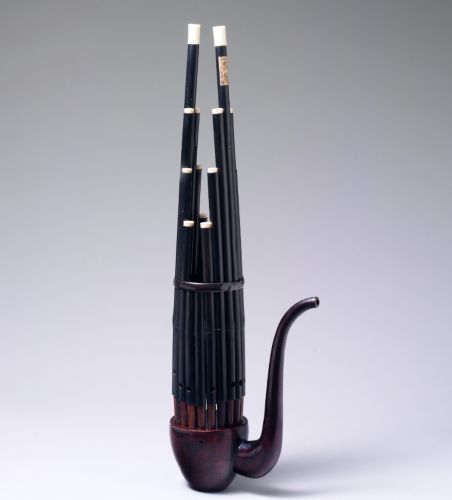
The sheng’s historical importance rests not only on its antiquity, but on the unusual acoustic principle it placed at the center of musical performance. In the broad family of wind instruments, sound can be made in several different ways: air may be split against an edge, as in flutes; the player’s lips may vibrate into a tube, as in trumpets and horns; or a reed may beat, pulse, or vibrate in response to breath. The sheng belonged to a distinctive branch of this last category. Its reeds were not simply extensions of the player’s mouth, nor were they struck mechanically by a keyboard or bellows. They were small, carefully fitted tongues of bamboo or metal that vibrated freely when air passed through their openings. This made the sheng technically remarkable, because its musical life depended on a mechanism that was compact, repeatable, and capable of being multiplied across many pipes.
A free reed differs from many other reed systems because it vibrates within a frame or aperture rather than against the player’s lips or directly against another reed. That distinction may sound small, but its consequences were large. A double reed, such as that used in an oboe, depends on two blades beating against one another; a single reed, such as that used in a clarinet, beats against a mouthpiece. The free reed instead moves through an opening, responding to air pressure in a way that can be controlled with remarkable efficiency. In the sheng, each pipe could carry its own reed and pitch, giving the instrument a modular structure. One reed, one tone; several reeds, several tones. This gave the sheng a sound-world different from many ancient wind instruments, whose design emphasized melodic line rather than vertical sonority.
The verticality of the sheng’s sound was one of its most important features. Because several pipes could sound together, the instrument allowed a player to create chords, drones, octaves, and clusters of related tones. This did not make the sheng “harmonic” in the later European sense of functional harmony, and it would be misleading to impose modern Western theory backward onto Chinese musical practice. Its polyphony was not the same thing as a Baroque chorale or a blues progression. Still, the instrument’s ability to sound multiple pitches at once gave it a rare capacity among breath-driven instruments. It could support melody, thicken texture, color ensemble sound, and produce a sense of fullness that exceeded the single-line logic of many pipes and flutes. In that sense, the sheng made breath architectural. It did not merely carry a tune; it built a small structure of sound in the air. That structure also changed the relationship between performer and listener, because the sheng could make one body seem to produce a gathering of voices. Its sound could be delicate or penetrating, blended or reedy, stable or shimmering, depending on how the pipes were combined and how the player shaped the breath. This made the instrument especially valuable in ensembles, where it could occupy a space between melodic clarity and sonic support. It could bind other instruments together, reinforce tonal centers, and enrich ceremonial texture without overpowering the whole. The sheng’s polyphony was not a decorative curiosity. It was a technical capacity with social and musical consequences, allowing one performer to create fullness, continuity, and resonance in ways that challenged the assumption that wind instruments were necessarily bound to single melodic lines.
This capacity was especially significant in Chinese ritual and ensemble contexts, where instruments were not valued only for individual display but for their placement within ordered sound. The sheng’s clustered pipes, balanced sonorities, and blended tones suited musical environments in which timbre, correspondence, and symbolic order mattered deeply. In courtly and ritual traditions, sound could carry ethical, cosmological, and political meaning, joining music to ideas of harmony, hierarchy, season, and governance. The sheng’s physical structure reflected this broader imagination. Its pipes gathered around a wind chamber like a community of voices animated by one breath, and its ability to sound multiple tones made it especially apt for musical textures that suggested coordination rather than isolation. The instrument’s technology, in other words, cannot be separated from the cultural meanings that gave that technology value.
The sheng also organized breath in a distinctive way. Many wind instruments force the player into a pattern of sound and interruption, since musical tone depends almost entirely on exhalation. The sheng allowed sound to be produced through both blowing and drawing air, giving the performer a more continuous relationship to the instrument. Breath became reciprocal rather than one-directional. The body did not simply empty itself into the instrument; it moved in a cycle of giving and receiving. That feature created practical advantages, but it also helps explain why the sheng occupies such an important place in the genealogy of later free-reed instruments. The harmonica, too, would make inhalation musically meaningful. In both instruments, the inward breath is not a pause or recovery, but a source of tone.
The technological implications of this principle were enormous once the free reed entered wider channels of experimentation. A reed that could sound reliably under air pressure, be assigned to a pitch, and be multiplied across a compact structure was a powerful musical device. It could be fitted into a pipe, mounted in a chamber, activated by breath, or later adapted to bellows and keyboard mechanisms. This helps explain why the sheng mattered so much to later histories of the accordion, concertina, harmonium, and harmonica. The sheng did not contain those instruments in finished form, and no responsible history should pretend that it did. What it did contain was a flexible acoustic idea: a way of making small reeds speak with clarity, stability, and expressive force. Once that idea traveled, it proved remarkably adaptable. European makers could detach the free reed from the specific ritual and musical world of the sheng while retaining the acoustic mechanism that made it so useful. In that process, the reed became a technology in motion, capable of being reorganized according to new tuning systems, new materials, new performance habits, and new markets. The same principle that served a pipe cluster in Chinese musical culture could later be placed into experimental organs, bellows-driven instruments, pitch devices, and eventually a small mouth-blown frame. That does not make the later instruments simple copies. It shows instead how technological ideas migrate by being transformed. The free reed survived because it was not tied to one shape forever; it could be translated.
The sheng’s technological unusualness lay in the meeting of simplicity and complexity. At the level of physics, it used air to vibrate small reeds. At the level of instrument design, it multiplied that principle into a polyphonic wind instrument. At the level of performance, it turned both inhalation and exhalation into musical action. At the level of culture, it joined craftsmanship to ritual, symbolism, and social order. This is why the sheng cannot be treated merely as a remote ancestor of the harmonica. It was already a complete achievement. The later harmonica would shrink the free reed into a handheld industrial form and place it in the mouths of workers, migrants, and blues musicians, but the deeper insight had already been made: breath could be divided among reeds, reeds could gather into harmony, and a small vibrating tongue could carry a world of sound.
Encounter and Translation: The Sheng Enters European Knowledge
The sheng entered European knowledge through a world of encounter that was never simple, neutral, or complete. By the seventeenth and eighteenth centuries, European missionaries, merchants, travelers, collectors, and scholars were gathering information about Chinese arts and sciences with a mixture of curiosity, admiration, misunderstanding, and imperial ambition. Instruments moved through this world as physical objects, but also as diagrams, written descriptions, translated terms, anecdotes, and speculative comparisons. The sheng was especially vulnerable to this kind of partial reception. It could be seen, sketched, collected, and described without being fully understood. European observers might recognize its unusual cluster of pipes or its association with Chinese ceremonial and courtly music, but the deeper significance of its free-reed mechanism required a level of technical attention that not every observer possessed. The instrument’s movement into Europe was not a clean transfer of knowledge. It was an encounter mediated by language, distance, religion, collecting practices, and the limits of listening across cultures.
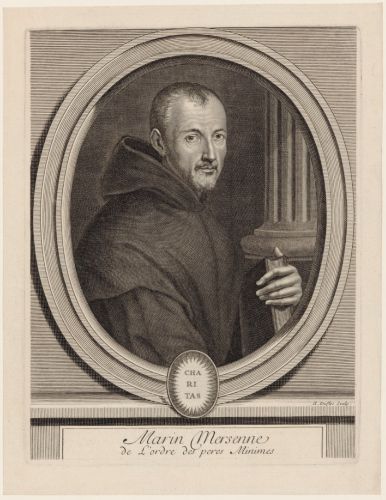
Earlier European references to Asian free-reed instruments show that contact preceded comprehension. Marin Mersenne’s seventeenth-century work included a depiction of an Asian free-reed instrument resembling the Southeast Asian khaen, but the description did not necessarily reveal an understanding of the acoustic principle that made it unusual. This matters because the history of the harmonica cannot be reduced to the mere appearance of Eastern instruments in Western books or collections. A technological idea becomes historically active only when someone grasps that it can be detached, studied, adapted, and rebuilt. The free reed had to become more than an exotic feature of foreign musical practice. It had to become a usable principle for European instrument makers. That process took time. The sheng’s entry into European knowledge was part of a broader pattern in which Chinese material culture was admired, classified, and sometimes misunderstood before it was technically transformed.
The most important figure in this process was Joseph-Marie Amiot, the French Jesuit missionary who lived at the Qing court and published his Mémoire sur la musique des Chinois, tant anciens que modernes in 1779. Amiot’s work gave European readers one of the most substantial accounts of Chinese music then available in a Western language, and it helped place Chinese musical theory and instruments before Enlightenment audiences who were eager to compare civilizations. His position at the Qing court gave him access to musical materials, courtly knowledge, and scholarly traditions that few Europeans could observe directly, although that access was still shaped by the assumptions and limits of missionary scholarship. His writings did not simply describe music as entertainment. They treated Chinese music as part of a learned tradition with ancient roots, theoretical systems, ritual associations, and courtly prestige. For the sheng, this mattered because Amiot presented Chinese instruments within an intellectual frame rather than as isolated curiosities. The instrument could now be read as evidence of a sophisticated musical civilization, even if European readers still filtered that civilization through their own assumptions about harmony, antiquity, and progress. Amiot helped move the sheng from the category of exotic object into the category of comparative musical evidence. He did not erase the distance between Chinese practice and European understanding, but he gave that distance a form scholars and instrument makers could study.
Yet Amiot’s importance should not be overstated into a neat invention story. He did not “invent” the European free-reed tradition, nor did he hand European makers a finished path to the harmonica. His role was one of transmission and translation, not direct manufacture. He helped make Chinese music legible to European readers, but legibility is not the same as mastery. The knowledge that crossed from China to Europe was selective and unstable. It depended on what Amiot saw, what he understood, what he chose to describe, how his editors shaped the material, and how European readers interpreted it. Even sympathetic observers often treated Chinese music through European categories, measuring it against assumptions about scale, harmony, notation, and refinement. The result was a productive but uneven encounter. Chinese instruments became available to European thought, but not always on their own terms.
The sheng’s presence in Europe also belonged to the culture of cabinets, collections, salons, workshops, and scholarly correspondence. An instrument brought from China could function as a marvel before it functioned as a model. It could be displayed as evidence of global curiosity, imperial reach, missionary access, or Enlightenment cosmopolitanism. In that setting, the sheng was not automatically heard as Chinese musicians heard it. It might be separated from trained performers, ritual contexts, repertories, and the embodied techniques required to make it speak properly. This kind of displacement was common in early modern collecting. Objects traveled faster than practices. A sheng in a European collection could invite fascination while also becoming mute, misplayed, or misread. Its pipes and reeds were present, but the musical world that had given them meaning was only partially recoverable. That gap between object and practice is crucial. A collected instrument could reveal construction, materials, and arrangement, but it could not by itself transmit breathing technique, tuning habits, ensemble placement, or the symbolic grammar of Chinese performance. European makers might learn from the mechanism while missing the musical culture that had refined it. The sheng entered Europe both as knowledge and as loss: knowledge because its structure made the free reed visible, loss because the instrument was often detached from the living traditions that made its sound intelligible.
Still, this partial encounter mattered profoundly. Once European makers and theorists recognized that Asian mouth organs used reeds capable of sounding freely under air pressure, the free reed became available for experiment. The sheng did not simply become the harmonica, and the path from Chinese court instrument to European pocket instrument was neither direct nor inevitable. But the European encounter with the sheng helped shift the free reed from an unfamiliar Asian musical technology into a subject of Western adaptation. The next stage of the story would belong to workshops, organs, tuning devices, bellows instruments, and experimental mechanisms. There, the principle that had animated the sheng would be abstracted from its original form and reorganized for new musical worlds. Translation did not preserve the instrument unchanged. It changed the reed’s historical destiny.
European Experimentation: Organs, Aeolines, Tuning Devices, and the Free-Reed Craze
By the late eighteenth and early nineteenth centuries, the free reed had entered a European world already fascinated by mechanical sound. This was an age of organs, automata, scientific instruments, precision craft, domestic music-making, and increasingly specialized workshops. The sheng and related Asian mouth organs had helped make the free reed visible to European observers, but the next stage of the story depended on a different kind of imagination: the willingness to detach the reed from its original instrument and place it inside new machines. European makers did not simply copy the sheng. They asked what its acoustic principle could do if mounted in an organ, placed under bellows, connected to keys, arranged for tuning, or reduced to a portable mouth-blown device. That shift from encounter to experimentation is crucial. It marks the moment when the free reed became not only an imported curiosity but a European workshop problem.
The appeal of the free reed was practical as well as musical. Compared with pipe-based organ technology, free reeds could be compact, relatively stable in pitch, and capable of sustained tone without requiring large resonating pipes for every note. A reed vibrating in a close-fitting slot could create sound under controlled air pressure, and that sound could be shaped by chambers, resonators, bellows, or the player’s mouth. For instrument makers, this opened a field of possibility. The free reed could imitate certain vocal or reed-like tones, provide continuous sound, and be made smaller than many pipe systems. It also invited experimentation with dynamics, since changes in air pressure could affect the strength and character of the tone. In a period when European musicians were increasingly interested in expressive nuance, domestic instruments, and novel timbres, this mattered enormously. The free reed promised sound without architectural bulk, which made it attractive in workshops trying to adapt musical technology to smaller rooms, portable devices, teaching tools, and new middle-class markets. It could serve the ambitions of organ builders, who wanted new colors and mechanisms, but it could also serve the needs of makers designing instruments for homes, schools, salons, and itinerant performers. Its usefulness lay partly in this flexibility. The same acoustic principle could be scaled up or down, placed behind a keyboard or inside a hand-held object, given a refined parlor voice or a sharper practical tone for pitch reference. That adaptability made the free reed one of the great migratory technologies of nineteenth-century music.
The early free-reed craze did not produce one instrument but a family of experiments. Some were keyboard instruments, some were organ stops, some were tuning devices, and some were mouth-blown instruments. Names overlapped and shifted: aeoline, aeolodion, physharmonica, harmonica, mundaeoline, and other terms appeared in a confusing landscape of invention, adaptation, and commercial promotion. This confusion is itself historically revealing. Makers were not yet working within stable categories. They were testing what a reed could become. An “aeoline” might refer to a soft organ stop in one context and a free-reed experiment in another. A “harmonica” might not yet mean the familiar modern mouth organ. The language had not caught up with the technology, because the technology was still moving.
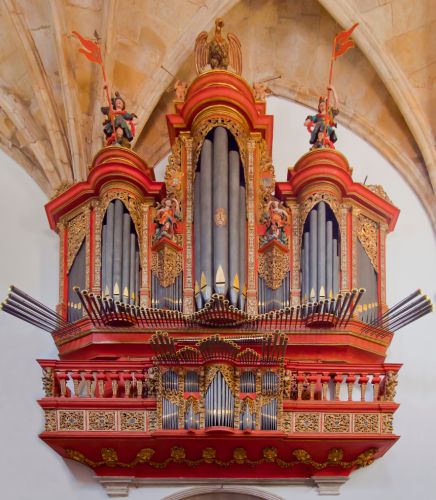
Organs provided one of the earliest European homes for the free reed. Organ builders had long experimented with reed stops, but free reeds offered a different sound and a different mechanical logic from beating reeds in traditional organ pipes. French and German makers explored ways to use free reeds in or alongside organ mechanisms, seeking tones that could be soft, sustained, and responsive. Gabriel-Joseph Grenié’s early nineteenth-century work in France is often associated with free-reed organ development, while German-speaking makers pursued related experiments in smaller keyboard instruments and organ-like devices. These efforts mattered because they turned the reed into a component that could be systematized. A single sheng reed belonged to a pipe in a Chinese mouth organ; a European free reed could now become one element in a larger mechanical apparatus. This systematization changed the reed’s historical role. Instead of remaining tied to one instrument’s body, it could be standardized, replicated, tuned, arranged in ranks, and connected to other mechanisms. Organ builders were especially well positioned to pursue this transformation because they already worked with air supply, valves, stops, chambers, and the controlled distribution of wind. The free reed entered that tradition as both a novelty and a solution. It offered another way to produce sustained tone, another color for the organ builder’s palette, and another opportunity to reduce the physical demands imposed by pipe length and resonating space. In that sense, the organ workshop helped translate the free reed from an observed foreign mechanism into a modular European technology.
The aeoline and related instruments illustrate this transitional world. The name evoked Aeolus, the classical keeper of the winds, and it suited instruments whose appeal lay in the poetic manipulation of air. These devices promised a new kind of sound: intimate, sustained, and less massive than the pipe organ, yet capable of more continuity than many plucked or struck domestic instruments. The free reed seemed to offer a voice between breath and mechanism. It could sound human, because air animated it; but it could also sound mechanical, because keys, bellows, and chambers could organize that air with precision. This in-between quality helps explain why free-reed instruments became so attractive in the early nineteenth century. They suited an era drawn both to Romantic expressiveness and to mechanical ingenuity.
The physharmonica carried this experimentation further. Associated especially with Anton Haeckl in Vienna in the early nineteenth century, it placed free reeds inside a small keyboard instrument operated by bellows. Surviving museum descriptions identify Haeckl’s physharmonica as part of the same developmental world that later produced the harmonium, and date examples to the early 1820s. The instrument was not a harmonica in the modern sense, since the player selected pitches with keys rather than with the mouth. Yet it belongs directly in the harmonica’s wider genealogy because it showed that free reeds could be organized into compact, commercially attractive instruments for domestic and salon use. The physharmonica also demonstrates why the early history of free reeds is so difficult to narrate as a single line. Around the same decades, different makers in different cities were exploring similar principles through different forms. The free reed was not awaiting one inventor. It was becoming an entire technological field.
Tuning devices also played an important role in this history. Small free-reed instruments could provide fixed pitches for singers, choirs, teachers, and instrument makers. This practical use may seem humble, but it was historically significant because it encouraged the miniaturization and stabilization of reed technology. A pitch device did not need the symbolic elegance of the sheng or the musical ambition of the physharmonica. It needed to be reliable, portable, and clear. Those same virtues would later become central to the harmonica. The movement from tuning aid to musical instrument was not always clean, but the connection is logical. Once reeds could be mounted compactly and assigned stable pitches, makers could imagine instruments in which the mouth selected tones by position and breath direction rather than by keys or pipes.
By the 1820s and 1830s, then, the European free-reed world was crowded with experiments. The accordion, concertina, harmonium, reed organ, and harmonica all emerged from this broader environment rather than from isolated inspiration. Some depended on bellows, some on keyboards or buttons, and some on the player’s breath. Some were designed for parlors, churches, salons, or teaching; others would become instruments of streets, ships, camps, and folk performance. What united them was the realization that the free reed could be detached from its Asian form and reorganized according to European materials, markets, and musical habits. This was both innovation and translation. The reed had crossed cultures, but it did not remain unchanged. In European hands, it became smaller, louder, cheaper, more mechanical, more commercial, and increasingly mobile. The harmonica would emerge from this free-reed craze not as an accident, but as one of its most successful reductions: a whole musical mechanism compressed into the space of a breath.
The Question of Invention: Buschmann, Vienna, and the Problem of the “First Harmonica”
The search for the “first harmonica” is tempting because it promises the clean drama of invention: one maker, one workshop, one date, one object that suddenly changes musical history. Yet the harmonica resists that kind of story. Like many nineteenth-century instruments, it emerged from overlapping experiments rather than from a single isolated act. The free reed was already circulating through European workshops, organs, tuning devices, and bellows instruments before the modern mouth harmonica became recognizable. Makers were trying similar things in different places, sometimes using similar names for different devices and different names for similar devices. The problem, then, is not whether someone invented a mouth-blown free-reed instrument in the early nineteenth century. The problem is whether any one claimant can responsibly be called the inventor of the harmonica as later musicians understood it. That question matters because invention stories often flatten the slower, messier processes by which musical technologies actually take shape. Instruments rarely arrive as completed cultural objects. They pass through prototypes, workshop variations, commercial experiments, failed models, renamed devices, copied mechanisms, and practical refinements made by people whose names were not always preserved. To ask who invented the harmonica is also to ask what counts as invention: the first free reed, the first mouth-blown reed device, the first commercially sold model, the first recognizable diatonic layout, or the first instrument that ordinary players would have identified as a harmonica.
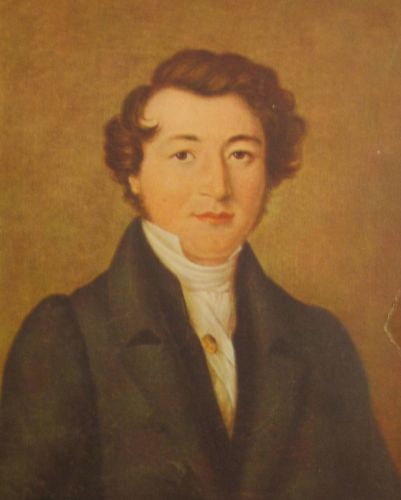
Christian Friedrich Ludwig Buschmann stands at the center of the traditional answer. Born in 1805, Buschmann belonged to a family of instrument makers and mechanics, and popular accounts often credit him with creating an early mouth-blown free-reed instrument around 1821. This device is usually called the “aura” or “aerolina,” and it is often presented as the ancestor of the harmonica. The appeal of the story is obvious. Buschmann was young, mechanically gifted, and active at precisely the moment when free-reed experimentation was flourishing in German-speaking Europe. His supposed invention appears to compress the broader free-reed revolution into a memorable biographical scene: a teenage maker arranging small reeds into a compact instrument that could be played with the breath.
But the Buschmann story becomes less certain when examined closely. The traditional claim rests heavily on later family and company narratives, especially accounts that had reason to celebrate Buschmann as a heroic inventor. Pat Missin, one of the most careful modern writers on harmonica history, has emphasized that the claim cannot be substantiated in the simple form in which it is often repeated. Buschmann was unquestionably important in the world of free-reed instruments, but importance is not the same as priority. A letter from 1828 indicates that Buschmann had recently invented a new instrument, yet by that time harmonicas or closely related mouth organs had already been made and sold elsewhere. If the instrument existed commercially before Buschmann’s documented claim, then the “first harmonica” cannot be placed securely in his hands without qualification. The legend survives because it is tidy. The evidence is messier. It is also important to notice the kind of evidence involved. Later memorial accounts, company histories, family recollections, and patriotic narratives often preserve valuable information, but they also tend to sharpen ambiguity into certainty. They prefer founding fathers to crowded workshops. They turn gradual development into a birth scene. In Buschmann’s case, the surviving record makes him a significant figure in the free-reed world, but it does not allow the historian to treat him as the uncontested origin point of the modern harmonica. The responsible claim is narrower and stronger: Buschmann belonged to the experimental culture from which the harmonica emerged, and his name became central to the instrument’s memory, but memory and invention are not identical.
Vienna complicates the story even further. Documentary evidence indicates that mouth harmonicas were being sold there by 1825, which means that the instrument was already part of a commercial environment within a few years of the dates usually assigned to Buschmann’s early experiments. Vienna was not incidental to this history. It was a major musical city with active instrument makers, refined keyboard traditions, opera houses, salons, and a market for novelty instruments. It was also a place where free-reed experimentation, including instruments such as the physharmonica, had already gained traction. If harmonicas were being sold in Vienna by the mid-1820s, then the instrument’s emergence must be understood as regional and commercial, not merely biographical. The harmonica appeared within a network of makers and markets, not as a solitary miracle.
The difficulty is made worse by terminology. Early nineteenth-century sources did not always use instrument names with the precision later historians would prefer. “Harmonica” could refer to several things, including the glass harmonica, free-reed devices, or other instruments associated with pleasing or blended sound. Some instruments were blown by mouth; others used bellows; some were pitch aids; others were intended for musical performance. A small free-reed tuning device might resemble a harmonica in mechanism but not in function. A mouth-blown reed instrument might lack the blow-and-draw layout that later became central to the diatonic harmonica. This ambiguity matters because invention depends on definition. If by “harmonica” one means any small mouth-blown free-reed device, the answer differs from the answer one gives if by “harmonica” one means the later diatonic mouth organ with paired blow and draw reeds organized for practical melody and chordal use.
This is why the so-called Richter system also belongs in the invention problem. The modern diatonic harmonica is not merely a row of reeds. Its historical usefulness depends on a particular arrangement of blow and draw notes that allows chords, melodies, and later blues techniques to emerge from a compact layout. The name “Richter” is traditionally attached to this system, but here too the history is uncertain. The figure behind the name is difficult to identify securely, and the development of the tuning may have been gradual rather than the work of one clearly documented inventor. What matters here is not to solve every unresolved question of harmonica organology, but to show that the recognizable harmonica was a convergence: free-reed acoustics, mouth-blown portability, reed-plate organization, commercial production, tuning design, and user technique all had to come together before the instrument could become historically powerful. The tuning system is especially important because it turned a mechanical device into a practical musical companion. A row of reeds could produce pitches, but a useful layout could produce habits, patterns, chords, and shortcuts that ordinary players could learn by ear and hand. The instrument’s design had to invite music, not merely permit sound. In that sense, the harmonica’s invention was completed not only by makers but by use. Its final identity emerged when the arrangement of reeds, the logic of breath, and the expectations of players met one another in a form that could travel easily across class, region, and repertoire.
The better historical conclusion is cautious but not evasive. Buschmann belongs in the story as an important participant in the early European free-reed world, and the traditional aura or aerolina narrative should be acknowledged because it shaped harmonica memory. But he should not be presented as the uncontested inventor of the harmonica. Vienna, early commercial sales, tuning devices, physharmonicas, and other makers all reveal a broader field of invention. The harmonica was not born fully formed in one workshop. It emerged from a dense moment of experimentation in which many people were learning how small reeds could be arranged, tuned, sold, and played. That messiness is not a weakness in the history. It is the history. The harmonica was always a democratic instrument, even in its invention: not the creation of one genius alone, but the product of many hands, many breaths, and many attempts to make a reed speak.
From Workshop to World Market: Matthias Hohner and the Industrial Harmonica
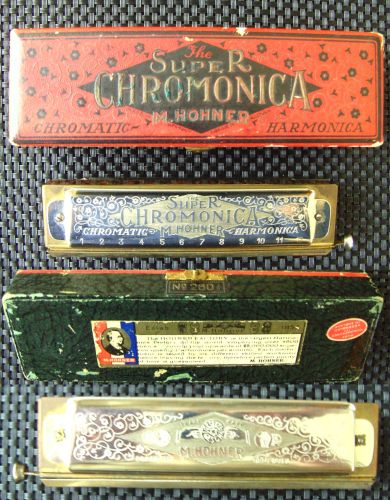
If the modern harmonica was difficult to assign to a single inventor, its transformation into a global instrument is easier to locate. That story runs through Trossingen, a small town in southwest Germany, and through Matthias Hohner, who founded his harmonica workshop there in 1857. Hohner did not invent the harmonica, and any history that treats him as the instrument’s origin point simply moves the old invention myth to a new figure. His significance lay elsewhere. He understood, more clearly than many of his competitors, that the harmonica could become an industrial product: cheap enough for mass consumption, consistent enough to inspire trust, small enough for export, and appealing enough to cross social boundaries. The difference between invention and industrialization matters. The harmonica may have emerged from early nineteenth-century experiments, but Hohner helped make it unavoidable. He entered the story at the moment when the instrument’s future no longer depended primarily on whether free reeds could be made to sound, but on whether they could be manufactured, branded, shipped, sold, and replaced on a scale large enough to make the harmonica part of everyday life. That was a different kind of creativity. It required not only craft knowledge, but business discipline, labor organization, marketing instinct, and a sharp understanding of nineteenth-century consumer culture. Hohner’s achievement was to move the harmonica from the realm of clever mechanism into the world of durable mass possession.
Hohner’s background as a clockmaker mattered because the harmonica rewarded precision. Small reeds had to be cut, tuned, mounted, and arranged with enough regularity that buyers could expect the same instrument to behave in the same way from one purchase to the next. A handmade curiosity could charm a collector, but a mass-market harmonica had to be reliable. It had to survive pockets, weather, travel, children, soldiers, workers, and amateur enthusiasm. Trossingen already belonged to a regional world of craft, small manufacture, and disciplined labor, and Hohner turned that world toward musical production. His achievement was not merely that he made harmonicas, but that he helped standardize the conditions under which harmonicas could be made in large numbers. A free-reed principle that had once passed through courts, missionary texts, salons, and experimental workshops now entered the logic of repeatable manufacture.
This industrial turn changed the social meaning of the instrument. Before mass production, a new musical device could remain limited to specialists, urban buyers, wealthy amateurs, or experimental makers. Under industrial conditions, the harmonica became available to people who might never own a piano, hire a music teacher, or join a formal ensemble. It was not only inexpensive; it was culturally accessible. A buyer did not need a parlor, a conservatory education, or printed music to begin. The instrument invited trial and error. It rewarded the ear, the mouth, and the hand. This made it an ideal product for a nineteenth-century world increasingly shaped by mobility, migration, wage labor, military service, and leisure markets. The harmonica could go where larger instruments could not. It could belong to people who owned little else.
Hohner’s genius was commercial as much as mechanical. He built a brand around an instrument whose small size might otherwise have made it seem disposable. Branding mattered because harmonicas were easily copied, and competition among makers could be intense. The more the instrument spread, the more important it became to associate quality, consistency, and prestige with a recognizable name. Hohner’s workshop expanded into a company, and the company learned how to sell not just objects but trust. A harmonica stamped with the Hohner name promised that the buyer was not simply purchasing a toy or novelty. He was purchasing a dependable musical tool. In that sense, Hohner helped elevate the harmonica without making it elite. He preserved its cheapness while giving it an industrial identity. That balance was crucial. If the harmonica had become too refined, too expensive, or too closely associated with formal musical respectability, it might have lost the very quality that made it historically powerful. Hohner’s brand worked because it attached credibility to accessibility. It made the humble instrument seem trustworthy without making it exclusive. The harmonica could be marketed to amateurs without insulting them, sold to children without being reduced to a trinket, and carried by adults without seeming unserious. The company’s growth depended on this delicate combination of affordability and authority, a combination that allowed the instrument to pass across age, class, region, and musical setting with unusual ease.
The American market became central to this transformation. German immigrants, transatlantic trade, and expanding consumer networks helped move Hohner harmonicas into the United States, where the instrument found an especially receptive environment. America in the nineteenth century was a country of movement: westward migration, military conflict, railroad expansion, labor migration, urban growth, rural isolation, and constant cultural mixing. The harmonica fit that world almost perfectly. It could be sold through catalogs, general stores, music shops, and traveling commerce. It could be carried by people who moved often and lived lightly. Hohner’s later expansion into the American market, including the role of Matthias Hohner’s son Hans and the establishment of a New York branch in 1901, shows how thoroughly the company understood that the harmonica’s future depended on export as much as production. The instrument was German-made, but its modern identity would become inseparable from American vernacular sound.
Mass production also produced a paradox. The harmonica became standardized as an object, but that very standardization made it available for wildly diverse forms of expression. Identical or near-identical instruments could be played in parlors, camps, farms, ships, classrooms, vaudeville stages, blues performances, and children’s games. Industrial uniformity did not flatten musical culture; it multiplied access to it. Once the instrument was cheap and widely distributed, players could adapt it to local needs and styles. Some used it for simple melodies, others for dance tunes, hymns, sentimental songs, train imitations, comic effects, or later blues bends and amplified solos. The factory produced the instrument’s body, but users produced its meanings. This is one of the harmonica’s great historical ironies: one of the most personal and emotionally flexible instruments of modern popular music became possible because of impersonal industrial scale.
By the end of the nineteenth century, the harmonica had crossed the threshold from invention to ubiquity. It was no longer merely one experiment among many in the free-reed family. It had become a commodity, a companion, a teaching device, a folk instrument, and an export success. Hohner’s achievement was to recognize that the harmonica’s power lay in compression: many reeds in a small frame, many notes in a pocket, many possible users in a global market. The instrument’s older free-reed ancestry remained inside it, but its modern career depended on industry. Ancient breath technology had entered the world of branding, factories, trade routes, and mass desire. The next phase of the harmonica’s history would unfold not in the workshop alone, but in the hands of the people who carried it away.
Migration, War, and the Pocket Instrument: The Harmonica in the Nineteenth-Century Atlantic World
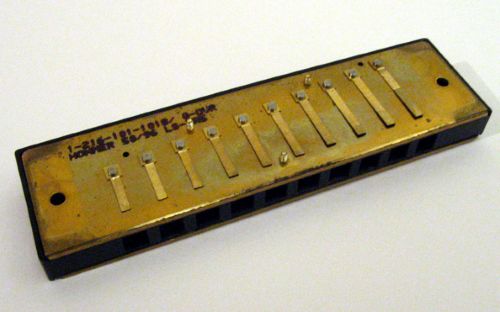
The harmonica’s industrial success cannot be separated from the movement of people. Once Hohner and other German manufacturers learned to produce harmonicas in large numbers, the instrument entered the same Atlantic currents that carried migrants, commodities, letters, tools, printed music, and memory between Europe and the Americas. It was ideally suited to that world because it did not demand settled life. A piano belonged to a room; an organ belonged to a church; even a fiddle or guitar required more space, more care, and more visible commitment. A harmonica could vanish into a pocket. It could travel in a trunk, a coat, a soldier’s pack, a sailor’s bag, or a child’s hand. Its historical importance in the nineteenth century lay not simply in its sound, but in its fit with an age defined by departure.
German migration helped carry the instrument across the Atlantic. In the mid-nineteenth century, large numbers of German-speaking migrants settled in the United States, and harmonica makers recognized that these communities could become both markets and carriers of the instrument. The harmonica could serve as a souvenir of home, a familiar object in an unfamiliar country, and a piece of portable German manufacture that did not require wealth to possess. Early American demand grew within these migrant networks before spreading more widely into the national market. By the 1880s and 1890s, Hohner’s production and export figures show how dramatically the American market had expanded, with North America becoming central to the company’s business. The instrument’s smallness made export practical, but migration made export meaningful. It was not only shipped to America; it arrived with people whose lives were already organized around movement, loss, adaptation, and the preservation of memory.
This is where the harmonica’s emotional history begins to deepen. For migrants, portable music could carry more than entertainment. It could hold fragments of language, childhood, region, family, and longing. A harmonica did not need a full band to make a song recognizable. It did not need printed lyrics to summon a melody. It could be played alone, quietly, repetitively, and imperfectly. That mattered in boardinghouses, rural settlements, mining camps, rail towns, immigrant neighborhoods, and temporary labor communities where music often had to be made from whatever was available. The harmonica’s modesty was an advantage. It could accompany loneliness without making a spectacle of it. It could turn private breath into a small act of continuity. In that sense, the instrument was well matched to migration because both involved compression: whole histories carried in limited space. A few notes could recall a village, a church tune, a dance, a lullaby, or a popular melody heard before departure. The instrument could not restore what migration had broken, but it could make absence audible. Its sound belonged to the emotional economy of people who had crossed borders and oceans without certainty that they would return. Because it was easy to share, it also helped form new communities. One person’s remembered tune could become another’s evening entertainment, and a cheap German-made object could become part of American local culture precisely because migrants used it to survive the distance between old and new worlds.
War also shaped the harmonica’s mythology, though the evidence must be handled carefully. Popular accounts often claim that harmonicas were widely used by soldiers during the American Civil War, sometimes embellishing the claim into sentimental or improbable stories of battlefield survival and presidential ownership. The safer historical approach is to say that the harmonica’s portability made it the kind of instrument that later memory naturally associated with soldiers and camps, while specific Civil War claims require caution. The instrument was present in the United States by the Civil War era, and Hohner had begun exporting to America in the 1860s, but the scale and documentary visibility of wartime use are less certain than popular histories suggest. That uncertainty is useful, not inconvenient. It shows how quickly the harmonica became a symbol of portable consolation, even where the archive is thinner than the legend.
The broader association between harmonicas and military life is nevertheless easy to understand. Soldiers have always needed small forms of music. Marching, waiting, boredom, fear, homesickness, and camp life create musical needs that large instruments cannot always meet. A harmonica could be carried without burden, shared without formal instruction, and played in moments when a brass band, church choir, or parlor piano was impossible. Its sound was intimate enough for a few companions but loud enough to mark time, mood, or memory. Whether in war camps, barracks, ships, or frontier posts, such an instrument answered a basic human requirement: the need to make sound in conditions of uncertainty. It did not abolish danger or loneliness, but it gave breath a shape when words were insufficient.
Sailors, laborers, and itinerant workers belonged to the same portable sound world. The nineteenth-century Atlantic was not only an ocean of migrants and armies; it was also a world of docks, ships, railroads, canals, factories, farms, mines, and seasonal labor. People moved because work required them to move. The harmonica’s durability and low cost made it appropriate for such lives. It could endure rough handling better than more delicate instruments, and losing one was not the catastrophe that losing a violin or guitar might be. It could also participate in informal performance without ceremony. One player could fill silence after work, accompany a song, imitate a train, or draw laughter from a crowd. In this world, the harmonica became a practical instrument of sociality. It made music possible where music had no official place. That point is especially important because nineteenth-century labor often separated people from the institutions that traditionally organized music: churches, village festivals, family gatherings, and stable neighborhoods. In temporary male work camps, on ships, in railroad settlements, and in boardinghouses, culture had to be improvised. The harmonica suited those improvised worlds because it required neither furniture nor rehearsal. It could appear after a meal, during a pause in work, beside a fire, on a porch, or in the cramped quarters of men who owned little and expected to move again. Its portability made it useful, but its informality made it welcome.
Commercial networks amplified this portability. As the century advanced, harmonicas moved through general stores, catalogs, music dealers, immigrant merchants, and regional distribution systems. Their small size made them perfect commodities for a widening consumer culture. They could be stocked easily, advertised cheaply, and purchased impulsively. This mattered because the nineteenth century did not merely produce new goods; it produced new habits of buying. Cheap musical instruments helped democratize leisure, especially for people who could not afford formal instruction or expensive household instruments. The harmonica’s market success depended on this convergence of industrial production and consumer accessibility. It was a factory product that felt personal because it entered the body through breath. Its presence in catalogs and shop counters also changed the relationship between ordinary consumers and music-making. A person did not need to inherit an instrument, join an ensemble, or invest in lessons before beginning. He could buy a harmonica as one might buy a pocketknife, a comb, or a small tool, then discover its musical possibilities through use. This blurred the line between commodity and companion. The harmonica was manufactured in bulk, but it became intimate only when pressed to the mouth, warmed by breath, and marked by the player’s own habits.
By the end of the nineteenth century, the harmonica had become one of the characteristic instruments of mobile modern life. Its route from Trossingen to the Atlantic world reveals how technology, migration, commerce, and emotion can converge in a small object. It traveled with Germans to America, spread beyond German-speaking communities, entered working-class and rural soundscapes, and gathered associations with soldiers, sailors, laborers, children, and wanderers. This was the stage on which the harmonica became more than an industrial success. It became a companion of movement. The ancient free reed had passed through European experiment and German manufacture, but in the Atlantic world it acquired a new social identity: the music of people who could not always stay, but could still carry a song.
Folk Sound and Vernacular Technique: The Harmonica Becomes an American Voice
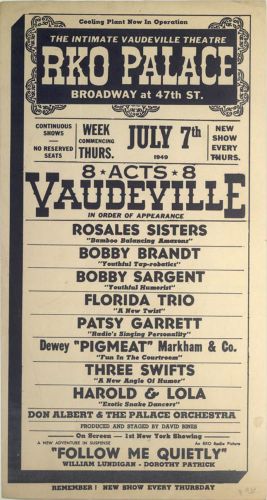
By the turn of the twentieth century, the harmonica had moved beyond its identity as a German export and become part of American vernacular sound. Its path into American music did not run primarily through conservatories, orchestras, or formal instruction. It entered by way of porches, camps, trains, rural stores, vaudeville circuits, street performance, family gatherings, and the informal teaching systems of ordinary life. This mattered because the harmonica’s American history was shaped less by written method books than by ears, mouths, hands, imitation, and experiment. It was an instrument learned by trying, by listening, by copying a neighbor, by carrying a tune from memory, or by finding out what happened when the breath was pushed harder, softened, bent, or interrupted. In that world, technique did not descend from authority. It emerged from use.
The harmonica’s appeal in American folk settings rested partly on its ability to sit between voice and instrument. It could play a melody, but it could also imitate vocal inflection, laughter, crying, train whistles, animal calls, or the rhythmic pulse of work and travel. Its sound was small enough for intimate music-making but sharp enough to cut through outdoor noise or informal gatherings. This gave it unusual flexibility. A fiddle might lead a dance, a banjo might drive rhythm, a guitar might support song, but the harmonica could slip among these roles. It could accompany, answer, decorate, or stand alone. Its portability made it common, but its vocal quality made it expressive. The instrument seemed to belong naturally to people who made music without asking permission from musical institutions. That vocal quality also helped the harmonica absorb emotion quickly. A player could make it sigh, bark, wheeze, pulse, or moan through small changes in breath and hand position, creating effects that felt closer to speech than to formal instrumental technique. This made it especially useful in settings where music was social rather than staged. Around a porch, a campfire, a work break, or a family gathering, the harmonica could enter conversation as easily as song. It could comment, joke, mourn, or imitate the surrounding world, turning ordinary sound into performance without requiring the separation between player and audience that formal concert culture often assumed.
This folk identity also depended on the harmonica’s limitations. The diatonic harmonica did not provide easy access to every note in every key. Its layout encouraged some patterns and resisted others. Yet players turned those limitations into style. Rather than treating missing notes or awkward intervals as defects, vernacular musicians found ways to bend, slide, imply, and approximate. The instrument rewarded bodily intelligence: the shaping of the mouth cavity, the angle of breath, the cupping of hands, the pressure of tongue and lips, and the small muscular decisions that changed tone. This was not “simple” playing merely because it was informal. It was a different kind of knowledge, one often transmitted outside notation and professional respectability. The harmonica’s technique lived in the body before it lived on paper.
In rural and working-class communities, the harmonica became a useful companion to song traditions already in motion. It could carry hymns, sentimental parlor melodies, fiddle tunes, ballads, minstrel-derived material, cowboy songs, children’s songs, and dance music. Because it was inexpensive, it moved across racial, ethnic, regional, and class lines, although not equally or innocently. The instrument entered a country whose music was shaped by Indigenous dispossession, African American creativity, European immigration, commercial minstrelsy, religious revivalism, labor migration, and regional exchange. The harmonica did not belong to one tradition alone. It became American precisely because it could be absorbed into many traditions, sometimes reinforcing older musical patterns and sometimes helping new ones emerge. Its sound traveled through a culture already full of borrowed tunes, contested performances, and hybrid forms.
The instrument’s relationship to mobility remained central. Railroads, roads, river towns, cattle trails, logging camps, farms, mines, and urban boardinghouses all helped produce the conditions in which portable music mattered. The harmonica’s ability to imitate trains was more than a novelty. It connected the instrument to one of the central sounds of modern American movement. Players could reproduce the chug of wheels, the swell of a whistle, or the feeling of distance opening across the landscape. That sonic imagination would become especially important in blues, but its roots were broader. In folk contexts, the harmonica often voiced the experience of being between places: away from home, traveling for work, moving west, waiting for news, or making temporary community among strangers. Its breathy sound gave motion an emotional texture. It could make travel sound playful, lonely, restless, or dangerous, depending on the player and the tune. That mattered in a society where mobility was often romanticized, but also frequently coerced by poverty, racial violence, land hunger, industrial labor, and family separation. The harmonica could participate in the myth of freedom on the road while also giving voice to the harder reality of being uprooted. Its train sounds, road songs, and wandering melodies carried both promise and ache, which is why the instrument fit so naturally into American folk imagination.
The harmonica also thrived because it fit the economics of amateur music. Many American households could not afford pianos, and many rural or working-class communities had limited access to formal musical instruction. But a harmonica could be bought cheaply and learned socially. Its low price did not make it culturally trivial. On the contrary, cheapness widened participation. It allowed children to enter music, allowed laborers to carry melody with them, and allowed people with little disposable income to possess an instrument of their own. The harmonica helped democratize musical agency. It did not eliminate hierarchy from American music, nor did it erase unequal access to performance spaces, publication, or recording. But it gave millions of ordinary people a tool for making sound, and that fact changed the instrument’s historical meaning.
By the early twentieth century, the harmonica had become an American voice not because it lost its European manufacture or its Asian technological ancestry, but because American players remade it through vernacular practice. They bent it toward local songs, regional rhythms, bodily techniques, comic effects, religious feeling, and the emotional demands of a mobile society. The factory had produced a standardized object, but folk musicians refused to let standardization determine expression. They turned the harmonica into a flexible instrument of memory, imitation, humor, and lament. Its Americanization was not a matter of national ownership. It was a matter of use. In the mouths of ordinary players, the harmonica became less a commodity than a way of breathing culture into sound.
Blues Transformation: Bending the Reed, Bending the World
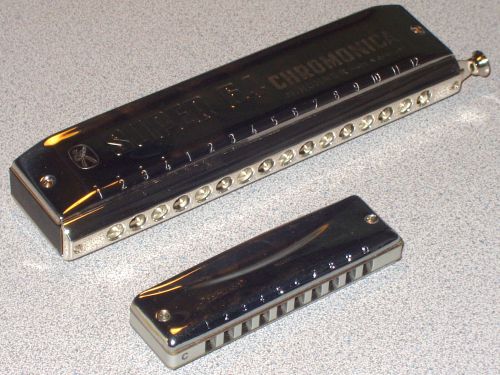
The harmonica’s deepest American transformation came through the blues, where a cheap imported instrument became one of the most expressive voices of Black musical modernity. In African American hands, the harmonica was not merely adopted; it was reimagined. Its reeds were bent, choked, pulled, and shaped until the instrument seemed capable of speech, lament, irony, flirtation, rage, and survival. This transformation was not accidental. The blues emerged from a world marked by emancipation’s unfinished promises, racial terror, labor exploitation, migration, religious memory, and the everyday genius of people making beauty from constraint. The harmonica fit that world because it was small, affordable, portable, and intensely bodily. It did not require institutional access, formal training, or expensive equipment. It required breath, pressure, memory, and nerve. In that sense, blues harmonica was both musical technique and historical testimony: a way of forcing a mass-produced object to carry the emotional weight of a people denied full freedom.
The diatonic harmonica’s limitations became central to its blues power. Its fixed tuning and uneven access to certain notes might have seemed restrictive in a formal musical setting, but blues musicians turned those constraints into expressive resources. By altering the shape of the mouth, throat, tongue, and breath stream, players could bend notes downward, blur pitch, create blue notes, and imitate vocal slides. This made the harmonica especially suited to a musical language in which expressive pitch mattered as much as fixed pitch. Blues singers often moved between notes rather than landing on them cleanly, shading sound with grief, humor, desire, and complaint. The harmonica could do the same. Its instability became eloquence. A bent reed could say what a cleanly struck note could not: that pain does not always resolve, that longing moves between certainty and collapse, that sound itself can carry the pressure of history.
Cross-harp playing, often called second position, became one of the decisive techniques in this transformation. Instead of playing the harmonica in its labeled key, blues players used it in a different key relationship that emphasized draw notes, expressive bends, and dominant harmonies useful for blues patterns. This technique changed the instrument’s center of gravity. The harmonica was no longer only a simple melody instrument for folk tunes and parlor songs. It became a blues engine, capable of rhythmic drive, vocal response, moaning bends, and call-and-response interplay with the singer or guitar. The player could use the instrument to answer a vocal line, intensify a groove, or create the impression of another human presence inside the music. In rural and early recorded blues, this mattered enormously. The harmonica could be companion, commentator, second voice, and emotional amplifier all at once. Cross-harp also revealed how thoroughly blues musicians could remake an instrument by refusing to play it according to its most obvious design. The labeled key became less important than the expressive possibilities hidden in another position. Draw reeds, which might have been ordinary elements of the layout, became pressure points for bending and tonal color. The player’s body became part of the tuning system, adjusting pitch through breath and embouchure in ways the manufacturer had not fully determined. This was not misuse. It was invention from below, a vernacular reengineering of an industrial object. In that sense, blues harmonica technique joined practical experimentation to cultural necessity: it made the instrument speak in the tonal language of Black experience, where precision mattered, but expressive deviation mattered more.
Early blues harmonica also grew from the soundscape of movement. Trains, roads, levees, fields, street corners, and work camps shaped both the imagery and the rhythm of the blues. Harmonica players could imitate train whistles and wheel rhythms, but those imitations were more than tricks. The train was one of the great symbols of Black modernity: escape, exile, migration, danger, labor, distance, and possibility all at once. A harmonica train effect could sound comic in one setting and devastating in another, because it carried the ambiguity of movement itself. For African Americans in the Jim Crow South and beyond, mobility could mean leaving violence, seeking work, losing kin, entering new forms of exploitation, or dreaming of a future not yet available. The harmonica’s breath-driven train sounds gave that ambiguity a sonic body. The instrument could make motion audible, but it could also make displacement ache.
The rise of recorded blues and urban electric blues expanded the harmonica’s role even further. Players such as John Lee “Sonny Boy” Williamson, Rice Miller, often known as Sonny Boy Williamson II, Big Walter Horton, and Little Walter Jacobs turned the instrument into a major blues voice rather than a minor accompaniment. Little Walter’s amplified playing was especially transformative. By cupping a microphone and driving the harmonica through amplification, he thickened, distorted, and electrified its tone, making it capable of competing with guitars, drums, and club noise. The result was not simply louder harmonica. It was a new instrument: horn-like, vocal, aggressive, smooth, and dangerous. In Chicago blues, the harmonica became part of the sound of Black urban migration, carrying rural breath into electric modernity. The reeds that had once fit into a pocket now pushed through speakers, dance halls, jukeboxes, and records. Amplification also changed the performer’s physical relationship to the instrument. The player no longer shaped sound only with mouth, hands, and breath, but with microphone technique, speaker distortion, stage volume, and the dense texture of an electric band. The harmonica could now growl like a saxophone, stab like a trumpet, or swell like a human voice strained through machinery. This mattered historically because Chicago blues itself was a music of transformation: southern migrants adapting older musical languages to crowded cities, industrial labor, commercial recording, and nightlife economies. The amplified harmonica embodied that transition with unusual force. It preserved the intimacy of breath while projecting it through modern technology, turning private pressure into public sound.
The blues transformation of the harmonica reveals one of the central truths of musical history: instruments are not finished by their makers. Factories build bodies; communities create voices. German manufacturers produced the harmonica’s standardized frame, but African American blues musicians exposed its deeper emotional and technical possibilities. They bent a small industrial object toward the history of forced labor, migration, racial violence, pleasure, wit, desire, and endurance. The instrument’s cheapness, once a commercial advantage, became part of its cultural force, because it placed expressive power in the hands of people whom American society routinely denied power elsewhere. The harmonica did not redeem that injustice. No instrument could. But in the blues, it became a tool of transformation, proving that even a small vibrating reed could be made to carry the weight of a world.
Country, Gospel, Film, and Popular Culture: The Harmonica as Familiar Sound
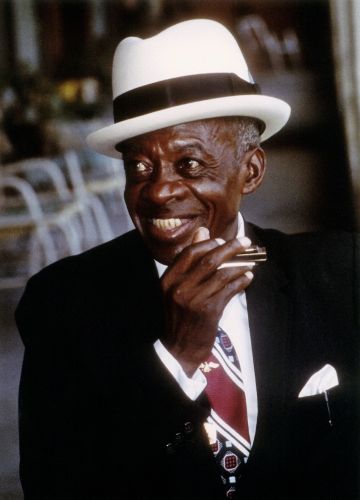
The harmonica’s rise in blues was one of its most profound transformations, but it was never confined to blues alone. By the early twentieth century, it had become a familiar sound across American country music, gospel performance, folk entertainment, children’s culture, vaudeville, radio, and later film. Its usefulness came from the same qualities that had made it powerful in earlier settings: portability, affordability, immediacy, and expressive flexibility. Yet in these broader popular contexts, the harmonica often acquired a different emotional register. It could still cry, moan, and bend toward sorrow, but it could also sound comic, pastoral, nostalgic, innocent, rustic, or intimate. The instrument was small enough to seem humble and ordinary, but recognizable enough to carry symbolic weight. In American popular culture, it became one of the quickest ways to evoke memory, movement, rural life, loneliness, childhood, or the open road.
In country and old-time music, the harmonica fit naturally into traditions already built around informal learning, regional repertories, and portable accompaniment. It joined fiddles, guitars, banjos, mandolins, and voices in a sound world where music was often social before it was professional. The instrument could double a melody, provide rhythmic punctuation, fill space between vocal lines, or imitate the whistle of a train cutting across a rural landscape. Its association with railroads and wandering made it especially compatible with country music’s recurring themes of departure, labor, heartbreak, home, and longing. Unlike the fiddle, which carried older dance traditions, or the guitar, which became central to accompaniment, the harmonica often sounded like a traveler moving through the song itself. It could be both inside and outside the voice, answering the singer as if memory had briefly become audible.
One of the most important figures in this broader story was DeFord Bailey, the African American harmonica player who became one of the earliest stars of the Grand Ole Opry. Bailey’s career reminds us that the boundaries later drawn between country, blues, folk, and popular entertainment were never as clean as genre labels suggest. His train imitations, virtuosic tone, and commanding stage presence helped make the harmonica a major sound in early radio performance, even as racial politics limited how he was recognized and remembered. Bailey stood at the intersection of Black musical skill, rural entertainment, commercial broadcasting, and the emerging mythology of country music. His presence complicates any simple story in which country harmonica belongs only to white rural nostalgia. The instrument carried Black innovation into spaces that were later marketed as racially narrower than their actual musical origins. Bailey’s prominence also shows how early country broadcasting depended on performers whose artistry crossed racial and stylistic boundaries, even when the industry later worked to separate and market those traditions as if they had developed in isolation. His famous train pieces were not merely novelty effects. They drew on a wider African American sound imagination in which trains represented travel, danger, distance, and possibility, while also satisfying radio’s appetite for vivid sonic pictures. Bailey could make the harmonica do the work of narrative, atmosphere, and spectacle at once. That he was later marginalized within the same institution he helped define makes his story especially revealing. The harmonica’s familiar country sound was never innocent of race; it was shaped by Black performance, commercial opportunity, and the selective memory of an industry that often benefited from Black creativity while narrowing the public story of who belonged.
Gospel and religious music gave the harmonica another kind of familiarity. Its breath-driven sound suited devotional music because it could feel intimate, direct, and human-scaled. In churches, homes, revivals, and informal sacred gatherings, inexpensive instruments mattered because they allowed music-making outside professionalized sacred settings. The harmonica could carry hymns, spirituals, and gospel melodies without requiring a piano or organ. It was modest, but that modesty could itself become spiritually meaningful. An instrument played by breath alone could seem close to prayer, testimony, or personal witness. In religious contexts, the harmonica’s lack of grandeur did not diminish it. It allowed sacred sound to travel into kitchens, fields, porches, camps, prisons, and street corners, places where formal instruments were absent but song remained necessary.
Film and radio further stabilized the harmonica as a sound of familiarity. Radio helped spread harmonica playing through variety programs, hillbilly music broadcasts, children’s programming, comedy routines, and commercial entertainment. Film then gave the instrument a visual and emotional vocabulary. A few harmonica notes could suggest a cowboy at dusk, a boyhood memory, a prisoner’s longing, a train leaving town, or a solitary figure on a dusty road. Westerns, dramas, comedies, and later popular soundtracks used the instrument because audiences already understood its associations. It was not neutral sound. It came loaded with meanings: rural simplicity, vulnerability, wandering, homesickness, and sometimes danger. The harmonica’s smallness made it cinematically useful. A character who played one seemed self-contained, emotionally guarded, or quietly haunted. The instrument could speak when dialogue would have said too much.
In twentieth-century popular music, the harmonica continued to move across genres with unusual ease. Folk revival performers used it as a sign of authenticity and mobility, rock musicians adopted it for bluesy grit or lyrical intimacy, and jazz and popular virtuosos expanded its technical range. Bob Dylan’s harmonica, for example, became inseparable from the image of the modern folk singer as witness, wanderer, and critic. Stevie Wonder brought chromatic harmonica into soul and pop with lyrical elegance, while Toots Thielemans demonstrated its sophistication in jazz and film music. These later figures show how flexible the instrument had become. It could still sound like a campfire, but it could also sound urbane, polished, melancholic, or technically dazzling. The same basic family of reeds could serve a front porch, a recording studio, a protest song, a jazz standard, or a film score. This flexibility depended partly on the coexistence of different harmonica types and playing traditions. The diatonic harmonica retained its association with folk directness, country color, blues bending, and rough-edged expressiveness, while the chromatic harmonica opened paths into jazz, orchestral arrangements, studio work, and smoother melodic lines. Popular culture did not require the instrument to choose one identity. It could be rustic in one context and cosmopolitan in another, comic in one song and devastatingly tender in the next. That range helped preserve the harmonica’s relevance even as musical technology changed around it. Microphones, electric guitars, synthesizers, and digital production did not erase it because the harmonica offered something difficult to replace: the audible friction of breath, reed, and body.
The harmonica’s journey through country, gospel, film, and popular culture reveals how fully it became embedded in modern emotional life. Its sound was familiar because it belonged to ordinary people, but also because mass media taught audiences how to hear it. It could signify rural America even when played in a studio, childhood even when used by adults, loneliness even when surrounded by orchestration, and authenticity even when carefully produced for commercial audiences. That double life is central to its power. The harmonica was both real and symbolic, both common object and cultural shorthand. Ancient free-reed technology had become an instrument of mass feeling. By the time audiences heard it in country songs, gospel melodies, radio shows, westerns, folk anthems, and pop recordings, the harmonica no longer needed explanation. It sounded like something people already knew, even when they were hearing it anew.
The Chromatic Harmonica and Technical Expansion
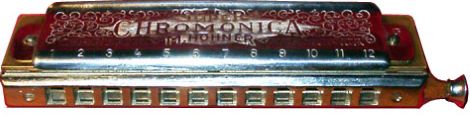
The harmonica’s popular identity was built largely around the diatonic instrument, but the twentieth century also produced a major technical expansion through the chromatic harmonica. The difference was not merely one of size or refinement. A diatonic harmonica is generally organized around a particular key, with its expressive power often depending on bends, breath direction, and the creative exploitation of missing or resistant notes. A chromatic harmonica, by contrast, uses a slide mechanism to redirect air toward reeds tuned a semitone apart, allowing the player to reach all twelve tones of the Western chromatic scale. This changed the instrument’s possibilities. The harmonica could now move more easily through modulations, jazz melodies, classical repertory, film themes, and technically demanding popular music. It did not cease to be breath-driven and intimate, but it gained a more flexible pitch architecture.
The chromatic harmonica also altered the instrument’s cultural status. For many listeners, the diatonic harmonica remained tied to folk directness, blues bending, country color, and vernacular immediacy. The chromatic model offered another identity: smoother, more melodic, more formally adaptable, and more compatible with repertories that required full chromatic access. Hohner’s Chromonica models, appearing in the early twentieth century, helped define this path. Surviving museum examples from the period show the instrument’s characteristic combination of reed plates, mouthpiece, and slide, while later models expanded range and technical ambition. The slide did not eliminate the need for expressive breath or tonal control, but it changed the player’s relationship to pitch. Instead of finding missing notes primarily through bending, the chromatic player could select them mechanically, opening a different kind of virtuosity. That difference mattered because it shifted the harmonica closer to musical worlds that had often treated it as too limited, too rustic, or too informal for complex repertory. With chromatic access, players could negotiate accidentals, key changes, jazz harmonies, and lyrical melodies that would have been awkward or impossible on many diatonic instruments without advanced bending technique. The chromatic harmonica did not simply add notes. It added legitimacy in contexts where musical flexibility was measured by range, modulation, and technical precision. It preserved the instrument’s essential intimacy. The slide gave the player more options, but the sound still came from breath pressing through reeds, shaped by the mouth and body rather than detached from them.
That new virtuosity mattered because it allowed harmonica players to challenge assumptions about the instrument’s limits. Larry Adler became one of the twentieth century’s most visible figures in this transformation, bringing the chromatic harmonica into concert settings, film music, and popular performance with a degree of theatrical polish that helped detach the instrument from purely rustic associations. Thielemans carried it into jazz with extraordinary lyricism, demonstrating that the harmonica could phrase with the subtlety of a horn while retaining the vulnerability of breath. Stevie Wonder, in turn, made the chromatic harmonica part of soul and pop’s emotional vocabulary, using it not as novelty color but as a singing instrumental voice. These players did not make the harmonica respectable by abandoning its older meanings. They expanded respectability itself, showing that a pocket instrument could move through elite, commercial, and vernacular spaces without losing its human immediacy.
The chromatic harmonica’s expansion also reveals a larger tension in the instrument’s history: the balance between accessibility and specialization. The diatonic harmonica became powerful partly because it was cheap, direct, and open to self-taught experimentation. The chromatic harmonica demanded a different technical discipline. Its slide mechanism, broader pitch resources, and melodic possibilities encouraged more formal study, more precise intonation, and more careful control of breath and phrasing. Yet this did not make it a betrayal of the harmonica’s democratic character. Rather, it showed that the instrument’s democracy included room for sophistication. An object could be humble in origin and still sustain virtuoso ambition. The chromatic harmonica made that argument every time it appeared in jazz, classical arrangements, studio recordings, or film scores.
By expanding the harmonica’s tonal range, the chromatic model also expanded its historical meaning. The instrument no longer belonged only to the road, the porch, the work camp, the blues club, or the country stage, though it never fully left those places. It could enter orchestral textures, jazz harmonies, cinematic moods, and pop arrangements while still carrying the trace of breath that made it recognizable. This is the deeper importance of the chromatic harmonica. It did not replace the diatonic instrument or supersede vernacular technique. It added another branch to the free-reed family tree, one that connected ancient breath technology and nineteenth-century mass manufacture to twentieth-century virtuosity. The harmonica remained small, but its musical world had grown vast.
Global Return and Modern Hybridity: The Harmonica Today
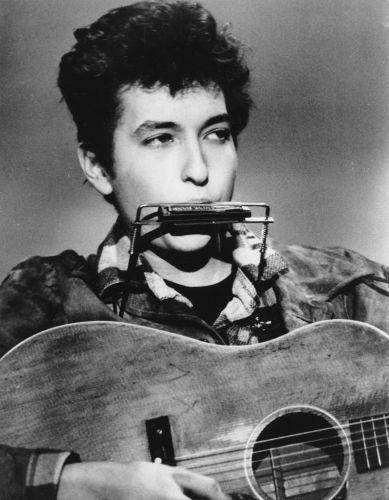
The harmonica today belongs to a genuinely global musical world. Its older centers of manufacture and meaning have not disappeared: Hohner remains strongly associated with German harmonica history, and the instrument still carries deep associations with blues, folk, country, gospel, and popular song. But the modern harmonica is no longer best understood through a single national story. It is made, modified, taught, collected, and performed across continents. Japan’s Tombo tradition, including its collaboration with Lee Oskar Harmonicas beginning in 1983, shows how modern harmonica manufacture has long since moved beyond the nineteenth-century German frame. Contemporary players buy German, Japanese, Chinese, Brazilian, and customized instruments; they learn through teachers, festivals, online videos, slow-down software, forums, and global blues communities. What began as an industrial export has become a transnational practice. The harmonica is now both a mass-produced object and a specialized craft culture, sustained by factory production, boutique customization, and intensely personal technique.
This global modernity has also changed how players understand the instrument’s possibilities. The old distinction between “simple” diatonic folk instrument and “serious” chromatic instrument no longer fully holds. Diatonic players use overblows, alternate tunings, customized reed setups, amplified effects, and sophisticated positional playing to reach musical worlds once thought inaccessible. Chromatic players continue to move through jazz, classical repertory, film music, tango, pop, and experimental composition. Tremolo and octave harmonicas remain especially important in East Asian traditions and ensembles, while bass and chord harmonicas appear in specialized groups. The instrument’s family has become wider than its stereotype. It can still play a campfire tune, but it can also handle bebop lines, orchestral melodies, avant-garde textures, cinematic themes, and heavily amplified blues-rock distortion. Its smallness has not limited its expansion; in some ways, smallness has made expansion easier.
The sheng has not remained frozen as a museum ancestor. It remains a living instrument in Chinese music and has also entered contemporary composition, orchestral settings, and cross-cultural performance. Modern shengs may include expanded ranges, chromatic designs, keyed mechanisms, and adaptations suited to new repertories, while traditional forms continue to carry older musical meanings. This matters for the harmonica’s history because it prevents the story from ending in a one-way movement from China to Europe to America. The free reed’s history has become circular and plural. The sheng, accordion, harmonica, concertina, and harmonium all belong to a larger family of instruments whose forms have crossed borders repeatedly. Today, composers and performers can place the sheng beside Western ensembles, electronics, jazz improvisers, or other global instruments, creating new sound worlds from an ancient principle. The “ancestor” remains active, still changing, still speaking.
Digital culture has intensified this hybridity. A beginner can now learn blues bending from one continent, chromatic jazz technique from another, and sheng performance from another, all in the same afternoon. This has weakened older boundaries between formal and informal instruction. The harmonica remains democratic because it is still relatively affordable and portable, but the knowledge around it has become more sophisticated and widely available. Players compare reed materials, temperament, airtightness, comb design, overblow setup, vintage models, microphone technique, and amplification chains with a level of detail that would have astonished many nineteenth-century buyers. The instrument is still intimate, but its community is vast. It lives simultaneously in pockets, studios, orchestras, jam sessions, workshops, online lessons, museum collections, and algorithmic feeds.
The harmonica’s present bring us full circle. A small free reed instrument, descended technologically from ancient breath-based principles and industrially shaped by nineteenth-century Europe, now circulates through a world of hybrid identities. It is Asian in ancestry, German in much of its industrial mythology, American in much of its blues and folk symbolism, and global in contemporary practice. Its sound can be rustic, virtuosic, comic, mournful, sacred, cinematic, or experimental. The sheng and the harmonica no longer stand only at opposite ends of a historical line. They now coexist within a global free-reed ecology, each reminding the other that musical technology never belongs permanently to one place. Breath travels. Reeds migrate. Instruments remember, but they also keep changing.
Is the Harmonica Really a Descendant of the Sheng?
The following video from Phoenix History provides a history of the harmonica:
To call the harmonica a descendant of the sheng is useful, but only if the phrase is handled with care. The relationship is real at the level of free-reed technology: both instruments depend on small reeds that vibrate under moving air, and European awareness of Asian mouth organs helped shape the experimental culture from which modern free-reed instruments emerged. Yet descent can easily become distortion. The harmonica is not a miniature sheng, nor did Chinese musical practice simply migrate intact into European workshops and American folk culture. The sheng belonged to Chinese ritual, courtly, and ensemble traditions, with its own symbolic architecture and musical grammar. The harmonica emerged from a later European environment of tuning devices, industrial production, commercial portability, and mass-market consumption. They share an acoustic principle, but not the same form, repertory, social function, or cultural meaning.
The problem lies partly in the word “ancestor.” In biological language, ancestry implies a line of descent from one organism to another. In instrument history, the metaphor is less precise. Instruments do not reproduce; makers borrow, adapt, misunderstand, simplify, recombine, and commercialize. The sheng did not give birth to the harmonica in the way one generation gives birth to the next. Rather, the free-reed principle associated with the sheng became one available resource within a larger field of European experimentation. By the time the harmonica emerged in the early nineteenth century, that principle had passed through missionary description, collecting, organ building, aeoline and physharmonica experiments, pitch devices, and workshop innovation. The harmonica’s genealogy is branching rather than linear. The sheng is a crucial ancestor in the technological family tree, but it is not the only parent.
This distinction matters because simple origin stories often erase the complexity of cultural exchange. If the harmonica is described merely as “invented from the sheng,” the Chinese instrument becomes valuable only because it leads to a later Western object. That would reduce the sheng to a prologue, when in fact it was and remains a complete instrument with its own history. Conversely, if the sheng’s role is denied altogether, the harmonica becomes falsely isolated within European invention, as though the free reed emerged from nowhere in the workshops of Germany and Austria. Both errors are forms of historical narrowing. The stronger interpretation holds both truths together: the sheng was not the harmonica, but without Asian free-reed instruments and European encounters with them, the experimental conditions that produced the harmonica would have been different. This balance is especially important because cultural transmission rarely moves in clean lines from source to copy. It moves through fragments, objects, diagrams, misunderstandings, technical curiosity, commercial need, and creative misuse. A European maker could learn from the sheng’s reed principle without understanding Chinese musical aesthetics; an American blues player could transform a German-made harmonica without knowing its Asian technological ancestry. The history is not a chain of ownership, but a series of translations. Each stage preserved something and lost something. The reed survived, but the meanings surrounding it changed. That is why the sheng must be honored as a living instrument and technological predecessor, not treated as raw material for a Western success story.
The harmonica’s later development also complicates the descent claim. Its most influential modern identities came not from Chinese or European elite traditions, but from popular and vernacular use. German factories made it cheap and consistent; migrants and workers carried it across the Atlantic; American folk musicians absorbed it into regional repertories; African American blues musicians transformed its expressive capacity through bending, cross-harp technique, and amplification. These later developments were not latent inside the sheng. They were historical creations produced by industrial capitalism, racial struggle, labor movement, commercial recording, and popular performance. The harmonica’s free reed may look backward to ancient China, but its modern voice was made in many places, especially in the mouths of ordinary players who turned design into expression.
The best answer, then, is neither a simple yes nor a simple no. The harmonica is a descendant of the sheng if descent means technological kinship through the free reed and the historical transmission of an acoustic idea. It is not a descendant if the phrase implies direct copying, cultural continuity, or a clean line from Chinese court instrument to European pocket harmonica. The sheng belongs at the beginning of the story because it reveals the ancient depth and sophistication of free-reed sound. The harmonica belongs later because it shows how that principle could be compressed, industrialized, democratized, and transformed across continents. Their relationship is not one of replacement, but of resonance. One breath technology entered history in ancient China; another carried that vibrating principle into the pockets, trains, churches, stages, blues clubs, and recording studios of the modern world.
Conclusion: Breath, Reed, Pocket, World
The harmonica’s history begins with a deceptively simple act: breath passing over a reed. Yet that act has carried the instrument across an extraordinary range of cultures, technologies, and social worlds. In ancient China, the free reed found sophisticated expression in the sheng, an instrument whose pipes, chamber, and symbolic associations joined musical craft to ritual and cosmological imagination. In Europe, the same acoustic principle entered the world of missionaries, collectors, organ builders, experimenters, and mechanics, where it was detached from its original setting and reorganized through new materials, tuning systems, workshops, and commercial ambitions. By the nineteenth century, the harmonica had emerged from this free-reed environment not as a single miraculous invention, but as the compact result of many experiments. Its modern body was small, but its ancestry was immense.
Industrial production then changed everything. Matthias Hohner and other manufacturers did not create the free reed, nor did they invent breath music, but they made the harmonica available on a scale that transformed its meaning. A mechanism that had passed through courts, salons, workshops, and technical experiments became an object that workers, migrants, soldiers, sailors, children, and amateurs could own. The harmonica’s cheapness was not a minor detail. It was central to its democratic power. Because it could be bought cheaply, carried easily, and learned informally, it entered places where more expensive instruments rarely went. It belonged to the age of migration, camps, railroads, boardinghouses, front porches, catalog orders, and working-class leisure. The pocket became part of the instrument’s history. To carry a harmonica was to carry the possibility of music without needing permission, property, or institutional approval.
Its deepest transformations came through use. American folk musicians made it a vernacular voice; African American blues players bent its reeds into an instrument of sorrow, wit, resistance, and urban electricity; country, gospel, radio, film, jazz, soul, and popular performers gave it still more identities. The factory standardized the object, but players refused to standardize its meaning. They made it imitate trains, answer singers, accompany hymns, cry through amplifiers, evoke loneliness on film soundtracks, and speak in musical languages its makers could not have fully imagined. The harmonica’s story challenges any narrow distinction between technology and culture. A reed plate is mechanical, but a bent note is historical. A tuning layout is technical, but a blues phrase carries social memory. The instrument’s power lies in that meeting place where metal, wood, breath, body, commerce, and lived experience become sound.
To follow the harmonica from the sheng to the modern world is to see how musical technologies migrate without remaining the same. The sheng was not simply replaced by the harmonica, and the harmonica was never merely a Western copy of an Asian instrument. Their relationship is one of resonance, inheritance, transformation, and return. Today the sheng remains a living instrument, while the harmonica circulates through global blues communities, jazz stages, film scores, online lessons, folk traditions, and experimental performance. The free reed has become a world traveler. It has belonged to courts and factories, migrants and virtuosos, children and masters, anonymous players and famous performers. Its history reminds us that small instruments can hold large worlds. Breath enters, reeds answer, and across centuries the sound keeps moving.
Bibliography
Affiliate disclosure: Amazon links on this site are paid links. As an Amazon Associate I earn from qualifying purchases.
- Åberg, Måns Ahlstedt. “The First Chinese Music Heard in Europe: Instruments and Musicians in the Study of Chinese Music in Europe during the Long 18th Century.” Early Music 53:3 (2025), 270–283.
- Adler, Larry. It Ain’t Necessarily So. London: Collins, 1984.
- Amiot, Joseph-Marie. Mémoire sur la musique des Chinois, tant anciens que modernes. Paris: Nyon, 1779.
- Bastin, Bruce. Red River Blues: The Blues Tradition in the Southeast. Urbana: University of Illinois Press, 1986.
- Berghoff, Hartmut. “Marketing Diversity: The Making of a Global Consumer Product—Hohner’s Harmonicas, 1857—1930.” Enterprise & Society 2:2 (2001), 338-372.
- Berghoff, Hartmut, with Stella Danek and Robert Winkler. “Hans Hohner.” In “Immigrant Entrepreneurship: German-American Business Biographies, 1720 to the Present—An Online Project of the German Historical Institute Washington.” Journal of American Ethnic History 33:4 (2014), 67-72.
- Buschmann, Heinrich. Christian Friedrich Ludwig Buschmann, der Erfinder der Mund- und der Handharmonika: Ein Beitrag zur Geschichte dieser Musikinstrumente mit Benutzung des Familienarchivs des Enkels Ludwig Buschmann, Instrumentenbauer in Hamburg. Trossingen: Hohner A.G., 1938.
- Dudaš, Grga. “The Position of Physharmonica in the Harmonium History.” Arti musices 37:1 (2006), 119–136.
- Evans, David. Big Road Blues: Tradition and Creativity in the Folk Blues. Berkeley: University of California Press, 1982.
- Field, Kim. Harmonicas, Harps, and Heavy Breathers: The History of the Harmonica and Its Role in American Music. New York: Cooper Square Press, 1993.
- Filene, Benjamin. Romancing the Folk: Public Memory and American Roots Music. Chapel Hill: University of North Carolina Press, 2000.
- Glover, Tony, Scott Dirks, and Ward Gaines. Blues with a Feeling: The Little Walter Story. New York: Routledge, 2002.
- Gross, Daniel A. “Industrial Espionage and Cutthroat Competition Fueled the Rise of the Humble Harmonica.” Smithsonian Magazine, September 17, 2014.
- Hornbostel, Erich M. von, and Curt Sachs. “Systematik der Musikinstrumente: Ein Versuch.” Zeitschrift für Ethnologie 46:4/5 (1914), 553–590.
- Lake, Robert. “Diddley Bows, Cross Harps, Banjars and Backbeats: The Rhythm and Sound of Personal Agency from Southern African America.” Counterpoints 434 (2014), 78-88.
- Lee Oskar Harmonicas. “About Lee Oskar Harmonicas.” Accessed May 30, 2026.
- Licht, Michael S. “Harmonica Magic: Virtuoso Display in American Folk Music.” Ethnomusicology 24:2 (1980), 211-221.
- Lornell, Kip. Exploring American Folk Music: Ethnic, Grassroots, and Regional Traditions in the United States. Jackson: University Press of Mississippi, 2012.
- Malone, Bill C., and David Stricklin. Southern Music/American Music. Revised ed. Lexington: University Press of Kentucky, 2003.
- Malone, Bill C., and Tracey E. W. Laird. Country Music, U.S.A. 50th anniversary ed. Austin: University of Texas Press, 2018.
- Matthews, Betty. “The Davies Sisters, J. C. Bach and the Glass Harmonica.” Music & Letters 56:2 (1975), 150-169.
- Mersenne, Marin. Harmonie universelle, contenant la théorie et la pratique de la musique. Paris: Sébastien Cramoisy, 1636.
- Minnesota Orchestra. “What Is the Sheng?” Accessed May 30, 2026.
- Missin, Pat. “Tuning Schemes for the Standard Major Diatonic Harmonica.” Accessed May 30, 2026.
- —-. “Western Free Reed Instruments.” Accessed May 30, 2026.
- —-. “Who Invented the Harmonica?” Accessed May 30, 2026.
- Oliver, Paul. The Story of the Blues. Boston: Northeastern University Press, 1969.
- Palmer, Robert. Deep Blues: A Musical and Cultural History of the Mississippi Delta. New York: Viking Press, 1981.
- Pecknold, Diane. The Selling Sound: The Rise of the Country Music Industry. Durham: Duke University Press, 2007.
- Raz, Carmel. “How the Sheng Became a Harp: The Western Reception of Free Reeds.” Sound Studies 6:2 (2020), 196–216.
- Russell, Tony. Country Music Originals: The Legends and the Lost. New York: Oxford University Press, 2007.
- Sachs, Curt. The History of Musical Instruments. New York: W. W. Norton, 1940.
- Smithsonian National Museum of American History. “Hohner Chromonica Chromatic Harmonica.” Accessed May 30, 2026.
- Tate, Douglas. Make Your Harmonica Work Better. Bradford-on-Avon: Doug Tate, 1994.
- Thielemans, Toots, and Kenny Werner. Toots Thielemans: The Jazz Master Class Series from NYU. Milwaukee: Hal Leonard, 2011.
- Thrasher, Alan R. Chinese Musical Instruments. New York: Oxford University Press, 2000.
- Wald, Elijah. Escaping the Delta: Robert Johnson and the Invention of the Blues. New York: Amistad, 2001.
- Wolfe, Charles K., and David C. Morton. DeFord Bailey: A Black Star in Early Country Music. Knoxville: University of Tennessee Press, 1991.
- Wolfe, Charles K., and Kip Lornell. The Life and Legend of Leadbelly. New York: Da Capo Press, 1992.
- Yung, Bell, Evelyn S. Rawski, and Rubie S. Watson, eds. Harmony and Counterpoint: Ritual Music in Chinese Context. Stanford: Stanford University Press, 1996.
Originally published by Brewminate, 06.04.2026, under the terms of a Creative Commons Attribution-NonCommercial-NoDerivatives 4.0 International license.
About the Author