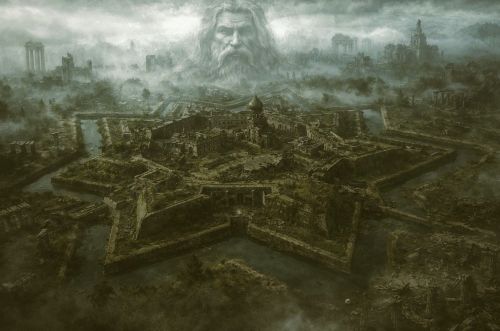
A critical examination of claims about star forts, Tartaria, and “mud floods,” separating conspiracy narratives from verifiable historical and scientific evidence.

By Matthew A. McIntosh
Public Historian
Brewminate
Introduction: The Seduction of Hidden Histories
A video published by the YouTube account Wisdom of the Ancients (hereafter WOTA) advances a sweeping reinterpretation of early modern architecture, asserting that the star-shaped fortresses found across Europe and beyond were not military constructions but remnants of a lost, technologically advanced civilization. According to WOTA, these structures were “the most advanced spiritual machines ever built,” part of a global network designed to harness atmospheric energy and elevate human consciousness rather than serve defensive purposes. This narrative, presented with confident certainty and reinforced through selective visual comparisons and rhetorical questioning, invites viewers to reconsider not only the purpose of these fortifications but the entire trajectory of human development. At its core, the video does not merely challenge a specific historical interpretation; it proposes an alternative past grounded in concealment, suppression, and the deliberate erasure of knowledge.
The appeal of such claims lies not only in their content but in their structure. WOTA frames its argument as a revelation, contrasting a supposedly simplistic “official” narrative with a deeper, hidden truth accessible only to those willing to question established knowledge. This rhetorical move is neither new nor accidental. It echoes longstanding patterns in conspiratorial and counter-historical discourse, in which authority itself becomes suspect and the absence of evidence is reinterpreted as proof of concealment rather than a limitation of the historical record. By positioning its claims as something suppressed or hidden, WOTA effectively insulates its argument from conventional critique, encouraging viewers to see disagreement not as refutation but as further confirmation of a cover-up. The invocation of geometric precision, global coordination, and lost technologies further enhances the narrative’s plausibility for non-specialist audiences, especially when presented with authoritative tone and visual suggestiveness. Moreover, the video’s language consistently shifts the burden of proof away from the claimant and onto established scholarship, asking why historians have “ignored” or “erased” these supposed truths rather than demonstrating their existence through verifiable evidence. The video functions less as a conventional historical argument and more as a form of modern mythmaking, one that reshapes the past in ways that resonate with contemporary distrust of institutions and fascination with hidden systems of power, while simultaneously offering its audience the psychological reward of possessing exclusive insight.
Central to WOTA’s claims is the reinterpretation of star forts themselves, which it presents as anomalies inexplicable within conventional historic contexts. Yet the scholarly literature on early modern fortifications offers a well-documented account of their emergence, grounded in the military transformations of the sixteenth and seventeenth centuries. The development of gunpowder artillery rendered medieval walls increasingly vulnerable, prompting the evolution of the trace italienne, a system of angular bastions designed to maximize defensive coverage and minimize exposure to cannon fire. These fortifications were not isolated or mysterious constructions but part of a broader, transnational exchange of engineering knowledge, shaped by practical military needs and disseminated through widely circulated treatises and the movement of military engineers across Europe. To reinterpret them as evidence of a hidden global energy network requires not only the rejection of this substantial body of evidence but the replacement of documented history with speculative analogy.
Here I address the claims advanced by WOTA directly and systematically, using the transcript of the video as its primary point of reference. Each major assertion (concerning geometry, global coordination, Tartaria, energy systems, and historical suppression) will be examined in turn, first by presenting the argument as stated and then by evaluating it against the strongest available historical, architectural, and scientific scholarship. The goal is not merely to refute a particular set of claims but to illuminate the broader processes through which alternative histories are constructed and sustained. The enduring fascination with lost civilizations and hidden knowledge speaks to genuine human curiosity about the past, but it also underscores the necessity of rigorous methods and verifiable evidence supported by disciplined interpretation in distinguishing history from invention.
What Star Forts Actually Were: Early Modern Military Engineering
Following is the video by “Wisdom of the Ancients” I am addressing here:
WOTA presents star forts as architectural anomalies that cannot be explained within the framework of conventional military history, suggesting instead that they were inherited remnants of a far more advanced civilization. In this interpretation, their geometric precision and global distribution are treated as evidence of a lost technological network rather than the product of human engineering responding to specific historical conditions. Yet such claims overlook the well-documented transformation of warfare in the late medieval and early modern periods, particularly the profound impact of gunpowder artillery on defensive architecture. As cannon became more powerful and accurate during the fifteenth century, traditional high-walled medieval fortifications proved increasingly vulnerable, necessitating a fundamental rethinking of how cities and strategic positions could be defended.
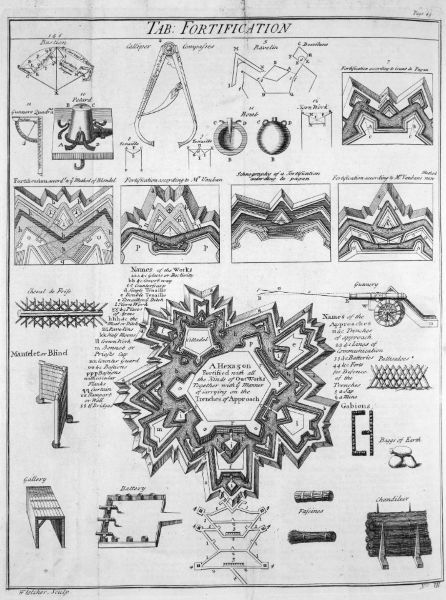
The response to this challenge emerged most clearly in Renaissance Italy, where military engineers began to develop what would later be known as the trace italienne, or “Italian style” of fortification. This system replaced tall, thin walls with lower, thicker ramparts capable of absorbing and deflecting cannon fire, often reinforced with earthen backing that proved far more resilient than stone alone. More importantly, it introduced angular bastions projecting outward from the main walls, allowing defenders to fire along the faces of adjacent walls and eliminate blind spots that attackers might exploit. These bastions were carefully calculated according to geometric principles that ensured optimal coverage and minimized areas vulnerable to assault. The design was not arbitrary but deeply rooted in practical experimentation, with engineers observing how cannon fire interacted with different materials and angles. The resulting star-like shapes, which WOTA interprets as mysterious or spiritually significant, were in fact the logical outcome of maximizing defensive efficiency while adapting to the technological realities of artillery warfare. Far from being inexplicable, the geometry of these fortifications reflects a rational and iterative process of problem-solving grounded in both mathematics and lived military experience.
As these techniques proved effective, they spread rapidly across Europe through the circulation of military treatises and the movement of engineers employed by competing states. Francesco di Giorgio Martini and later Sébastien Le Prestre de Vauban played key roles in refining and standardizing fortification design, transforming it into a highly specialized discipline that combined geometry, materials science, and tactical planning. Printed manuals and detailed diagrams outlining bastion angles, proportional relationships, and construction techniques were widely disseminated, allowing knowledge to move across political boundaries despite ongoing conflicts. Engineers often served multiple courts over their careers, carrying expertise from one region to another and contributing to a shared technical vocabulary. The apparent similarities between star forts in Italy, the Low Countries, France, and beyond are not evidence of hidden coordination but of an increasingly interconnected European intellectual and military culture. These parallels reflect the transmission of knowledge through documented channels rather than the remnants of a vanished global empire, and they demonstrate how innovation can produce consistent forms across different contexts without requiring centralized control.
WOTA further questions the military logic of star forts by noting that many were constructed on flat terrain rather than elevated positions, implying that such locations would have been strategically unsound. This critique reflects a misunderstanding of early modern warfare. While high ground could offer advantages in certain contexts, the defensive strength of a bastion fortification did not depend primarily on elevation but on visibility, overlapping fields of fire, and controlled access to the surrounding landscape. Flat terrain often allowed for clearer lines of sight and more predictable defensive geometry, while the surrounding glacis, a gently sloping embankment, was carefully engineered to expose attacking forces to sustained artillery fire. The placement of star forts was not a flaw but a deliberate adaptation to the realities of siege warfare.
Equally significant is the role of labor and resources as well as state organization in the construction of these fortifications, which WOTA characterizes as logistically impossible for early modern societies. The construction of major fortifications was a central priority for emerging European states, which invested substantial financial and human resources into their development. These projects were often funded through taxation, state treasuries, and, in some cases, extraordinary wartime levies, reflecting their perceived strategic importance. Construction frequently unfolded over extended periods, sometimes decades, with phases of expansion, modification, and reinforcement responding to evolving military needs. Thousands of laborers, including skilled masons, engineers, and unskilled workers, were organized into coordinated efforts supported by increasingly sophisticated administrative systems. Surviving records document the procurement of materials, the allocation of labor, and the technical oversight required to execute these designs, providing clear evidence of how such large-scale projects were managed. Rather than representing an impossibility, the scale of star forts illustrates the growing capacity of early modern states to mobilize resources and apply technical knowledge on a grand scale.
The interpretation of star forts as inexplicable or anomalous structures depends on disregarding this extensive body of historical evidence in favor of speculative alternatives. When examined within their proper context, these fortifications reveal themselves not as remnants of a hidden technological age but as tangible expressions of a period defined by rapid military innovation and intellectual exchange. Their geometric complexity reflects the application of mathematical principles to practical problems, while their widespread distribution illustrates the interconnected nature of early modern Europe rather than the existence of a forgotten global network. In confronting WOTA’s claims, it becomes clear that the true history of star forts is not only well understood but also far more grounded in human ingenuity than the narrative of mystery and suppression allows.
Geometry and Function: Why Star Shapes Are Practical, Not Mystical

A central pillar of WOTA’s argument is the claim that the geometric form of star forts cannot be explained through conventional military logic, but instead reflects a deeper, “sacred” design rooted in spiritual or energetic principles. The video emphasizes the apparent precision and symmetry of these structures, suggesting that their resemblance to geometric forms such as the so-called Merkaba (mysticism surrounding a vision by Ezekiel) indicates intentional alignment with hidden forces rather than practical considerations. WOTA treats geometry itself as evidence of mysticism, implying that mathematical regularity must necessarily signal metaphysical purpose. Yet this interpretation rests on a fundamental misunderstanding of how geometry functions within architectural and engineering contexts, particularly in periods when mathematical reasoning became increasingly central to design.
In early modern fortification theory, geometry was not symbolic but instrumental. The angular bastions that give star forts their distinctive appearance were designed to solve a specific problem: the elimination of blind spots along defensive walls. In medieval fortifications, straight curtain walls created zones that defenders could not easily cover with fire, allowing attackers to approach relatively unchallenged. By projecting bastions outward at carefully calculated angles, engineers ensured that every section of wall could be defended from multiple directions. This principle, often referred to as flanking fire, required precise geometric planning, as even minor deviations in angle could compromise defensive effectiveness. The resulting star-like forms were not expressions of abstract symbolism but the direct outcome of optimizing visibility, coverage, and defensive coordination.
WOTA further suggests that the recurrence of similar geometric forms across different regions implies a shared, hidden knowledge system beyond the scope of documented history. But the spread of geometric fortification design can be fully accounted for through the circulation of military knowledge in early modern Europe. Treatises on fortification, many of which included detailed diagrams and proportional guidelines, were widely printed and studied by engineers and military leaders. These works standardized certain geometric relationships, such as the angles of bastions and the proportional distances between defensive elements, leading to recognizable similarities across fortifications constructed in different regions. This was not evidence of a lost global blueprint but of an increasingly formalized and shared technical language, one grounded in mathematics and reinforced through education and practice.
The association of geometric forms with spiritual or mystical meanings, while historically attested in certain philosophical and religious traditions, does not imply that all uses of geometry carry such connotations. Renaissance architects and engineers were certainly aware of classical ideas linking geometry to harmony and proportion, but in the context of military construction, these ideas were subordinated to practical necessity. The geometry of a star fort was judged not by its symbolic resonance but by its ability to withstand siege, direct artillery fire, and coordinate defensive responses. To interpret these forms primarily through a mystical lens is to invert their actual purpose, attributing meaning where function provides a far more direct and well-supported explanation.
The persistence of the “sacred geometry” interpretation in WOTA’s narrative reflects a broader tendency to conflate aesthetic complexity with hidden significance. Symmetry, repetition, and mathematical order can evoke a sense of wonder, particularly when viewed from an aerial perspective that was unavailable to most early modern observers. Yet such visual impact does not constitute evidence of concealed intention. In the case of star forts, the geometry that appears striking or mysterious to modern viewers is, upon closer examination, entirely consistent with the demands of early modern warfare and the mathematical tools available to those who designed them. By recontextualizing these forms within their historical and functional framework, the need for speculative or mystical explanations falls away, replaced by a clearer understanding of how geometry served as a practical instrument of defense rather than a conduit of hidden energies.
The Myth of Global Synchronization
WOTA advances the claim that the presence of star forts across multiple continents represents evidence of a globally coordinated construction effort, one that could not have been achieved by separate societies operating within the constraints of early modern technology. The video emphasizes perceived similarities in layout, geometry, and scale, arguing that such uniformity implies the existence of a unified civilization with access to advanced knowledge and capabilities. This interpretation reframes what historians understand as the diffusion of military engineering into a narrative of centralized design, suggesting that independent development is implausible and that the accepted historical timeline fails to account for the precision and consistency observed in these structures. By presenting visual comparisons across distant regions as inherently suspicious, WOTA encourages viewers to interpret resemblance as proof of coordination, rather than as the expected outcome of shared technical solutions to common military problems.
The apparent uniformity of star forts dissolves upon closer examination. While many share general features such as bastions, moats, and angular walls, their specific configurations vary considerably depending on local conditions, available materials, and strategic requirements. Fortifications in the Low Countries, for example, often adapted to marshy terrain and incorporated extensive water management systems, while those in Mediterranean regions reflected different environmental and logistical constraints. Even within the same political territory, designs could differ significantly based on the priorities of individual engineers and the evolving nature of military threats. These variations demonstrate that star forts were not replicas of a single template but flexible adaptations of a broader design philosophy.
The spread of this design philosophy can be traced through well-documented channels of knowledge exchange. Early modern Europe witnessed an unprecedented circulation of technical expertise, facilitated by the printing press, the movement of engineers between courts, and the increasing professionalization of military science. Treatises on fortification provided detailed instructions on geometric principles, construction techniques, and defensive strategies, allowing ideas to be replicated and modified across different regions. Engineers trained in one context often applied their knowledge elsewhere, creating a network of shared practices that produced recognizable similarities without requiring any form of hidden coordination. What WOTA presents as inexplicable synchronization is more accurately understood as the result of intellectual and professional exchange within a connected world.
WOTA further implies that the presence of similar fortifications outside Europe, particularly in colonial contexts, supports the idea of a preexisting global network. Yet this too can be explained through historical processes that are extensively documented. As European powers expanded overseas, they carried their military technologies with them, constructing fortifications in the Americas, Africa, and Asia that reflected the same principles developed in Europe. These structures were often built by European engineers or under their supervision, adapting established designs to new environments. The global distribution of star forts is not evidence of an ancient, unified civilization but of early modern imperial expansion and the transfer of knowledge through colonial networks. Moreover, local labor forces, environmental constraints, and regional priorities shaped these constructions in ways that further undermine the idea of strict uniformity, revealing instead a pattern of adaptation layered atop shared principles.
The notion of global synchronization rests on a misinterpretation of similarity as uniformity and diffusion as centralization. WOTA’s argument assumes that shared features must originate from a single, hidden source, overlooking the well-established mechanisms through which ideas spread and evolve. When examined within their historical context, star forts reveal a pattern not of mysterious coordination but of iterative development, shaped by local conditions and informed by a shared body of knowledge. The persistence of the synchronization myth reflects a broader tendency to replace complex, documented processes with simplified narratives of hidden unity, but the evidence consistently points toward a more grounded and human explanation rooted in communication, adaptation, and innovation.
Tartaria: From Cartographic Label to Conspiracy Myth
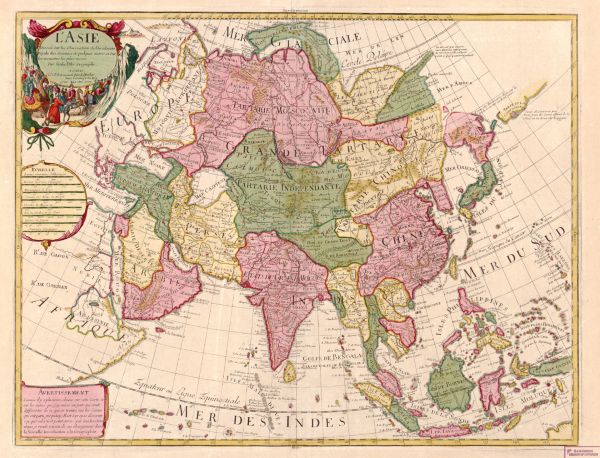
A central component of WOTA’s broader narrative is the invocation of “Tartaria” as evidence of a lost global civilization responsible for monumental architecture, including star forts. The term is presented as the name of a vast, unified empire that has been deliberately erased from historical memory, its achievements reassigned or obscured by later powers. In this framing, historical maps that label large regions of Eurasia as “Tartary” are treated not as descriptive artifacts of early modern geography but as proof of political coherence and advanced civilizational development. This interpretation depends on reading cartographic terminology literally, without accounting for the conventions and limitations of the period in which these maps were produced.
In early modern European cartography, “Tartary” functioned as a broad and imprecise label applied to vast regions of northern and central Asia, many of which were poorly understood by European mapmakers. The term derived from “Tartar,” a word used to describe various nomadic and semi-nomadic groups, particularly those associated with the Mongol Empire and its successor states. Rather than indicating a single, unified polity, “Tartary” served as a geographic placeholder, encompassing multiple distinct cultures, political entities, and territories, including areas that modern historians would identify as parts of Siberia, Central Asia, and the domains of various khanates. Its usage reflects the limits of European knowledge and the tendency to generalize unfamiliar regions, not the existence of a hidden empire with centralized authority or advanced technological capabilities. The label persisted even as political realities on the ground shifted, demonstrating that it was less a precise descriptor than a convenient shorthand for regions beyond detailed European understanding.
The transformation of “Tartary” from a cartographic convenience into a cornerstone of conspiracy theory illustrates how historical terminology can be reinterpreted when removed from its original context. WOTA’s argument treats the presence of the label on maps as evidence of deliberate historical suppression, suggesting that the disappearance of the term from modern usage signals an intentional erasure of truth. The decline of “Tartary” in cartography corresponds with the expansion of geographic knowledge and the increasing precision of mapping practices from the eighteenth century onward. As explorers, traders, and diplomats gathered more detailed information, broad labels gave way to more specific regional and political designations, rendering earlier terminology obsolete rather than concealed.
By reframing a vague geographic term as the name of a lost civilization, WOTA constructs a narrative that appears to fill gaps in historical understanding while actually creating them. The appeal of “Tartaria” lies in its ambiguity, which allows it to absorb a wide range of speculative claims without the constraints of verifiable evidence. Yet when examined through the lens of historical scholarship, the concept dissolves into the realities of early modern cartography and the gradual refinement of geographic knowledge. What is presented as a suppressed empire is, in fact, a reflection of how Europeans once described regions they did not fully understand, a reminder that the language of maps often reveals as much about the mapmaker as it does about the world being mapped. The persistence of this reinterpretation underscores how easily historical labels can be detached from their context and repurposed to support modern narratives that prioritize mystery over evidence, even when the documentary record offers clear and consistent explanations.
The Industrial Revolution: Progress, Disruption, Not Suppression

WOTA situates the Industrial Revolution within a broader narrative of concealment, suggesting that the rapid technological and social transformations of the eighteenth and nineteenth centuries were not genuine developments but a form of historical overwriting. In this view, industrialization becomes less a process of innovation and more a deliberate effort to obscure or dismantle an earlier, more advanced civilization. Factories, railways, and mechanized production are framed as replacements for lost technologies rather than as the culmination of incremental change. This interpretation relies on collapsing complex historical processes into a single, intentional act of suppression, ignoring the extensive body of evidence that documents how industrialization unfolded.
In historical scholarship, the Industrial Revolution is understood as a gradual and uneven transformation driven by a combination of technological innovation, economic change, and social reorganization. Developments such as the mechanization of textile production, the refinement of steam power, and the expansion of coal-based energy systems emerged over decades through experimentation, adaptation, and investment. These changes were not sudden impositions but the result of cumulative advancements that can be traced through patents, workshop practices, and the writings of engineers and entrepreneurs. The transition from artisanal production to factory-based industry reflects a shift in scale and organization rather than the sudden appearance of unfamiliar or inexplicable technologies. Innovations often built directly upon earlier methods, with inventors modifying existing machines to improve efficiency rather than discarding them entirely, illustrating a clear continuity rather than rupture. This incremental process, grounded in trial and error as much as in theoretical knowledge, underscores the fundamentally evolutionary nature of industrial development.
The material record of the Industrial Revolution further undermines claims of suppression. Surviving machinery, factory buildings, and infrastructure projects provide tangible evidence of technological evolution, showing clear lines of development from earlier tools and techniques. Steam engines, for example, can be traced from early atmospheric designs to more efficient high-pressure models, each stage documented and preserved in both physical artifacts and written accounts. These developments were often accompanied by public demonstrations, technical publications, and commercial competition, all of which contributed to a transparent and widely observed process of innovation. Far from being hidden, industrial technologies were aggressively promoted and disseminated, becoming central to economic and national power.
WOTA’s interpretation also overlooks the disruptive and often contested nature of industrialization. The rise of mechanized production generated significant social and economic tensions, including labor displacement, urban overcrowding, and environmental degradation. Workers and communities responded in various ways, from organized protest to the destruction of machinery in movements such as Luddism. These reactions are well documented and reflect a society grappling openly with the consequences of technological change. Far from indicating a concealed past, these conflicts demonstrate how visible and immediate industrial transformation was to those experiencing it firsthand, shaping daily life in ways that could not be ignored or hidden. Industrialization did not unfold quietly in the background but forced itself into public consciousness, provoking debate, resistance, and adaptation across multiple levels of society.
The global spread of industrialization further demonstrates its character as a process of diffusion rather than suppression. Technologies developed in Britain were adopted and adapted in Europe, North America, and beyond, often with significant regional variation. Governments, investors, and engineers actively sought to replicate and improve upon industrial methods, leading to a dynamic exchange of ideas and practices. This expansion was facilitated by trade, migration, and communication networks, all of which are extensively documented. Regions selectively adopted certain technologies while modifying or rejecting others, producing distinct industrial pathways shaped by local economic priorities and resource availability. The diversity of industrial experiences across different regions underscores the absence of a single, hidden origin, instead highlighting the role of local conditions and decision-making in shaping industrial development.
The portrayal of the Industrial Revolution as an act of concealment collapses under the weight of historical evidence. The period is characterized not by secrecy but by visibility, documentation, and debate, with innovations emerging through identifiable processes and leaving enduring traces in both the material and written record. By reframing industrialization as suppression, WOTA substitutes a narrative of intentional erasure for one of complex transformation, obscuring the very dynamics that made the Industrial Revolution such a pivotal moment in human history. A closer examination reveals a story not of hidden technologies lost and replaced, but of continuous change driven by human ingenuity, economic pressures, and the evolving relationship between society and technology.
The “Mud Flood” and Catastrophe Narratives
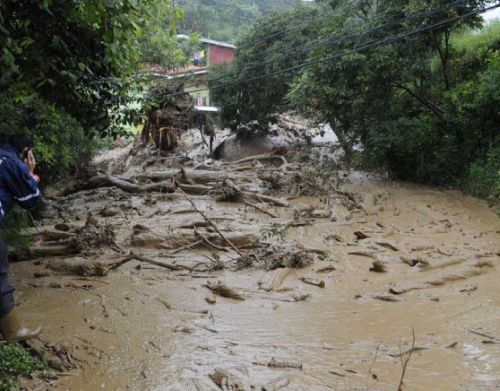
Among the more striking elements of WOTA’s argument is the invocation of a supposed “mud flood,” a global or near-global catastrophic event said to have buried entire cities and civilizations beneath layers of sediment. According to this narrative, many historical buildings, including star forts and monumental architecture, are partially submerged remnants of a preexisting world, later excavated and repurposed by subsequent societies. Visual cues such as buried lower floors, basement windows, and uneven ground levels are presented as evidence of this catastrophe, with the implication that conventional history has deliberately ignored or concealed the event. This framing transforms ordinary architectural and urban features into signs of a hidden disaster, inviting viewers to reinterpret familiar environments as fragments of a lost past. By assembling these observations into a single explanatory framework, WOTA constructs a narrative that appears internally consistent, even as it departs significantly from established historical and archaeological understanding.
In historical and archaeological scholarship, there is no evidence of a global mud flood event of the kind described by WOTA. While localized flooding, sediment deposition, and urban rebuilding are well-documented phenomena, they occur within specific environmental and historical contexts rather than as part of a single, worldwide catastrophe. River floods, coastal storms, and gradual changes in land use can all lead to the accumulation of sediment and the alteration of ground levels over time. Cities built along major waterways often experience cycles of flooding and reconstruction that leave visible traces in the built environment. These processes are extensively studied and supported by stratigraphic analysis, which reveals layered deposits corresponding to distinct events rather than a single, uniform burial. Archaeologists rely on these layers to reconstruct timelines of occupation and change, demonstrating continuity and variation rather than abrupt, universal disruption.
The architectural features cited as evidence of a mud flood can be more convincingly explained through standard construction practices and patterns of urban development. Buildings with partially buried lower levels, for example, are common in cities that have undergone successive phases of expansion and renovation. Streets are raised to improve drainage or accommodate increased traffic, while older structures are modified rather than demolished, resulting in the appearance of “sunken” floors or windows. In some cases, what appear to be buried stories were originally designed as basements or service levels, intended for storage, utilities, or servants’ quarters. These design choices reflect practical considerations rather than the aftermath of a catastrophic event.
WOTA’s interpretation also relies heavily on visual comparison and anecdotal observation, often drawing conclusions from isolated examples without situating them within broader historical or environmental contexts. Photographs of buildings with partially obscured lower sections are presented as representative of a global pattern, despite significant variation in local conditions and construction histories. This method privileges surface appearance over systematic analysis, encouraging conclusions that are not supported by the wider body of evidence. When examined through archaeological methods, including excavation, dating techniques, and contextual analysis, these sites consistently reveal gradual processes of accumulation and modification rather than sudden, large-scale burial. The absence of consistent global stratigraphic markers further undermines the idea of a single catastrophic event, reinforcing the conclusion that these features arise from localized and historically specific processes.
The appeal of the mud flood narrative lies in its ability to provide a dramatic and unifying explanation for a range of otherwise mundane features. By attributing buried structures and altered landscapes to a single catastrophic event, WOTA offers a coherent story that appears to resolve perceived anomalies in the historical record. Yet this coherence is achieved by simplifying complex processes and ignoring the diversity of factors that shape urban environments. Real-world cities are the product of continuous change, influenced by economic development, environmental conditions, and human decision-making, all of which leave layered and sometimes irregular traces.
The mud flood hypothesis exemplifies how catastrophe narratives can emerge from the misinterpretation of ordinary phenomena. By reimagining incremental and well-documented processes as evidence of hidden disaster, WOTA replaces historical and archaeological explanation with speculative storytelling. A closer examination of the evidence reveals not a buried global civilization, but the accumulated effects of centuries of construction, adaptation, and environmental interaction. The buildings and landscapes cited as proof of a mud flood instead testify to the resilience and continuity of human settlement, shaped by forces that are both observable and historically grounded.
Pseudoscience and the Misuse of Physics
A defining feature of WOTA’s argument is its invocation of scientific language to lend credibility to claims that fall outside established historical and physical understanding. Terms such as “energy,” “frequency,” and “vibration” are used to suggest that star forts and other architectural forms were designed to interact with invisible forces, implying a level of technological sophistication not recognized by mainstream scholarship. These references are presented as evidence that conventional science has either overlooked or deliberately ignored key principles, positioning WOTA’s interpretation as a corrective to an incomplete or suppressed body of knowledge. Yet this rhetorical strategy depends less on the application of physics than on the selective appropriation of its vocabulary, detached from the frameworks that give such terms their meaning.
In physics, concepts like energy and frequency have precise definitions and are governed by measurable relationships. Energy refers to the capacity to do work, expressed in quantifiable forms such as kinetic, potential, thermal, or electromagnetic energy. Frequency describes the rate at which a periodic event occurs, typically measured in cycles per second. These concepts are embedded within mathematical models and empirical methods that allow for prediction, testing, and verification. When used in scientific contexts, they are not metaphors or general descriptors but specific quantities that can be observed and measured, often with high degrees of precision. WOTA’s usage, by contrast, treats these terms as flexible signifiers, invoking their scientific resonance without adhering to their definitional constraints. This shift from precise measurement to vague implication allows the argument to appear grounded in science while avoiding the rigor that scientific claims require.
The claim that star forts functioned as devices for harnessing or directing energy illustrates this misuse of scientific language. No credible evidence exists to suggest that these structures were designed with such purposes in mind, nor do their materials or configurations support such interpretations. The geometry of star forts, as established by early modern military engineering, reflects the requirements of defense rather than the manipulation of physical forces in the sense implied by WOTA. Stone, brick, and earthwork constructions lack the properties necessary for generating or transmitting energy in the ways described, and no historical sources indicate that their builders possessed or pursued such capabilities. The attribution of hidden energetic functions to these structures relies on analogy and speculation rather than on demonstrable physical principles.
WOTA’s argument also exemplifies a broader pattern in pseudoscience: the conflation of complexity with hidden functionality. Structures that appear intricate or visually striking are interpreted as evidence of advanced technology, with their design features reimagined as components of a system that modern observers have yet to fully understand. This approach often bypasses the need for empirical validation, substituting visual impression and intuitive appeal for systematic analysis. It creates a self-reinforcing framework in which the absence of evidence is reinterpreted as evidence of concealment, and the lack of measurable effects is attributed to lost knowledge or suppressed science.
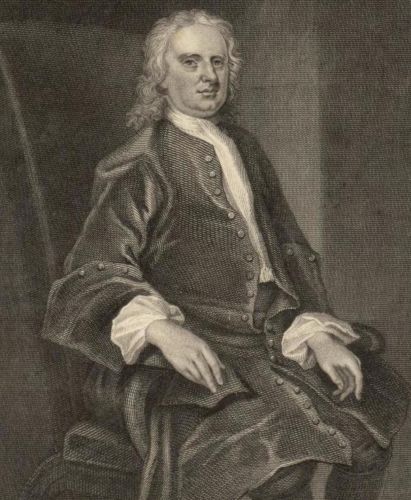
The historical development of physics itself further undermines the plausibility of WOTA’s claims. The principles governing energy, electromagnetism, and wave behavior were established through centuries of experimentation and theoretical refinement, particularly from the seventeenth century onward. Isaac Newton, Michael Faraday, and James Clerk Maxwell contributed to a body of knowledge that is extensively documented and continuously tested. These developments did not emerge from the rediscovery of ancient technologies but from sustained inquiry into observable phenomena. Their work was built incrementally, with later scientists refining, challenging, and expanding earlier theories through experimentation and mathematical modeling. The absence of any reference to star forts or similar structures within this body of work suggests that their functions were unrelated to the physical processes WOTA attributes to them, reinforcing the conclusion that such claims are speculative rather than evidence-based.
The use of scientific language in WOTA’s narrative serves to create an impression of authority without engaging with the standards of evidence that define scientific inquiry. By borrowing terminology while disregarding its methodological context, the argument blurs the distinction between explanation and speculation. A careful examination reveals that the concepts invoked do not support the conclusions drawn, and that the phenomena described can be more coherently understood through established historical and physical frameworks. Rather than uncovering hidden technologies, WOTA’s interpretation demonstrates how easily the language of science can be repurposed to support narratives that lack empirical foundation, highlighting the importance of maintaining clear boundaries between scientific reasoning and speculative interpretation.
Conspiracy Thinking and Narrative Structure
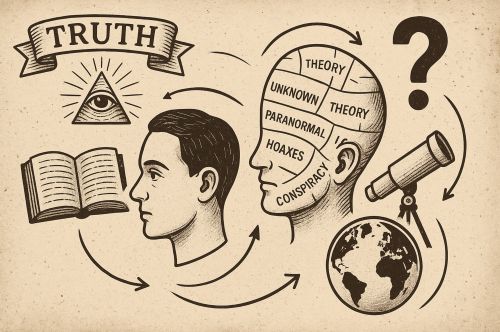
WOTA’s interpretation of star forts and related phenomena is not simply a collection of isolated claims but part of a broader narrative structure characteristic of conspiracy thinking. At its core, this structure depends on the assumption that official accounts of history are fundamentally unreliable, either because they are incomplete or because they have been deliberately manipulated by powerful actors. This premise creates a framework in which alternative explanations are not only plausible but necessary, positioning the viewer as someone capable of seeing through deception. By framing conventional scholarship as suspect, WOTA establishes a rhetorical environment in which its own claims can operate with reduced scrutiny, as disagreement becomes evidence of complicity rather than a prompt for critical evaluation.
A key feature of this narrative structure is the reinterpretation of absence as presence. Gaps in the historical record, uncertainties in interpretation, or the natural limits of available evidence are treated not as areas for cautious inquiry but as proof of deliberate concealment. When documentation does not support a claim, the absence itself is recast as evidence that the truth has been suppressed. This inversion allows the argument to remain resilient in the face of contradiction, as any challenge can be absorbed into the overarching narrative of hidden knowledge. The lack of direct evidence for a lost civilization or advanced technology becomes, paradoxically, one of the central pillars supporting its supposed existence.
WOTA also relies heavily on pattern recognition, encouraging viewers to identify similarities across disparate contexts and to interpret these similarities as meaningful connections. Visual resemblances between structures, recurring geometric forms, and shared architectural features are presented as components of a larger, unified system. While pattern recognition is a fundamental aspect of human cognition, it becomes problematic when it is detached from contextual analysis and empirical validation. In the absence of rigorous methodology, patterns can be perceived where none exist, or where they can be more convincingly explained through known historical processes such as diffusion, adaptation, and convergence. This tendency is amplified by selective comparison, in which examples that fit the proposed pattern are highlighted while those that do not are ignored or dismissed. The appearance of coherence is constructed through curation rather than demonstrated through comprehensive analysis, reinforcing conclusions that may not withstand broader scrutiny.
Another defining characteristic of conspiracy-oriented narratives is their tendency toward self-sealing logic. Once the framework is established, it becomes difficult to falsify because it incorporates mechanisms that neutralize counterarguments. Evidence that contradicts the narrative is dismissed as fabricated or manipulated, while supporting evidence is amplified regardless of its reliability. This creates a closed interpretive system in which conclusions are effectively predetermined, and the process of evaluation serves primarily to reinforce existing beliefs. WOTA’s approach reflects this pattern, as it privileges interpretations that align with its central thesis while marginalizing or reinterpreting information that does not.
Understanding the narrative structure of WOTA’s argument does not require dismissing it outright, but it does require situating it within a broader context of how such narratives function. By examining the mechanisms through which claims are constructed, supported, and defended, it becomes possible to distinguish between interpretations grounded in evidence and those sustained by rhetorical strategies. In the case of star forts and related phenomena, the historical and archaeological record provides coherent explanations that account for their form, distribution, and development. The persistence of alternative narratives reflects not a failure of evidence, but the enduring appeal of stories that promise hidden truths and challenge established knowledge, offering a sense of discovery that can be difficult to resist even when it departs from verifiable reality.
Architecture, Meaning, and Human Imagination
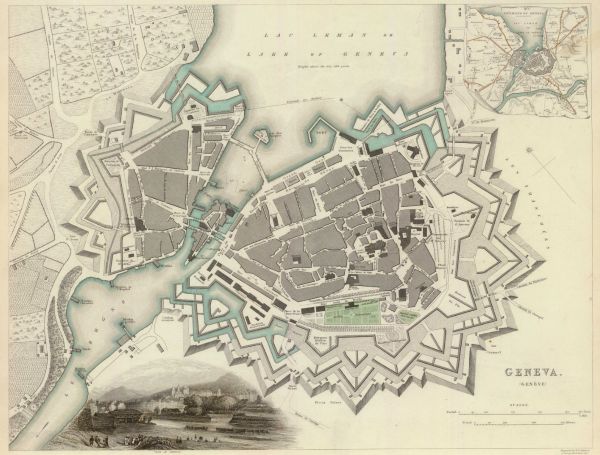
Architecture has always existed at the intersection of function and meaning, where practical necessity and human interpretation converge. Structures such as star forts were designed with specific purposes in mind, shaped by the demands of warfare, engineering constraints, and available materials. Yet these same structures acquire additional layers of meaning, as later observers project their own perspectives onto the built environment. WOTA’s interpretation reflects this dynamic, transforming functional designs into symbols of hidden knowledge. This process is not unique to conspiracy narratives but is part of a broader human tendency to seek deeper significance in forms that appear ordered, symmetrical, or visually striking.
The appeal of geometric architecture lies in its capacity to evoke both clarity and mystery. Symmetry and proportion can suggest intentionality and precision, qualities that often invite interpretation beyond their immediate purpose. In the case of star forts, their radial patterns and angular forms create a visual impact that can seem to transcend simple utility, particularly when viewed from above. For modern audiences accustomed to aerial imagery, these designs can appear almost abstract, resembling diagrams or symbols rather than defensive structures. This shift in perspective plays a crucial role in shaping how such architecture is perceived, as forms originally intended for ground-level interaction are reimagined through a detached, panoramic lens.
Historical context anchors these forms in the practical realities of their time. Early modern engineers approached fortification as a problem to be solved through calculation, observation, and adaptation. The geometry of star forts emerged from this problem-solving process, reflecting a balance between theoretical principles and empirical experience. While aesthetic considerations were not entirely absent, they were secondary to the demands of defense and construction. The resulting designs demonstrate how mathematical reasoning could be applied to real-world challenges, producing structures that were both effective and, to later observers, visually compelling.
The reinterpretation of such structures through imaginative frameworks highlights the flexibility of architectural meaning. Buildings do not possess fixed interpretations; their significance evolves as they are encountered by different audiences in different contexts. What one generation understands as a military installation, another may see as a work of art, a historical artifact, or even a symbol of something more elusive. WOTA’s narrative represents one such reinterpretation, drawing on contemporary interests in hidden knowledge and alternative histories to recast familiar forms in unfamiliar ways. While this perspective diverges from established scholarship, it illustrates how architecture can serve as a canvas for a wide range of interpretive possibilities.
The projection of meaning onto architecture must be balanced by attention to evidence and context. Without this grounding, interpretation can drift into speculation, attributing intentions and functions that are not supported by historical or material records. The challenge lies in distinguishing between interpretations that enrich understanding and those that obscure it. In the case of star forts, the wealth of documentation surrounding their design and construction provides a firm basis for interpretation, allowing their forms to be understood within the framework of early modern military engineering rather than as expressions of hidden or mystical knowledge.
The enduring fascination with structures like star forts speaks to the broader relationship between human imagination and the material world. Architecture invites interpretation because it embodies both intention and ambiguity, offering forms that can be read in multiple ways. WOTA’s narrative, while not supported by historical or scientific evidence, taps into this interpretive impulse, demonstrating how easily meaning can be expanded beyond its original context. By situating these interpretations alongside established knowledge, it becomes possible to appreciate both the imaginative appeal of such narratives and the importance of grounding our understanding in evidence, ensuring that the stories we tell about the past remain connected to the realities from which they emerge.
Historiography: How Real History Is Constructed
At the heart of WOTA’s claims lies a fundamental misunderstanding of how history itself is constructed. The narrative assumes that historical knowledge is a fixed body of facts handed down by authority, vulnerable to manipulation or erasure by those in power. In contrast, historiography, the study of how history is written and interpreted, reveals a far more dynamic and transparent process. Historical knowledge emerges through the critical examination of sources, the comparison of evidence, and the ongoing debate among scholars. Rather than being static or monolithic, history is continually revised and refined as new evidence is discovered and existing interpretations are reassessed.
Primary sources form the foundation of this process, providing direct evidence from the periods under study. These include documents such as letters, official records, maps, architectural plans, and material artifacts, each offering insight into specific aspects of past societies. Historians do not accept these sources at face value but analyze them critically, considering their context, purpose, and limitations. A military treatise on fortification, for example, is examined not only for its technical content but also for what it reveals about the priorities and assumptions of its author. This careful evaluation allows historians to construct interpretations that are grounded in evidence while acknowledging the partial and sometimes contradictory nature of the sources themselves. Cross-referencing between multiple types of sources further strengthens this process, as written records can be compared with archaeological findings, visual representations, and material remains to build a more comprehensive understanding. Individual pieces of evidence are not treated in isolation but as part of a broader evidentiary network that supports or challenges specific interpretations.
Secondary scholarship builds upon this foundation, synthesizing primary evidence into broader interpretations and narratives. Historians engage with one another’s work, challenging conclusions, proposing alternatives, and refining arguments over time. This process of scholarly exchange is essential to the development of historical understanding, as it subjects ideas to scrutiny and encourages the incorporation of diverse perspectives. In fields such as early modern military history, this has led to increasingly nuanced accounts of technological development, state formation, and the social impact of warfare. The resulting body of scholarship reflects not a single, unified viewpoint but a conversation that evolves as new questions are asked and new methods are applied.
WOTA’s portrayal of history as something that can be easily rewritten or suppressed overlooks the scale and complexity of this scholarly enterprise. Historical knowledge is not confined to a single institution or authority but is distributed across archives, universities, museums, and independent researchers around the world. Documents are preserved in multiple locations, often in different languages and formats, making comprehensive erasure extraordinarily difficult. Moreover, the collaborative nature of historical research means that claims are constantly tested against a wide range of evidence and interpretations. Errors and biases do occur, but they are subject to correction through the same processes that produce historical knowledge in the first place. The decentralized and often international character of historical scholarship ensures that no single perspective can dominate unchallenged, as competing interpretations are continually evaluated and debated within the academic community. This ongoing process of critique and revision serves as a safeguard against the kind of totalizing control implied by conspiracy narratives.
Understanding historiography clarifies why claims of hidden civilizations or suppressed technologies require a level of coordination and control that is incompatible with the realities of historical practice. To sustain such a narrative, one would have to assume not only the existence of overwhelming evidence but also its successful concealment across countless independent institutions and scholars. The absence of such evidence, combined with the robustness of existing documentation, points instead to the reliability of established historical methods. By examining how history is actually constructed, it becomes clear that the explanatory power of conventional scholarship lies not in authority alone, but in its commitment to evidence, transparency, and critical inquiry.
Conclusion: The Danger of Invented Pasts
The arguments advanced by WOTA rest on the transformation of uncertainty into certainty and speculation into narrative. By reinterpreting architectural forms, historical terminology, and scientific language through a lens of hidden knowledge, the video constructs a cohesive story that appears to resolve perceived gaps in the historical record. Yet this coherence is achieved not through the accumulation of evidence, but through its selective use and reinterpretation. The result is a version of the past that feels compelling precisely because it simplifies complexity, offering clear answers where historical inquiry often presents nuance and ambiguity.
The danger of such invented pasts lies not only in their factual inaccuracy but in their capacity to reshape how history is understood and evaluated. When speculative narratives are presented as alternatives to established scholarship, they can erode trust in the methods and institutions that produce historical knowledge. This shift encourages a mode of thinking in which evidence is secondary to interpretation, and where the appeal of a narrative outweighs its explanatory validity. The distinction between history and storytelling becomes increasingly blurred, making it more difficult to assess claims on the basis of verifiable information.
The persistence of these narratives highlights an important aspect of historical engagement: the desire for discovery and reinterpretation. People are drawn to the idea that there are hidden layers of the past waiting to be uncovered, that familiar landscapes and structures might conceal deeper truths. This impulse is not inherently problematic; indeed, it has driven many legitimate historical inquiries. The challenge arises when this curiosity is directed toward explanations that bypass the evidentiary standards necessary to distinguish between plausible interpretation and unfounded speculation.
A critical engagement with the past requires both openness to new perspectives and a commitment to rigorous evaluation. The study of star forts, early modern engineering, and the broader historical processes discussed here demonstrates that conventional scholarship is neither static nor dismissive of complexity. Instead, it provides frameworks for understanding that are grounded in evidence and subject to continual refinement. By recognizing the difference between imaginative reinterpretation and historically supported analysis, it becomes possible to appreciate the allure of alternative narratives while maintaining a clear commitment to the principles that sustain meaningful historical inquiry.
Bibliography
- Allen, Robert C. The British Industrial Revolution in Global Perspective. Cambridge: Cambridge University Press, 2009.
- Barkun, Michael. A Culture of Conspiracy: Apocalyptic Visions in Contemporary America. Berkeley: University of California Press, 2013.
- Black, Jeremy. European Warfare, 1494–1660. London: Routledge, 2002.
- Bloch, Marc. The Historian’s Craft. Translated by Peter Putnam. New York: Vintage Books, 1949.
- Butter, Michael. The Nature of Conspiracy Theories. Cambridge: Polity Press, 2020.
- Byford, Jovan. Conspiracy Theories: A Critical Introduction. New York: Palgrave Macmillan, 2011.
- Carr, E. H. What Is History? London: Penguin Books, 1961.
- Dear, Peter. The Intelligibility of Nature: How Science Makes Sense of the World. Chicago: University of Chicago Press, 2006.
- —-. Revolutionizing the Sciences: European Knowledge and Its Ambitions, 1500–1700. Princeton: Princeton University Press, 2001.
- Duffy, Christopher. Fire and Stone: The Science of Fortress Warfare 1660–1860. London: Greenhill Books, 1975.
- Elior, Rachel. “Merkabah Mysticism: A Critical Review.” Numen 37:2 (1990), 233-249.
- Evans, Richard J. In Defence of History. London: Granta Books, 1997.
- Fagan, Brian. Floods, Famines, and Emperors: El Niño and the Fate of Civilizations. New York: Basic Books, 1999.
- Fenster, Mark. Conspiracy Theories: Secrecy and Power in American Culture. Minneapolis: University of Minnesota Press, 1999.
- Forty, Adrian. Words and Buildings: A Vocabulary of Modern Architecture. London: Thames & Hudson, 2000.
- Hale, John R. War and Society in Renaissance Europe, 1450–1620. Baltimore: Johns Hopkins University Press, 1985.
- Harley, J. B., and David Woodward, eds. The History of Cartography, Volume 3: Cartography in the European Renaissance. Chicago: University of Chicago Press, 2007.
- Harris, Edward C. Principles of Archaeological Stratigraphy. London: Academic Press, 1989.
- Heilbron, J. L. Electricity in the 17th and 18th Centuries: A Study of Early Modern Physics. Berkeley: University of California Press, 1979.
- Kostof, Spiro. A History of Architecture: Settings and Rituals. 2nd ed. New York: Oxford University Press, 1995.
- Martini, Francesco di Giorgio. Trattati di Architettura, Ingegneria e Arte Militare. Edited by Corrado Maltese. Milan: Il Polifilo, 1841.
- Maxwell, James Clerk. A Treatise on Electricity and Magnetism. Oxford: Clarendon Press, 1873.
- Mokyr, Joel. The Enlightened Economy: An Economic History of Britain 1700–1850. New Haven: Yale University Press, 2009.
- Mumford, Lewis. The City in History: Its Origins, Its Transformations, and Its Prospects. New York: Harcourt, Brace & World, 1961.
- Newton, Isaac. Philosophiæ Naturalis Principia Mathematica. London, 1687.
- Parker, Geoffrey. The Military Revolution: Military Innovation and the Rise of the West, 1500–1800. Cambridge: Cambridge University Press, 1988.
- Parrott, David. The Business of War: Military Enterprise and Military Revolution in Early Modern Europe. Cambridge: Cambridge University Press, 2012.
- Pedretti, Carlo. Leonardo Architect. New York: Rizzoli International Publications, Inc., 1981.
- Riasanovsky, Nicholas V., and Mark D. Steinberg. A History of Russia. New York: Oxford University Press, 2011.
- Smith, Monica L. Cities: The First 6,000 Years. New York: Viking, 2019.
- Stearns, Peter N. The Industrial Revolution in World History. Boulder: Westview Press, 1993.
- Tosh, John. The Pursuit of History: Aims, Methods, and New Directions in the Study of History. London: Routledge, 1984.
- Trachtenberg, Marvin, and Isabelle Hyman. Architecture: From Prehistory to Post Modernism. New York: Harry N. Abrams, 2002.
- Vauban, Sébastien Le Prestre de. A Manual of Siegecraft and Fortification. Translated and edited from original writings. London: Greenhill Books, 1968.
- Woodward, David. “Maps and the Rationalization of Geographic Space.” In The History of Cartography, edited by J. B. Harley and David Woodward. Chicago: University of Chicago Press, 2007.
- Wootton, David. The Invention of Science: A New History of the Scientific Revolution. New York: HarperCollins, 2015.
- Wrigley, E. A. Energy and the English Industrial Revolution. Cambridge: Cambridge University Press, 2010.
Originally published by Brewminate, 04.14.2026, under the terms of a Creative Commons Attribution-NonCommercial-NoDerivatives 4.0 International license.
About the Author