Ancient slavery did not erase family life among the enslaved; it made kinship conditional, fragile, and vulnerable to ownership.

By Matthew A. McIntosh
Public Historian
Brewminate
Introduction: The Family under the Sign of Property
To speak of enslaved families in the ancient world is to begin with a contradiction. Enslaved people formed households, loved partners, bore children, raised the young, mourned the dead, remembered kin, and sometimes left behind inscriptions that speak in the language of marriage, parenthood, and devotion. Yet the legal systems that governed them rarely treated those bonds as rights. In Greek and Roman societies especially, the family was central to citizenship, inheritance, household religion, legitimacy, and social order, but enslaved people were placed outside the legal architecture that made those bonds secure. Their kinship existed as human reality before it existed as law, and often it never entered law at all. That gap between lived intimacy and legal erasure is the beginning of the history. Ancient slavery did not simply exploit labor. It placed the most vulnerable parts of human life, birth, sexuality, childhood, partnership, and memory, under the sign of property.
This does not mean that slavery was identical across the ancient world. Debt bondage in Mesopotamia, chattel slavery in Athens, helotry in Sparta, domestic slavery in Rome, agricultural labor on large estates, and forced labor in mines all produced different forms of dependency and violence. Some enslaved people lived inside households and worked as nurses, tutors, cooks, attendants, secretaries, accountants, craftspeople, or administrators, occupying spaces close enough to the free family to become indispensable while still remaining legally disposable. Others labored in fields, workshops, quarries, and mines where family formation was difficult or nearly impossible, not because enslaved people lacked the desire or capacity for kinship, but because the organization of labor itself was designed around exhaustion, surveillance, mobility, and replacement. Some were born into slavery; others were captured in war, sold by pirates, abandoned as infants, punished by law, transferred through debt, or inherited along with houses, land, animals, and tools. In some places, enslaved people could form stable unions with the permission or indifference of owners. In others, the conditions of work, sale, transport, and discipline broke those bonds before they could become durable. The ancient slave family cannot be described as a single institution. It must be followed across labor systems, legal categories, and economic settings. What remains consistent is the fragility of enslaved kinship. Whether tolerated, encouraged, ignored, or broken, the family of the enslaved person remained dependent on power outside itself.
Roman law gives especially sharp language to this condition because it classified human beings according to status with brutal clarity. The jurist Gaius opened his treatment of persons with the distinction that all human beings were either free or enslaved, a formulation that exposes the legal imagination of Roman society at its root. The enslaved person was human in body, speech, skill, affection, and suffering, but legally subject to ownership. Enslaved people could not contract a lawful Roman marriage, though they could enter quasi-marital unions often described as contubernium. These unions might be acknowledged by masters, recorded in inscriptions, or treated as socially meaningful within the household, but they lacked the full legal force of marriage. Children born to enslaved women generally inherited the condition of the mother, transforming reproduction itself into a mechanism of property. In that world, a child could be loved as a son or daughter by an enslaved parent while being counted by the owner as an asset.
Ancient slavery did not abolish family life among the enslaved. It made family life conditional. The enslaved family survived in kitchens, nurseries, barracks, estate quarters, burial inscriptions, whispered customs, remembered names, and the stubborn emotional practices of people whom law tried to reduce to things. But survival should not be mistaken for protection. A spouse could be sold, a child transferred, a mother sexually exploited, a father manumitted apart from his children, or a household divided by inheritance. The ancient world’s slave systems varied widely, but again and again they subordinated kinship to ownership. That is what made the enslaved family both real and precarious: it existed everywhere, yet everywhere under threat from the legal and economic order that refused to see enslaved people first as husbands, wives, parents, children, and kin.
Before Greece and Rome: Debt, Household Dependence, and Family Vulnerability in the Ancient Near East

Before the better-documented slave systems of Greece and Rome, the ancient Near East had already developed complex forms of dependence in which family vulnerability was closely tied to debt, conquest, household labor, and institutional power. Mesopotamian law collections, royal inscriptions, administrative records, and sale documents reveal societies in which slavery did not always appear as a single, uniform condition. Some enslaved people were war captives. Others were born into servile status, purchased in markets, transferred between households, pledged for debt, or attached to temples and palaces. The distinction matters because Near Eastern slavery often occupied a broad spectrum between permanent chattel enslavement, temporary debt servitude, and household dependency. Yet across that spectrum, the family was repeatedly exposed to forces it could not control. A household that fell into debt could lose not only land, goods, or livestock, but also the labor and bodies of wives, sons, daughters, and dependents.
The law collection associated with Hammurabi, king of Babylon in the eighteenth century BCE, offers one of the clearest windows into this world, not because it describes everyday life completely, but because it reveals the assumptions that elite legal culture considered intelligible. Several provisions address debt, pledging, household authority, and servile status, showing how economic crisis could move family members into conditions of dependence. A debtor might pledge a wife, son, or daughter into service, though the law attempted to regulate the duration of some such arrangements. These limits should not be mistaken for humanitarian equality. They show that law recognized the danger of household collapse while still permitting the use of family members as instruments of repayment. The legal imagination here is revealing. It did not treat the household as a purely sentimental space, nor did it imagine family members as detached individuals standing equally before the law. The household was a productive, reproductive, and economic unit, organized around hierarchy, obligation, and patriarchal authority. When debt entered that structure, it did not merely threaten possessions outside the family. It could move inward, reaching the people whose labor made the household viable in the first place. The family stood at the center of economic life, but that centrality made it vulnerable. Kin were not merely loved ones or heirs. They were labor power, legal dependents, and, in moments of desperation, negotiable assets.
This Near Eastern pattern differs from later Greek and Roman chattel slavery in important ways. Debt servitude did not always mean permanent enslavement, and some legal provisions distinguished between native debt dependents and enslaved outsiders acquired through war or purchase. Nevertheless, those distinctions did not erase the violence of dependency. To be pledged for debt, transferred into another household, or held under the authority of a creditor meant that family life could be reorganized by economic pressure. A child’s labor might be claimed by someone outside the family. A wife or daughter could be placed in a vulnerable domestic environment. A son could be removed from the authority of his own household and placed under another man’s control. Even when such arrangements were temporary in legal theory, they exposed the weakness of kinship when measured against debt, hierarchy, and property. The ancient household protected its members only so long as it remained solvent, recognized, and powerful enough to defend them.
War intensified this vulnerability. Across the ancient Near East, conquest regularly produced captives who could be deported, distributed, sold, incorporated into elite households, or assigned to temples, palaces, and agricultural labor. Royal inscriptions often present conquest as triumph, order, and divine favor, but beneath that language lay the dislocation of families and communities. Captivity could sever people from their kin, homeland, language, gods, and legal identity. The enslaved captive was not simply a laborer newly attached to a master. He or she was often a survivor of political collapse, someone whose previous social world had been broken by military power. Children could be absorbed into households that renamed, trained, or exploited them. Women could be placed in domestic, sexual, or reproductive vulnerability. Men might be assigned to heavy labor or institutional service. The violence of conquest became a violence against genealogy itself, interrupting descent, inheritance, memory, and the ordinary transmission of family life. This was especially consequential because ancient identity was deeply embedded in household, city, temple, land, and lineage. To be removed from those settings was not only to lose freedom in the narrow legal sense. It was to be displaced from the structures through which a person’s name, ancestry, obligations, cult, and future had meaning. War captivity did not always destroy biological kinship, but it placed kinship under conditions where recognition became fragile. A child taken young might remember little of origin. A woman placed in a foreign household might bear children who belonged socially and legally to another lineage. A man transported for labor might vanish from his family’s memory except as loss. Conquest converted political defeat into intimate dispossession.
Temples and palaces also shaped the condition of dependent families. These institutions controlled land, labor, storage, craft production, and redistribution, and they could absorb servile workers into large administrative systems. Dependence was not always identical to private household slavery, but it could still subordinate family life to institutional need. Workers might be counted, assigned, rationed, transferred, or grouped according to labor category rather than kinship. Administrative texts rarely pause to describe the emotional consequences of such arrangements, which is itself revealing. The archive sees workers as units of obligation, production, or distribution. Yet behind those records were people whose marriages, children, and household ties had to survive within structures designed for extraction and control. Institutional dependence could create a kind of managed stability, since workers attached to temples or palaces might remain in place long enough to form relationships, have children, and participate in routines of provision. But that stability was not the same as autonomy. It depended on the institution’s needs, records, rations, and assignments. A family might live together because the system found it useful, not because the family possessed an independent right to remain intact. The same apparatus that distributed grain or recorded labor could also separate, reclassify, or relocate. The ancient Near Eastern family was not outside the economy. It was one of the places where the economy acted most deeply.
This early history matters because it prevents beginning slavery’s assault on the family too late, as though Greece and Rome invented the problem. Long before classical Athens or imperial Rome, ancient societies had already learned how to convert human dependency into household advantage, creditor power, royal wealth, and institutional labor. The Near Eastern evidence also complicates any simple model of slavery. Family separation did not always occur through outright sale in a market. It could happen through debt, pledging, conquest, deportation, administrative assignment, or the slow absorption of vulnerable people into stronger households. The result was a world in which kinship remained essential but insecure. Families organized labor, inheritance, identity, and survival, but when power moved against them, law and economy could turn those same bonds into pathways of dispossession.
Classical Greece: Household Slavery, Civic Freedom, and the Unfree Family
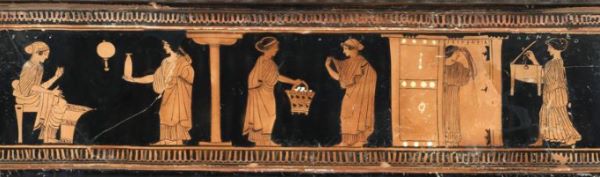
Classical Greece sharpened the contradiction between household intimacy and legal exclusion. In the Greek city-state, and especially in democratic Athens, freedom was not simply a private condition. It was a civic identity, a legal status, and a claim to participation in the community’s political and religious life. The citizen household, or oikos, stood at the center of that order. It organized marriage, inheritance, legitimacy, property transmission, ancestor memory, and the production of future citizens. Yet enslaved people lived inside and around this household world while being denied the legal standing that made family secure. They cooked meals, nursed children, worked wool, accompanied women, educated boys, managed shops, carried messages, and performed the countless tasks that allowed free households to function. Their labor sustained the family order of citizens, but their own kinship remained fragile because the law recognized them primarily through ownership rather than belonging.
Athens is especially revealing because its democratic self-image depended on a strong distinction between the free citizen and the enslaved outsider. The legal and ideological language of the polis made freedom a defining mark of citizenship, but that freedom rested on the presence of people who could be bought, sold, punished, leased, inherited, and compelled to work. Enslaved people in Athens came from many backgrounds, including war captivity, piracy, trade, birth within slavery, and purchase through wider Mediterranean markets. Their ethnic and geographic origins varied greatly, which meant that enslavement often began with displacement. A person brought into an Athenian household as a slave might already have lost language, homeland, kin, and civic identity before entering the daily life of the master’s oikos. This displacement mattered for family history because the enslaved person’s previous social world was usually made irrelevant by the new owner’s rights. The polis that guarded citizen descent so anxiously did not extend comparable concern to the kinship histories of the enslaved. Indeed, the contrast is one of the most revealing features of Athenian society: the city treated citizen ancestry as a public matter of law, legitimacy, and collective identity, while the ancestry of enslaved people was either erased, ignored, or converted into a marker of market origin. A Thracian, Phrygian, Carian, Syrian, Scythian, or other foreign-born slave might carry memories of family and community into Athens, but those memories had no official force within the civic order that now claimed his or her labor. The enslaved person’s past could be commercially relevant, culturally stereotyped, or socially noticed, but it did not create legal claims. In that sense, slavery did not merely remove people from freedom. It interrupted biography. It severed the relationship between a person’s origin and the protections normally attached to household, kin, and city.
The Greek household could nevertheless become a place where enslaved people formed attachments, partnerships, and informal family bonds. Domestic slaves often lived in close proximity to free families, and some were present across years or even generations. Nurses and attendants could become emotionally significant figures within elite households, though this significance flowed through service rather than legal equality. A trusted household slave might be valued, remembered, or treated with relative familiarity, but such proximity did not transform status. The same household that depended on an enslaved woman’s care for citizen children could deny her authority over her own. The same master who tolerated a union between enslaved people could dissolve it through sale or reassignment. Greek domestic slavery produced an intimate form of domination. It did not always require constant visible brutality to be coercive. Its power lay in the fact that affection, trust, and dependency existed inside a structure where one party remained legally disposable.
The law of the citizen family made the exclusion of enslaved people especially stark. Athenian marriage was not merely a romantic or domestic arrangement. It was tied to legitimate offspring, dowry, inheritance, citizenship, and the orderly transfer of property through recognized descent. Enslaved people could form sexual and emotional unions, but they could not enter the citizen marriage system that gave unions legal consequence. Their children did not become heirs in the civic household, nor did enslaved parenthood create rights against a master’s authority. This distinction became even sharper after the citizenship law associated with Pericles in the fifth century BCE, which restricted Athenian citizenship to those born from two citizen parents. The law was aimed at citizen status, not enslaved family life as such, but it reveals the polis’s obsession with legitimate descent among the free. The more carefully Athens guarded the reproductive boundaries of citizenship, the more clearly it marked enslaved reproduction as outside the protected civic order. Enslaved people could have children, but those children entered a world in which birth did not create civic belonging. It created another life subject to ownership if the mother was enslaved.
Gender made this vulnerability still more severe. Enslaved women occupied a dangerous position inside Greek households because their labor was domestic, bodily, and often sexually exposed. Free citizen women were subject to patriarchal control, but their sexual violation could be treated as an offense against household honor, legitimacy, and male guardianship. Enslaved women did not receive the same protection because their bodies were already located within property relations. They could be used for domestic work, textile production, childcare, concubinage, prostitution, or sexual access by masters and other men. This does not mean every enslaved woman experienced the same treatment, and the evidence often speaks from the perspective of free men rather than enslaved women themselves. Still, the structural imbalance is clear. Greek household ideology depended heavily on controlling the sexuality of citizen women so that legitimate descent could be preserved, but enslaved women stood outside that system of guarded honor. Their vulnerability was not incidental to the household; it was built into the household’s hierarchy. A citizen wife’s reproductive capacity was protected because it served inheritance and citizenship, while an enslaved woman’s reproductive and sexual life could be exploited without producing the same legal anxiety. Her body could be treated as laboring, sexual, maternal, and commercial at once. This made enslaved motherhood especially precarious. A child born to an enslaved woman might be raised near her, used in the same household, sold elsewhere, or absorbed into the master’s property without any recognized claim from the mother that could override ownership. Her children might grow up in the same house where she worked, but their future depended less on her will than on the interests of the owner.
The contrast between domestic slavery and harsher labor settings also shaped the possibility of enslaved family life in classical Greece. Household slaves might have the best chance of forming continuing relationships because they lived within relatively stable domestic environments, even if that stability remained conditional. By contrast, enslaved people in mines, quarries, large workshops, and agricultural labor often faced conditions that made kinship far more difficult to sustain. The silver mines of Laurion in Attica became notorious in later memory for the severity of their labor, and the structure of such work was especially hostile to family continuity. Mining demanded physical endurance, isolation, discipline, and replacement. The enslaved worker there appeared less as a household dependent than as an expendable instrument of extraction. Workshops and agricultural estates varied, but they too could organize enslaved people by task, productivity, and profit rather than by family relation. Classical Greece reveals a hierarchy of kinship possibility. Enslaved families were most visible where owners found domestic stability useful, and least protected where labor systems consumed bodies without regard for relational life.
The deepest irony is that Greek civic freedom was imagined through the household while denying enslaved people a secure household of their own. Philosophers, playwrights, litigants, and historians repeatedly assumed slavery as a normal background of social life, even when they disagreed about its origins, justice, or management. Aristotle famously described the slave as an instrument of action and theorized natural slavery, while Athenian courtroom speeches treated enslaved people as property, witnesses under torture, sexual objects, or household assets. These sources must be read critically, because they rarely preserve the enslaved person’s voice directly. Yet their silences are part of the evidence. The enslaved family appears at the edge of Greek texts precisely because Greek civic culture did not consider it a legal center. It existed in bedrooms, workrooms, kitchens, streets, nurseries, and burial places, but the polis reserved the full dignity of family for those whose bloodlines served citizenship. The enslaved were close enough to make free family life possible, yet excluded enough that their own families could be ignored, managed, or destroyed.
The Mines, Workshops, and Fields: Labor Systems That Made Family Life Nearly Impossible

The possibility of enslaved family life in classical Greece depended not only on law, ownership, or the temperament of a master, but also on the physical organization of labor. Domestic slavery, however coercive, sometimes placed enslaved people within relatively stable households where long-term proximity could permit informal unions, child-rearing, and remembered attachments. Extractive and large-scale productive labor worked differently. Mines, quarries, workshops, and agricultural estates often organized enslaved bodies around output, discipline, danger, and replacement rather than around continuity of life. The question, then, is not whether enslaved people in these settings had emotional ties or sought kinship. Of course they did. The question is whether the labor regime allowed those ties to endure. In many of the harshest environments, slavery did not need to outlaw family formation directly. It made family life materially almost impossible.
The aforementioned silver mines stand at the grim center of this problem. Laurion helped finance Athenian power, including the naval strength that shaped the city’s fifth-century BCE democracy and empire, yet its wealth depended heavily on enslaved labor in conditions far removed from the civic ideals celebrated in public speech. Mine labor was dangerous, exhausting, and often hidden from the polite ideological surface of the polis. Workers descended into cramped shafts, extracted ore, processed material, and endured an environment defined by dust, darkness, physical strain, and constant risk. Ancient writers do not give us the interior voices of these miners, and that silence itself is telling. The polis could imagine citizen freedom in assemblies, courts, festivals, and fleets, while the enslaved labor that helped support that freedom remained buried underground. Family continuity was not merely insecure. It was structurally foreign to the purpose of the labor system.
Mining slavery was especially hostile to kinship because it tended to isolate workers from the rhythms that sustain family life. A household, however unequal, has rooms, routines, meals, children, sleeping arrangements, and recurring interpersonal contact. A mine has shifts, shafts, overseers, tools, injuries, and quotas. The enslaved miner’s value lay in extraction, not in household reproduction or stable domestic attachment. The demographic composition of mining labor was likely heavily male, and the work itself favored physical endurance under brutal conditions. Even when enslaved men formed friendships, solidarities, or surrogate bonds with one another, the formation of conjugal families and parent-child households would have been sharply constrained by the labor setting. The mine compressed life into labor so thoroughly that the normal markers of family existence became difficult to sustain. There was little room for a household economy, little protection for domestic routine, and little incentive for owners to preserve kinship ties among workers whose bodies were treated as replaceable instruments. If domestic slavery made the enslaved family vulnerable to the master’s household, mining slavery often removed the enslaved person from household life almost altogether. It created a world in which survival itself consumed the energies that family life requires. Mining did not simply separate enslaved people from family members already lost through sale or capture. It placed them in an environment where the creation of new family life was unlikely to be supported, encouraged, or even logistically possible.
Workshops occupied a more ambiguous position. They were often urban or semi-urban, and some enslaved workers in craft production may have lived with greater regularity than miners. Yet workshops still reveal how labor organization could displace family priority. Athenian evidence points to enslaved workers employed in shield-making, furniture production, metalwork, textile labor, and other crafts. Some workshops were small and closely attached to households, while others were large enough to resemble concentrated labor enterprises. In these spaces, enslaved people might sleep, work, and eat in patterns shaped by production rather than kinship. The workshop did not always destroy family possibility as completely as the mine, but it subordinated it to commercial purpose. An enslaved craftworker might possess skill, experience, and economic value, yet that value belonged to the owner. If the worker had a partner or children, those relationships were vulnerable to the same calculations that governed tools, inventory, and productive capacity.
The figure of the skilled slave is important because skill could create a misleading appearance of security. In Athens and elsewhere, some enslaved artisans, clerks, bankers’ assistants, and managers exercised practical responsibility and could even handle money or conduct business on behalf of owners. In certain cases, such enslaved people may have had more mobility and autonomy than field hands or miners. But autonomy within slavery was never the same as legal independence. A skilled worker could be leased out, sold for a higher price, separated from companions, or moved according to the owner’s interest. Economic value might protect a person from the most wasteful forms of abuse, but it could also intensify commodification. A talented craftworker was worth preserving because he or she produced profit. That calculation did not necessarily protect a spouse, child, sibling, or informal household. It could even make separation more likely if the worker’s abilities made transfer profitable. A skilled enslaved man might be moved to a different shop, leased to another operator, or sold into a setting where his labor fetched better returns. A skilled enslaved woman might be valued for textile work, domestic production, or specialized service while still lacking any enforceable authority over her children or partner. Skill changed the mode of exploitation, not the foundation of status. The workshop created a subtler version of the same problem: the enslaved person’s labor might be stable, but the enslaved person’s family was not secure.
Agricultural slavery added another layer to this geography of separation. In small households, enslaved agricultural workers may have labored near domestic space and participated in recurring rural routines. On larger estates, the logic of agricultural production could become far more impersonal. Fields required seasonal intensity, physical discipline, supervision, and the organization of workers by task. The family was relevant only when it served labor supply, order, or owner interest. In later Roman contexts, estate management literature would reveal a much more explicit concern with the reproduction, discipline, and classification of enslaved rural workers, but the Greek world already shows the underlying tension. Rural labor could permit forms of settlement and attachment in some cases, especially where enslaved people remained in one place for a longer period of time. Yet it could also expose them to hard labor, isolation, sale, and separation from partners or children. The land could root enslaved workers in place without giving them any right to belong there.
The distinction between household, workshop, mine, and field helps clarify why enslaved families in the ancient world cannot be discussed only through legal status. Law made enslaved kinship vulnerable, but labor conditions determined how that vulnerability was lived. A domestic servant might see a partner regularly but lose that partner through sale. A mine worker might have no realistic opportunity to form a household at all. A workshop slave might develop durable ties but remain subject to commercial relocation. A field laborer might live near others for years while still being treated as part of an agricultural inventory. These differences matter because they show that slavery attacked family in more than one way. Sometimes it broke existing families violently. Sometimes it prevented new ones from forming. Sometimes it tolerated them for convenience while keeping them legally exposed. Sometimes it converted reproduction itself into a strategy of labor management. The same legal status could produce very different domestic realities depending on where a person worked and how that work was organized. An enslaved person inside a household might experience family vulnerability through intimacy and dependency, while an enslaved person in a mine might experience it through deprivation and isolation. An enslaved craftworker might negotiate daily routines that allowed some attachments to endure, while still knowing that a sale or lease could undo them without warning. An agricultural worker might remain near a partner or child for years, only to discover that rootedness without rights was not security. The ancient slave family was shaped by a geography of coercion.
This labor geography also exposes a moral contradiction in Greek civic life. Athens could praise freedom, leisure, public speech, and household order while depending on labor systems that denied enslaved people the time, space, and security from which family life grows. The citizen’s ability to participate in politics often rested on the labor of people who could not protect their own children from sale or their own partners from separation. The silver of Laurion, the products of workshops, and the harvests of enslaved rural labor all helped sustain the economic life of free society. Yet the more intensely a labor system pursued extraction, the less room it left for the enslaved person as a member of a family. That is the crucial point. Ancient slavery was not only a legal institution that made people property. It was also a set of working environments that decided, day after day, whether love could be lived, whether children could remain with parents, and whether kinship had any practical chance of survival.
Sparta and the Helots: Family, Reproduction, and Enslavement by Conquest
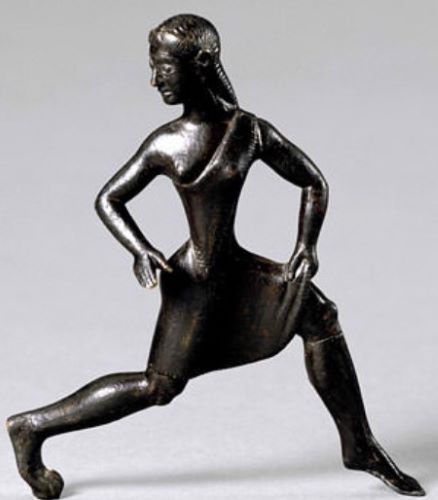
Sparta complicates any simple account of slavery and family in the ancient Greek world because the helots were not ordinary household slaves in the Athenian sense. They were an unfree population, most famously associated with Messenia and Laconia, bound to the land, compelled to produce agricultural surplus, and subjected to Spartan domination across generations. Their condition emerged not primarily from individual purchase or private household acquisition, but from conquest and collective subordination. This matters for the history of enslaved families because helot kinship was not usually broken by the same mechanisms that shaped market slavery in Athens. Helots could live in communities, form households, bear children, and sustain local memory in ways that mine slaves or urban chattel slaves often could not. Yet that relative continuity should not be confused with freedom. The helot family survived inside a conquered social order that treated its reproduction as part of the economic foundation of Spartan power.
The Spartan system depended on a sharp division between the warrior-citizen minority and the laboring unfree majority. Spartan citizens were trained for military discipline and public cohesion, while helots performed the agricultural labor that made such specialization possible. Helot families were not incidental to Spartan society. They were structurally necessary. Their households reproduced the labor force that sustained the Spartan way of life, fed citizen messes, and allowed Spartiates to imagine themselves as a class of disciplined soldiers rather than ordinary farmers. This made helot family life both more possible and more trapped than the family life of many other enslaved people. A helot parent might remain near children in a familiar landscape; a helot community might preserve customs and attachments across generations. But the very continuity of that life served the conqueror’s order. Sparta did not need to dissolve every helot family, because it had already subordinated the entire population from which those families came. The system worked precisely because domination was collective, hereditary, and agricultural. It did not require the constant market circulation of bodies in the same way that Athenian slavery often did, because Spartan power had transformed whole communities into a labor base. The helot household could endure because its endurance was useful. Children grew into workers; family reproduction helped stabilize production; local rootedness kept agricultural labor attached to the land. What looked, from a distance, like a greater allowance for family continuity was bound to a deeper structure of collective possession. The family was not protected from slavery. It was folded into slavery’s machinery.
This produced a distinctive kind of violence. In market slavery, the family could be destroyed through sale, transport, or private disposal. In helotry, the family could be preserved as a laboring unit while being denied political dignity, military equality, and secure ownership of its own future. The helot was not always uprooted from land in the way a captive sold overseas might be. Instead, the helot could be fixed to land that had become a sign of defeat. This is why helotry must be treated as an institution of conquest rather than simply as another form of domestic slavery. The land remembered what law denied. Messenian identity, Spartan domination, agricultural extraction, and hereditary servitude were bound together. A helot child did not merely inherit poverty or dependency. The child inherited the consequences of conquest, entering a world where family continuity itself was enclosed within subjection.
The sources for helotry are difficult, hostile, and often ideologically charged. Much of what survives comes from non-helot observers, many of them fascinated or disturbed by Sparta’s peculiar social order. Ancient writers describe helots as numerous, resentful, dangerous, degraded, and necessary, a combination that reveals Spartan anxiety as much as helot life. The famous traditions about ritual humiliation, violent surveillance, and the krypteia must be handled carefully, because the evidence is layered and sometimes retrospective. Still, even when details are debated, the larger structure is clear enough. Spartan society feared the people it depended on. That fear shaped helot family life. A community permitted to reproduce under domination could also be watched as a potential enemy population. Marriage, childbirth, and household continuity were politically charged. Every helot child was both a future laborer and, in Spartan imagination, a possible threat. This made helot reproduction profoundly ambivalent from the Spartan point of view. The state needed helot families to continue because agricultural extraction required a renewable laboring population, but it also feared the demographic strength that such continuity created. Unlike an isolated household slave who could be sold away from companions, the helot belonged to a broader conquered people whose kinship networks could preserve memory, grievance, and solidarity. Spartan domination rested on a permanent contradiction: it required the reproduction of the very population it mistrusted. The helot family was useful because it produced labor, but dangerous because it could also produce collective identity. That tension helps explain why Spartan control appears in the sources not merely as economic management, but as psychological intimidation, ritualized contempt, and recurring fear of revolt.
The comparison with Athens is revealing. Athenian slavery often erased origin through market circulation, transforming people from many places into privately owned laborers within households, workshops, mines, or fields. Spartan helotry preserved origin more visibly because the dominated population remained tied to conquered territory and collective memory. That difference gave helot families a form of continuity rarely available to many chattel slaves, but it also intensified the political nature of their oppression. Helot kinship could become a vessel of memory, grievance, identity, and resistance. The family did not merely reproduce labor. It could also reproduce stories of dispossession. This helps explain why helot revolt and the threat of revolt haunted Spartan history. The same familial and communal continuity that made the system productive also made it unstable. Sparta needed helots to remain rooted enough to farm, but not empowered enough to reclaim the meaning of that rootedness.
Helotry forces a wider understanding of what slavery could do to the family. It did not always destroy kinship by scattering people across markets. Sometimes it captured kinship in place. Sometimes it preserved households because hereditary exploitation required them. Sometimes it allowed children to know parents, villages, fields, and local memory while ensuring that all of these remained under the shadow of conquest. The helot family stands at the edge of the ancient history of slavery as a reminder that continuity can itself be coerced. A family may remain together and still be unfree. A people may reproduce itself and still be dispossessed. In Sparta, the enslaved family was not simply tolerated despite domination. It was made useful to domination, and that is what gives helotry its particular cruelty.
Hellenistic Expansion: War Captivity, Slave Markets, and the Commercialization of Separation
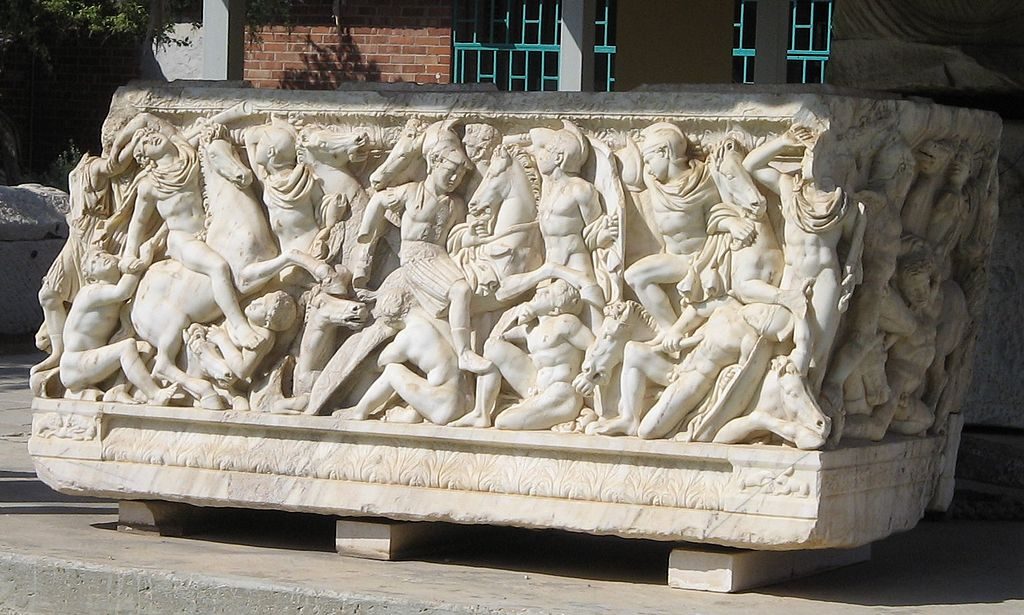
The conquests of Alexander and the formation of the Hellenistic kingdoms widened the world in which enslaved families could be broken, sold, and scattered. This did not create slavery from nothing. Greek cities, Near Eastern monarchies, and Mediterranean trading networks had long absorbed captives, debtors, abandoned children, and purchased laborers into systems of dependency. What changed after the late fourth century BCE was the scale and connectivity of the political world. Macedonian conquest, dynastic warfare, garrison settlement, urban expansion, piracy, and long-distance trade intensified the movement of people across regions. Enslavement increasingly became not merely a local household condition, but a commercial process tied to war, markets, ports, armies, and royal economies. For families, this meant that separation could become faster, wider, and more final. A person captured in one region might be sold in another, transported by sea, renamed in a new household, and absorbed into a labor system that had no reason to preserve earlier kinship.
War was the most dramatic engine of this transformation. Hellenistic warfare did not only involve armies meeting in battle. It also meant sieges, sackings, deportations, hostage-taking, enslavement, and the redistribution of civilian populations. When a city fell, its inhabitants could be killed, ransomed, deported, or sold. Ancient historians often present these moments through the language of strategy, punishment, royal ambition, or civic catastrophe, but beneath that public language lay the intimate destruction of households. Parents could lose children in the chaos of capture. Husbands and wives could be separated in sale. Children could be taken young enough that memory itself became unstable. The violence of enslavement was not only the loss of freedom. It was the conversion of family members into individually marketable bodies. War broke the civic walls first, but the family often broke immediately afterward.
The Hellenistic slave market made this rupture more systematic. Once captives entered commercial circulation, kinship became secondary to price, skill, age, gender, and buyer demand. Markets did not need to hate families to destroy them. They simply did not recognize family preservation as their purpose. A child might be more valuable if sold separately into domestic service or training. A woman might be purchased for household labor, textile work, concubinage, or prostitution. A man might be sent into agriculture, military support labor, mining, transport, or skilled craft production. The market translated human difference into sale categories, and those categories cut across the bonds by which people had previously known themselves. A mother and son did not enter the market as mother and son in any protected legal sense. They entered as units of value. That is the cold genius of commercialization: it can destroy intimacy without needing to name intimacy at all.
Piracy and raiding deepened this world of insecurity. The eastern Mediterranean of the Hellenistic age was marked by maritime mobility, shifting royal power, and zones where raiders, merchants, soldiers, and local strongmen could profit from human seizure. People living near coasts, routes, and contested territories faced the danger that enslavement might arrive not through formal defeat in battle, but through sudden capture. This mattered for families because raiding produced abrupt separations without the administrative structure even of conquest. A child could disappear from a village, a woman from a coastal settlement, a man from a ship or field. Such people might then be moved through networks where recovery was difficult and recognition uncertain. The sea, which connected the Hellenistic world commercially and culturally, also became a corridor of dispossession. Its ports linked kingdoms, merchants, and households, but they also carried the enslaved away from anyone who knew their original names. The violence of maritime capture was especially cruel because it could happen at the margins of ordinary life, outside the formal drama of siege or battlefield. A family did not need to belong to a defeated city to be broken. It only needed to live within reach of a predatory market. Coastal vulnerability, insecure roads, contested islands, and unstable borders turned geography itself into a risk. The same networks that moved grain, wine, oil, soldiers, letters, and luxury goods could also move stolen people. Once absorbed into those networks, the captive’s family identity became difficult to prove and almost impossible to enforce. Distance did the work of erasure.
Urban growth added another layer to the commercialization of separation. Hellenistic cities required labor: domestic servants, artisans, builders, porters, entertainers, sex workers, agricultural suppliers, and administrators. Royal capitals and expanding civic centers drew in wealth, soldiers, migrants, merchants, and enslaved people. Enslaved labor could be highly differentiated. Some enslaved people worked in elite households or royal service, where proximity to power might produce relative stability or even opportunities for advancement. Others entered brothels, workshops, docks, rural estates, or harsh manual labor. The city could both concentrate and erase. It brought many enslaved people into dense social worlds where new ties might form, but it also detached them from previous kinship and placed them in occupations structured by owner profit. Family life might reappear in new forms, through partnerships, shared quarters, ethnic associations, or informal care, but it did so after the market had already performed its violence.
Children were especially vulnerable in this expanding commercial order. The Hellenistic world inherited older practices of infant exposure, child sale, and the absorption of abandoned or captured children into servile labor. A child taken young could be trained into a household role, taught a craft, raised for sexual exploitation, or acculturated into a new language and identity. From an owner’s perspective, youth could mean malleability. From the child’s perspective, it meant radical dependence. The child might grow up with little memory of birth family, or with memory that had no practical power. Even where enslaved children formed attachments in new households, those attachments were governed by ownership. Their lives show how slavery could attack family across time as well as space. It did not only separate children from parents. It could sever children from the possibility of knowing themselves as members of a prior lineage.
Women’s vulnerability also intensified in this commercial world because war and sale placed their labor, sexuality, and reproductive capacity into the hands of owners. Hellenistic sources, like earlier Greek sources, often speak about enslaved women through the perspectives of men, households, courts, and markets. That imbalance requires caution, but it does not obscure the larger structure. Enslaved women could be moved into domestic service, textile production, taverns, entertainment, concubinage, or prostitution. Their family bonds were vulnerable both because they could be separated from prior kin and because any children they bore in slavery entered a condition shaped by the owner’s authority. The commercialization of slavery made women’s bodies sites where several forms of exploitation met: labor extraction, sexual access, reproductive control, and household incorporation. A woman could be forced into a new environment, made useful to it, and then have her children claimed by it. This was not only a matter of sexual violence, though that danger was real and pervasive. It was also a matter of legal and economic placement. Enslaved women stood at the intersection of market demand and household reproduction, which meant their bodies could be valued simultaneously for work, service, pleasure, fertility, and resale. If an enslaved woman formed a partnership, that relationship could be ignored by an owner who saw profit elsewhere. If she bore a child, that child could strengthen the owner’s household rather than her own. If she remembered a former family, that memory had no standing against the new claims imposed by purchase. Her kinship was attacked from both directions: torn from the family she had lost and denied secure authority over the family she might create in slavery.
The Hellenistic period marks an important transition in the larger chronology. Earlier societies had already subordinated families through debt, conquest, and household dependence, while classical Greece had drawn sharp lines between citizen kinship and enslaved exclusion. The Hellenistic world did something further: it enlarged the machinery by which separation could be monetized. War supplied captives. Piracy and raiding fed markets. Cities demanded labor. Ports moved bodies. Buyers sorted people according to use. Families might survive, re-form, or be remembered in fragments, but the commercial system did not exist to preserve them. It existed to convert defeat, poverty, exposure, and vulnerability into transferable human value. In that sense, Hellenistic slavery made separation not only a consequence of enslavement, but one of its ordinary business operations.
The Roman Republic: Conquest, Mass Enslavement, and the Slave Family as Spoils of Empire

The Roman Republic transformed enslavement into one of the ordinary consequences of imperial expansion. Rome did not invent slavery, nor did it alone make war captives into laborers, domestic servants, concubines, field hands, and saleable dependents. But as Roman power spread through Italy, Sicily, North Africa, Greece, Spain, and the eastern Mediterranean, conquest supplied the Republic with human beings on a scale that reshaped Roman society itself. Defeated cities, rebellious communities, captured soldiers, civilians, women, and children could be absorbed into the machinery of sale, redistribution, and ownership. This was not an accidental byproduct of war. It was part of the material reward of victory. Land, treasure, tribute, captives, and prestige moved together. The triumphal imagination of Rome celebrated conquest as glory, order, and divine favor, but for the enslaved it often meant the destruction of the family as a recognizable social world.
Mass enslavement made family separation both sudden and systematic. When Roman armies captured a city or subdued a population, the defeated could be killed, ransomed, deported, or sold. Ancient historians sometimes recorded large numbers of captives, and even when those figures require caution, the pattern is unmistakable: war turned populations into commodities. The violence did not end when weapons were put down. It continued in the sorting of bodies, the assignment of value, the sale of captives, and the dispersal of people across markets and households. A father might be sent to agricultural labor, a mother into domestic service or sexual vulnerability, a child into a household where youth made him or her trainable and profitable. Kinship had no power against the commercial consequences of defeat. The family that had existed inside a city, village, army camp, or rural community entered the Roman economy as separable property. Conquest did not merely defeat political enemies. It broke the human networks through which those enemies had lived as parents, children, spouses, siblings, neighbors, and descendants.
The expansion of Roman slavery also changed the Roman countryside. By the second and first centuries BCE, enslaved labor was deeply embedded in agriculture, especially in regions shaped by elite landholding, market production, and the consolidation of estates. The degree, timing, and regional character of this process remain debated, and the older image of a countryside simply swallowed whole by vast slave plantations has been refined by modern scholarship. Still, the broad transformation is clear enough: war captives and purchased slaves became central to Roman agricultural wealth. On estates, enslaved people could be organized into work gangs, housed under supervision, disciplined by overseers, and valued according to strength, skill, age, obedience, and productivity. Family life under such conditions depended almost entirely on owner interest. Where stable reproduction seemed useful, unions might be tolerated or even encouraged. Where mobility, punishment, sale, or labor efficiency mattered more, families could be separated without legal obstacle. The rural slave family existed inside an agricultural economy that might use it, ignore it, or destroy it according to profit.
Roman law sharpened this vulnerability by treating the enslaved person as property under the authority of the master. The enslaved could not contract a valid Roman marriage, because lawful marriage belonged to those with the proper legal capacity. Enslaved partners could live together in unions later described as contubernium, and such relationships could be socially meaningful, emotionally durable, and sometimes recognized by owners or commemorated after death. But they did not possess the legal force that protected citizen marriage, inheritance, legitimacy, or paternal authority. Children born to enslaved women generally followed the condition of the mother, which meant that birth itself could enlarge an owner’s property. The enslaved mother’s body brutally stood between family and ownership. She could bear a child whom she loved, nursed, and raised, while the law treated that child as belonging to someone else. Roman slavery did not need to deny that enslaved people formed families. It only needed to deny that those families could limit the master’s rights.
The Republic’s slave wars exposed the human cost of this system, though Roman sources usually frame them through fear, disorder, and military crisis rather than family destruction. The great slave uprisings in Sicily and the revolt associated with Spartacus were not simply explosions of labor unrest. They emerged from a world in which enormous numbers of enslaved people had been captured, transported, sold, brutalized, and deprived of recognized social belonging. Some rebels were shepherds, agricultural laborers, gladiators, and war captives whose prior identities had been violently overwritten by Roman ownership. Their rebellions reveal how slavery created communities of desperation as well as labor. Even when these movements did not seek family restoration in any simple sense, they show the instability produced by mass enslavement. People torn from former households and denied lawful families could still form solidarities, loyalties, and collective identities under conditions of violence. A slave barracks, a pastoral work gang, a gladiatorial school, or a rural estate could become a grim replacement for the families and communities that conquest had broken. These were not free kinship structures, but they could generate shared memory, mutual dependence, and a dangerous awareness of common injury. Rome feared enslaved people not only because they worked, but because they remembered, gathered, resisted, and sometimes fought back against the order that had commodified them. The rebellions were political crises, but they were also symptoms of a deeper social wound: the Republic had built wealth by uprooting people from the ordinary bonds that make life intelligible, then seemed shocked when those uprooted people found new bonds in anger, survival, and revolt.
By the end of the Republic, the slave family had become one of the hidden costs of Roman empire. Roman aristocrats could display conquered wealth, cultivate estates, fill households with servants, employ skilled slaves in business, and celebrate military victories, while the families destroyed by that process remained mostly outside the moral frame of elite writing. Yet the absence is part of the evidence. Roman conquest generated captives; markets redistributed them; law classified them as property; agriculture and domestic service consumed their labor; and reproduction could be absorbed into the owner’s estate, household, or balance sheet. The enslaved family was spoils of empire in a double sense. It was broken when conquest converted people into captives, and it was appropriated when Roman ownership claimed the children, partnerships, and reproductive futures of the enslaved. Rome’s greatness, as Romans told it, was built through victory. But beneath that victory lay a quieter and more intimate devastation: the reduction of kinship itself to something conquerors could sell.
The Roman Household: Contubernium, Domestic Labor, and the Conditional Slave Family

The Roman household brought enslaved people into one of the most intimate spaces of ancient social life while still denying them the legal standing that made kinship secure. A large Roman domus was not simply a private residence in the modern sense. It was a site of production, reproduction, education, discipline, display, patronage, and hierarchy. Enslaved people cooked, cleaned, carried messages, managed accounts, nursed children, prepared clothing, guarded doors, accompanied family members, performed skilled services, and absorbed the daily rhythms of the master’s family. Some lived for years within the same household and became familiar figures across generations. Yet familiarity did not dissolve ownership. The enslaved person might know the children of the house from infancy, understand the household’s secrets, and participate in its routines more continuously than many free relatives, but his or her own family bonds remained conditional. Roman domestic slavery created a world of closeness without equality, intimacy without rights, and household belonging without legal security.
The language of familia itself reveals the problem. In Roman usage, familia could refer not only to kin in a narrow biological sense, but also to the enslaved personnel belonging to a household. This meant that enslaved people were included within the master’s household structure while being excluded from the full dignity of family in law. They belonged to the household as property, labor, and dependents, not as autonomous members whose marriages, children, and inheritances stood on equal footing with those of the free. The same word-world that gathered them under the master’s authority also marked the limits of their recognition. An enslaved nurse, steward, cook, or attendant might be indispensable to the daily life of the household, yet that indispensability did not create legal personhood. The Roman household could absorb enslaved people deeply enough to rely on them emotionally and practically, while still reserving authority over their bodies, labor, sexuality, movement, and children.
Within this structure, enslaved unions known as contubernia reveal the uneasy space between social recognition and legal denial. A contubernium was a quasi-marital union involving enslaved people, or sometimes an enslaved person and a free or freed partner, but it was not a lawful Roman marriage. The distinction was not merely technical. Lawful marriage carried implications for legitimacy, property, inheritance, dowry, paternal authority, and civic order. Enslaved people lacked the legal capacity to enter that structure. Yet Roman inscriptions and legal discussions show that enslaved and formerly enslaved people did form lasting partnerships and sometimes described one another in language resembling that of spouses. Owners might tolerate such unions, encourage them, record them, or use them to stabilize household life. But toleration was not protection. A contubernium could be emotionally real and socially acknowledged while remaining legally fragile. It existed at the mercy of those who owned, managed, inherited, or sold the people involved.
Domestic labor could make these unions more possible than harsher labor regimes did. Enslaved people who lived in the same house, worked in coordinated roles, or remained attached to a household had greater opportunity to form partnerships and raise children than those sent to mines, chained field gangs, or distant agricultural estates. Urban households, especially elite ones, often contained multiple enslaved workers, creating dense social environments in which attachments could develop. A doorkeeper might know a maidservant across many years. A nurse might raise a child while also caring for her own. A steward might form a union with a woman in the same household staff. These relationships were not marginal to enslaved life. They were part of the emotional architecture by which enslaved people survived the reduction of their public status. Yet the very conditions that made such relationships possible also kept them vulnerable. The household brought enslaved people together, but as property gathered under one owner’s authority. What the master permitted, the master or his heirs could also undo. A household death, a marriage alliance, a debt, a change in inheritance, or the sale of an estate could rearrange the lives of enslaved people without treating their relationships as binding. Even a comparatively stable domestic environment could become unstable at the moment property was divided. An enslaved couple who had lived together for years might discover that their union had no force against testamentary distribution or market need. A child raised near a mother might be assigned to another branch of the family or sold to meet financial pressure. Domestic slavery did not simply offer a gentler alternative to the mine or field. It created a more intimate vulnerability, one in which family life could grow precisely because the household was stable, and then be shattered precisely because that same household treated people as transferable assets.
Children made the conditional nature of the slave family even clearer. In Roman slavery, a child born to an enslaved woman generally followed the mother’s condition and belonged to the mother’s owner. This rule turned birth into acquisition. The enslaved mother’s pregnancy, labor, nursing, and attachment produced a child whom the law placed within another person’s property. Such children, often described as vernae when born within the household, could occupy a complicated place in domestic life. They might be familiar, acculturated, trusted, and even favored because they had grown up inside the household. Owners sometimes valued home-born enslaved children precisely because they were shaped from infancy by the household’s language, habits, and loyalties. But none of this erased the fundamental violence of their condition. A verna could be loved, trained, indulged, or commemorated, yet still remain saleable, punishable, and legally unfree. The child’s presence in the household might soften the appearance of slavery, but it also showed how deeply slavery had entered reproduction itself.
The Roman domestic household also exposed enslaved women to particular forms of vulnerability. Their labor often involved the body directly: nursing, bathing, dressing, textile work, childbirth assistance, sexual service, and intimate attendance on free men and women. Enslaved women could be incorporated into the emotional life of the household while lacking the protections associated with free female honor, lawful marriage, or paternal guardianship. A citizen wife’s sexuality mattered to inheritance and legitimacy; an enslaved woman’s sexuality was subordinated to ownership. This did not mean that every enslaved woman’s experience was identical, nor that affection, negotiation, or household loyalty never existed. But the structural imbalance was severe. A master’s access to an enslaved woman did not threaten the legal order in the same way as sexual violation of a citizen woman, because the enslaved woman was already placed outside the protected framework of civic family. If she bore children, those children could strengthen the master’s household rather than her own. Her motherhood was real, but her authority as mother was not secure.
The evidence of funerary inscriptions complicates the legal picture by revealing emotional worlds that law could not fully erase. Enslaved and freed people in Rome and the wider Roman world sometimes commemorated partners, children, fellow slaves, patrons, and household companions with language of affection, grief, and familial devotion. These inscriptions do not make slavery gentle, and they should never be used to sentimentalize domestic bondage. Rather, they show that enslaved people made kinship even where law denied its full force. A man might call a woman his beloved partner. A freedperson might commemorate a former enslaved companion. A parent might preserve the memory of a child whose life had been legally entangled with ownership. Such memorials matter because they expose the difference between the state’s categories and human experience. Roman law could classify enslaved people as property, but it could not prevent them from loving, grieving, naming, remembering, and presenting relationships as meaningful before the living and the dead.
The Roman household stands as one of the central paradoxes in the history of ancient enslaved families. It was the place where enslaved kinship could become most visible, and also the place where its legal weakness was most apparent. Domestic slavery gave some enslaved people proximity, routine, and opportunities for attachment denied to those in mines or brutal agricultural labor. But it also placed those attachments inside a structure of ownership that could transform spouses into separable assets and children into household property. Contubernium captured that contradiction perfectly: a union real enough to be lived, remembered, and sometimes honored, but not secure enough to bind the master’s power. In Rome, the enslaved family did not exist outside the household. It existed inside it, under it, and against it, making human claims in a legal world designed to hear first the voice of property.
Sexual Exploitation, Reproduction, and the Enslaved Mother

The enslaved mother stood at one of the cruelest intersections in Roman slavery because her body joined labor, sexuality, reproduction, and property in a single legal condition. Roman society placed enormous ideological value on marriage, descent, household continuity, and paternal authority among the free, yet it denied enslaved women the protections that made those ideals meaningful. A freeborn Roman woman’s sexuality could be guarded because it affected inheritance, legitimacy, and family honor. An enslaved woman’s sexuality, by contrast, was subordinated to ownership. She could be used as a domestic worker, nurse, attendant, textile laborer, concubine, prostitute, or reproductive source without acquiring the secure status of wife or legally protected mother. This does not mean every enslaved woman experienced identical treatment, nor that affection, attachment, or negotiation never existed in Roman households. But the structure itself was violent. It placed an enslaved woman’s reproductive life within the authority of someone who could profit from her labor, her sexual vulnerability, and her children.
Roman law made this violence especially clear through the status of birth. The child of an enslaved woman generally followed the mother’s condition, which meant that maternity did not secure freedom for the child but transferred the child into the ownership structure that already governed the mother. This principle converted childbirth into acquisition. A woman could endure pregnancy, labor, nursing, and maternal attachment while the law treated the child as belonging to the owner. That legal fact shaped every emotional possibility around enslaved motherhood. The mother might love, protect, feed, and raise her child, but she did so without the legal authority that free parenthood could claim. Her child could be trained for household service, assigned to labor, favored as a home-born slave, punished, manumitted, retained, or sold. The child’s future did not arise from the mother’s rights. It depended on the owner’s calculation, sentiment, finances, and household strategy.
The Roman category of the verna, the enslaved person born within the household, reveals both the intimacy and brutality of this arrangement. Home-born enslaved children could be valued because they were raised inside the language, habits, loyalties, and expectations of the household. They might be remembered with affection, trusted with domestic tasks, or treated as familiar figures in the daily life of the domus. Some owners preferred such slaves because they seemed more acculturated, manageable, and personally attached than captives or purchased foreigners. Yet the apparent warmth surrounding the verna should not obscure the deeper fact that the household had claimed the child from birth. Familiarity could soften the language of domination, but it did not undo domination. A home-born child’s closeness to the master’s family did not necessarily protect the child’s relationship with his or her own mother. The same household that called a verna beloved could still dispose of that child as property. Roman slavery was often most insidious when it wrapped ownership in the language of affection.
Sexual exploitation also shaped enslaved motherhood before a child was even born. Enslaved women had little meaningful protection against coercive access by masters, household men, overseers, clients, or others with power over them. Roman moral discourse could condemn sexual disorder in certain contexts, and individual masters might impose household rules for reasons of discipline, jealousy, inheritance anxiety, or reputation. But the enslaved woman herself did not stand before the law as a citizen wife whose violation threatened legitimate descent. Her sexual vulnerability was part of the ordinary asymmetry of slavery. If she bore a child by a master, another slave, a freedman, or an unknown man, the child’s status still turned on her enslavement. That rule detached reproduction from recognized paternal responsibility and placed the burden of status on the mother’s unfreedom. Maternity could become evidence not of protected family formation, but of intensified ownership. The enslaved mother’s womb became a legal passage through which another person’s property could increase.
Yet enslaved motherhood was not reducible to victimization alone. The surviving evidence, especially inscriptions, legal discussions, and household patterns, suggests that enslaved and freed women created relationships of care, memory, and attachment despite the structures arrayed against them. Mothers loved children whom law did not fully allow them to claim. Families formed in quarters, kitchens, nurseries, rural estates, and urban households. Freedwomen sometimes commemorated children, partners, and kin in ways that asserted dignity against the memory of servile status. These acts should not be romanticized, but neither should they be erased. The enslaved mother lived under a regime that treated her sexuality as accessible, her labor as owned, and her children as alienable. Still, within that regime, she made human claims that law could not fully extinguish. Her care mattered even when it had no formal standing. Her grief mattered even when the sale of a child was legally intelligible as a transfer of property. Her memory mattered even when Roman household order tried to absorb her children into someone else’s lineage, labor force, or estate. This is why enslaved motherhood exposes the deepest moral wound in Roman slavery. The system depended on the human capacities of enslaved women, their labor, intimacy, fertility, nursing, endurance, and attachment, while refusing to recognize those capacities as grounds for rights. Her tragedy was not that she lacked family feeling. It was that Roman slavery recognized the value of her reproduction while refusing to honor the authority of her motherhood.
Children of Slavery: Vernae, Exposure, Sale, Training, and Loss
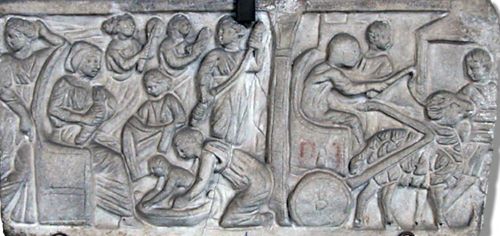
Children occupied one of the most vulnerable places in ancient slavery because they entered systems of ownership before they could understand the world that claimed them. Some were born to enslaved mothers and inherited their status at birth. Others were captured in war, sold by impoverished families, abandoned as infants, or gathered into slave markets after exposure. In every case, childhood did not protect them from commodification. It often made them more useful to it. A child could be trained early, reshaped linguistically and culturally, disciplined into obedience, and absorbed into the habits of a household before memory had hardened into resistance. Ancient societies often praised children as heirs, continuators of the household, and signs of civic or familial futurity, but enslaved children were denied that protected meaning. Their future belonged first to the owner, not to the mother who bore them, the father who might have claimed them, or the kin from whom they had been severed.
The enslaved child born within the household, reveals the peculiar intimacy of this condition. A verna might grow up among the children of the free household, learn its language, know its gods, understand its routines, and become emotionally familiar to owners and fellow slaves alike. Such children could be favored in inscriptions, remembered affectionately, and valued as especially loyal because they had been shaped from infancy within the master’s world. That closeness has sometimes tempted sentimental readings, as though household birth softened slavery into belonging. But the opposite must also be seen. The verna was proof that slavery had entered the nursery. A home-born enslaved child might be loved and still owned, indulged and still saleable, mourned and still legally unfree. The household did not merely receive the child’s labor later in life. It claimed the child from the beginning, converting birth itself into an extension of property. This made the verna one of the most revealing figures in Roman domestic slavery, because the category joined affection and appropriation so tightly that the two could be difficult to separate in the surviving evidence. An owner might praise a home-born enslaved child’s loyalty without acknowledging that such loyalty had been cultivated under conditions of captivity. A household might mourn a child who had died young while never questioning the legal order that had made that child property. Even kindness could become part of domination when it confirmed the master’s authority to define the terms of care. The verna exposes not a softer form of slavery, but a more intimate one, where ownership could wear the face of familiarity and where a child’s earliest memories were formed inside the very household that claimed the right to command, train, punish, transfer, or sell.
Exposure widened the danger beyond children already born into slavery. In Greek and Roman antiquity, unwanted infants could be abandoned, and although motives varied, poverty, disability, illegitimacy, gender preference, household crisis, and social shame all played roles in the vulnerability of newborns. Exposure did not always mean immediate death. Some abandoned children were taken in by others, but rescue could itself become exploitation. An infant collected from exposure might be raised as a slave, trained for domestic service, or drawn into prostitution. This is one of the starkest examples of how ancient societies could transform abandonment into ownership. The exposed child had already been pushed outside the protections of the birth household. Whoever recovered that child could then define the terms of survival. Life might be preserved, but at the cost of liberty. The language of rescue could hide the creation of another enslaved life.
Sale made childhood still more precarious because children could be separated from parents precisely when they were least able to preserve memory, identity, or resistance. An enslaved child might be sold away from a mother as part of estate management, debt settlement, inheritance division, punishment, or ordinary commercial exchange. Young age could increase market value because the child could be trained into desired forms of service. Boys might be prepared for domestic attendance, craft work, literacy-based labor, or agricultural tasks. Girls could be trained for household service, textile production, childcare, sexual exploitation, or entertainment. The market did not see a child primarily as a member of a family. It saw future labor, future obedience, future profit, and future adaptability. That future-oriented valuation was itself a form of violence. It treated the child not as someone becoming a person within kinship, but as someone becoming useful within another person’s plans.
Training was not neutral education. It was the disciplined remaking of a child for servitude. In elite households, enslaved children might learn refined domestic skills, literacy, account keeping, music, grooming, or forms of service that brought them close to free family members. In workshops or agricultural settings, they might be apprenticed into labor according to the needs of production. Some children, especially those born in the household, may have experienced affection, instruction, and familiarity that looked outwardly similar to care. Yet the purpose of this care was unstable because it remained tied to ownership. A free child’s training prepared him or her for family continuity, civic identity, inheritance, or marriage. An enslaved child’s training prepared him or her to serve. Even when training improved the child’s treatment or future prospects, it also increased the child’s value to someone else. Skill could bring trust, but trust did not equal freedom. Education could create opportunity, but opportunity remained enclosed within the master’s authority. This is why the education of enslaved children must be read with a double vision. On one side, training could give a child tools for survival, communication, household influence, or eventual manumission. Literacy, numeracy, craft skill, or specialized service might make an enslaved child less expendable than a body valued only for brute labor. On the other side, that same training deepened the owner’s investment and strengthened the economic logic that held the child in place. The child became more useful precisely by becoming more thoroughly shaped for another household’s needs. The tragedy was not that enslaved children were never taught, loved, or cultivated. It was that even nurture could be organized around possession. The hand that trained could also discipline. The household that educated could also sell. The skill that distinguished a child could become the reason that child was retained, priced, transferred, or exploited more efficiently.
The loss inflicted on enslaved children was not only physical separation from parents, though that could be devastating enough. It was also the loss of protected origin, lawful descent, family authority, and control over the meaning of one’s own growth. A child born into slavery could be raised near a mother who had no secure right to keep him. A child taken in war could forget the language of his first home. A child rescued from exposure could survive only by becoming property. A verna could be cherished within a household whose affection never cancelled ownership. These children remind us that ancient slavery did not simply exploit mature laborers. It reached backward into birth and forward into formation, claiming the child’s body, memory, training, sexuality, work, and future. The enslaved child stood where the family was most exposed: at the point where love should have protected vulnerability, but law and economy instead made vulnerability profitable.
Manumission and the Fractured Freed Family

Manumission could transform the legal status of an enslaved person, but it did not automatically restore the family that slavery had damaged. In Roman society, freedom from slavery might open the way to citizenship, lawful marriage, property holding, business activity, public commemoration, and a new relationship to the former master as patron. Yet manumission usually operated on individuals rather than families as protected units. A man could be freed while his partner remained enslaved. A mother could gain liberty while her children stayed in the household of the former owner. A child could be manumitted before a parent, or a spouse could remain legally unreachable because ownership placed him or her under another master’s authority. Freedom, then, was not always a clean crossing from bondage into wholeness. It could be a partial rescue that exposed the fractures slavery had already made.
The Roman freedperson occupied a complicated social position. He or she was no longer enslaved, but the past did not disappear. The freedperson often owed duties, respect, services, or loyalty to the former owner, now transformed into a patron. This patronal relationship could offer protection and opportunity, but it also preserved hierarchy after emancipation. For the freed family, that meant that freedom remained entangled with the household that had once owned the person. A freedman might marry legally after manumission if the proper conditions were met, but a prior union formed in slavery had not possessed the same legal force. A freedwoman might seek to establish a household of her own, but her children’s status depended on the timing of birth, the condition of the mother when they were born, and the ownership claims that had surrounded them. The law could recognize the freedperson more fully than the slave, yet it could not undo every consequence of the earlier denial. Manumission changed status, but it did not magically repair memory, separation, or interrupted descent.
This is why freed families so often had to be made, remade, and publicly asserted. Inscriptions, burial monuments, naming practices, and household arrangements became ways for freedpeople to declare relationships that slavery had left insecure or legally incomplete. A freedman or freedwoman could commemorate a spouse, child, patron, fellow freedperson, or former companion in language that claimed affection, dignity, and continuity. These memorials matter because they show freedpeople using the public language of Roman commemoration to rebuild personhood after enslavement. The tomb could become a place where family identity was stabilized, even if life had been marked by instability. Names, ages, relationships, and terms of affection were not decorative details. They were acts of social repair. They said that people once treated as alienable bodies had belonged to someone, had loved someone, had remembered someone, and deserved to be remembered in return. This public assertion was especially important because slavery had often made family either legally invisible or socially dependent on the owner’s household. A freedperson’s epitaph could do what the law of slavery had not done: name a union, honor a child, preserve a household bond, or give permanence to a relationship that had once existed only by permission. Such commemoration did not erase the violence of servile status, but it allowed freedpeople and their descendants to inscribe themselves into Roman memory on terms more human than the market had allowed. In that sense, funerary culture became one of the places where fractured families tried to gather themselves again. Stone could not restore a child sold away, nor could an inscription undo years of legal nonrecognition, but it could bear witness. It could say, against the logic of ownership, that these lives had kinship, grief, honor, and continuity.
Yet manumission could also deepen the pain of separation because freedom sharpened the contrast between those released and those left behind. The freedperson now had legal capacities that enslaved relatives still lacked. He or she might be able to contract a lawful marriage, acquire property, make a will, participate in certain civic or religious associations, and create a recognized household. But these new rights could intensify rather than erase grief if a partner, parent, sibling, or child remained enslaved elsewhere. The freedperson’s family history could be divided by legal status, with some kin entering the world of Roman personhood while others remained property. Even successful freedpeople, including those who accumulated wealth or social standing, carried the marks of this fracture. Their advancement did not prove that slavery had been mild. It showed how much effort was required to reconstruct a life after a system had first made kinship conditional.
The freed family reveals one of the central ironies of Roman slavery. Freedom was real, and manumission mattered profoundly. It could change a person’s name, status, rights, prospects, and descendants. But when freedom arrived one person at a time, it could leave the family divided across the line between person and property. The enslaved union might become a lawful marriage only after emancipation, if both partners were free and able to marry. The enslaved child might become part of a freed household only if ownership, timing, and circumstance allowed it. The parent who had once lacked legal authority might spend freedom trying to recover, purchase, commemorate, or symbolically restore what slavery had taken. Manumission did not stand outside the history of enslaved families. It belonged to that history as one of its most revealing chapters. It shows both the possibility of recovery and the depth of the wound. Roman slavery fractured families so thoroughly that even freedom could arrive carrying the shape of loss.
Late Antiquity: Christian Moral Language, Roman Law, and the Partial Protection of Slave Kinship
Late antiquity did not abolish slavery, but it did change some of the language through which slavery, family, and moral responsibility were discussed. As Christianity moved from persecuted movement to imperial religion, Christian writers increasingly spoke of enslaved people as souls before God, brothers and sisters in the church, and moral subjects rather than merely household property. That language mattered, but it did not dismantle the legal institution that made enslaved families vulnerable. Roman law continued to recognize slavery, masters continued to own human beings, and households continued to depend on servile labor. The change was not a clean moral revolution. It was a tension. Christian teaching could soften cruelty, praise manumission, condemn sexual excess, and urge masters toward restraint, while still leaving the enslaved person inside a world where marriage, parenthood, and children remained deeply exposed to ownership. This tension is essential because late antique Christianity did not enter a neutral society and then simply choose whether to abolish slavery. It entered a Roman world in which slavery was woven into property law, domestic management, agricultural production, punishment, inheritance, and elite wealth. Christian bishops and theologians could challenge the moral behavior of masters without necessarily challenging the master’s legal status as owner. They could insist that enslaved people possessed souls and spiritual dignity while still accepting social arrangements that denied them legal equality. The result was a world in which enslaved kinship became more morally visible, but not fully protected. Late antiquity gave the enslaved family a new religious vocabulary of compassion, but it did not yet give that family secure possession of itself.
The Christian household codes and moral writings of late antiquity often addressed masters and slaves within the same hierarchical frame. Masters were told to behave justly or mercifully; slaves were told to obey. This language could restrain some abuses, especially when bishops, preachers, and ascetic writers urged that enslaved people shared a common humanity before God. Yet the structure of command remained intact. The slave was not usually imagined as a rights-bearing family member whose marriage could defeat the master’s claim, or whose parenthood automatically limited sale, discipline, or household division. Christian moral discourse created obligations of conscience, but obligations of conscience were not the same as enforceable equality. A master might be urged to remember divine judgment, but the enslaved mother still depended on human power for the security of her child. The spiritual brotherhood of the church did not erase the domestic hierarchy of the Roman house.
Imperial legislation in late antiquity reveals a similar mixture of continuity and unease. Some laws attempted to limit especially disruptive forms of family separation, particularly when enslaved people attached to estates or fiscal properties were divided. These measures are important because they show that legislators recognized slave kinship as socially real and that the forced separation of spouses, parents, and children could be treated as a problem requiring regulation. But the limits of such protection are just as important. These laws did not transform enslaved people into free persons, nor did they give slave marriage the full legal status of Roman marriage. They sought to manage the consequences of slavery rather than abolish the condition that produced those consequences. The enslaved family could be partially protected when preservation served order, estate management, Christianized moral expectation, or administrative stability. It was not protected because enslaved kinship had finally become equal to free kinship. This distinction matters because partial regulation can easily be mistaken for recognition. A law that discourages the breakup of enslaved families may acknowledge that such families exist, but it does not necessarily grant those families independent legal authority. It may preserve them because divided families create disorder, reduce productivity, offend Christian moral sensibilities, or complicate administration. The family remains seen through the needs of the owner, estate, church, or state. Late Roman law could admit the pain of separation without conceding that enslaved people possessed the same marital and parental rights as the free. It could restrain the owner at certain points while leaving ownership itself intact.
Constantine’s legislation is especially revealing for this partial shift. Late Roman law sometimes displayed concern that slave families should not be arbitrarily divided in certain contexts, and Christian emperors increasingly framed rulership in moral and religious language. Yet Constantine also governed a society in which slavery remained deeply embedded in wealth, punishment, labor, and household organization. His age demonstrates the complexity of late antique reform. The empire could speak more loudly about mercy while preserving mastery. It could grant churches a role in manumission while allowing slaveholding to continue. It could recognize that separating enslaved relatives was socially destructive while refusing to make enslaved family bonds fully inviolable. The result was not liberation, but mitigation. Late antique law sometimes placed a hand on the machinery of slavery to slow its harshest motion, but it did not dismantle the machinery itself.
Christianity also altered the symbolic value of manumission. Freeing slaves could be praised as an act of piety, charity, or penitence, and church settings sometimes became places where emancipation was publicly performed or morally celebrated. This gave freedom a new religious vocabulary. A master might manumit an enslaved person for the good of the soul, in fulfillment of a vow, as an act of generosity, or under the influence of clerical teaching. For enslaved families, this could produce the same fractured results seen earlier in Roman society. Unless a family was freed together, manumission could still divide parent from child, spouse from spouse, or freedperson from enslaved kin. Christianized manumission might carry the language of mercy, but mercy applied selectively could leave family wounds intact. A freed father could still have enslaved children. A freed mother could still be separated from a partner. A pious act by a master might redeem his conscience without repairing the enslaved family’s whole life.
Late antique Christian writers sometimes expressed discomfort with sexual exploitation, cruelty, and the moral dangers of mastery, but they rarely mounted a systematic attack on slavery as an institution. This matters for enslaved women and children. Christian sexual ethics could condemn fornication, adultery, lust, and prostitution, but enslaved women remained vulnerable because their status placed them under the control of masters, managers, and household men. A Christian master might be morally instructed to avoid sexual exploitation, but the enslaved woman’s legal security still depended on structures that had long subordinated her body to ownership. Children born into slavery continued to inherit vulnerability through the condition of the mother. The Christian insistence that all souls stood before God did not automatically become a legal rule that protected the enslaved mother’s authority over her child. The distance between theological equality and social equality remained painfully wide. A sermon could remind a master that he too was subject to God, but it could not by itself give an enslaved woman control over whether her child would remain with her. A bishop might condemn sexual excess, yet the household still contained unequal bodies, unequal risks, and unequal consequences. The moral imagination of Christianity could trouble the conscience of slavery, but conscience did not always become law, and law did not always become protection. For enslaved women, that gap was not abstract. It lived in pregnancy, nursing, fear of sale, sexual coercion, and the knowledge that a child’s body could be claimed by someone else’s household.
Late antiquity belongs in this history not as the end of ancient slavery, but as the period in which its moral contradictions became harder to hide. The enslaved family could now be spoken of with more visible concern, and in some cases law and church practice offered partial shields against the most disruptive forms of separation. Yet partial protection also reveals the endurance of the deeper problem. The family of the enslaved person remained conditional because slavery itself remained lawful. Christian language could name mercy, but ownership still named power. Roman law could discourage some separations, but it did not fully recognize enslaved marriage as equal marriage or enslaved parenthood as secure parenthood. The late antique world stands as a sober conclusion to the ancient pattern: moral anxiety had grown, but the enslaved family still lived under a system that made kinship dependent on someone else’s will.
Comparative Synthesis: Five Ancient Patterns of Enslaved Family Life
The following video from “HistoryExtra” covers slavery in ancient Rome:
Across the ancient world, enslaved family life followed no single pattern, because slavery itself was not one institution repeated unchanged from Mesopotamia to Rome. Debt servitude, war captivity, household slavery, helotry, mining labor, estate agriculture, domestic service, exposure, and manumission all produced different forms of vulnerability. Yet the differences should not obscure the deeper continuity. Enslaved people formed relationships wherever they could, but those relationships were shaped by systems that placed ownership, debt, conquest, labor demand, or legal status above kinship. The ancient slave family has to be understood as both persistent and precarious. It was persistent because enslaved people continued to love, reproduce, mourn, remember, and create bonds under terrible constraints. It was precarious because those bonds rarely possessed the legal power to resist sale, transfer, sexual exploitation, inheritance division, administrative reassignment, or the owner’s will. The point is not that ancient enslaved people lacked families, nor that masters always prevented such families from forming. The point is sharper: enslaved kinship existed in a world where its survival depended on forces outside itself. A marriage-like union might endure for decades or disappear with a sale. A mother might nurse a child whom the household regarded as property. A conquered community might remain on its land while losing command over its own future. A freedperson might finally gain legal standing only to find that spouse, child, or parent remained trapped behind the boundary of ownership. The ancient slave family was not an exception to slavery’s logic. It was one of the places where that logic became most visible.
The first major pattern was the destruction or weakening of family through capture, debt, and displacement. In the ancient Near East, household members could become vulnerable through debt obligations, pledging, and institutional dependency. In the Greek and Hellenistic worlds, warfare, piracy, raiding, and slave markets could tear people away from kin, city, language, and ancestral memory. In the Roman Republic, conquest turned mass enslavement into one of empire’s ordinary rewards, converting defeated populations into saleable bodies. This kind of family destruction was often sudden, but its effects lasted across generations. A child captured young might lose the memory of origin. A woman sold into a foreign household might bear children who legally belonged to another family’s property system. A man taken in war might disappear into agricultural labor, a workshop, a mine, or a household where no one knew his former name. Enslavement began, again and again, as an attack on biography. It did not merely remove people from freedom. It removed them from the social worlds that had made their lives intelligible.
The second pattern was conditional family formation within households. Domestic slavery could create proximity, routine, and the possibility of durable relationships. Enslaved people working as nurses, cooks, attendants, tutors, stewards, textile workers, or household managers often lived close enough to one another, and to the free family, to form partnerships and raise children. In Rome, contubernium gave a name to unions that could be socially visible and emotionally real, even though they were not lawful marriages. This was not insignificant. It means enslaved family life was not simply absent from ancient households. It was present, sometimes deeply so, in the daily operation of elite and ordinary domestic worlds. But conditional existence remained the defining fact. A master could tolerate, encourage, or sentimentalize an enslaved union while retaining the power to dissolve it. A child born inside the household could be cherished as a verna while still being owned. Domestic slavery produced one of the ancient world’s most intimate contradictions: the enslaved family could be closest to recognition precisely where it was most deeply enclosed by ownership.
The third pattern was the near impossibility of family life under extractive or highly organized labor regimes. Mines, quarries, large workshops, field gangs, and some agricultural estates treated enslaved people primarily as units of production. These settings did not always need to forbid family formation explicitly because they often made family life impractical by their very structure. The silver mines of Laurion, rural workforces, and labor groups organized around output, discipline, and replacement show how work itself could become a weapon against kinship. A domestic slave might fear the sale of a spouse or child; a miner might have little realistic opportunity to form a household at all. A craft worker might possess skill and relative stability while still being leased, transferred, or sold according to commercial need. A field laborer might remain rooted in place while lacking any right to call that place home. Ancient slavery attacked the family not only through law, but through space, labor rhythm, exhaustion, surveillance, and the practical organization of daily life. This matters because legal status alone cannot explain the lived differences among enslaved people. Two people might both be legally enslaved, yet one might sleep near a partner in a domestic household while another descended into a mine where ordinary domestic life was almost unimaginable. One might raise a child under constant threat of sale, while another might never be permitted the physical conditions in which a household could form. Labor systems created different kinds of loneliness, different kinds of danger, and different degrees of relational possibility. The mine, the workshop, the field, and the household were not just workplaces. They were environments that determined whether kinship could become daily practice or remain only memory, longing, or loss.
The fourth pattern was the use of reproduction as an economic and social resource. This was most visible in Rome, but the logic appeared in other settings as well. When children followed the status of an enslaved mother, birth itself could increase an owner’s property. The enslaved woman’s body became a site where sexuality, labor, maternity, and ownership converged. The child born within slavery entered life already claimed by a legal order that placed the owner’s rights before maternal authority. The Roman verna makes this especially clear, because home-born enslaved children could be valued, trained, trusted, and remembered affectionately while still remaining unfree. In Sparta, the helot family shows a different version of reproductive exploitation. Helot households were not usually scattered through market sale in the same way as chattel slaves, but their continuity served the reproduction of an agricultural labor force created by conquest. In both cases, the family was not merely threatened by slavery. It was made useful to slavery. Children, fertility, household continuity, and inherited status became part of the machinery by which domination renewed itself.
The fifth pattern was the partial repair and renewed fracture produced by manumission, moral reform, and late antique law. Freedom mattered, and it should not be minimized. Manumission could give former slaves legal personhood, property rights, lawful marriage, public memory, and a future for descendants. Christian moral language and late Roman legislation could also make enslaved kinship more visible, restraining some forms of separation and encouraging mercy or pious emancipation. Yet these developments did not erase the family wounds slavery had made. Manumission often freed individuals rather than families. Christianized law could discourage certain separations while preserving the institution that made enslaved families vulnerable in the first place. Freedpeople used inscriptions, burial monuments, names, and household formation to rebuild dignity, but the need for such public repair reveals the depth of prior damage. Across the ancient world, the enslaved family survived, adapted, and sometimes reconstituted itself after bondage. But survival was not security, and recognition was not equality. The ancient pattern is painfully clear: slavery did not eliminate family life among the enslaved. It subordinated family life to power, and then called that subordination law, economy, household order, or mercy.
Conclusion: The Family That Law Refused to See
The history of enslaved families in the ancient world is not a history of absence. Enslaved people did not live without love, memory, partnership, parenthood, grief, or obligation. They formed unions where they could, raised children under danger, remembered the dead, rebuilt households after sale or manumission, and created kinship in spaces that law had not made for them. What they lacked was not family feeling, but legal protection. Ancient societies repeatedly recognized the usefulness of enslaved people while refusing to recognize the full claims of their kinship. The same world that guarded citizen descent, household honor, inheritance, and lawful marriage could treat enslaved spouses as separable, enslaved children as alienable, and enslaved mothers as reproductive sources within someone else’s property system. That contradiction runs through the whole ancient record. The family of the enslaved was visible but diminished or denied in law.
The forms of that denial varied across time and place. In the ancient Near East, debt and household dependency could turn kin into collateral or labor under another household’s authority. In classical Greece, the citizen oikos stood at the center of civic life while enslaved people remained outside the legal structures that protected marriage, descent, and inheritance. In mines, workshops, and fields, the organization of labor itself often made family life difficult or nearly impossible. In Sparta, helot families could endure across generations, but their endurance served the reproduction of a conquered laboring population. In the Hellenistic world and Roman Republic, conquest and markets made family separation more mobile, commercial, and final. Rome then gave this vulnerability one of its most developed legal forms, allowing enslaved people to form contubernia and households while denying them the legal force of marriage, paternal authority, and secure parenthood. Late antiquity brought Christian moral language and partial legal restraint, but not abolition. The ancient pattern remained: kinship could be tolerated, used, softened, remembered, or regulated, but rarely allowed to stand above ownership.
This is why the enslaved family must be placed at the center of any serious history of ancient slavery. Labor exploitation alone cannot explain the depth of the institution’s violence. Slavery reached into the body, the household, the womb, the nursery, the burial place, and the memory of origin. It claimed not only what people did, but whom they could keep, whom they could protect, and whether their children belonged first to kin or to an owner. It made a mother’s love real but legally insecure. It made a spouse’s companionship meaningful but breakable. It made a child’s birth a matter of property. It made freedom, when it came through manumission, powerful but often incomplete, because one person’s liberation could leave another loved person enslaved. The ancient slave family exposes slavery’s deepest moral logic: the reduction of persons was never only individual. It was relational. To make a human being property was also to make that person’s bonds vulnerable to possession, division, sale, and silence.
Yet the persistence of enslaved family life also reveals the limits of domination. Law could refuse to see enslaved kinship fully, but it could not prevent enslaved people from making kinship meaningful. Markets could scatter families, but memory survived. Households could claim children, but mothers still loved them. Masters could deny lawful marriage, but partners still lived, mourned, and named one another. Freedpeople inscribed relationships in stone because they knew that memory itself could become an answer to erasure. That answer was not enough to redeem the ancient world’s systems of bondage, and it should not soften our judgment of them. It should deepen it. The tragedy of the enslaved family was not that it failed to exist. It was that it existed everywhere under conditions designed to make it conditional. Ancient law saw property first. The people it enslaved kept insisting, through care, grief, endurance, and remembrance, that they were family before they were things.
Bibliography
- Appian. Roman History. Volume 3: The Civil Wars, Books 1–3.26. Translated by Horace White. Loeb Classical Library. Cambridge, MA: Harvard University Press, 1913.
- Aristotle, The Poetics of Aristotle. S. H. Butcher, trans. London: MacMillan and Co., 1922.
- Augustine of Hippo. The City of God against the Pagans. Edited and translated by R. W. Dyson. Cambridge: Cambridge University Press, 1998.
- Boswell, John. The Kindness of Strangers: The Abandonment of Children in Western Europe from Late Antiquity to the Renaissance. New York: Pantheon Books, 1988.
- Bradley, Keith. Discovering the Roman Family: Studies in Roman Social History. Oxford: Oxford University Press, 1991.
- —-. Slavery and Rebellion in the Roman World, 140 BC–70 BC. Bloomington: Indiana University Press, 1989.
- —-. Slavery and Society at Rome. Cambridge: Cambridge University Press, 1994.
- Bradley, Keith, and Paul Cartledge, eds. The Cambridge World History of Slavery. Volume 1, The Ancient Mediterranean World. Cambridge: Cambridge University Press, 2011.
- Brown, Peter. Through the Eye of a Needle: Wealth, the Fall of Rome, and the Making of Christianity in the West, 350–550 AD. Princeton: Princeton University Press, 2012.
- Buckland, William Warwick. The Roman Law of Slavery: The Condition of the Slave in Private Law from Augustus to Justinian. Cambridge: Cambridge University Press, 1908.
- Cartledge, Paul. Ancient Greek Political Thought in Practice. Cambridge: Cambridge University Press, 2009.
- —-. Sparta and Lakonia: A Regional History 1300–362 BC. 2nd ed. London: Routledge, 2001.
- —-. The Spartans: The World of the Warrior-Heroes of Ancient Greece. Woodstock, NY: Overlook Press, 2003.
- Codex Theodosianus. In The Theodosian Code and Novels and the Sirmondian Constitutions. Translated by Clyde Pharr. Princeton: Princeton University Press, 1952.
- Cohen, David. Law, Sexuality, and Society: The Enforcement of Morals in Classical Athens. Cambridge: Cambridge University Press, 1991.
- Demosthenes. Speeches 27–38. Translated by A. T. Murray. Loeb Classical Library. Cambridge, MA: Harvard University Press, 1936.
- Diodorus Siculus. Library of History. Volume 8: Books 16.66–17. Translated by C. Bradford Welles. Loeb Classical Library. Cambridge, MA: Harvard University Press, 1963.
- Ekholm, Kajsa and Jonathan Friedman. “’Capital’ Imperialism and Exploitation in Ancient World-Systems.” Review (Fernand Braudel Center) 6:1 (1982), 87-109.
- Finley, Moses I. The Ancient Economy. Updated edition. Berkeley: University of California Press, 1973.
- Fisher, N. R. E. Slavery in Classical Greece. London: Bristol Classical Press, 1993.
- Gaius. The Institutes of Gaius. Translated by W. M. Gordon and O. F. Robinson. Ithaca, NY: Cornell University Press, 1988.
- Gallia, Andrew B. “Vestal Virgins and Their Families.” Classical Antiquity 34:1 (2015), 74-120.
- Gardner, Jane F. Family and Familia in Roman Law and Life. Oxford: Clarendon Press, 1998.
- —-. Women in Roman Law and Society. Bloomington: Indiana University Press, 1986.
- Garlan, Yvon. Slavery in Ancient Greece. Translated by Janet Lloyd. Ithaca, NY: Cornell University Press, 1988.
- Glancy, Jennifer A. Slavery in Early Christianity. Oxford: Oxford University Press, 2002.
- Grubbs, Judith Evans. Law and Family in Late Antiquity: The Emperor Constantine’s Marriage Legislation. Oxford: Clarendon Press, 1995.
- Harper, Kyle. Slavery in the Late Roman World, AD 275–425. Cambridge: Cambridge University Press, 2011.
- Harrill, J. Albert. Slaves in the New Testament: Literary, Social, and Moral Dimensions. Minneapolis: Fortress Press, 2006.
- Harris, William V. “Child-Exposure in the Roman Empire.” Journal of Roman Studies 84 (1994), 1–22.
- —-. “Towards a Study of the Roman Slave Trade.” Memoirs of the American Academy in Rome 36 (1980), 117–140.
- Hopkins, Keith. Conquerors and Slaves. Cambridge: Cambridge University Press, 1978.
- Hunt, Peter. Ancient Greek and Roman Slavery. Malden, MA: Wiley Blackwell, 2018.
- Isager, Signe, and Jens Erik Skydsgaard. Ancient Greek Agriculture: An Introduction. London: Routledge, 1992.
- Joshel, Sandra R. Slavery in the Roman World. Cambridge: Cambridge University Press, 2010.
- Just, Roger. Women in Athenian Law and Life. London: Routledge, 1989.
- Justinian. The Digest of Justinian. Edited by Theodor Mommsen and Paul Krueger. Translated by Alan Watson. 4 vols. Philadelphia: University of Pennsylvania Press, 1985.
- Lafont, Sophie. Femmes, droit et justice dans l’Antiquité orientale: Contribution à l’étude du droit pénal au Proche-Orient ancien. Fribourg: Éditions Universitaires Fribourg Suisse, 1999.
- Lauffer, Siegfried. Die Bergwerkssklaven von Laureion. 2 vols. Wiesbaden: Franz Steiner Verlag, 1955–1956.
- Luraghi, Nino. The Ancient Messenians: Constructions of Ethnicity and Memory. Cambridge: Cambridge University Press, 2008.
- Luraghi, Nino, and Susan E. Alcock, eds. Helots and Their Masters in Laconia and Messenia: Histories, Ideologies, Structures. Cambridge, MA: Center for Hellenic Studies, 2003.
- MacDowell, Douglas M. The Law in Classical Athens. Ithaca, NY: Cornell University Press, 1978.
- MacMullen, Ramsay. Christianizing the Roman Empire (A.D. 100–400). New Haven: Yale University Press, 1984.
- McGinn, Thomas A. J. Prostitution, Sexuality, and the Law in Ancient Rome. Oxford: Oxford University Press, 1998.
- McKechnie, Paul, and Philippe Guillaume, eds. Ptolemy II Philadelphus and His World. Leiden: Brill, 2008.
- Morris, Ian. Archaeology as Cultural History: Words and Things in Iron Age Greece. Malden, MA: Blackwell, 2000.
- Mouritsen, Henrik. The Freedman in the Roman World. Cambridge: Cambridge University Press, 2011.
- Patterson, Cynthia B. The Family in Greek History. Cambridge, MA: Harvard University Press, 1998.
- Patterson, Orlando. Slavery and Social Death: A Comparative Study. Cambridge, MA: Harvard University Press, 1982.
- Perry, Matthew J. Gender, Manumission, and the Roman Freedwoman. Cambridge: Cambridge University Press, 2013.
- Plutarch. Lives. Volume 1: Theseus and Romulus, Lycurgus and Numa, Solon and Publicola. Translated by Bernadotte Perrin. Loeb Classical Library. Cambridge, MA: Harvard University Press, 1914.
- —-. Lives. Volume 3: Pericles and Fabius Maximus, Nicias and Crassus. Translated by Bernadotte Perrin. Loeb Classical Library. Cambridge, MA: Harvard University Press, 1916.
- Rawson, Beryl, ed. The Family in Ancient Rome: New Perspectives. Ithaca, NY: Cornell University Press, 1986.
- Roth, Martha T., trans. Law Collections from Mesopotamia and Asia Minor. 2nd ed. Atlanta: Scholars Press, 1997.
- Saller, Richard P. Patriarchy, Property and Death in the Roman Family. Cambridge: Cambridge University Press, 1994.
- Scheidel, Walter. “The Roman Slave Supply.” In The Cambridge World History of Slavery. Volume 1, The Ancient Mediterranean World, edited by Keith Bradley and Paul Cartledge, 287–310. Cambridge: Cambridge University Press, 2011.
- Snell, Daniel C. Life in the Ancient Near East, 3100–332 BCE. New Haven: Yale University Press, 1997.
- Tarn, W. W., and G. T. Griffith. Hellenistic Civilisation. 3rd ed. London: Edward Arnold, 1952.
- Thucydides. History of the Peloponnesian War. Translated by Rex Warner. Revised by M.I. Finley. London: Penguin Classics, 1972.
- Treggiari, Susan. Roman Marriage: Iusti Coniuges from the Time of Cicero to the Time of Ulpian. Oxford: Oxford University Press, 1991.
- Tyrtaeus. Greek Elegiac Poetry: From the Seventh to the Fifth Centuries BC. Edited and translated by Douglas E. Gerber. Loeb Classical Library. Cambridge, MA: Harvard University Press, 1999.
- Varro. On Agriculture. Translated by W. D. Hooper and Harrison Boyd Ash. Loeb Classical Library. Cambridge, MA: Harvard University Press, 1934.
- Weaver, P. R. C. Familia Caesaris: A Social Study of the Emperor’s Freedmen and Slaves. Cambridge: Cambridge University Press, 1972.
- Westbrook, Raymond, ed. A History of Ancient Near Eastern Law. 2 vols. Leiden: Brill, 2003.
- —-. Property and the Family in Biblical Law. Sheffield: Sheffield Academic Press, 1991.
- Wiemer, Hans-Ulrich. Alexander the Great and the Hellenistic World. Translated by Elisabeth Lauffer. Cambridge: Cambridge University Press, 2023.
- Xenophon of Athens. Oeconomicus. Translated with commentary by Sarah B. Pomeroy. Oxford: Clarendon Press, 1994.
- —-. Ways and Means. Translated by E. C. Marchant. Loeb Classical Library. Cambridge, MA: Harvard University Press, 1925.
Originally published by Brewminate, 05.26.2026, under the terms of a Creative Commons Attribution-NonCommercial-NoDerivatives 4.0 International license.
About the Author