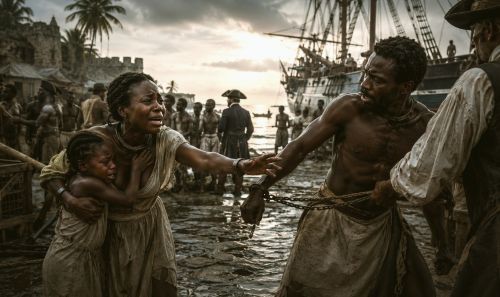
The transatlantic and domestic slave trades shattered enslaved families through capture, sale, forced migration, and law, yet kinship endured.

By Matthew A. McIntosh
Public Historian
Brewminate
Introduction: The Family as Slavery’s First Target
The transatlantic slave trade did not merely move labor across an ocean. It assaulted the most basic structures through which human beings understood themselves: household, ancestry, marriage, parenthood, memory, and belonging. Long before an enslaved person reached a plantation, the violence of slavery had already begun its deeper work. A mother disappeared from her children. A husband was marched away from his wife. A child was taken from a village, a lineage, a language, and a world of names that gave life meaning before any European buyer ever inspected a body for sale. Slavery was economic, legal, racial, and imperial, but it was also profoundly genealogical. It tried to sever people from the networks that told them who they were, where they came from, whom they owed care to, and who would remember them after death.
This destruction was not accidental. The Atlantic slave system depended on turning persons into movable property, and property could not be allowed to possess enforceable kinship claims against its owner. A captive might be a son, wife, father, sister, elder, bride, or child within African social worlds, but in the logic of Atlantic commerce that person became an item of exchange, sorted by age, sex, health, strength, reproductive capacity, and market value. That conversion was itself a form of violence. It did not wait for the auction block or the plantation ledger. It began whenever traders, brokers, rulers, raiders, ship captains, merchants, and buyers treated family identity as irrelevant to price. People were detached from the obligations and protections that had surrounded them, then reclassified through categories useful to sale: male or female, young or old, healthy or weak, skilled or unskilled, fertile or expendable. The Middle Passage then extended this first rupture into a systematic unmaking of social identity. Shipboard confinement separated men, women, and children; stripped captives of familiar languages and rituals; exposed them to terror, disease, sexual violence, hunger, and death; and forced survivors into a world where old kinship ties had been wounded and new ones had to be built under domination. The ship did not simply transport enslaved people. It attempted to remake them as commodities, severing the visible body from the family history, ancestral memory, and communal belonging that slavery had no interest in recognizing.
In the Americas, that assault on family became law, custom, and market practice. Enslaved people formed marriages, raised children, preserved names, created households, built religious communities, and claimed kin across blood and affection, but the slave system refused to give those bonds reliable legal protection. A spouse could be sold, a child inherited, a mother separated from an infant, a brother sent south, a family divided by debt, death, punishment, or speculation. Under hereditary slavery, the child of an enslaved woman inherited her condition, making Black motherhood economically valuable to enslavers while denying mothers the legal power to secure their children’s futures. The cruelty was not only that families were broken. It was that they were permitted to exist only at the pleasure of those who could profit from destroying them.
Yet enslaved families were never merely passive victims of this machinery. They resisted erasure through naming, memory, mourning, caregiving, marriage, fictive kinship, oral history, religion, and, after emancipation, long searches for the relatives slavery had stolen. Formerly enslaved people placed newspaper notices, contacted churches, followed rumors, appealed to the Freedmen’s Bureau, and traveled across counties and states in search of parents, spouses, children, and siblings. Those searches reveal the central truth of this history: slavery targeted the family because family was one of the deepest sources of identity, continuity, and resistance. To recover a name, remember a mother, search for a child, or claim a spouse was to reject slavery’s lie that property had no kin. The family was slavery’s first target because it was also one of slavery’s most enduring defeats.
African Captivity before the Coast: War, Kidnapping, Debt, and the First Break
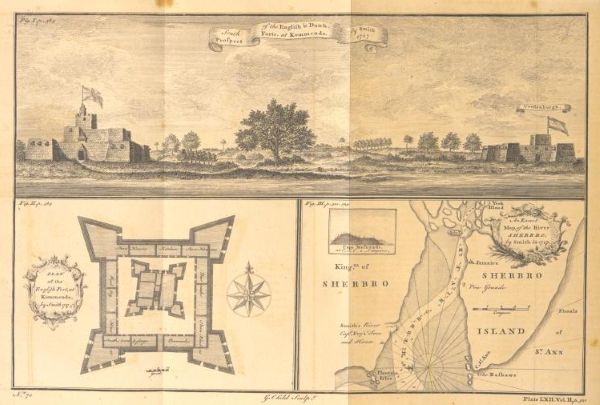
The shattering of enslaved families did not begin at the auction block in Charleston, Kingston, Havana, or New Orleans. It began earlier, often far inland, before the coast appeared and before a European ship entered the captive’s field of vision. The Atlantic slave trade drew human beings out of many African societies through warfare, raiding, kidnapping, judicial punishment, debt, pawnship, and political violence, all of which became more destructive as Atlantic demand expanded the commercial value of captive bodies. This first break was often sudden and absolute. A person might leave home for work, trade, worship, travel, or refuge and never return. A village might be raided at night. A defeated community might see its young people marched away. A debtor’s dependent might be converted from a temporary pledge into permanent alienation. Even when captivity followed recognizable political or legal forms within a local society, the Atlantic trade altered the stakes by attaching those forms to an export market that could carry the captive beyond recovery. The person taken was not only removed from a household but from the realm in which kin might plead, compensate, negotiate, ransom, retaliate, or remember through ordinary communal practice. Whatever the precise route into captivity, the first wound was the same: the captive was torn from a web of kinship before being converted into an Atlantic commodity.
That rupture mattered because family in many African societies was not simply a private emotional arrangement. It was a structure of ancestry, obligation, labor, inheritance, marriage alliance, ritual belonging, and political identity. A person’s place in the world was held by names, elders, lineages, households, age grades, patrons, clients, spiritual affiliations, and remembered dead. To be seized was not only to lose physical freedom. It was to be violently removed from the social grammar through which one’s humanity was publicly recognized. The captive did not become “enslaved” in some abstract or isolated sense. He or she became separated from those who could testify to identity, defend status, arrange marriage, remember genealogy, perform mourning rites, or call the person back into community. The first theft of the slave trade was not labor. It was social location.
European buyers and Atlantic merchants did not invent every African form of captivity, but Atlantic commerce transformed the scale, direction, and consequences of enslavement. Older systems of dependency, war captivity, pawnship, and incorporation existed in parts of Africa long before the rise of the Atlantic plantation complex, and their meanings varied widely across region and period. Some captives in African contexts could be absorbed into households, married into communities, or held within hierarchical but socially intelligible relationships. The Atlantic trade intensified the most destructive possibilities within these systems by creating an external market that rewarded permanent export. Once captives were marched toward the coast, the possibility of reintegration narrowed brutally. The captive was no longer merely vulnerable within a local hierarchy. He or she was being removed from the continent’s interior social worlds into an oceanic system designed to make return almost impossible.
Warfare was one of the central engines of this first separation, but it should not be imagined only as organized battle between armies. Captivity could come through raids, border conflicts, state expansion, commercial militarization, retaliation, and the predatory violence of groups drawn into slave-trading networks. As demand rose, the line between war and kidnapping could blur, because human seizure itself became an incentive for violence. Political authorities, merchants, and armed intermediaries learned that captives could be exchanged for imported goods, weapons, textiles, alcohol, credit, and prestige. In some places, militarized states and commercial brokers became increasingly entangled, so that war fed trade and trade encouraged further war. The household became exposed to forces far beyond its control: regional conflict, coastal bargaining, European demand, and inland systems of violence that turned defeat or vulnerability into sale. This did not mean African societies were passive victims of European power, nor does it permit the old evasive claim that Europeans were somehow absolved because African intermediaries participated. The Atlantic system was a chain of profit and coercion in which different actors held different kinds of power, but the family consequence was consistent: the captive disappeared from one world so another could price the body.
Debt and judicial enslavement also fractured families in ways that exposed the vulnerability of dependents, women, children, and the socially marginal. In some regions, people could be pledged for debt, punished for crimes, or seized because of obligations they did not personally create. These processes could turn household crisis into kinship destruction. A child, spouse, dependent, or collateral relative might become the human payment through which another obligation was settled. The Atlantic market made such vulnerability more dangerous because it converted local dependency into exportable property. Once moved from the interior to the coast, the captive’s kin might have little ability to redeem, negotiate for, or even locate the lost person. A debt that might once have remained within a local moral economy could become, under Atlantic pressure, the opening act of permanent exile.
The first break, then, was not simply geographical. It was temporal, spiritual, and genealogical. Captives were pulled out of the future their families had imagined for them. Marriages would not happen. Children would not be born into expected lineages. Elders would not be cared for by those taken away. Ancestors would not be honored by descendants who had vanished across the sea. Those left behind often faced not only grief but uncertainty, because disappearance without knowledge of death disrupts mourning itself. For the captive, the march toward the coast began the long process by which slavery tried to strip the person of remembered belonging. For the family left behind, the slave trade opened a wound without a body, a grave, or an ending. Before the Middle Passage, before plantation labor, before sale in the Americas, slavery had already done one of its most devastating works: it had made kin into absences.
Barracoons and Coastal Trading Posts: Sorting Human Beings before the Sea
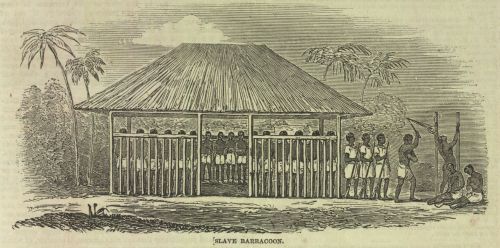
By the time captives reached the African coast, the first violence of separation had already occurred, but the coast gave that violence a new institutional form. Forts, factories, trading posts, beaches, river ports, and barracoons became spaces where human beings were held, inspected, confined, grouped, and prepared for Atlantic sale. These were not merely waiting rooms before the Middle Passage. They were commercial thresholds where persons taken from inland worlds were more fully absorbed into the machinery of oceanic exchange. A captive who had once belonged to a household, lineage, village, or political community now entered a space organized around inventory, bargaining, surveillance, and shipment. The barracoon reduced kinship to inconvenience. It gathered the stolen not as families or communities, but as bodies awaiting profitable arrangement.
This sorting was one of the crucial acts by which slavery turned social persons into marketable units. Captives were examined for age, sex, strength, illness, injury, pregnancy, perceived fertility, and likely labor value. Children, adolescents, adults, and elders were evaluated differently; men and women were assigned different commercial meanings; bodily scars, teeth, skin, muscle, and movement became evidence in a grotesque theater of appraisal. The process stripped captives of the identities that had mattered before seizure and replaced them with the categories useful to traders and buyers. A woman was not first a daughter, wife, mother, ritual participant, farmer, trader, or elder-in-training. She became a saleable body whose value could be imagined through labor, sexuality, and reproduction. A child was not first the future of a lineage. He or she became a smaller unit of human property, vulnerable precisely because protection had been torn away. The inspection of bodies also made the family disappear from the field of commercial vision. Traders could see height, teeth, wounds, strength, and pregnancy, but they did not record grief as value, marriage as obligation, or motherhood as a claim that should prevent sale. What mattered was not who waited for the captive, who had raised the child, who had married the woman, or who would mourn the man, but how the body could be fitted into the next stage of exchange. In that sense, the coastal market did not merely ignore kinship. It trained everyone who profited from it to see kinship as commercially irrelevant.
The coastal holding spaces also intensified separation by breaking whatever fragments of kinship or regional solidarity had survived the march from the interior. Captives who had been seized together might be divided before sale. People from different language groups, polities, and regions could be crowded together in confinement, sometimes with little ability to speak across difference except through gesture, grief, fear, or emerging forms of shared captivity. This mixing was not always the product of a single deliberate policy; it also reflected the routes, timing, and practical logistics of trade. Yet its consequences were unmistakable. The captive’s world became more disorienting at each stage. Familiar speech disappeared. Known faces vanished. Ritual obligations could not be fulfilled. The ordinary signs by which one recognized belonging were replaced by chains, walls, armed guards, traders’ ledgers, and the sight of the sea.
The barracoon also marked a terrible shift in the meaning of time. Inland, captives might still imagine pursuit, ransom, rescue, negotiation, or return, however fragile those hopes may have been. At the coast, time narrowed around departure. The ocean stood before them as both geography and terror, a vast unknown associated in many captives’ minds with death, disappearance, and spiritual rupture. European and African traders might negotiate prices, credit, cargoes, and delivery schedules, but captives waited in a different temporality altogether: the time of hunger, confinement, rumor, disease, dread, and forced anticipation. Every delay could mean more illness or death. Every movement could mean sale, shipment, or separation from the last person who knew one’s name. Before the ship’s hold enclosed them, the coastal prison had already begun to make kinship feel unreachable.
Yet even in these spaces, captives were not emptied of memory or will. The very brutality of the barracoon reveals why enslavers and traders had to confine, guard, divide, and discipline them. Captives resisted through attempted escape, refusal, communication, mourning, spiritual practice, and the stubborn preservation of identity under conditions designed to destroy it. Some remembered the names of those taken with them. Some carried fragments of language, song, scarification, ritual knowledge, and place-memory into the ship and beyond it. Others forged fragile bonds with people who had been strangers only days or weeks before, creating first gestures of mutual recognition in the face of terror: shared food when possible, whispered words, exchanged signs, collective lament, or the simple act of witnessing one another’s suffering. These forms of connection could not restore the families already broken, but they mattered because they challenged the trade’s attempt to isolate each captive as a solitary commodity. The coast was meant to be a place of final sorting before the sea, but it was also a place where the first forms of diasporic consciousness began to emerge from catastrophe. People who had been made strangers to one another by language and origin were forced into a shared recognition: whatever worlds had been stolen from them, they were now trapped together inside the same violent Atlantic design.
The Middle Passage: Shipboard Separation and the Unmaking of Kinship

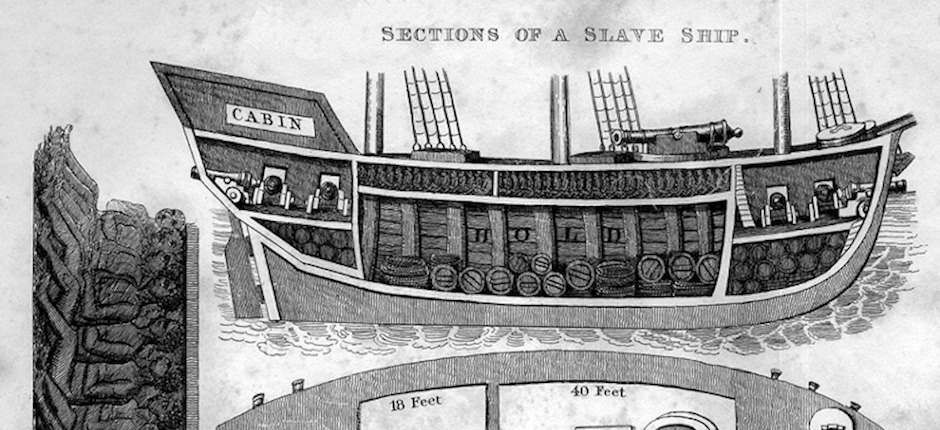
The Middle Passage was not only a route across the Atlantic. It was a machinery of separation built into wood, iron, rope, violence, and commercial calculation. By the time captives were forced aboard slave ships, many had already endured inland seizure, forced marches, confinement, sale, and the terror of coastal prisons. The ship deepened that rupture by enclosing captives within a moving architecture designed to suppress identity and maximize profit. Men, women, and children were commonly separated aboard ship, confined in different spaces, chained or guarded according to the perceived threat they represented, and subjected to routines that treated them as cargo while never forgetting that they were human beings capable of resistance. This was one of the central cruelties of the crossing: the enslavers knew enough about human bonds to fear them, but not enough to honor them.
Shipboard separation attacked kinship at the level of the body. Families who had survived capture together could be divided in the hold, forced apart by sex, age, size, health, or the ship captain’s disciplinary judgment. Men were often more tightly restrained because captains and crews feared revolt; women and children could be confined separately, exposed to different patterns of coercion, labor, surveillance, and sexual vulnerability. The organization of the ship made ordinary family protection almost impossible. A husband could not reliably shield a wife. A mother might be unable to hold or comfort a child. Siblings could lose sight of one another in the darkness, heat, stench, crowding, and panic of confinement. The hold did not simply contain suffering. It reorganized suffering so that kinship itself became physically unreachable.
The ship also assaulted the social practices through which family life had meaning. Captives came from societies in which birth, death, marriage, initiation, mourning, ancestor veneration, food sharing, and bodily care were embedded in ritual and communal obligation. The Middle Passage violated those practices repeatedly. People died without proper rites. Bodies were thrown into the sea. Illness spread through spaces where care was constrained by chains and crowding. Hunger, thirst, nakedness, forced exercise, inspection, and sexual violence stripped captives of the privacy and dignity through which family and community had been lived. The enslaved person was not merely transported away from home; he or she was forced into a world where the basic acts by which human beings care for one another were made contingent on the will of captors. A mother’s desire to clean a child, an elder’s obligation to comfort the frightened, a spouse’s instinct to shield the beloved, or a community’s duty to mourn the dead could all be interrupted by iron restraints, shipboard discipline, and the captain’s calculation of risk. Even the dead were denied the relational meaning they had held in life. The casting of bodies into the Atlantic was not only disposal; it was the final denial of burial, remembrance, and return. In that sense, the ocean became part of slavery’s ritual violence, replacing funeral obligation with commercial necessity and forcing survivors to carry grief without the practices that might have made grief bearable.
Yet the attempt to unmake kinship never fully succeeded, because captives carried memory into the hold. Names, languages, prayers, songs, gestures, scars, hairstyles, bodily markings, and fragments of regional knowledge crossed the ocean with them. Some captives could still communicate with people from related language communities. Others built new forms of recognition through shared fear, shared restraint, and shared resistance. Even where words failed, the body could communicate: a glance, a warning, a rhythm, a refusal, a hand extended in darkness, a collective cry when another captive was beaten or thrown overboard. The ship tried to reduce people to isolated units of sale, but the conditions of captivity also forced the beginnings of new solidarities among those who had been made strangers to one another.
Resistance aboard slave ships further reveals that the Middle Passage was never a passive process of transport. Captives rebelled, plotted, refused food, attempted suicide, attacked crew members, sabotaged shipboard routines, and sometimes tried to regain control of the vessel. These acts were not only political or military responses to enslavement. They were also defenses of violated humanity. To refuse food, to leap into the sea, to strike back, or to join a revolt was to reject the ship’s claim that captives had already been converted into property. The frequency of shipboard resistance helps explain why crews used chains, weapons, forced feeding, separation, intimidation, and terror. The enslavers understood that captives had not forgotten themselves. They had to be broken precisely because they remained persons. Their resistance also carried a kinship logic, even when it did not arise from biological family alone. Collective action aboard ship could create emergency communities among captives who had not known one another before the coast or the hold. A revolt required trust, timing, communication, and the willingness to risk death for something larger than individual survival. Even refusal could become communal when captives acted together, turning hunger, silence, or defiance into shared testimony against enslavement. The ship’s regime tried to isolate each captive as a separate commodity, but resistance exposed the continuing human capacity to form obligation under terror. In that fragile and dangerous solidarity, the Middle Passage produced not only suffering, but also the first Atlantic forms of chosen kinship among people violently cut off from their own.
For families, the greatest cruelty of the Middle Passage was that it made loss both intimate and anonymous. Some captives watched relatives die and could not bury them. Others were separated before boarding and crossed the ocean without knowing whether their spouses, parents, children, or siblings were alive, dead, sold elsewhere, or still confined on the coast. The Atlantic transformed kin into uncertainty. Its waters swallowed not only bodies, but also knowledge. There was often no grave, no message, no witness who could return to tell a family what had happened. The ocean became an archive of absences, holding stories that could not be recorded by those who most needed to know them. That uncertainty would echo across generations, leaving descendants to reconstruct lineages from fragments, silences, advertisements, oral memory, and the cruelly partial records of enslavers.
The Middle Passage must be understood as a central stage in slavery’s assault on the family, not merely as a passage between African captivity and American plantation labor. It converted earlier ruptures into a transoceanic condition. By separating bodies, violating ritual obligations, destroying the possibility of ordinary care, and forcing captives into a market system that denied kinship any binding claim, the slave ship helped create the Atlantic world’s most brutal fiction: that people could be stripped of relation and made into property. But the very need for chains, guards, violence, and surveillance proved the opposite. The enslaved carried kinship even when kin were gone. They carried memory even when names were threatened. They carried belonging even when the ship tried to turn the ocean itself into a wall between past and future.
Arrival in the Americas: Quarantine, Seasoning, Sale, and the Marketable Body
Arrival in the Americas did not end the terror of the Middle Passage. It translated oceanic captivity into colonial possession. Survivors who staggered, were carried, or were driven from slave ships entered ports where illness, exhaustion, grief, and disorientation became part of their market presentation. The crossing had already assaulted their bodies and kinship ties, but arrival exposed them to a new regime of inspection, quarantine, advertisement, and sale. To European and colonial buyers, the newly arrived African was not a person emerging from catastrophe. He or she was an imported commodity whose condition had to be assessed, restored if necessary, priced, and placed into labor. The port became another threshold of unmaking. The captive had survived the sea, but survival itself now made the body saleable.
Quarantine and inspection gave this transition a bureaucratic and medical appearance, but they remained bound to commerce. Disease mattered to officials, ship captains, merchants, and buyers because sickness threatened port populations, crew survival, cargo value, and plantation investment. Captives were examined, counted, sometimes isolated, and often prepared for sale through washing, feeding, oiling, exercise, and superficial treatment intended to improve appearance. This was not care in any humane sense. It was repair work on damaged property. A person who had endured terror, hunger, dehydration, sexual violence, bereavement, and confinement might be made to appear stronger than he or she was so that a buyer would pay a higher price. The body bore the truth of the crossing, but the market tried to dress that truth for purchase.
The process often called “seasoning” extended the violence of arrival beyond the port. In the Caribbean, mainland North America, Brazil, and Spanish America, newly arrived Africans were forced through a period of adjustment to new disease environments, labor demands, languages, punishments, foodways, and systems of command. Enslavers described seasoning as if it were a practical stage of acclimation, but for the enslaved it was a second ordeal after the ocean. The survivor had to learn the sounds of orders, the boundaries of violence, the rhythms of work, and the dangers of unfamiliar landscapes while carrying the trauma of capture and crossing. Many died during this period. Those who lived were expected to become useful within the plantation or urban economy, which meant that survival itself was interpreted by enslavers as proof that the person could now be worked, disciplined, and resold. Seasoning also worked directly against the reconstruction of family life. Newly arrived Africans might be deliberately dispersed among more experienced enslaved workers, assigned new names, punished for unfamiliarity with commands, or forced to adapt under people who measured their confusion as defiance. The process pressed the survivor to abandon old orientations and learn a new order of fear. Yet it also created spaces where older enslaved people, including African-born men and women who had survived earlier arrivals, could become interpreters, protectors, ritual guides, or substitute kin. In this tension lay one of slavery’s cruelest contradictions: the same system that sought to break memory often depended on enslaved communities to absorb the newly arrived and make them survivable workers.
Sale after arrival completed one of the most brutal conversions in the Atlantic world: the transformation of a displaced person into a marketable body within a colonial inventory. Buyers inspected captives by touching muscles, opening mouths, examining teeth, assessing posture, looking for wounds, estimating age, judging reproductive potential, and imagining future labor. Men might be valued for field labor, artisan skill, or physical strength; women for labor, domestic service, sexuality, and childbearing; children for future value and malleability. The inspection repeated, in colonial form, the sorting that had occurred on the African coast and aboard ship. But now the captive faced a new and terrible uncertainty: where the sale would send them, whose power would claim them, what language would surround them, and whether any surviving companion from the ship would remain nearby.
Family separation at arrival was often final in a way earlier separations had not always been. On the African coast, a captive might still imagine rescue or ransom. On the ship, captives might still know that someone from their region, vessel, or surviving group remained near them. In the American market, buyers could scatter survivors across plantations, cities, islands, mines, workshops, and households. A mother and child might be sold separately if their combined sale did not suit a buyer. A husband and wife who had survived the crossing together might be divided because one buyer wanted a field hand and another wanted domestic labor. Shipmates who had become emergency kin in the hold could be separated at the moment when their shared survival seemed most necessary. The market did not merely ignore these bonds. It profited from its freedom to disregard them. That freedom was devastating because the sale converted uncertainty into distance. Once people were carried away from the port, the possibility of finding one another depended on rumor, memory, owner permission, and geographic chance. The buyer’s decision could determine whether a surviving child remained within sight of a mother, whether a companion from the ship became a neighbor or a permanent absence, whether a person heard a familiar language again, or whether the last witness to an earlier life disappeared down another road. The auction or private sale performed a second social death, not by erasing the past completely, but by making its surviving human links vulnerable to immediate dispersal.
Renaming intensified this assault on identity. Newly arrived Africans often received European or biblical names, names chosen by enslavers, traders, or buyers who had neither the knowledge nor the desire to preserve African naming systems. A name is never a small thing. It carries family, language, place, ancestry, ritual, and memory. To rename the captive was to announce that the previous social person no longer held authority in the new order. Yet the old name did not necessarily vanish. Enslaved people remembered names privately, reshaped imposed names, passed fragments of African identity through speech and ritual, and sometimes preserved ethnic, regional, or shipmate associations within new communities. The enslaver’s ledger might record one name, while memory carried another. That split between recorded identity and remembered identity would haunt the archive for generations.
The plantation world then pressed the newly arrived into labor regimes that used violence to replace kinship with command. On sugar estates, rice plantations, tobacco fields, mines, ports, and urban worksites, the enslaved were organized by gang, task, skill, sex, age, and owner interest rather than by family integrity. Housing arrangements could place strangers together while separating those who had known one another. Labor demands consumed the time and bodily energy through which ordinary family life might have been rebuilt. Yet enslaved people still formed relationships, made households where possible, created ritual communities, learned new languages, and recognized shared histories of loss. The plantation sought to create workers, but the enslaved continued to make social worlds. Even under domination, they searched for ways to become kin again. These new kinship formations could be fragile, improvised, and constantly threatened, but they were not secondary to survival; they were survival. Shared cabins, field labor, night gatherings, religious meetings, healing practices, naming traditions, and child care networks became ways to restore human relation where law and market had denied it. The newly arrived might enter these worlds as strangers, but plantation communities often became the only available ground on which memory could be joined to a future. Slavery attempted to make the plantation a site of discipline alone. Enslaved people made it, against enormous force, a place where broken histories could begin to speak to one another.
Arrival in the Americas should not be imagined as the end of a journey, but as the beginning of another phase in slavery’s long attack on family. Capture had removed people from their first communities. The coast had sorted them. The ship had confined and separated them. The port, quarantine yard, seasoning ground, and market now assigned them to colonial life as property. At each stage, kinship was made more difficult to defend and easier for others to deny. Still, the very persistence of family formation in the Americas reveals the failure of slavery’s deepest ambition. Enslavers could sell bodies, rename captives, divide shipmates, and force survivors into plantation labor, but they could not fully erase the human drive to remember, attach, mourn, and belong. The marketable body remained a person, and within that stubborn truth lay the first beginnings of diasporic family life.
Law, Property, and the Non-Recognition of Enslaved Marriage

The destruction of enslaved families was not only a consequence of kidnapping, transportation, and sale. It was also written into the legal foundations of slavery itself. Across slaveholding societies in the Americas, enslaved people formed marriages, partnerships, households, and kin networks that were socially real within Black communities, but these bonds were rarely recognized as legally binding against the claims of enslavers. A man and woman might pledge themselves to one another, live together when permitted, raise children, exchange vows before their community, or be known by everyone around them as husband and wife. Yet the law that governed their bodies did not treat that union as a contract with enforceable protections. The enslaver’s property right stood above the enslaved person’s family claim. Marriage existed, but it existed under the shadow of sale.
This legal non-recognition was central to the system. If enslaved marriage had possessed full legal standing, then enslavers could not have freely sold husbands away from wives, wives away from husbands, or children away from parents. The market required separability. A person who could be mortgaged, inherited, leased, seized for debt, gifted, punished, or sold could not also possess family rights capable of interrupting those transactions. Slavery made kinship socially visible but legally fragile. Enslavers often knew perfectly well who was married, who had children, who belonged to which household, and who would suffer if a sale occurred. Plantation records, sale advertisements, wills, probate inventories, court disputes, and slaveholder correspondence often acknowledged relationships indirectly, naming mothers with children, identifying family groups, or noting spouses who lived on nearby estates. But acknowledgment was not protection. The same records that prove enslaved families existed also reveal how easily law converted those families into divisible property. A mother and child could appear together in an inventory and then be separated in distribution; a husband could be known to a whole neighborhood and still have no enforceable claim to remain near his wife; a child could be recognized as belonging to a woman in the quarters while legally belonging to someone else entirely. That contradiction was not a flaw in the system. It was the system working as designed. The legal bond between owner and property outweighed the human bond between spouse and spouse, parent and child, sibling and sibling.
The contradiction appeared most sharply in enslavers’ own paternalist language. Many slaveholders claimed to govern plantations as households, imagining themselves as patriarchs presiding over dependent people. They praised loyalty, domestic order, Christian morality, obedience, marriage, reproduction, and family stability when those things served plantation discipline. Yet the same enslavers could divide families when debts mounted, estates were settled, labor needs shifted, punishment was desired, or profit beckoned. Their paternalism depended on a fraud: it spoke the language of family while preserving the power to destroy actual families. Slaveholders could encourage marriage because it discouraged flight, stabilized labor, and attached enslaved people to plantation life, while still refusing to let marriage become a right that limited ownership. They could praise motherhood because it reproduced the labor force, while denying mothers authority over their children. They could invoke Christianity to demand fidelity, obedience, and domestic morality from the enslaved, while ignoring the moral claims those same teachings might make against sale, sexual coercion, and family destruction. Paternalism allowed enslavers to present domination as care and market violence as unfortunate necessity. The enslaved household was useful when it made labor more stable, reproduction more predictable, and resistance less likely. It became disposable whenever the market, the court, or the master’s will required it.
The legal condition of children revealed the system’s deepest violence. In hereditary racial slavery, the child followed the condition of the mother, a principle often described through the Latin formula partus sequitur ventrem. This rule transformed enslaved women’s reproductive lives into a source of wealth for enslavers. Children born to enslaved mothers entered the world already claimed as property, regardless of the father’s status, desire, responsibility, or recognition. The rule protected white male sexual access while securing slaveholders’ title to the children produced through coercion, assault, or constrained relationships. It also severed motherhood from legal authority. An enslaved woman could give birth, nurse, comfort, teach, name, discipline, and love her child, but she could not legally guarantee that the child would remain with her.
That denial of parental authority was not an incidental cruelty. It was one of slavery’s organizing principles. Enslaved parents were expected to raise children into laboring life, but they could not claim the legal rights that made parenthood secure. They could not prevent sale. They could not refuse an owner’s discipline. They could not decide where a child would live, what work the child would do, whether the child would be hired out, or whether a daughter or son would be carried away under the pressure of estate division or market demand. The enslaved mother’s body was treated as the source of future property, while her motherhood was denied the force of law. The enslaved father’s authority was likewise undermined, since he could be prevented from living with his children, sold away from them, or denied any recognized claim over their protection. Slavery did not abolish parental love. It made parental love legally defenseless.
Enslaved people nevertheless treated marriage and family as meaningful, binding, and sacred where law refused to do so. They married according to custom, religious practice, community recognition, and mutual commitment. They raised children within extended networks of grandparents, aunts, uncles, siblings, neighbors, godparents, and fictive kin. They preserved surnames, passed down stories, taught survival strategies, and built domestic worlds in cabins, quarters, praise houses, fields, and forests. Some couples negotiated visiting arrangements across plantations, forming what later scholars have called “abroad marriages,” in which husbands and wives lived under different owners and maintained relationships across distance when permission, geography, and danger allowed. These marriages reveal both the resilience of enslaved people and the obscenity of the system around them. The fact that love survived under such conditions should not soften the violence. It should sharpen our understanding of what slavery forced love to endure.
The non-recognition of enslaved marriage exposes the central legal lie of slavery: that a human being could be fully embedded in family life and yet remain alienable property. Enslavers saw the family when they wanted reproduction, discipline, emotional leverage, or Christian respectability. They denied the family when recognition would limit ownership. Law made this hypocrisy durable by converting human relationships into permissions granted from above rather than rights held from within. Enslaved people answered that denial by creating kinship anyway, and they sustained one of the most important forms of resistance available to them. To marry without legal protection, to parent without legal authority, and to claim kin in a world that priced people separately was to insist that the slave system’s categories were false. Property had kin. The law simply refused to confess it.
Plantation Family Life under Permanent Threat

Plantation slavery did not prevent enslaved people from forming families. It made family life precarious, conditional, and exposed to violence at every point. Across the Americas, enslaved men, women, and children created households, entered marriages, raised children, cared for elders, remembered kin, and built communities under conditions designed to deny them secure possession of their own lives. This is one of the central tensions in the history of slavery: the enslaved family was both profoundly real and relentlessly vulnerable. It was real because enslaved people made it real through commitment, labor, memory, affection, ritual, and daily sacrifice. It was vulnerable because law, market, and mastery could invade it at any moment. The plantation quarters were never simply domestic spaces. They were places where people tried to make a human world inside a system that could break that world apart without warning.
The ordinary work of family life under slavery was itself a form of resistance to commodification. Enslaved parents taught children how to survive authority, read danger, preserve dignity, and recognize the thin line between obedience used as strategy and submission demanded as ideology. Mothers carried the central burden of feeding, nursing, clothing, protecting, and emotionally anchoring children whose legal status placed them beyond maternal control. Fathers, despite the law’s refusal to recognize their authority, contributed labor, discipline, affection, instruction, and protection wherever plantation geography and owner permission allowed. Grandparents, older siblings, aunts, uncles, cousins, neighbors, and fictive kin widened the circle of care. These networks mattered because the slave system had already weakened the nuclear family as a protected unit. Enslaved people responded by making kinship expansive, flexible, and communal, able to absorb loss and sustain children when biological parents were sold, hired out, dead, or forced to live elsewhere. Family life became both intimate and collective. A child might belong most directly to a mother and father, but that child’s survival often depended on a wider community that watched, fed, warned, corrected, comforted, and remembered. Women in the quarters might share child care while working under brutal demands; older people might transmit stories and moral lessons when exhausted parents could not; siblings might become caretakers before they were old enough to understand the full burden placed on them. Under slavery, care itself had to be redistributed because danger was so widely distributed. The enslaved family survived not because the plantation allowed it to flourish, but because enslaved people made kinship elastic enough to withstand a system built to rupture it.
Marriage under plantation slavery revealed both the strength of enslaved commitment and the instability imposed by ownership. Some couples lived together in the same quarters and were recognized by their communities as husband and wife. Others endured “abroad marriages,” in which spouses lived on different plantations and maintained relationships through nighttime visits, Sunday travel, holiday gatherings, and fragile agreements between enslavers. These marriages demanded stamina and risk. A husband might walk miles after exhausting labor to see his wife and children, only to return before dawn to avoid punishment. A wife might raise children with a husband who could not be present daily, not because he had abandoned them, but because slavery had placed ownership between marriage and home. Such unions exposed the cruelty of a system that permitted affection only when affection did not obstruct labor, discipline, or sale.
Children grew up within this contradiction from their earliest years. The quarters could be places of tenderness, storytelling, music, religious instruction, play, and intergenerational teaching, but childhood was never protected from the knowledge of sale. Enslaved children saw grief in adults before they understood its cause. They learned that traders, estate settlements, debt, punishment, and an owner’s death could alter their lives without consent. They heard warnings about behavior, not only as moral instruction, but as survival training in a world where a careless word, a suspected theft, a failed task, or a master’s anger might bring whipping, forced separation, or sale. Childhood under slavery was not simply shortened by labor. It was burdened by premature knowledge of insecurity. To be born into an enslaved family was to be loved fiercely by people who knew that love alone could not keep the child safe. This knowledge shaped childhood emotionally as well as materially. Children learned to read adult silences, to understand the meaning of strangers arriving on horseback, to fear the inventory, the auction notice, the locked room, the wagon, or the sudden instruction to gather belongings. They also learned the counter-lessons of enslaved family life: who could be trusted, which elders carried memory, which songs held coded feeling, which stories explained loss without surrendering to it. The result was a childhood lived between dread and attachment. Enslaved children were made vulnerable by law, but they were also held inside a dense moral world created by those who loved them. That moral world could not abolish sale, but it could teach a child that enslavement was not the whole truth of who they were.
The threat of sale shaped plantation family life even when no sale occurred. It hovered over marriage, parenting, discipline, worship, and daily conversation as a constant possibility. Enslavers understood this and used it. The sale of a spouse, child, parent, or sibling could punish resistance, settle debt, redistribute estate property, or remove someone considered troublesome. The possibility of separation could coerce obedience as effectively as physical force, because it targeted what enslaved people most cherished. This made the plantation household a field of emotional leverage. A mother’s fear for her child, a husband’s fear for his wife, or a child’s fear of losing a parent could be turned into an instrument of control. The system did not merely threaten bodies. It threatened bonds.
Still, plantation family life endured because enslaved people refused the slaveholder’s definition of them as separable units of labor. They made homes out of cabins they did not own, marriages out of vows the law would not protect, childhoods out of stolen hours, and genealogies out of names the market tried to scatter. They buried the dead, remembered the sold, cared for the orphaned, honored elders, taught children kinship terms, and preserved stories of people gone from sight but not from memory. This resilience should never be mistaken for mitigation. The survival of enslaved families does not soften the violence of slavery. It indicts it more deeply. The plantation family existed under permanent threat, and its endurance was not evidence of slavery’s tolerability, but of enslaved people’s extraordinary refusal to let law, sale, and terror become the final meaning of their lives.
Auction Blocks and Estate Sales: The Public Theater of Family Destruction
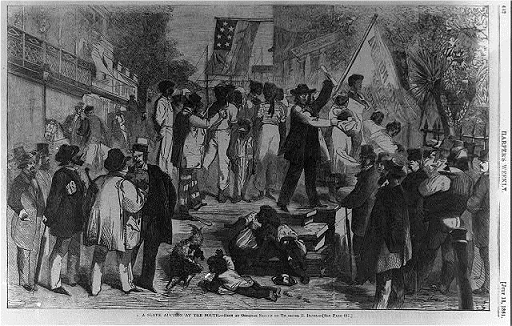
The slave market made visible what plantation law had already made possible. If enslaved families lived under permanent threat, the auction block was one of the places where that threat became public spectacle. Men, women, and children were displayed, inspected, questioned, touched, priced, and divided before buyers who claimed the authority to imagine their futures. The market did not create the enslaver’s power to separate families, but it dramatized that power with brutal clarity. A mother could plead, a child could cling, a husband could protest, a wife could weep, and still the sale could proceed because the market recognized none of those claims as superior to ownership. Family feeling might be noticed. It might even be pitied. But pity did not suspend bidding.
Estate sales carried a special cruelty because they often exposed the lie that enslaved people were safe under so-called benevolent masters. An enslaver’s death could transform a plantation community into a list of assets, dividing human beings among heirs, creditors, widows, children, and purchasers. The same families that had lived for years in a particular place, sometimes across generations, could be broken by probate proceedings, debt settlements, or disputes over inheritance. In these moments, the enslaved learned again that even long residence, loyal service, marriage, age, motherhood, childhood, and communal rootedness offered no secure protection. A plantation might have appeared stable while the owner lived, but death revealed the deeper truth: the enslaved family’s future rested not on its own rights, but on the financial condition, testamentary wishes, and legal obligations of another household.
The auction itself functioned as a theater of dehumanization. Buyers assessed bodies with a confidence that depended on refusing the full humanity before them. They asked about skill, obedience, fertility, age, strength, illness, temperament, and experience, but the most important question was always whether the person could be turned into value. The auction block converted biography into sales language. A young woman became a likely worker and bearer of children. A man became a field hand, carpenter, driver, or risk. A child became future labor. An elderly person became depreciating property, sometimes sold cheaply or separated from younger kin because sentiment had little market value. The family, meanwhile, appeared in the market chiefly as a complication: something that might lower or raise price, affect behavior, or require strategic handling by the seller. Buyers might ask whether a woman had children, not because they honored maternity, but because children could influence price, future reproduction, nursing demands, or the likelihood of grief and resistance. They might ask whether a man had a wife nearby, not because marriage carried legal protection, but because attachment could make him less manageable if sold far away or more stable if kept within reach. The market did not wholly fail to see family. It saw family selectively, through the cold lens of utility, risk, and value. Kinship entered the auctioneer’s world only after being stripped of moral authority.
Public sale also turned humiliation into discipline. The enslaved person on the block was forced to endure not only separation, but exposure. Bodies were examined in ways that violated privacy and dignity. Scars could be read as evidence of punishment, resistance, or endurance. Teeth, limbs, backs, hands, breasts, and posture became part of commercial judgment. For women, this exposure carried particular danger because the market assessed them through labor, sexuality, and reproduction at once. For children, the spectacle taught early that the adult world could transform terror into transaction without apology. The crowd mattered. Auctions instructed everyone present in the power of slavery: buyers learned mastery, sellers converted human distress into money, spectators absorbed racial hierarchy, and enslaved people were made to watch the rules of their world performed in public.
The separation of families at auction was sometimes defended by enslavers as regrettable necessity, but the record of slave sales shows how thoroughly necessity had been defined by profit. Sellers could choose to keep families together, but they often did so only when it protected price, reputation, discipline, or convenience. Buyers might purchase relatives together when they wanted a household group, when children increased a woman’s value, or when family attachment promised stability, but the market never treated unity as a right. A family group could be split because different bidders wanted different bodies, because a child’s price was attractive, because a skilled man could bring more from one buyer while his wife was wanted by another, or because an estate required equal division among heirs. This was especially devastating in estate sales, where human beings could be divided in the same spirit as land, livestock, furniture, tools, and debts. Appraisers could assign values to parents and children separately, turning the intimate structure of a household into columns of monetary equivalence. The result was a legal fiction with flesh-and-blood consequences: the family appeared in the inventory only to be broken by the distribution. The system’s cruelty lay not simply in the fact that families were separated, but in the ordinary logic that made separation economically rational.
Enslaved people did not meet the auction block without strategy or resistance. They pleaded with buyers, tried to remain near kin, appealed to owners, emphasized family ties, concealed skills that might make distant sale more likely, exaggerated weakness, performed obedience, or sought purchasers who might keep them close to loved ones. Some resisted openly. Others resisted through memory, refusing to let the market’s transaction become the final truth of the relationship it had violated. A mother who remembered the child sold away, a husband who carried the name of a wife taken elsewhere, a sibling who told younger children about the missing, or a community that continued to speak of the sold as kin all denied the market’s claim to finality. These acts may look small beside the enormous machinery of sale, but they mattered precisely because slavery tried to make the auction decisive. To remember was to keep the relationship alive after the law had treated it as extinguished. To tell a child the name of a sold parent was to preserve a genealogy the market had tried to scatter. To plead on the auction ground was to force buyers and sellers to confront, even for a moment, the human bonds their transaction required them to disregard. Sale could remove the person from sight, but it could not make the relationship meaningless.
The auction block and estate sale stand at the center of slavery’s assault on family because they reveal how public, legal, and normalized that assault became. Family destruction did not require chaos. It could proceed through paperwork, advertisements, appraisals, courthouse steps, estate inventories, and orderly bidding. That orderliness was part of the horror. Slavery did not always shatter families in moments of uncontrolled violence; it often did so through recognized procedures that gave cruelty the appearance of legality. The public sale exposed the moral architecture of the slave system with almost unbearable clarity: a society could know that enslaved people loved, married, parented, grieved, and remembered, and still gather to price them separately. The auction block was not an exception to slavery’s family violence. It was one of its clearest rituals.
The 1808 Divide: Ending the International Trade and Expanding the Domestic One
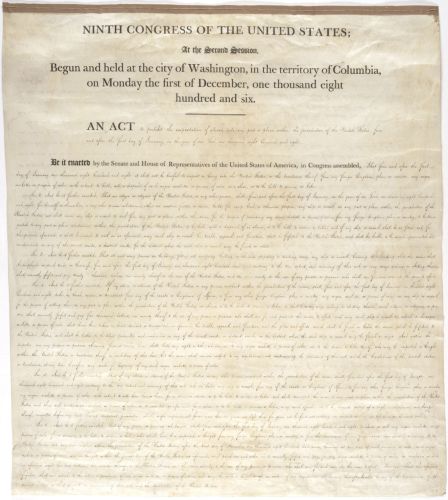
The legal abolition of the transatlantic slave trade by the United States did not end the sale of human beings. It redirected the machinery of family destruction inward. The Act Prohibiting Importation of Slaves, passed in 1807 and effective on January 1, 1808, made it illegal to import enslaved Africans into the United States, fulfilling the constitutional provision that had prevented Congress from banning the trade before that date. But the law did not abolish slavery, did not free those already enslaved, and did not prevent enslaved people from being sold within the country. It closed one door while leaving the house itself intact. For enslaved families, the result was not safety, but a new geography of terror. The Atlantic crossing receded as a legal trade route, while roads, rivers, coastal vessels, slave pens, auction houses, and plantation frontiers became the arteries of a domestic traffic that would define the next half century of American slavery.
This divide mattered because it changed the economic meaning of enslaved people already held in the United States. Once legal importation ended, the enslaved population within the country became the primary source of labor for an expanding slave economy. Reproduction, inheritance, sale, mortgage, and forced migration became even more central to the system’s growth. The enslaved child was not only born into bondage; he or she entered a market in which future value was calculated against the rising demand for labor in cotton, sugar, and other plantation economies. The Upper South, where tobacco agriculture had shifted and some enslavers held more enslaved people than they wished to employ locally, became a major exporting region. The Lower South and Southwest, where cotton expansion consumed land and labor with astonishing speed, became the destination. The family consequences were immense. A child born in Virginia, Maryland, or Kentucky might be raised under the shadow of sale to Mississippi, Louisiana, Alabama, Arkansas, or Texas.
The end of legal importation also encouraged a cruel ideological fiction. Many white Americans could condemn the African trade as barbaric while tolerating, defending, or profiting from the domestic trade at home. The Atlantic trade was increasingly described as a foreign or obsolete evil, while internal sale was treated as a matter of property rights, state sovereignty, inheritance, debt, and commercial necessity. This distinction allowed the republic to imagine itself morally improved without confronting the continued commodification of Black families. Indeed, the domestic trade could be made to appear more respectable precisely because it operated through familiar American institutions: banks, courts, sheriffs, newspapers, railroads, steamboats, insurance arrangements, and local markets. The violence did not become less severe because it was domestic. It became more deeply woven into the everyday economic and legal life of the nation.
For enslaved people, the 1808 divide did not separate one era of family trauma from another so much as transform its form. Before 1808, the Middle Passage had carried captives from African societies into American slavery. After 1808, the internal trade forced enslaved people born in the United States through what scholars have often called a “Second Middle Passage,” a coerced movement from older slaveholding regions to the plantation frontiers of the Deep South. Families were broken by sale, but also by anticipation. Rumors of traders, financial trouble, estate division, or cotton opportunities could produce dread long before the wagon arrived. The possibility of being “sold south” became one of the most feared phrases in enslaved life, because it often meant not simply relocation, but the near-total severing of family, community, climate, custom, and hope of contact. A person sold from Virginia or Maryland to Mississippi or Louisiana might not only lose daily contact with kin, but also disappear into a distance so vast that news became nearly impossible to send or receive. The older Atlantic crossing had torn captives from Africa into the Americas; the domestic trade repeated that logic within the republic itself, remapping Black loss across counties, states, rivers, and cotton frontiers. Parents could no longer assume that children born in the same country would remain within any reachable world. Spouses could no longer trust that shared language, religion, or birthplace would protect their marriage from the trader’s route. The internal trade made the United States itself an ocean.
The 1808 law occupies an uneasy place in the history of slavery and family separation. It marked a real legal shift and reflected growing opposition to the international slave trade, but it also exposed the limits of reform that left property in persons untouched. By banning importation while preserving slavery, the United States did not dismantle the market logic that shattered families. It nationalized and intensified it. The domestic slave trade grew into one of the central engines of nineteenth-century American capitalism, binding the older seaboard states to the cotton frontier through the sale of Black bodies and the destruction of Black kinship. The end of the legal Atlantic trade did not end the Middle Passage’s family violence. It moved that violence onto American roads, into American courts, through American estates, and across American fields.
The Second Middle Passage: Cotton, Forced Migration, and the Domestic Slave Trade
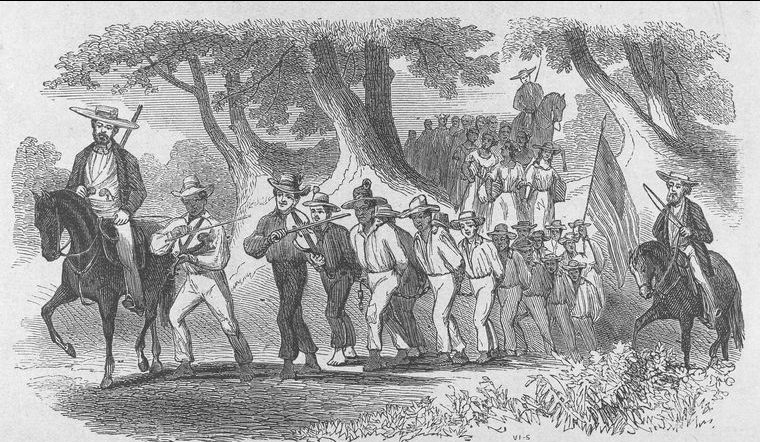
The domestic slave trade became the internal engine of family destruction in the nineteenth-century United States. After the legal end of the transatlantic trade in 1808, enslaved people already within the country became the labor supply for an expanding plantation frontier. The phrase “Second Middle Passage” captures the scale and terror of this forced movement from the Upper South to the Lower South and Southwest, especially as cotton agriculture spread across Georgia, Alabama, Mississippi, Louisiana, Arkansas, and Texas. This was not migration in any ordinary sense. It was coerced relocation through sale, speculation, debt, inheritance, and territorial ambition. Enslaved people were marched in coffles, shipped by sea, carried by steamboat, moved by wagon, confined in pens, and sold in markets that connected older slaveholding regions to the Cotton Kingdom. The Atlantic Ocean no longer stood between captives and their future, but distance, law, commerce, and violence created another kind of ocean inside the republic.
Cotton gave this internal trade its most powerful economic logic. The expansion of short-staple cotton after the spread of the cotton gin turned vast portions of the Deep South into labor-hungry plantation zones. Land taken through Indigenous dispossession became the ground on which enslavers imagined fortunes, and those fortunes required bodies. Virginia, Maryland, Delaware, Kentucky, Tennessee, and parts of the Carolinas became major sources of enslaved people sold southward, while New Orleans, Natchez, Mobile, Richmond, Charleston, and other centers became nodes in a national market. Traders did not merely respond to demand. They organized it, advertised it, financed it, and profited from the tears it produced. The domestic trade linked plantations, banks, courts, newspapers, roads, rivers, and ports into a system that treated Black kinship as an obstacle to liquidity. A family rooted for generations in one county could be converted into capital for another region’s cotton future. This was the human underside of the Cotton Kingdom’s expansion. Every new plantation carved from seized land required laborers to clear trees, drain swamps, plant fields, pick cotton, haul bales, build cabins, and reproduce the plantation order itself. Enslaved people were not simply moved to meet economic demand; their forced movement made that demand profitable. Creditors, speculators, planters, slave traders, factors, and transport companies all participated in a chain of value that began with family rupture and ended in cotton exports. The market did not need to hate families to destroy them. It needed only to value cotton, land, credit, and enslaved bodies more.
The coffle became one of the most visible symbols of this Second Middle Passage. Men, women, and children were chained or tied together and marched across roads that turned the American landscape into a corridor of forced movement. These journeys could last weeks or months, depending on distance, season, route, and destination. Along the way, enslaved people passed towns, farms, taverns, courthouses, churches, and white households that could see the trade and still accept its legitimacy. The movement was public, not hidden. Families watched relatives disappear into chained lines; children saw adults carried away; free Black communities and enslaved communities alike understood the coffle as a warning. Its terror lay not only in the pain of the march, but in the knowledge that it represented a final distance. To be carried south often meant entering a world from which letters, visits, news, and return were nearly impossible.
The domestic trade also worked through water. Coastal shipping carried enslaved people from ports such as Baltimore, Norfolk, Richmond, Charleston, and Savannah toward New Orleans and other southern markets. Steamboats moved people along the Mississippi River and its tributaries, placing the slave trade inside the same transportation revolution that moved cotton, sugar, passengers, mail, and manufactured goods. This integration mattered because it reveals how ordinary the extraordinary violence of the trade became. The same commercial infrastructure that celebrated national growth and western opportunity also carried separated spouses, parents, and children into forced labor regimes. Slave pens near docks and river landings functioned as holding spaces before sale, much as coastal barracoons had done in the Atlantic trade. The domestic trade did not require a foreign shore to reproduce the logic of the Middle Passage. It required only buyers, sellers, transport, credit, and law.
For families, the Second Middle Passage was especially devastating because it often separated people who shared birthplace, language, religion, kin networks, and memories of several generations in North America. Earlier Atlantic captives had been torn from African societies; those sold south in the nineteenth century were often American-born people whose parents, grandparents, spouses, children, burial grounds, churches, and extended kin were rooted in particular local worlds. This did not make their suffering greater in some simple comparative sense, but it did give the domestic trade a distinctive cruelty. It severed communities that enslaved people had built despite slavery’s earlier assaults. A husband who had managed an abroad marriage, a mother who had raised children within a network of grandmothers and neighbors, or an elder who held family memory for a whole quarter could be taken away and sold into a region where that social world had no immediate continuity. The trade did not merely exploit isolated individuals. It attacked the intergenerational achievement of Black family-making under slavery.
The threat of being “sold south” became one of the most feared instruments of plantation discipline. Enslavers and traders knew that distance magnified terror. Sale within a neighborhood might still leave some chance of rumor, visitation, or eventual reunion. Sale to Mississippi, Louisiana, or Texas could feel like disappearance. This fear could be used to punish resistance, intimidate workers, break suspected rebels, discipline women, control men, and frighten children into obedience. It also haunted daily life even before any sale occurred. The arrival of a trader, an owner’s financial trouble, a death in the white household, a court case, or a rumor of moving west could unsettle an entire enslaved community. The trade inflicted harm not only through actual separation, but through anticipation. Families lived with the knowledge that no amount of love, service, age, marriage, or local belonging could guarantee protection from the southward road.
The scale of the domestic trade made family separation one of the central experiences of nineteenth-century American slavery. Estimates vary by method and period, but scholars have shown that hundreds of thousands of enslaved people were forcibly relocated through sale and migration between the Upper South and the Deep South before the Civil War, with the total number commonly placed around one million. These numbers are staggering, but the deeper historical meaning lies in what they represent at household level. Each sale could mean a missing child, an absent mother, a father turned into memory, a marriage reduced to rumor, a sibling carried beyond reach, or an elder left with no one to care for them. The archive often records these events through bills of sale, advertisements, account books, manifests, court documents, and traders’ correspondence. Such records are indispensable, but they are also morally incomplete. They preserve the transaction more fully than the wound. A manifest could list names, ages, sex, and destination while omitting the scream of a child left behind or the final words exchanged between spouses. An advertisement could announce “likely” men, women, and children without acknowledging the kin networks from which they had been torn. A trader’s ledger could calculate gain and loss while erasing the emotional economy of grief that made the transaction possible. To read these sources responsibly is to see both what they reveal and what they suppress. Their cold precision is part of their historical value, but it is also part of their violence.
The Second Middle Passage exposes the domestic slave trade as more than a regional labor transfer. It was a national system of forced family rupture, tied to cotton capitalism, territorial expansion, financial speculation, and the law of property in persons. It extended the logic of the Atlantic trade into the interior of the United States, transforming roads and rivers into routes of kinship destruction. Yet here too enslaved people refused the market’s claim to finality. They remembered the names of those sold away. They asked travelers for news. They carried stories southward and northward. They formed new families while mourning old ones, creating kinship in the very places where the trade had tried to leave them socially orphaned. The domestic slave trade shattered families because it understood their power. It also revealed, again and again, that family could survive in memory even when the market had carried the body away.
Debt, Inheritance, Punishment, and the Everyday Machinery of Separation
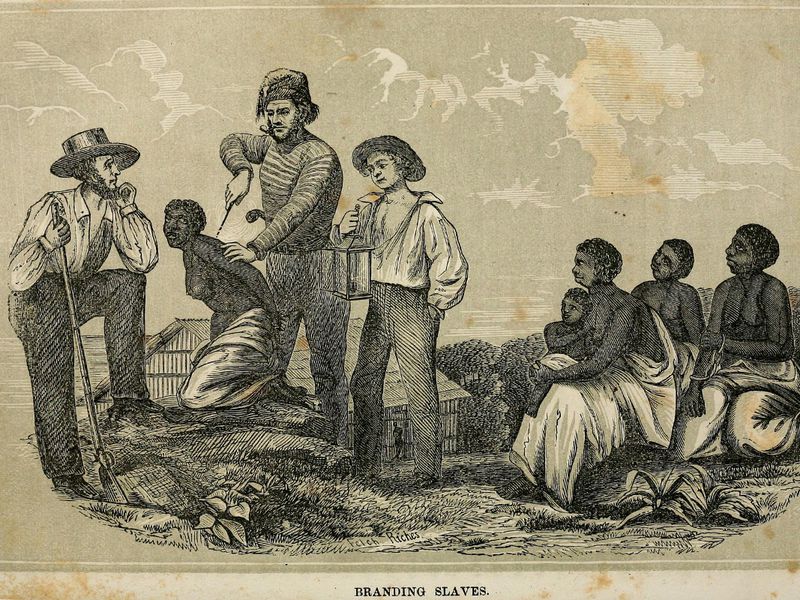
Family separation under slavery did not occur only in dramatic markets, distant coffles, or the great southward movement of the domestic slave trade. It also operated through the ordinary mechanisms of property management. Debt, inheritance, estate settlement, punishment, hiring, gifting, mortgage, and private sale could break a family as surely as a trader’s chain. This everyday machinery is essential to understanding slavery’s violence because it shows that family destruction was not an occasional failure of the system. It was embedded in the normal functioning of ownership. The enslaved family lived inside a world where a white household’s financial trouble, legal dispute, death, marriage, migration, or anger could suddenly become Black bereavement. The danger was not only the slave trader who arrived from elsewhere. It was the ledger, the will, the note of debt, the sheriff’s notice, the probate inventory, and the owner’s private decision.
Debt was one of the most common ways family became vulnerable to sale. Enslaved people were valuable property, and they could be used as collateral, seized by creditors, sold to satisfy obligations, or transferred as part of financial arrangements. A plantation owner’s bad harvest, speculative failure, gambling debt, commercial overextension, or unpaid loan could lead directly to the sale of enslaved people who had no part in creating the debt. The cruel absurdity was complete: one person borrowed money, failed in business, or mismanaged an estate, and another person’s child, spouse, parent, or sibling paid the price. Because the enslaved were treated as assets, their family relations were subordinate to their exchange value. A creditor did not need to hate a mother to sell her child away. He needed only to collect.
Inheritance created another recurring danger. The death of an enslaver could break apart an entire community, especially when heirs demanded division of property or when an estate had to be settled among widows, children, creditors, and distant relatives. Enslaved people could be appraised, grouped, distributed, or sold according to the needs of people who might never have known them except as entries in an inventory. A family that had lived together for years could be split because one heir received the mother, another the child, and a third the father, or because none of the heirs wanted particular individuals and the estate turned them into cash. This was one of slavery’s most devastating forms of posthumous power. The enslaver’s death did not liberate those held in bondage. It often made them newly vulnerable. White inheritance could become Black dismemberment.
Gifting and marriage settlements also moved enslaved people through white family networks in ways that disregarded Black family bonds. Enslaved men, women, and children could be given as wedding gifts, dowry-like transfers, inheritances advanced before death, or tokens of status within white kinship. These transfers reveal a bitter inversion: white families used enslaved people to build, secure, and celebrate their own domestic futures while destabilizing the families of those they gave away. A daughter’s marriage might be marked by the transfer of an enslaved girl from her mother. A son’s new household might begin with the relocation of an enslaved man from his wife and children. A white child might inherit a Black child as property, binding one family’s continuity to another family’s vulnerability. The sentimental language surrounding white domestic life did not soften slavery. It often hid the violence by which white households reproduced themselves through Black separation. White kinship and Black family rupture were not separate histories unfolding side by side. They were structurally connected. The marriage contract, the household gift, the inheritance plan, and the family settlement could all become instruments through which enslaved people were displaced from their own kin to strengthen someone else’s. Slavery allowed one family’s domestic ceremony to become another family’s catastrophe, turning the rituals of white continuity into mechanisms of Black loss.
Punishment made separation even more intimate because it transformed family attachment into a target. Enslavers sold people not only for profit or debt, but also to discipline individuals and communities. A man accused of defiance, a woman who resisted sexual exploitation or labor demands, a person suspected of planning escape, or a family member considered “troublesome” could be sold away as an example. The punishment did not fall only on the person sold. It struck spouses, children, parents, siblings, and neighbors who were forced to absorb the loss. Sale as punishment worked precisely because enslavers knew that bonds mattered. They understood that taking a loved one could terrorize those who remained. The slave system denied the legal meaning of family while weaponizing its emotional power.
Hiring out also threatened family stability, even when it did not involve permanent sale. Enslaved people could be leased for months or years to other farms, factories, mines, households, railroads, or urban employers. Hiring separated spouses and children, disrupted daily care, exposed enslaved people to unfamiliar overseers, and weakened community oversight. Some hired people found limited opportunities in cities or skilled work, but those possibilities existed inside coercion. A hired-out parent could not simply return home when a child was sick. A spouse could not assume regular presence. A child might experience a parent’s absence as another kind of loss, one that could become permanent if hiring led to sale, injury, death, or relocation. Hiring reminds us that family separation was not always a single catastrophic event. It could also be a repeated rhythm of absence imposed by the owner’s search for income. It also reveals how elastic the enslaver’s claim to ownership could be. The owner could profit from a person’s labor without providing daily supervision, could transfer danger to another employer while retaining title, and could interrupt enslaved domestic life without the finality of sale. That temporary quality did not make the separation harmless. Repeated absence could strain marriages, deprive children of care, expose workers to abuse beyond the reach of familiar community protection, and create uncertainty about whether return would actually occur. The hired person lived suspended between places, while the family left behind had to organize love around interruption.
The everyday machinery of separation made enslaved family life unstable even in periods that appeared quiet. No auction had to be scheduled for fear to circulate. No coffle had to pass for a mother to worry. The ordinary paperwork of slavery was enough. A whispered rumor of debt, an owner’s illness, a court judgment, an estate appraisal, a marriage among white heirs, a quarrel in the big house, or a threat from an overseer could unsettle an entire enslaved community. This constant vulnerability shaped how enslaved people loved, planned, worshiped, disciplined children, and remembered the missing. It forced families to live in the present while fearing the next transaction. The greatest terror of slavery was not only that families were broken. It was that every family knew the system always retained the power to break them.
Mothers, Children, and Reproductive Violence

The violence slavery inflicted on family life was nowhere more intimate than in the relationship between enslaved mothers and their children. Hereditary slavery made birth itself a site of ownership. In the English colonies and later the United States, the legal principle that a child followed the condition of the mother transformed enslaved women’s reproductive lives into a mechanism for reproducing property. The child born from an enslaved woman’s body entered the world already claimed by someone else, not because of any act the child had committed, but because law had converted maternal descent into a commercial rule. This was one of slavery’s most devastating inversions. Motherhood, which ordinarily signified continuity, protection, and belonging, was made to serve a system that denied mothers the legal right to secure their children’s futures.
Enslaved women’s reproductive capacity was never merely private. It was watched, counted, valued, coerced, and interpreted through the economic imagination of enslavers. A woman could be appraised not only for her labor, but for her perceived fertility, age, health, sexual vulnerability, and the children she had already borne or might bear in the future. This did not mean every enslaver managed reproduction in the same way, nor should the history be flattened into a single model of calculated breeding everywhere and at all times. But the legal and economic structure was unmistakable: children born to enslaved women increased the enslaver’s wealth. That fact placed the womb inside the logic of the ledger. The enslaved mother’s body was treated as both laboring body and reproductive source, while her own desires, griefs, refusals, attachments, and fears were subordinated to the property claims of others. This reproductive violence was made more insidious by its ability to appear ordinary within plantation management. Births could be recorded alongside purchases, deaths, livestock, tools, and crops, as though the arrival of a child were simply an increase in assets. Enslavers could congratulate themselves on the “natural increase” of their holdings while ignoring the terror of raising children who could be sold, punished, exploited, or inherited by others. The mother’s pregnancy might be noticed as future value before it was honored as human vulnerability. The infant might be welcomed by the enslaved community as kin and by the enslaver as property. In that divided reception lay one of the deepest moral fractures of slavery: the same birth could mean love to one world and profit to another.
Sexual violence intensified this reproductive order. Enslaved women and girls lived under conditions in which their vulnerability was produced by law, labor hierarchy, racial ideology, and the power of enslavers, overseers, traders, and other white men who could exploit them with little fear of legal consequence. The children born of coercion, assault, or constrained sexual relationships entered slavery through the mother, a rule that protected white male power while placing the burden of bondage on Black women and their descendants. This was not only sexual exploitation. It was genealogical violence. The same system that denied enslaved women protection against abuse also claimed the children who might result from that abuse. Slavery turned violation into inheritance, binding bodily coercion to the reproduction of racial slavery itself.
The mother-child bond under slavery existed in a state of permanent contradiction. Enslaved mothers nursed, fed, taught, disciplined, comforted, and loved children whose legal lives they did not control. They prepared them for a world of forced labor and racial domination while also trying to give them a sense of dignity beyond the names and categories imposed by enslavers. They taught children how to speak carefully, how to recognize danger, how to endure punishment without surrendering the self, and how to remember kin who had been sold or had died. Yet no amount of maternal devotion could guarantee protection against sale, hiring out, whipping, sexual danger, or separation. The mother’s love was powerful, but the law made it structurally vulnerable. That is the cruelty at the center of enslaved motherhood: slavery demanded maternal labor while denying maternal authority. Mothers had to raise children into awareness without crushing them beneath fear, and that required an agonizing kind of wisdom. They had to teach caution without teaching self-hatred, obedience without surrender, silence without consent, and endurance without moral acceptance of bondage. The lessons of enslaved motherhood were both practical and spiritual. A child needed to know when not to answer back, when to run, when to hide emotion, whom to trust, how to work, how to pray, how to remember, and how to hold an inner self apart from the names and prices imposed by others. Slavery tried to make mothers into producers of labor. Enslaved women made motherhood into a school of survival, memory, and resistance.
Children themselves were not peripheral to slavery’s violence. They were central to its future. Enslaved childhood was shaped by play, affection, storytelling, sibling bonds, and the care of parents and elders, but it was also shaped by the early discovery that one’s body belonged legally to someone else. Children could be listed in inventories, valued in estate divisions, gifted to white children, hired out, punished, sold, or separated from siblings and parents before they fully understood the language of property. They learned from observation: the quiet when a trader arrived, the terror surrounding an owner’s death, the grief of adults after an auction, the discipline required to survive in the presence of white authority. Childhood under slavery was not simply deprived of innocence. It was forced into premature knowledge. A child had to learn that family was real, but not legally secure; that love was binding, but not enforceable; that memory might be the only form of possession slavery could not fully seize.
The violence done to enslaved mothers and children reveals why family separation cannot be treated as an accidental byproduct of slavery. It was woven into the system’s reproductive foundation. Slavery needed children, but not protected childhood. It needed mothers, but not maternal rights. It needed family stability when such stability increased labor, obedience, and reproduction, but it reserved the right to destroy that family whenever profit, punishment, debt, inheritance, or desire required it. Against this order, enslaved women and their communities made motherhood meaningful through care, naming, memory, kin networks, and survival teaching. They could not always keep their children from sale, but they could refuse the lie that sale defined the child’s worth. In that refusal, enslaved motherhood became one of slavery’s most wounded places and one of its most morally powerful indictments.
Cultural Memory, Fictive Kinship, and the Refusal to Let the Family Die

Slavery attacked family by sale, law, violence, distance, and renaming, but it never succeeded in making enslaved people accept the slaveholder’s definition of kinship. Across plantation quarters, towns, ports, fields, forests, churches, praise houses, kitchens, and cabins, enslaved people rebuilt relation wherever the system had tried to leave only fragments. They remembered parents sold away, named children for ancestors, preserved stories of birthplaces and lineages, cared for the orphaned, honored elders, and created new bonds with people who had no biological connection but shared danger, grief, and obligation. This was not sentimental survival at the margins of slavery. It was one of the central ways enslaved people resisted social death. If slavery tried to turn persons into alienable property, cultural memory insisted that each person still belonged to a past, a people, and a network of claims that no bill of sale could fully erase.
Memory was especially important because slavery’s archive was built to record ownership more faithfully than relationship. Plantation inventories, sale advertisements, account books, ship manifests, and probate records might preserve names, ages, prices, and destinations while omitting the emotional and genealogical worlds those entries shattered. Enslaved communities carried histories in forms the enslaver’s ledger could not contain. A grandmother’s recollection, a mother’s repeated story, a naming pattern, a song, a remembered African word, a burial place, a scar, a skill, a recipe, a prayer, or a tale about someone sold long ago could become a vessel of family knowledge. Such memories did not always remain complete. Slavery fractured names, locations, languages, and generations too violently for that. But even partial memory mattered. To remember that a child had a grandmother, that a father had been sold south, that a mother came from a particular place, or that an ancestor had crossed the ocean was to deny the market’s effort to make each enslaved person begin and end as property.
Fictive kinship emerged from this same need to preserve family in a world where blood kin could be stolen. Terms such as aunt, uncle, cousin, brother, sister, mother, and father could describe biological relation, but they could also name chosen, communal, spiritual, and protective bonds. These relationships were not false kinship. They were kinship made under pressure. When children lost parents to sale or death, other adults stepped into roles of care. When newly arrived Africans entered communities without known relatives, they could be absorbed into networks of shared work, worship, language, healing, and survival. When spouses were separated by distance or sale, neighbors and extended community members helped sustain children and memory. Fictive kinship allowed enslaved people to answer rupture with enlargement. The family became wider because it had to be, elastic enough to survive the assaults that had made narrow legal or biological security impossible.
Religion and ritual strengthened these reconstructed bonds. African spiritual inheritances, Christian practices, burial customs, mourning traditions, healing knowledge, praise gatherings, and communal worship all helped enslaved people make meaning under conditions designed to deny them formal authority over their own lives. The spiritual world could hold relationships that the legal world refused to recognize. In prayer, song, burial, testimony, and remembered obligation, the dead remained present, the sold remained mourned, and the absent remained claimed. Religious community also created kinship language that crossed bloodlines. Brothers and sisters in worship could become caregivers, witnesses, protectors, and bearers of memory. This mattered because slavery’s violence was not only material. It was metaphysical. It tried to define who counted, who belonged, who could inherit, who could marry, who could parent, and who could be remembered. Ritual answered by placing enslaved people inside a moral order larger than the plantation. It allowed enslaved communities to insist that bonds broken by sale were not broken before God, before ancestors, or before the gathered community. A funeral could affirm the dignity of a person whom the law had treated as property. A prayer meeting could join people into a spiritual household that slavery had no legal category for and no reliable means of controlling. A song could carry grief, coded hope, remembered places, and communal endurance in a form that moved from mouth to mouth even when written records remained hostile or silent. Through such practices, enslaved people made sacred space inside an unsacred system, turning worship and ritual into ways of preserving relation when law, market, and violence had tried to make relation disposable.
Naming was one of the most powerful forms of this refusal. Enslavers could impose names, distort African names, rename people after purchase, or record only the names useful to property management, but enslaved people used naming to preserve memory, honor kin, assert identity, and carry hidden histories forward. A child’s name could recall a parent, grandparent, African origin, biblical figure, admired community member, or loved one sold away. Surnames, even when unstable or unofficial, could express claims to family continuity that slavery had tried to prevent. After emancipation, the choosing and stabilizing of surnames became especially significant, but the work of naming had begun long before freedom. To name someone was to place that person in relation. It declared that the child was not merely an increase in an owner’s property, not merely a future laborer, not merely an entry in an estate. The child belonged to people who remembered and intended that memory to continue.
The refusal to let the family die took many forms: caregiving, storytelling, worship, naming, fictive kinship, burial, search, mourning, and the preservation of genealogical fragments. None of this should be romanticized. Enslaved people did not create expansive kinship because slavery was bearable. They created it because slavery made ordinary family security impossible. Their achievement lay in building relation under conditions designed to make relation fragile, temporary, and legally meaningless. The enslaved family survived not only through mothers, fathers, and children, but through a whole architecture of remembered and chosen obligation. Against a system that priced people separately, enslaved communities insisted that no one stood alone. Against a market that scattered bodies, they carried names. Against a law that denied Black kinship, they made kinship visible. Slavery could sell a person away, but it could not fully command the memory that followed them.
Emancipation and the Search for the Stolen
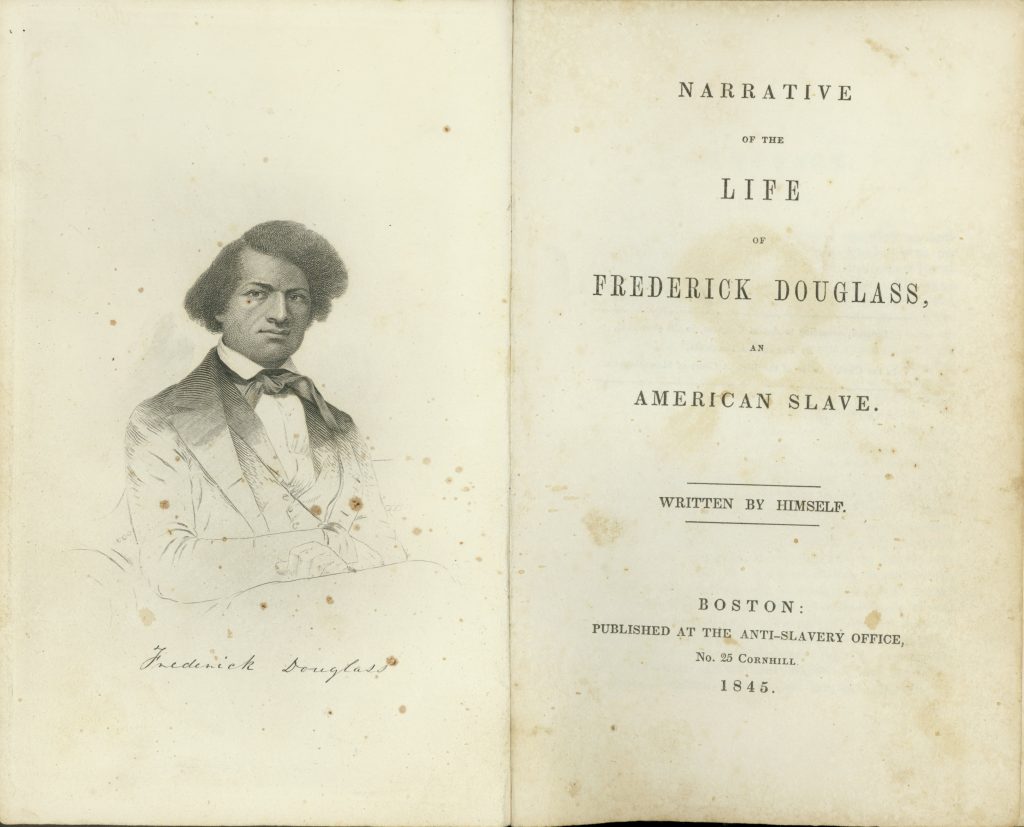
Emancipation did not restore enslaved families in a single liberating moment. It opened the possibility of search. For generations, slavery had scattered spouses, children, parents, siblings, and extended kin through sale, inheritance, forced migration, hiring, punishment, and the domestic slave trade. Freedom arrived not only as a legal transformation, but as an unfinished family reckoning. Formerly enslaved people did not simply step into liberty as isolated individuals. Many stepped into freedom carrying names, rumors, partial memories, fragments of place, and questions that had endured for decades. Where was the child sold south? Was the husband still alive? What became of the mother taken before the war? Did a sibling remember the old plantation, the old name, the old story? Emancipation made these questions newly actionable, but it could not undo the years in which slavery had made kin disappear.
The search for family became one of the defining acts of freedom. Formerly enslaved people traveled roads, wrote letters, placed newspaper advertisements, questioned soldiers and ministers, appealed to the Freedmen’s Bureau, consulted church networks, and asked strangers to carry news across counties and states. The effort was often painstaking, uncertain, and emotionally dangerous. Searchers might know only a first name, an owner’s surname, a county, a remembered sale, a plantation nickname, or the direction in which someone had been carried. They reconstructed kinship from fragments because slavery had left them little else. Yet those fragments mattered. A mother’s name, a father’s trade, a scar, a birthplace, a remembered sibling, or the name of a former enslaver could become the thread by which a family tried to pull the stolen back into history.
Newspapers became especially important in this work of recovery. “Information wanted” notices and later “Lost Friends” advertisements show formerly enslaved people using print to repair what the slave market had torn apart. These notices were often brief, but their emotional force is immense. They named the missing, described the circumstances of separation, listed former owners, recalled sales, and asked readers to send word if anything was known. They transformed the public language of print. The same newspaper culture that had once carried sale notices, runaway advertisements, and descriptions of human property now also carried the demands of Black memory. A printed notice could not guarantee reunion, but it refused silence. It declared that the missing person had kin, that the separation had a history, and that freedom required more than legal release from bondage. It required the right to search. These notices also restored agency to people whom slavery had long treated as objects of description rather than authors of their own claims. In runaway advertisements, enslavers had described Black bodies for capture; in postwar family notices, Black searchers described loved ones for recovery. The reversal is morally profound. A scar, age, complexion, former owner’s name, or remembered place no longer served only the surveillance of slavery. It could become evidence in a search for reunion. The printed page became a fragile bridge across the distances slavery had created, carrying grief into public record and transforming private longing into historical testimony.
These searches also reveal how deeply slavery had failed to erase family identity. The enslaved had been denied legal marriage, secure parental authority, stable surnames, and protection from sale, but they had preserved enough memory to pursue one another after emancipation. Some reunions did occur, and they were acts of profound historical repair. Many searches ended without certainty. Death, distance, name changes, remarriage, migration, destroyed records, and decades of silence made recovery painfully difficult. Still, even unsuccessful searches carried meaning. To look for a mother after thirty years, to advertise for a child sold in infancy, or to ask after a spouse taken to the Deep South was to reject slavery’s verdict that separation had ended the relationship. The search itself was a claim: this person belonged to someone, was loved by someone, and remained part of a family history that slavery had no moral right to dissolve.
Emancipation did not close the history of family separation. It exposed its depth. Freedom gave formerly enslaved people new tools, mobility, institutions, and public voice, but it also revealed the scale of what could not be recovered. The search for the stolen became both a practical campaign and a moral archive, preserving names that might otherwise have vanished into ledgers, bills of sale, and graves without markers. In the years after slavery, Black families rebuilt households, solemnized marriages, reunited where possible, stabilized surnames, claimed children, and turned memory into testimony. They also forced the nation to confront a truth emancipation alone could not settle: the destruction of slavery had not ended with legal abolition, because its absences remained alive in every missing parent, every unknown grave, every changed name, every sibling never found, and every family story interrupted by sale. The work of reunion was also the work of historical repair. It did not restore everything stolen, and it could not make whole what generations of violence had broken, but it insisted that the stolen were not lost to meaning. This was not simply the aftermath of slavery. It was part of emancipation’s meaning. To be free was not only to leave bondage. It was to seek the people bondage had taken, and to insist that the family slavery had shattered still had the right to be remembered whole.
Intergenerational Trauma, Genealogy, and the Afterlife of Separation
The following video from “Bedtime & Historian” covers the transatlantic slave trade:
The family separations created by slavery did not end when slavery ended. They passed into the lives of descendants as broken genealogies, missing surnames, silenced stories, uncertain origins, and ancestral absences that could not always be repaired by freedom. The trauma was not only psychological, though it was certainly that. It was archival, legal, cultural, and familial. Slavery had recorded people as property while denying them secure marriage, parental authority, stable names, protected households, and control over their children’s futures. Emancipation created new possibilities for reunion and self-definition, but it did not restore the records never made, the children never found, the parents whose names had been lost, or the ancestors whose lives survived only in fragments. The afterlife of separation lived in both memory and documentation. Families inherited not only stories, but gaps.
Genealogy became difficult because slavery had attacked the very structures through which genealogy is normally preserved. Enslaved people could be renamed by owners, listed without surnames, recorded by age rather than birth date, identified by owner rather than parent, and transferred through bills of sale, estate inventories, wills, court records, and advertisements that cared more about market value than kinship. A child might appear in one document as an asset in an estate, in another as part of a sale, and nowhere as the beloved son or daughter of a named mother. Fathers were often erased even more thoroughly, especially when enslaved marriage lacked legal recognition or when sexual exploitation by white men produced children whom the law assigned to the mother’s enslaved status while refusing paternal responsibility. The archive of slavery is full of names without families, prices without grief, and movements without the emotional histories that made those movements devastating.
This archival violence shaped the work of descendants. To trace enslaved ancestors often requires reading against records created by enslavers, traders, courts, churches, military officials, plantation managers, and government agents. Descendants must search through inventories, probate files, Freedmen’s Bureau records, labor contracts, cohabitation registers, pension files, newspaper notices, plantation papers, bills of sale, census records, and oral histories, often piecing together family history from documents never designed to honor Black family life. This work can be both empowering and painful. Each discovery restores a name, place, relationship, or movement to historical visibility. Each silence reminds the researcher that slavery did not simply exploit bodies; it damaged the transmission of memory itself. The genealogist confronting slavery’s records often encounters the same moral contradiction at the heart of the system: the documents exist because enslavers valued people as property, yet those same documents may become the only surviving path by which descendants recover people as kin.
Intergenerational trauma also moved through family stories and family silences. Some descendants inherited explicit memories of sale, migration, sexual violence, lost children, changed surnames, or ancestors who had searched for relatives after emancipation. Others inherited absence itself: a missing branch, an unexplained name, a refusal to speak of a particular ancestor, a family story that begins “we do not know,” or a geographic rupture no one could explain. Silence should not be mistaken for forgetting. In communities shaped by enslavement, silence could be protection, grief, exhaustion, or the result of violence so deep that language failed. Oral tradition preserved what written records omitted. Names repeated across generations, stories of “people sold south,” memories of old plantations, church affiliations, burial grounds, foodways, songs, and kinship terms all carried historical knowledge. The afterlife of slavery lived in the tension between what could be said, what had to be inferred, and what had been deliberately made difficult to know.
The struggle over genealogy is also a struggle over historical personhood. Slavery tried to make Black family history dependent on white recordkeeping, but descendants have repeatedly refused that limit. Through oral history, church records, family Bibles, cemetery research, DNA testing, local archives, plantation records, newspaper databases, and community memory projects, descendants continue the work that began in emancipation’s search notices. They seek not only biological connection, but narrative restoration. To identify an ancestor as a mother, husband, child, sister, midwife, preacher, carpenter, field hand, runaway, veteran, healer, or survivor is to rescue that person from the flattening language of property. Genealogy becomes a form of historical repair because it reattaches people to relationships, places, choices, sufferings, and communities. It answers the ledger with a lineage.
The afterlife of separation reveals slavery’s deepest ambition and its ultimate failure. Slavery sought to make families legally fragile, commercially divisible, and historically obscure. It succeeded in breaking countless households and scattering generations across the Atlantic world and the American interior. But it did not erase the human claim of kinship. That claim survived in memory, in names, in searches, in songs, in mourning, in children taught to remember people they had never met, and in descendants still reconstructing the broken lines. The work is unfinished because the violence was immense. Yet every recovered ancestor, every restored name, every family story reconnected to a place, and every silence honestly named becomes part of the long refusal to let slavery have the final word. The family slavery tried to shatter remains, even when it must be assembled from fragments.
Conclusion: The Family Slavery Tried to Erase
The history of family separation in the transatlantic and domestic slave trades reveals slavery not only as a labor system, but as a sustained assault on human relation. From the first seizure in Africa to the barracoon, from the slave ship to the port, from the plantation quarter to the auction block, from the domestic coffle to the postwar newspaper notice, slavery repeatedly attacked the structures through which people knew themselves and one another. It tore children from parents, spouses from spouses, siblings from siblings, elders from descendants, and communities from their own memories. It also attacked the ordinary expectations by which human beings build a future: that children might grow near parents, that marriages might endure beyond a master’s convenience, that elders might pass knowledge to descendants, that the dead might be mourned by those who knew them, and that names might carry family history forward rather than disappear into inventories and bills of sale. This was not incidental brutality. It was the logic of property in persons. A system that claimed the right to buy, sell, mortgage, inherit, punish, lease, and transport human beings could never fully honor the family, because family placed moral limits on ownership that slavery refused to accept. Wherever kinship asserted continuity, slavery asserted alienability. Wherever family created obligation, slavery answered with price.
The law made this violence durable by denying enslaved kinship the protection it gave to white property. Enslaved people married, parented, named children, mourned the dead, formed households, built religious communities, and preserved memory, but the legal order treated those bonds as subordinate to ownership. The market then made that legal denial visible. Auction blocks, estate inventories, sale advertisements, bills of sale, and traders’ ledgers translated human attachment into financial language. A mother became a value. A child became future labor. A husband became a body that could be moved. A family became divisible assets. Slavery’s deepest obscenity lay in this combination of knowledge and denial. Enslavers knew enslaved people loved their children, grieved their dead, feared separation, and remembered the sold. They simply insisted that none of that could outweigh the claims of property.
Yet the enslaved family endured because enslaved people refused the system’s moral vocabulary. They created kinship under conditions that made kinship vulnerable, illegal, unstable, and repeatedly wounded. They remembered African origins, preserved names, built fictive kin networks, sustained marriages across distance, raised children communally, claimed spiritual brothers and sisters, and mourned those whom the market tried to turn into absences. After emancipation, they searched. They walked roads, wrote letters, placed advertisements, questioned strangers, contacted churches, appealed to federal agents, and carried fragments of memory into public record. Some found the people slavery had stolen. Many did not. But even an unsuccessful search rejected slavery’s verdict. It declared that a sold child remained a child, a lost mother remained a mother, and a vanished spouse remained part of a history that could not be morally canceled by sale.
The family slavery tried to erase survived in forms both broken and powerful. It survived in genealogical fragments, oral memory, chosen kinship, reclaimed names, burial grounds, church communities, freedom marriages, search notices, and descendants still reconstructing the lines slavery tried to scatter. This survival should never be used to soften the crime. The endurance of Black family life does not redeem slavery; it condemns it. It shows what slavery attacked most fiercely because it understood that family was one of the deepest sources of identity, resistance, continuity, and hope. Slavery could sell bodies across oceans, rivers, roads, and auction floors, but it could not fully command memory. It could separate kin, but it could not make kinship meaningless. The family slavery tried to erase became one of the clearest witnesses against it.
Bibliography
Affiliate disclosure: Amazon links on this site are paid links. As an Amazon Associate I earn from qualifying purchases.
- Baptist, Edward E. The Half Has Never Been Told: Slavery and the Making of American Capitalism. New York: Basic Books, 2014.
- Behrendt, Stephen D., David Eltis, and David Richardson. “The Costs of Coercion: African Agency in the Pre-Modern Atlantic World.” The Economic History Review 54:3 (2001), 454-476.
- Berlin, Ira. Generations of Captivity: A History of African-American Slaves. Cambridge, MA: Harvard University Press, 2003.
- —-. Many Thousands Gone: The First Two Centuries of Slavery in North America. Cambridge, MA: Harvard University Press, 1998.
- Berry, Daina Ramey. The Price for Their Pound of Flesh: The Value of the Enslaved, from Womb to Grave, in the Building of a Nation. Boston: Beacon Press, 2017.
- Bibb, Henry. Narrative of the Life and Adventures of Henry Bibb, an American Slave, Written by Himself. New York: Published by the Author, 1849.
- Blassingame, John W. The Slave Community: Plantation Life in the Antebellum South. Rev. and enl. ed. New York: Oxford University Press, 1979.
- Bly, Antonio T. “Crossing the Lake of Fire: Slave Resistance during the Middle Passage, 1720-1842.” The Journal of Negro History 83:3 (1998), 178-186.
- Browne, William Wells. Narrative of William W. Brown, a Fugitive Slave, Written by Himself. Boston: Anti-Slavery Office, 1847.
- Browning, Wilhelmena S. “Finding Our Mothers: African American Genealogy and Historical Recovery.” In African American Lives, edited by Henry Louis Gates Jr. and Evelyn Brooks Higginbotham. New York: Oxford University Press, 2004.
- Burnard, Trevor. Mastery, Tyranny, and Desire: Thomas Thistlewood and His Slaves in the Anglo-Jamaican World. Chapel Hill: University of North Carolina Press, 2004.
- Camp, Stephanie M. H. Closer to Freedom: Enslaved Women and Everyday Resistance in the Plantation South. Chapel Hill: University of North Carolina Press, 2004.
- Cimbala, Paul A., and Randall M. Miller, eds. The Freedmen’s Bureau and Reconstruction: Reconsiderations. New York: Fordham University Press, 1999.
- Deyle, Steven. Carry Me Back: The Domestic Slave Trade in American Life. New York: Oxford University Press, 2005.
- Douglass, Frederick. Narrative of the Life of Frederick Douglass, an American Slave. Boston: Anti-Slavery Office, 1845.
- Dunn, Richard S. A Tale of Two Plantations: Slave Life and Labor in Jamaica and Virginia. Cambridge, MA: Harvard University Press, 2014.
- Edwards, Laura F. Gendered Strife and Confusion: The Political Culture of Reconstruction. Urbana: University of Illinois Press, 1997.
- Eltis, David, and David Richardson. Atlas of the Transatlantic Slave Trade. New Haven: Yale University Press, 2010.
- Equiano, Olaudah. The Interesting Narrative of the Life of Olaudah Equiano, or Gustavus Vassa, the African. London, 1789.
- Falconbridge, Alexander. An Account of the Slave Trade on the Coast of Africa. London: J. Phillips, 1788.
- Fett, Sharla M. Working Cures: Healing, Health, and Power on Southern Slave Plantations. Chapel Hill: University of North Carolina Press, 2000.
- Foner, Eric. Forever Free: The Story of Emancipation and Reconstruction. New York: Alfred A. Knopf, 1963.
- —-. Reconstruction: America’s Unfinished Revolution, 1863–1877. New York: Harper & Row, 1988.
- Foster, Frances Smith. Written by Herself: Literary Production by African American Women, 1746–1892. Bloomington: Indiana University Press, 1993.
- Fox-Genovese, Elizabeth. Within the Plantation Household: Black and White Women of the Old South. Chapel Hill: University of North Carolina Press, 1988.
- Franklin, John Hope, and Loren Schweninger. Runaway Slaves: Rebels on the Plantation. New York: Oxford University Press, 1999.
- Gates, Henry Louis Jr. Finding Oprah’s Roots: Finding Your Own. New York: Crown, 2007.
- Genovese, Eugene D. Roll, Jordan, Roll: The World the Slaves Made. New York: Pantheon Books, 1974.
- Giesberg, Judith, et al. Last Seen: The Enduring Search by Formerly Enslaved People to Find Their Lost Families. Villanova University.
- Gomez, Michael A. Exchanging Our Country Marks: The Transformation of African Identities in the Colonial and Antebellum South. Chapel Hill: University of North Carolina Press, 1998.
- —-. Reversing Sail: A History of the African Diaspora. 2nd ed. Cambridge: Cambridge University Press, 2004.
- Gross, Ariela J. Double Character: Slavery and Mastery in the Antebellum Southern Courtroom. Princeton: Princeton University Press, 2000.
- Gudmestad, Robert H. A Troublesome Commerce: The Transformation of the Interstate Slave Trade. Baton Rouge: Louisiana State University Press, 2003.
- Gutman, Herbert G. The Black Family in Slavery and Freedom, 1750–1925. New York: Pantheon Books, 1976.
- Harms, Robert. The Diligent: A Voyage through the Worlds of the Slave Trade. New York: Basic Books, 2002.
- Higman, B. W. Slave Populations of the British Caribbean, 1807–1834. Baltimore: Johns Hopkins University Press, 1984.
- Jacobs, Harriet A. Incidents in the Life of a Slave Girl. Edited by L. Maria Child. Boston, 1861.
- Johnson, Walter. River of Dark Dreams: Slavery and Empire in the Cotton Kingdom. Cambridge, MA: Harvard University Press, 2013.
- —-. Soul by Soul: Life Inside the Antebellum Slave Market. Cambridge, MA: Harvard University Press, 1999.
- Jones-Rogers, Stephanie E. They Were Her Property: White Women as Slave Owners in the American South. New Haven: Yale University Press, 2019.
- Joyner, Charles. Down by the Riverside: A South Carolina Slave Community. Urbana: University of Illinois Press, 1984.
- Klein, Martin A. Slavery and Colonial Rule in French West Africa. Cambridge: Cambridge University Press, 1998.
- Law, Robin. The Slave Coast of West Africa, 1550–1750: The Impact of the Atlantic Slave Trade on an African Society. Oxford: Clarendon Press, 1991.
- Lovejoy, Paul E. Transformations in Slavery: A History of Slavery in Africa. 3rd ed. Cambridge: Cambridge University Press, 2011.
- Martinez, Jenny S. “Antislavery Courts and the Dawn of International Human Rights Law.” The Yale Law Journal 117:4 (2008), 550-641.
- Miers, Suzanne, and Igor Kopytoff, eds. Slavery in Africa: Historical and Anthropological Perspectives. Madison: University of Wisconsin Press, 1977.
- Miller, Joseph C. Way of Death: Merchant Capitalism and the Angolan Slave Trade, 1730–1830. Madison: University of Wisconsin Press, 1988.
- Morgan, Jennifer L. Laboring Women: Reproduction and Gender in New World Slavery. Philadelphia: University of Pennsylvania Press, 2004.
- Morgan, Philip D. Slave Counterpoint: Black Culture in the Eighteenth-Century Chesapeake and Lowcountry. Chapel Hill: University of North Carolina Press, 1998.
- Morris, Thomas D. Southern Slavery and the Law, 1619–1860. Chapel Hill: University of North Carolina Press, 1996.
- Mustakeem, Sowande M. Slavery at Sea: Terror, Sex, and Sickness in the Middle Passage. Urbana: University of Illinois Press, 2016.
- Northrup, David. Africa’s Discovery of Europe, 1450–1850. 3rd ed. New York: Oxford University Press, 2016.
- Penningroth, Dylan C. The Claims of Kinfolk: African American Property and Community in the Nineteenth-Century South. Chapel Hill: University of North Carolina Press, 2003.
- Rediker, Marcus. The Slave Ship: A Human History. New York: Viking, 2007.
- Rothman, Adam. Slave Country: American Expansion and the Origins of the Deep South. Cambridge, MA: Harvard University Press, 2005.
- Russell, Thomas D. “The Disruption of Slave Families at Court Sales.” Cardozo Law Review 18 (1996), 1165–1192.
- Schermerhorn, Calvin. The Business of Slavery and the Rise of American Capitalism, 1815–1860. New Haven: Yale University Press, 2015.
- Schwalm, Leslie A. A Hard Fight for We: Women’s Transition from Slavery to Freedom in South Carolina. Urbana: University of Illinois Press, 1997.
- Schwartz, Marie Jenkins. Born in Bondage: Growing Up Enslaved in the Antebellum South. Cambridge, MA: Harvard University Press, 2000.
- Sinha, Manisha. The Slave’s Cause: A History of Abolition. New Haven: Yale University Press, 2016.
- Smallwood, Stephanie E. Saltwater Slavery: A Middle Passage from Africa to American Diaspora. Cambridge, MA: Harvard University Press, 2007.
- Stevenson, Brenda E. Life in Black and White: Family and Community in the Slave South. New York: Oxford University Press, 1996.
- —-. What Is Slavery? Cambridge: Polity Press, 2015.
- Tadman, Michael. Speculators and Slaves: Masters, Traders, and Slaves in the Old South. Madison: University of Wisconsin Press, 1989.
- Thomas, Hugh. The Slave Trade: The Story of the Atlantic Slave Trade, 1440–1870. New York: Simon & Schuster, 1997.
- Thornton, John K. Africa and Africans in the Making of the Atlantic World, 1400–1800. 2nd ed. Cambridge: Cambridge University Press, 1998.
- United States Congress. An Act to Prohibit the Importation of Slaves into Any Port or Place within the Jurisdiction of the United States. 9th Cong., 2nd sess., March 2, 1807.
- United States Constitution. Article I, Section 9.
- Uzoigwe, G. N. “The Slave Trade and African Societies.” Transactions of the Historical Society of Ghana 14:2 (1973), 187-212.
- White, Deborah Gray. Ar’n’t I a Woman? Female Slaves in the Plantation South. Rev. ed. New York: W. W. Norton, 1999.
- Williams, Heather Andrea. Help Me to Find My People: The African American Search for Family Lost in Slavery. Chapel Hill: University of North Carolina Press, 2012.
- Wood, Kirsten E. Masterful Women: Slaveholding Widows from the American Revolution through the Civil War. Chapel Hill: University of North Carolina Press, 2004.
Originally published by Brewminate, 05.26.2026, under the terms of a Creative Commons Attribution-NonCommercial-NoDerivatives 4.0 International license.
About the Author