New Orleans jazz funerals turn mourning into movement, blending African diasporic deathways, Christian ritual, brass bands, mutual aid, and second-line memory.

By Matthew A. McIntosh
Public Historian
Brewminate
Introduction: A Funeral That Refuses Silence
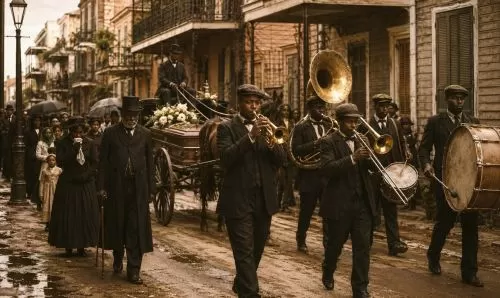
A New Orleans jazz funeral begins with a contradiction only if one assumes that grief must be quiet. The procession moves through the street with the dead at its center, but it does not treat death as a private event sealed inside a church, funeral home, or cemetery. Family, clergy, funeral directors, musicians, friends, neighbors, club members, and passersby create a moving ceremony in which mourning becomes visible, audible, and shared. The first sounds are often slow: hymns, dirges, spirituals, and brass-band laments that acknowledge the weight of loss. The procession does not hurry past sorrow. It gives sorrow rhythm, pace, and public form.
Yet the jazz funeral is not simply a funeral with music added to it. Its meaning depends on sequence. Before burial, the music tends toward restraint, reverence, and lament. After the body has been committed, the emotional order changes. The band may turn from a dirge to a swinging spiritual, and the walkers may become dancers. Handkerchiefs rise; parasols turn; the second line swells behind the formal mourners. This transition, often described as “cutting the body loose,” does not erase grief but marks a ritual boundary: the living have escorted the dead as far as they can. What follows is not forgetfulness but release.
To understand this practice historically, it is necessary to resist the easy phrase “celebration of life” when it becomes too simple. New Orleans jazz funerals are celebratory, but they are also disciplined, hierarchical, religious, economic, racial, and deeply communal. They draw from African diasporic ideas about death, ancestors, rhythm, and transition; from Catholic and Protestant funeral forms; from European brass-band and military processional music; from the mutual-aid institutions Black New Orleanians built in the face of exclusion; and from the improvisational culture that made New Orleans central to the history of jazz. Each of these strands matters, because the funeral’s form cannot be explained by music alone. It is also a story about burial insurance, neighborhood solidarity, Jim Crow inequality, sacred obligation, public performance, and the right to claim the street as a place of Black presence and memory. The band, the mourners, the family, and the second line all participate in a social grammar older and broader than the word “jazz” itself. Their power lies not in a single origin but in a long process of creolization, adaptation, and survival.
New Orleans jazz funeral is best understood as a ritual of passage and repair. It escorts the dead, sustains the bereaved, affirms the dignity of the community, and transforms the street into a sacred social space. The tradition’s genius is not that it chooses joy instead of sorrow, but that it refuses to separate them. In the jazz funeral, grief walks first; joy follows only after grief has been honored. The result is one of the most distinctive public rituals in American history: a funeral that refuses silence because the dead deserve accompaniment, and the living need one another to keep moving.
New Orleans as Ritual Ground: Port City, Catholic City, African Diasporic City

New Orleans did not produce the jazz funeral by accident. It was a city unusually suited to rituals that moved through public space, because its streets had long carried processions, parades, religious observances, military display, market traffic, funerals, carnival performance, and neighborhood gathering. The city’s geography mattered as much as its culture. Set near the mouth of the Mississippi River, connected to the Caribbean, the Gulf Coast, the Atlantic world, and the North American interior, New Orleans became a place where people, sounds, religions, languages, and ritual forms met without blending into a single uniform culture. It was not merely a Southern city, nor simply a French or Spanish colonial city, nor only a Black Atlantic city. It was all of these at once, and its funeral traditions emerged from that layered world.
The colonial Catholic city gave New Orleans a strong processional imagination. Catholicism did not confine religion entirely to the interior of churches; it gave sacred meaning to movement, streets, feast days, saints, bells, candles, cemeteries, and visible acts of devotion. Even when later Protestant forms became increasingly important, New Orleans retained a civic and religious culture in which public ceremony felt natural. Death could be marked by movement from home to church, from church to cemetery, from private grief to public recognition. The jazz funeral would later develop within Black communities whose religious lives were often Protestant, Catholic, syncretic, or shifting, but the larger city had already made room for the idea that sacred passage could unfold in public view.
European military and brass-band culture also shaped the ritual ground on which jazz funerals formed. French, Spanish, and American military traditions brought marching bands, uniforms, drums, horns, processional order, and martial repertoire into the soundscape of the city. These traditions were not simply preserved in official form. Black musicians, including free people of color and later emancipated African Americans, absorbed and transformed the instruments and idioms of brass-band performance. A military march could become a funeral march; a parade band could become a mourning band; a European processional form could be reworked through African diasporic rhythm, Protestant hymnody, improvisation, and neighborhood style. The instruments themselves mattered because they were portable, loud, durable, and suited to street movement. Cornets, trombones, clarinets, bass drums, snare drums, and tubas could carry sound across blocks, turning a procession into an audible claim on urban space. In the hands of Black New Orleans musicians, brass-band music became both practical and symbolic: it organized movement, announced public presence, marked communal dignity, and allowed sorrow to be shaped into a collective sound. The result was not imitation, but conversion: imported forms were made to serve local Black ritual life.
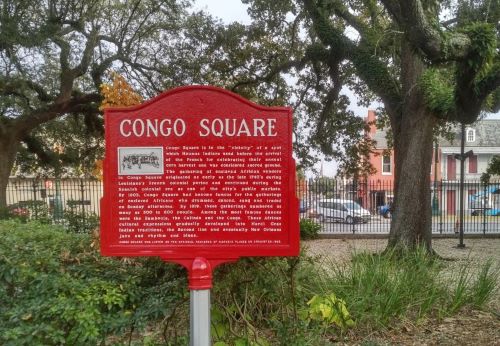
The African diasporic dimension of New Orleans was equally essential. Enslaved Africans and their descendants brought with them many different cultural inheritances rather than a single unified “African tradition.” People from West and Central Africa, together with Afro-Caribbean communities moving through the French and Spanish Atlantic, helped create a world in which dance, drumming, call-and-response, spirit presence, ancestor memory, and communal ritual retained powerful meaning even under brutal conditions. Congo Square has often served as the symbolic center of this story, not because all later Black music can be simply traced to one site, but because it reminds us that New Orleans allowed certain forms of African diasporic public gathering to remain unusually visible. The city’s Black ritual culture developed under constraint, but not in silence.
This visibility mattered for death. In many African and African diasporic traditions, the dead were not imagined as disappearing into nothingness. Death involved passage, transformation, obligation, and continuing relationship. The living had duties to the dead, and those duties were not only emotional. They were social, ritual, musical, and communal. In New Orleans, these ideas encountered Christian doctrines of heaven, resurrection, judgment, and salvation; they also encountered the practical demands of burial in a crowded, unequal, racially ordered city. The later jazz funeral would draw strength from this convergence. Its movement toward the cemetery, its solemn music before burial, and its turn toward dancing afterward all make sense within a world where death is both rupture and transition. The procession’s emotional sequence is important here. The slow march acknowledges separation, bodily death, and the grief of the family; the later musical release imagines continuity, spiritual passage, and the community’s return to life. This does not require treating the jazz funeral as a direct survival of one African rite or one Christian ceremony. It is better understood as a creolized ritual language in which different traditions made death publicly intelligible. The dead were escorted, the mourners were supported, and the community used music to negotiate the dangerous threshold between absence and presence.
The city’s cemeteries also contributed to this ritual landscape. New Orleans burial practices were shaped by environment, religion, architecture, family identity, and public memory. Above-ground tombs, cemetery societies, family vaults, and the visible geography of burial made death part of the city’s built environment. Cemeteries were not hidden from civic life; they were landmarks of memory, class, ethnicity, religion, and belonging. For Black New Orleanians, the right to a proper burial carried particular weight because racial exclusion often denied dignity in life and threatened dignity in death. A funeral procession through the streets did more than transport a body. It declared that the deceased had a name, a family, a community, and a claim on public honor. That claim was meaningful in a society where Black lives were routinely constrained by segregation, economic exclusion, and civic disrespect. Burial could become a final arena of dignity, and the journey to the cemetery could make that dignity visible. The procession asserted that the dead were not disposable, that grief was not invisible, and that the neighborhood itself had the authority to witness and remember. The cemetery was not merely the endpoint of the ritual. It was the place where private loss met public memory, and where the community’s obligation to the dead could be completed before the living turned back toward the street.
New Orleans became ritual ground because it forced cultural forms into contact while allowing them to remain recognizable. Catholic procession, Protestant hymn, African diasporic rhythm, military brass, cemetery practice, mutual aid, carnival movement, neighborhood pride, and public mourning all met in the same urban space. The jazz funeral was not born fully formed from any single source. It emerged because New Orleans offered the conditions in which death could be carried through the street as music, memory, obligation, and release. To understand the jazz funeral, one must begin not with jazz alone but with the city itself: a port city of crossings, a Catholic city of processions, and an African diasporic city where the dead were never simply left behind.
African Diasporic Deathways: Ancestors, Transition, Music, and the Living Community
The African diasporic roots of the New Orleans jazz funeral must be approached with care, because the strongest interpretation is not the simplest one. It would be tempting to say that jazz funerals descend directly from a single West African funeral rite, carried intact across the Atlantic and preserved in New Orleans. But the history is more complex and more interesting than that. Enslaved Africans brought many different religious worlds, musical systems, burial customs, and ideas about the dead into the Americas. Those traditions were broken, pressured, adapted, disguised, and recombined under slavery and racial domination. What survived was not a museum-piece replica of one African custom, but a set of durable ritual principles: the dead required attention, music could mediate passage, the community had obligations, and death was not simply a biological ending.
Across many African and African diasporic traditions, death was understood less as disappearance than as transition. The dead did not necessarily vanish from the social world; they could remain powerful presences, remembered through name, lineage, ritual, place, and obligation. Ancestors were not merely sentimental memories. They belonged to a moral order linking generations, households, communities, and spirits. Proper burial and remembrance mattered because they helped secure the relation between the living and the dead. A neglected death could disturb the living community, while a properly honored death could confirm continuity across rupture. The jazz funeral’s public movement toward burial and its later turn toward release are part of a much older ritual concern: how to help the dead depart rightly while helping the living remain whole. That concern did not require a single doctrine of the afterlife. It could appear through ritual action itself: washing, dressing, carrying, singing, feeding mourners, gathering kin, speaking the name of the deceased, and marking the passage from one social condition to another. The dead had to be placed, and the living had to be reassembled around the fact of loss. The New Orleans jazz funeral would eventually express this work through brass instruments and street procession, but the underlying problem was older than jazz: death had to be made socially bearable by turning separation into ceremony.
New Orleans intensified these inherited concerns because it was a city where African cultural memory remained unusually public. Congo Square has often carried too much symbolic weight in popular accounts, as though one location alone could explain the whole history of Black music in the city. Still, its importance should not be dismissed. The remembered gatherings at Congo Square point to a wider urban reality: enslaved and free people of African descent found ways, under constraint, to make rhythm, dance, market exchange, costume, and communal assembly visible in the city. Observers often misunderstood, exoticized, or caricatured what they saw, but their accounts still reveal that African diasporic performance was not hidden entirely from public life. Music and movement could sustain memory even when language, kinship, religion, and homeland had been violently disrupted.
The role of music in African diasporic deathways was never simply decorative. Music could call, accompany, answer, intensify, settle, and transform. Drumming, singing, clapping, dancing, and later brass-band performance helped create a shared emotional field in which grief became communal rather than solitary. In many traditions shaped by African retentions and New World adaptation, rhythm did not merely express feeling after the fact; it helped produce ritual order. It told bodies how to move, marked the difference between phases of ceremony, and connected participants to one another through repetition and response. This matters for the jazz funeral because the procession’s emotional structure is musical before it is verbal. The slow dirge, the measured march, the break into swing, and the dancing second line all use sound to guide the community through death’s dangerous passage. Music also allows grief to be held collectively without requiring every mourner to speak it in the same way. Some may weep, some may walk silently, some may sing, some may dance, and some may simply follow the band; the rhythm gives all of these responses a shared frame. That is one reason the jazz funeral can contain such apparently different emotions without collapsing into confusion. The music organizes contradiction. It permits sorrow and release to occupy the same ritual path, each in its proper time.
This does not mean that every horn line or dance step in a New Orleans jazz funeral can be traced neatly to Yoruba, Fon, Kongo, or any other specific African source. Scholars have rightly warned against turning “Africa” into a vague explanation for every expressive practice in the Black Atlantic. Yet caution should not become erasure. The funeral’s ritual logic bears strong African diasporic marks: the dead are accompanied rather than abandoned; movement matters; the body and spirit are understood through transition; grief is shared through performance; and the community’s presence is an ethical obligation. These features became entangled with Christian theology, European instruments, American racial politics, and New Orleans urban life, but entanglement is not the same as disappearance. African influence endured precisely because it could adapt. It could live inside a Protestant hymn, a Catholic procession, a brass-band march, a benevolent society parade, or a second-line dance without needing to announce itself as a pure survival. That is the mistake many origin stories make: they imagine authenticity as unchanged preservation. In a diasporic setting, authenticity often appears as reworking under pressure. The jazz funeral’s African inheritance is not a hidden fossil beneath the music but an active grammar of movement, transition, communal obligation, and ritual sound.
The concept of the ancestor is particularly useful for understanding the jazz funeral, even when participants speak in Christian language rather than explicitly African religious terms. The funeral honors a particular deceased person, but it also places that person within a chain of memory. In Black New Orleans, where families, neighborhoods, churches, social clubs, and musical lineages often overlap, the dead may be remembered as kin, elders, culture-bearers, musicians, workers, leaders, or ordinary people whose lives helped sustain the community. The procession makes that memory visible. It says that this person mattered enough to be carried through the street with sound, witnesses, and dignity. Even when the theology is framed through heaven, salvation, or going home to God, the social effect resembles ancestor-making: the dead are situated among those who continue to shape the living.
The living community is not an audience to the funeral but one of its necessary instruments. Family members grieve, clergy pray, musicians lead, club members organize, and the second line follows, responds, and enlarges the ritual. This participation transforms mourning from private pain into public obligation. In a society that repeatedly denied Black people full civic dignity, the public honoring of the dead became an assertion that Black grief was not invisible and Black death was not disposable. The procession insisted that the deceased belonged to a network of people who would walk, listen, dance, and remember. African diasporic deathways gave this insistence depth: to care for the dead was also to repair the living community, to reaffirm bonds strained by loss, and to restore movement after rupture. The second line is important because it expands the circle of mourning beyond the immediate family. It allows neighbors, friends, fellow musicians, club members, and even respectful strangers to enter the ritual as witnesses. Their presence does not replace kinship, but it surrounds it. The bereaved are not left alone with the weight of death; the community takes that weight into its own feet, voices, gestures, and movement. The jazz funeral does not simply express community. It makes community again at the very moment death has torn a hole in it.
The jazz funeral’s later celebratory phase makes sense only within this broader ritual framework. Without that framework, outsiders can misread the dancing as emotional contradiction, novelty, or spectacle. But the turn from dirge to up-tempo music does not deny death; it marks the community’s passage through it. The dead have been honored, the body has been committed, and the living must return. That return is not cold or casual. It is embodied, rhythmic, and communal. In the African diasporic imagination that helped shape New Orleans, death required sound because silence alone could not carry the dead or heal the living. The jazz funeral became one of the city’s most powerful answers to that need: a ritual in which ancestors, memory, music, and community all move together.
Christian Frames: Catholic Procession, Protestant Hymnody, and Sacred Ambiguity
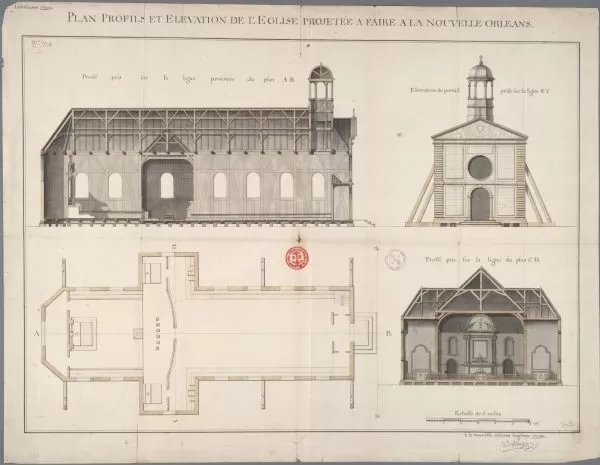
The Christian dimensions of the New Orleans jazz funeral do not sit outside its African diasporic inheritance; they are one of the main historical languages through which that inheritance was reworked. New Orleans was shaped by Catholic colonial culture, Protestant growth, Black church life, and the spiritual creativity of people who often moved across religious categories more fluidly than institutions preferred. A jazz funeral might begin at a church, funeral home, or family residence; it might involve clergy, prayer, scripture, hymns, burial rites, and explicitly Christian language about heaven, resurrection, judgment, and reunion. Yet these Christian elements did not simply overwrite older ritual understandings of death as transition. They gave them new vocabulary, new institutional settings, and new songs through which grief and hope could be publicly performed.
Catholicism mattered first because New Orleans inherited a processional religious imagination. In Catholic practice, sacred meaning often moves through space: saints are carried, feast days are marked publicly, candles and bells organize devotion, and the passage from life to death is framed through visible rites. Even where the later jazz funeral became strongly associated with Black Protestant churches and spirituals, it developed in a city where religious movement through streets and cemeteries was already familiar. The procession itself could carry layered meaning. It was transportation, but it was also pilgrimage; it was a funeral cortege, but also a public act of sacred passage. The body moved from the world of the living toward consecrated burial, while the mourners moved through a city whose streets could temporarily become extensions of church, chapel, and cemetery. This Catholic inheritance also shaped the visual and spatial grammar of mourning: the importance of ordered movement, the presence of clergy, the solemnity of burial ground, and the understanding that religious ritual could be witnessed by a broader public. New Orleans did not require sacred action to remain hidden indoors. Its Catholic past helped normalize the idea that the holy, the civic, and the communal might meet in the street, where bells, bodies, music, and memory could turn ordinary urban space into ceremonial passage.
Protestant hymnody added another essential layer. Spirituals, hymns, and gospel-inflected songs supplied the emotional and theological vocabulary by which Black New Orleanians could narrate death as sorrow, struggle, homegoing, and deliverance. Songs such as “Just a Closer Walk with Thee,” “Nearer, My God, to Thee,” and “When the Saints Go Marching In” do not function merely as familiar tunes. They help order the ritual’s emotional sequence. Before the burial, slower hymns and dirges make grief audible, allowing the procession to confess loss without collapsing into disorder. After the burial, livelier sacred songs can shift the meaning of movement from accompaniment to release. The same Christian tradition that teaches mourning also offers images of passage, reunion, and triumph beyond death.
This is where the jazz funeral’s sacred ambiguity becomes most important. The ritual is Christian, but not only Christian; African diasporic, but not reducible to African survival; musical, but not merely musical; public, but still intimate. Its songs may name God, Jesus, heaven, and saints, while its bodily movement, communal obligation, and ancestor-like remembrance evoke wider Black Atlantic understandings of death and continuity. The result is not confusion but layered meaning. Participants do not need to resolve every theological strand for the ritual to work. The funeral holds together multiple truths: the body is gone, the soul is entrusted to God, the dead remain powerful in memory, the family must be supported, and the community must continue. Sacred ambiguity is not a weakness in the tradition. It is one of the ways the tradition makes room for a people whose religious history was shaped by rupture, conversion, adaptation, and endurance.
The Black church also gave jazz funerals an institutional and moral frame. Churches were not only places of worship; they were centers of mutual aid, leadership, music education, social discipline, political organization, and communal memory. Funeral rites within or around Black church life affirmed the dignity of the deceased in a world that often denied such dignity to Black people in law, economy, and custom. Clergy, hymns, prayers, and church processions helped declare that the dead person belonged within a sacred community and that the bereaved family was not abandoned. The funeral could move beyond the church door into the street, where sacred authority passed into a broader public performance. The minister might lead the prayer, but the band, the family, the club, and the second line helped carry the ritual to completion.
The Christian frame did not domesticate the jazz funeral into quiet respectability. It helped make possible the very movement from lament to release that gives the tradition its force. Christian hymns could bear grief; Christian hope could authorize joy; church ritual could bless the dead; and street music could return the living to the world. The jazz funeral’s theological power lies in this disciplined passage from sorrow to motion. It does not ask mourners to choose between weeping and dancing, between heaven and memory, between church and street. It allows each to appear in its proper place. The slow music before burial gives Christian sorrow its full weight, while the brighter music afterward draws on a language of resurrection, homegoing, and deliverance that makes joy ritually possible without making grief seem inadequate. This is why the transition after burial can feel both emotionally startling and spiritually coherent. The community has not forgotten the dead; it has completed one phase of obligation and entered another. In New Orleans, Christianity became one of the great vessels through which death could be sung, marched, mourned, and finally answered with rhythm.
Brass Bands, Military Music, and the Street as a Moving Chapel
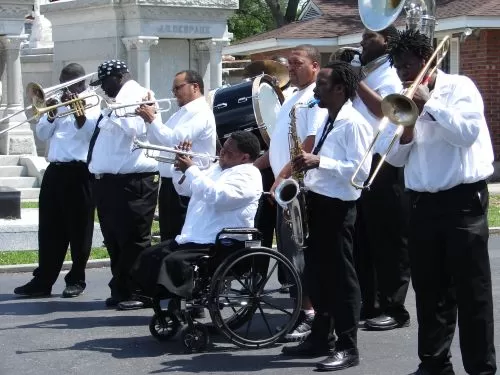
The jazz funeral could not have taken its recognizable New Orleans form without the brass band. African diasporic ideas about death, Christian processional ritual, and mutual-aid obligation supplied much of the funeral’s social and spiritual logic, but brass instruments gave that logic volume, mobility, and public force. A funeral that moves through the street needs music that can move with it. It needs sound strong enough to carry over traffic, conversation, balconies, porches, market noise, and neighborhood interruption. Brass bands made grief audible across distance. They allowed mourning to occupy the street not as a whisper but as a civic presence.
The brass-band tradition in New Orleans drew heavily from European and American military music. Colonial rule, militia culture, parades, civic ceremonies, military reviews, and nineteenth-century popular entertainment all contributed to a city in which horns, drums, uniforms, marches, and processional discipline were familiar. Military bands were designed for movement and command; they organized bodies in space. Their music could announce authority, coordinate marching, and turn public movement into spectacle. In New Orleans, these martial forms did not remain confined to barracks, parades, or official ceremonies. They entered the wider urban soundscape and became available for reinterpretation by civilian, working-class, and Black musicians.
That reinterpretation was crucial. Black New Orleans musicians did not simply imitate military bands; they transformed their instruments and habits into a language suited to dances, picnics, parades, benevolent-society events, church occasions, political gatherings, and funerals. The military march supplied a structure, but Black performance practices loosened, bent, and reanimated it. Syncopation, improvisation, blue notes, call-and-response phrasing, and rhythmic flexibility changed the meaning of the march itself. A band could still organize a procession, but it could also converse with the crowd, respond to the emotional temperature of the moment, and shift between solemnity and release. The New Orleans brass band became a mechanism of creolization: European instruments and military procedures were turned toward African diasporic movement, Black church feeling, and neighborhood ritual.
The instruments mattered because they were both practical and symbolic. Cornets and trumpets could project melody; trombones could answer, moan, slide, and comment; clarinets could weave ornament and countermelody; bass drums and snare drums could hold the body of the procession together; tubas and sousaphones could supply a portable bass line that turned the street into a moving sound chamber. Unlike a church organ or parlor piano, these instruments did not require a fixed interior space. They could accompany a body from church to cemetery, gather a second line behind them, and then lead the living back into the neighborhood after burial. Their sound traveled ahead of the procession, announcing death before the mourners arrived, and lingered after the procession passed, leaving grief suspended in the air of the neighborhood. Brass instruments also allowed individual voices to emerge within a collective form. A trumpet might carry the main line of a hymn, a trombone might seem to groan beneath it, a clarinet might curl around it with something like memory or lament, and the drums might keep everyone moving when sorrow threatened to slow the body to stillness. The band became more than a collection of musicians. It functioned as a ritual body, with each instrument contributing to the emotional anatomy of the funeral. The brass band made it possible for the street itself to become a moving chapel, one whose walls were made of sound and whose congregation formed as it walked.
This transformation of the street was important in Black New Orleans. Public space was never neutral in a racially city. Streets were regulated, policed, segregated, claimed, contested, and watched. A brass-band funeral did more than accompany grief; it asserted a right to move, sound, and remembrance. The band announced that the deceased was not being carried away invisibly. Family, club, church, and neighborhood had gathered, and the city would have to hear them. Even the formal order of the procession mattered. The band did not create disorder; it created a disciplined public route through sorrow. The beat organized the walkers, the melody marked the mood, and the procession temporarily remade the street into sacred Black communal space.
The musical sequence of the jazz funeral depended on the band’s ability to shift emotional registers. On the way to the cemetery, the band could play slowly, emphasizing lament, reverence, and restraint. The sound might be heavy, almost burdened, matching the pace of the family and the presence of the body. After the burial or the ritual moment of release, the same band could change tempo, repertoire, and rhythmic feel. This shift was not merely entertainment added after the serious part had ended. It was the ritual pivot itself. The band interpreted the transition for everyone present: the dead had been accompanied, the body had been committed, and the living were now permitted, even required, to move differently. The authority of the brass band lay in its ability to make that emotional transformation public and intelligible.
By the time jazz emerged as a named musical form, New Orleans brass bands had already become institutions of public movement. They linked older military repertories to ragtime, blues, spirituals, early jazz, and later funk, R&B, and hip-hop. Funerals were only one part of this larger musical world, but they reveal the depth of the brass band’s civic function. In a jazz funeral, the band is not background music and not mere accompaniment. It is a ritual actor. It carries sorrow, directs movement, marks transition, and helps return the living to life after death has interrupted it. The street becomes a chapel because the band makes it one: portable, communal, disciplined, improvisational, and loud enough to insist that grief itself has a public claim.
The First Line and the Second Line: Order, Rank, Kinship, and Community
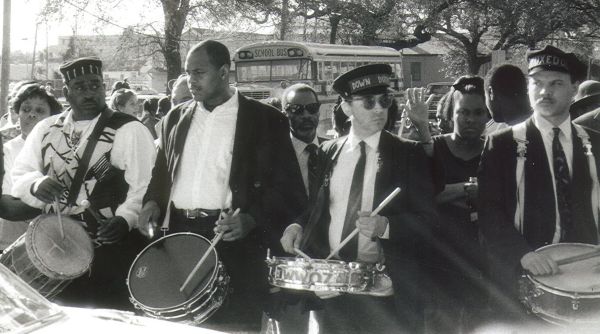
The jazz funeral procession is often remembered for its looseness, its dancing, and its invitation to join, but its power depends on order. The procession has a social architecture. At its center is the deceased, accompanied by those with the closest ritual and emotional claims: family, clergy, funeral directors, pallbearers, a grand marshal, and the hired band. This formal group is commonly understood as the first line. It is the ceremonial core of the funeral, the part of the procession most directly tied to kinship, religious authority, burial obligation, and the practical handling of the body. The first line gives the ritual its shape before the crowd enlarges it.
The first line is not simply a matter of physical position. It expresses rank, grief, responsibility, and intimacy. Those nearest the body are nearest the loss. The family’s place near the front marks their relationship to the deceased, while clergy and funeral workers help translate that loss into ritual form. The band, too, belongs to this formal order. It does not merely accompany the family from behind; it helps lead the emotional movement of the procession, choosing the pace and sound through which grief becomes public. The grand marshal, when present, adds another layer of authority, directing movement with gestures that are part command, part dance, and part ceremonial style. The first line makes mourning legible. It shows who is responsible for the dead, who is closest to the rupture, and who carries the obligation of formal farewell.
Behind and around this formal core gathers the second line. The second line may include friends, neighbors, members of social aid and pleasure clubs, fellow musicians, church members, acquaintances, and onlookers who become participants by joining the walk. Its boundaries are more porous than those of the first line, but that does not make it meaningless or chaotic. The second line is the community entering the funeral. It transforms a private death into a public event without erasing the family’s special place. The second line says that death has occurred within a web of relationships wider than the household. The deceased belonged not only to relatives but also to a neighborhood, a musical culture, a church world, a club network, a street, and a city.
This distinction between first line and second line reveals one of the central tensions of the jazz funeral: it is both hierarchical and open. The family and formal mourners lead, but the community follows; the ritual has structure, but it also allows expansion; grief begins with kinship, but it does not remain locked inside kinship alone. The procession balances authority and participation. The first line protects the dignity of the deceased and the rights of the bereaved. The second line surrounds that dignity with public witness. The difference matters because an open procession without order could become spectacle, while an ordered procession without communal response would lose much of its New Orleans meaning. The jazz funeral needs both: the front line of obligation and the following line of shared memory. It is precisely this balance that allows the procession to be public without becoming ownerless. The family’s grief remains central, but it is not abandoned to privacy; the community joins, but it does not take possession of the death. The first line establishes the ritual’s moral center, while the second line acknowledges that loss radiates outward through friendship, work, neighborhood, music, and memory. In that sense, the procession is not only a route to the cemetery. It is a visible map of social relationship.
The second line is also a bodily practice. It is not merely the crowd behind the funeral; it is a style of moving through grief. Handkerchiefs wave, parasols turn, feet slide and step, shoulders loosen, and dancers respond to the band with gestures that are individual but not isolated. The body becomes part of the ritual language. This is important after the burial, when the music turns from dirge to up-tempo release. The second line does not dance because death has ceased to matter. It dances because the ritual has reached the point where the living must move again. Each dancer’s gesture belongs to a shared grammar of endurance: sorrow has been acknowledged, the dead have been accompanied, and the community now carries life forward in motion.
The second line also makes public space social in a distinctive way. A street that might otherwise belong to traffic, commerce, policing, or municipal regulation becomes, for the duration of the procession, a corridor of memory. The people who join the second line help convert the route into a temporary community. Porches, sidewalks, intersections, bars, churches, funeral homes, and cemeteries become part of the ritual field. Even spectators are not entirely outside the event, because watching itself can become a form of acknowledgment. This is why the second line has been so central to Black New Orleans public culture. It asserts that community is not abstract. It is made by people moving together, hearing the same band, answering the same beat, and recognizing the same dead. In a city where Black movement through public space has often been constrained, surveilled, or commodified, the second line carries political meaning even when it is not framed as formal protest. It claims visibility through sound and motion. It makes the street answer to memory rather than merely to traffic or authority. The route may be temporary, but the claim is not: the dead belonged here, the mourners belong here, and the community has the right to occupy the city with grief, rhythm, and remembrance.
The first line and second line show that the jazz funeral is not simply a musical custom but a social order in motion. It organizes proximity to death, distributes grief through the community, and turns the street into a ritual space where rank and participation coexist. The first line carries the formal burden of farewell; the second line carries the wider burden of remembrance. Together they reveal the funeral’s deepest communal logic. The dead are not escorted alone, the family does not mourn alone, and the living do not return alone. The procession makes visible what ordinary life often hides: every death rearranges a community, and every community must decide how to walk after loss.
Social Aid and Pleasure Clubs: Mutual Aid, Burial Insurance, and Black Self-Organization
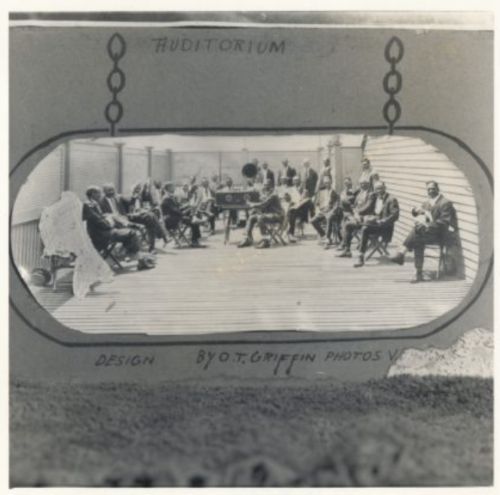
The jazz funeral cannot be understood only as a religious or musical form. It was also an institution of survival. In Black New Orleans, the public honoring of the dead was tied to the practical question of who would pay for illness, burial, funeral procession, music, and communal support when formal structures of insurance and civic care excluded or exploited African Americans. The beauty of the jazz funeral rested partly on hard organization. Behind the band, the second line, the handkerchiefs, and the bright turn from dirge to celebration stood dues, meetings, officers, rules, benefit events, burial obligations, and long habits of mutual responsibility.
Benevolent societies and mutual-aid associations had deep roots in nineteenth-century New Orleans. Some were organized around occupation, neighborhood, religion, ethnicity, free people of color, immigrant communities, or broader communal identity. For Black New Orleanians, such organizations became important after emancipation and during the long rise of segregation. Freedom did not bring equal access to health care, life insurance, burial insurance, credit, or civic protection. Mutual-aid groups helped fill those gaps by pooling small contributions from members so that sickness, death, and emergency would not fall entirely on one household. A proper burial was not a luxury in this world. It was a final claim to dignity, and the society helped make that claim possible. These organizations also reflected a wider Black associational culture that treated collective discipline as a form of protection. Meetings, officers, dues, constitutions, and benefit rules may seem far removed from the emotional spectacle of a jazz funeral, but they were part of the same world. The ability to bury the dead with honor depended on habits of organization built over time, often by people with limited resources who understood that individual survival required collective preparation.
Social Aid and Pleasure Clubs developed from this wider associational world, preserving the mutual-aid function while also becoming major sponsors of public festivity, parading, music, and neighborhood display. The phrase itself contains the balance: “social aid” and “pleasure.” These clubs were not merely charitable institutions, nor were they merely entertainment societies. They existed at the intersection of care and celebration. Members might help one another through illness and death, but they also organized dances, anniversary parades, banquets, balls, and street processions. The club gave structure to pleasure, and pleasure gave visibility to aid. In a city that often marginalized Black civic life, the club made self-organization public, stylish, disciplined, and unmistakably present. That style mattered because it turned mutual aid into a visible claim on dignity. Fine suits, coordinated colors, sashes, fans, parasols, banners, and carefully planned processions announced that Black communal life possessed elegance, order, and authority. The clubs did not simply help people endure hardship quietly. They transformed endurance into public culture, making care something that could be seen, heard, danced, and remembered.
Burial obligations gave these organizations particular emotional weight. Death exposed the fragility of poor and working-class families more sharply than almost any other event. A funeral required money quickly: for the undertaker, coffin, grave or tomb arrangements, transportation, clothing, food, ritual, and, in New Orleans, often music. Without communal support, families could be forced into humiliating economies of emergency. Social aid groups answered that threat with collective preparation. Members paid dues while living so that they and their families would not be abandoned in death. The funeral procession represented more than affection for the deceased. It was the visible fulfillment of a promise made in advance: when your time comes, we will show up, we will help bury you, and we will not let you pass from the world unnoticed.
The clubs also sustained the musical economy that made jazz funerals possible. Hiring a brass band required money, planning, and social networks. Benevolent societies and Social Aid and Pleasure Clubs became crucial patrons of Black musicians, providing work for parades, funerals, dances, and annual events. This patronage helped preserve and develop the brass-band tradition across generations. Musicians did not perform in an abstract cultural vacuum; they worked within a dense ecology of churches, clubs, funeral homes, neighborhoods, bars, dance halls, and street processions. The club parade and the funeral procession were connected. Both depended on disciplined public movement, both required bands, both displayed rank and style, and both turned neighborhood streets into spaces of Black cultural authority.
The self-organization of these clubs also carried political meaning, even when it did not take the form of formal politics. In the Jim Crow city, African Americans were repeatedly told where they could live, travel, worship, work, gather, and be entertained. Social Aid and Pleasure Clubs answered exclusion by building institutions of their own. They elected officers, kept records, collected dues, purchased regalia, negotiated routes, hired musicians, cared for members, and staged events with elaborate codes of dress and conduct. The club uniform, sash, fan, parasol, or coordinated suit was not superficial decoration. It signaled respectability, creativity, rank, and presence. To step into the street as a club was to say that Black New Orleanians possessed civic order even when the city denied them civic equality. This public order was powerful because it inverted racist assumptions about disorder and dependency. The clubs demonstrated that Black communities could organize their own welfare, produce their own ceremonies, regulate their own public performances, and honor their own dead on terms not dictated by white institutions. Their processions were cultural events, but they were also acts of self-definition. They showed a city built on racial hierarchy that Black New Orleans had its own systems of care, prestige, memory, and authority.
This history changes how we should read the jazz funeral. The procession was not simply a spontaneous outpouring of grief, nor only a picturesque local custom. It was the ceremonial face of a larger system of Black mutual aid. The first line and second line moved through streets made meaningful by club labor, neighborhood memory, religious authority, and musical patronage. The funeral honored one person, but it also affirmed the collective power required to honor anyone properly. In that sense, Social Aid and Pleasure Clubs did more than support jazz funerals. They helped define what a dignified death could look like in Black New Orleans: organized, public, musical, communal, and protected by promises the living made to one another long before the band began to play.
“Cutting the Body Loose”: The Ritual Pivot from Grief to Release
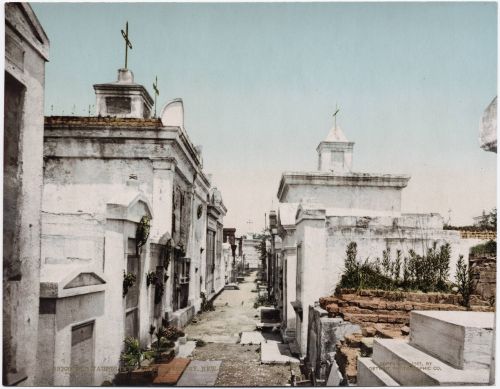
The most dramatic moment in a New Orleans jazz funeral is not the beginning of the procession but the turn. Before the burial, the music walks with grief. The band plays slowly, the mourners move with restraint, and the body remains the ritual center. The procession’s pace acknowledges the heaviness of death and the solemn duty of accompaniment. The dead are not rushed to the cemetery as a practical problem to be solved; they are escorted. This first movement gives sorrow its due. It allows the family, clergy, musicians, club members, and community to inhabit the fact of loss before anything like celebration becomes ritually possible.
The phrase “cutting the body loose” captures the symbolic force of what happens after burial, committal, or the decisive moment when the deceased has been entrusted to the grave, tomb, God, ancestors, and memory. The living have taken the dead as far as they can. The body no longer leads the procession, and the emotional burden of the ritual changes direction. This does not mean that grief ends. It means that the funeral has crossed a threshold. The deceased is released from the world of ordinary social obligation, and the mourners are released from the slow ceremonial movement required while the body was still present among them. The shift is not casual. It is one of the funeral’s deepest acts of interpretation: death separates, but ritual gives separation a form the community can survive.
Music performs this transition more powerfully than explanation could. A dirge may give way to a faster spiritual, a hymn may begin to swing, drums may loosen the steps of the walkers, and horns that previously sounded burdened may become bright, sharp, and jubilant. The same band that carried grief now authorizes motion. This is why the change can feel sudden without being incoherent. The musicians announce that the funeral has entered a new phase, and the second line responds with the body. Handkerchiefs rise, parasols turn, shoulders drop, feet begin to play with the beat, and individual dancers make public what the ritual has made possible: the living are returning to life, not because death has been denied, but because death has been properly accompanied. The change in tempo also changes the social atmosphere of the street. What had been a corridor of solemn passage becomes a space of release, improvisation, and renewed contact among the living. The band’s authority is crucial here because it prevents the transition from seeming arbitrary. The musicians do not simply “cheer people up”; they interpret the ritual threshold through sound. Their shift tells the crowd when it is time to move differently, when grief may loosen its shoulders, and when the second line may transform mourning into communal endurance. The music gives permission for emotional complexity: tears may continue, but they now exist beside dancing; memory remains, but it is carried by rhythm; absence is real, but so is the community that remains.
The phrase also reveals how carefully the jazz funeral manages the relation between body and spirit. In Christian terms, the soul may be understood as entrusted to God, heaven, resurrection, or divine mercy. In African diasporic terms, the dead may be understood through transition, ancestral presence, and continuing relation with the living. In civic and communal terms, the deceased has been honored publicly and restored to memory. “Cutting the body loose” can hold all of these meanings without needing to reduce them to one doctrine. The body has been committed, but the person is not simply erased. The mourners do not abandon the dead; they complete the escort. The celebration afterward is not a rejection of mourning but a disciplined second act of mourning, one that turns from the dead person’s passage to the community’s repair.
This ritual pivot is what makes the jazz funeral so easy to romanticize and so important to understand correctly. Outsiders often see the dancing and imagine that New Orleans has somehow made death cheerful. That reading misses the sequence. The joy comes after lament, not instead of it. The band has first played sorrow; the family has first walked behind the body; the community has first witnessed the seriousness of loss. Only then can the funeral become a dance. The genius of “cutting the body loose” is that it gives grief permission to change shape. It teaches that mourning is not only stillness, tears, and silence. Mourning can also be movement, sound, release, and the communal decision to keep walking.
Jazz, Improvisation, and the Sound of Communal Emotion
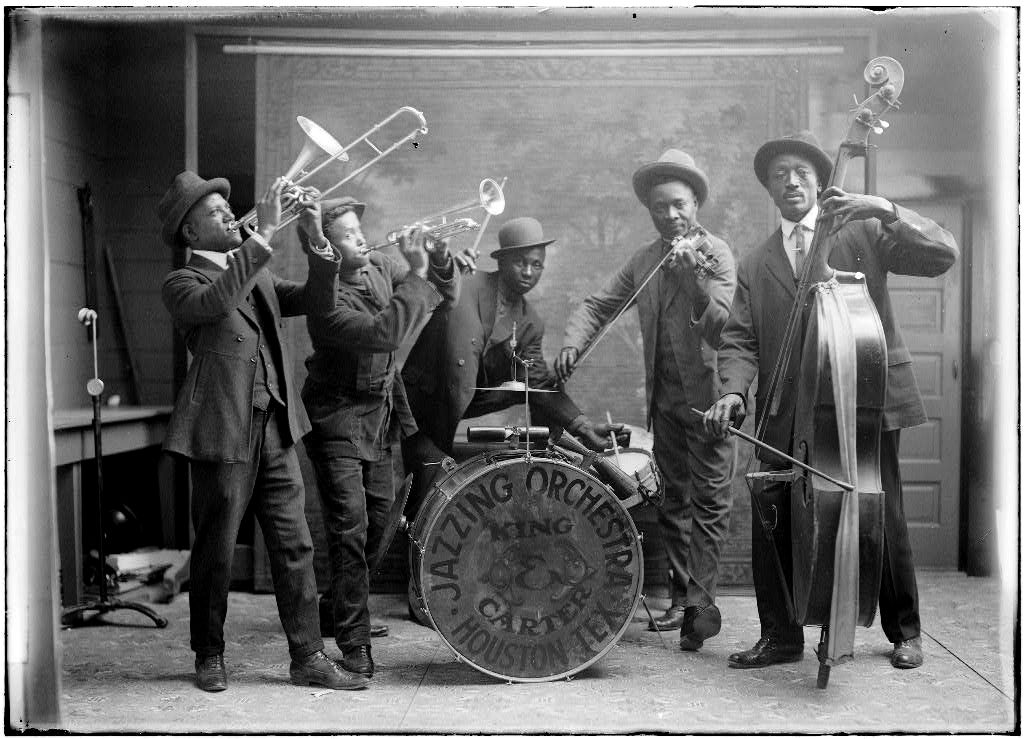
Jazz did not create the New Orleans funeral procession from nothing, but it changed what the procession could sound like and feel like. Funerals with music, brass bands, hymns, and public mourning existed before “jazz” became a named musical style, and the danger of the phrase “jazz funeral” is that it can make an older ritual tradition seem dependent on a later genre label. Yet jazz gave the funeral a new expressive vocabulary. It allowed musicians to move between structure and surprise, between inherited melody and personal statement, between collective discipline and individual voice. In the funeral procession, jazz was not simply a style of performance. It became a way of making communal emotion audible as it changed from grief to release.
Improvisation mattered because grief is never entirely predictable. A funeral procession has a route, a tempo, a ritual order, and a repertoire, but it also unfolds among people whose sorrow, memory, and bodily responses cannot be scripted in advance. New Orleans musicians learned to read that field of feeling. A cornet or trumpet might hold a hymn close to its recognizable form, then bend a phrase just enough to make it sound like a cry. A trombone might answer with a sliding, almost vocal moan. A clarinet might wind around the melody, not replacing it but thickening it with ornament, memory, and motion. The rhythm section could keep the procession moving while allowing the music to breathe. Improvisation did not undermine ritual order. It made ritual order responsive. It allowed the band to honor the expected form of the funeral while also registering the particularity of this death, this family, this route, and this crowd. No two processions were emotionally identical, even when they drew on familiar songs and conventions. The musicians’ task was to keep the ritual recognizable without making it mechanical. Improvisation gave them the means to do that: to stretch a note when grief seemed to demand lingering, to sharpen the rhythm when the procession needed forward motion, and to let the music answer the mourners as much as lead them.
The relationship between jazz and communal emotion was powerful because jazz carried both individual expression and collective form. A solo mattered, but it mattered inside the band; the band mattered, but it mattered inside the procession; the procession mattered, but it mattered inside the neighborhood. This nested structure allowed personal grief to become public without becoming formless. A musician could sound sorrow through an individual phrase, while the ensemble held the larger emotional frame. Likewise, a dancer in the second line could improvise steps, gestures, and turns, but always in relation to the beat and to the crowd. Jazz and second-line movement shared this logic: each person could speak through the body or instrument, but no one spoke alone.
This is one reason the jazz funeral occupies such an important place in the history of New Orleans music. It shows that early jazz was not merely a nightclub music, a recording industry product, or an entertainment form detached from community life. It belonged to a wider ecology of churches, streets, dance halls, benevolent societies, parades, funerals, and social clubs. Musicians played for audiences, but they also played for occasions. They marked time, death, celebration, civic presence, and neighborhood identity. The funeral procession demanded a particularly wide emotional range. A band had to know how to sustain solemnity without dullness, how to honor sacred melodies without freezing them, and how to turn toward joy without making grief seem trivial. Jazz developed within precisely this kind of social demand: music had to be useful, beautiful, adaptive, and emotionally intelligent.
The repertoire of jazz funerals also reveals the tradition’s layered sound world. Spirituals, hymns, blues feeling, marches, ragtime, early jazz standards, and later brass-band funk all became available to the ritual, depending on time, place, band, and family. Songs associated with Christian hope could become vehicles for improvisation; older marches could acquire swing; familiar melodies could be reshaped by blue notes, rhythmic displacement, and instrumental commentary. The power of the music came partly from recognition. Mourners could hear a tune they knew, a song tied to church, family, or city memory, and then hear it altered by the band in the moment. That alteration mattered. It suggested that memory itself was not static. The dead were being remembered through songs that had lived before them and would continue after them. A hymn could carry childhood church memories, a march could evoke older civic ceremony, a spiritual could point toward homegoing and deliverance, and a popular tune could recall the personality of the person being buried. The funeral’s sound world did not separate sacred from secular as neatly as outside observers might expect. New Orleans musicians could move across those boundaries because the ritual required emotional truth more than categorical purity. What mattered was whether the tune could bear the weight of memory, whether the band could bend it toward the moment, and whether the community could recognize itself in the sound.
Jazz gave the funeral a language for emotional transformation. It could hold lament and motion together, allowing the community to pass through grief without pretending to master it. The slow music before burial sounded the reality of loss; the improvised inflections made that loss human and particular; the turn toward up-tempo release made survival collective. In the jazz funeral, improvisation is not mere decoration or virtuosity. It is a ritual ethic. It teaches that tradition survives by responding, that sorrow can be voiced without being contained, and that the living must find a way to move forward without silencing the dead. The sound of communal emotion is never fixed once and for all. In New Orleans, it is played, answered, bent, remembered, and carried down the street.
Gender, Performance, and Respectability in the Funeral Street
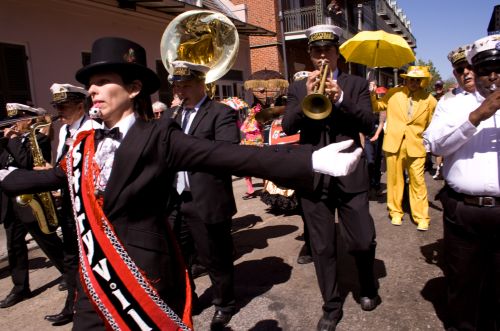
The funeral street was never a neutral stage. It was a place where grief, authority, gender, age, class, style, and public reputation all became visible. Jazz funerals are often described through their music and ritual sequence, but they were also performances of social identity. Who stood in the first line, who danced in the second line, who carried parasols, who led the band, who organized the club, who paid dues, who prepared the clothing, and who kept family memory alive all mattered. The procession did not simply express mourning; it displayed a community’s understanding of dignity. In Black New Orleans, where racist structures constantly denied respect, the funeral street became one place where respectability, artistry, and defiance could move together.
Men have often occupied the most visible roles in public descriptions of jazz funerals. Brass-band musicians, grand marshals, club officers, pallbearers, and celebrated dancers frequently appear as the emblematic figures of the tradition. The grand marshal in particular embodies a stylized masculine authority: he directs the procession, marks the beat, controls the route, and performs command through elegance rather than blunt force. His gestures can be precise, theatrical, and improvisational, blending discipline with flair. Likewise, male dancers in the second line may display balance, agility, risk, humor, toughness, and grace, turning grief into a public test of bodily control. This performance of masculinity is not merely decorative. It is a claim to presence in a society that often associated Black men either with servility or threat. The funeral street allowed another image: dignified, skilled, stylish, emotionally expressive, and communally responsible.
Yet the visibility of men should not lead us to mistake the tradition for a male-only world. Women have been central to the social life that made jazz funerals possible, even when their labor has been less often romanticized in public memory. Women mourned, organized, sang, cooked, dressed the dead, prepared children, preserved kinship stories, supported churches, participated in clubs, and helped sustain the networks of care around illness and burial. They also appeared in the procession as family elders, widows, daughters, churchwomen, club members, parasol bearers, singers, and second-line dancers. Their performance of grief could carry its own authority: composed sorrow, vocal lament, ritual dress, protective care for children, and the public bearing of loss before the neighborhood. If male performance often drew attention through motion and display, women’s performance often revealed the deeper infrastructures of memory, kinship, and mourning.
Respectability was not a simple matter of restraint. In the context of Black New Orleans, respectability could include polish, dress, posture, order, religious observance, and formal procession, but it could also include exuberant motion, musical excellence, and public style. A well-dressed club, a disciplined first line, a carefully hired band, a coordinated color scheme, or a dancer moving with dazzling control all worked against racist assumptions that Black public gathering was disorderly or undignified. Jazz funerals complicate middle-class respectability politics because they do not equate dignity with quietness. The tradition insists that Black dignity can be loud, rhythmic, embodied, and improvisational. It can wear a suit and wave a handkerchief; it can pray in church and dance in the street; it can honor the dead without suppressing the body.
This tension shaped gendered performance in powerful ways. Men could use the funeral street to display controlled daring, demonstrating that the body could be expressive without being undisciplined. Women could use the same space to display grief, elegance, endurance, authority, and social belonging. Both forms mattered because public mourning required the community to show itself as worthy of the dead. The procession’s clothing, gestures, and movement were not superficial. They were part of the ritual’s moral language. To appear properly, beautifully, or powerfully in the funeral street was to say that the deceased had been loved by people who knew how to honor them. The body of the mourner became evidence of care.
Gender also reminds us that the jazz funeral is sustained by visible performance and invisible preparation. The dramatic moment of the second line depends on prior work: arranging the funeral, contacting musicians, organizing club members, preparing food, dressing mourners, caring for elderly relatives, managing children, and holding family emotion together. Much of that labor has historically fallen to women, even when men occupied the most photographed roles in the street. A fuller interpretation must see the jazz funeral as both spectacle and infrastructure. The procession reveals a community in motion, but behind that motion stand households, churches, clubs, and kin networks that made public dignity possible. The funeral street may display grief through brass, dance, and style, but its deepest performance is communal responsibility, enacted by men and women in different but interdependent forms.
From Neighborhood Ritual to Cultural Icon: Tourism, Preservation, and the Problem of Spectacle
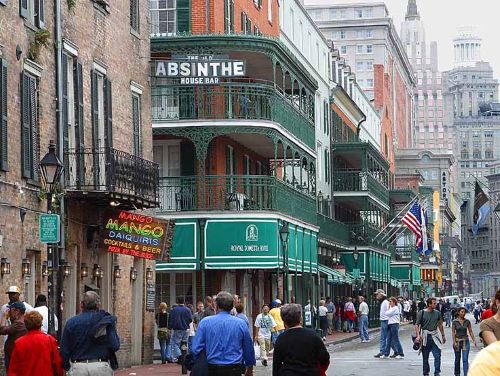
As jazz funerals became more widely recognized beyond New Orleans, they entered a new and uneasy cultural life. What had developed as a neighborhood ritual of burial, mutual aid, music, and public mourning became one of the city’s most recognizable symbols. Visitors, journalists, photographers, filmmakers, festival organizers, preservationists, and tourism promoters found in the jazz funeral an image that seemed to summarize New Orleans itself: sorrow and joy walking together, death answered by brass, grief transformed into dance. The appeal is easy to understand. Few rituals so powerfully contradict the modern tendency to privatize death. But recognition also changes what it recognizes. Once the jazz funeral becomes an emblem of “New Orleans culture,” it risks being detached from the institutions, neighborhoods, and obligations that gave it meaning. The ritual’s visibility can make it seem timeless, unified, and available to everyone in the same way, when in fact it has always depended on specific communities, families, clubs, musicians, routes, and circumstances. What appears to outsiders as a spontaneous eruption of local spirit is often the result of planning, payment, permission, rehearsal, memory, and inherited etiquette. Cultural fame can illuminate a tradition, but it can also flatten it into an image.
Tourism has long depended on turning local practices into legible experiences for outsiders. New Orleans, perhaps more than most American cities, has been marketed through atmosphere: food, music, cemeteries, Carnival, nightlife, Catholic remnants, haunted streets, Creole memory, and the promise that ordinary rules loosen at the city’s edge. The jazz funeral fits easily into that symbolic economy because it seems to offer visitors the city’s deepest paradox in one moving image. It is sacred and theatrical, mournful and exuberant, old and improvisational, communal and photogenic. Yet this very legibility can be dangerous. A tourist image often simplifies what a ritual actually does. The funeral becomes “the happy funeral,” the second line becomes a party, and the long histories of Black bereavement, insurance exclusion, musical labor, club organization, and racialized public space recede behind the spectacle of dancing in the street.
Preservation has been both necessary and complicated. Institutions dedicated to New Orleans music and culture have helped document brass-band traditions, teach younger audiences, protect musical lineages, and remind the public that jazz funerals are not decorative entertainment. Preservation Hall, museums, archives, neighborhood organizations, and cultural scholars have all played important roles in resisting amnesia. Without such work, many outsiders would know only the most commercial version of the ritual. Preservation can unintentionally freeze a living practice into a heritage object. Once a tradition is described, archived, filmed, packaged, and taught as “authentic New Orleans,” it may become harder to see its changes, conflicts, and internal diversity. A jazz funeral is not made authentic by matching a tourist’s expectation of what the past should look like. It is authentic when it remains accountable to the dead, the family, the musicians, the club, and the community that calls it into being.
The problem of spectacle becomes clearest when jazz-funeral imagery is borrowed for events far removed from death. Second lines now appear at weddings, conventions, festivals, corporate events, sporting celebrations, and tourism campaigns. Some of these uses are joyful extensions of local brass-band culture rather than betrayals of it. New Orleans musicians deserve paid work, and the city’s processional traditions have always included celebration as well as mourning. The same streets that carry funerals also carry club parades, Carnival processions, political marches, and neighborhood parties. But when the visual style of the jazz funeral is extracted without its ritual sequence, it can become a consumable mood: brass, parasols, handkerchiefs, dancing, and “New Orleans flavor.” What disappears is the discipline of the transition from dirge to release, the formal place of the family, and the moral fact that the music first serves the dead before it serves the crowd.
Commercialization also changes the position of the musician. Brass-band players are often treated as bearers of tradition, but they are also working artists navigating precarious economies. Tourism can provide employment, visibility, recording opportunities, and international recognition. It can also demand that musicians perform a narrowed version of themselves for outsiders who want celebration without history. The musician in a funeral procession is a ritual actor; the musician at a staged tourist event may be asked to provide atmosphere. These roles can overlap, and many musicians move between them with skill and pragmatism. But the distinction matters. A tradition rooted in communal obligation becomes vulnerable when its most marketable features are separated from the communities that sustained it. The question is not whether brass bands should be paid or whether second lines should ever be celebratory outside funerals. The question is who controls the meaning, who benefits from the performance, and whether the labor of culture-bearers is respected rather than merely consumed.
Public regulation adds another layer to the problem. A jazz funeral or second line is not only a cultural expression; it is also a movement through municipal space. Routes, permits, police escorts, fees, traffic control, and neighborhood pressures all shape what appears to outsiders as spontaneous street culture. This matters because Black public gathering in New Orleans has often been celebrated as heritage while also being policed as disorder. The same city that markets second-line imagery may regulate actual second-line practice with increasing expense or scrutiny. Such contradictions reveal the politics beneath preservation. New Orleans can praise Black culture as the city’s soul while making it difficult for Black communities to occupy the street on their own terms. The jazz funeral’s visibility does not necessarily guarantee security. Cultural recognition can coexist with displacement, regulation, and unequal power. It can produce murals, brochures, documentaries, and festival stages while the neighborhoods that nurtured the tradition face rising costs, demographic change, policing disputes, and the loss of long-standing social networks. The danger is not simply that outsiders will misunderstand the ritual, but that the conditions required to sustain it may be weakened even as its image becomes more profitable. A city can celebrate second lines symbolically while making actual second lines harder to live, organize, and inherit.
The movement from neighborhood ritual to cultural icon complicates, rather than cancels, the meaning of the jazz funeral. Tourism and preservation have helped spread awareness of the tradition, supported musicians, and given New Orleans a powerful language for representing itself to the world. But they have also encouraged simplification, commodification, and spectacle. The central challenge is to remember that the jazz funeral is not merely an image of New Orleans joy. It is a ritual born from death, mutual aid, Black self-organization, religious ambiguity, musical labor, and the right to mourn publicly. To honor it properly, one must see the dance and the discipline, the beauty and the burden, the cultural icon and the neighborhood obligation beneath it.
Funk, Rebirth, and the Contemporary Brass-Band Revival
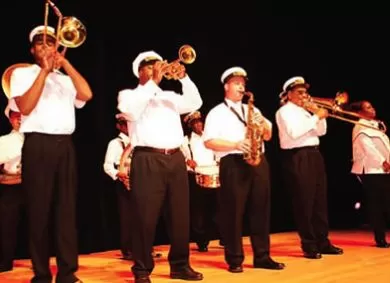
By the late twentieth century, New Orleans brass-band music was often described through the language of preservation, as though its main task were to maintain an older sound against modern change. But the contemporary brass-band revival shows that tradition survived not by standing still, but by becoming louder, faster, funkier, and more rhythmically aggressive. The same processional world that had carried funerals, second lines, club parades, and neighborhood rituals now absorbed bebop, funk, R&B, soul, and later hip-hop. This was not a break from the jazz funeral tradition so much as another chapter in its long history of adaptation. New Orleans brass bands had always transformed inherited materials. The late twentieth-century revival made that transformation unmistakable.
The Dirty Dozen Brass Band became one of the clearest symbols of this new moment. Emerging from the world of social aid and pleasure clubs, youth music, and neighborhood performance, the group pushed beyond conventional revivalist expectations of what a New Orleans brass band should sound like. They brought bebop complexity, funk rhythm, and a more expansive sense of arrangement into a tradition that outsiders often imagined as fixed in the past. Their importance lay not simply in innovation for its own sake, but in demonstrating that brass-band music could remain rooted in second-line culture while also speaking to contemporary Black musical life. The sousaphone, snare, bass drum, trumpet, trombone, and saxophone did not have to sound like museum objects. They could drive, shout, stretch, and groove. The Dirty Dozen’s sound made clear that the street was not separate from the wider history of Black popular music; it was one of the places where that history kept being made. Funk did not enter the brass-band tradition as a foreign intrusion, but as a rhythmic vocabulary already deeply connected to dance, procession, call-and-response, and bodily release. In that sense, the band’s modernity was also a return to first principles: music had to move people, answer the crowd, and make collective feeling physical. Their success also challenged outsiders who wanted New Orleans music to remain charmingly old-fashioned. The brass band could honor the funeral route and the second-line street while refusing to be trapped inside nostalgia.
Rebirth Brass Band carried that transformation into another generation and made the very idea of “rebirth” feel historically appropriate. Founded by young musicians in the early 1980s, Rebirth helped establish a sound that was unmistakably New Orleans but also modern, streetwise, and intensely danceable. Its music was tied to the second line, but it also belonged to clubs, recordings, festivals, schools, and neighborhood gatherings. Rebirth’s success showed that the brass-band tradition could produce contemporary stars without abandoning its ritual and communal roots. In funeral contexts, this mattered because the emotional pivot from sorrow to release could now draw on a wider rhythmic vocabulary. The post-burial celebration might swing, but it could also funk, punch, and move with the heavier syncopation of late twentieth-century Black popular music. Rebirth’s importance was not only musical but generational. It showed younger musicians and listeners that brass-band culture was not something inherited passively from elders and preserved under glass. It could be claimed, updated, and made urgent again. The band’s name itself captured the process by which New Orleans traditions repeatedly survive: not by avoiding change, but by passing through it. For jazz funerals and second lines, that meant the old ritual grammar remained intact while its sound kept expanding. The march to the cemetery could still carry solemnity, but the return from the grave could speak in the rhythms of the living city.
The broader revival included bands such as the Soul Rebels, Hot 8, New Birth, Treme Brass Band, and others, each negotiating the relationship between inheritance and change. Some leaned more heavily toward traditional repertoire, others toward funk, hip-hop, or contemporary popular music, but all operated within a city where brass-band performance remained tied to street movement and communal identity. This is one of the reasons the revival cannot be understood only through recordings or stage performance. The brass band in New Orleans is not merely a concert ensemble. It is a working public instrument. It plays funerals, second lines, parades, clubs, festivals, tourist events, school programs, and memorials. Its meaning changes with the occasion, but its authority comes from being able to move among them.
The revival also exposed the difficult economics of cultural inheritance. Contemporary brass-band musicians have often been celebrated as guardians of New Orleans tradition while living within the same precarious conditions that shaped earlier generations: uneven pay, racial inequality, violence, displacement, unstable cultural labor, and the pressure to perform local authenticity for audiences with more money than the neighborhoods that produced the sound. Tourism and global recognition could bring opportunity, but they could also narrow expectations. A band might be praised for representing the soul of New Orleans while its members struggled to afford the city whose soul they supposedly embodied. The revival was both triumphant and uneasy. It proved the vitality of the brass-band tradition, but it also revealed how much cultural survival depends on labor that is admired more readily than it is protected.
In the history of the jazz funeral, the contemporary brass-band revival matters because it shows that the ritual’s music was never frozen at the moment outsiders first noticed it. The funeral procession could absorb new rhythms because it had always been built around transition. Its deepest structure remained recognizable: the slow movement toward burial, the ritual release, the second line’s return to life. But the sound of that return could change. Funk and contemporary brass-band energy did not cheapen the funeral’s meaning when used with ritual intelligence; they extended its capacity to speak to the living community. The dead were still accompanied, grief was still honored, and the body was still cut loose. But the living returned with rhythms that belonged to their own time. That is what made the revival a rebirth in more than one sense: not the restoration of an old form exactly as it had been, but the renewal of a tradition powerful enough to keep changing without losing its route.
Katrina, Violence, Resilience, and the Politics of Returning to the Street

Hurricane Katrina did not create the vulnerabilities that shaped Black New Orleans, but it exposed them with devastating clarity. The flood revealed the unequal geography of the city: who lived on lower ground, who had cars, who had insurance, who could evacuate, who could return, who could rebuild, and whose neighborhoods would be treated as recoverable or expendable. For the culture of jazz funerals, brass bands, Social Aid and Pleasure Clubs, and second lines, Katrina was not only a natural disaster. It was a rupture in the social fabric that made public ritual possible. Families were scattered, musicians displaced, clubs interrupted, churches damaged, archives lost, homes destroyed, and neighborhood routes broken. A tradition built on movement through familiar streets suddenly faced the question of whether the people, the streets, and the institutions that sustained it would still be there.
Returning to the street became an act of cultural survival. A second line or jazz funeral after Katrina could not be understood only as a parade or ceremony. It was a declaration that the community had not disappeared, even when official recovery plans, market pressures, and demographic change seemed to imagine a different city. To march again was to make a claim: these streets still held memory; these neighborhoods still had heirs; these clubs still had members; these musicians still had work to do; these dead still deserved public honor. The procession became a way of contesting erasure. It did what New Orleans ritual had long done, but under intensified pressure: it turned public movement into proof of belonging.
Violence also haunted the post-Katrina landscape, and it complicates any easy story of resilience. New Orleans brass-band culture has often been celebrated as joyful, but many of the communities that sustained it lived with poverty, premature death, incarceration, trauma, police pressure, and the everyday vulnerability of young Black life. Musicians and dancers could become cultural ambassadors one day and mourners the next. Jazz funerals and memorial second lines often carried the weight of lives cut short, not only by age or illness but by violence. This made the ritual’s emotional range even more urgent. The music after burial did not mean that death had been made harmless. It meant that a community surrounded by loss had developed a public method for refusing paralysis. In that setting, the brass band’s joy was not naïve; it was hard-earned, disciplined, and sometimes defiant. The second line could become a way to grieve those whom the city, the economy, or the criminal justice system had failed to protect. It could also become a public demand that a death be seen as more than a statistic. The procession restored individuality to the dead: a name, a body, a route, a song, a crowd, a memory. That restoration mattered in a city where premature Black death could be normalized by outsiders as background tragedy rather than recognized as communal injury.
The politics of resilience are double-edged. On the one hand, the return of brass bands, clubs, and second lines after Katrina showed extraordinary strength. These practices helped people find one another again, remember the dead, reoccupy devastated neighborhoods, and insist that New Orleans was not merely buildings, tourism, or municipal branding. The city lived through social forms: parades, funerals, music, foodways, churches, clubs, corner gatherings, and remembered routes. On the other hand, “resilience” can become a dangerous word when it asks communities to endure what should have been prevented or repaired. Celebrating Black New Orleans for surviving disaster should not excuse the political failures, racial inequalities, and economic forces that made survival so difficult in the first place.
Jazz funerals after Katrina also revealed the power of mourning as public history. The dead mourned in these processions were not only individuals, though the individual always remained central. They could also stand for lost homes, vanished blocks, broken institutions, drowned neighborhoods, displaced elders, interrupted musical lineages, and the city that many feared would not return in recognizable form. A funeral route could become a map of memory and damage. The band’s sound moved through streets where absence was visible: empty lots, rebuilt houses beside ruins, familiar corners changed by flood and redevelopment, neighbors missing because they had resettled elsewhere. The jazz funeral did not merely commemorate a death in these moments. It measured what disaster had done to the living community. The procession gathered losses that official reports could not fully count. It made audible the grief of displacement, the shock of return, and the anger of people who knew that recovery was unevenly distributed. Where government language spoke of infrastructure, rebuilding zones, mitigation, and redevelopment, the funeral street spoke in names, songs, bodies, and remembered routes. This kind of mourning was historical because it placed personal loss inside the larger story of the city’s survival and transformation. It reminded participants that memory was not kept only in archives or monuments. It lived in the act of walking together through places where the past had been damaged but not erased.
Post-Katrina brass-band culture gained even greater symbolic value in the eyes of the wider world. Musicians became emblems of recovery, and second lines became images of New Orleans’s refusal to die. This visibility could bring opportunities, donations, gigs, documentaries, festivals, and renewed appreciation. Yet it also intensified the old problem of spectacle. The world wanted the sound of resilience, but not always the politics behind it. A brass band could be praised as the heartbeat of the city while the neighborhoods that produced it struggled with housing costs, school upheaval, policing, violence, and cultural displacement. The funeral street, once again, became a place where beauty and burden walked together.
Katrina sharpened the meaning of the jazz funeral rather than changing it beyond recognition. The tradition had always been about passage through rupture: from life to death, from grief to release, from private loss to communal repair. After Katrina, those themes became civic as well as personal. To return to the street was to mourn, but also to rebuild social presence. To play was to remember, but also to insist. To dance after loss was not to deny catastrophe; it was to refuse to let catastrophe have the final movement. In post-Katrina New Orleans, the jazz funeral’s old lesson became newly visible: a community survives not because it escapes death, but because it knows how to carry the dead, gather the living, and move again through the streets that still belong to memory. That lesson applied not only to individual funerals but to the city itself. New Orleans had to decide whether it would treat Black cultural life as decoration for recovery narratives or as one of the foundations of recovery itself. The jazz funeral answered by doing what it had always done: bringing grief into public, organizing people around the dead, and transforming movement into memory. Its resilience was not passive endurance. It was a ritual claim that loss must be witnessed, that return must be embodied, and that no city can truly recover while forgetting the people whose songs taught it how to survive.
Meaning: Grief, Joy, Obligation, and the Ethics of the Living
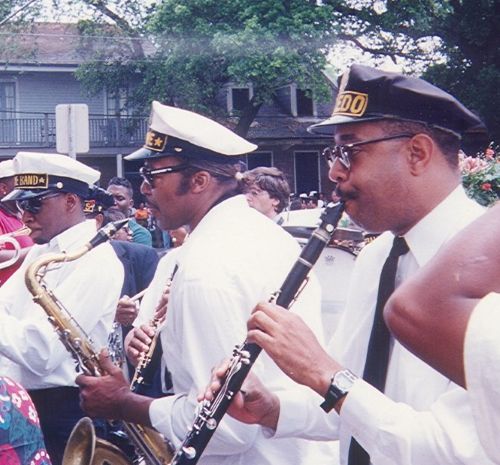
The New Orleans jazz funeral matters because it refuses to let death become either silence or spectacle alone. Its deepest meaning lies in the disciplined movement between grief and joy, and in the communal obligations that make such movement possible. The funeral does not begin with celebration. It begins with acknowledgment: the body is present, the family is bereaved, the band plays slowly, and the community walks with restraint. Loss is given time, sound, and public space. Only after the dead have been accompanied does the ritual permit release. This sequence is the key to the tradition’s moral force. Joy does not cancel grief; it becomes possible because grief has first been honored. The ritual also teaches that mourning is not merely an individual emotion. Modern death often becomes private, managed by professionals, confined to funeral homes, churches, hospitals, cemeteries, or the interior life of the bereaved. The jazz funeral resists that narrowing. It insists that death happens to a network of people, not only to a body and a household. Family members suffer the closest wound, but neighbors, musicians, club members, church communities, and friends also have obligations. The procession makes those obligations visible. To walk, play, follow, sing, watch, wave a handkerchief, or join the second line is to acknowledge that grief requires witnesses. The living owe the dead remembrance, but they also owe the bereaved presence.
This is why the jazz funeral should be understood as an ethic as much as a custom. It teaches a way of behaving toward death. The dead should not be disposed of quietly as though they were an inconvenience. The family should not be left alone as though grief were a private burden to be carried without help. The community should not pretend that life continues unchanged after one of its members is gone. A death creates a rupture in the social world, and the funeral is the community’s answer to that rupture. The procession says: we will carry this person, we will mark this loss, we will walk with those who mourn, and we will return together. The ethic is not sentimental. It requires labor, money, musicianship, organization, bodily presence, and time.
The emotional complexity of the jazz funeral comes from its refusal to choose between sorrow and survival. In many mourning traditions, dignity is associated with restraint, quietness, and controlled sadness. New Orleans does not reject restraint; the dirge, the first line, the slow march, and the formal order of the procession all show that grief has rules and weight. But the tradition also refuses to make stillness the only respectable language of mourning. Dancing after burial is not frivolity. It is the body’s reentry into life after the ritual has carried the dead to the threshold of separation. The second line does not say that death is easy. It says that life must be taken up again by people who have faced death together.
The funeral’s joy is a serious joy. It is not the shallow cheerfulness of distraction, nor the tourist fantasy of a city that turns everything into a party. It is a joy that comes after obligation. The band can break into brighter music because it has already played the sorrowful music. The dancers can move because the dead have already been escorted. The community can celebrate because it has first mourned. This order matters. Without the dirge, the dance would risk becoming spectacle; without the dance, the dirge might leave the living suspended in grief. The jazz funeral holds both phases together and teaches that mourning has a rhythm: descent, accompaniment, release, return. The practice also reveals a distinctive understanding of memory. The dead remain present not because the funeral refuses to let them go, but because it gives their departure public form. To remember someone is not only to think of them privately. It can mean walking a route, hearing a song, gathering a club, wearing particular colors, feeding mourners, telling stories, dancing in a street the deceased once knew, or allowing a familiar hymn to carry a new loss. The jazz funeral makes memory embodied. It places remembrance in feet, horns, drums, shoulders, hands, and breath. The dead become part of the community’s continuing movement, not as ghosts trapped among the living, but as presences carried forward through ritual action.
The ethics of the living are inseparable from the honor given to the dead. A jazz funeral asks the community to do more than feel. It asks people to show up, to organize, to listen, to accompany, and finally to move. Its meaning is not exhausted by music, religion, African diasporic continuity, Christian hope, mutual aid, or civic performance, although it includes all of these. At its center is a social claim: no one should leave the world unattended, and no one should return from the cemetery alone. The jazz funeral’s answer to death is not denial, but accompaniment. It gives the dead a road, the mourners a community, and the living a rhythm by which to continue.
Are We Turning a Varied Black New Orleans Practice into a Single Romantic Tradition?
The following video from Preservation Hall Foundation is a demonstration of a New Orleans jazz funeral:
I am careful here not to make the New Orleans jazz funeral appear more unified, continuous, and symbolically coherent than the historical record allows. “Jazz funeral” itself is a convenient phrase, but convenience can become distortion. New Orleans has known many kinds of funerals with music, many kinds of second lines, many neighborhood customs, many church practices, and many levels of participation depending on family, class, religion, race, era, club membership, and the status of the deceased. Not every funeral with a band followed the same emotional sequence; not every procession carried the same theological meaning; not every second line had the same relation to burial, mutual aid, or neighborhood memory. We naturally seek pattern, but pattern can become romance when it smooths over local variation.
This challenge is important when discussing African diasporic origins. It is true that the jazz funeral bears strong marks of African and Black Atlantic deathways: music, movement, transition, ancestor-like memory, communal obligation, and the refusal to treat death as mere disappearance. But it would be too simple to present the tradition as a direct survival of Yoruba, Fon, Kongo, or any other single African system. Enslaved Africans and their descendants lived through rupture, conversion, coercion, improvisation, and recombination. New Orleans itself was shaped by Catholic procession, Protestant hymnody, military brass bands, benevolent societies, Jim Crow exclusion, tourism, and modern cultural preservation. The tradition is African diasporic not because it remained unchanged, but because African-derived ritual principles were remade under new historical pressures. The strongest reading is not purity but creolization. This matters because origin stories often carry hidden expectations about authenticity. If a practice can be linked cleanly to a named African people or ritual, it may seem more legitimate; if it cannot, some readers may assume the African inheritance is weak or merely symbolic. Both assumptions are flawed. Diasporic culture rarely survives by remaining untouched. It survives by finding new vessels. A brass band, a Protestant hymn, a Catholic cemetery procession, a benevolent-society parade, or a second-line dance can all carry African diasporic meanings without being identical to any single African antecedent. The point is not to locate one pure source beneath the jazz funeral, but to understand how displaced people and their descendants used available forms to solve old ritual problems: how to honor the dead, how to protect the living, how to mark transition, and how to turn rupture into continuity.
There is also a danger in romanticizing Black communal resilience. Jazz funerals and second lines are often described in language of joy, survival, creativity, and cultural genius, and those descriptions are not wrong. But they can become misleading if they turn suffering into aesthetic charm. The need for burial societies emerged from exclusion and inequality, not from picturesque local color. The public power of the procession developed in a city where Black dignity was repeatedly denied. The beauty of brass-band mourning cannot be separated from the economic insecurity of musicians, the labor of families and clubs, the vulnerability of Black neighborhoods, or the premature deaths that have so often required public grieving. To celebrate the tradition without naming those burdens risks turning historical struggle into a consumable image of “New Orleans spirit.”
A further complication is that the jazz funeral’s public visibility has been shaped by outsiders as well as insiders. Writers, folklorists, tourists, photographers, preservationists, journalists, and scholars have all helped define what counts as the recognizable jazz funeral. Their work has sometimes protected memory, but it has also selected, framed, and simplified. Some accounts highlight the dramatic turn from dirge to dance because it is visually and narratively powerful; others emphasize African survivals, Christian hope, musical innovation, or neighborhood authenticity. Each emphasis reveals something, but each can also narrow the field. The actual practice has always been more uneven: sometimes solemn, sometimes exuberant, sometimes formal, sometimes improvised, sometimes deeply communal, sometimes staged for audiences, and sometimes shaped by practical compromises rather than ideal ritual order.
This counterpoint does not overturn the my central interpretation; it strengthens and disciplines it. The New Orleans jazz funeral should not be treated as a single timeless ceremony with one origin and one meaning. It is better understood as a family of related practices that became recognizable through repeated patterns: public mourning, brass-band accompaniment, first-line order, second-line participation, mutual-aid obligation, religious ambiguity, and the emotional movement from grief toward release. Its significance lies precisely in its ability to hold variation without losing identity. The jazz funeral is not powerful because it is pure, fixed, or perfectly coherent. It is powerful because Black New Orleanians made a changing ritual language out of death, music, memory, inequality, faith, and the street. The romance must be resisted, but the meaning remains.
Conclusion: Leaving with Rhythm, Returning with Memory
The New Orleans jazz funeral endures because it gives death a public language large enough to hold contradiction. It begins in sorrow and ends in movement, but the movement does not undo the sorrow. The slow march, the dirge, the first line, the family’s place near the body, and the solemn route to the cemetery all insist that loss must be faced directly. The later music, dancing, and second-line release insist with equal force that death cannot be allowed to freeze the living in place. The funeral’s emotional wisdom lies in this sequence. Grief walks first; joy follows only after the dead have been honored.
That sequence is also historical. The jazz funeral emerged from New Orleans itself: a port city, a Catholic city, an African diasporic city, a brass-band city, a city of churches, clubs, cemeteries, processions, racial exclusion, mutual aid, and public performance. Its form was shaped by African and Black Atlantic ideas of transition and community obligation, Christian languages of homegoing and resurrection, European military instruments remade by Black musicians, and the practical labor of Social Aid and Pleasure Clubs that made dignified burial possible. No single origin explains it. Its power comes from convergence. The jazz funeral is not pure survival, not mere invention, and not simple entertainment. It is a creolized ritual of memory, discipline, and release.
To romanticize the jazz funeral as merely joyful is to miss its burden. The dance after burial is not a refusal to mourn; it is mourning carried into another phase. The brass band is not background music; it is a ritual actor. The second line is not only a crowd; it is the community taking responsibility for grief. The street is not only a route; it becomes a temporary sacred space where the dead are named, the bereaved are accompanied, and the living are gathered back into motion. Even when tourism, preservation, commercialization, disaster, and cultural fame reshape the tradition, its central claim remains: no one should leave the world unattended, and no community should let death pass without witness.
Leaving with rhythm is not a quaint New Orleans flourish. It is a philosophy of death made public. The jazz funeral teaches that memory is something people do with their bodies, their instruments, their streets, and their obligations to one another. The dead are carried as far as the living can carry them, and then the living turn back, altered but not alone. That return is the final meaning of the procession. The funeral does not conquer death. It answers death with accompaniment, with sound, with communal dignity, and with the stubborn decision to keep walking.
Bibliography
Affiliate disclosure: Amazon links on this site are paid links. As an Amazon Associate I earn from qualifying purchases.
- Allen, Richard B., William Russell, and William J. Schafer. Jazz New Orleans, 1885–1963: An Index to the Negro Musicians of New Orleans. New Orleans: Jazzology Press, 1966.
- Armstrong, Louis. Satchmo: My Life in New Orleans. New York: Prentice-Hall, 1954.
- Barker, Danny. A Life in Jazz. Edited by Alyn Shipton. London: Macmillan, 1986.
- Baum, Dan. Nine Lives: Death and Life in New Orleans. New York: Spiegel & Grau, 2009.
- Becker, Cynthia, Rachel Breunlin, and Helen A. Regis. “Performing Africa in New Orleans.” African Arts 46:2 (2013), 12-21.
- Blassingame, John W. Black New Orleans, 1860–1880. Chicago: University of Chicago Press, 1973.
- Breunlin, Rachel, and Ronald W. Lewis. The House of Dance and Feathers: A Museum by Ronald W. Lewis. New Orleans: Neighborhood Story Project, 2009.
- Bring New Orleans Back Commission. Action Plan for New Orleans: The New American City. New Orleans: Bring New Orleans Back Commission, 2006.
- Brothers, Thomas. Louis Armstrong’s New Orleans. New York: W. W. Norton, 2006.
- Brown, Vincent. The Reaper’s Garden: Death and Power in the World of Atlantic Slavery. Cambridge, MA: Harvard University Press, 2008.
- Burns, Mick. Keeping the Beat on the Street: The New Orleans Brass Band Renaissance. Baton Rouge: Louisiana State University Press, 2006.
- Cable, George Washington. “The Dance in Place Congo.” Century Magazine 31:4 (1886), 517–532.
- Cooper, Judy, et.al. “Dancing in the Streets: Social Aid and Pleasure Clubs of New Orleans.” New Orleans: Historic New Orleans Collection.
- Evans, Freddi Williams. Congo Square: African Roots in New Orleans. Lafayette: University of Louisiana at Lafayette Press, 2011.
- Federal Writers’ Project of the Works Progress Administration. Gumbo Ya-Ya: A Collection of Louisiana Folk Tales. Boston: Houghton Mifflin, 1945.
- —-. New Orleans City Guide. Boston: Houghton Mifflin, 1938.
- Gomez, Michael A. Exchanging Our Country Marks: The Transformation of African Identities in the Colonial and Antebellum South. Chapel Hill: University of North Carolina Press, 1998.
- Gotham, Kevin Fox. Authentic New Orleans: Tourism, Culture, and Race in the Big Easy. New York: New York University Press, 2007.
- Gridley, Mark C. and Wallace Rave. “Towards Identification of African Traits in Early Jazz.” The Black Perspective in Music 12:1 (1984), 44-56.
- Guarino, Lindsay and Wendy Oliver, eds. Jazz Dance: A History of the Roots and Branches. Gainesville: University Press of Florida, 2014.
- Gushee, Lawrence. Pioneers of Jazz: The Story of the Creole Band. New York: Oxford University Press, 2005.
- Kein, Sybil. “The Celebration of Life in New Orleans Jazz Funerals.” Revue Française d’Études Américaines 51 (1992), 19–26.
- Kmen, Henry A. Music in New Orleans: The Formative Years, 1791–1841. Baton Rouge: Louisiana State University Press, 1966.
- Latrobe, Benjamin Henry. Impressions Respecting New Orleans: Diary and Sketches, 1818–1820. Edited by Samuel Wilson Jr. New York: Columbia University Press, 1951.
- Lomax, Alan, ed. Mr. Jelly Roll: The Fortunes of Jelly Roll Morton, New Orleans Creole and “Inventor of Jazz.” Berkeley: University of California Press, 1950.
- New Orleans City Council. Code of the City of New Orleans: Parades, Processions, and Public Assemblies. New Orleans: City of New Orleans.
- Okun, Jordan. “Death’s Lessons on Leading an Ethical Life in Black New Orleans Jazz Funerals.” Religions 14:4 (2023), 498.
- Preservation Hall Foundation. “Jazz Funeral Traditions.” Preservation Hall Lessons. Accessed June 13, 2026.
- Raeburn, Bruce Boyd. New Orleans Style and the Writing of American Jazz History. Ann Arbor: University of Michigan Press, 2009.
- Regis, Helen A. “Blackness and the Politics of Memory in the New Orleans Second Line.” American Ethnologist 28:4 (2001), 752-777.
- —-. “Second Lines, Minstrelsy, and the Contested Landscapes of New Orleans Afro-Creole Festivals.” Cultural Anthropology 14:4 (1999), 472–504.
- Roach, Joseph. Cities of the Dead: Circum-Atlantic Performance. New York: Columbia University Press, 1996.
- Sakakeeny, Matt. “Jazz Funerals and Second Line Parades.” 64 Parishes, October 2, 2017.
- —-. Roll With It: Brass Bands in the Streets of New Orleans. Durham, NC: Duke University Press, 2013.
- Schafer, William J., and Richard B. Allen. Brass Bands and New Orleans Jazz. Baton Rouge: Louisiana State University Press, 1977.
- Secundy, Marian Gray. “Coping with Words and Song: The New Orleans Jazz Funeral.” Literature and Medicine 8:1 (1989), 100–105.
- Select Bipartisan Committee to Investigate the Preparation for and Response to Hurricane Katrina. A Failure of Initiative: Final Report of the Select Bipartisan Committee to Investigate the Preparation for and Response to Hurricane Katrina. Washington, DC: U.S. Government Printing Office, 2006.
- Smith, Michael P. Spirit World: Pattern in the Expressive Folk Culture of African-American New Orleans. Gretna, LA: Pelican Publishing, 1988.
- Souther, J. Mark. New Orleans on Parade: Tourism and the Transformation of the Crescent City. Baton Rouge: Louisiana State University Press, 2006.
- Spera, Keith. Groove Interrupted: Loss, Renewal, and the Music of New Orleans. New York: St. Martin’s Press, 2011.
- Sublette, Ned. The World That Made New Orleans: From Spanish Silver to Congo Square. Chicago: Lawrence Hill Books, 2008.
- Thomas, Lynnell L. Desire and Disaster in New Orleans: Tourism, Race, and Historical Memory. Durham, NC: Duke University Press, 2014.
- Thompson, Robert Farris. Flash of the Spirit: African and Afro-American Art and Philosophy. New York: Vintage Books, 1983.
- Tulane University Special Collections. Early New Orleans Jazz Posters. New Orleans: Tulane University.
- Turner, Richard Brent. Jazz Religion, the Second Line, and Black New Orleans. Bloomington: Indiana University Press, 2009.
- White, Shane, and Graham White. The Sounds of Slavery: Discovering African American History through Songs, Sermons, and Speech. Boston: Beacon Press, 2005.
- Work, John W., comp. American Negro Songs and Spirituals: A Comprehensive Collection of 230 Folk Songs, Religious and Secular. New York: Bonanza Books, 1940.
Originally published by Brewminate, 06.16.2026, under the terms of a Creative Commons Attribution-NonCommercial-NoDerivatives 4.0 International license.
About the Author