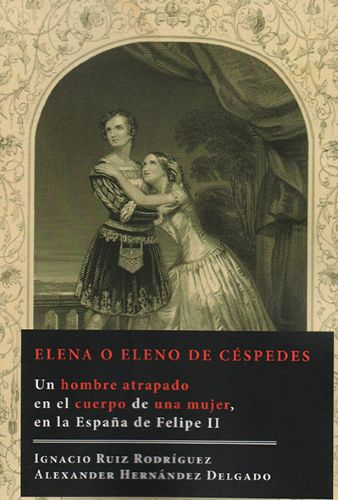
In 1587, a licensed surgeon faced the Spanish Inquisition over a marriage. Céspedes’s defense exposed competing medical claims and the power to decide which accounts of sex would count.
By Matthew A. McIntosh
Public Historian
Brewminate
Introduction: The Examiner Becomes the Examined
Before Eleno de Céspedes married María del Caño in 1586, medical examiners were asked to establish whether the prospective husband was a man. Among those consulted was Francisco Díaz, a surgeon attached to the royal court, whose favorable assessment helped make the marriage possible. During the proceedings that followed in 1587, examinations produced incompatible conclusions, and Díaz himself repudiated his earlier judgment. A relationship entered with ecclesiastical approval became the subject of investigation, while the medical testimony that had supported it required explanation. Céspedes encountered this reversal as a licensed surgeon with knowledge of the practices through which bodily conditions were examined and described. The accused could answer medical claims with arguments drawn from the same learned traditions that informed the examiners.
That professional competence had been acquired through an exceptional passage across the social divisions of sixteenth-century Spain. Born enslaved in southern Spain during the 1540s, Céspedes eventually obtained freedom, worked in several occupations, and established a life as a man before securing authorization to practice surgery. Much of this history survives because the prosecution required an account of the years preceding the disputed marriage. Its details demand careful examination, but they also establish the breadth of experience that Céspedes brought into the interrogation room. Medical books supplied resources for explaining bodily variation, and practical training furnished a vocabulary with which to describe personal experience. When challenged, Céspedes argued that changes in the body belonged within the possibilities of nature. This defense addressed the legal and religious consequences attached to the allegation that the marriage rested on deception. Enslaved origins and racial descriptions also formed part of the identity reconstructed through the proceedings, raising questions about access to professional standing and the credibility available to someone without the protections of an influential family. Explaining that vulnerability requires attention to the circumstances in which such distinctions mattered, rather than assuming that each adverse finding followed automatically from prejudice.
The central problem was how competing accounts of Céspedes acquired unequal authority. A surgical qualification established competence for certain forms of practice; it did not guarantee that its holder’s explanation of personal anatomy would prevail before a court. Ecclesiastical officials, civil magistrates, and inquisitors approached the marriage through different responsibilities, while the medical practitioners they consulted supplied judgments whose implications exceeded the examination itself. Following those decisions reveals how uncertainty about a body could coexist with binding determinations about the life its owner was permitted to lead.
The surviving dossier places limits on how confidently that process can be reconstructed. Testimony emerged through questions directed toward suspected offenses, and statements were recorded within procedures over which the accused exercised little control. Céspedes’s explanations nevertheless deserve attention as informed contributions to the dispute, including when they served the immediate purpose of avoiding punishment. Their defensive setting does not make them worthless, just as an examiner’s official position does not make a finding conclusive. Each account must be considered in relation to its circumstances and to the other evidence available. The use here of Eleno de Céspedes, followed by the surname, identifies the person whose masculine life and marriage came under scrutiny; variations in naming within the documents will be examined where they shaped the case. Neither a confident modern diagnosis nor unquestioning acceptance of the tribunal’s classification can resolve the evidentiary difficulties. What the record permits is a close investigation of how a knowledgeable practitioner sought recognition, how earlier approvals became vulnerable to reconsideration, and how judicial decisions gave interpretations consequences that Céspedes could contest but could not finally control.
Born Enslaved: Family and Freedom in Granada
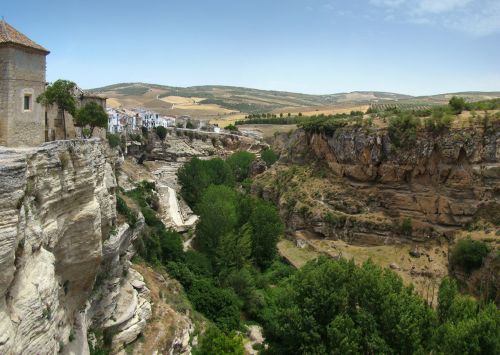
Francisca de Medina appears in her child’s testimony as an enslaved woman belonging to the household of Benito de Medina in Alhama de Granada. Céspedes was born there around 1545–1546, although the approximate ages supplied during interrogation leave the year uncertain. Asked about parentage, Céspedes named Pero Hernández, a local farmer who possessed a mill, as the father, and identified a brother, Juan de Medina. Knowledge of the family beyond that generation was sparse. Céspedes could give neither the names nor the histories of the grandparents. These answers preserve a family whose members were connected through relationships that the household’s ownership arrangements did not fully describe. Yet Francisca’s position directly affected the circumstances into which her children were born.
Slavery was an established feature of the region’s economy. Enslaved people worked in domestic service and in artisanal production, living among free inhabitants whose households depended on their labor. Granada’s connections with Mediterranean captivity and the African slave trade brought people of different origins into this system; birth within a slaveholding household supplied another means of perpetuating it. Under the inherited Castilian legal framework, a child born to an enslaved mother could remain enslaved despite having a free father. Identifying Hernández as the father supplied no automatic exemption from Francisca’s condition. Baptism likewise did not ordinarily extinguish an owner’s claim, and Christian religious participation coexisted with continuing bondage. The familiar description of slavery as “domestic” identifies where much of the work occurred, but it should carry no implication of gentleness. Residence within a household placed servants near their owners while leaving them subject to demands they possessed limited means to refuse. The names preserved in the family history show how ownership entered everyday identification. Francisca and Juan bore the surname Medina, while Céspedes explained that the name Elena de Céspedes came from Benito’s wife, out of consideration for whom the child had been named. Such naming connected dependents to an owning household without establishing biological descent from its members. That distinction matters because some historians have proposed that Benito himself fathered Céspedes, an interpretation consistent with the broader vulnerability of enslaved women to sexual exploitation but unproved in this specific case. Childhood service extended the household’s reach beyond Alhama. Céspedes recalled accompanying the owners’ daughter, Ana Daça, to Vélez Málaga after her marriage and serving her for approximately two years. The move followed an arrangement within the owning family; it offers an early example of geographical movement whose purpose was determined by someone else’s needs.
Descriptions of appearance require a different kind of scrutiny. Céspedes called Francisca morena and elsewhere negra, while witnesses applied mulata to Céspedes. These terms placed the family within distinctions that associated perceived color with ancestry and social position, but their meanings were neither uniform nor precise enough to yield an uncontested genealogy. Aurelia Martín Casares and Magdalena Díaz Hernández have emphasized the difficulty of deriving a specific ethnic origin from this vocabulary. Accounts identifying Francisca confidently as Morisco or assigning her an African birthplace go beyond what these descriptions establish. Morisco identity concerned descent from Muslims converted to Christianity, whereas the language of color operated across several populations; the two forms of classification could intersect without becoming interchangeable. A related uncertainty concerns the marks on Céspedes’s cheeks, frequently described in later biographies as slave brands. During questioning about whether these were signs of enslavement, Céspedes attributed a mark to a childhood carbuncle and denied having belonged to anyone, an answer that sits uneasily beside the acknowledgment elsewhere of enslaved birth. The discrepancy deserves preservation. It records an attempt to explain a visible feature under interrogation, rather than furnishing secure grounds for choosing either branding or illness as an established explanation.
Emancipation is similarly difficult to place on a firm timetable. Céspedes remembered that the master had declared the child free, but the account supplies no clear date or complete description of the arrangement. Continued references to an amo, or master, complicate efforts to determine exactly when service ceased to rest on ownership. Nor does the later marriage to Cristóbal Lombardo independently settle the matter. Enslaved people could contract marriages without thereby obtaining freedom. The available evidence supports a passage out of bondage while leaving its timing less certain than a neatly dated biography would suggest.
The return to Alhama brought a more tangible development in the means of earning a living. According to the life account, Benito’s wife had died by the time Céspedes returned, and weaving instruction subsequently took place in Francisca’s home under a master named Castillo. This detail restores the mother’s household to a history often organized around the interventions of owners and officials. It also locates occupational learning before the better-known acquisition of surgical expertise. Textile work provided skills that Céspedes could carry beyond the immediate family circle, although competence in a trade offered no assurance of steady employment. Research on Granada’s freed population shows that legal release could coexist with dependence on former owners or other household employers for survival. Freedom nevertheless changed the basis on which labor could be claimed and made a wider range of arrangements possible. In Céspedes’s early history, its practical significance emerges through the gradual acquisition of work that could support movement away from the household into which the child had been born.
Becoming Eleno
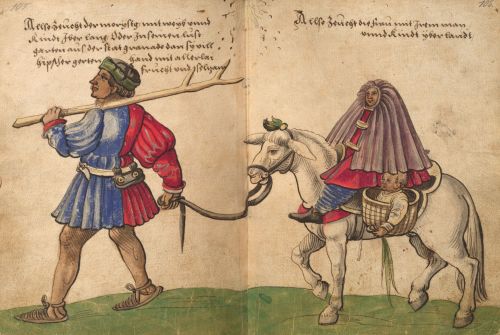
At approximately sixteen, Céspedes married Cristóbal Lombardo, a mason associated with Jaén, in a union reportedly arranged by the parents. The couple lived together for about three months before Lombardo departed, leaving Céspedes pregnant. Their son, also named Cristóbal, subsequently entered the care of a household in Seville headed by Marco Antonio, whom Céspedes described as a foreigner who leased an oven. The testimony supplies no secure basis for identifying this man as a close friend or explaining the terms under which he received the child. When questioned in 1587, Céspedes did not know whether the son was still alive. That admission places a substantial rupture within the family history, but the circumstances surrounding the separation remain largely inaccessible. Céspedes also reported that Lombardo had died in Baza shortly after the marriage, a claim whose later legal importance would far exceed the few words devoted to it in the autobiographical account.
Childbirth acquired another significance when Céspedes explained the development of masculine bodily characteristics. In that account, the physical exertion of delivery exposed a previously concealed part of the body, beginning changes that subsequently shaped intimate experience. The statement gave a bodily history to a life that observers might otherwise describe entirely through clothing and occupation. Yet the sequence Céspedes supplied elsewhere separated childbirth from the later decision to wear men’s garments. Keeping those episodes distinct allows the account of physical experience to retain its importance without compressing several years into a single moment of transformation.
The first movements beyond Alhama were sustained by textile work. Following the period surrounding the marriage and the mother’s death, Céspedes went to Granada, where residence in a cleric’s household provided an opportunity to learn hose making. Weaving followed, but insufficient work prompted a turn toward tailoring and hosiery, occupations that continued in Sanlúcar de Barrameda and then Jerez de la Frontera. Céspedes remembered Sanlúcar as a place where the trade supplied enough to live on, an observation that gives these journeys an economic purpose without explaining every departure. Skills could be offered again in another town when employment faltered or personal circumstances deteriorated. Francisco Vázquez García and Richard Cleminson have emphasized the importance of occupational movement in questioning assumptions that people in early modern societies possessed little capacity to alter their circumstances. Céspedes’s itinerary supports that argument at the level of daily subsistence. Maintaining a livelihood required finding another place to work, rather than securing one permanent position. Much of this experience preceded the adoption of masculine dress, making it difficult to explain the entire working life as an opportunity created by that change.
Violence in Jerez supplied the immediate explanation Céspedes later gave for changing clothes. A confrontation with a man named Heredia involved an attack with a dagger and resulted in imprisonment; the account does not establish a formal duel or describe an injury with sufficient clarity to reconstruct the encounter. After release, threats from Heredia and his associates prompted Céspedes to leave women’s clothing behind and travel to Arcos dressed as a man. The explanation connects the decision to a particular danger, although it cannot account by itself for the subsequent duration or personal significance of masculine life. Naming also developed less abruptly than a familiar account of “becoming Eleno” might suggest. Céspedes explicitly recalled using the surname alone at this stage, without a given name such as Pedro, Eleno, or Juan.
Arcos brought employment as a farmhand and then as a shepherd, followed by another arrest. The suspicion was that Céspedes was a monfí, a term associated with Morisco outlaws, which introduced an accusation of dangerous religious and political affiliation into the circumstances of an itinerant worker. It provides evidence of how Céspedes could be classified by others without establishing the ancestry or allegiance alleged. Release followed an intervention by the licentiate Vanegas, a man from Alhama who recognized the prisoner and privately informed the magistrate of that earlier identity. Familiarity with the place of origin helped resolve one accusation while exposing Céspedes to another form of supervision. During subsequent service in the household of the priest Juan Núñez, the magistrate ordered a return to women’s clothing, and Céspedes recalled complying by putting on a skirt. Several months passed before a dispute with the priest ended that employment. This episode interrupts any narrative of uninterrupted concealment. Someone could work and travel in masculine dress, be recognized through an earlier history, and then be compelled to alter appearance again. The results depended on encounters with people able to intervene.
The rebellion in Granada, beginning in 1568, created a route into soldiering and renewed male presentation. Céspedes described joining the company of Luis Ponce de León, returning to Arcos when that company dispersed, and subsequently serving again as a paid substitute for a resident selected for military duty. The second enlistment makes the financial attraction explicit, while the account as a whole situates military employment within the Alpujarras conflict of 1568–1571. Participation also placed Céspedes on the side of royal forces suppressing Morisco resistance, complicating a history that might otherwise assign the formerly enslaved person an uncomplicated position among the persecuted.
Between the two periods of service, Céspedes resumed tailoring and underwent an occupational examination in Jerez. According to the testimony, the resulting credential used the feminine designation sastra, even though Céspedes practiced publicly in men’s clothing. Authorization to perform the trade coexisted with a description its holder did not consistently enact in daily life. The credential recorded a distinction that colleagues and employers could accommodate without agreeing on how Céspedes should be understood in every setting.
After the war, tailoring again supplied continuity through further moves across Andalusia, including a return to Alhama, where Céspedes kept a shop. These were communities in which earlier acquaintances might still be encountered, so movement offered no dependable escape from personal history. Relationships with women likewise crossed the changes in dress. Céspedes described attraction and sexual encounters during periods when women’s garments were still being worn. Economic advantage explains only part of the developing masculine life. Work among men provided settings in which that life could be sustained, while intimate attachments and Céspedes’s account of the body gave it meanings beyond employment. By the eventual move to the court at Madrid, experience had accumulated in negotiating the responses of employers and local officials, sometimes through compliance and sometimes through departure. Céspedes arrived there as a practicing tailor; a friendship with a Valencian surgeon would open an occupation requiring a different kind of training.
Becoming a Surgeon: Licensing and Professional Standing
In Madrid, surgical instruction began through the hospitality of another practitioner. Céspedes recalled forming a friendship with an unnamed surgeon from Valencia, entering his house as a guest, and receiving lessons in healing. The account presents unusually rapid progress, claiming that within a short time the pupil could treat patients as effectively as the teacher. That assertion belongs to Céspedes’s presentation of personal ability, rather than an independently documented assessment of results. Nevertheless, the relationship establishes an important feature of the training. Knowledge was acquired through instruction from someone already practicing the occupation. Describing Céspedes simply as self-taught obscures this exchange and the subsequent experience gained in a hospital. The decision to abandon tailoring followed the discovery that healing offered a useful means of livelihood.
The occupation entered through that relationship formed part of a medical world with several routes to competence. University-trained physicians possessed educational distinctions that supported claims to superior learning, while surgical preparation could include instruction under a practitioner and sustained experience treating patients. Some surgeons also pursued university studies, and the association of surgery with manual work should not be mistaken for an absence of intellectual demands. Reading could accompany practical training, just as a formally educated practitioner still needed experience beyond books. Barbers and bloodletters performed activities that overlapped with surgical work, although the authorizations held by certain individuals could differ. Apothecaries maintained another area of expertise through preparing and supplying medicines. María Luz López Terrada’s research on medical pluralism cautions against reducing this variety to a division between legitimate university medicine and an undifferentiated remainder of ignorance or fraud. Céspedes’s progress makes better sense within an occupational environment where learning outside a university could lead toward recognized practice.
Hospital work extended the initial instruction. Céspedes described approximately three years assisting and practicing surgery in a hospital at the court, without providing enough information in that passage to identify the institution securely. The statement indicates sustained participation in treatment, although it supplies no register of operations or individual patient histories. Such experience offered repeated occasions to connect instruction with the demands of attending sick and injured people. Its importance lies in the accumulation of practice over time, which gives a different measure of preparation from the earlier claim of almost immediate mastery.
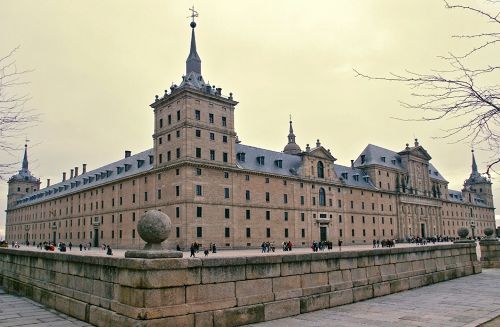
The distinction between treating patients and possessing authorization became significant after Céspedes went to El Escorial to attend Obregón, identified as a servant of the king. This connection placed the practitioner within reach of someone attached to the royal household, but it did not constitute appointment as a royal surgeon. Céspedes then continued treating people in the surrounding mountain districts until an accusation of practicing without examination prompted a return to the court. According to the testimony, examination produced two qualifications, one authorizing bleeding and purging and another permitting surgery. The account does not supply a dependable year for this event, and its approximate intervals should not be converted into a precise calendar. The sequence nonetheless separates an initial period of treatment from the acquisition of credentials. Within Castile, the Protomedicato formed an important part of the machinery for examining practitioners and policing unauthorized activity, alongside authorities whose responsibilities could overlap or conflict with its own. This was a regulatory system operating through some jurisdictions, rather than a uniformly effective administration directing medical work throughout the monarchy. Céspedes’s response to the complaint illustrates how someone already earning a living through treatment could seek to regularize that work by submitting to examination.
Books contributed another dimension to professional preparation. When asked about education, Céspedes reported being able to read and write, having undertaken no formal studies, and possessing medical and surgical volumes purchased together from a graduate. The distinction between formal schooling and other learning is essential here. The answer accompanies evidence of substantial engagement with technical literature. Paloma Moral de Calatrava has identified vernacular works associated with the collection, including Bernardino Montaña de Monserrate’s anatomical writing and Guy de Chauliac’s surgical manual. These brought different periods of medical learning into the same reader’s reach, with a recent anatomical work available alongside a text whose influence extended back to the fourteenth century. Possession of books in Latin, also mentioned in the testimony, establishes neither complete command of that language nor an inability to use those volumes. The strongest evidence concerns access to medical writing and the capacity to employ some of its terminology. Sophia Blea Nuñez’s examination of the inventories further places the books among the material possessions of a working household, where medicinal substances also formed part of everyday provision.
After qualification, Céspedes continued treating patients at the court and in places including Cuenca and La Guardia. Journeys between communities remained part of the occupation, while a later period accompanying soldiers involved attending the wounded. The pattern shows a practitioner whose services could be carried to patients and whose livelihood depended on obtaining work in successive locations. A credential could establish authorization, but employment still required people willing to engage its holder. The reported career involved maintaining relationships with households and other sources of demand, rather than entering one permanent institutional post.
For a person born enslaved, obtaining surgical qualifications represented a substantial expansion of occupational possibilities. Yet the nature of the achievement needs to remain specific. Authorization to perform defined activities conferred a standing that a university medical degree or royal appointment would have established differently; none of those distinctions should be silently substituted for another. Nor does the account of examination show that officials investigated every aspect of Céspedes’s family background or previous life before granting approval. It establishes access to a recognized occupation while leaving the circumstances of admission only partially described. Living as a man placed Céspedes within the predominantly masculine professional relationships through which this career developed, but the evidence does not isolate that circumstance as the sole explanation for success. The teaching received and the hospital experience also demand their place in the account. By the time marriage brought further scrutiny, Céspedes had acquired both practical familiarity with treatment and written resources for discussing the body, forms of preparation that would shape the answers offered when other practitioners claimed to know it better.
What Learned Medicine Allowed: Sexual Difference and Bodily Change
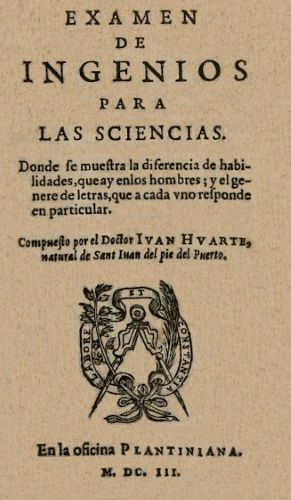
In his Examen de ingenios para las ciencias, first published in 1575, Juan Huarte de San Juan described male and female reproductive organs through correspondences inherited from Galenic anatomy. Structures visible outside a man’s body could, in this explanation, be compared with structures retained within a woman’s. Their different positions reflected differences in bodily heat, which helped determine how fully the organs developed and where they appeared. Huarte extended this reasoning to the possibility of transformation, treating reports of women becoming men as events that deserved consideration within natural philosophy. Such an account offered a contemporary reader a way to understand changes that would otherwise seem to violate the distinction between the sexes. It was one explanation among several circulating in the period, with neither its anatomical premises nor its implications commanding universal agreement.
The physiological language supporting these arguments concerned the material constitution of bodies. Relative heat and moisture helped explain differences in development, while accounts of generation addressed how parental contributions produced a child’s characteristics. Galenic traditions could attribute reproductive seed to both women and men, although they assigned unequal powers to those contributions. Aristotelian explanations instead emphasized the formative action of male semen upon material supplied by the female, commonly identified with menstrual blood. These were substantial disagreements about reproduction, not interchangeable versions of a single theory. They also affected how writers explained resemblance between parents and children or the formation of an unusual body. A physician might combine elements of different traditions, accepting one authority on the organs while preferring another on conception. The result was an intellectual setting in which disagreement could occur within a broadly shared commitment to explaining bodily processes through nature. The category of the “hermaphrodite” addressed a related problem; the apparent presence of characteristics associated with both sexes in one person. Some explanations located its origin in the conditions of conception or development before birth. A medieval account that remained available in print divided the uterus into seven compartments and associated the central position with the formation of a child possessing mixed sexual characteristics. This scheme supplied a spatial explanation for bodily variation, connecting an exceptional outcome with a location in the womb. It did not establish that every person placed in the category possessed two complete, equally functional reproductive systems.
Even the books associated with Céspedes’s collection offered conflicting accounts of that internal arrangement. Johannes de Ketham’s Compendio de la humana salud retained the compartmental scheme, whereas Bernardino Montaña de Monserrate rejected uterine divisions in his Libro de la anothomia del hombre of 1551. As Paloma Moral de Calatrava has shown, Montaña drew upon the anatomical criticism associated with Andreas Vesalius while preserving other inherited explanations of bodily function. He continued, for example, to connect maternal milk with menstrual blood, although he expressed uncertainty about whether women produced reproductive seed. Accepting a revised description of one organ did not require abandoning every older physiological proposition. Nor did the rejection of uterine compartments settle all questions about unusual genital formation. A reader comparing these works encountered different judgments about which structures existed and how their operation should be explained. The collection provided resources for argument without constituting a consistent doctrinal handbook.
Reports of transformation after birth supplied another kind of evidence, one sustained by the authority of named writers and the accumulation of remarkable examples. Pliny the Elder’s Natural History described individuals said to have changed from female to male, including a person at Argos whose earlier marriage to a man was followed by the appearance of masculine characteristics and a subsequent marriage to a woman. Elsewhere in the same passage, a reported change at Casinum led to removal to a deserted island on the instructions of religious diviners. These accounts joined an asserted physical event to markedly different social consequences. Their continuing availability gave later readers precedents for discussing change, but their presence in an authoritative work did not make them verified anatomical observations. Huarte’s willingness to consider transformation belonged within a much longer history of collecting and interpreting such reports. For a sixteenth-century practitioner, the question could involve deciding whether an account described the emergence of a previously concealed structure, an alteration in bodily condition, or something incorrectly reported. Those alternatives allowed considerable disagreement even among readers prepared to accept that extraordinary developments sometimes occurred.
A reported marvel could remain part of nature. The designation preternatural offered a way to discuss events outside its usual course without placing them beyond its capacities, while providential interpretation could give an unusual birth additional religious significance. Medical explanation and the search for an omen could address the same occurrence through different questions. The historical language of “monsters” likewise encompassed forms whose rarity invited attention, rather than supplying one consistent judgment about their cause. Lorraine Daston and Katharine Park’s work on wonders demonstrates how these exceptional cases could provoke inquiry into nature’s range. Recognizing that range supplied no automatic assurance of favorable treatment for the person whose body attracted notice.
Modern historiography has sometimes made this setting appear more uniform than the surviving medical literature permits. Thomas Laqueur’s influential Making Sex characterized a long tradition in which female anatomy was understood through a hierarchy of resemblance to the male, contrasting it with the later prominence of fundamental sexual difference. The resulting “one-sex model” has helped historians examine the relationship between anatomical description and social rank. Its explanatory reach has been challenged through close study of the texts. Michael Stolberg identified substantial attention to specifically female anatomy among physicians of the sixteenth and early seventeenth centuries, including descriptions of the skeleton and reproductive organs that resisted reduction to an imperfect masculine counterpart. Park has more recently argued that the internal–external model belonged to textual traditions whose reception changed over time, with continuing vernacular circulation differing from its standing in learned medicine. These objections leave anatomical correspondence as an important historical explanation while requiring greater precision about who used it. Céspedes’s access to a text containing such an account demonstrates its availability to that reader; it cannot establish what every contemporary examiner believed. Similarity between organs could also be asserted alongside firm distinctions in reproductive function and sharply unequal expectations of women and men.
Marriage required decisions that these accounts of formation and change could not supply on their own. Inherited legal reasoning could accommodate a person described as possessing characteristics of both sexes by asking which sex predominated, thereby assigning that person a position within existing distinctions. The acknowledgment of variation did not necessarily establish a separate, unrestricted legal status. It raised further questions about which features should determine the applicable obligations and permissions, especially when sexual capacity was at issue. A medical writer might explain how an unusual configuration arose, while a magistrate or ecclesiastical official needed to determine what conduct could lawfully follow from it. Céspedes would enter the marriage proceedings with explanations that made bodily change discussable within learned terms. Whether any of those explanations justified marrying María del Caño remained a further question, carrying consequences that a medical precedent alone could not decide.
Permission to Marry: María del Caño and the First Examinations
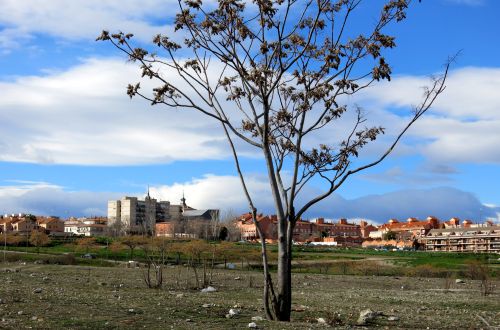
The relationship with María del Caño developed during a period in which Céspedes needed care. While practicing in the vicinity of Ciempozuelos, Céspedes fell ill and stayed in the household of María’s father, Francisco del Caño. The later autobiographical account described kindly treatment there and an attachment that became reciprocal. Céspedes subsequently approached María’s parents about marriage and remembered receiving a favorable answer, expressed conditionally through reference to God’s will. This is principally the prospective husband’s account of the courtship, rather than a detailed record of María’s own deliberations. Nevertheless, it places the proposed union within an existing household relationship and gives affection a place in a history subsequently dominated by examinations. María’s parents accepted the prospect sufficiently for Céspedes to begin seeking ecclesiastical permission.
The procedure connected this family agreement to a wider system of matrimonial oversight. In 1563, the Council of Trent’s decree Tametsi had reinforced public requirements intended to expose impediments and make marriages more readily provable. Where the decree operated, contracting a valid marriage required the presence of the parish priest, or another appropriately authorized priest, together with witnesses. Ordinarily, announcements of the intended union were to precede it, allowing objections to emerge before the parties married, and the parish priest was to preserve a written record. These provisions addressed practical injuries associated with concealed unions, including the difficulty of proving an earlier marriage after one spouse departed. They also increased the importance of establishing that applicants were free to marry. Parental acceptance mattered socially, but Trent expressly rejected the proposition that its absence alone invalidated a marriage. The consent of the contracting parties remained indispensable, even as ecclesiastical officials supervised the circumstances in which it acquired legal effect. Nothing in this ordinary procedure prescribed a genital examination for every couple; Céspedes’s application prompted that additional scrutiny because a specific doubt arose.
In Madrid, the vicar Juan Bautista Neroni questioned Céspedes’s capacity to appear as the prospective husband after observing a beardless face and asking whether the applicant was a capón, or castrated man. According to Céspedes’s subsequent account, the response was an offer to submit to inspection. Three or four men then viewed Céspedes in a nearby house and concluded that the applicant was male and had not been castrated. The narrative specifies that this examination was confined to the front of the body because Céspedes would not permit inspection from behind. Neroni allowed the marriage announcements to proceed, but publication brought another claimant into the application. Isabel Ortiz, a widow living in Madrid, asserted that Céspedes had previously promised to marry her. The account indicates that this matter was addressed before the vicar, without preserving enough detail to reconstruct a complete judgment about the alleged promise. A further objection followed. Céspedes was reputed to be both male and female. The initial inspection had supplied permission to advance the application without ending the possibility of renewed challenge.
The response to that report involved further petitions and changes of location. Ordered to undergo another assessment in Madrid, Céspedes sought to have it performed in Toledo instead, explaining that being well known in Madrid made examination there unwelcome. This was an attempt to alter the place of inspection, rather than an unqualified refusal to be examined. The petition did not secure the desired transfer, and the matter was referred back to Madrid. During an intervening stay in Yepes, where Céspedes treated patients, a separate examination was arranged under the authority of the town’s magistrate. The later testimony described ten participants, including medical practitioners and other men considered worthy of credit, whose observations supported the absence of female genitalia. That account also associated the inspection with preparations intended to alter the genital region through astringent washes and fumigations. These details belong to statements recorded during the prosecution of 1587 and should retain that attribution; they provide an explanation offered afterward for an earlier appearance, rather than an independently witnessed account of every preparation or its effect. The resulting document could nonetheless be carried to Madrid as favorable evidence. Obtaining permission required Céspedes to move between jurisdictions while keeping the reports generated by one examination available for consideration at another.
The Madrid assessment by Antonio Mantilla and Díaz in 1586 supplied further support for proceeding. Their findings identified Céspedes as male and excluded the classification of hermaphrodite, a distinction that narrowed the explanation upon which approval rested. The vicar also required acknowledgment that the applicant presenting the medical evidence was the person whom the practitioners had examined. This connected the report to an identifiable individual seeking a particular permission. Once those requirements had been satisfied, Céspedes received authorization to marry María.
The account distinguishes two stages in completing the union. Marriage was contracted in Ciempozuelos, followed by the nuptial blessing, or velación, at the parish church of San Benito in Yepes. The first should not be reduced to a modern engagement, nor should the ceremonies be counted as two separate marriages. Contracting the bond and receiving its solemn blessing were distinguishable acts within the matrimonial practice of the period. Céspedes named Agustín del Castillo and his wife, María de Paz, among those who participated, recalling the presence of other prominent people whose names were no longer remembered. For María, ecclesiastical approval subsequently formed part of the explanation of why she had understood herself to be marrying a man. That reliance does not furnish complete access to what she knew about every rumor, but it establishes the significance she attached to the permission granted. She entered the relationship as a recognized wife after objections had been raised and examinations undertaken. The couple’s married life in Yepes began with public ceremonies and the support of findings that officials had accepted as sufficient.
From Recognition to Accusation: The Proceedings Begin in 1587
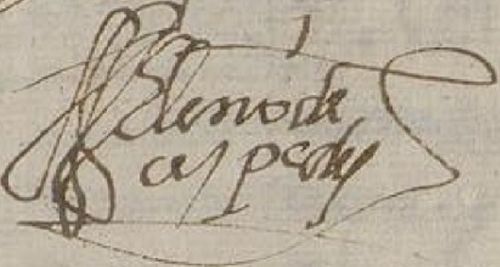
Céspedes explained the move from Yepes to Ocaña through an opportunity to practice surgery in a town that lacked a surgeon. The relocation brought the married couple into contact with people whose knowledge extended beyond the circumstances under which the union had been approved. Among them was an official named Ortega, whom Céspedes remembered as an auditor with the army during the Granada campaign. According to the autobiographical testimony, Ortega wrote to the governor about that earlier acquaintance and the report that Céspedes possessed characteristics of both sexes. His intervention connected memories of military service with questions about the marriage to María. By June 1587, Céspedes was detained under the authority of the government at Ocaña. Familiarity with the past, which had previously helped secure release during the arrest at Arcos, now supplied information that could support prosecution.
The initial proceedings belonged to secular justice. Their allegations treated Céspedes as a woman who had assumed masculine appearance and engaged in unlawful sexual conduct with María, thereby challenging the basis upon which the couple had married. An accusation of sodomy placed the relationship within a penal category carrying potentially capital consequences, although accusation alone neither established the offense nor determined its punishment. The inquiry required an account of what had occurred between the spouses and how the alleged acts had been performed. Descriptions of anatomy became relevant to establishing the conduct charged, while the claim to be María’s husband could itself be presented as evidence of deception. The public marriage complicated the investigation because its legitimacy had already been considered by ecclesiastical officials and supported by medical reports. Prosecutors faced a union whose documentary history could not simply be omitted. But they could question the accuracy of the information upon which permission had rested and investigate whether the earlier approvals had been improperly obtained.
Detention also exposed the household to immediate economic losses. An inventory dated July 1, 1587, recorded possessions placed under official control, including books that formed part of Céspedes’s working resources. As Sophia Blea Nuñez’s study demonstrates, the sequestration and attempted sale of goods connected the prosecution to the costs of imprisonment and judicial administration. María was also taken into custody, extending the proceedings to the person whose marriage was being investigated. The couple had to confront questions about their relationship while officials assumed control over property upon which their everyday lives depended.
The Toledo Inquisition entered the case through offenses it considered within its competence. In a later summary, the tribunal explained that it had ordered the prisoner and the existing proceedings sent from Ocaña because some of the alleged crimes belonged to the Holy Office’s jurisdiction. That qualification matters. Ordinary prosecution for sodomy in Castile lay with secular courts, and the authority exercised by inquisitors elsewhere in the monarchy cannot be transferred indiscriminately to Toledo. The marriage nevertheless supplied grounds for examining religious error, especially if it could be represented as contempt for a sacrament. Questions about an earlier marital bond also brought possible bigamy into consideration, while allegations of supernatural deception offered an explanation for how apparently authoritative examinations might have produced unacceptable conclusions. These were different accusations requiring different kinds of proof, even when they drew upon the same events. Clothing could help establish an alleged impersonation; a wedding could be interpreted as an affront to matrimony; an examiner’s favorable report could prompt investigation of fraud or supposed diabolical intervention. Neither bodily ambiguity nor the contemporary category of hermaphroditism was, by itself, equivalent to all these offenses. The transfer changed the legal questions under examination without removing the coercive circumstances in which Céspedes had to answer them.
On July 17, the autobiographical interrogation before the Toledo tribunal began with an oath and a requirement of secrecy. The clerk introduced the prisoner as a woman wearing men’s clothing, giving the record an initial classification before the ensuing explanations had been heard. Questions about ancestry and religious observance placed Céspedes within the tribunal’s customary investigation of a suspect’s life. The account includes the recitation of familiar Catholic prayers as well as information about marriage and occupation. During the following day’s questioning, Céspedes acknowledged having given two statements before the authorities at Ocaña and addressed discrepancies between those accounts and the testimony now being recorded. The explanation attributed differences to shame and fear that secular justice would fail to protect Céspedes’s rights. It does not establish that the accused had requested the transfer, or that the Holy Office offered an unpressured setting in which to speak. The inquisitors linked their customary promises of mercy to full confession, while Céspedes continued to defend the truth of the account given before them. Fresh medical opinions would now be sought to assess both the body presented in custody and the history through which Céspedes explained it.
Conflicting Examinations: Francisco Díaz and the Problem of Expert Credibility

Francisco Díaz entered the Toledo proceedings with credentials that made the contradiction between the examinations important. A surgeon to Philip II and an established medical author, he possessed standing that had strengthened the application for permission to marry. His Compendio de chirurgia, published in 1575, had already addressed an unusual growth of female genital tissue described as nimphea, placing questions of exceptional genital formation within his published professional interests. As Paloma Moral de Calatrava emphasizes, such conditions belonged to the medical knowledge available to the participants in the case. Díaz’s favorable declaration of 1586 had also been anatomically specific; it described a penis and testicles and expressly invoked examination by sight and touch. Once subsequent practitioners disputed that description, the investigation necessarily concerned the reliability of a royal surgeon’s sworn observations as well as the status of the person he had examined.
The report delivered by the Toledo practitioners on August 3, 1587, pursued a more ambitious question than the identification of the anatomy before them. Doctors de la Fuente and Villalobos, accompanied by the surgeon Juan Gómez, first heard Céspedes’s recorded explanations and then inspected the prisoner in the courtyard of the inquisitorial jail. Their instructions required them to judge whether Céspedes could previously have possessed the male organs described in that testimony. They classified the present anatomy as female and argued that the absence of scars contradicted the reported emergence, injury, and loss of external male structures. An enlarged nympha received consideration as a possible bodily variation, although they rejected its presence in this case and denied that such a structure could have performed the sexual acts Céspedes described. These conclusions combined inspection with assumptions about the location, capacities, and expected traces of exceptional organs. The assertion that Céspedes had never been a hermaphrodite extended beyond an observation of the body in custody. Its force depended upon accepting the practitioners’ account of what an earlier condition would necessarily have left behind.
On August 15, Díaz and Juan de las Casas, a physician from Yepes, appeared as witnesses whom Céspedes had requested for the defense. Their previous favorable assessments offered grounds for contesting the adverse findings already assembled. The tribunal nevertheless required them to examine Céspedes again alongside its own practitioners and defend their earlier conclusions according to medical learning. This arrangement placed the witnesses in a difficult position: the testimony upon which Céspedes relied became an occasion for scrutinizing their competence before colleagues whose contrary judgment was already recorded.
Díaz’s answers preserved a striking recollection of the earlier inspection while weakening its evidentiary foundations. He continued to describe having seen a member with the proportions and appearance of male genitalia, but, when asked whether he had touched it, answered that he could not remember. That uncertainty sat uneasily beside the original certificate’s explicit statement that manual examination had occurred. Questions about remuneration introduced another possible explanation for the favorable report; Díaz acknowledged receiving four reales and subsequently six, although payment for professional work did not itself establish bribery. Following the renewed inspection, he and Casas attributed their earlier conclusions to deception, potentially involving an artificial arrangement that concealed female anatomy while displaying apparently male organs. They also acknowledged that their previous scrutiny had been less detailed than the examination now undertaken. Their explanation of a concealing device was conjectural. The testimony reproduced in the documentary account describes what they thought must have happened, rather than an object recovered and demonstrated to the tribunal. References to demonic illusion accompanied these proposed means of deception, allowing the witnesses to maintain that they had reported appearances in good faith. The resulting account relocated responsibility for the discrepancy onto Céspedes without establishing precisely how the alleged deception had worked.
Antonio Mantilla’s separate appearance on September 1 reveals how firmly the later classification had become embedded in the questioning. Before the renewed inspection, the inquisitor addressed him on the premise that Céspedes was naturally female and could never have been male. Mantilla subsequently identified the prisoner as the same person examined in Madrid, accepted the current adverse assessment, and explained the earlier findings through illusion or deception. When the interrogation raised the possibility of payment or deliberate concealment, he denied having been bribed and insisted that he had been misled. His answers also exposed a limitation in what the original examination had established. He had seen an apparently male organ in a flaccid state and had not tested its capacity for intercourse. He maintained that a different instruction from the vicar would have required an additional investigation according to medical rules. Permission to marry had rested partly upon a report whose author later distinguished anatomical appearance from demonstrated sexual capacity.
Closer inspection and ordinary correction remain plausible elements of these reversals. The later practitioners offered reasons for their judgments, while the earlier examiners themselves conceded limitations in what they had observed; an interpretation centered upon professional self-protection cannot simply disregard those admissions. Nor does the record establish that Díaz or Mantilla knowingly fabricated either assessment. Nevertheless, the hearings made their professional credibility depend upon accounting for a discrepancy within a prosecution that increasingly treated Céspedes’s explanations as fraudulent. Invoking deception offered a way to reconcile the witnesses’ claimed honesty with their incompatible conclusions, and supernatural interference supplied an additional explanation when the physical means remained uncertain. For Céspedes, this reconciliation carried a disadvantage. Favorable medical testimony could be converted into evidence of an exceptional ability to mislead qualified observers. The examinations changed more than the classification entered in the record. They altered the evidentiary value of earlier recognition, requiring Céspedes to explain both the disputed bodily history and the errors now attributed to those who had once certified it.
Céspedes’s Medical Defense: Explaining an Exceptional Body

On November 17, 1587, the defense submitted on Céspedes’s behalf requested acquittal by challenging the prosecution’s account of how apparently male anatomy had been presented to earlier examiners. The pleading denied a demonic pact and asserted that masculine characteristics had predominated when the marriage to María del Caño occurred. It bears the signature of the lawyer José Tello Maldonado, whose participation requires care in attributing its precise language and marginal learning. The surviving document does not allow every argument to be assigned confidently to either client or counsel. Nevertheless, the bodily history upon which it depended had already appeared in Céspedes’s July testimony, before this formal response to the later accusation. The interrogation and the pleading show an accused practitioner supplying explanations that legal assistance organized into a demand for release. Medical knowledge contributed to that effort through a narrative of physical events as well as through assertions about what the evidence could establish.
Childbirth supplied the first event in that narrative, but Céspedes described a process that continued through subsequent surgical intervention. According to the July account, pressure during delivery ruptured a covering of skin near the urinary passage and exposed a small protrusion that became more prominent during arousal. Later, in Sanlúcar de Barrameda, a surgeon named Tapia reportedly identified the condition as hermaphroditism, opened the remaining covering, and cut a restraining band that had kept the emerging organ curved. Céspedes attributed the capacity for intercourse with women to the result of this treatment. The explanatory sequence matters because it represented surgery as releasing and correcting something already present in the body. Tapia’s reported intervention supplied an earlier professional recognition of the condition, preceding the examinations associated with marriage. Moral de Calatrava’s comparison with surgical literature identifies similarities to descriptions of opening obstructed female genitalia and correcting a frenulum, showing how recognizable procedures could be combined within an exceptional personal account. Such parallels establish the narrative’s relationship to available medicine; they do not independently verify the operation or prove that certain passages were copied from books Céspedes owned.
By the time the tribunal heard this history, Céspedes acknowledged that the male organ described in it was absent. The explanation offered a second sequence of events involving bleeding, pain, ulceration aggravated by riding, and the progressive deterioration of the affected tissue. Céspedes said that portions had been cut away gradually and that the final loss occurred during confinement at Ocaña, shortly before the transfer to Toledo.
On July 18, questions about who had provided treatment elicited an answer grounded in personal practice. Céspedes had undertaken the care, using medicinal powders and ointments, including preparations containing lead, together with rose oil. The testimony also stated that healing remained incomplete and requested examination by a physician. In the November pleading, this account explicitly invoked professional standing through the phrase “como zirujano que he sido, y soy,” reaffirming the professional identity upon which the explanation of self-treatment depended. Its immediate purpose was to explain why current appearance differed from the anatomy previously certified. The claim created a serious evidentiary difficulty because the treatment said to explain the discrepancy had also removed the structure whose former existence was disputed. Céspedes maintained that wounds and scabs supported the account, while denying the interrogators’ suggestion that injuries had deliberately been produced to manufacture corroborating marks.
Even adverse testimony about ejaculation received an answer that resisted making a single bodily function decisive. The written defense argued that a failure to emit semen could occur among other men and did not, by itself, establish that Céspedes had never been male. This contention supplemented the July testimony’s affirmative descriptions of urination and sexual function through the claimed male organ. Its purpose was to prevent a disputed detail of sexual performance from deciding the larger question of bodily classification.
Against the allegation of supernatural assistance, the pleading distinguished an occurrence seldom encountered from one contrary to nature. Marginal references invoked Cicero, Augustine’s City of God, and the seventh book of Pliny’s Natural History, placing the claim within a learned discussion of unusual human forms. These authorities supplied precedents for admitting bodily variation into consideration without settling whether Céspedes’s explanation was correct. Burshatin’s study of the defense explains the importance of this appeal. An account grounded in nature could answer the charge that masculine appearance necessarily required illicit intervention. The petition also challenged the quality of the opposing inference, describing statements about demonic deception as opinions rather than demonstrations of a pact. Its argument did not require the tribunal to accept every extraordinary report transmitted by ancient writers. Instead, acknowledged possibilities in natural history were used to contest the claim that the prosecution’s explanation followed inevitably from the body’s unusual history. The submission accordingly maintained that an offense should not be presumed where the alleged pact remained unproved. The requested remedy included a concrete demand concerning the court’s evidence. The earlier sworn examinations should be brought into the proceedings and used in deciding the case. The defense claimed that the first statements deserved precedence over the experts’ later reversals, presenting this as a position supported by prevailing legal opinion. That was an argument advanced for Céspedes, whose acceptance by the tribunal cannot be assumed. Alongside the certificates, the pleading invoked the testimony of women who had experienced Céspedes as a sexual partner and regarded the relationship as intercourse with a man. The crucial period was the time of the second marriage, when masculine predominance allegedly permitted a union with a woman. The earlier marriage to Cristóbal Lombardo was assigned to a period of female predominance, followed by the asserted death of that husband. Through this chronology, the defense sought to explain both marriages within existing matrimonial requirements, making bodily change and the termination of the first bond essential to its account of lawful conduct.
One exchange during the July interrogation reveals clearly how Céspedes claimed a place within medical discussion. Asked to describe the form of the testicles previously reported, Céspedes used gestures that the record describes as difficult to understand and then insisted that a physician would comprehend the explanation. The difficulty recorded here concerned communication across different kinds of expertise, even before anyone decided whether the description was true. Céspedes appealed to the possibility of professional understanding while remaining subject to officials who controlled how the answer entered the record. The defense deserves attention as an exercise of agency under prosecution, even where its anatomy cannot be reconstructed securely. Its medical detail could express experience, draw upon reading, or serve immediate legal needs, and the surviving testimony does not reliably separate those contributions. What can be established is the insistence that the tribunal consider a history of bodily alteration and treatment before treating the marriage as a deliberate violation of the faith.
A Husband Known through Marriage: María del Caño and Other Witnesses

María del Caño’s account of her marriage began from a claim that investigators repeatedly challenged: she had understood Céspedes to be a man. Her testimony described sexual relations that, to her, confirmed the position of husband. Officials wanted to know whether that understanding could remain credible after months of sharing a bed. Because María faced proceedings of her own, her answers bore directly upon whether she would be treated as an accomplice. She entered the record as someone defending her own conduct while providing evidence about the person she had married.
Her recorded answers complicate any description of a wife who had never noticed grounds for uncertainty. María acknowledged hearing before the wedding that Céspedes possessed characteristics of both sexes, and she described repeated efforts to obtain closer access to the body about which others had spoken. She wanted to see and touch with the freedom she had heard other women enjoyed with their husbands. Lisa Vollendorf draws attention to what this statement preserves beyond its immediate judicial purpose. Women discussed sexual experience, and María expressed a desire to participate in the forms of intimacy described in those conversations. Her requests involved curiosity and expectations about married life, even as they answered an existing rumor. On one occasion, she said, she felt an indistinct bulge through Céspedes’s shirt while Céspedes slept; on another, a briefly lifted shirt allowed too little time for the closer inspection she sought. Céspedes’s own testimony likewise acknowledged refusing the fuller examination María wanted, while María’s account associated those refusals with appeals to modesty. That language placed limits upon her access within the marriage, giving the dispute an interpersonal dimension that an exclusive emphasis on resistance to prosecution would miss. María nevertheless maintained that, having known no other man sexually, she had believed that other men might be formed in the same way. The investigators answered with features they considered incompatible with her professed belief, including Céspedes’s beardlessness and pierced ears. Their questions attempted to turn bodily signs into proof that she must have recognized a woman and knowingly married one. Knowledge that a rumor existed was not equivalent to an admission that she had accepted the classification the investigators now imposed. The testimony leaves room for defensive calculation, but its potential usefulness to María does not establish that her stated understanding was false.
Investigation reached María’s body as well. On June 27, 1587, matrons examined her in the Ocaña jail and reported findings they interpreted as evidence of previous intercourse. Their conclusions became part of the effort to establish the acts charged against the couple, although such an inspection could not independently determine Céspedes’s former anatomy. Women participated in the proceedings through sharply different positions. María underwent compulsory scrutiny, while the matrons supplied judgments that officials could use against her. Her separate prosecution also continued alongside Céspedes’s inquisitorial case. When Céspedes named María as a favorable witness in September, she remained imprisoned at Ocaña, and material from her own proceedings was copied into the Toledo record. Her appearance as a witness should be read together with the continuing vulnerability of an accused spouse.
Isabel Ortiz supplied a different basis for identifying Céspedes as a man. The Madrid widow had earlier asserted a promise of marriage, yet her subsequent deposition offered testimony favorable to Céspedes’s account of male sexual capacity. As Blea Nuñez documents from the trial papers, Ortiz affirmed male anatomy and explained that intercourse with Céspedes had resembled intercourse with her deceased husband. Where María emphasized her lack of previous experience, Ortiz explicitly reasoned from comparison. Their accounts cannot be reduced to an identical story of feminine innocence or uniform sexual ignorance. Nor should Ortiz’s earlier claim upon Céspedes automatically make her a hostile witness; in the testimony at issue, she supported the person whose proposed marriage she had once challenged. Her comparison concerned an encounter that the official examinations could not reproduce, interpreted through experience that she considered sufficient grounds for recognizing a man. Its implications remained disputable, since reported sexual performance did not establish every anatomical claim made in the defense. Other relationships mentioned by Céspedes require a different evidentiary description. Naming Ana de Albánchez or women encountered at Arcos does not turn Céspedes’s recollections into independent depositions from those partners. Keeping that distinction prevents a list of reported relationships from becoming an assumed consensus among witnesses. María and Ortiz matter because their recorded explanations show how each arrived at the judgment she defended.
The household itself offers another way to understand what María’s marriage encompassed. Blea Nuñez’s examination of the inventories places the couple in a room in Juan González’s property, where garments associated with women’s dress were listed alongside Céspedes’s books and medicinal materials. A coif and a woman’s shirt suggest María’s presence within a household whose surviving history is often organized around the surgeon’s achievements and disputed body. An unfinished stocking and yarn also preserve evidence of textile work, although the entries do not identify who was doing it. These objects cannot establish the couple’s emotional happiness, and their individual ownership is not always recoverable. They nevertheless record belongings used in an ongoing domestic arrangement, giving substance to the shared life about which the witnesses were questioned. Clothing associated with María was exposed to seizure along with the resources of Céspedes’s occupation, extending the consequences of prosecution beyond the acts investigators sought to prove. Recognition as a wife concerned the household she inhabited as well as the sexual relationship she described. Her testimony defended a position within that household, even though the surviving papers cannot disclose every conviction or calculation behind her words.
From Evidence to Judgment: What the Tribunal Decided
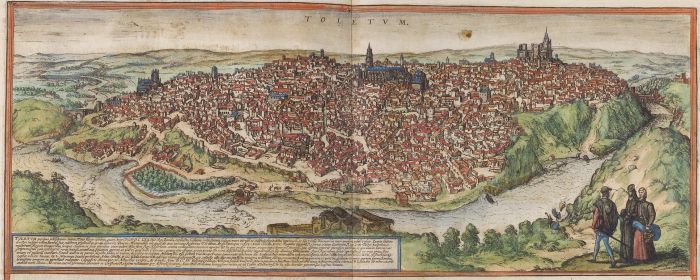
The Toledo tribunal rejected the release sought in Céspedes’s defense and imposed a sentence combining public punishment with prolonged hospital confinement. Its operative language described the conduct to be punished as fabrications and deceptions, making culpable misrepresentation central to the outcome. Understanding that decision requires distinguishing the prosecutor’s allegations, reproduced in the judicial summary, from the orders the judges actually issued. The sentence and its accompanying proclamation established an enforceable account of marital wrongdoing without explaining how every disputed anatomical claim had been disproved.
The summary rehearsed Sotocameno’s allegations of apostasy and contempt for matrimony, including the claim that Céspedes had deceived the earlier examiners through bribery or supernatural assistance. Those passages preserve what the prosecution wanted accepted; their inclusion does not mean that the operative sentence separately declared every allegation proved. The language beginning the judgment instead referred broadly to the offenses disclosed by the proceedings and to the need to punish deception. This distinction matters for the accusation of a demonic pact, which should not acquire the status of a demonstrated fact merely through its repetition in an official document. The existing marriage to Cristóbal Lombardo supplied another basis for condemnation. Céspedes had claimed that Lombardo died in the hospital at Baza, explaining that documents concerning his death had been lost. The prosecution asserted that he was still alive, and the public account of punishment treated Céspedes as already married when the union with María was contracted. That was the tribunal’s operative position, although it does not independently establish Lombardo’s actual survival. Vázquez García and Cleminson accordingly describe a finding of fraud punished in a manner similar to bigamy. Such a description follows the wording more closely than reducing the entire outcome to an isolated conviction on one charge. It also avoids implying that the judges accepted the second ceremony as creating a valid marital bond. Even a favorable assessment of bodily variation would still have left the question of whether the first marriage had ended.
The requirement to abjure de levi places the religious judgment more precisely. This was an abjuration associated with a slight suspicion of heresy, a category distinct from a finding that formal heresy had been established. Gacto Fernández’s study explains why Spanish inquisitorial proceedings against bigamists commonly used this form. Conduct involving another marriage could raise suspicions about belief in the sacrament without proving a settled rejection of Catholic teaching. Céspedes faced a religious correction connected to the marital offense, alongside substantial corporal penalties. The comparatively slight degree of suspicion did not make those penalties slight. It shows how the tribunal could maintain its authority over the case without resolving every accusation at the highest level of religious culpability.
Public enforcement made the judgment visible well beyond the hearing room. Céspedes appeared as a penitent at the auto de fe held in Toledo’s Zocodover square on December 18, 1588, wearing the prescribed coroza, a conical penitential cap, with identifying insignia. The sentence required its public reading and ordered one hundred lashes through Toledo’s streets, followed by another hundred at Ciempozuelos. A further order dated December 24 directed an officer to take Céspedes to Ciempozuelos and execute that part of the punishment after a parish reading on a Sunday or feast day. Returning the condemnation to the community where the marriage had been contracted gave the punishment a local significance. The same relationship that had acquired public standing through marriage now became the subject of an officially prescribed account of wrongdoing. The proclamation reduced the case to the assertion that Céspedes, already married, had deceived another woman and married her. Its brevity excluded the medical explanations through which the defense had contested that interpretation. As an instruction for public announcement, it supplied a reason for punishment intelligible to spectators who had heard none of the detailed testimony. The judges also specified the exemplary purpose of the penalty. Céspedes was to be punished so that others would avoid similar deceptions. This declared intention cannot establish what individual spectators believed, but it demonstrates that public instruction formed part of the sentence itself. The authorities determined both the account to be heard and the occasions on which it would accompany physical punishment.
The judges presented these measures as an exercise of equity and mercy. They declared that stricter application of the law could have produced a graver condemnation, then invoked unspecified just reasons for choosing the punishment imposed. Their wording does not identify anatomical doubt or professional skill as the decisive consideration. Mercy was the tribunal’s explanation of its own discretion, and the unnamed grounds for that discretion remain an important limit on what can be inferred from Céspedes’s survival.
A ten-year obligation to serve without wages in a designated hospital extended judicial control beyond the public ceremonies. The tribunal reserved the choice of institution to itself and required service in its infirmaries under threat of further punishment for noncompliance. This provision transformed the conditions under which Céspedes’s labor would be performed, placing a formerly independent practitioner within an institution selected by the judges. The operative clauses prescribed confinement and service without setting out a comprehensive new professional status. Formal cancellation of the surgical qualification was not among their express provisions. What they clearly established was compulsory work over a substantial portion of an adult life, with remuneration expressly withheld. The decision also denied the defense’s attempt to sustain recognition as María’s husband, describing the union publicly through the categories of an already married woman and a deceived female partner. Its consequences were definite even where the written judgment left aspects of the evidentiary dispute unresolved. The sentence made the tribunal’s control over Céspedes’s future work more explicit than its explanation of the body’s past.
Punishment and Continued Practice: Hospital Service, 1588–1589
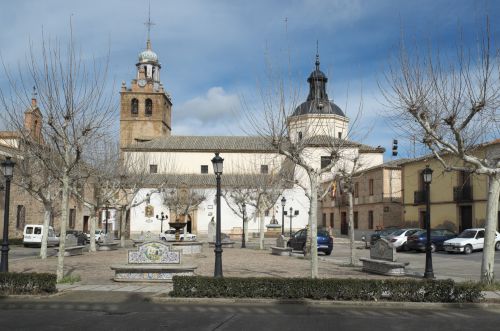
The first months of Céspedes’s hospital confinement showed how public demand for treatment could complicate a penal assignment. Placement in an institution for the poor made surgical experience available under coercive conditions. Yet the attention surrounding Céspedes interfered with the orderly seclusion that officials expected. The correspondence of early 1589 records an attempt to reconcile the demand for care with the management of a condemned person whose presence attracted visitors.
On February 23, Hernando de Aguilar e Mendoza, the administrator of Toledo’s Hospital del Rey, petitioned the inquisitors for Céspedes’s removal. He explained that the placement had been intended both to punish and to benefit the hospital, expressly describing the latter purpose in the language of charity and almsgiving. The assignment joined a penal obligation to the provision of care, making one person’s compulsory service a resource that officials expected the institution to use. Aguilar understood the placement as labor that should assist the hospital’s poor, and he appealed to that purpose when arguing that the arrangement had become troublesome. According to his petition, the hospital and its regular staff were unsettled by the number of people arriving to see Céspedes and obtain treatment. The regular staff appear collectively in this complaint, leaving their duties and individual opinions unspecified. His concern was the resulting disturbance to institutional government, which he wanted restored to its former quiet. Recalling the tribunal’s charitable intention also served his request: he could present removal as a way to fulfill the purpose of the original placement. His argument sought intervention from the authorities who had assigned the worker, locating responsibility for a solution beyond the hospital itself. The petition reveals how the anticipated advantage of an additional worker could conflict with the practical effects of that worker’s reputation. It also complicates any description of hospital service as an uncomplicated return to employment. The administrator evaluated the placement according to the institution’s needs and asked the judges to determine where Céspedes should be held.
The initial response was a transfer to Toledo’s Hospital de San Lázaro. The inquisitors instructed its rector to receive Céspedes and maintain the confinement, preserving the sentence while changing its institutional setting. A subsequent entry identifies San Lázaro as the place where Céspedes was then residing, confirming that this first relocation occurred. By March 20, the tribunal again treated continued residence in Toledo as a source of difficulty. Moving between hospitals within the city had left the broader problem of public attention unresolved.
The March entry is revealing about the survival of professional reputation. Lope de Mendoza, after consulting his colleague Rodrigo de Mendoza, stated that Céspedes had become known as a surgeon who treated many illnesses and attracted so many people that quiet confinement was obstructed. The complaint preserved a description of medical demand in the tribunal’s own administrative language. Earlier proceedings had subjected Céspedes’s bodily explanations to hostile scrutiny; the later order nevertheless presented the reputation for treating patients as a practical circumstance requiring action. The term cirujano appears within sentences that otherwise refer to Céspedes in feminine language, allowing an occupational designation to coexist with the classification imposed during prosecution. Its grammatical form cannot independently establish renewed recognition as a man, but its use shows that the description of surgeon remained intelligible after condemnation. More importantly, the tribunal’s next instruction gave that reputation an institutional application by requiring continued treatment of poor patients. The judges could organize the use of Céspedes’s abilities while withholding the freedom to determine where those abilities would be exercised. Professional usefulness survived within an arrangement that made service obligatory and subjected it to supervision.
The destination selected on March 20 was the hospital at El Puente del Arzobispo, outside Toledo. Céspedes was to complete the remaining confinement there, treating its poor under the administrator’s direction. Lucas del Varco, a familiar, or lay agent, of the Holy Office, received instructions to escort the prisoner and deliver a letter to the hospital’s administrator, Torres de la Cava. The surviving entry records Varco’s undertaking to carry out those instructions; it establishes the arrangements for removal more securely than the date of arrival. The reference to the remaining term also shows that this was a change in the execution of the existing sentence. The new institution was to receive both the confined person and the obligation to provide care. Although the earlier judgment had prescribed service in infirmaries in general terms, this order explicitly directed Céspedes to treat the hospital’s poor.
What brought the visitors remains harder to determine than what the officials did about them. Burshatin interprets the following in relation to the fascination generated by Céspedes’s extraordinary public history, while Vázquez García and Cleminson connect the episode to beliefs surrounding unusual bodies and healing powers. Such interpretations identify possibilities within the period’s culture, but the hospital papers themselves distinguish only between coming to see Céspedes and coming for treatment. They contain no collection of patients’ explanations that would allow those purposes to be apportioned, and seeking care does not establish that a cure occurred. A clinical reputation could attract people without requiring every visitor to share an interpretation of the practitioner’s anatomy. Equally, curiosity could coexist with a practical wish for treatment. The witnesses to this popularity are officials attempting to regulate it, which makes their testimony evidence of an administrative problem as well as of a following. The clearest institutional consequence was that public attendance altered how confinement was administere. Aguilar sought relief, and the tribunal eventually selected a destination beyond the city. These adjustments reveal the limits of the officials’ ability to control the public attention that accompanied punishment. Céspedes remained constrained, but the surrounding demand obliged administrators to revise the conditions under which the sentence operated.
The dated papers leave Céspedes at the point of an arranged removal from Toledo in March 1589. They do not establish completion of the ten-year term or provide a secure account of release, later employment, or death. The year 1589 marks a limit of the documented sequence. At the final moment preserved here, official control extended to the hospital in which Céspedes was to reside and the administrator whose directions would govern the work. The same instructions continued to call upon the capacity to care for the sick that the practitioner had acquired before prosecution.
Céspedes in Historical Writing
Céspedes acquired a printed afterlife before the circumstances of the prosecution had receded far into the past. In his annotated translation of Pliny, published in Madrid in 1599, Jerónimo de Huerta presented the case as an example of deception, emphasizing the figure of an enslaved Andalusian woman who had persuaded examiners to recognize a man. A work invoked in the defense could transmit an account hostile to that defense. The availability of ancient stories about bodily transformation did not guarantee that a specific person would be admitted among nature’s exceptions.
The case acquired another meaning in José María Llanas Aguilaniedo’s “Matrimonios entre mujeres,” published in 1904. He reproduced substantial material from the proceedings while explaining Céspedes through the psychiatric language of congenital sexual inversion. The anatomical narrative became a fabrication concealing what he considered an underlying psychological condition. His interpretation also drew explicitly upon racial stereotypes. Movement between towns and occupations became evidence of alleged primitiveness, while modest possessions were enlisted in a judgment about character. Details preserved by the court were reorganized to confirm categories supplied by a much later medical culture. Yet Llanas’s conclusions also included a qualified argument for treating homosexual partnerships with tolerance, acknowledging the companionship and mutual support such relationships could provide. This combination prevents his article from fitting a simple opposition between prejudiced condemnation and sympathetic recovery. His willingness to entertain greater social acceptance coexisted with pathologizing assumptions and racial hierarchy. The problem was deeper than whether the author approved of Céspedes; it concerned the explanations through which approval or disapproval became possible. Archival disclosure could enlarge public knowledge of the life while placing its subject inside another authoritative classification.
Marie-Catherine Barbazza’s social history redirected attention toward the conditions under which an unconventional life could be sustained. Her later discussion in 2014 explicitly approached Céspedes as a marginalized woman seeking to live according to homosexual desire while improving a precarious social position. She acknowledged the dossier’s conflicting perspectives and the difficulty of extracting certainty from judicially recorded speech. Nevertheless, the identification of Céspedes as a woman structured her explanation of masculine presentation and the hermaphroditic defense. Her work demonstrates how attention to economic circumstances and personal agency can coexist with an interpretive decision about gender that remains open to challenge.
Transgender interpretations have made different aspects of the record more prominent, although their evidentiary procedures also require examination. Emilio Maganto Pavón’s 2007 work contributed important documentary material concerning Francisco Díaz and the examinations, while identifying Céspedes retrospectively as a trans man within a medical framework. In the same study, proposed anatomical alterations and an artificial device became confident explanations of how the earlier examiners had been deceived. The documentary contribution can be evaluated separately from those reconstructions, whose certainty exceeds what the quoted testimony establishes. A different approach appears in Aurelia Martín Casares and Magdalena Díaz Hernández’s 2016 study, which combines transgender terminology and gender fluidity with an investigation of social networks. Its emphasis on relationships helps explain how Céspedes obtained opportunities and sustained recognition across changing circumstances. But a modern category cannot itself establish which changes were freely chosen, how stable an identification felt, or what a prisoner meant by every recorded concession. These approaches also make it necessary to distinguish questions about gender from claims about bodily traits. Intersex interpretations concern physical variation, which the surviving examinations cannot securely reconstruct, while inclusion in transgender history can rest upon evidence of a masculine name and a sustained life as a husband. Attraction to women does not independently resolve either question. The absence of today’s vocabulary does not require excluding earlier lives from histories written with modern concepts. An interpretive category can illuminate experiences that contemporaries named otherwise without becoming a claim about the exact language Céspedes would have chosen. Taking these distinctions seriously gives masculine self-presentation substantial historical weight without making a modern clinical classification the condition for recognizing it.
Burshatin’s investigations changed the terms of discussion by making enslavement and racial description central to the interpretation of gender. His work on natural history examined how the credibility of an exceptional body depended upon its placement within accounts of human difference and social hierarchy. Esther Mayoko Ortega Arjonilla’s 2021 critique develops the problem of racial exclusion in historical recovery, while acknowledging Burshatin’s contribution. She argues that celebrating a pioneering woman surgeon or claiming an early transgender predecessor can marginalize the significance of Blackness and enslavement, even when those facts appear in an introductory biography. Her criticism concerns the explanatory structure of scholarship: which experiences organize the narrative and which become explanatory afterthoughts. This challenges histories that extract an exemplary figure from the social conditions through which that figure became visible. Meeting it requires tracing what racialized status did in some circumstances, rather than treating an additional descriptive label as sufficient explanation. Historical variation in racial terminology requires careful contextual interpretation. Uncertainty about the precise implications of a designation cannot justify removing racialization from the account, but its importance does not make every proposed ancestry or family relationship demonstrable.
Moral de Calatrava’s study of the medical defense offers a further way to recover the person’s intellectual activity. Her investigation asks how the reasoning of an apprenticed practitioner related to the learned resources available through vernacular medical books. This makes the accused’s interpretive labor an object of historical explanation in its own right. Within the history of medicine, the resulting shift is consequential. Attention extends from the standing of a celebrated royal examiner to the knowledge exercised by the practitioner whose account he disputed.
Blea Nuñez’s work on the inventories moves the inquiry again by reconsidering what kinds of documents should organize the biography. Possessions that Llanas had used to support a racialized judgment about character become evidence through which the practical circumstances of Céspedes and María can be investigated. The change involves an altered account of what an inventory records and what the sale price of an object can establish about the people who used it. It also enlarges María’s place in scholarship, addressing the household through sources that were long subordinate to descriptions of genital examination. Such research challenges the tendency to make bodily classification the subject’s entire historical significance. Its claims about daily life still depend upon distinguishing documented use from inferred personal meaning. More broadly, historical recovery includes decisions about how the words of clerks and witnesses enter a modern narrative. When a clerk’s designation becomes the subject’s settled identity in historical prose, an editorial choice can acquire the appearance of an established finding. Making that transition visible allows the terminology of recovery to be assessed alongside the evidence it is intended to explain.
Does a Struggle over Classification Explain the Prosecution?
The following video from Desde mi retiro is an overview of the story of Elena Céspedes:
An emphasis on the authority to define sex risks mistaking a consequential dispute within the proceedings for the principal reason they occurred. The prosecution addressed an allegedly unlawful marriage, the possibility of an undissolved earlier union, and the religious implications of entering a ceremony under those circumstances. On this reading, disagreement about the body became important because existing obligations and prohibitions required certain facts to be established. A convincing interpretation must explain what a contest over classification adds to an account already grounded in matrimonial regulation and the protection of a sacrament.
Marriage supplied questions that could not be answered simply by accepting Céspedes’s account of bodily change. In the interrogation of July 18, 1587, Lope de Mendoza asked how Céspedes knew that Cristóbal Lombardo had died and what inquiries had preceded the subsequent marriage. The reply invoked letters received many years earlier and records no longer available, leaving an evidentiary difficulty that physical inspection could not resolve. Recognition of male sexual capacity would not, by itself, have established that the previous marital bond had ended. The same hearing asked whether marrying María expressed a belief that women could lawfully marry one another or contempt for matrimony itself. Céspedes affirmed the prohibition and maintained that the union had been undertaken as a man and in the service of God. The answer sought compliance with accepted marriage doctrine, making bodily difference an argument for eligibility within its requirements. Enrique Gacto Fernández’s study of inquisitorial bigamy proceedings explains why intention mattered. The Holy Office asserted jurisdiction because marital conduct could suggest erroneous sacramental belief. Some jurists distinguished a public second wedding, potentially suggesting such error, from secrecy and documentary fraud, which could indicate conscious wrongdoing. Their distinction cannot be assumed to have governed this judgment, but it shows that the relationship between an irregular marriage and religious culpability required interpretation. Treating the charges as merely a convenient vocabulary for disciplining sexual difference would diminish the substantive importance of what Céspedes understood and intended.
Nor should the adverse medical findings be presumed to have been consciously manufactured. Earlier certification might have been mistaken or insufficient for the questions subsequently posed, giving later examiners legitimate reasons to reconsider it. Paloma Moral de Calatrava’s analysis shows that the traditions available to Céspedes contained differing explanations of sexual development, with implications that could undermine the defense as well as support it. Medical learning supplied arguments whose persuasive force remained open to challenge from other practitioners. Sincere disagreement and possible observational error deserve consideration alongside the pressures exerted by prosecution. Allowing those possibilities strengthens the historical analysis without identifying any surviving account as a definitive anatomical record.
Yet even a sound medical reassessment would leave a separate question about responsibility. Findings obtained during the investigation could not directly disclose what Céspedes had understood when marrying, notably when earlier examinations had supplied affirmative certification. To interpret the wedding as a deliberate deception was to judge statements, expectations, and intention across time. Céspedes acknowledged the presence of female organs while disputing the examiners’ conclusion that male anatomy had never existed. Prior permission might support an assertion of good faith, although its force depended on whether the information supplied to obtain it had been truthful. Choosing among these accounts connected the interpretation of physical evidence to the assessment of marital and religious fault. Institutional diversity makes that connection more specific. The authorities who licensed surgical practice, those who authorized the wedding, and those who organized compulsory hospital service performed different tasks and responded to different concerns. Their involvement demonstrates several forms of conditional acceptance, together with the capacity to restrict one kind of recognition while retaining another. Explaining those decisions requires identifying how a particular account became decisive for a particular purpose. The tribunal’s power included assigning legal consequences to contested evidence, a capacity entirely compatible with its officers taking the underlying medical and doctrinal questions seriously.
Matrimonial enforcement and suspicion concerning sacramental belief explain the legal occasion for intervention; disagreements over knowledge help explain the investigation’s distinctive course and the rejection of certain defenses. Céspedes sought recognition within an order whose marriage rules the defense explicitly affirmed, and that commitment gave medical testimony both its usefulness and its limits. An exceptional bodily history offered a reason why conduct resembling an offense should be considered permissible, but it could not independently settle every objection to the union. Equally, the existence of an alleged offense left investigators with choices among incompatible reports and competing interpretations of earlier authorization. The revised argument concerns the allocation of credibility wherever bodily history affected legal responsibility. Classification helped determine how alleged wrongdoing became punishable, while matrimonial obligations and religious belief retained explanatory force of their own. This narrower interpretation makes the exercise of authority more historically specific and leaves room for uncertainty about anatomy, intention, and the sincerity of individual judgments.
Conclusion: Knowledge, Recognition, and the Limits of the Record
Medical knowledge remained significant after Céspedes’s defense failed. The surviving file preserves learned explanations offered by the accused, while the hospital correspondence shows continued official interest in the practical use of surgical skills. These different uses of expertise prevent the verdict from becoming a simple story of professional erasure. They also reveal a limitation of Céspedes’s achievement. A qualification could establish permission to practice without securing comparable influence over decisions about marriage and punishment.
Former enslavement makes the acquisition of a recognized medical qualification impactful. Céspedes’s career involved access to work and public standing that had substantial effects before the prosecution intervened. A surgical license authorized treatment, and ecclesiastical permission allowed a marriage to be celebrated openly. The household shared with María del Caño belongs to this history of things Céspedes had managed to secure, although the surviving depositions offer only partial access to the partners’ expectations. Such achievements deserve their full historical weight, even though subsequent proceedings exposed their vulnerability. The history of successive occupations and geographical movement also resists a biography organized entirely around the eventual trial, as if every earlier decision merely prepared its outcome. Earning a livelihood presented changing opportunities whose significance cannot be recovered solely from the accusations made later. Within that wider life, medical learning supplied practical resources as well as explanations of bodily experience. It enabled Céspedes to participate in a learned discussion that might otherwise appear to belong exclusively to the appointed examiners. Freedom from slavery had not removed the social significance of origin or the unequal standing conveyed through racial description. Those circumstances belong within the explanation of how a formerly enslaved person negotiated professional and marital acceptance, without being assigned an undocumented role in every hostile decision.
The limits of the record call for precision about what remains uncertain. Surviving orders establish what officials required, and recorded exchanges show Céspedes repeatedly disputing the explanations advanced against the defense. Statements about earlier anatomy reach us through testimony whose purpose was often to accuse or justify conduct. They require comparison with one another, with attention to the conditions in which they were produced and the difference between an observation and an inference. Historical explanation remains possible because uncertainty bears more heavily on some questions than on others. A historian can establish how an assertion acquired legal force while leaving unresolved the physical history it purported to describe.
The prosecution’s religious and matrimonial purposes must retain a central place in the final interpretation. They identify the grounds on which officials investigated the marriage, while medical disagreement helps explain the difficulties of assigning fault within that inquiry. Credentials and favorable examinations could provide protection, but their meaning depended on the officials assessing them and the question being decided. The tribunal possessed the means to conclude the proceedings through punishment, even though its decision left substantial problems for later readers. That difference between an enforceable outcome and a fully persuasive explanation is essential to understanding what authority accomplished here. Céspedes’s arguments remain within the documents alongside the findings imposed by others, preserving a challenge that the judgment could reject without exhausting its historical significance. Taking that reasoning seriously requires disciplined attention to what the accused actually claimed and to the medical resources used in making those claims. The surgeon’s participation is among the clearest facts the record supplies. Someone subjected to medical judgment answered with medical arguments, and those arguments remain part of a history that the sentence alone cannot explain.
Bibliography
- Archivo Histórico Nacional, Madrid. Inquisición, legajo 234, expediente 24. “Proceso de fe de Elena de Céspedes, alias Eleno de Céspedes.”
- Barbazza, Marie-Catherine. “Un caso de subversión social: el proceso de Elena de Céspedes (1587–1589).” Criticón 26 (1984), 17–40.
- —-. “Eleno / Elena de Céspedes: La construction d’une identité et ses aléas.” HispanismeS 3 (2014), 41–57.
- Blea Nuñez, Sophia. “‘No ay quien los quiera’: Vida cotidiana de Elena o Eleno de Céspedes y María del Caño a través de sus inventarios de bienes.” Journal of Spanish Cultural Studies 23:4 (2022), 393–409.
- Brodell, Ria. “Elena aka Eleno de Céspedes 1545–c. 1588 Spain.” Ria Brodell. Accessed October 24, 2026.
- Burshatin, Israel. “Written on the Body: Slave or Hermaphrodite in Sixteenth-Century Spain.” In Queer Iberia: Sexualities, Cultures, and Crossings from the Middle Ages to the Renaissance, edited by Josiah Blackmore and Gregory S. Hutcheson, 420–456. Durham, NC: Duke University Press, 1999.
- Burshatin, Israel, and Cabello/Carceller. “Actas del proceso de Eleno de Céspedes en el Tribunal de la Inquisición de Toledo, 1587–1589.” In Anexo: Caso Céspedes / Addendum: The Céspedes Case, 66–109. Mexico City: Museo Universitario Arte Contemporáneo, Universidad Nacional Autónoma de México, 2019.
- Council of Trent. The Canons and Decrees of the Sacred and Oecumenical Council of Trent. Edited and translated by J. Waterworth. London: Dolman, 1848.
- Daston, Lorraine, and Katharine Park. Wonders and the Order of Nature, 1150–1750. New York: Zone Books, 1998.
- Díaz, Francisco. Compendio de chirurgia. Madrid: Pedro Cosin, 1575.
- Gacto Fernández, Enrique. “El delito de bigamia y la Inquisición española.” Anuario de Historia del Derecho Español 57 (1987), 465–492.
- García, Jonatan Gastón. “Eleno de Céspedes: Cuerpo, performatividad e identidad en el siglo XVI.” In Autobiografía, historia y memoria: Historias de vida como recursos en la enseñanza de la Historia Moderna, edited by Juan Bubello, María Inés Carzolio, and Osvaldo Víctor Pereyra, 118–52. La Plata: Editorial de la Universidad Nacional de La Plata, 2023.
- Huarte de San Juan, Juan. Examen de ingenios para las ciencias. Baeza: Juan Bautista de Montoya, 1575.
- Jelks, Stephanie. “Who Was Elena/Eleno de Céspedes?” TheCollector, June 27, 2024.
- Kagan, Richard L., and Abigail Dyer, eds. and trans. Inquisitorial Inquiries: Brief Lives of Secret Jews and Other Heretics. 2nd ed. Baltimore: Johns Hopkins University Press, 2011.
- Laqueur, Thomas. Making Sex: Body and Gender from the Greeks to Freud. Cambridge, MA: Harvard University Press, 1990.
- López, Ianko. “The Surprising Case of Catalina de Erauso: The First Trans Portrait in History Finds Its Voice 400 Years Later.” El País, March 16, 2022.
- López Terrada, María Luz. “Medical Pluralism in the Iberian Kingdoms: The Control of Extra-academic Practitioners in Valencia.” Medical History Supplement 29 (2009), 7–25.
- Luna Díaz, Juan Andrés, and Pablo Luna Cortacans. “Esclavos en la Granada del siglo XVI (1508–1568): panorámica desde los registros parroquiales.” Chronica Nova 49 (2023), 315–348.
- Maganto Pavón, Emilio. “La intervención del Dr. Francisco Díaz en el proceso inquisitorial contra Elena/o de Céspedes, una cirujana transexual condenada por la Inquisición de Toledo en 1587.” Archivos Españoles de Urología 60, no. 8 (2007): 873–86.
- Martín Casares, Aurelia. “Esclavitud y mentalidad: la población esclava de Granada a lo largo del siglo XVI.” Chronica Nova 25 (1998), 337–348.
- —-. La esclavitud en la Granada del siglo XVI: Género, raza y religión. Granada: Editorial Universidad de Granada, 2000.
- Martín Casares, Aurelia, and Magdalena Díaz Hernández. “Nuevas reflexiones sobre ‘Elena, alias Eleno de Céspedes’, transgénero, redes sociales y libertad en la España del siglo XVI.” Bulletin for Spanish and Portuguese Historical Studies 41:1 (2016), 27–41.
- Montaña de Monserrate, Bernardino. Libro de la anothomia del hombre. Valladolid: Sebastián Martínez, 1551.
- Moral de Calatrava, Paloma. “‘En buena mediçina’. Las fuentes médicas del discurso de Céspedes ante la Inquisición.” Asclepio 70:2 (2018), 230.
- Ortega Arjonilla, Esther (Mayoko). “Céspedes y la colonialidad del archivo: Historias de negritud y fuga en la modernidad española peninsular.” Open Library of Humanities 7:2 (2021), article 4.
- Park, Katharine. “The Myth of the ‘One-Sex’ Body.” Isis 114:1 (2023), 150–175.
- Pliny the Elder. Natural History. Translated by H. Rackham et al. Cambridge, MA: Harvard University Press, 1938–1962.
- Rhodes, Elizabeth. “Gender and the Monstrous in ‘El burlador de Sevilla’.” MLN 117:2 (2002), 267-285.
- Soyer, François. Ambiguous Gender in Early Modern Spain and Portugal: Inquisitors, Doctors and the Transgression of Gender Norms. Leiden: Brill, 2012.
- Stolberg, Michael. “A Woman Down to Her Bones: The Anatomy of Sexual Difference in the Sixteenth and Early Seventeenth Centuries.” Isis 94:2 (2003), 274–299.
- Vázquez García, Francisco, and Richard Cleminson. “Subjectivities in Transition: Gender and Sexual Identities in Cases of ‘Sex Change’ and ‘Hermaphroditism’ in Spain, c. 1500–1800.” History of Science 48:1 (2010), 1–38.
- Vollendorf, Lisa. “Good Sex, Bad Sex: Women and Intimacy in Early Modern Spain.” Hispania 87:1 (2004), 1–12.
Originally published by Brewminate, 10.26.2026, under the terms of a Creative Commons Attribution-NonCommercial-NoDerivatives 4.0 International license.
About the Author