In Navarre’s witch panic, María de Alzate faced accusations forced from her daughter. Her struggle for separation exposes the links between domestic abuse and witchcraft allegations.

By Matthew A. McIntosh
Public Historian
Brewminate
Introduction: When a Daughter Named Her Mother
In December 1611, María de Alzate petitioned the episcopal court in Pamplona for separation from her husband, Juan de Unciti. She feared that he would kill her if she were compelled to continue living with him. The danger described in her case intersected with an accusation of witchcraft made by their adolescent daughter, Marimartín, during the persecution then spreading through Navarre. A charge that might appear to disclose a household’s concealed wrongdoing instead became evidence of the coercion operating within it.
According to Alzate and other witnesses, Marimartín’s father, and especially her stepbrother, had threatened her with death to force her to accuse her mother. Those statements require the daughter’s apparent knowledge to be examined alongside the circumstances in which she expressed it. An allegation from someone so close to the accused could seem persuasive because intimacy suggested access to otherwise hidden conduct. Yet proximity also exposed a dependent child to intimidation that listeners outside the household might not see. The testimony describing Unciti’s earlier mistreatment of Alzate further complicates any explanation that begins with the witch panic itself. In the account preserved through litigation, hostility within the marriage preceded the accusation, which supplied another means of pursuing it. Marimartín’s position also unsettles a straightforward division between persecutor and victim, since words that endangered her mother were attributed to threats against the daughter’s own life. Their relationship reveals how coercion could connect the vulnerability of one family member to the persecution of another.
The documentary foundation for this investigation is unusual because its principal proceedings were not trials for witchcraft. Lu Ann Homza’s The Child Witches of Olague translates two secular cases involving reciprocal defamation claims and a petition for marital separation before an ecclesiastical court. These records preserve disputes about what people had said and the remedies available when accusations or mistreatment became intolerable. Public identification as a witch could injure someone’s honor and expose that person to danger without producing a formal prosecution for the alleged offense. Reading these proceedings together shifts attention toward harms that histories organized around interrogations and executions can leave less visible. It also recovers accused people as participants in litigation, seeking judgments against those whose conduct threatened them.
Alzate’s experience suggests that the force of a witchcraft accusation lay partly in its capacity to alter how existing relationships were understood. A wife could be represented as a danger within the household, making aggression against her appear defensible to those who accepted the allegation. Such representations supplied no lawful permission for assault, and their reception was never necessarily unanimous. Nor does evidence of deliberate intimidation in this family establish that other accusations arose from equally calculated deception. Fear of witchcraft could be sincere, while belief and manipulation could operate together. The surviving testimony must also be read through the questions posed in court and the translation of predominantly Basque speech into Spanish legal records, rather than treated as an unmediated account of private life. Alzate secured the separation she sought, demonstrating that an accusation did not extinguish every opportunity to contest an abusive husband’s demands, even though a favorable judgment cannot establish that her subsequent life was secure. Her case makes it possible to investigate both how the designation of witch could intensify violence among familiar people and how an accused woman could challenge the treatment that designation was used to justify.
Navarre’s Witch Panic and the Problem of Jurisdiction
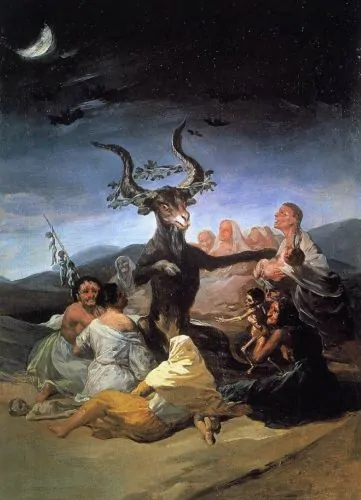
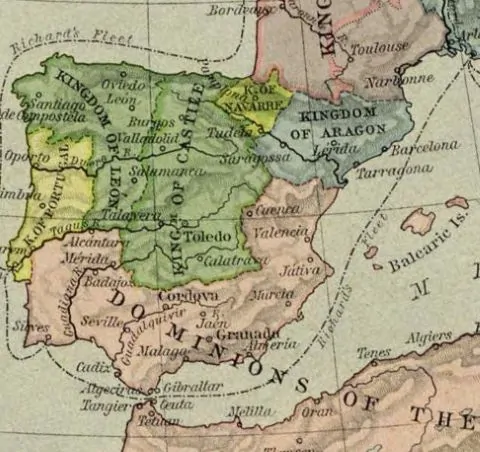
The persecution that eventually reached Olagüe developed from accusations at Zugarramurdi, near the French frontier, late in 1608. María de Ximildegui, returning from employment across the border, declared that she had attended gatherings of witches and identified people whom she claimed to have encountered there. Several inhabitants subsequently confessed in their parish church and sought forgiveness from their neighbors. Those admissions did not settle the matter locally. Reports reached the inquisitorial tribunal at Logroño, outside Navarre but responsible for investigating heresy within it, and suspects were taken into custody early in 1609. Attempts to retract earlier confessions helped turn an episode of communal accusation and attempted reconciliation into a sustained judicial investigation.
The proceedings acquired a much larger audience at Logroño’s auto de fe on November 7–8, 1610. Thirty-one people were condemned for witchcraft in the associated proceedings, although two clerics received their sentences privately rather than appearing among those publicly sentenced. Twenty were reconciled to the Catholic Church and subjected to penances; six were executed, while representations of five others who had died in custody were burned in effigy. The distinction matters because accounts describing eleven people burned can obscure both deaths in imprisonment and the different treatment of surviving defendants. Narratives of the alleged offenses extended beyond the ceremony through pamphlets printed in January 1611. These publications presented elaborate descriptions of diabolical activity within accounts of an officially adjudicated crime. Their circulation does not establish exactly what any individual in Olagüe read or heard, but it made stories of witchcraft available for repetition beyond the tribunal. The public proceedings offered a powerful confirmation that the authorities regarded the danger as real, even as the continuing multiplication of accusations demonstrated that punishment had not brought the crisis to an end.
Inquisitorial involvement rested on the religious character attributed to the alleged offenses. The decisive issue was the claim that baptized Christians had repudiated their obligations to God and entered the Devil’s service. Harmful magic could support that interpretation, but the tribunal’s distinctive responsibility concerned heresy and apostasy. Its officers were investigating an alleged betrayal of Christianity, rather than exercising a general commission to adjudicate every injury associated with supernatural suspicion. This religious purpose should not be confused with institutional independence from the monarchy, since the Spanish Inquisition combined ecclesiastical authority with royal sponsorship. Nor did inquisitorial intervention remove all responsibilities from other judges. A single accusation could describe conduct that attracted several authorities for different reasons.
The royal secular court in Pamplona had an interest in injuries allegedly caused by magic to human beings, livestock, or agricultural resources. Such claims concerned damage to persons and property, even when the supposed means of causing that damage also suggested a pact with the Devil. Royal justice could also address recognizable offenses committed during the pursuit of suspected witches. An assault remained an assault requiring legal scrutiny, and a public insult could generate a dispute over defamation. These responsibilities created a significant distinction between investigating alleged witchcraft and investigating what people did to those accused of it. The distinction did not make secular judges religious skeptics or place their court outside the Christian assumptions of their society. It meant that a complaint could require them to examine threatening conduct or the circumstances of an accusation without first resolving every theological question raised by the wider persecution.
Episcopal jurisdiction introduced another set of responsibilities. Pamplona’s bishop had pastoral and disciplinary reasons to investigate reports of religious error, although the Inquisition claimed priority in the pursuit of heresy. The bishop’s court also exercised matrimonial authority, which did not depend on an inquisitorial investigation into diabolical worship. Questions about whether spouses should continue living together belonged to a legal relationship different from the one created by a charge of apostasy. The relevance of that authority to Alzate’s eventual petition illustrates why references to “the Church” as a single judicial actor conceal distinctions essential to understanding the available remedies.
Institutional reach also depended on personnel and the willingness of officials to leave their tribunal. After the November 1610 sentencing, accusations continued to multiply, while Logroño’s inquisitors faced shortages of money, staff, and prison accommodation. From that November until May 1611, they remained at the tribunal, dealing with people already detained and those who traveled there, rather than conducting another visitation through the affected communities. This was not a suspension of inquisitorial work, but it left a substantial distance between the institution’s claim to supervise the persecution and its capacity to respond locally. Instructions and suggestions from superiors in Madrid did not immediately produce the intervention they sought. Homza’s reconstruction shows that some local inquisitorial employees became involved in recommending coercive efforts to obtain confessions, conduct they later defended as necessary to restore peace. Such advice did not turn private violence into lawful procedure. It reveals instead how people associated with an institution could encourage actions that its formal authority did not authorize. Villagers might encounter the Inquisition through those intermediaries while remaining unable to obtain a timely decision from the tribunal itself.
A renewed visitation finally began in May 1611 under Alonso de Salazar Frías, the junior member of the Logroño tribunal. He carried an edict of grace that offered repentant suspects a route to reconciliation without the full course of prosecution. This differed from an effort devoted chiefly to identifying offenders and assembling cases against them, although it still operated within the assumption that religious wrongdoing required correction. Salazar remained in the field until January 1612, placing his journey within the period when Olagüe’s accusations and litigation were unfolding. His assignment should not be read backward through the evidentiary criticisms for which he later became known. At its outset, the visitation was an inquisitorial response to a mounting crisis, conducted by an official responsible for bringing alleged offenders back into the Catholic fold.
Residents confronted several kinds of authority whose powers overlapped without providing an immediate or unified response. The existence of multiple courts did not mean that a frightened or impoverished person could move freely among them, obtaining whichever remedy seemed most advantageous. A complaint had to be presented within a court’s competence and supported through procedures that required time and assistance. Conversely, the difficulty of securing inquisitorial intervention did not mean that royal or episcopal justice had ceased to function. A dispute that remained unresolved as an allegation of witchcraft could still be pursued through another offense or legal obligation. This uneven distribution of responsibility helps explain how persecution and litigation could develop together. Olagüe’s inhabitants were living through a crisis in which official judgments had reinforced the seriousness of witchcraft allegations, while the practical work of restraining accusers or protecting those they pursued remained dispersed among authorities with different responsibilities.
Familiar People in a Village under Suspicion
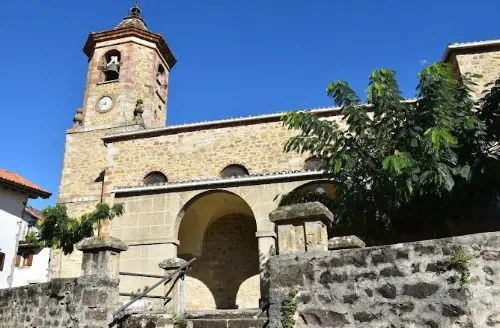
Olagüe’s disputes unfolded in a settlement whose households numbered in the dozens rather than the hundreds. A census of 1606 recorded twenty-five heads of household, providing a firmer measure of its modest scale than any precise reconstruction of its population. Homza estimates approximately 125 inhabitants by allowing five people per household, but that remains a calculation rather than a count of individual residents. The distinction matters because a small settlement need not have been socially uniform or equally familiar to everyone living there. Its size created opportunities for repeated encounters without ensuring that inhabitants possessed complete knowledge of one another’s lives.
Work connected these households through activities that continued while accusations were circulating. Most residents owned at least some livestock, although their holdings differed, and the available evidence does not establish an identical economic position for every family. The presence of Juan de Unciti as Olagüe’s blacksmith also places specialized craft production within this rural setting. An occupation identifies a person’s contribution to local economic life, but it cannot establish that the practitioner enjoyed affection or moral esteem. More broadly, the village was vulnerable to the material insecurities Homza identifies across the region, including failures of agricultural production and episodes of hunger. Those conditions help explain the seriousness of threats allegedly directed against subsistence, without supplying a documented economic cause for the accusations of 1611. It would be misleading to invent a failed harvest or an unusual outbreak of disease to make the persecution appear more explicable. The important setting was a society in which livelihoods could be precarious and people repeatedly encountered others whose circumstances they could observe without fully understanding.
Social distinctions remained substantial within that restricted population. The connected proceedings bring the noble household of Don Pedro de Echaide and Doña Graciana de Ursúa into conflicts involving two widows, exposing differences that the general designation of “villagers” can conceal. Titles expressed recognized rank, while marital status located women within different arrangements of household authority. Neither category, by itself, establishes how much influence someone exercised in an individual dispute. Widowhood should not automatically be translated into poverty or isolation, just as noble standing cannot explain an accuser’s convictions. These differences instead require attention to the relationships through which people asserted their standing and encountered opposition.
Catholic belief supplied a shared vocabulary through which allegations could become intelligible across such distinctions. Reports of service to the Devil described a repudiation of commitments that inhabitants were expected to recognize as binding. A witchcraft accusation could accordingly challenge more than a person’s account of an isolated incident. It attributed a concealed allegiance fundamentally at odds with the religious community to which that person outwardly belonged. Yet agreement about the existence of diabolical danger did not establish agreement about who had participated in it. Someone could reject an allegation against a neighbor while accepting that witches existed and deserved punishment when their guilt was established. This distinction makes it possible to understand disagreement within a common religious culture without dividing the village into credulous persecutors and modern skeptics. The dispute could concern whether a story was trustworthy or whether someone had reasons to spread a falsehood, rather than whether Christianity’s account of spiritual danger should be abandoned. Shared beliefs furnished terms for the controversy; they did not dictate a single judgment about every person named.
Public reputation depended heavily on communication in a population that was predominantly Basque-speaking and generally illiterate. Limited literacy did not prevent inhabitants from evaluating stories, remembering contradictions, or assessing the conduct of those who spoke. Nor was honor merely an elite possession, since ordinary women and men had standing to defend before the people among whom they lived. As Scott K. Taylor’s work cautions, the language of honor should be understood through its uses in actual conflicts, rather than treated as a rigid code that compelled everyone to answer an insult in the same way.
Children participated in this public exchange with effects that cannot be measured simply by their subordinate position within adult households. Homza describes youngsters moving through Olagüe in groups and repeatedly identifying adults as witches. Their activity made allegations visible and audible beyond the circumstances in which any one child had first voiced them. Repetition also brought additional listeners into a dispute, although hearing an allegation several times did not provide independent verification of its substance. The appearance of several young accusers could give a story social force without proving that their accounts originated separately. Conversely, their collective activity does not establish that every child was following a coordinated adult plan. What the village evidence permits us to recognize is a form of participation through which people with limited formal standing could command attention and place adults under pressure. This public role requires analysis alongside the dependence and intimidation visible elsewhere in the records, rather than allowing either feature of childhood to explain the other away. The resulting divisions resist an account in which Olagüe simply expelled a clearly bounded group of outsiders. Accused people retained histories and connections that a public charge could damage without immediately extinguishing. Knowledge of their previous conduct might be invoked against them, but it could also support objections to what others were saying. Robin Briggs’s broader analysis of European witchcraft is useful here because it locates suspicion within relationships that could endure through substantial conflict, rather than assuming that accusations required strangers or people already detached from communal life. In Olagüe, competing statements make the absence of a settled collective judgment uniquely important. A loud accusation should not be mistaken for the voice of the entire village, and continued association should not be mistaken for freedom from danger. The household disputes that followed belonged to this divided social world, where authority within a family operated among relationships extending beyond its members.
Before the Accusation in Alzate’s Household
Marriage to Juan de Unciti brought María de Alzate into a family already shaped by previous unions. Both spouses had been married before, and Alzate had a son and daughter from her earlier marriage. Their child together, Marimartín de Unciti, was approximately twelve or thirteen in the summer of 1611. Unciti also had an older son, Martín, who was twenty-three and had become a deacon. These relationships placed an adolescent girl alongside an adult son connected to her through their father. The family’s composition does not explain its conflicts, but it identifies the unequal positions from which its members would participate in them.
Alzate’s later account of married life described serious physical injury and exclusion from ordinary household activities. She reported that Unciti had broken her left arm with a fire shovel and struck her face with his closed fist. He had also expelled the children of her first marriage from the house and driven her out herself. These allegations concerned more than moments of anger between spouses. They described a husband exercising control over whether his wife and her children could remain in the dwelling, alongside violence directed against her body. His refusal to allow her to eat with the family extended that treatment into the provision of daily necessities. The surviving descriptions do not supply a continuous chronology for every assault, and individual incidents should not be assigned dates the testimony cannot establish. They disclose the conditions Alzate sought to escape when she attempted to leave the marriage.
Other people encountered those conditions through their work or proximity to the couple. Unciti’s apprentices reportedly provided Alzate with food, while servants sometimes intervened during his mistreatment of her. Neighbors described hearing violence and seeing her running away through the village. Their accounts make the history of the marriage accessible through observations beyond those of the spouses themselves. The assistance given inside the household could alleviate an immediate need, but it did not settle whether Alzate could establish a separate residence and remain there.
Her departures became a subject of criticism in their own right. Some witnesses objected that she had repeatedly left Unciti’s house on her own initiative and gone where she wished. Her movement was evaluated as conduct requiring explanation, even within testimony about a deeply troubled marriage. The question was partly who possessed the authority to decide where a married woman should live. Before 1611, Alzate attempted to reside independently in Lantz, a village near Olagüe. That effort brought ecclesiastical intervention rather than a durable escape. When an episcopal inspector discovered the separation, he ordered the spouses to reunite, with Alzate facing excommunication if she refused. Her continued presence with Unciti when the witchcraft rumors began cannot be read as evidence that she had accepted the conditions of their marriage. She had acted to change her circumstances, only to encounter an official demand that she return.
Financial circumstances also entered the later explanations of her treatment. Some witnesses called on Unciti’s behalf emphasized that Alzate had married without a dowry, presenting that absence as relevant to their assessment of the union. She answered that he had known her situation when he married her. Their disagreement exposes an attempt to attach continuing significance to a condition she maintained had been understood from the beginning. It does not establish that money caused his violence, but it shows how an economic fact could be invoked when responsibility for the marriage was contested.
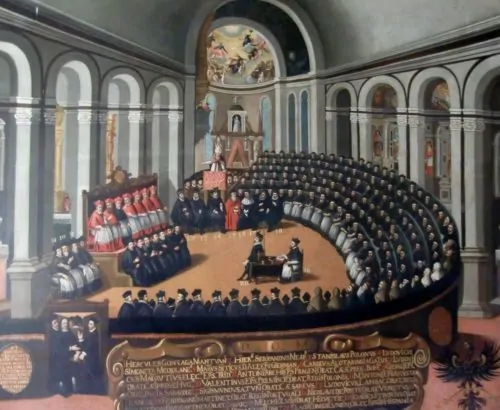
Juncal Campo Guinea’s research on matrimonial proceedings in Pamplona places disputes over spouses already living apart within the wider enforcement of marital obligations after the Council of Trento. Physical departure did not by itself secure recognition that a couple could legitimately maintain separate lives. For Alzate, that gap between leaving and obtaining permission to remain away had direct practical importance. She could remove herself from Unciti’s immediate reach and still face pressure from an authority outside the household to resume cohabitation. The record of her earlier efforts also changes how her later conduct should be understood. Seeking safety was an undertaking she had already attempted, requiring her to confront criticism of her behavior as well as her husband’s demands. Marimartín’s subsequent involvement in accusations against her mother developed within an arrangement whose continuation had been enforced despite Alzate’s efforts to leave.
Marimartín’s Accusation and the Evidence of Coercion

Marimartín’s June 1611 deposition implicated her mother in a remarkably brief statement. Within testimony naming several alleged participants in diabolical gatherings, she identified Alzate as someone who had taken her there. The accusation against her mother occupied a single sentence, without an accompanying account of a specific journey or encounter. Officials received the deposition without an oath, read it back to her, and recorded her ratification; because she could not sign, the notary signed instead. These procedures established a record of what she had acknowledged saying. They supplied no equivalent account of how the allegation had originated, leaving the circumstances behind its apparent confirmation outside the document’s initial presentation.
On July 4, appearing in a different secular defamation proceeding, Marimartín described the demands that had preceded her accusation. She placed the episode after Easter, when Martín de Unciti and a servant of their father took her to Graciana de Olagüe’s house. There, according to her account, those two and Graciana’s son, Sancho, insisted that she confess and identify others as witches. Her denials met with a threat that refusal would expose her to burning as a negativa, someone who would not confess. The threatened punishment gave her interrogators’ demands an appearance of connection to inquisitorial justice, although their words were neither a judicial sentence nor evidence of an authorized examination. They were claiming to know what would happen if she persisted in denying their assertions. Accepting the imposed account was presented as the means of avoiding a terrible fate. Her testimony requires the resulting confession to be understood alongside an encounter in which the people demanding an answer also prescribed its substance.
Pressure continued after that encounter. Marimartín reported that Martín subsequently threatened to put ropes around her throat and throw her over a dam if she changed her story. This further threat concerned the maintenance of an accusation already obtained. A declaration repeated afterward could demonstrate the continuing effectiveness of intimidation, rather than a fresh decision that the allegation was true. The episode gives a concrete reason to examine the conditions sustaining consistency before treating consistency itself as proof of reliable knowledge.
Alzate’s questioning of her daughter produced another account of these events before adult witnesses. One participant later recalled that she asked Marimartín to explain how she knew her mother was a witch, whereupon the girl cried and disclosed the intimidation. The witness’s description allows us to establish that an explanation involving threats was voiced outside the courtroom. It does not make everyone present an eyewitness to the original coercion. Alzate also had an unmistakable interest in obtaining a withdrawal of the charge against her, and her involvement belongs within the assessment of the encounter. Yet an interested setting does not render its testimony worthless. By bringing other people into the conversation, she created circumstances in which they could subsequently report what they had heard, rather than leaving the exchange recoverable only through mother and daughter.
A further confrontation, described in Marimartín’s July testimony, shows how dangerous withdrawal could become. After she changed her account before inquisitorial commissioners, the parish priest, Pedro de Ostiz, challenged her in the presence of her father and Martín. Ostiz was Unciti’s first cousin, placing a clerical participant within the family’s connections. Marimartín said that he struck her and threatened her with a dagger when she defended her retraction, while her father and Martín added threats of death. She described promising compliance to get away, then reporting the renewed violence to the commissioners the next day. The record does not establish how Ostiz learned what she had told those officials, so his intervention cannot by itself prove a breach of inquisitorial secrecy. What it does reveal, through her account, is an attempt to reverse the effect of an official interview through a subsequent personal confrontation. Access to investigators had provided an opportunity to speak differently, but it had not placed her beyond the reach of those seeking to control her answers.
Corroboration must be weighed according to what each deponent could establish. Adults who heard Marimartín disclose threats supported the existence of that disclosure, while other children described pressure involving some of the same individuals. Such testimony strengthens the case for a pattern of coercion without independently proving every detail of her experiences. Homza’s reconstruction is persuasive because it brings these accounts into relation while making their different circumstances visible. The evidence permits a stronger interpretation than one resting solely on a daughter’s unexplained change of story, but it still requires distinctions between reported experience and knowledge acquired through hearing others speak.
Alzate responded by supporting her daughter’s explanation and subsequently taking steps to remove her from the people she accused of threatening her. After July, she placed Marimartín in a household in Pamplona and later kept her whereabouts concealed. Those actions gave practical substance to the relationship that the accusation had endangered. Alzate treated the girl as someone requiring protection, despite the injury her earlier statement had inflicted. Marimartín, meanwhile, used later opportunities to explain how her allegations had been obtained and defended her ability to withdraw them. This was action under severe constraint, with apparent compliance at one moment followed by renewed disclosure at another. Their efforts to secure shelter show that exposing coercion and escaping its perpetrators remained separate undertakings.
Child Witches as Victims, Accusers, and Witnesses

The children identified in Navarre’s records did not occupy the same position as adults accused of directing harmful magic. Homza identifies the Basque term haur-sorgina alongside the Spanish legal expressions niño embrujado and niña embrujada, terms whose meanings must be understood within this persecution. Young people could describe themselves as child witches while explaining that someone else had brought them into contact with the Devil. Their declarations combined an acknowledgment of involvement with an assertion that the involvement had been imposed. Calling themselves child witches could identify an injury they claimed to have suffered, rather than announce a freely chosen allegiance.
Accounts of the alleged gatherings gave children recognizable activities without necessarily assigning them responsibility for the destructive acts attributed to adults. Some described guarding toads associated with the production of poison, while others recounted witnessing the behavior of older participants. Such details placed youngsters inside the imagined organization of witchcraft, giving them something to report about its personnel and practices. Yet presence, participation, and culpability remained distinguishable. A child allegedly transported against their will could be regarded as a victim even after admitting conduct that would have been gravely incriminating in an adult. The explanation depended on an understanding of consent in which youth and compulsion limited responsibility. Within these narratives, the Devil might delay demanding a deliberate renunciation of Christianity until a youngster was sufficiently mature to understand it. The stories themselves accommodated differences between being subjected to diabolical power and knowingly accepting the obligations associated with it.
Age qualified that protection. Homza identifies girls of twelve or older and boys of fourteen or older as potentially exposed to legal difficulty when implicated in gatherings without claiming that they had been forcibly transported. These thresholds made the circumstances of alleged attendance important to the interpretation of an adolescent’s conduct. They should not be converted into a universal boundary separating powerless children from independent adults. Instead, they indicate how the account a young person gave of compulsion could affect assessments of responsibility.
The ability to provide evidence followed another set of considerations. Children as young as six appeared as witnesses in the Olagüe proceedings, and statements received without an oath could still enter the judicial record. Their youth did not prevent adults from considering what they said, although the weight to attach to it remained open to argument. Nor was testimonial capacity identical to liability for public accusation. Homza identifies a protection against defamation prosecution for children who uttered insults, creating an imbalance between the injury their declarations could cause and the remedies available against them. An adult’s reputation might be seriously damaged by a speaker whom that adult could not prosecute for slander. This did not give youngsters immunity from every offense or make their evidence sufficient to establish any charge. But it did help create circumstances in which children could exercise substantial accusatory influence despite their restricted legal responsibility.
Relations among the young also complicated the direction of accusation. Olagüe’s children named other boys and girls among those allegedly present at the gatherings, bringing peers into accounts that extended beyond their own households. Someone described as a companion at an akelarre might subsequently become a potential source of information about it. The resulting connections gave investigators further people to question, while also exposing those named to scrutiny. These exchanges require attention without an invented explanation of precisely how every story traveled. The surviving statements establish participation in a developing controversy, but they do not allow all agreement between children to be attributed to imitation or a coordinated plan.
Material expectations appear in one revealing, carefully qualified allegation. Marimartín told the royal court that other children had said Pedro de Ostiz promised them the houses of people they identified as witches. This was her report of what others had told her, rather than direct confirmation from the priest that he had made such an offer. Ostiz possessed no recognized authority to distribute those houses in that way. Yet the reported promise introduced prospective gain into the children’s own explanation of persistence in accusation. Identifying a witch could be imagined as an action capable of changing who possessed a home. That possibility should not become a general assertion that the young accusers were pursuing property, still less that property actually changed hands through such promises. Its significance lies in the range of expectations represented in their speech. Some children were being described as people who anticipated benefits from continuing to denounce, a position that complicates an account confined to fear or obedience.
Withdrawal supplied another form of participation. Pedroco de Imbuluzqueta sought priests in neighboring villages to disclose that his witchcraft accusations had been false before his first appearance in secular court. His disclosure had a setting outside the hearing in which his evidence would later be contested. Seeking clerical assistance also placed the problem within religious practices through which wrongdoing might be acknowledged and addressed. A child could attempt to correct an earlier declaration while continuing to understand that correction through the moral world shared with adults.
Other youngsters maintained their allegations without reporting the intimidation described by Marimartín or Pedroco. Their persistence belongs in the account alongside the withdrawals, although neither persistence nor silence about threats gives unrestricted access to private conviction. It would be unwarranted to classify every continuing accuser as a conscious deceiver because some children explained how they had been compelled to speak falsely. Equally, accepting a youngster’s perceived vulnerability cannot settle whether an allegation against someone else was reliable. The documents disclose children doing different things with the positions available to them, including sustaining claims and seeking opportunities to undo them. Their influence cannot be measured only through resistance to adult demands, since statements that adults welcomed could also redirect proceedings and endanger other people. The problem for those hearing them was how to protect the young while evaluating accusations whose effects reached well beyond the speakers themselves.
The Defamation Proceedings and Their Competing Claims
Miguel de Imbuluzqueta entered the surviving litigation as a defendant after confronting Graciana de Olagüe at her doorway on May 6, 1611. He accused her of inducing his son to identify his parents as witches, then called her a witch and a thief. Graciana promptly prosecuted him for defamation. The public character of his words, supported by witnesses who had heard them, gave her a readily identifiable complaint. Miguel filed his own case against her on June 3, creating reciprocal claims within a dispute whose origins lay in the accusations circulating through Olagüe. His attempt to challenge those accusations had itself supplied the occasion for his prosecution.
Juan de Urrizola, Miguel’s lawyer, pursued several grounds for defending his client’s language. He presented testimony about the intimidation of children, but also called witnesses who recalled a theft attributed to Graciana in 1589. Evidence that she had actually committed theft could answer the allegation that calling her a thief was defamatory. That strategy required the lawyer to establish something different from the falsity of the witchcraft accusations against Miguel. The two questions were connected through the quarrel, yet success on one would not necessarily determine the other. Witnesses also differed over whether Graciana herself had publicly called Miguel a witch, a disagreement that mattered because her responsibility could not simply be inferred from what children had said. Urrizola was assembling a defense from separate propositions about earlier wrongdoing and the conduct of the confrontation. The case required more than a general demonstration that his client had been treated badly.
Graciana’s lawyer, Gaspar de Eslava, emphasized the persistence of the children’s allegations. Accounts placing Miguel at the alleged gatherings were presented as statements maintained across time and appearances before officials. This argument gave continuity a central evidentiary role. Urrizola’s evidence about coercion challenged the meaning of that continuity, rather than merely supplying an alternative description of Miguel’s character. The lawyers were asking the court to draw opposed conclusions from the history of the children’s declarations, bringing disputed accounts of witchcraft into a proceeding formally concerned with defamatory speech.
Miguel’s ability to sustain his countercase deteriorated as the litigation continued. He eventually obtained release on bond, but his subsequent movements and difficulties involving his guarantors complicated his position, and he was again imprisoned by early 1612. Homza finds parts of that sequence difficult to reconstruct, so his changing circumstances should not be reduced to an uncomplicated story of wealth defeating innocence. His inability to pay for further legal work is still directly documented. Ill and without sufficient means, he petitioned for his complaint to be advanced while acknowledging that he could not meet the required fees. The counterclaim existed, but maintaining the process through which it might become effective demanded resources he no longer possessed. In April 1612, he was ordered to retract his statements publicly and undergo four years of exile, while Graciana was relieved of costs in his case against her. The availability of representation and supporting witnesses had not secured the result his defense sought.
A second proceeding followed the confrontations involving Don Pedro de Echaide, his wife Doña Graciana de Ursúa, and the widows Margarita and María Martín de Olagüe in June 1611. After the assaults on the women, prosecution witnesses alleged that the widows shouted defamatory accusations against the noble couple. The Echaides brought the resulting case to Pamplona. Margarita and her daughter became defendants and pursued a countercomplaint, again represented by Urrizola. The sequence resembled Miguel’s predicament because people already exposed to witchcraft allegations were prosecuted over the language attributed to them in their response. Whether those words had been spoken, and what could justify them, became questions with their own legal consequences.
The competing presentations required the court to consider sharply different explanations of the same encounter. The Echaides produced children who identified the widows as witches, while Urrizola’s defense stressed the violence inflicted on his clients in their homes. Establishing that the women had suffered assault could challenge the plaintiffs’ portrayal of their conduct, but it did not automatically dispose of evidence that defamatory words had followed. The defense also had to work through uneven witness participation, since some early deponents claimed little knowledge of events. Later testimony offered much stronger criticism of the Echaides and defended the women’s reputations. Several witnesses described the widows as hidalgas, pointing to exemption from direct taxation as evidence of their standing. Their disadvantage cannot accordingly be explained through a simple opposition between noble plaintiffs and commoner defendants. The testimony instead places asserted noble status alongside poverty and limited protection, showing that recognized rank did not necessarily provide the means to sustain an effective case.
The court’s September 1611 decision imposed two years of exile on Margarita and required María Martín to retract her insults. The daughter remained imprisoned and died sometime between September and December. Urrizola then presented further defense testimony, continuing into January 1612, in an effort that could still matter to the surviving mother. Witnesses expressed indignation at the treatment of the women and concern for the children left behind. No later resolution superseding the recorded verdict survives, and whether Margarita was compelled to undergo exile remains unknown. The additional evidence enriches the historical account without establishing that the renewed defense changed the judicial outcome.
These proceedings expose a substantial gap between possessing a counterclaim and obtaining an effective remedy. Each defendant could offer an account in which the initiating plaintiff had contributed to the original injury, but that account still had to meet the demands of a case directed against specific words. A judgment punishing those words did not establish that the defendant had practiced witchcraft. Nor did the presence of persuasive evidence about persecution ensure that judges would excuse the language attributed to someone responding to it. The records preserve both the defendants’ efforts to redirect scrutiny toward their accusers and the limits of what those efforts achieved. They also give Alzate’s testimony a setting beyond her own matrimonial dispute, since knowledge about the pressure applied to children could be mobilized in another person’s defense. Witchcraft accusations had generated several legally distinguishable injuries, and a court’s decision concerning one could leave others without an effective remedy.
How Accusation Could Make Violence Appear Defensible

A woman who later testified about the attacks on the Olagüe widows recalled Don Pedro de Echaide walking through the village with a club beneath his arm. She reported that he announced his purpose in Basque. In Homza’s translation, he intended to “remove the evil spirits from those who have no soul.” The remembered declaration attached a corrective purpose to an armed confrontation, presenting the women as people against whom intervention was warranted. It should not be mistaken for a formal exorcism or a statement of Catholic doctrine about accused witches. Its importance lies in the justification attributed to one participant, whose language made violence sound like an undertaking against spiritual danger.
Repeated nocturnal abduction gave such claims a prospective urgency. For someone accepting the children’s allegations, the danger concerned what an accused person might do again, not simply an offense already completed. Continued proximity could appear threatening if the supposed offender possessed the ability to enter homes and carry youngsters away without ordinary means of access. This helps explain how an attack could be represented as an effort to prevent further harm. The reasoning remains an interpretation of the allegations and the conduct defended through them, rather than proof of every assailant’s private motives. Belief in danger could coexist with hostility toward a neighbor, and the available testimony does not require one explanation to exclude the other. Nor did concern for children establish that the people identified as their abductors had injured them. The force of the protective claim depended on accepting an accusation whose reliability was precisely what required investigation.
Compelled admissions could then give that protective claim an appearance of confirmation. Where threats produced an acknowledgment of witchcraft, the person applying pressure might invoke the resulting words as evidence that intervention had been necessary. The admission would conceal its own dependence on intimidation unless someone disclosed how it had been obtained. This process could make coercion appear productive, encouraging confidence in a method that had helped manufacture the evidence offered in its defense. An apparent success in extracting information needs to be assessed through the circumstances of the questioning, rather than through the incriminating content alone.
The location of the assaults exposes another problem with the language of protection. The Echaides’ concern for their children became associated with entry into other people’s dwellings, where Margarita and María Martín were subjected to physical attack. Urrizola’s defense made the crossing of those domestic boundaries an important feature of the plaintiffs’ conduct. As Homza observes, the argument carried a pointed parallel with the intrusions attributed to witches themselves. Alleged violations of one household were being answered through actual violations of another. The widows’ homes were also settings of family life, yet the accusation allowed their assailants to claim a purpose overriding the ordinary restraints on entry and force. Accepting that purpose would have given the accusers considerable power to decide whose domestic security deserved protection. The defense challenged that priority by asking the court to examine what the attackers had done, rather than treating their account of the children’s danger as sufficient justification.
Fear also shaped the behavior of people who witnessed or heard the confrontations. One woman described remaining inside her house when she expected the Echaides’ visit to result in harm. Another recounted leaving through a window after the assailants had departed, avoiding notice before approaching Margarita’s home. Such accounts make immediate nonintervention difficult to interpret as agreement with the attack. They describe people managing the risk of becoming visible to those whose conduct they subsequently criticized. Their later testimony created a record of opposition, although it could not undo their neighbors’ injuries. Public violence could continue in the presence of disapproval when those nearby feared the repercussions of intervening.
A relative’s intervention with a knife generated a competing account of protection. Some defense testimony represented his action as an effort to defend his mother and sister, while the Echaides’ servants described injuries inflicted during the encounter. Witnesses disputed aspects of that account, including the alleged wounds suffered by Doña Graciana. The competing presentations required attention to who had initiated the confrontation and what the intervention was intended to stop. Protective language was available to different parties, so its use could not itself decide whether an application of force was justified.
Alzate’s experience must be placed within these contested claims without assuming that every accused person followed the same course. She did not confess to witchcraft, and her case cannot be explained through an admission subsequently used to validate aggression. The danger was that an allegation could give existing antagonists an additional way to describe coercive conduct as necessary or corrective. Yet the records also preserve people challenging such descriptions and supplying evidence against those who advanced them. Accused women retained claims to protection that their assailants could not lawfully extinguish by naming them witches. The historical significance of the accusation lies in the pressure it could place on the recognition of those claims, especially when supposed threats to children were invoked. What appeared defensible to an attacker remained open to objection from witnesses and scrutiny by judges, even where neither proved sufficient to prevent the harm.
Seeking Separation in the Episcopal Court
By petitioning for separation in December 1611, Alzate placed the conditions of her married life before judges who could authorize a change in her obligations. Her earlier attempts to leave had exposed her to demands that she return. A favorable judgment would give residence apart from Unciti a legal foundation that departure alone had not supplied. The petition asked the court to assess danger within an existing marriage and determine whether continued cohabitation should be required. Her fear of being killed became the basis of a request for a defined judicial remedy.
Separation occupied a distinct position within Catholic matrimonial law. An annulment concerned whether a valid marriage had existed, whereas separation could permit spouses to live apart while their marriage remained binding. The latter remedy offered no freedom to contract another marriage. Campo Guinea’s study of Pamplona’s matrimonial proceedings identifies this distinction as fundamental to understanding the alternatives available to dissatisfied or endangered spouses. Recognition of an enduring bond did not invariably entail compulsory residence together under every circumstance. Alzate’s petition sought relief within that distinction, addressing the conduct of married life rather than challenging the original validity of the union. The court could authorize her to leave without treating the marriage itself as something her husband’s behavior had dissolved.
The proceeding also gave Unciti an opportunity to answer her allegations. As Homza explains, the cases translated in her collection opened with the plaintiff’s statements and evidence, followed by the opposing party’s presentation. Both sides had legal representatives and could prepare questions for witnesses. Alzate’s description of danger entered an adversarial process rather than becoming a judgment through its submission alone. Reports of previous treatment mattered because they could support an assessment of what further residence with Unciti would expose her to. The evidentiary task was prospective as well as retrospective, asking judges to consider the implications of conduct already described.
Some testimony crossed the division between the litigating parties in ways Unciti’s defense could hardly have welcomed. Homza notes that witnesses called on his behalf corroborated his abuse of Alzate. Their position within the proceeding did not make them advocates for her, but their observations could support elements of the case she had brought. Such evidence complicates an interpretation resting entirely on competing assertions by the spouses. It also requires care in distinguishing acknowledgment of mistreatment from agreement about everything Alzate had said or done. A witness could supply damaging information about a husband without abandoning expectations concerning a wife’s obedience. The judges had to evaluate the reported conduct rather than assume that testimony necessarily supported the party responsible for calling its speaker. For Alzate, this created an evidentiary opportunity within a process her husband was entitled to contest.
The earlier insistence on reunion and the eventual authorization of separation represented different exercises of ecclesiastical authority. They should not be attributed to a single official simply reversing his position. Campo Guinea’s regional research shows that authorities took an active interest in couples already living apart, placing the enforcement of marital conduct within the ordinary business of the episcopal jurisdiction. Alzate’s experience reveals the importance of obtaining a decision that recognized separation as permissible in her circumstances. Once granted, that recognition could bind Unciti as well as release her from the requirement to share his residence.
On February 20, 1612, the court granted the separation. Its order prohibited Unciti from troubling or disturbing Alzate and required him to pay her court costs. The judgment also permitted her attendance at divine offices despite the position previously taken by the episcopal inspector. These provisions addressed interference with her life apart and the financial burden of the proceeding, alongside her ability to participate in worship. The payment specified concerned litigation costs; the surviving account supplies no basis for converting it into a regular maintenance allowance or a broader property settlement. Nor was this an acquittal on witchcraft charges, since Alzate had not been prosecuted for that offense. She had secured a matrimonial judgment directing how her husband must treat her and recognizing that their marriage could continue without their living together.
What Alzate’s Victory Could Secure

The favorable ruling gave Alzate an authoritative account of her circumstances that she could invoke beyond the courtroom. Homza observes that she could publicize the decision against Unciti as well as the testimony she had given in the secular proceedings. This possibility mattered where damaging representations circulated through spoken exchanges and repeated accusations. She could point to an adjudicated dispute in which her husband had been placed under obligations toward her. The surviving evidence does not establish how extensively she communicated the result or how her neighbors received it, but the judgment supplied something more durable than another denial made during a quarrel.
Her own reported priorities offer a way to assess the achievement without making financial improvement its sole measure. Witnesses recalled that, before the witchcraft accusations, Alzate had said she would prefer poverty to continuing life with Unciti. That statement cannot establish her subsequent economic circumstances, but it identifies the importance she attached to getting away. An interpretation concerned only with the material advantages conventionally associated with marriage would miss the judgment she had expressed about this marriage. Remaining in the household carried costs that she considered more serious than the prospect of diminished means. Her preference arose within restricted alternatives, and it should not be romanticized as an unconstrained choice of independence. The separation’s value lay partly in allowing her to pursue a condition she had already sought, despite the sacrifices she anticipated.
Establishing a livelihood apart from Unciti remained a different undertaking from securing permission to do so. The published evidence does not reconstruct Alzate’s later household or provide an account of the resources available to her. It would be unwarranted to supply employment or assistance from relatives merely because either might make the outcome more reassuring. Equally, a lack of information about those resources cannot establish that she possessed none. The material history of her separation remains incomplete, even though its importance to her is clear.
The ruling could also have continuing value if Unciti attempted further interference. Alzate would have a specific judicial command to cite when seeking recognition that he was acting against an obligation imposed upon him. That resource need not be dismissed because it fell short of ensuring constant protection. Yet its practical use would depend on circumstances that the judgment alone cannot reveal, including whether a complaint reached officials able and willing to respond. The surviving account does not document a sequence of enforcement actions or sustained compliance. Silence about further proceedings permits neither an assumption that Unciti respected the order nor a reconstruction of renewed abuse. The distinction is between an enforceable claim to protection and a demonstrated history of being protected, with the former securely documented and the latter largely inaccessible.
Homza’s suggestion that Alzate may subsequently have died in poverty must remain tentative. Her earlier study noted that no further trace of either mother or daughter had been found, leaving the later course of their lives unresolved. These limits do not justify supplying a death date or treating destitution as the established result of the separation. They also leave insufficient grounds for a narrative of lasting security. What can be assessed is a substantial achievement under dangerous conditions, measured partly against Alzate’s expressed determination to leave. The unresolved aftermath qualifies how far that assessment can extend without erasing what she obtained.
Local Resistance and the Reconsideration of Witchcraft Evidence

Challenges to the persecution generated information that inquisitorial investigations had often failed to uncover. Beyond Olagüe, people accused of witchcraft brought proceedings against neighbors who had tormented them, and some obtained favorable judgments. Parishioners also financed litigation against a priest whose conduct during the panic had become intolerable. These actions placed the production of accusations under examination, preserving accounts of what had happened before admissions reached officials. Local resistance supplied more than opposition to punishment. It created evidence through which investigators could reconsider the apparent strength of the cases assembled against suspected witches.
Salazar encountered this wider body of resistance during his visitation. Homza connects his developing assessment with his knowledge of proceedings in the royal and episcopal jurisdictions, which he supported. He also received eighty-one withdrawals of witchcraft confessions from children and adults during the investigation. Those withdrawals did not independently verify every allegation of coercion, but they presented a substantial challenge to admissions previously treated as incriminating. Salazar’s willingness to receive them was itself a development rather than an unchanging position. Initially reluctant to accept revocations under the approach followed by his colleagues, he subsequently received authorization from the Suprema to admit them. The opportunity to retract depended partly on an institutional decision about what investigators were permitted to hear. Statements that might otherwise have been dismissed as evasion could become material for examining the reliability of the original evidence.
Independent corroboration became central to that examination. Salazar could not find adequate physical evidence supporting the alleged activities, nor reliable verification from witnesses outside the circle of those themselves implicated. A collection of mutually supporting accusations could appear substantial while remaining dependent on the same disputed premises. The problem extended beyond the honesty of an individual speaker to the means by which judges could establish that the events described had occurred. An alleged sect could not be allowed to supply the exclusive testimony through which its existence and activities were proved.
His report of March 24, 1612, brought these concerns before the Suprema. Salazar argued that the information collected during the visitation did not provide sufficient grounds for the prosecutions his tribunal contemplated. He also departed from the expected process of reaching decisions with his colleagues before presenting his assessment to their superiors. Alonso Becerra Holguín and Juan de Valle Alvarado objected to his procedure as well as his interpretation of the evidence. Their disagreement exposed divisions within the tribunal responsible for supervising the persecution. Salazar’s conclusions were an intervention in that dispute, not a policy that became effective merely because he had written it. The subsequent exchanges required the council to assess competing accounts from officials who claimed to be defending the proper work of the Inquisition. The controversy remained grounded in Christian understandings of spiritual danger. Salazar distinguished the accepted possibility of witchcraft from the question of whether it had been demonstrated in an individual case. Invoking the Devil’s powers or the authority of learned theologians could not establish that an accusation was true. His colleagues, meanwhile, feared that explanations involving dreams and deception could assist the Devil in shielding witches from investigation. These positions cannot be adequately described as belief confronting disbelief. They concerned the conclusions judges should draw from claims about diabolical activity and the evidence required before imposing punishment. Homza’s interpretation locates Salazar’s reconsideration within inquisitorial legal and religious commitments, qualifying an account in which an isolated modern skeptic simply overcame the assumptions of his age.
The revised instructions issued on August 29, 1614, incorporated substantial restraints on the treatment of witchcraft evidence. They called for attention to whether reported experiences corresponded to external events and whether alleged wrongdoing involved deliberate intent. Investigators were to consider alternative explanations for apparent disasters rather than move directly from an injury to an accusation of harmful magic. The instructions also addressed forced confessions and permitted the withdrawal of admissions previously made under oath. These provisions challenged procedures through which the persecution had repeatedly acquired new suspects. They did not abolish witchcraft as an offense or declare further investigation impermissible. The Suprema retained witchcraft within visitation inquiries, rejecting Salazar’s proposal to omit it from the edicts. The resulting policy restricted how cases could be established while preserving the institution’s authority to investigate religious error.
The council also ordered redress for the Logroño prosecutions. Homza describes the cancellation of the tribunal’s witchcraft investigations and trials from 1609 to 1614, accompanied by measures lifting penalties and restoring confiscated possessions. The reversal addressed dishonor extending to defendants’ families as well as the continuing effects of imprisonment or exile. These were orders intended to undo legal injuries, rather than evidence that every material loss was successfully repaired. For those who had died, rehabilitation could alter the official account of their guilt without restoring the lives the proceedings had taken.
Olagüe’s condition makes the limits of institutional correction difficult to overlook. A census in July 1612 recorded twenty-six households, eight of whose owners were absent; the surviving evidence does not establish whether those families returned. Disruption was already extensive before the Suprema adopted its new instructions. Its reversal of Logroño’s witchcraft cases did not cancel the separate secular defamation judgments examined here, which had arisen under different charges. Alzate’s separation likewise rested on matrimonial authority and had been secured before the council’s decision. Her achievement belongs within the wider history of opposition to mistreatment, without becoming a demonstrated cause of Salazar’s change of position. The reconsideration of evidence drew strength from local disclosures and litigation, but its institutional results reached different people through different proceedings.
From Basque Speech to Spanish Court Records

Most, and possibly all, of the people whose testimony appears in Homza’s collection spoke Basque when giving evidence. Their accounts entered manuscripts written in Spanish, the formal documentary language of the jurisdictions involved. The surviving depositions already embody a translation between the language of an encounter and the language through which officials preserved it. This process made locally spoken knowledge available for judicial consideration, while placing it within forms that historians must examine. The written record provides access to testimony through that process, rather than preserving a speaker’s language independently of it.
Questioning shaped what became relevant before translation could settle the wording of an answer. Lawyers prepared interrogatories directed toward the claims they wished to support, selecting matters on which witnesses would be asked to speak. A deposition concerning an insult could approach a relationship through different questions from those raised in a matrimonial proceeding. Thomas Kuehn’s methodological critique of microhistory, invoked by Homza, emphasizes the importance of reading testimony within such legal conditions. A detailed statement cannot simply be detached from the purpose for which it was elicited and treated as a complete account of someone’s life. Nor does the preparation of questions establish that counsel supplied every answer. The historian’s task includes identifying what a proceeding encouraged witnesses to explain and what it gave them little reason to discuss.
Notarial recording introduced further organization. Replies acquired a documentary sequence and recognizable legal phrasing, which could make an account appear more continuous than the exchange from which it emerged. Substantive distinctions continued to remain available within that written form. For example, testimony that Miguel de Oyeregui examined Doña Graciana’s hands during a later encounter supplied evidence about what he observed then, rather than continuous knowledge of her condition throughout the earlier confrontation. Keeping the scope of that observation clear matters more than turning it into an unrestricted assertion that no injury occurred. Careful reading can recover the limits witnesses placed on their knowledge as well as the conclusions litigants hoped their statements would support.
Witnesses also possessed opportunities to affect the resulting account. Homza notes that participants in these proceedings could decline questions without punishment, determine how extensively to answer, and amend statements during ratification. Those possibilities complicate any assumption that legal formulas reduced deponents to speakers of an imposed script. A statement could exceed the question’s immediate purpose or qualify how its contents should be used. One priest testifying for Miguel appended a request that his evidence should not lead to bloodshed or bodily mutilation. The legal phrasing of that qualification does not reveal the full character of his personal response, but it preserves a limitation attached to his participation. Documentary convention and a witness’s purpose could operate together. The presence of standardized language requires interpretation rather than the automatic dismissal of whatever it conveys.
The circumstances of producing these manuscripts must also be distinguished from the intimidation they describe. Homza stresses that the surviving Olagüe testimonies were not extracted through judicial torture, although they contain accounts of severe coercion outside the courtroom. That distinction prevents a model derived from torture-generated confessions elsewhere from determining how every statement here is read. It does not make the proceedings free from pressure, since people still faced the authority of judges and the possible reactions of those about whom they spoke. The source can preserve an account of coercion without being identical to the encounter in which that coercion occurred.
Preservation determines another part of what remains accessible. The destruction of Logroño’s trial records in 1808 left surviving inquisitorial correspondence and reports important to reconstructions of the persecution. The rediscovery of the Olagüe proceedings during the 2010s enlarged that evidence through records held in other jurisdictions. Their organization around defamation and marriage brought different disputes into view from those foregrounded in an inquisitor’s account of heresy. Such discoveries alter the questions historians can investigate without making the resulting collection representative of everyone affected. People whose experiences generated no surviving case remain less visible, while those who entered litigation appear through the matters the court recorded. The documentary richness of Alzate’s story is inseparable from that uneven survival.
Modern readers encounter another stage of mediation in Homza’s edited English translations. The wording through which Echaide’s announcement has been examined here reaches us through remembered speech recorded judicially and subsequently rendered into English. Quotation marks identify a passage in that transmission; they do not return the reader directly to the original Basque utterance. An editor’s reconstruction of events must also be distinguished from the translated statements on which it draws, just as my interpretations remain distinct from both. Without parallel records of the spoken Basque, a specific mistranslation cannot be established merely because an expression appears unfamiliar or a narrative contains contradictions. Those difficulties invite close comparison of statements and their procedural settings. The manuscripts preserve substantial evidence of how people answered questions and pursued their purposes through legal encounters, while leaving parts of their experience beyond recovery.
Does Coercion Explain Too Much?
The following video from Misty Folklorian discusses the Navarra and Basque witch trials:
The strongest objection concerns what coercion can actually explain. Unciti’s mistreatment of Alzate preceded the witchcraft allegations, raising the possibility that the accusation supplemented a pattern of domination rather than producing a new willingness to harm her. Demonstrating that he used an allegation against his wife does not establish how he would have behaved without it. Any argument assigning the designation of witch an independent causal role must identify what changed when that designation entered the dispute. Otherwise, an interpretation centered on naming risks attributing to the accusation effects already generated by the husband’s power.
Producing an allegation and making it persuasive also require different explanations. Threats could compel a child to say something damaging, but they cannot by themselves explain why listeners considered the resulting story credible. Its force depended on recognizable beliefs about diabolical activity and the obligations adults associated with protecting children. Robin Briggs’s discussion of multiple explanation provides a useful framework for keeping these levels of inquiry connected. A mechanism established within one household need not account for the wider conditions that made it effective. Adults who sincerely accepted reports of abduction could regard intervention as necessary without participating in a calculated effort to manufacture evidence. Their conduct would still require investigation, but an account of its origins would differ from one centered on deliberate intimidation. Strategic exploitation and religious fear could contribute at different stages of the same episode, rather than constitute rival explanations from which the historian must choose only one.
The evidentiary preference given to retractions deserves scrutiny as well. Litigants benefited from portraying accusations as coerced, just as their opponents benefited from presenting them as reliable disclosures. Rejecting the supernatural content of an allegation does not automatically verify the explanation subsequently offered for making it. The grounds for accepting a specific account of intimidation must lie in the supporting evidence, including correspondences between statements and testimony that cuts across the interests of the party calling a witness. In Alzate’s case, those features give substantial weight to the coercion described, without making every assertion advanced in her favor equally secure.
There is also a danger in allowing the household at the center of my thesis to become a model for the whole persecution. Unciti’s campaign against his wife involved relationships different from those through which the Echaides presented themselves as defenders of endangered children. Women elsewhere participated in accusation and coercion, while children could sustain allegations through activities extending beyond obedience to a single adult. These differences matter because a shared vocabulary of witchcraft did not necessarily perform identical work in every conflict. Even the claim that it made violence appear defensible needs an identified audience. Evidence that an attacker advanced a justification establishes less than evidence that witnesses accepted it or judges recognized it. The opposition preserved in the proceedings shows that the meaning of an assault remained contested after its perpetrator supplied a protective purpose. A useful comparison must explain those disagreements as carefully as it explains the accusation’s capacity to mobilize action.
Alzate’s case supports a narrower but substantial conclusion. Coercion helped produce testimony that gave an existing marital conflict a public form recognizable within the witch panic. The allegation extended the dispute beyond Unciti’s treatment of his wife by making her supposed danger to a child available for wider circulation and judicial consideration. Its additional force depended on the authority listeners granted that story, while resistance exposed how the account had been obtained. This interpretation treats witchcraft language as a resource whose effects must be demonstrated within specific relationships. Coercion explains the production of some evidence; shared beliefs and the decisions of those receiving it help explain what that evidence could accomplish.
Conclusion: The Danger of Being Named at Home
Marimartín’s accusation placed the obligations of motherhood at the center of Alzate’s danger. Conduct ordinarily associated with care was represented as the means through which a child had been delivered to the Devil. That allegation gained significance from the relationship between the two speakers, even as the testimony about intimidation exposed how the daughter’s words had been obtained. Family membership remained essential to the charge’s persuasive force. The accusation threatened Alzate through an understanding of maternal responsibility that people already recognized, making her established place in the household available for use against her.
Their subsequent conduct complicates the apparent opposition between an accusing daughter and an accused mother. Marimartín disclosed the pressure exerted upon her and defended her ability to withdraw what she had said. Alzate supported that explanation and took steps to remove the girl from those she identified as dangerous. These actions preserved a relationship that the allegation had placed under considerable strain, without allowing the historian to reconstruct an undocumented reconciliation. They also changed the terms on which the daughter’s involvement could be understood. Her earlier accusation remained consequential, but its significance could now be assessed alongside the threats she described and the efforts made to protect her. Alzate’s response pursued her own defense while addressing a danger to her child. The record contains maternal conduct that challenges the destructive account of motherhood through which she had been accused.
The history of this persecution also extends beyond the category of a witchcraft prosecution. Defamation proceedings preserved arguments about the manufacture of accusations, while matrimonial litigation exposed dangers sustained through an abusive marriage. These different forms of action made aspects of persecution visible that a count of witchcraft trials or executions would capture poorly. Their records disclose people trying to obtain protection through institutions that could also impose substantial burdens upon them. The varied outcomes prevent judicial access from becoming a simple explanation of rescue, while establishing that accused people could contest what others claimed about them. Their efforts belong within the history of the panic even where the courts adjudicated another offense or obligation.
Alzate secured a significant change within that uneven legal landscape. Her separation placed an authoritative limit on Unciti’s demands and supplied a decision she could invoke publicly. Obtaining it required no general abandonment of belief in witchcraft, and the judgment did not settle every question about her reputation or subsequent circumstances. Its significance rested on the recognition that the marriage could continue without compelling her to share her husband’s residence. Where an earlier intervention had required reunion, her petition produced a ruling authorizing life apart. That achievement gives the surviving account a definite result without supplying the security that the later record cannot establish. The woman accused within her own family had obtained a judgment directing her husband to leave her undisturbed.
Bibliography
Affiliate disclosure: Amazon links on this site are paid links. As an Amazon Associate I earn from qualifying purchases.
- Briggs, Robin. “‘Many Reasons Why’: Witchcraft and the Problem of Multiple Explanation.” In Witchcraft in Early Modern Europe: Studies in Culture and Belief, edited by Jonathan Barry, Marianne Hester, and Gareth Roberts, 49–63. Cambridge: Cambridge University Press, 1996.
- —-. Witches and Neighbours: The Social and Cultural Context of European Witchcraft. 2nd ed. Oxford: Blackwell, 2002.
- Campo Guinea, María del Juncal. “Los procesos por causa matrimonial ante el Tribunal Eclesiástico de Pamplona. Siglos XVI y XVII.” Príncipe de Viana 55:202 (1994), 377–389.
- Clark, Stuart. Thinking with Demons: The Idea of Witchcraft in Early Modern Europe. Oxford: Oxford University Press, 1997.
- Henningsen, Gustav, ed. The Salazar Documents: Inquisitor Alonso de Salazar Frías and Others on the Basque Witch Persecution. Leiden: Brill, 2004.
- Hoak, Dale. “The Great European Witch-Hunts: A Historical Perspective.” American Journal of Sociology 88:6 (1983), 1270-1274.
- Homza, Lu Ann. The Child Witches of Olague. University Park: Pennsylvania State University Press, 2024.
- —-. Village Infernos and Witches’ Advocates: Witch-Hunting in Navarre, 1608–1614. University Park: Pennsylvania State University Press, 2022.
- —-. “When Witches Litigate: New Sources from Early Modern Navarre.” Journal of Modern History 91:2 (2019), 245–275.
- Horsley, Richard A. “Who Were the Witches? The Social Roles of the Accused in the European Witch Trials.” The Journal of Interdisciplinary History 9:4 (1979), 689-715.
- Kuehn, Thomas. “Reading Microhistory: The Example of Giovanni and Lusanna.” Journal of Modern History 61:3 (1989), 512–534.
- Levack, Brian P. The Witch-Hunt in Early Modern Europe. London: Routledge, 1987.
- Monter, E. William. “The Historiography of European Witchcraft: Progress and Prospects.” The Journal of Interdisciplinary History 2:4 (1972), 435-451.
- Taylor, Scott K. Honor and Violence in Golden Age Spain. New Haven, CT: Yale University Press, 2008.
Originally published by Brewminate, 11.04.2026, under the terms of a Creative Commons Attribution-NonCommercial-NoDerivatives 4.0 International license.
About the Author