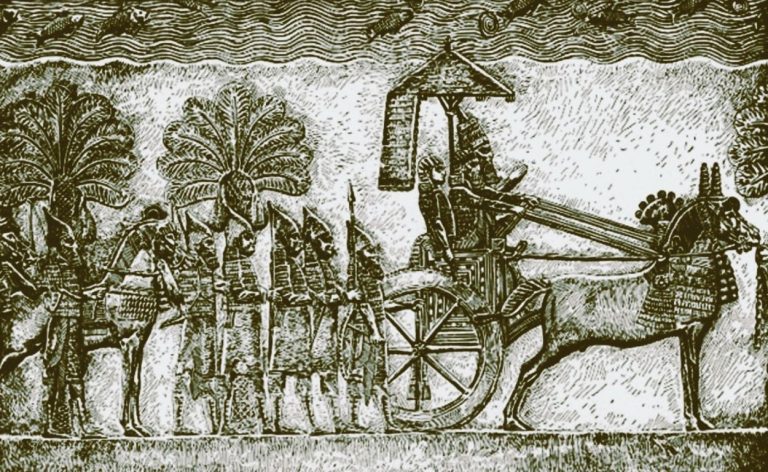
Ancient Sumer flourished by mastering irrigation, but the same canals that fed its cities slowly concentrated salt in the soil and weakened the agricultural base beneath them.

By Matthew A. McIntosh
Public Historian
Brewminate
Introduction: The Slow Disaster Beneath the First Cities
The earliest cities of southern Mesopotamia rose from a landscape that was neither naturally easy nor naturally doomed. Sumer’s cities (Uruk, Ur, Lagash, Nippur, Eridu, and others) were built in an alluvial plain where the Tigris and Euphrates rivers offered extraordinary agricultural potential but withheld the simpler gift of dependable rainfall. To live densely in this environment required more than planting seed in fertile mud. It required canals, embankments, levees, ditches, basin fields, labor crews, surveyors, administrators, and institutions capable of deciding when water would move, where it would go, and who would receive it. The same hydraulic system that allowed Sumerian cities to grow also made them vulnerable to the long consequences of their own success. Their prosperity depended on the repeated artificial wetting of a hot, flat, poorly drained landscape.
That dependence created one of history’s earliest examples of a human-made environmental trap. Irrigation solved the immediate problem of aridity, but it introduced a slower danger that could not be seen in a single season. River water carried dissolved mineral salts. When that water spread across fields and then evaporated under the Mesopotamian sun, the water disappeared but the salts remained. In a landscape with inadequate drainage, repeated irrigation could raise groundwater levels and draw salts back toward the root zone, where they accumulated around the plants that fed the cities. The process was gradual, uneven, and difficult to reverse. It did not resemble an invasion, a failed dynasty, or a catastrophic flood. It was a disaster that arrived as maintenance, habit, and routine: the same canals opened, the same fields watered, the same crops planted, the same salts left behind.
Sumer did not collapse simply because its people “over-irrigated” in some crude or careless sense. The Sumerians were not fools destroying a landscape they did not value; they were farmers, priests, scribes, laborers, and rulers trying to make an arid world support cities at a scale never before achieved. Their agricultural knowledge was practical and sophisticated, as reflected in Sumerian farming instructions that describe field preparation, plowing, watering, sowing, and harvesting with close attention to timing and labor. Yet practical expertise could not fully overcome the structural limits of the southern alluvium. The more urban life depended on irrigated grain, the harder it became to reduce pressure on the land. Temples and palaces needed rations, workers needed food, armies needed supplies, and cities needed regular surplus. A system built to produce abundance became locked into the conditions that slowly undermined abundance.
The story of salinization in ancient Sumer should be read neither as a simple morality tale nor as a single-cause explanation for the end of Sumerian power. Sumer was not one unified empire for most of its history, and its decline was entangled with warfare, political fragmentation, shifting river courses, climatic stress, migration, and the rise of successor states. But salinity matters because it operated below those visible events, weakening the agricultural base on which urban institutions depended. The result was not the sudden death of civilization, but a long reduction in resilience. Salt did not overthrow Sumer by itself. It narrowed Sumer’s choices, reduced the margin between surplus and shortage, and helped turn the miracle of irrigation into a slow disaster beneath the first cities.
The Alluvial Trap: Why Sumer Needed Irrigation
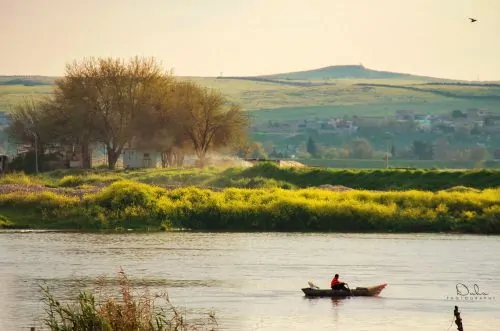
Southern Mesopotamia was not a natural paradise waiting passively for agriculture. It was a young alluvial plain built by the Tigris and Euphrates, a low, flat, shifting landscape of levees, basins, marshes, abandoned channels, reed beds, and riverine corridors. Its fertility came from water and silt, but neither arrived in the convenient form that settled grain agriculture required. Rivers could flood destructively, change course, deposit sediment in canals, or leave fields dry when water was most needed. The same landscape that made urban life possible demanded constant intervention. Sumerian civilization developed not simply beside the rivers, but through the repeated human work of converting unstable river water into predictable agricultural production.
The basic problem was rainfall. Northern Mesopotamia and parts of the upper plains could support dry farming in some periods and places, but the southern alluvium lay in an arid to semi-arid zone where rainfall was too sparse and unreliable for the kind of dense cereal agriculture that supported cities. The growing season required water at times when rain could not be trusted to provide it, and the southern plain’s climate made agriculture dependent on timing. Too little water meant crop failure; too much water at the wrong moment could waterlog fields, damage young plants, or interfere with harvest. The rivers themselves did not behave like obedient reservoirs. Their floods were seasonal, variable, and not always synchronized with the needs of cultivated grain. Farmers had to capture, redirect, and ration water rather than merely wait for it. Without irrigation, southern Mesopotamia might still have supported pastoralism, fishing, marsh exploitation, date cultivation, and smaller forms of settlement, but it could not have sustained the great urban concentrations that became the hallmark of Sumer. The largest cities of Uruk, Ur, Lagash, Umma, Nippur, and their neighbors depended on an agricultural hinterland that could produce regular surplus, not merely occasional abundance. They were not merely river cities. They were irrigation cities, built on the deliberate transformation of an uncertain floodplain into a managed grain-producing machine.
This dependence shaped the entire Sumerian landscape. Fields had to be laid out in relation to canals and levees. Water had to be diverted, timed, distributed, and drained. Main canals carried river water toward agricultural zones, while smaller channels and ditches brought it to fields. Embankments protected some areas while exposing others. Basin fields could be flooded, dried, plowed, and sown according to seasonal rhythms that required communal labor and administrative supervision. The Sumerian agricultural world described in texts such as The Farmer’s Instructions was not casual subsistence farming; it was a disciplined regime of field preparation, water management, plowing, sowing, harvesting, threshing, and storage. The farmer’s skill was inseparable from the controlled movement of water.
Yet this need for irrigation created what might be called the alluvial trap. Sumer could not become Sumer without irrigation, but irrigation exposed Sumer to dangers that were built into the physical setting of the southern plain. The land was extremely flat, so water did not easily run off. The rivers carried silt, so canals required continual cleaning and could become clogged, elevated, or inefficient. Floodwaters could replenish land but also damage it, spreading unpredictably or leaving behind deposits that altered field levels and water flow. Canal systems, once built, were never finished works of engineering; they were living infrastructures that had to be dredged, repaired, extended, and defended against neglect. Most importantly for the later history of salinization, irrigation in an arid environment introduced water into fields where evaporation was intense and natural flushing was limited. In wetter environments, rainfall can help wash salts downward through the soil profile. In southern Mesopotamia, where rain was insufficient and evaporation powerful, the movement of water was less forgiving. Water brought life to the field, but it also carried dissolved minerals. When the water evaporated, those minerals remained. When drainage was poor, the problem could compound as groundwater rose closer to the surface and capillary action drew saline moisture back toward plant roots. The land needed water to grow grain, but each act of watering carried consequences that accumulated over time.
This was not a problem that could have been solved by simply choosing a different way of life once cities had emerged. By the third millennium BCE, irrigation was bound to the political economy of southern Mesopotamia. Temples needed grain for offerings, dependents, and redistribution. Palaces needed grain for laborers, soldiers, messengers, and officials. Households depended on harvests, rations, and access to fields. Cities depended on rural hinterlands whose productivity supported craftsmen, merchants, priests, scribes, and rulers who did not all grow their own food. A reduction in irrigated cultivation would have been socially and politically dangerous. The system demanded maintenance, but it also demanded continuation. Once Sumerian urban society had been built on irrigated surplus, retreating from irrigation was not a realistic option.
The tragedy of southern Mesopotamia was not that irrigation was a mistaken invention. Irrigation was the condition of Sumerian greatness. It allowed one of the world’s earliest urban civilizations to flourish in a place where rain-fed farming alone could not have produced the same density, wealth, or institutional complexity. But it also meant that Sumerian society was tied to a demanding and fragile hydrological system. The rivers made abundance possible only when disciplined by canals; the canals made cities possible only when maintained by labor; and the same fields that produced grain under irrigation became vulnerable to waterlogging, siltation, and salt. The alluvial plain did not doom Sumer from the beginning, but it set the terms of survival. Sumer’s achievement was to master water well enough to build cities. Its danger was that this mastery could never be complete.
Agricultural Technology and the Making of Sumerian Society

Irrigation in Sumer was never only a technical matter. It was also a social and political order written into the landscape. A canal was a work of engineering, but it was also a claim on labor, land, water, and authority. To dig a canal required organized workers; to maintain it required regular dredging and repair; to use it required rules about sequence, access, and distribution. The movement of water produced more than crops. It produced obligations, offices, records, disputes, and hierarchies. In southern Mesopotamia, power did not merely sit in temples and palaces after agriculture had created surplus. Power was made through the very process of organizing the water that made surplus possible.
This connection between irrigation and authority should not be exaggerated into a simple “hydraulic despotism,” as if canals automatically created centralized tyranny. Sumerian political life was too varied for that. Cities competed with one another, local institutions mattered, temples and palaces overlapped, and authority changed across time. Some canal works may have required citywide or intercommunal coordination, while many smaller tasks were likely handled at more local levels by households, estates, temple dependents, or neighborhood labor groups. The danger in reducing Sumerian society to an automatic product of irrigation is that it makes people and institutions seem passive before geography, as though the rivers themselves created kings, scribes, and bureaucracies. The evidence suggests something more complicated. Irrigation created recurring problems of cooperation, but those problems could be answered in different ways depending on period, place, political strength, local custom, and institutional rivalry. Yet the basic point remains: irrigation demanded coordination at a scale beyond the isolated household. A farmer could manage his own field, but he could not alone control the river, clear a major canal, regulate upstream and downstream users, or settle conflicts between neighboring communities. The hydraulic landscape encouraged collective organization, and collective organization created opportunities for institutional power. In Sumer, water management was one of the places where environment, economy, and government met.
The canal system also made agricultural production visible to administration. Fields could be surveyed, measured, assigned, taxed, leased, and recorded. Labor could be mobilized for canal digging or maintenance. Grain could be collected, stored, redistributed, and counted. The rise of writing in southern Mesopotamia was deeply connected to this world of managed resources: fields, workers, livestock, rations, deliveries, and temple or palace accounts. The earliest administrative texts do not present an abstract civilization dreaming in poetry before turning to economics. They show institutions keeping track of things: grain, labor, animals, land, and obligations. Irrigation helped create the surplus that made administration necessary, but administration also helped keep irrigation functioning.
This was important because Sumerian agriculture depended on timing. Water had to arrive neither too early nor too late, neither too little nor too much. Fields needed preparation before sowing, and canals had to be in usable condition before the agricultural cycle required them. The practical wisdom preserved in The Farmer’s Instructions reflects a world in which successful farming depended on ordered labor and careful sequence: preparing land, opening water, plowing, sowing, protecting the crop, harvesting, threshing, and storing. The text’s concern with proper timing is important because it reveals agriculture as a chain of linked operations rather than a single act of planting. A neglected embankment, a delayed watering, poorly prepared soil, insufficient draft animals, badly timed sowing, or failure to protect the maturing crop could all compromise the harvest. Such instructions belong to the level of field practice, but they also imply a wider infrastructure behind the farmer’s work. The individual cultivator’s skill mattered, yet his success depended on channels, water flow, field boundaries, labor arrangements, and social expectations that no single farmer controlled entirely. Irrigation turned farming into both a technical and social discipline. The crop grew in the field, but the field itself was embedded in a managed landscape of obligations, schedules, tools, animals, laborers, overseers, and institutions.
Because irrigation created surplus, it also supported specialization. Grain from irrigated fields fed people who were not themselves full-time farmers: priests, scribes, craftsmen, merchants, soldiers, labor gangs, administrators, and rulers. This was one of the foundations of Sumerian urbanism. Cities could become centers of cult, trade, manufacture, and political command because surrounding fields generated food beyond the immediate needs of cultivators. But that surplus was not a neutral gift of nature. It had to be extracted from a managed landscape, and the institutions that managed the landscape gained claims over what it produced. Temples and palaces became powerful not only because they stood at the center of religious and political life, but because they were embedded in constructs of landholding, labor organization, and agricultural redistribution.
Water also created conflict. In a flat alluvial plain, upstream and downstream interests could collide. A canal that benefited one field, estate, or city might deprive another. Too much diversion in one place could mean shortage elsewhere; neglect in one section could damage the usefulness of the whole system. The famous conflict between Lagash and Umma over the Gu’edena borderland shows how land, water, political authority, and sacred claims could become inseparable. This was not merely a quarrel over abstract territory. Productive land in southern Mesopotamia was valuable because it was watered, bounded, cultivated, and integrated into institutional economies. To control such land was to control grain, labor, tribute, and prestige. Irrigation intensified both cooperation and rivalry: it required shared maintenance, but it also made the rewards of control worth fighting over.
The deeper danger was that this entire social order became increasingly dependent on the continued productivity of irrigated land. The more temples, palaces, cities, and households relied on irrigated grain, the harder it became to step back from intensive cultivation even when the land required relief. A lightly settled landscape might respond to ecological stress by shifting fields, reducing pressure, or allowing longer recovery. An urbanized irrigation society had fewer easy exits. Its institutions were built around expected yields, ration systems, labor demands, offerings, debts, and political obligations. If soil fertility declined, if canals silted, if waterlogging spread, or if salts accumulated, the crisis was not confined to farmers. It moved upward through the entire social structure. Reduced yields could affect temple stores, palace revenues, worker rations, seed reserves, military provisioning, debt obligations, and the capacity of rulers to reward dependents or maintain public works. Ecological stress became administrative stress, and administrative stress could become political stress. This is why salinization matters historically even if it did not strike every field equally or cause a single dramatic collapse. Irrigation made Sumerian society more productive, but it also made that society more tightly coupled to the health of the fields. The institutions that gave Sumer its power were not floating above the environment; they were rooted in soil, canals, grain, and labor. In Sumer, irrigation made power possible; it also made power vulnerable to the slow exhaustion of the fields beneath it.
How Salt Kills a Field
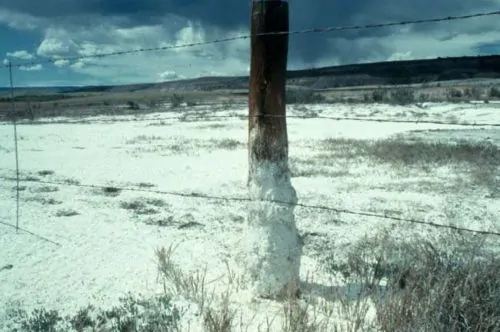
Salt did not poison Sumerian fields in the way a sudden toxin poisons a well. It worked slowly, season after season, through the ordinary physics of irrigated farming in an arid land. River water is never pure. As it moves through soils, sediments, and channels, it carries dissolved minerals, including salts. In a well-drained and humid environment, some of these salts can be washed downward by rainfall and carried away from the root zone. Southern Mesopotamia offered the opposite conditions: low rainfall, high evaporation, flat terrain, and drainage that was difficult to maintain. When irrigation water spread over a field, the crop used some of it, some soaked into the soil, and much of it evaporated. The water left, but the salts did not. They remained behind in the soil, accumulating invisibly until the field itself began to change.
The danger lay in repetition. A single irrigation season would not necessarily ruin a field, and ancient farmers could sometimes manage salts through timing, crop choice, fallowing, flushing, and field rotation. But irrigation agriculture depends on recurrence. Fields had to be watered again and again because the climate could not supply enough rain. Every cycle brought another small deposit of dissolved minerals. Salts concentrated near the surface, especially where evaporation pulled moisture upward. If the water table rose beneath a field, capillary action could draw saline groundwater toward the roots. The surface might then develop pale crusts or patches where plant growth weakened. Yields could decline long before a field became visibly ruined. Salt does not need to make land barren all at once to matter historically. It only needs to make harvests less dependable.
The biological damage was direct. Plants take up water through their roots, but salt in the soil makes that water harder to absorb. Even when moisture is physically present, high salinity can create a condition that resembles drought from the plant’s point of view. The crop stands in wet soil but cannot use the water efficiently. Salt stress can stunt growth, reduce germination, weaken roots, damage leaves, and lower grain yields. It can also affect the earliest and most vulnerable stages of cultivation, when seed must germinate evenly and young plants must establish themselves before heat, pests, weeds, or labor delays reduce the harvest further. A field under salt stress might not fail dramatically; it might simply produce thinner stands, weaker stalks, smaller heads of grain, and greater unevenness from one plot to another. That kind of decline could be easy to underestimate because the field still looked like agricultural land and still produced something. But in a rationed urban economy, “something” was not always enough. Some crops tolerate these conditions better than others. Barley is more salt-tolerant than wheat, which is why the apparent shift from wheat toward barley in southern Mesopotamian agriculture has played such an important role in arguments about salinization. The field did not simply stop producing. It changed what it could safely produce, and that change mattered in a society whose food network, ration system, seed reserves, brewing practices, animal fodder, and institutional economy depended heavily on cereal crops.
The cruel irony was that the most obvious remedy, more water, could become part of the problem. In theory, salts can be leached downward by flushing the soil with fresh water. Leaching only works if the salty water can drain away. Without adequate drainage, extra irrigation may raise the groundwater table, bringing more saline moisture closer to the surface. In a flat alluvial landscape, drainage was not a minor technical detail. It was the difference between washing salt out of the root zone and recycling it upward again. Canals that supplied water also silted, leaked, overflowed, and required maintenance. Fields that needed moisture could become waterlogged. A society could find itself trapped between two agricultural dangers: too little water produced drought and crop failure, while too much poorly drained water encouraged salinization and waterlogging. This demanded precision, but the landscape resisted perfect control.
This is why salinization should be understood as a slow structural disaster rather than a single event. It was not merely “bad farming,” and it was not simply the result of ignorance. It emerged from the interaction of climate, soil, river water, drainage, crop biology, labor organization, and political pressure. Sumerian farmers could recognize field conditions and adapt in practical ways, but they worked within a construct that required constant irrigation to sustain dense urban life. They could alter watering schedules, favor hardier crops, maintain canals, let some fields rest, or attempt to move cultivation where conditions were better, but each response carried costs. Less cultivation meant less grain. More labor on canals meant labor taken from other tasks. Shifting to barley could preserve production, but it also signaled narrowing agricultural choice. Allowing fields to recover was easier in theory than in a society with temples to supply, dependents to feed, debts to meet, and rulers to satisfy. When salts accumulated, they did not attack only plants. They attacked the margin of surplus on which temples, palaces, workers, and cities depended. A slightly weaker harvest could mean fewer rations, less seed grain, greater pressure on better fields, higher vulnerability to drought, and sharper competition over land and water. Over time, this could turn an environmental condition into a social and political weakness. Salt killed a field first by making it less generous. In a civilization built on surplus, that was dangerous enough.
The Evidence for Agricultural Stress
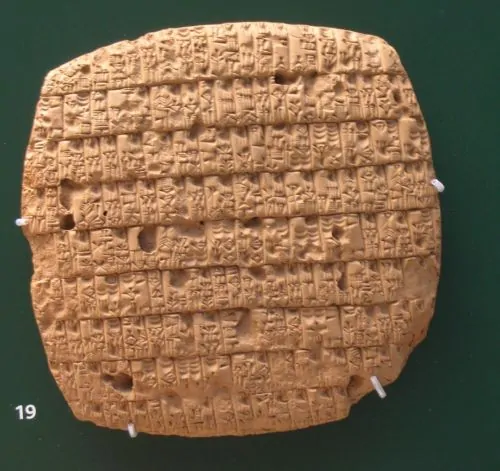
The most important evidence for salinization in ancient Sumer is not a single dramatic text announcing that the fields had died. It is a pattern reconstructed from crops, yields, administrative records, and the ecological difference between wheat and barley. Wheat and barley were both known in Mesopotamia, but they did not respond to the same field conditions in the same way. Wheat is generally more sensitive to salinity, while barley can tolerate saltier soils and harsher growing conditions. That difference gives crop choice historical meaning. If farmers increasingly favored barley over wheat in southern Mesopotamia, the change may reflect more than taste, habit, or institutional preference. It may point to a landscape in which salt was gradually narrowing what the fields could reliably produce.
This is why the wheat-to-barley question became central to the classic salinization argument. Scholars treated the changing balance between wheat and barley as one of the signs that southern Mesopotamian agriculture was under environmental stress. Their argument was not simply that barley existed, for barley was always important in Mesopotamian agriculture. Rather, they suggested that wheat became increasingly difficult to cultivate in parts of the southern alluvium as salinity worsened, while barley remained viable because of its greater tolerance. The implication was powerful: the agricultural system did not collapse all at once, but it adjusted downward. A civilization that once could cultivate a broader range of cereals became more dependent on the hardier crop. The movement from wheat toward barley served as a historical symptom of ecological constraint. It suggested that environmental change might be read not only in abandoned settlements or damaged canals, but also in the quieter choices of farmers and institutions deciding what seed to put into the ground. If wheat demanded cleaner soils and more favorable field conditions, while barley could endure more marginal ones, then the decline of wheat in the southern record becomes a possible signal that the agricultural landscape itself had changed. The key point is not that barley proved disaster by its presence, but that a growing dependence on barley may reveal adaptation under pressure. In that sense, the crop record becomes a kind of ecological testimony: not a single confession of collapse, but a pattern of choices shaped by what the land could still bear.
The point must be handled carefully, because barley was not a desperate food of last resort. It was central to Sumerian life in its own right. Barley was food, ration, seed, fodder, brewing grain, and accounting unit. It appears throughout administrative and economic records because it was deeply embedded in institutional practice. Workers could receive barley rations; temples and palaces could collect and redistribute barley; scribes could measure obligations in barley; and households could depend on it as a staple. Its prominence in the records does not automatically prove environmental decline. A society may favor barley because it is agronomically reliable, administratively convenient, culturally normal, or economically useful. The fact that barley was everywhere in Sumerian documentation is evidence of its importance, but the historical question is why wheat appears to have become less significant in the southern agricultural system over time.
That is where environmental interpretation becomes persuasive but not absolute. In an irrigated, arid, poorly drained landscape, increasing reliance on barley fits what we would expect from salinization. Salt-stressed fields do not necessarily become empty; they become selective. They reward crops that can endure the altered soil and punish those that cannot. Farmers facing this reality may not describe themselves as managing an ecological crisis. They may simply plant the crop that works. Over generations, that practical choice can become visible in records as a crop pattern. Barley’s rise, or wheat’s decline, matters because it suggests adaptation. Sumerian agriculture may have survived salinity not by defeating it, but by reorganizing itself around the crop most able to endure it.
Yield evidence points in the same direction, though it is more difficult to interpret than older summaries sometimes suggest. Administrative texts can preserve figures for seed, land, harvest, and expected output, but these figures do not always translate neatly into modern yield statistics. Ancient measures, scribal conventions, institutional accounting, field categories, and local conditions complicate comparison. A recorded yield may reflect real productivity, but it may also reflect administrative expectation, assessment practice, type of land, quality of seed, or the purpose of the document. Fields under temple or palace control may have been counted differently from privately held or locally managed land. Some records may preserve ideal norms, some actual deliveries, some obligations, and some retrospective calculations whose purpose was bureaucratic rather than agronomic. Even the relationship between seed and harvest is not always straightforward, because seeding rates, fallow cycles, field quality, labor availability, and water access could vary widely. This is the force of Marvin Powell’s critique: the salinization thesis becomes weaker when it treats difficult textual data as if they were modern agricultural reports. The evidence can support environmental stress, but it cannot always deliver the clean numerical precision that popular retellings want from it. It is better to use yield data as one strand in a larger argument rather than as a self-sufficient proof. The question is not whether one tablet can prove collapse, but whether crop choice, yield patterns, soil science, irrigation conditions, and settlement history point in the same general direction.
Even so, the broader pattern remains historically important. A shift toward barley, combined with the known physical risks of irrigation in southern Mesopotamia, makes salinization more than a theoretical possibility. The crop record fits the environmental mechanism. Irrigation water brought salts; evaporation concentrated them; poor drainage limited natural flushing; barley tolerated the resulting conditions better than wheat. The argument is strongest when these lines of evidence are read together rather than separately. No single tablet, crop ratio, or yield figure proves that salt “destroyed Sumer.” But the convergence of environmental science, settlement history, administrative evidence, and crop ecology supports the idea that parts of the Sumerian south faced long-term agricultural stress.
The human meaning of this shift should not be missed. To move from wheat to barley was not merely to change one plant for another. It was to accept a narrower agricultural future. Barley could keep people alive, provision institutions, feed animals, and sustain urban life, but its increasing dominance may signal a loss of flexibility in the food system. A society with many viable crops has options; a society forced toward the hardiest crop has fewer. In Sumer, that mattered because agricultural surplus supported everything above the field: rations, craft production, temple offerings, palace storage, trade, labor projects, and political authority. The evidence for stress is not only botanical. It is social. Wheat and barley reveal how environmental pressure could enter the everyday machinery of civilization, not as a single catastrophe, but as a slow narrowing of possibility.
From Soil Stress to Social Stress

Soil salinization mattered because agriculture in Sumer was not merely a private household activity. It was the material foundation of the urban order. Grain fed families, but it also fed temple personnel, palace workers, corvée laborers, dependent women and children, craftsmen, soldiers, boatmen, messengers, and officials. It was stored, measured, redistributed, loaned, owed, taxed, and offered to the gods. A field weakened by salt did not only injure the farmer who worked it. It threatened the broader chain of obligations that connected field, storehouse, household, temple, palace, and city. In a small subsistence community, a declining field might be a local hardship. In Sumer, where urban institutions depended on predictable surplus, declining field productivity could become a structural crisis.
The first effect of soil stress was not necessarily famine, but uncertainty. A field that had become saltier might still produce grain, but it might produce less, produce less predictably, or require more careful management to produce what it once yielded more easily. That difference mattered enormously. Sumerian institutions were built around expectation: expected yields, expected rations, expected labor, expected deliveries, expected offerings, and expected reserves. When actual harvests fell below expected obligations, the pressure had to go somewhere. It could fall on cultivators required to meet quotas, on workers whose rations were reduced, on temples and palaces forced to draw down stores, on households taking loans, or on marginal lands pushed harder to compensate for losses elsewhere. Soil stress became social stress through the gap between what the land could give and what institutions continued to demand.
This kind of pressure would have been dangerous because Sumerian society was already highly organized around grain accounting. Barley and other staples were not simply foods; they were administrative media through which labor and obligation could be measured. Workers received rations, fields were assessed, animals were provisioned, and institutions calculated inflows and outflows. That system gave Sumerian cities remarkable organizational power, but it also meant that agricultural shortfall could be translated quickly into bureaucratic strain. A bad harvest was not just hunger in the abstract. It was missing grain in a storeroom, an unpaid obligation, an unmet ration, an empty seed reserve, a postponed labor project, or an account that no longer balanced. Administrative structures can soften crisis when they possess adequate reserves, flexible authority, and reliable information, but they can also transmit crisis when obligations remain fixed while production falls. A temple or palace that expected a certain delivery from a field did not necessarily revise its demands simply because the soil had become less generous. Scribes could record shortage, but writing did not create grain. If the stores were thin, if seed grain had to be protected for the next season, or if laborers still had to be fed for canal work and public projects, every shortfall became a decision about who would bear the loss. In that sense, the very sophistication of Sumerian administration made ecological stress legible and distributable. It turned soil weakness into entries, arrears, ration adjustments, labor demands, and institutional choices.
Soil stress also sharpened inequality. Not all fields would have suffered equally from salinization, waterlogging, or drainage problems. Some lands were better positioned, better drained, closer to reliable canals, or more easily maintained. Others were marginal, poorly watered, or more exposed to salt accumulation. As environmental stress increased, the value of good land would have risen. Powerful institutions and households were better placed to secure access to productive plots, mobilize labor for canal maintenance, obtain seed, store grain, and survive bad years. Poorer cultivators, dependent workers, debtors, and marginal households had fewer buffers. Ecological decline rarely distributes suffering evenly. It tends to expose and deepen existing social differences. In Sumer, salt may have entered the historical record less as a universal agricultural death sentence than as a pressure that made the strong more secure and the vulnerable more exposed.
The consequences could also extend into politics. Rulers in southern Mesopotamia claimed legitimacy through protection, justice, cultic service, military success, canal building, and the maintenance of abundance. Royal inscriptions often celebrate construction, restoration, boundary defense, temple support, and public works because such acts demonstrated a ruler’s capacity to order the world. A ruler who dug canals, restored temples, secured borders, and fed dependents presented himself as the one who kept disorder away from the city. But a ruler whose land produced less grain faced a narrower political field. He had less surplus with which to reward followers, provision laborers, support temples, feed armies, repair canals, and stabilize cities after crisis. The symbolism of abundance could survive in royal language even when the material basis of abundance was weakening, and that gap could be dangerous. Kingship depended not only on ritual authority or military victory but also on the visible capacity to maintain the systems that made life possible. If canal maintenance faltered, if rations shrank, if temple economies strained, or if productive land became more contested, political authority could appear less protective and less effective. If environmental stress coincided with war, dynastic conflict, river shifts, drought, or external invasion, it could make political recovery harder. Salinization did not need to topple kings directly. It only had to reduce the resources available to kings when other pressures arrived.
This is where environmental history must resist a false division between “natural” and “political” causes. A crop failure, a canal dispute, a labor shortage, a debt crisis, a border war, and a weakening dynasty may look like separate problems, but in an irrigation society they could be connected. Less productive soil meant more competition for better fields. More competition for land and water could worsen disputes between households, estates, cities, or rulers. Lower yields could make labor obligations heavier, because institutions still needed canals cleared and fields worked. Heavier obligations could increase flight, resistance, debt, or dependence. Political instability could then reduce the maintenance needed to keep irrigation systems functioning, which in turn could worsen agricultural stress. Such feedback loops are difficult to prove in every specific case, but they are essential to understanding how a slow environmental process becomes historically explosive.
The social meaning of salinization was not simple collapse, but reduced resilience. A resilient agricultural society can absorb bad years, rebuild after war, survive dynastic conflict, and adapt to changing river conditions. A society already coping with declining field quality has less room to maneuver. Sumer’s cities did not fall in a single synchronized ecological disaster, and Mesopotamian civilization did not end when Sumerian political dominance faded. But salinization helps explain why the southern heartland became more fragile over time. Salt worked beneath the surface of events, weakening the agricultural confidence on which urban life depended. The crisis began in the soil, but it did not remain there. It moved through rations, accounts, debts, canals, temples, palaces, borders, and kingship itself.
The Collapse That Was Not One Collapse
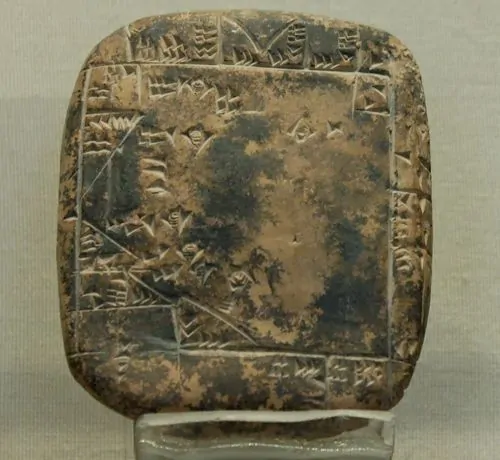
The decline of Sumer was not a single collapse, and it did not happen on one day, in one reign, or from one cause. This matters because the salinization argument can become misleading if it is forced into the shape of a sudden catastrophe. Sumer was not a unified empire that simply fell when its fields failed. For much of its history, it was a southern Mesopotamian cultural and linguistic world organized around competing city-states, shared religious traditions, overlapping economic practices, and shifting political hegemonies. Its power rose, fractured, revived, and transformed across centuries. Salt belongs in that history not as the one event that “ended Sumer,” but as one of the long pressures beneath a series of political and social changes.
In the Early Dynastic period, southern Mesopotamia was defined less by unity than by rivalry. Cities such as Uruk, Ur, Lagash, Umma, Kish, and Nippur shared broad cultural forms, but they also fought over land, prestige, water, borders, and divine favor. The Lagash-Umma war is revealing because it shows that agricultural territory was already politically charged long before the final decline of Sumerian power. Productive land was never just dirt. It was watered land, bounded land, taxable land, sacred land, and grain-producing land. These city-state conflicts remind us that instability was not an accidental late development. Competition was woven into the structure of southern Mesopotamian life, and irrigation agriculture made some of that competition sharper.
The rise of the Akkadian Empire under Sargon and his successors did not erase this older Sumerian world; it reorganized it under a broader territorial power. Akkadian rule created a new imperial scale in Mesopotamian politics, linking Sumer and Akkad under kings who claimed authority beyond the limits of a single city. But imperial unification also created new burdens. A wider state required armies, administrators, tribute, roads, garrisons, and reliable flows of resources. The agricultural south remained crucial to this system, but the Akkadian Empire faced pressures that cannot be reduced to salinity: rebellion, regional diversity, succession struggles, military overextension, and possibly climatic disruption in the late third millennium BCE. The later literary memory of Akkad’s fall, especially in The Curse of Agade, transformed political disaster into a theological drama of divine anger, sacrilege, famine, and ruin. That text is not a documentary account in the modern sense, but it preserves a Mesopotamian way of imagining collapse as the breakdown of order across city, temple, field, and cosmos.
After Akkadian power broke down, southern Mesopotamia did not simply disappear into ruin. The so-called Gutian period remains historically difficult, partly because later Mesopotamian tradition portrayed the Gutians as barbarous destroyers and disorderly outsiders. Yet the deeper point here is that political disruption did not mean the end of Sumerian civilization. Cities persisted, institutions adapted, local rulers acted, and the cultural prestige of Sumerian traditions continued. Collapse, in this phase, meant fragmentation and reordering rather than extinction. If salinization was already weakening parts of the southern agricultural base, it operated alongside this political instability rather than replacing it. A stressed landscape could make recovery harder, but it did not prevent all recovery.
The clearest proof that Sumer did not “collapse” in a simple linear way is the rise of the Third Dynasty of Ur. Ur III was a powerful revival of southern Mesopotamian statecraft, centered on Ur and associated with kings such as Ur-Namma and Shulgi. Its rulers built, administered, taxed, recorded, standardized, and projected authority on an impressive scale. The enormous administrative archive of the period shows a highly organized state concerned with labor, animals, grain, textiles, land, rations, and movement of goods. If salt had already made southern Mesopotamia wholly unproductive, such a state could not have functioned. Ur III complicates any crude story of ecological doom. The south was stressed, but not dead. Its institutions remained capable of extraordinary organization. Indeed, the very scale of Ur III administration shows that southern Mesopotamia still possessed substantial agricultural and institutional capacity after centuries of earlier political upheaval. The state could mobilize labor, support temples, provision dependents, manage herds, regulate production, and coordinate flows of goods across a large territory. That does not disprove salinization; it refines how we understand it. Environmental stress did not necessarily mean immediate abandonment or incapacity. It could coexist with administrative brilliance, especially when a state was powerful enough to concentrate labor and resources. Ur III’s achievement reveals both resilience and danger: the southern network could still generate impressive power, but only through increasingly intensive organization of land, people, and surplus.
Yet Ur III also shows the vulnerability of a highly administered agrarian state. Its strength depended on the very systems that could become brittle under pressure. A state that counted labor, grain, animals, fields, and rations so closely could mobilize resources effectively, but it also depended on those resources arriving. If harvests became less reliable, if canals required greater maintenance, if frontier pressures increased, if labor demands grew heavier, or if regional loyalty weakened, the administrative machine could become strained. The final decades of Ur III were marked by military threats, Amorite incursions or migrations, internal pressures, and eventually Elamite intervention. The fall of Ur in the early second millennium BCE was a political and military event, remembered in laments as a cosmic and urban tragedy. But beneath the drama of invasion and dynastic failure lay the deeper question of how much stress the southern network could absorb.
This is where salinization belongs: not as the executioner standing alone at the end of the story, but as a background process that reduced resilience across successive political crises. Sumerian power did not fall once; it lost ground through repeated transformations. City-state rivalry weakened regional unity. Akkadian imperial rule changed the scale of politics. Post-Akkadian fragmentation altered local power. Ur III restored southern authority but did so through an intensely managed state. Its fall shifted the political center increasingly toward Amorite dynasties and later Babylonian power. Throughout these changes, the old Sumerian south remained culturally important, but its political primacy faded. If parts of the southern landscape were becoming harder to farm, more dependent on barley, more vulnerable to waterlogging, or more costly to maintain, then ecological stress would have made each political crisis more difficult to survive. It would not have needed to produce a uniform agricultural collapse across all Sumerian land. A patchwork of declining fields, rising maintenance demands, narrowed crop choices, and increased competition for better-watered land would have been enough to weaken the old urban order over time. Political events then become easier to understand not as alternatives to environmental explanation, but as moments when an already strained system was tested. War, migration, rebellion, and dynastic failure struck a society whose ecological foundations may have been less forgiving than they had once been.
The result was not the death of Mesopotamian civilization. That is essential. Writing, law, kingship, temple culture, myth, mathematics, astronomy, and urban life continued after the decline of Sumerian political dominance. The Sumerian language itself survived as a learned, sacred, and scholarly language long after it ceased to be the everyday speech of most people. What changed was the balance of power, the role of the southern cities, and the ecological confidence of the old heartland. Sumer’s collapse was not one collapse. It was a long historical transition in which environmental stress, political rivalry, imperial ambition, migration, warfare, and institutional overreach interacted. Salt did not end Sumer in a single blow. It helped make the old Sumerian world less able to recover from blows that came from many directions.
An Artificial Disaster, but Not a Simple Moral Fable

To call Sumerian salinization an artificial disaster is not to say that ancient farmers deliberately destroyed their land. It is to say that the disaster emerged from human systems: canals, irrigation schedules, settlement density, state demands, crop regimes, labor obligations, and the long dependence of cities on managed water. Salt accumulation was not a purely natural fate imposed on southern Mesopotamia from outside history. It was intensified by the very agricultural practices that made Sumerian urban civilization possible. The fields did not become vulnerable because people failed to work them. They became vulnerable because people worked them intensively, repeatedly, and successfully enough to support cities whose needs could not easily be reduced.
This distinction matters because the story can too easily become a modern morality play about environmental arrogance. Sumerians are sometimes imagined as early offenders in a long human record of ecological self-destruction: they built canals, ignored the consequences, poisoned the soil, and collapsed beneath the weight of their own cleverness. There is truth in the broad warning, but the simplified version is unfair to the ancient actors and weak as history. Sumerian farmers and administrators were not modern hydrologists, but they were not ignorant of land, water, seed, or harvest. Their agricultural texts reflect close practical knowledge of field preparation, watering, plowing, sowing, threshing, and storage. Their rulers boasted of canal construction and restoration because water management was recognized as a central duty of power. Their institutions recorded land and grain with extraordinary care. This was not a society indifferent to agriculture. It was a society whose intelligence was invested deeply in agriculture.
The problem was that practical knowledge could manage symptoms without escaping the structure that produced them. Farmers could plant barley instead of wheat where conditions demanded it. They could adjust watering, maintain ditches, allow some land to rest, flush fields when possible, or move cultivation toward better areas. Institutions could organize labor for canals, dredging, embankments, and field management. These strategies mattered, and they help explain why southern Mesopotamian civilization did not simply vanish when salinity became a problem. Adaptation was real. But adaptation is not the same as solution. If irrigation continued to bring dissolved salts, if evaporation remained high, if drainage remained difficult, and if the political economy continued to demand surplus from the same broad landscape, then each local remedy operated within a larger trap.
That trap was intensified by urban dependence. A small agricultural community under pressure might reduce cultivation, shift settlement, rely more heavily on pastoralism, or leave some land idle for longer periods. Sumerian cities had fewer simple choices. Their temples, palaces, labor systems, craft production, and redistribution networks required reliable grain. Even if some officials or cultivators recognized that particular fields were declining, the immediate demands of the city still pressed forward. Workers had to be fed now. Canals had to be maintained now. Offerings had to be supplied now. Seed had to be preserved now. Armies, messengers, dependent households, and public works required resources in the present. The long-term health of the soil competed against the short-term survival of institutions. A ruler who reduced cultivation to protect future fertility might weaken present revenues, anger dependents, fail cultic obligations, or lose military capacity. A temple household that allowed land to rest still had personnel to support and ritual needs to meet. A cultivator who knew that a field was deteriorating might nevertheless have debts, quotas, rents, or family needs that made withdrawal impossible. This created a kind of ecological debt: present production was maintained by drawing down the future capacity of the land. That is one of the cruelest features of environmental disasters created by successful systems: the very needs that make reform necessary also make reform difficult.
Nor should “artificial” be confused with “avoidable” in any simple sense. Southern Mesopotamia’s geography made irrigation necessary for the kind of civilization that developed there. Without canals, levees, and managed fields, the region could not have supported the same dense urban life. The Sumerians did not choose between a sustainable paradise and a destructive irrigation regime. They chose, across generations, among constrained options in a difficult environment. Irrigation opened possibilities that rain-fed agriculture could not provide. It allowed cities, writing, monumental religion, specialized labor, long-distance exchange, and complex administration to flourish. But those possibilities carried costs that accumulated slowly and unevenly. The disaster was artificial because human action produced it; it was tragic because that action was also the foundation of Sumerian achievement.
This is why the language of “suicide” must be used carefully. As a title or metaphor, it captures the irony that Sumerian society helped undermine the fields that sustained it. As literal explanation, it goes too far. Suicide implies knowledge, intention, and a single decisive act. Salinization involved none of those in a straightforward way. It was incremental, distributed, and partly invisible. No one canal ruined Sumer. No one harvest revealed the whole danger. No single ruler chose collapse. Instead, many ordinary decisions (watering fields, maintaining canals, demanding rations, planting barley, expanding cultivation, meeting quotas, repairing one channel while neglecting another) participated in a cumulative process. These were not necessarily irrational choices in their immediate context. Many were practical, even necessary. A canal had to be opened because fields needed water; barley had to be planted because it could survive; rations had to be distributed because workers depended on them; damaged channels had to be repaired because without them the next harvest might fail outright. The tragedy is that reasonable short-term actions can become destructive when repeated within a constrained ecological system. The danger lay not in one catastrophic mistake but in a system whose normal operation generated long-term damage.
The strongest interpretation is neither condemnation nor absolution. Sumerian salinization was a human-made disaster, but it was not a simple fable of stupidity, greed, or technological arrogance. It was a tragedy of dependence, scale, and delayed consequence. Sumer’s irrigation civilization became powerful by solving the problem of water in an arid land, yet that solution created another problem that unfolded too slowly to force an easy reckoning. The lesson is not that ancient people failed because they lacked wisdom and modern people possess it. The lesson is sharper than that: societies can be intelligent, adaptive, administratively sophisticated, and still become trapped by the ecological side effects of their own success. Sumer’s salt problem was not the opposite of civilization. It was civilization’s shadow in the soil.
Did Salt Really Bring Down Sumer?
The following video from “History with Cy” is a history of the Sumerians:
Salinization can be made too powerful, too neat, and too modern. The image of Sumer “committing suicide with salt” is memorable, but it risks turning a difficult historical problem into an environmental morality tale. Ancient Sumer did not leave behind a simple confession that irrigation destroyed its fields and brought down its cities. The evidence is indirect: crop choices, administrative records, yield estimates, soil science, settlement patterns, and later historical reconstruction. That evidence matters, but it must be handled with caution. The fall of Sumerian political primacy involved warfare, city-state rivalry, Akkadian imperial rule, Gutian disruption, Ur III centralization, Amorite movement, Elamite attack, shifting river channels, institutional strain, and broader regional changes. Salt was part of this world, but it was not the whole world.
Marvin Powell’s critique of the progressive salinization thesis remains important precisely because it warns against overconfidence. He challenged the way some scholars interpreted Sumerian seed and yield data, arguing that difficult ancient accounting texts should not be treated as if they were modern agricultural statistics. Measures, categories, scribal purposes, and institutional conventions complicate the evidence. A tablet recording seed, field, or harvest information may tell us something valuable, but it does not automatically reveal actual productivity across the entire southern alluvium. Some records may reflect expected yields rather than actual harvests; others may preserve institutional claims, obligations, assessments, or accounting norms rather than direct observations of what the land produced. The problem is not that the tablets are useless, but that they require translation across several gaps at once: language, metrology, administrative purpose, agronomic context, and regional variation. Likewise, the prominence of barley does not prove crisis by itself. Barley was not merely a fallback crop for ruined land; it was a normal and central grain in Mesopotamian life, used for food, beer, fodder, rations, and accounting. Its dominance in administrative records may partly reflect institutional convenience as much as ecological necessity. Sumerian officials counted barley because barley was economically central, storable, divisible, and deeply embedded in the ration system. If the evidence is pushed too hard, the salinization argument can become circular: barley is common because the land was salty, and the land must have been salty because barley is common. Powell’s critique does not require us to reject salinization, but it does require us to stop treating every barley reference, yield figure, or crop ratio as transparent proof of environmental decline.
There is also a chronological problem. Sumerian history does not line up neatly with a single ecological collapse. The south remained productive enough to support major cities and powerful states long after salinity may have begun affecting parts of the landscape. The Ur III state shows impressive administrative capacity, agricultural organization, and institutional reach in the late third millennium BCE. If salinization had already destroyed Sumerian agriculture in a simple sense, Ur III should not have been possible. The persistence of urban life, temple institutions, written culture, and agricultural administration shows that southern Mesopotamia was not reduced to wasteland. Environmental stress was also probably uneven. Some fields, cities, canals, and districts would have been more vulnerable than others. Salinization may have damaged certain zones while other areas remained productive, especially where drainage, water access, soil type, or management practices were more favorable.
These challenges do not destroy the environmental argument, but they do force it into a better form. Salt should not be treated as the sole cause of Sumer’s decline, nor as a sudden executioner of civilization. It is better understood as a long-term constraint that reduced resilience. The physical mechanism of salinization in an arid, irrigated, poorly drained landscape is real. The shift toward barley is suggestive, even if not conclusive by itself. The administrative pressure of grain-based institutions made declining reliability historically significant. The settlement and political history of the southern alluvium shows transformation rather than instant extinction. In that context, salinity becomes one pressure among several, but a particularly deep one because it affected the agricultural foundation beneath temples, palaces, labor systems, and cities.
The final interpretation is strengthened in this analysis. Sumer did not simply “die of salt,” and the phrase “ecological suicide” must remain metaphor, not verdict. The Sumerians did not knowingly choose ruin, and their civilization was not undone by one environmental mistake. Yet the metaphor captures something real: the irrigation system that made urban life possible also helped create conditions that narrowed the future of the southern fields. Salt did not march into Ur, overthrow kings, or burn temples. It weakened margins, shifted crops, increased dependence on management, and made political shocks harder to absorb. The most defensible conclusion is not that salinization single-handedly brought down Sumer, but that Sumer’s decline cannot be fully understood without the slow environmental cost of the water system that had made Sumerian civilization possible.
Conclusion: The Civilization That Could Not Drain Its Own Success
Sumer’s salt problem was not a separate episode added to the end of its history. It was embedded in the very system that made Sumerian civilization possible. Southern Mesopotamia became one of the birthplaces of urban life because its people learned to move water across an arid alluvial plain with extraordinary skill. Canals turned uncertain river landscapes into fields; fields produced grain; grain supported temples, palaces, scribes, craftsmen, laborers, soldiers, and cities. Irrigation was not a technical footnote to Sumerian history. It was one of the foundations of Sumerian power. Yet that foundation carried a hidden contradiction. The more the cities depended on irrigated agriculture, the more they depended on a process that could slowly concentrate salts in the soil beneath them.
That contradiction is what makes salinization such a powerful historical problem. Salt did not destroy Sumer as a single invading force, and it did not reduce the southern plain to wasteland overnight. Its work was slower and less theatrical. It narrowed crop choices, encouraged greater reliance on barley, reduced the reliability of harvests, increased the cost of maintaining productive land, and made social institutions more vulnerable to shortage. It turned environmental stress into administrative stress, and administrative stress into political fragility. In a society organized around grain, rations, labor, storage, and redistribution, declining agricultural resilience could not remain confined to the field. It moved through the entire structure of urban life.
The decline of Sumerian political primacy was not simply an ecological collapse, but neither can it be understood without ecology. Warfare, rivalry among city-states, Akkadian imperial rule, Gutian disruption, Ur III centralization, Amorite movement, Elamite attack, shifting river courses, and institutional strain all mattered. The strongest interpretation does not choose between environmental and political causes as though they were separate worlds. It sees them as interlocking pressures in an irrigation society whose success depended on the constant conversion of water into surplus. Salt weakened the margin within which Sumerian states could survive other shocks. It did not end Mesopotamian civilization, which continued in Babylonian, Assyrian, and later forms, and it did not erase Sumerian cultural memory. But it helped explain why the old southern heartland became less able to sustain the kind of dominance it had once achieved.
Sumer’s tragedy was not that it failed to understand agriculture. It was that its civilization became dependent on an agricultural solution whose costs accumulated slowly, unevenly, and often invisibly. The Sumerians mastered water well enough to build the first cities, but they could not fully drain the consequences of that mastery. Their world reminds us that environmental disaster does not always arrive as an interruption of civilization. Sometimes it is produced by civilization’s most successful routines: the canal opened again, the field watered again, the grain counted again, the surplus demanded again. Sumer did not simply die by salt. It revealed how a society can be brilliant, adaptive, and powerful while still being undermined by the ecological shadow of its own achievements.
Bibliography
Affiliate disclosure: Amazon links on this site are paid links. As an Amazon Associate I earn from qualifying purchases.
- Adams, Robert McC. Heartland of Cities: Surveys of Ancient Settlement and Land Use on the Central Floodplain of the Euphrates. Chicago: University of Chicago Press, 1981.
- Algaze, Guillermo. Ancient Mesopotamia at the Dawn of Civilization: The Evolution of an Urban Landscape. Chicago: University of Chicago Press, 2008.
- Altaweel, Mark, and Chikako E. Watanabe. “Assessing the Resilience of Irrigation Agriculture: Applying a Social–Ecological Model for Understanding the Mitigation of Salinization.” Journal of Archaeological Science 39:4 (2012), 1160–1171.
- Artzy, Michal, and Daniel Hillel. “A Defense of the Theory of Progressive Soil Salinization in Ancient Southern Mesopotamia.” Geoarchaeology 3:3 (1988), 235–238.
- Barton, George A., ed. and trans. The Royal Inscriptions of Sumer and Akkad. New Haven: Yale University Press, 1929.
- Black, Jeremy, et.al., trans. and eds. The Literature of Ancient Sumer. Oxford: Oxford University Press, 2004.
- Buringh, P. Soils and Soil Conditions in Iraq. Baghdad: Ministry of Agriculture, 1960.
- Civil, Miguel. The Farmer’s Instructions: A Sumerian Agricultural Manual. Aula Orientalis Supplementa 5. Sabadell, Spain: Editorial AUSA, 1994.
- Cooper, Jerrold S. The Curse of Agade. Baltimore: Johns Hopkins University Press, 1983.
- Englund, Robert K. “Administrative Timekeeping in Ancient Mesopotamia.” Journal of the Economic and Social History of the Orient 31:2 (1988), 121-185.
- Flückiger-Hawker, Esther. Urnamma of Ur in Sumerian Literary Tradition. Orbis Biblicus et Orientalis 166. Fribourg: University Press; Göttingen: Vandenhoeck & Ruprecht, 1999.
- Frayne, Douglas R. Presargonic Period, 2700–2350 BC. The Royal Inscriptions of Mesopotamia, Early Periods 1. Toronto: University of Toronto Press, 2008.
- —-. Sargonic and Gutian Periods, 2334–2113 BC. The Royal Inscriptions of Mesopotamia, Early Periods 2. Toronto: University of Toronto Press, 1993.
- —-. Ur III Period, 2112–2004 BC. The Royal Inscriptions of Mesopotamia, Early Periods 3/2. Toronto: University of Toronto Press, 1997.
- Hillel, Daniel. Out of the Earth: Civilization and the Life of the Soil. Berkeley: University of California Press, 1991.
- Jacobsen, Thorkild. The Sumerian King List. Assyriological Studies 11. Chicago: University of Chicago Press, 1939.
- Jacobsen, Thorkild, and Robert McC. Adams. “Salt and Silt in Ancient Mesopotamian Agriculture.” Science 128:3334 (1958), 1251–1258.
- Kuhrt, Amélie. The Ancient Near East, c. 3000–330 BC. 2 vols. London: Routledge, 1995.
- Legrain, Leon. Business Documents of the Third Dynasty of Ur from Umma. Philadelphia: University Museum, University of Pennsylvania, 1947.
- Levey, Martin. “Gypsum, Salt and Soda in Ancient Mesopotamian Chemical Technology.” Isis 49:3 (1958), 336-342.
- Liverani, Mario. The Ancient Near East: History, Society and Economy. London: Routledge, 2013.
- Maekawa, Kazuya. “The Agricultural Texts of Ur III Lagash of the British Museum.” Acta Sumerologica 4 (1982), 37–61.
- Michalowski, Piotr. The Correspondence of the Kings of Ur: An Epistolary History of an Ancient Mesopotamian Kingdom. Winona Lake, IN: Eisenbrauns, 2011.
- —-. The Lamentation over the Destruction of Sumer and Ur. Mesopotamian Civilizations 1. Winona Lake, IN: Eisenbrauns, 1989.
- —-. “The Mortal Kings of Ur: A Short Century of Divine Rule in Ancient Mesopotamia.” In Religion and Power: Divine Kingship in the Ancient World, edited by Nicole Brisch, 33–45. Chicago: Oriental Institute of the University of Chicago, 2008.
- Nissen, Hans J. The Early History of the Ancient Near East, 9000–2000 B.C. Translated by Elizabeth Lutzeier. Chicago: University of Chicago Press, 1988.
- Pessarakli, Mohammad, ed. Handbook of Plant and Crop Stress. 4th ed. Boca Raton, FL: CRC Press, 2019.
- Pollock, Susan. Ancient Mesopotamia. Cambridge: Cambridge University Press, 1999.
- Postgate, J. N. Early Mesopotamia: Society and Economy at the Dawn of History. London: Routledge, 1992.
- Pournelle, Jennifer R. “Physical Geography.” In The Sumerian World, edited by Harriet Crawford, 13–32. London: Routledge, 2013.
- Powell, Marvin A. “Salt, Seed, and Yields in Sumerian Agriculture: A Critique of the Theory of Progressive Salinization.” Zeitschrift für Assyriologie und Vorderasiatische Archäologie 75:1 (1985), 7–38.
- Roth, Martha T., trans. Law Collections from Mesopotamia and Asia Minor. 2nd ed. Atlanta: Scholars Press, 1997.
- Sigrist, Marcel. Drehem. Bethesda, MD: CDL Press, 1992.
- Sollberger, Edmond. The Business and Administrative Correspondence under the Kings of Ur. Locust Valley, NY: J. J. Augustin, 1966.
- Steinkeller, Piotr. “The Organization of Crafts in Third Millennium Babylonia: The Case of Potters.” Altorientalische Forschungen 23:2 (1996), 232–253.
- Van De Mieroop, Marc. A History of the Ancient Near East, ca. 3000–323 BC. 3rd ed. Malden, MA: Wiley-Blackwell, 2003.
- Waetzoldt, Hartmut, and Harald Hauptmann, eds. Wirtschaft und Gesellschaft von Ebla: Akten der Internationalen Tagung Heidelberg, 4.–7. November 1986. Heidelberg: Heidelberger Orientverlag, 1988.
- Weiss, Harvey, et al. “The Genesis and Collapse of Third Millennium North Mesopotamian Civilization.” Science 261:5124 (1993), 995–1004.
- Widell, Magnus. “Sumerian Agriculture and Land Management.” In The Sumerian World, edited by Harriet Crawford, 55–67. London: Routledge, 2013.
- Wilkinson, Tony J. Archaeological Landscapes of the Near East. Tucson: University of Arizona Press, 2003.
- Yoffee, Norman. Myths of the Archaic State: Evolution of the Earliest Cities, States, and Civilizations. Cambridge: Cambridge University Press, 2005.
Originally published by Brewminate, 07.08.2026, under the terms of a Creative Commons Attribution-NonCommercial-NoDerivatives 4.0 International license.
About the Author