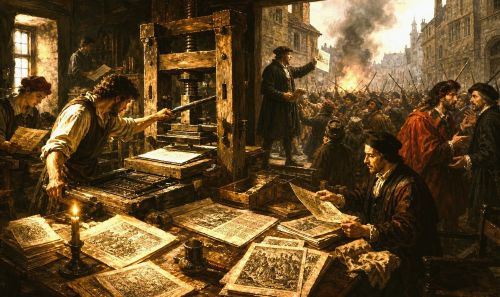
Print transformed early modern political violence by spreading propaganda, legitimizing revolt, demonizing enemies, and turning conflict into public spectacle.

By Matthew A. McIntosh
Public Historian
Brewminate
Introduction: Print as an Instrument of Political Violence
In early modern Europe, the printing press did not simply carry news of political violence after the fact. It helped make violence public, intelligible, repeatable, and morally charged. Between roughly 1500 and 1800, printed texts and images entered conflicts over religion, monarchy, rebellion, law, confession, empire, and popular sovereignty with a force no earlier medium could match. Sermons, pamphlets, placards, broadsheets, newsbooks, libelles, engravings, trial accounts, martyr narratives, and official proclamations did more than describe events. They told readers who was innocent, who was monstrous, who had betrayed God or kingdom, and when bloodshed could be imagined as justice rather than crime. The press widened the theater of violence by allowing local episodes of riot, persecution, execution, massacre, and revolt to become regional, national, or even international arguments over legitimacy. This was one of the central political consequences of print: it gave conflict a portable language and gave violence an audience beyond the place where bodies actually fell.
That power should not be understood as a simple mechanical effect of technology. Print did not cause the Reformation, the German Peasants’ War, the French Wars of Religion, the Dutch Revolt, the English Civil Wars, or the French Revolution in any narrow sense. Those conflicts emerged from deeper political, religious, social, and fiscal crises. Yet print changed how those crises unfolded by accelerating accusation, reply, persuasion, and suspicion. It could authenticate power, counterfeit authority, widen rumor, and make political uncertainty durable.
Political violence here includes more than battles and bloodshed. It includes the printed justification of rebellion, the demonization of religious enemies, the public defense of executions, the manufacture of martyrdom, the circulation of atrocity reports, the management of diplomatic reputation, and the destruction of political character through scandal. Early modern readers encountered violence not only as an event but as an interpretation. Was a rebel a defender of ancient liberty or a traitor to lawful authority? Was a massacre divine vengeance, royal necessity, or evidence of monstrous cruelty? Was an executed ruler a tyrant lawfully punished or a martyr murdered by sedition? Print did not settle these questions. It multiplied them, sharpened them, and placed them before audiences far beyond the court, pulpit, battlefield, or town square. In that sense, the press became a weapon not because every printed text urged violence directly, but because print helped define the moral categories through which violence could be condemned, excused, sanctified, or demanded.
The history that follows moves chronologically from the Reformation to the French Revolution, tracing how print became embedded in the machinery of early modern conflict. Protestant and Catholic polemic turned religious disagreement into mass persuasion. Peasant manifestos and princely condemnations showed how the same medium could voice grievance and authorize repression. French religious pamphlets and atrocity narratives transformed massacre into confessional memory. Dutch and English print cultures made rebellion, news, regicide, and state violence matters of public argument. In 18th-century France, libelles and scandal literature weakened the symbolic authority of monarchy before revolutionary newspapers and pamphlets helped define the enemies of the people. Across these episodes, the central pattern is clear: print did not merely reflect political violence. It helped organize the imagination through which violence became meaningful, legitimate, and publicly usable.
Reformation Print and the Birth of Mass Religious Polemic
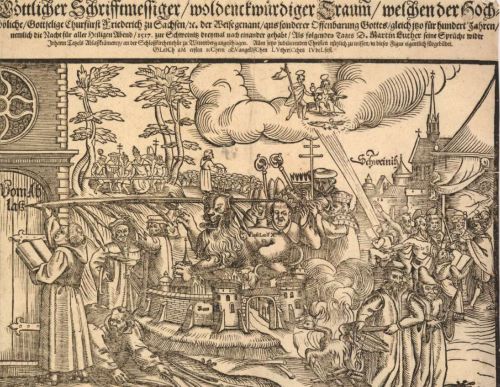
The Protestant Reformation was not the first religious controversy in European history, but it was the first to unfold within a mature print culture. Earlier medieval reform movements had relied on manuscript circulation, preaching, rumor, disputation, and local networks of patronage or protection. The controversy that followed Martin Luther’s challenge to indulgences in 1517 operated differently. Printed pamphlets, sermons, broadsheets, catechisms, biblical translations, and woodcut images allowed theological conflict to move with unusual speed across towns, universities, courts, workshops, and marketplaces. What began as a dispute over penitential theology and ecclesiastical authority became a public crisis because print gave religious argument a reproducible form. A sermon could become a pamphlet. A pamphlet could be reprinted in another city. A Latin argument could be translated into the vernacular. A theological opponent could be turned into a symbol, a monster, a fool, or an enemy of God.
Luther’s success depended partly on his ability to write in forms suited to print. His works could be brief, forceful, direct, and polemically memorable. They moved between theology and public address, speaking not only to scholars and clerics but also to magistrates, artisans, nobles, and literate townspeople. Printers recognized demand and helped create it, issuing editions quickly and often without Luther’s direct supervision. This mattered politically because printed religious controversy bypassed older channels of ecclesiastical control. The pulpit still mattered deeply, but print extended the pulpit’s reach. A polemical claim could now survive beyond the sermon, travel beyond the preacher, and acquire authority through repetition. The Reformation’s early printed culture destabilized hierarchy not simply by spreading Protestant ideas, but by changing who could encounter, repeat, and argue about religious authority.
Images intensified this process. Woodcuts and illustrated pamphlets compressed complex theological claims into immediately legible scenes of corruption, idolatry, tyranny, and spiritual danger. The pope could be represented as Antichrist, monks as gluttons, clerics as deceivers, and Rome as a predatory power exploiting Christian consciences. Such imagery did not require the same level of literacy as dense theological prose, and even printed texts often circulated orally when read aloud in homes, taverns, workshops, and public gatherings. This combination of visual satire, vernacular prose, and oral performance made print culture socially porous. It moved across the boundary between literate and semi-literate publics. It also turned religious disagreement into emotional recognition. The enemy was not merely wrong. He was visible, named, mocked, and morally disfigured. A woodcut could make doctrine feel concrete by translating invisible spiritual danger into bodies, gestures, costumes, animals, devils, and scenes of abuse. For readers already anxious about corruption or judgment, such images did not simply illustrate argument. They disciplined perception, teaching communities how to recognize enemies before they encountered them in person.
Catholic writers and authorities responded in kind, though often from a defensive position in the early years. The Reformation did not create a Protestant print world facing a silent Catholic establishment. It created a confessional print battlefield in which rival claims to truth, obedience, antiquity, sacrament, and authority circulated against one another. Catholic polemicists attacked Luther as a heretic, rebel, and destroyer of Christian unity, while Protestant writers portrayed Rome as a corrupt tyranny enslaving the faithful. The significance of this exchange lies in its escalation. Print encouraged controversy to become serial, cumulative, and public. Each reply invited a counter-reply. Each accusation could be preserved, reprinted, excerpted, translated, and intensified. The result was not merely debate but a widening field of confessional antagonism.
The connection between this polemical culture and political violence was indirect but profound. Most Reformation pamphlets did not function as simple calls to bloodshed. Their deeper importance lay in the moral categories they helped normalize. They taught readers to see religious opponents as servants of Antichrist, enemies of Scripture, corrupters of the commonwealth, or rebels against divinely sanctioned order. Once religious disagreement was framed in such terms, compromise became spiritually dangerous and coercion could appear as defense. Princes, magistrates, preachers, and urban crowds could draw from printed polemic when deciding whether to suppress, resist, exile, punish, or protect. Print did not make violence inevitable, but it helped create a world in which confessional conflict appeared absolute. It supplied language through which both rebellion and repression could be imagined as obedience to God.
This was the Reformation’s central contribution to the history of print and political violence: it showed that mass polemic could turn contested authority into public crisis. The printed page fused theology, loyalty, law, and communal identity. Enemies were demonized, victims sanctified, and rulers judged by religious truth. By the middle of the 16th century, print had become more than a medium of reform. It had become a tool for dividing Europe into righteous and corrupt, faithful and heretical, persecuted and tyrannical.
Print, Manifesto, and Revolt: The German Peasants’ War

The German Peasants’ War of 1524–1525 revealed how quickly Reformation print could move from theological controversy into social and political revolt. The uprising drew on long-standing grievances over lordship, rents, labor obligations, legal rights, communal autonomy, and access to forests, waters, and common lands. Yet it unfolded in a world already unsettled by printed religious polemic, vernacular preaching, and arguments about Christian liberty. Peasant communities did not simply absorb Reformation ideas passively, nor did they rebel because print commanded them to do so. They interpreted religious language through local experience, using Scripture, customary law, and communal memory to frame their demands as morally legitimate. Print mattered because it gave those demands a reproducible form. It allowed grievance to become manifesto, manifesto to become public argument, and public argument to become a claim on divine and political justice.
The most important printed document of the revolt was the Twelve Articles of the Upper Swabian peasants, first issued in 1525. It presented peasant demands not as chaotic fury but as reasoned, Christian, and lawful petition. The articles called for reforms such as the right of communities to choose pastors, relief from excessive labor services, limits on arbitrary lordship, and access to common resources. Their language was significant because it fused evangelical appeal with social negotiation. The peasants did not present themselves as enemies of order. They presented themselves as Christians asking that burdens be judged by the Gospel and by fairness. Once printed, the Twelve Articles circulated beyond their original context and became one of the clearest examples of early modern manifesto politics. It showed that lower-status communities could use print to speak in a collective voice, organize grievances, and address a wider public.
That collective voice was powerful precisely because it challenged elite assumptions about who had the authority to interpret justice. Medieval and early modern societies were filled with petitions, complaints, negotiated rights, and customary claims, but print altered the visibility and scale of such claims. A local dispute over dues, tithes, labor obligations, or common lands could now be framed as part of a broader Christian crisis. A village grievance could appear as evidence of general oppression. The Twelve Articles made this connection especially dangerous because it translated social demands into a language that many contemporaries recognized as religiously serious. If lords violated Christian justice, then obedience itself became morally complicated. That did not mean all peasants were revolutionaries in a modern sense. Many sought restoration, reform, or protection of customary rights rather than the destruction of hierarchy itself. Yet print allowed those aims to appear as a shared movement rather than scattered resistance. It gave scattered communities a sense that their burdens were intelligible to others, that their claims could be defended in public, and that their cause belonged to a larger struggle over Christian order. In that transformation lay the political danger of the printed manifesto: it could make local suffering look systemic and make obedience appear conditional upon justice.
Authorities, reformers, and urban elites quickly recognized the danger. The same print culture that helped peasants articulate grievance also gave their opponents tools to denounce revolt. Martin Luther’s response became one of the most revealing examples of print’s double edge. In writings such as Admonition to Peace and especially Against the Robbing and Murdering Hordes of Peasants, Luther rejected the legitimacy of violent uprising and urged rulers to restore order. His language was severe because he believed rebellion threatened both civil peace and the Gospel itself. Print served two conflicting purposes at once. It carried the peasants’ appeal to Christian justice, but it also circulated the theological and political case for crushing them. The press did not belong to rebellion alone. It belonged to the entire struggle over whether revolt should be understood as justice, sedition, or sacrilege.
The Peasants’ War also demonstrated how print could accelerate fear. For rulers and magistrates, printed demands suggested coordination, contagion, and the possible collapse of hierarchy. For rebels, printed arguments confirmed that their grievances were not isolated. Printed texts widened both the imagined community of protest and the imagined danger of protest. The press intensified the psychological geography of rebellion, making distant events feel connected and local disorder feel like a general crisis.
By the time the revolt was suppressed, print had helped create competing memories of what had happened. To some observers, the peasants had been victims of lordly oppression who appealed to Christian justice and were answered with overwhelming violence. To others, they were rebels whose misuse of evangelical freedom proved the dangers of religious disorder. That interpretive divide was one of print’s lasting consequences. The German Peasants’ War showed that manifestos, pamphlets, and polemical replies could shape not only mobilization but also aftermath. Violence did not end when armies defeated peasant bands. It continued in printed explanation, blame, warning, and memory. The uprising marks a decisive moment in the history of early modern political violence: print had become a medium through which common people could claim justice and through which authorities could justify bloodshed in the name of order.
Confessional Demonization and the French Wars of Religion
The French Wars of Religion carried Reformation polemic into a more sustained and brutal cycle of civil conflict. Between 1562 and 1598, France was torn by recurrent wars between Catholics and Huguenots, but the conflict cannot be understood only as a sequence of battles, treaties, noble rivalries, and royal failures. It was also a war of representation. Printed pamphlets, songs, broadsheets, engravings, polemical histories, and atrocity narratives taught readers how to interpret violence before, during, and after it occurred. They supplied names for enemies, motives for fear, and moral frameworks for action. Print did not simply reflect confessional hatred. It sharpened religious difference into existential danger, turning neighbors into threats and political opponents into agents of spiritual contamination.
French religious violence drew much of its emotional force from the demonization of the confessional other. Catholic polemicists could portray Huguenots as iconoclasts, rebels, sacrament-breakers, and enemies of the sacred order that bound kingdom and church together. Huguenot writers, in turn, depicted militant Catholics and royal hardliners as persecutors, tyrants, idolaters, and servants of Antichrist. These accusations mattered because they transformed disagreement into moral emergency. If the other side was merely mistaken, persuasion might remain possible. If the other side was diabolical, treasonous, or bent on destroying true religion, then coercion could appear not only permissible but necessary. Print magnified this transformation by making accusations durable and repeatable. A rumor of sacrilege, conspiracy, massacre, or royal betrayal could travel beyond its original setting and acquire authority through circulation.
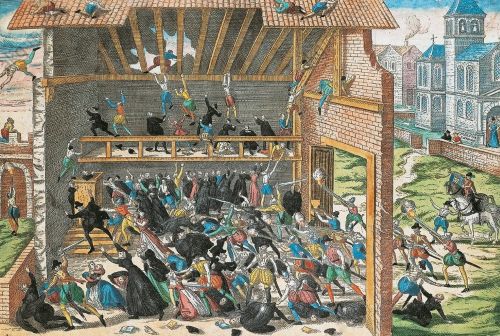
The massacre at Vassy in 1562 showed how quickly violence could become printed evidence in a wider confessional struggle. The killing of Huguenot worshippers by forces associated with François, Duke of Guise, was interpreted through competing narratives of persecution, provocation, unlawful assembly, and religious defense. Print made these interpretations portable, allowing a local episode to become grievance, warning, justification, and propaganda.
The Saint Bartholomew’s Day Massacre of 1572 intensified this pattern on a European scale. The killings that began in Paris and spread to other French towns became one of the defining printed events of the 16th century. Catholic and Protestant accounts offered radically different interpretations. Some Catholic responses treated the massacre as deliverance from conspiracy or as the defeat of dangerous rebels, while Protestant accounts transformed it into an atrocity narrative of betrayal, persecution, and martyrdom. Printed histories, pamphlets, and images carried these interpretations across borders, making the massacre a central memory of confessional violence. The Tortorel and Perrissin print series, produced in Geneva, is especially important because it presented recent violence visually as history, offering readers a sequence of scenes through which the wars could be seen, ordered, and morally judged. The image did not merely decorate memory. It structured it.
The wars also deepened arguments over resistance, obedience, and tyrannicide. As royal authority faltered and confessional factions hardened, printed texts increasingly asked whether subjects could resist rulers who failed to defend true religion or who became instruments of persecution. Huguenot resistance theory developed in response to massacre, repression, and distrust of the crown, arguing that obedience could not be separated from the protection of godly order and lawful community. Catholic League writers later advanced their own claims against kings they viewed as insufficiently Catholic, politically compromised, or dangerous to the faith. This mutual radicalization exposed one of the most dangerous consequences of confessional print culture. Once monarchy was judged through the survival of true religion, loyalty became conditional. The king could be defended as God’s lieutenant, condemned as a tyrant, or mourned as the victim of sacrilegious murder, depending on the confessional and political frame through which print presented him. The assassinations of King Henri III in 1589 and King Henri IV in 1610 revealed how arguments over sacred kingship, heresy, tyranny, and obedience could surround acts of political murder with competing meanings. Print did not invent those meanings from nothing, but it carried them outward, stabilized them, and allowed each faction to place violence inside a larger story of divine judgment or national rescue.
By the end of the French Wars of Religion, print had helped produce a political culture in which violence was remembered through competing confessional truths. Massacre, assassination, riot, iconoclasm, and repression were rarely left as bare events. They were narrated as providence, justice, treachery, martyrdom, sedition, or necessary defense. This was the deeper significance of French confessional demonization. It made violence morally legible before it happened and ideologically usable afterward. The press did not invent French religious hatred, nor did it act alone. But it gave hatred recognizable forms, memorable images, and repeatable arguments. It helped transform civil war into a struggle over public memory as much as political power.
Atrocity, Martyrdom, and International Opinion
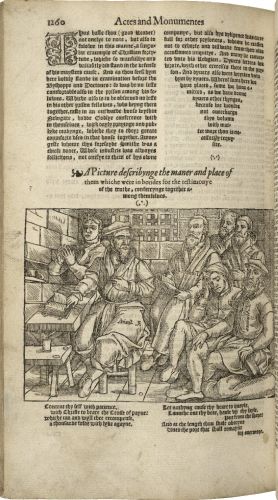
Early modern print did more than demonize enemies or justify revolt. It also transformed suffering into public evidence. Reports of massacre, exile, judicial execution, forced conversion, imprisonment, and religious persecution could be gathered, edited, illustrated, translated, and circulated far beyond the communities that first experienced them. This did not make such reports neutral. Atrocity narratives were almost always argumentative. They selected victims, named perpetrators, arranged events into moral sequence, and asked readers to judge. Yet precisely because they were partisan, they reveal how political violence became internationalized through print. A local killing could be presented as proof of a general conspiracy. An execution could become martyrdom. A persecuted community could turn its suffering outward, appealing not only to rulers but to foreign readers whose sympathy might become political pressure.
Martyrdom was one of the most powerful forms through which printed violence acquired meaning. Protestant and Catholic martyrologies alike turned death into testimony, presenting the victim as a witness whose body confirmed religious truth. John Foxe’s Acts and Monuments became the most famous Protestant example in England, while Catholic writers produced their own martyr accounts under Protestant regimes. These works trained readers to see execution not merely as punishment, but as proof of courage, cruelty, and divine meaning.
Atrocity reporting also helped shape foreign opinion during conflicts that spilled across confessional and political borders. The French Wars of Religion, the Dutch Revolt, and later struggles in England and Central Europe all generated printed accounts that invited readers outside the immediate conflict to identify victims and villains. The same event could appear in sharply opposed forms depending on the press, patron, or faction behind the account. Protestant reports of Catholic violence often emphasized massacre, betrayal, and persecution, while Catholic narratives could portray Protestant action as sacrilege, rebellion, or social disorder. This competition did not weaken the importance of atrocity print. It increased it. Readers learned about foreign violence through texts that were already acts of judgment, and governments, exiles, churches, and political factions learned to treat international opinion as a field worth cultivating.
The emerging humanitarian dimension of print should be handled carefully, since early modern appeals to compassion were usually entangled with confession, diplomacy, commerce, and state interest. Even so, printed reports could create wider publics of concern. Persecuted communities and their advocates used print to publicize expulsions, massacres, and religious oppression in ways that sought sympathy beyond local authority. Dutch print culture was especially important in this process because the Dutch Republic became a major center for international news, religious refugees, and politically sensitive publication. Reports of suffering could move across linguistic and territorial boundaries, turning remote violence into a matter of moral attention. This did not produce humanitarianism in a modern secular sense all at once, but it helped create habits of public protest: naming victims, documenting abuse, appealing to conscience, and pressuring authorities through publicity.
The importance of atrocity and martyrdom print lies in its ability to extend violence beyond the moment of physical harm. Violence entered print as memory, warning, accusation, and proof. It could harden hatred, but it could also mobilize sympathy. It could sanctify revenge, but it could also demand protection. This duality makes printed suffering central to the history of early modern political violence. The press did not merely tell readers that people had been killed, exiled, or persecuted. It told them what those acts meant and what moral obligations followed from knowing about them. By transforming pain into public argument, print gave victims, factions, churches, and states a new way to fight after the violence itself had ended.
The Dutch Revolt and the Printed War for Legitimacy

The Dutch Revolt brought together many of the dynamics that had already appeared in Reformation polemic, peasant manifesto, and confessional atrocity print. Beginning in the 1560s and extending through the long struggle against Habsburg Spain, the revolt was fought with armies, sieges, executions, taxation, diplomacy, and naval power. Yet it was also fought through pamphlets, songs, engravings, declarations, petitions, histories, and printed news. The central problem for the rebels was legitimacy. Resistance to King Philip II of Spain could not be presented merely as disobedience, since rebellion against a lawful monarch remained morally and politically dangerous. It had to be framed as defense: defense of ancient privileges, local liberties, true religion, lawful government, and communities violated by tyranny. Print gave that defense a public architecture.
The revolt’s printed culture worked by transforming Spanish rule into a language of oppression. Accounts of persecution, military brutality, judicial cruelty, and broken privileges helped construct the image of Spanish tyranny. The Duke of Alba’s Council of Troubles, widely remembered by its opponents as the “Council of Blood,” became especially important in this process. Executions, confiscations, and repression could be narrated as evidence that lawful rule had become domination. The point was not simply to arouse anger, though anger mattered. It was to make resistance appear principled rather than criminal. Printed texts and images taught readers to see the conflict as a struggle between liberty and tyranny, conscience and persecution, lawful privilege and foreign violence.
William of Orange’s political self-presentation was central to this printed war for legitimacy. His Apology of 1580 defended his actions against Philip II and argued that resistance had been forced by royal injustice, religious persecution, and the violation of established rights. The text mattered because it placed rebellion within a legal and moral framework. William did not present himself as a reckless revolutionary. He appeared as a servant of the commonwealth, a defender of liberties, and a reluctant opponent of tyranny. That distinction was crucial. Early modern rebels often needed to show that they were not destroying order but restoring it. Print allowed such arguments to circulate beyond immediate political assemblies and reach wider audiences at home and abroad.
The Act of Abjuration of 1581 carried this logic further by formally rejecting Philip II’s sovereignty over the rebellious provinces. Its argument rested on the claim that a ruler who oppressed his subjects and violated their liberties ceased to fulfill the obligations of kingship. This was a radical claim, but it was expressed in a language of lawful necessity rather than abstract democratic revolution. The act did not simply announce separation. It explained it. That explanatory function is essential to understanding early modern political print. A regime could not merely be resisted; resistance had to be narrated, justified, and made morally legible. Printed declarations helped convert political rupture into public reason.
Visual and narrative accounts of Spanish violence strengthened this argument. The sack of Antwerp in 1576, remembered as the Spanish Fury, became one of the most powerful examples of atrocity as political evidence. Printed descriptions and images of massacre, looting, fire, and disorder helped persuade readers that Spanish military power threatened not only rebels but civil society itself. Such representations could simplify complicated events, but their political effect was clear. They linked bodily violence to governmental illegitimacy. If Spanish rule produced massacre, plunder, and terror, then resistance could be framed as protection rather than sedition. The same logic shaped broader anti-Spanish imagery, in which Spain appeared as cruel, fanatical, and tyrannical.
The Dutch Revolt shows how print could help create a political community by giving shared meaning to violence. Pamphlets, songs, news reports, engravings, and declarations did not merely describe a conflict already understood. They helped define what the conflict was. They connected local suffering to provincial liberty, religious persecution to political rights, and military brutality to the failure of kingship. Print helped transform revolt into a legitimate cause and gave the emerging Dutch Republic a usable memory of its origins. The rebels’ victory was not only military or diplomatic. It was interpretive. They succeeded, in part, because print helped persuade readers that resistance to a king could be obedience to justice.
Newsbooks, Civil War, and Regicide in Seventeenth-Century England

The English Civil Wars marked a dramatic expansion in the political uses of print. The collapse of effective censorship in the early 1640s created conditions in which pamphlets, petitions, sermons, printed speeches, newsbooks, and polemical replies multiplied at extraordinary speed. Conflict between King Charles I and Parliament was not fought only through armies, taxation, local allegiance, and control of institutions. It was also fought through explanation. Each side needed to tell readers what the crisis meant: whether Parliament was defending ancient liberties against arbitrary government, whether the king was preserving lawful monarchy against rebellion, whether war itself was defensive necessity or treasonous rupture. Print turned constitutional conflict into a public struggle over interpretation.
Newsbooks were especially important because they gave the war a serial form. Readers did not encounter violence only as distant rumor or retrospective history. They encountered battles, sieges, negotiations, executions, plots, and rumors as recurring installments in an unfolding crisis. This regularity mattered. It encouraged readers to follow politics as an ongoing drama in which each week’s news demanded judgment. Reports from the front, parliamentary proceedings, royal declarations, military successes, and accusations of atrocity could be arranged to sustain loyalty, anger, fear, or hope. The newsbook did not simply inform. It organized attention. It taught readers that civil war was something to be tracked, interpreted, and morally evaluated in near real time.
Pamphlets and petitions widened that political world still further. They allowed groups outside the highest circles of court and Parliament to speak in print, or at least to be represented as speaking. London crowds, religious radicals, county communities, soldiers, ministers, merchants, and political theorists entered the printed debate over sovereignty and obedience. Arguments over episcopacy, taxation, militia control, royal prerogative, liberty of conscience, and the rights of Parliament moved into shops, streets, churches, taverns, and households. Political violence became inseparable from political literacy because the legitimacy of force increasingly required public defense.
The execution of King Charles I in January 1649 was the most explosive printed event of the conflict. Regicide required justification on a scale earlier English political culture had rarely imagined. To kill a king was to strike at sacred monarchy, hereditary authority, legal continuity, and the symbolic body of the realm. Supporters of the Commonwealth had to argue that Charles was not merely a defeated monarch but a public enemy lawfully judged for tyranny and bloodshed. Printed trial accounts, declarations, and defenses of the new regime attempted to transform royal execution into constitutional justice. John Milton’s The Tenure of Kings and Magistrates gave this argument one of its most forceful forms, insisting that rulers could be held accountable when they betrayed the trust placed in them.
Royalists answered by turning the dead king into a martyr. Eikon Basilike, published soon after Charles’s execution, presented him as pious, suffering, prayerful, and wronged, offering readers an image of monarchy purified through defeat. Its enormous popularity showed that print could resacralize what revolutionary violence had tried to desacralize. The same act, the killing of the king, was made to carry opposite meanings. To Parliamentarian and republican writers, it was justice against tyranny. To Royalists, it was murder, sacrilege, and national shame. This struggle over Charles’s meaning did not end at the scaffold. It continued through editions, answers, refutations, sermons, commemorations, and political memory. Print made regicide endlessly reproducible as argument.
The English Civil Wars reveal one of the clearest early modern examples of print as a weapon in the politics of legitimacy. Newsbooks made violence sequential and public. Pamphlets made allegiance argumentative. Petitions broadened the imagined political nation. Regicide forced writers to explain whether sovereign violence belonged to the king, the people, Parliament, the army, or God. The press did not create the military crisis, but it shaped the moral universe in which the crisis was understood. By the 1650s, English political culture had learned that even the execution of a king could not stand on force alone. It had to be narrated, defended, sanctified, or condemned in print.
Managing News: Diplomacy, Reputation, and Foreign Public Opinion

By the late 17th century, European rulers, diplomats, ministers, and political factions had become increasingly aware that printed news was not merely a domestic problem. It was an international instrument. Wars, treaties, dynastic crises, rebellions, executions, and massacres were interpreted across borders by readers who often encountered events through gazettes, newsletters, pamphlets, translated reports, and semi-official narratives. This mattered because reputation was a form of power. A state that appeared lawful, restrained, and providentially favored could claim moral authority, attract allies, and weaken hostile propaganda. A state portrayed as tyrannical, faithless, cruel, or unstable could suffer diplomatic damage even beyond the battlefield. Print became part of foreign policy. Managing news meant managing how violence appeared to distant publics.
Official and semi-official news publications played an important role in this process. Governments did not simply censor hostile print; they also produced or encouraged approved versions of events. Gazettes could report victories, suppress defeats, justify military campaigns, and frame punitive violence as lawful necessity. Diplomatic correspondence and printed news culture overlapped because ambassadors and agents monitored publications, circulated information, corrected damaging accounts, and sometimes fed narratives to printers. The line between information and persuasion was often thin. A battle report, a treaty notice, or an account of punishment could be written as fact while still guiding readers toward a political conclusion. Print allowed states to turn violence into explanation before hostile writers could monopolize its meaning.
The Dutch Republic and England were especially important in this international news environment. Both had active print cultures, commercially responsive news markets, and intense political interest in foreign affairs. Dutch printers circulated news in multiple languages and served audiences across Europe, while English news culture developed through civil war, Restoration politics, commercial expansion, and recurring conflict with continental powers. The Anglo-Dutch wars, anti-French coalitions, and debates over Protestant interest created a world in which foreign news was also domestic argument. Reports about naval battles, persecution, alliances, massacres, or royal policy abroad could be used to shape local opinion at home. Foreign violence became evidence in domestic political struggle.
Translation expanded the political reach of printed news. A report produced in one city could be reworked for another audience, sharpened in tone, or placed inside a new ideological frame. This mobility made print difficult for states to control. Even where censorship existed, news crossed borders through merchants, diplomats, exiles, refugees, booksellers, and travelers. Political violence became harder to contain because its interpretation could escape the jurisdiction where it occurred.
Diplomatic reputation also depended on how states explained coercion. Executions, sieges, religious repression, colonial violence, and emergency measures had to be narrated as order rather than brutality. This was especially true in conflicts involving religion, where persecution could be presented either as necessary defense of orthodoxy or as proof of tyranny. Reports of violence against Protestants in Catholic territories, Catholics in Protestant states, or religious minorities in contested regions could circulate as international appeals for sympathy and intervention. Governments understood that foreign opinion might not determine policy by itself, but it could strengthen alliances, embarrass enemies, and provide moral language for war. The printed public did not replace diplomacy, but it became one of diplomacy’s theaters.
The management of news marks a significant shift in the relationship between print and political violence. Earlier sections have shown print justifying rebellion, demonizing enemies, and memorializing atrocity. By the late 17th century, print was also part of statecraft. Governments and diplomats used it to frame violence before foreign audiences, protect reputation, and weaken opponents. Yet this strategy always carried risk. The same networks that carried official news could also carry scandal, atrocity, rumor, and dissent. States tried to master print because they recognized its power, but that power remained unstable. News could serve authority, but it could also expose authority to judgment beyond its control.
Libelles, Character Assassination, and the Politics of Scandal in France
By the late 17th and 18th centuries, the relationship between print and political violence in France increasingly moved through reputation before it reached open confrontation. The great confessional wars had formally ended, but the printed assault on authority continued through libelles, clandestine pamphlets, scandal sheets, satirical verse, pornographic fiction, and political rumor. These texts did not always call directly for revolt or bloodshed. Their power lay in something slower and more corrosive. They made rulers, ministers, courtiers, clerics, mistresses, and royal family members appear ridiculous, corrupt, sexually depraved, financially predatory, or morally unfit to govern. Character assassination became a political act because reputation was not ornamental in monarchy. It was part of authority itself.
The libelle was especially suited to this work. Short, aggressive, often anonymous, and frequently printed outside normal channels of authorization, libelles attacked public figures by blending accusation, gossip, obscenity, moral judgment, and political insinuation. They claimed to expose what official culture concealed: vice behind ceremony, theft behind finance, weakness behind majesty. Whether every allegation was true mattered less than the suspicion the genre cultivated. It encouraged readers to imagine that public order rested upon private corruption.
Royal authority was particularly vulnerable to this form of attack because monarchy depended on symbolic distance. Kingship required ceremony, hierarchy, controlled visibility, and the disciplined management of royal image. Libelles collapsed that distance. They dragged the court into the street, translating majesty into appetite and policy into intrigue. Under Louis XIV, attacks on ministers, mistresses, and court politics could already link private immorality to public misrule. By the later 18th century, the same dynamic became more dangerous because the monarchy faced fiscal crisis, judicial conflict, political frustration, and a growing public appetite for explanations of state failure. Scandal did not create those problems, but it gave them faces. It personalized structural crisis, allowing readers to see misgovernment not as an abstract problem of institutions but as the work of corrupt bodies and polluted households.
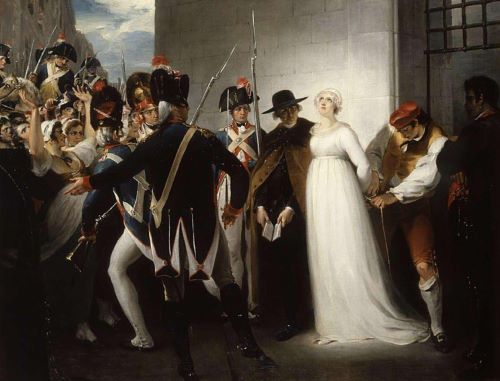
The attacks on Queen Marie Antoinette reveal the political violence of scandal with particular clarity. Pornographic and defamatory writings portrayed her as sexually uncontrolled, foreign, manipulative, extravagant, and hostile to France. These claims drew on older misogynistic traditions and anxieties about queenship, but print gave them an extraordinary reach and durability. The queen’s body became a symbolic site on which fears about Austrian influence, fiscal irresponsibility, aristocratic decadence, and royal betrayal could be projected. This was reputational violence before physical violence. It helped make the queen appear not simply unpopular but unnatural, alien, and dangerous. When revolutionary crisis later turned against her, earlier printed scandal had already helped strip away the protective aura of monarchy and motherhood.
Scandal print also overlapped with the legal and moral culture of causes célèbres. Highly publicized court cases involving fraud, inheritance disputes, sexual misconduct, family conflict, and judicial abuse trained readers to connect private life with public meaning. These cases invited the public to judge judges, ministers, families, clergy, and social hierarchy. The language of exposure, innocence, corruption, and public judgment moved easily from courtroom controversy to political critique. In that sense, scandal was not merely prurient distraction. It was a mode of political education.
The politics of libelles and scandal belongs within the history of early modern political violence, even when no weapon was raised. It weakened the moral architecture that made authority believable. It made obedience feel humiliating, reverence feel foolish, and monarchy feel obscene. The reputational destruction of rulers and elites did not cause the French Revolution by itself, nor should clandestine literature be treated as a single master key to 1789. But libelles helped create an interpretive climate in which royal power could be imagined as diseased from within. Before institutions are attacked, they are often desacralized. In 18th-century France, print performed that desacralizing work with ink, rumor, satire, and slander, turning character assassination into a preliminary form of political violence.
Enlightenment Print, Public Opinion, and the Legitimacy of Resistance

The 18th century did not replace violent religious polemic with calm rational debate, but it did change the printed environment in which authority was judged. Newspapers, journals, philosophical works, legal briefs, pamphlets, clandestine books, dictionaries, correspondence, and review culture widened the space in which readers could discuss government, punishment, religion, commerce, war, and reform. This developing public sphere was uneven, exclusionary, censored, and socially limited, but it mattered because it made judgment itself more public. Authority could still command, punish, and censor, but it increasingly had to explain itself before readers who had learned to treat opinion as a form of power. Print did not democratize politics in a modern sense, but it expanded the audience before whom legitimacy had to be performed.
Enlightenment print also changed how political violence could be criticized. Torture, execution, arbitrary imprisonment, religious persecution, judicial cruelty, and censorship became subjects of public argument rather than merely instruments of state order. Writers did not always agree about the proper limits of authority, and many remained deeply attached to hierarchy, monarchy, and empire. Yet print allowed coercive power to be described as a problem requiring reasoned scrutiny. The question was no longer simply whether rulers possessed the right to punish, but whether punishment was proportionate, lawful, useful, humane, and compatible with justice. This shift was crucial. Once state violence could be publicly evaluated, it became vulnerable to moral and political challenge. A punishment that had once been staged as royal authority could now be reinterpreted as cruelty. A prison sentence could become evidence of despotism. A judicial error could become an indictment of institutional corruption. Print made these reinterpretations durable by allowing reformers, lawyers, philosophers, and polemicists to return repeatedly to the same abuses until they became public symbols.
The language of rights, natural law, utility, tolerance, and public reason did not circulate only through major philosophical treatises. It also moved through smaller and more accessible forms: pamphlets, newspaper commentary, abridgments, translations, legal memoranda, and public controversies. Causes célèbres were especially important because they turned individual cases into tests of law, virtue, innocence, and institutional corruption. A disputed trial or punishment could become a public drama in which readers judged not only the accused but the courts, ministers, clergy, and monarchy itself. This mattered for political violence because judicial suffering could be transformed into evidence of systemic abuse. The victimized body became an argument about power.
The Enlightenment public sphere was never as clean or rational as its defenders sometimes imagined. The same print networks that circulated arguments for tolerance and legal reform also carried rumor, libel, pornography, conspiracy, and violent denunciation. Public opinion could expose cruelty, but it could also intensify suspicion. It could restrain authority, but it could also demand punishment against those portrayed as enemies of the people, enemies of religion, or enemies of the nation. This ambiguity is essential. Enlightenment print helped create new standards for criticizing violence, yet it also created new publics capable of moral outrage. The politics of reason and the politics of accusation were not separate worlds. They often occupied the same presses, bookshops, reading rooms, and conversations. A reader might encounter a philosophical argument for toleration alongside a scandalous attack on a minister, a legal defense of an accused victim beside a rumor of conspiracy, or a plea for humane punishment beside a demand that corrupt officials be exposed and destroyed. The printed public did not simply deliberate. It judged, suspected, sympathized, and condemned.
Resistance also became easier to imagine within this printed culture because authority was increasingly judged by function rather than mere inheritance. If government existed to secure law, welfare, property, liberty, or public happiness, then rulers who violated those ends could be criticized as failures rather than simply obeyed as superiors. This did not automatically justify rebellion. Many Enlightenment writers feared disorder and preferred reform to revolution. But print made conditional obedience more thinkable by spreading arguments that measured power against reason, rights, and public good.
The importance of Enlightenment print, then, lies in its transformation of political legitimacy into a public question. Earlier print cultures had justified revolt, demonized enemies, sanctified martyrs, managed news, and destroyed reputations. Eighteenth-century print added another layer: it made coercive authority answerable to standards that could be debated beyond court and council. This did not end political violence. It changed its vocabulary. Violence could now be condemned as cruelty, defended as public necessity, attacked as despotism, or demanded as justice in the name of the people. By the eve of the French Revolution, print had helped create a political culture in which authority was no longer merely inherited, sacralized, or commanded. It had to be argued.
The French Revolution: Newspapers, Pamphlets, and the Politics of Terror
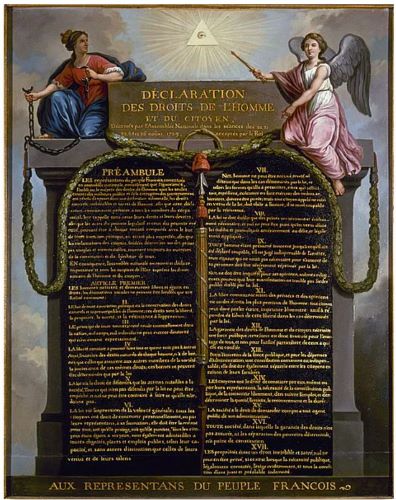
The French Revolution revealed the full force of print as an instrument of political mobilization and political violence. In 1789, France did not enter revolution through print alone. Fiscal crisis, social inequality, administrative paralysis, harvest failures, elite conflict, and the collapse of royal credibility all mattered. Yet print shaped how those crises were named, interpreted, and acted upon. Pamphlets, newspapers, posters, petitions, printed speeches, decrees, songs, and political cartoons turned grievance into public argument and public argument into collective action. The Revolution unfolded in streets, assemblies, clubs, courts, prisons, and battlefields, but it also unfolded on paper. Print gave revolutionary politics a vocabulary of nation, people, liberty, conspiracy, treason, regeneration, and vengeance.
Pamphlet culture was especially important in the opening phase of the Revolution. Emmanuel Joseph Sieyès’s What Is the Third Estate? gave one of the most influential formulations to the claim that the productive nation had been politically excluded by privilege. Across France, printed cahiers, political brochures, electoral materials, and reform proposals helped readers imagine themselves as participants in national reconstruction. Authority became something to be claimed, argued, printed, and remade in the name of the nation.
Newspapers then gave the Revolution its daily rhythm. Revolutionary readers followed debates in the National Assembly, rumors of conspiracy, food shortages, military developments, denunciations of enemies, and the shifting fortunes of factions through a rapidly expanding press. Journalism made politics immediate. Some such as Jean-Paul Marat, Jacques Pierre Brissot, Camille Desmoulins, and others used newspapers not merely to report events but to urge vigilance, expose betrayal, and define revolutionary virtue. This mattered because revolutionary politics depended on alertness to hidden enemies. The newspaper helped create a public trained to read crisis as evidence of plots. Suspicion became a civic posture, and the press helped make vigilance feel like a duty.
The politics of terror emerged from war, counterrevolution, factional struggle, economic emergency, and institutional breakdown, but print helped supply its moral grammar. Enemies were named as aristocrats, monopolists, federalists, moderates, conspirators, traitors, refractory priests, and enemies of the people. These labels could convert political disagreement into existential threat. Printed speeches, denunciations, and revolutionary newspapers circulated the idea that liberty could survive only if treason were exposed and punished. Violence could be defended as emergency justice rather than cruelty.
Print also intensified factional violence within the Revolution itself. Girondins, Jacobins, Hébertists, royalists, constitutional monarchists, and other political actors fought not only for institutional power but for control over public meaning. A defeat in print could become a prelude to political destruction. Accusations of betrayal, moderation, corruption, atheism, royalism, or conspiracy moved through newspapers and pamphlets before they appeared in tribunals, arrests, or executions. The press could elevate a figure as patriot and then recast him as traitor. This volatility was one of the Revolution’s most dangerous printed inheritances from earlier libelle and polemical traditions. Character assassination became faster, more ideological, and more lethal because political legitimacy itself had become unstable.
The French Revolution brought together the central patterns of early modern print and political violence. It inherited the Reformation’s demonizing polemic, the manifesto politics of revolt, the atrocity narrative, the newspaper’s serial crisis, the scandal culture of desacralization, and the Enlightenment appeal to public judgment. But it recombined them under revolutionary conditions, where sovereignty was contested, enemies seemed everywhere, and political language could become a matter of life and death. Print did not cause the Terror by itself. It did something historically more specific and more revealing: it helped create the categories, emotions, accusations, and justifications through which terror could be imagined as politics. By the 1790s, the printed word had become one of the Revolution’s weapons, courts, pulpits, and battlefields.
Repression, Censorship, and the State’s Counterattack on Print
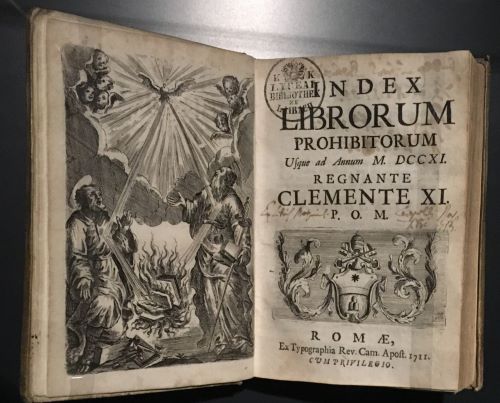
The power of print was never lost on early modern authorities. From the first decades of the Reformation to the revolutionary crises of the late 18th century, rulers, magistrates, church officials, parliaments, police officers, and censors treated the printed word as a possible source of disorder. Their fear was not irrational. Pamphlets could justify rebellion, newsbooks could make war publicly contestable, libelles could destroy reputations, and atrocity reports could invite foreign sympathy or intervention. States responded with bans, licensing systems, prior censorship, book seizures, prosecutions, privileges, informants, prison sentences, public burnings, and the control of presses. Repression was not merely an attack on expression. It was an attempt to defend political order by controlling the conditions under which violence could be imagined, justified, or remembered.
Religious conflict gave censorship much of its early urgency. The Catholic Church’s Index of Prohibited Books, imperial bans on Lutheran writings, local confiscations of heretical material, and Protestant controls over Catholic or radical publications all reflected the same premise: dangerous books could endanger souls and states alike. In a confessional age, religious error could be treated as sedition, contagion, rebellion, or spiritual treason. Censorship operated as preventive violence, restraining texts before they became actions. Yet prohibited works could be reprinted elsewhere, smuggled across borders, hidden under false imprints, read aloud privately, or transformed into rumor.
In England, licensing and press regulation developed alongside recurring fears of sedition, heresy, civil war, and republican argument. The Stationers’ Company, episcopal oversight, royal proclamations, parliamentary ordinances, and later licensing laws all sought to regulate who could print, what could be printed, and how political writing might circulate. The breakdown of control in the 1640s showed why authorities cared so intensely. Once censorship weakened, printed argument multiplied and political legitimacy became dangerously public. After the Restoration, renewed efforts to regulate the press reflected memories of civil war and regicide. To control print was to prevent the return of a world in which monarchy, church, army, Parliament, and people could all be dragged into open contest.
France developed one of the most elaborate systems of royal censorship, but it also became one of the clearest examples of censorship’s paradox. Official privilege, police surveillance, and prepublication review attempted to preserve monarchy, religion, and public order. Yet forbidden books, libelles, philosophical works, and scandal literature continued to circulate through clandestine networks, foreign presses, colporteurs, booksellers, and manuscript copies. Suppression could even increase a text’s appeal by marking it as dangerous knowledge. Censorship did not simply oppose print culture. It helped shape the underground world that made illicit print politically powerful.
The state’s counterattack on print also included official publication. Authorities did not only silence opponents; they produced their own printed truth. Edicts, trial records, execution accounts, proclamations, gazettes, royal declarations, and parliamentary statements framed punishment as justice and repression as necessity. This was especially important after rebellion, assassination, riot, or war, when governments needed to explain why coercion had been lawful rather than tyrannical. The struggle over print was never a simple opposition between state and press. States censored, but they also printed. They feared publicity, but they needed it. By 1800, repression and publication had become twin instruments of political authority, proving that early modern governments understood what their opponents had also learned: violence required interpretation, and interpretation increasingly required print.
Conclusion: Violence, Publicity, and the Printed Making of Political Reality
Between 1500 and 1800, print became one of the central instruments through which Europeans made political violence meaningful. The press did not act alone, and it did not replace older forms of persuasion, authority, rumor, preaching, ceremony, or coercion. Violence still emerged from material grievances, religious conviction, dynastic conflict, state formation, war, social inequality, and institutional crisis. Yet print changed the conditions under which those conflicts were understood. It gave violence words, images, sequence, memory, and reach. It allowed a killing to become martyrdom, a riot to become providence, a rebellion to become lawful resistance, a punishment to become tyranny, and a monarch’s fall to become either justice or sacrilege. The printed page did not merely transmit reality. It helped organize the categories through which reality was judged.
Across the early modern centuries, the press repeatedly widened the audience for conflict. Reformation pamphlets turned theology into mass polemic. Peasant manifestos made local grievances appear as shared Christian claims. French religious prints transformed massacre into confessional memory. Dutch declarations and atrocity narratives made revolt against a king appear as defense of liberty. English newsbooks turned civil war and regicide into serial public argument. French libelles desacralized monarchy through scandal before revolutionary newspapers and pamphlets gave suspicion, virtue, treason, and terror a daily printed rhythm. In each case, print did not simply add speed to politics. It altered the moral scale of violence by placing events before readers who were invited to judge, fear, sympathize, condemn, or act.
The deepest consequence was the fusion of violence and publicity. Early modern political violence increasingly required explanation, and print supplied the medium through which explanation could be contested. Rebels needed manifestos. States needed proclamations. Victims needed martyrologies. Diplomats needed news management. Factions needed enemies. Censors needed bans. The printed world was censored, unequal, commercial, partisan, and saturated with rumor, but it still created new pressures on authority. Power had to defend itself in public, and opposition had to persuade publics that resistance was more than disorder.
By 1800, the early modern press had helped create a political culture in which legitimacy could be made or broken through printed representation. This was the enduring transformation. Print did not make Europeans violent, but it changed how they imagined the necessity, justice, danger, and memory of violence. It made political reality reproducible and disputable. It carried bloodshed beyond the battlefield, scaffold, prison, church, marketplace, and palace into a broader world of readers and listeners. In that sense, the printing press was not merely a technology of communication. It was a technology of political imagination, one that taught early modern Europe how to fight over meaning as fiercely as it fought over power.
Bibliography
- Achinstein, Sharon. Milton and the Revolutionary Reader. Princeton: Princeton University Press, 1994.
- Andress, David. The Terror: The Merciless War for Freedom in Revolutionary France. New York: Farrar, Straus and Giroux, 2005.
- Baker, Keith Michael. Inventing the French Revolution: Essays on French Political Culture in the Eighteenth Century. Cambridge: Cambridge University Press, 1990.
- Benedict, Philip. Graphic History: The Wars, Massacres and Troubles of Tortorel and Perrissin. Geneva: Librairie Droz, 2007.
- Birn, Raymond. Royal Censorship of Books in Eighteenth-Century France. Stanford: Stanford University Press, 2012.
- Blickle, Peter. The Revolution of 1525: The German Peasants’ War from a New Perspective. Translated by Thomas A. Brady Jr. and H. C. Erik Midelfort. Baltimore: Johns Hopkins University Press, 1981.
- Brady, Thomas A., Jr. German Histories in the Age of Reformations, 1400–1650. Cambridge: Cambridge University Press, 2009.
- Cameron, Euan. The European Reformation. Oxford: Oxford University Press, 1991.
- Chartier, Roger. The Cultural Origins of the French Revolution. Durham: Duke University Press, 1991.
- —-. The Cultural Uses of Print in Early Modern France. Translated by Lydia G. Cochrane. Princeton: Princeton University Press, 1987.
- Clegg, Cyndia Susan. Press Censorship in Elizabethan England. Cambridge: Cambridge University Press, 1997.
- —-. Press Censorship in Jacobean England. Cambridge: Cambridge University Press, 2001.
- Como, David R. Radical Parliamentarians and the English Civil War. Oxford: Oxford University Press, 2018.
- Crouzet, Denis. Les Guerriers de Dieu: La Violence au Temps des Troubles de Religion, Vers 1525–Vers 1610. 2 vols. Seyssel: Champ Vallon, 1990.
- Darnton, Robert. The Devil in the Holy Water, or the Art of Slander from Louis XIV to Napoleon. Philadelphia: University of Pennsylvania Press, 2010.
- —-. The Forbidden Best-Sellers of Pre-Revolutionary France. New York: W. W. Norton, 1995.
- —-. The Literary Underground of the Old Regime. Cambridge, MA: Harvard University Press, 1982.
- Davis, Natalie Zemon. “The Rites of Violence: Religious Riot in Sixteenth-Century France.” Past & Present 59 (1973), 51–91.
- de Boer, David. The Early Modern Dutch Press in an Age of Religious Persecution: The Making of Humanitarianism. Oxford: Oxford University Press, 2023.
- De Bujanda, Jesús Martínez, ed. Index des livres interdits. 11 vols. Sherbrooke: Centre d’Études de la Renaissance, Université de Sherbrooke, 1984–2002.
- Desmoulins, Camille. Le Vieux Cordelier. Paris, 1793–1794.
- Diefendorf, Barbara B. Beneath the Cross: Catholics and Huguenots in Sixteenth-Century Paris. New York: Oxford University Press, 1991.
- Dittmar, Jeremiah E. “Information Technology and Economic Change: The Impact of the Printing Press.” The Quarterly Journal of Economics 126:3 (2011), 1133-1172.
- Dooley, Brendan, and Sabrina A. Baron, eds. The Politics of Information in Early Modern Europe. London: Routledge, 2001.
- Duke, Alastair. Reformation and Revolt in the Low Countries. London: Hambledon Press, 1990.
- Edwards, Mark U. Printing, Propaganda, and Martin Luther. Berkeley: University of California Press, 1994.
- Eisenstein, Elizabeth L. The Printing Press as an Agent of Change: Communications and Cultural Transformations in Early-Modern Europe. Cambridge: Cambridge University Press, 1979.
- Foxe, John. The Acts and Monuments of John Foxe. Edited by Stephen Reed Cattley. 8 vols. London: Seeley, Burnside, and Seeley, 1837–1841.
- Gelderen, Martin van. The Political Thought of the Dutch Revolt, 1555–1590. Cambridge: Cambridge University Press, 1992.
- Goodman, Dena. The Republic of Letters: A Cultural History of the French Enlightenment. Ithaca: Cornell University Press, 1994.
- Gough, Hugh. The Newspaper Press in the French Revolution. London: Routledge, 1988.
- Gregory, Brad S. Salvation at Stake: Christian Martyrdom in Early Modern Europe. Cambridge, MA: Harvard University Press, 1999.
- Habermas, Jürgen. The Structural Transformation of the Public Sphere. Cambridge, MA: MIT Press, 1989.
- Helmers, Helmer J. The Royalist Republic: Literature, Politics, and Religion in the Anglo-Dutch Public Sphere, 1639–1660. Cambridge: Cambridge University Press, 2014.
- Holt, Mack P. The French Wars of Religion, 1562–1629. Cambridge: Cambridge University Press, 1995.
- Hunt, Lynn. The Family Romance of the French Revolution. Berkeley: University of California Press, 1992.
- —-. Politics, Culture, and Class in the French Revolution. Berkeley: University of California Press, 1984.
- Israel, Jonathan I. The Dutch Republic: Its Rise, Greatness, and Fall, 1477–1806. Oxford: Clarendon Press, 1995.
- Johns, Adrian. The Nature of the Book: Print and Knowledge in the Making. Chicago: University of Chicago Press, 1998.
- King, John N. “’The Light of Printing’: William Tyndale, John Foxe, John Day, and Early Modern Print Culture.” Renaissance Quarterly 54:1 (2001), 52-85.
- Kingdon, Robert M. Myths About the St. Bartholomew’s Day Massacres, 1572–1576. Cambridge, MA: Harvard University Press, 1988.
- Koopmans, Joop W., ed. News and Politics in Early Modern Europe, 1500–1800. Leuven: Peeters, 2005.
- Luther, Martin. Luther’s Works. Vol. 31, Career of the Reformer I. Edited by Harold J. Grimm. Philadelphia: Fortress Press, 1957.
- —-. Luther’s Works. Vol. 46, The Christian in Society III. Edited by Robert C. Schultz. Philadelphia: Fortress Press, 1967.
- Marat, Jean-Paul. L’Ami du Peuple. Paris, 1789–1792.
- Maza, Sarah. Private Lives and Public Affairs: The Causes Célèbres of Prerevolutionary France. Berkeley: University of California Press, 1993.
- McMurtrie, Douglas C. “The Printing Press Moves Westward.” Minnesota History 15:1 (1934), 1-25.
- Merrick, Jeffrey. The Desacralization of the French Monarchy in the Eighteenth Century. Baton Rouge: Louisiana State University Press, 1990.
- Milton, John. The Tenure of Kings and Magistrates. In The Complete Prose Works of John Milton. Vol. 3, 1648–1649. Edited by Don M. Wolfe. New Haven: Yale University Press, 1962.
- Murdock, Graeme. Beyond Calvin: The Intellectual, Political and Cultural World of Europe’s Reformed Churches, c. 1540–1620. Basingstoke: Palgrave Macmillan, 2004.
- Nierop, Henk van. Treason in the Northern Quarter: War, Terror, and the Rule of Law in the Dutch Revolt. Translated by J. C. Grayson. Princeton: Princeton University Press, 2009.
- Patterson, Annabel. Censorship and Interpretation: The Conditions of Writing and Reading in Early Modern England. Madison: University of Wisconsin Press, 1984.
- Peacey, Jason. Politicians and Pamphleteers: Propaganda during the English Civil Wars and Interregnum. Aldershot: Ashgate, 2004.
- Pettegree, Andrew. The Book in the Renaissance. New Haven: Yale University Press, 2010.
- —-. Brand Luther: 1517, Printing, and the Making of the Reformation. New York: Penguin Press, 2015.
- —-. The Invention of News: How the World Came to Know About Itself. New Haven: Yale University Press, 2014.
- Pollmann, Judith. Catholic Identity and the Revolt of the Netherlands, 1520–1635. Oxford: Oxford University Press, 2011.
- Popkin, Jeremy D. Revolutionary News: The Press in France, 1789–1799. Durham: Duke University Press, 1990.
- Raymond, Joad. The Invention of the Newspaper: English Newsbooks, 1641–1649. Oxford: Clarendon Press, 1995.
- —-, ed. News, Newspapers, and Society in Early Modern Britain. London: Frank Cass, 1999.
- Roche, Daniel. France in the Enlightenment. Translated by Arthur Goldhammer. Cambridge, MA: Harvard University Press, 1993.
- Scott, Tom, and Bob Scribner, eds. The German Peasants’ War: A History in Documents. Atlantic Highlands, NJ: Humanities Press, 1991.
- Scribner, Robert W. For the Sake of Simple Folk: Popular Propaganda for the German Reformation. Cambridge: Cambridge University Press, 1981.
- Sharpe, Kevin. Image Wars: Promoting Kings and Commonwealths in England, 1603–1660. New Haven: Yale University Press, 2010.
- Sieyès, Emmanuel Joseph. What Is the Third Estate? Edited by M. Blondel. Translated by S. E. Finer. London: Pall Mall Press, 1963.
- Smith, Nigel. Literature and Revolution in England, 1640–1660. New Haven: Yale University Press, 1994.
- Sommerville, C. John. The News Revolution in England: Cultural Dynamics of Daily Information. New York: Oxford University Press, 1996.
- Stayer, James M. The German Peasants’ War and Anabaptist Community of Goods. Montreal: McGill-Queen’s University Press, 1991.
- Thomas, Chantal. The Wicked Queen: The Origins of the Myth of Marie-Antoinette. Translated by Julie Rose. New York: Zone Books, 1999.
- Walsham, Alexandra. Providence in Early Modern England. Oxford: Oxford University Press, 1999.
- William of Orange. The Apologie of Prince William of Orange Against the Proclamation of the King of Spaine. Delft, 1581.
- Würgler, Andreas. “National and Transnational News Distribution, 1400–1800.” In The Dissemination of News and the Emergence of Contemporaneity in Early Modern Europe, edited by Brendan Dooley, 181–195. Farnham: Ashgate, 2010.
Originally published by Brewminate, 05.05.2026, under the terms of a Creative Commons Attribution-NonCommercial-NoDerivatives 4.0 International license.
About the Author