Medieval pilgrimage was holy travel made through sore feet, bad roads, crowded inns, dangerous seas, relics, badges, and the hope of salvation.

By Matthew A. McIntosh
Public Historian
Brewminate
Introduction: The Holy Journey as Medieval Mobility

Medieval pilgrimage was one of the most powerful forms of movement in a world where most lives were shaped by locality. Fields, households, parishes, lordships, markets, and seasonal labor usually held people close to familiar ground, yet pilgrimage opened roads that could lead from a village church to Canterbury, from northern Europe to Rome or Santiago de Compostela, or, for the most ambitious and fortunate, across the sea toward Jerusalem. It was not ordinary travel, though it required ordinary travel’s most physical acts: walking, riding, waiting, bargaining, sleeping badly, crossing rivers, enduring weather, and fearing strangers. Nor was it simply private devotion, because a pilgrim’s journey depended on family permission, parish recognition, clerical blessing, hospitality networks, commercial services, roads, ships, and the company of others. Pilgrimage made mobility sacred, but it also made sanctity mobile, carrying holy places into stories, badges, vows, memories, and returning bodies.
That double character is what makes medieval pilgrimage so historically revealing. It joined religious aspiration to the practical world of transport. The pilgrim might leave home seeking pardon, healing, protection, fulfillment of a vow, or contact with the relics of a saint, but the journey unfolded through mud, fatigue, hunger, crowded lodgings, tolls, ferries, inns, monasteries, shrines, and markets. A staff could be both walking aid and emblem of faith; a scrip could be both pouch and sign of spiritual poverty; a badge could be both souvenir and proof of arrival. Medieval Christians did not necessarily separate these meanings. The sacred and the material met on the road, where the hardship of travel could become part of the offering itself.
Pilgrimage also complicates the assumption that medieval society was simply immobile. Certainly, many people were constrained by poverty, obligation, status, gender, labor, law, and danger. Long-distance movement was expensive, slow, and risky, and most medieval people did not wander freely across Europe as if the road were open to everyone equally. Yet medieval life was not motionless. Merchants, soldiers, students, clerics, messengers, laborers, exiles, sailors, and beggars moved through the same world as pilgrims. What distinguished pilgrimage was the moral permission it gave to movement. To travel as a pilgrim was to leave home under a recognized religious identity, one that could draw charity, suspicion, admiration, exploitation, and protection in unequal measure.
Medieval pilgrimage should be understood as a holy form of mobility: a journey in which the road itself helped produce the pilgrim’s spiritual meaning. The destination mattered profoundly, whether a local shrine, Canterbury, Walsingham, Rome, Santiago, or Jerusalem, but the destination alone did not define the experience. The slow passage of the body through distance, danger, discomfort, companionship, and expectation was central to the act. Medieval pilgrimage transformed travel from a practical necessity into a ritualized passage through sin, hope, suffering, and sacred geography. It was not a medieval vacation, though it could be sociable, memorable, and even pleasurable; it was not pure inward devotion, though it aimed at spiritual ends. It was a religious journey made real through roads, bodies, institutions, objects, and stories.
Seeking Grace on the Road: Why Medieval Pilgrims Traveled
Pilgrimage began with desire, but that desire could take many forms. Some pilgrims traveled because they felt the weight of sin and wanted to perform penance in a visible, bodily way. Others went because they were sick, frightened, grieving, childless, disabled, impoverished, imprisoned by anxiety, or desperate for help that ordinary medicine, family, or parish ritual had not provided. Some made vows in moments of danger: if a child survived, if a fever broke, if a ship reached harbor, if a wound healed, if a prisoner was freed, they would go to the saint’s shrine in gratitude. Others traveled because pilgrimage had been assigned to them as a penitential act, a punishment, or a condition of reconciliation. Still others went because shrines were famous, roads were full, stories were compelling, and the holy places of Christendom promised not only grace but wonder.
Penance was one of the deepest motives because pilgrimage translated inward contrition into outward movement. Medieval Christianity did not imagine repentance as merely a private feeling. Sin had consequences for the soul, the community, and the body, and penitential practice often demanded visible discipline. Confession, fasting, almsgiving, restitution, exclusion, reconciliation, and bodily hardship all belonged to a religious culture in which guilt was not only remembered but worked through. To walk for weeks or months, to leave the comforts of home, to endure hunger, cold, blisters, fear, and uncertainty, was to make repentance physical. The road externalized the penitent’s inner condition: the sinner was displaced, humbled, exposed, dependent on charity, and forced to experience the vulnerability that sin itself was believed to create before God. This did not mean that every pilgrim was a grievous sinner, nor that every journey was imposed by a priest or court. Many pilgrims went willingly, and many went for mixed reasons that cannot be reduced to penitential anxiety alone. But pilgrimage gave suffering a moral grammar. The difficulty of the road could be understood as part of the remedy, a hardship voluntarily embraced or obediently accepted in the hope that God, the saints, or the Church would recognize the sincerity of the traveler’s devotion.
Healing was just as important. Medieval shrines were crowded with bodies in need: the blind, the lame, the fevered, the paralyzed, the mentally distressed, the chronically ill, the wounded, and those whose suffering had no stable diagnosis. Miracle collections from major cult centers repeatedly describe people traveling to tombs, relics, churches, springs, images, or altars in search of relief. The logic was not irrational within its own religious world. Saints were believed to be alive in heaven, powerful before God, and capable of acting through their relics, names, feast days, images, and sacred places. A cure at a shrine was not merely medical success; it was evidence of intercession, proof that the saint heard petitions and that divine power remained active in the material world. Even failed healing did not necessarily destroy belief, because the shrine could still offer consolation, absolution, community, or the hope that suffering itself had spiritual value.
Vows made pilgrimage particularly binding. A vow was more than a wish; it was a promise made before God, often under pressure. A parent might promise to take a child to a shrine if the child recovered from illness. A sailor might vow to visit a saint if saved from wreck. A prisoner might promise an offering if released. A knight, merchant, widow, or peasant might bind themselves to a journey as repayment for mercy already received. This vow-based structure matters because it shows pilgrimage as part of an exchange of obligation, memory, and gratitude. The pilgrim did not simply decide to travel; the pilgrim had entered into a moral debt. Arrival at the shrine fulfilled that debt, while failure to go could weigh heavily on conscience.
Relics gave pilgrimage its sacred geography. Medieval Christians did not treat holy matter as a symbol only. The bones of saints, fragments of clothing, drops of blood, pieces of the True Cross, tombs, ampullae of holy liquid, and objects associated with sacred lives were believed to mediate divine power. The shrine mattered because holiness had become located, touchable, visible, and approachable. A pilgrim went to Canterbury because Thomas Becket’s tomb was there; to Santiago because the apostle James was believed to rest there; to Rome because the apostles Peter and Paul and the authority of the papacy drew the faithful; to Jerusalem because the city contained the landscape of Christ’s passion, death, and resurrection. Pilgrimage turned theology into movement. The pilgrim crossed ordinary space to enter concentrated sacred space.
Salvation gave all these motives their largest frame. A pilgrim might want healing, pardon, release from guilt, fulfillment of a vow, or contact with relics, but behind these lay the medieval concern with death, judgment, purgation, and eternal destiny. Pilgrimage belonged to a world in which the soul’s fate was not abstract speculation but an urgent practical concern, shaped by confession, penance, prayer, masses, alms, indulgences, and the intercession of saints. To make a journey could be to act upon the future beyond death, not only the present distress of the body. The road might ease the burden of sin, shorten purgatorial suffering, honor a saint whose aid was needed, or bind the traveler more securely to the saving work of the Church. Pilgrimage could also be performed on behalf of others, including the dead, which meant that the traveler’s movement might serve family memory and spiritual obligation as much as personal devotion. This made pilgrimage part of a broader economy of salvation in which the living, the dead, the saints, the Church, and sacred places were bound together. The journey was not only about what happened to the traveler’s body on the road. It was about the soul’s place in a cosmos where sin required remedy and holy intercession could alter eternal consequences.
Yet the motives for pilgrimage should not be made too neat. A single traveler could be penitential, hopeful, curious, frightened, sociable, and ambitious at once. A person might begin from sincere devotion and still enjoy new towns, strange foods, lively companions, and the prestige of return. Another might travel under obligation and discover genuine piety on the road. A sick person might seek healing while also seeking meaning if healing never came. Medieval pilgrimage was powerful precisely because it could gather these motives into one recognized form. It allowed fear, guilt, gratitude, illness, hope, curiosity, and longing to move in the same direction, toward a shrine where the sacred seemed close enough to touch.
Permission to Leave: How Pilgrimage Made Absence Legitimate

Pilgrimage required movement, but movement in medieval society was never a neutral act. To leave home for days, weeks, months, or years meant stepping away from household labor, parish obligations, lordly authority, marriage duties, debts, rents, seasonal work, and the watchful knowledge of neighbors. A pilgrim might imagine the journey as a private response to sin, sickness, vow, or devotion, but departure had public consequences. Someone had to tend the fields, manage the shop, care for children, pay obligations, answer legal claims, or explain the absence. This is why pilgrimage was not simply a matter of religious desire becoming travel. It had to be made socially legible. The traveler needed to be recognized not as a runaway, vagabond, deserter, debtor, suspicious stranger, or idle wanderer, but as a pilgrim.
The parish was often the first community before which that identity had to be acknowledged. Medieval parish life placed people inside a dense network of ritual and surveillance: baptism, marriage, confession, Easter communion, burial, tithes, feast days, processions, and local discipline. A person leaving on pilgrimage could do so with prayer, blessing, confession, counsel, or the symbolic reception of pilgrim equipment, but the deeper point was communal recognition. The pilgrim did not merely disappear from the village; ideally, he or she departed under a sacred name and with the moral memory of the community attached to the journey. That recognition mattered because pilgrimage depended on trust. Other Christians were more likely to give food, shelter, directions, or alms to someone visibly understood as traveling for a holy purpose. The parish helped transform absence into devotion.
Family permission could be just as important, especially because pilgrimage disrupted domestic order. A husband leaving a wife, a wife leaving a husband, a parent leaving children, or an adult child leaving aging parents created practical and moral problems that could not be dissolved simply by declaring a holy intention. Medieval religious culture praised renunciation, but households survived by labor, cooperation, property management, inheritance expectations, sexual regulation, and hierarchy. A long absence could leave a spouse vulnerable, delay marriage arrangements, weaken supervision of servants or children, disrupt craft production, or place burdens on kin who had not chosen the pilgrim’s vow. The problem was not only economic. It was also moral and reputational, because a household’s stability reflected on the honor and discipline of those within it. The tension appears with special force in the case of women pilgrims. A woman who traveled without clear authorization could be viewed with suspicion, not only because the road was dangerous but because female mobility challenged expectations about chastity, obedience, domestic responsibility, and public visibility. Even pious movement could be read as disorderly if it seemed to loosen a woman from household government or expose her to mixed company, strange lodgings, and unsupervised encounters. Margery Kempe’s account of her own travels shows how a woman’s pilgrimage could become a matter of negotiation, conflict, scrutiny, and repeated attempts to justify spiritual vocation before husbands, clergy, officials, and strangers. Her experience was extraordinary, but the anxieties surrounding her were not.
Lordship and legal status added another layer of constraint. Many rural people were bound by tenurial duties, rents, labor services, or local customs that limited their freedom to leave. It would be too simple to say that all peasants were immobile or legally trapped, because medieval labor arrangements varied enormously by region, century, and status. Some peasants moved for work, trade, marriage, flight, military service, or opportunity. Yet for the unfree, semi-free, indebted, or economically dependent, absence could be costly and dangerous. A villein, tenant, apprentice, servant, or debtor could not always walk away without consequences. Even a sincerely religious journey might be interpreted by others as evasion. Pilgrimage created a partial solution: it gave movement a recognized sacred purpose, but it did not erase the social and legal structures from which the traveler departed.
Law could also make pilgrimage compulsory. Courts, confessors, bishops, or local authorities might impose pilgrimage as a form of penance, punishment, reconciliation, or public correction. The journey was not an escape from discipline but an expression of it. A person guilty of violence, sexual sin, oath-breaking, heresy, sacrilege, or public scandal might be ordered to visit a shrine, wear penitential clothing, carry visible signs, or perform a journey that marked repentance before both God and society. This matters because it reveals pilgrimage as a form of social regulation as well as devotion. The same road that led a grateful parent to a healing shrine could also carry a punished sinner toward public restoration. Pilgrimage could be chosen, vowed, imposed, negotiated, or endured.
Social legitimacy was one of pilgrimage’s most important functions. It allowed medieval people to move through a suspicious world under an identity that others could understand. The pilgrim’s staff, scrip, cloak, badge, blessing, vow, route, and destination all helped distinguish holy travel from wandering. That distinction was never perfect. False pilgrims existed; thieves could disguise themselves; beggars could claim sacred purpose; innkeepers, officials, and villagers could doubt the stranger at the door. But the ideal remained powerful. Pilgrimage made travel morally intelligible. It converted departure from home into a religious act, absence into obligation, hardship into penance, and return into testimony. In a society where belonging was usually local, pilgrimage created one of the clearest ways to belong temporarily to the wider Christian road.
Preparing for the Pilgrimage
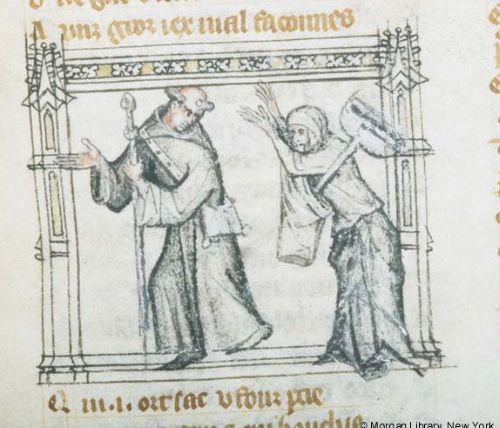
Before the pilgrim took to the road, pilgrimage had to be made visible. Medieval travel was full of ambiguous figures: merchants, messengers, beggars, soldiers, fugitives, laborers, students, friars, sailors, and wanderers all moved through the same roads and towns. The pilgrim needed more than private intention. He or she needed a recognizable identity, one that could be seen by parishioners at departure, strangers along the way, gatekeepers at hospitals, innkeepers at towns, and fellow travelers on the road. Preparation did not remove danger, suspicion, or hardship, but it gave the journey a public shape. It marked the traveler as someone who had left home not merely to roam, profit, escape, or idle, but to move under a sacred purpose.
The ritual beginning of pilgrimage often centered on blessing. A pilgrim might confess, receive counsel, hear Mass, pray at the parish altar, or receive a benediction before leaving. In liturgical traditions, the blessing of the pilgrim’s staff and scrip made the traveler’s equipment part of a religious act rather than ordinary luggage. The staff was not only a stick; the scrip was not only a bag. They were objects placed within the language of Christian protection, humility, and perseverance. The pilgrim departed as someone commended to God, the saints, and the charity of other Christians. This did not mean that every pilgrim everywhere experienced the same formal ceremony, nor that practice was uniform from England to Italy, France, Iberia, or the German lands. But the ideal of a blessed departure mattered because it framed the first step away from home as a passage from local belonging into holy movement.
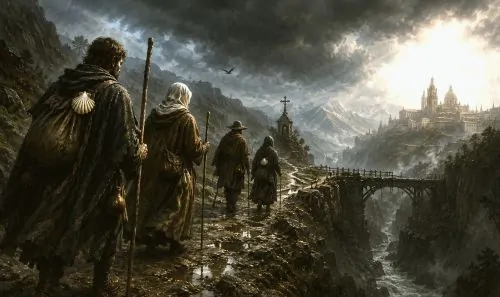
The staff was the most obvious sign of that transformation. Practically, it steadied the body, helped on rough ground, tested mud or water, warned animals away, and could be used in self-defense. Symbolically, it suggested support, discipline, poverty, and faith. The pilgrim leaned on the staff as the Christian was supposed to lean on divine aid. It was also a public sign that the traveler had entered a temporary condition of religious vulnerability. Unlike the weapons of a knight or the pack of a merchant, the staff marked the pilgrim as exposed and dependent. Yet that vulnerability was not weakness alone. The staff gave the pilgrim a recognized place in Christian imagination: the traveler of God, walking through uncertainty toward a holy destination.
The scrip, the small pouch or bag carried by the pilgrim, carried a related meaning. It held necessities: bread, coins, documents, small devotional objects, perhaps a knife, thread, tokens, or food gathered by purchase or charity. But its very smallness mattered. The scrip implied restraint. The pilgrim was not supposed to depart as a fully provisioned lord with wagons and abundance, even if wealthy pilgrims often traveled far more comfortably than the ideal suggested. A modest bag suggested a traveler who could not control the road in advance, who had to receive as well as carry, and who entered the journey with the discipline of limited possession. The scrip worked against the fantasy of mastery. It reminded the pilgrim and those who saw the pilgrim that holy travel was supposed to involve dependence, uncertainty, and humility. The scrip was not purely symbolic. Medieval roads required practical improvisation, and a pilgrim needed somewhere to keep food, money, letters of safe conduct, wax tablets, small relics, medicines, or the tokens acquired along the way. The object stood at the crossing of necessity and theology. It represented the spiritual discipline of having only what could be carried, accepted, or received. It made need visible. A pilgrim with a scrip was a person prepared to depend on hospitality, alms, markets, monasteries, and the uncertain mercy of strangers. In that sense, the scrip was a portable sign of both poverty and trust.
Clothing extended this identity across the whole body. The heavy cloak associated with pilgrimage, often described in terms such as the esclavina, protected against rain, wind, cold, dust, and bad sleep. A broad-brimmed hat could shield the traveler from sun and weather, while rough garments marked the pilgrim as someone who had accepted discomfort. Yet the costume of pilgrimage should not be imagined too rigidly. Medieval pilgrims were not issued uniforms. A local pilgrim, an aristocratic pilgrim, a barefoot penitent, a poor traveler, a Jerusalem pilgrim, and a traveler to Canterbury might look very different. Still, art, sermons, badges, literary descriptions, and surviving objects created a recognizable pilgrim type: staff in hand, pouch at the side, cloak over the body, hat marked by signs of the road. The image was powerful because it reduced the complexity of many journeys into a visible form that others could understand.
After arrival, the pilgrim’s identity could be altered again by the badge. Unlike the staff or scrip, which marked intention and departure, the badge marked contact and completion. A scallop shell associated with Santiago de Compostela, a Canterbury badge connected to Thomas Becket, keys for Rome, a palm for Jerusalem, or other local shrine tokens announced that the traveler had reached a holy place and carried some trace of it home. Badges were often made of inexpensive lead or tin alloys, which made them available to a wider public than luxury relic containers or costly devotional art. Their affordability mattered because pilgrimage itself crossed social lines. A wealthy traveler might bring home costly objects, written memories, or elaborate relic containers, but a cheaper badge allowed even a modest pilgrim to wear evidence of sacred contact. The badge also made arrival socially legible after the traveler returned. It could be shown to family, neighbors, patrons, confessors, or skeptics as proof that the vow had been fulfilled and the shrine reached. It might be touched, displayed, sewn onto clothing, fixed to a hat, or kept as a devotional reminder. In some cases, the growing collection of badges on a pilgrim’s garments turned the body into a map of past devotion, a visible archive of roads taken and saints visited. They were souvenirs but not merely souvenirs in the modern sense. They could serve as proof, memory, protection, testimony, and participation in the saint’s power. Fixed to a hat, cloak, or bag, the badge turned the pilgrim’s body into a moving record of sacred geography.
Preparation was not simply practical. It was a ritual and social reclassification. The pilgrim left home as someone newly legible, clothed in objects that linked body, road, parish, shrine, and salvation. The staff steadied the traveler; the scrip displayed dependence; the cloak endured weather; the hat carried signs; the badge remembered arrival. Together, these things helped convert travel into pilgrimage. They did not guarantee sincerity, safety, or holiness. False pilgrims could wear the signs, wealthy pilgrims could soften the hardships, and ordinary travelers could borrow the language of devotion for mixed motives. But the material culture of pilgrimage mattered because medieval society read bodies through visible signs. To prepare as a pilgrim was to become, before others and before oneself, a person in motion toward the sacred.
Sacred Geography: How Pilgrimage Mapped the Medieval Christian World
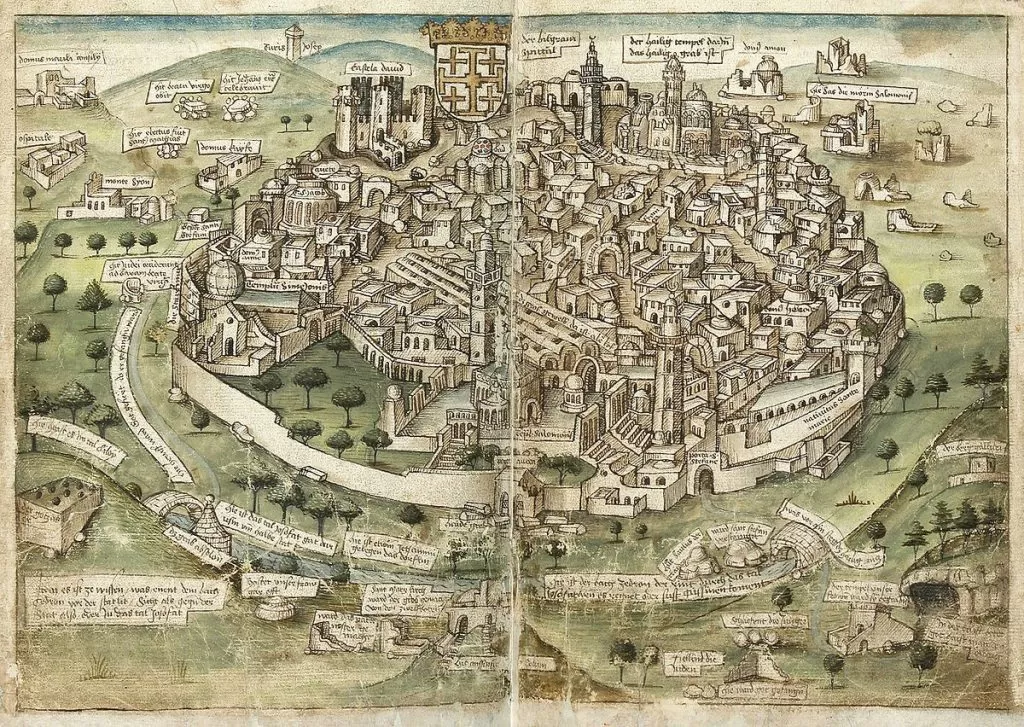
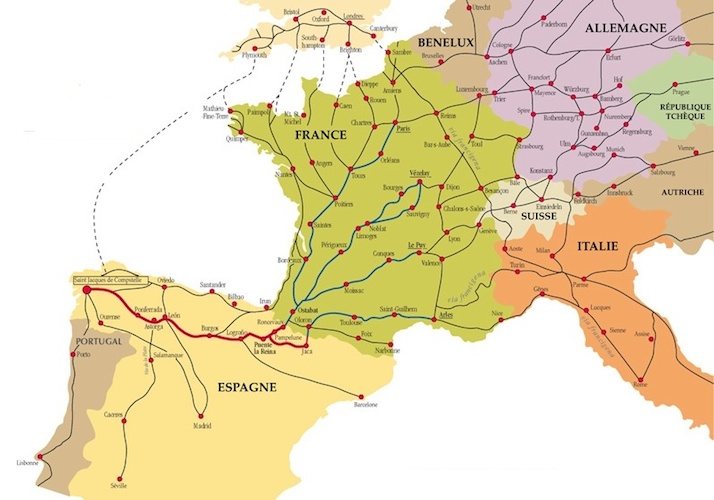
Pilgrimage made geography sacred by arranging the Christian world around places where divine power seemed unusually concentrated. Not every shrine had the same reach, and not every pilgrim imagined distance in the same way. A sick villager might seek help from a nearby saint whose tomb was only a day or two away. A penitent might be sent to a regional shrine known to the local clergy. A prosperous merchant might travel to Rome or Santiago de Compostela, while a noble, cleric, or determined layperson might attempt the much harder journey to Jerusalem. The map of pilgrimage was layered rather than flat. It stretched from parish chapels and local relics to the great international destinations of Latin Christendom, binding familiar landscapes to a much larger sacred world.
Canterbury became one of the most famous pilgrimage destinations in medieval England because of Thomas Becket’s murder in 1170 and the rapid growth of his cult afterward. Becket’s death in the cathedral turned Canterbury into a place where political conflict, episcopal authority, martyrdom, miracle, and royal penance converged. The killing itself mattered because it was remembered not as an ordinary act of violence but as a sacrilegious rupture inside sacred space: an archbishop struck down in his own cathedral after a bitter struggle with royal power. That drama gave Canterbury a charged devotional identity almost immediately. Pilgrims did not go there merely to visit an important church. They went to approach the tomb of a saint whose blood had made the site newly powerful, and whose miracles were recorded, repeated, displayed, and believed. Canterbury’s monks, miracle collectors, shrine attendants, and wider ecclesiastical networks helped transform Becket’s cult into one of the great devotional movements of medieval Europe. The shrine drew the sick, the penitent, the curious, the politically attentive, and the socially ambitious. It also benefited from English geography: Canterbury was close enough to London and the southeast to be reachable for many, but famous enough to carry prestige far beyond England. Canterbury’s importance was both spiritual and practical. It was reachable for many English pilgrims in a way that Rome or Jerusalem were not, yet prestigious enough to give the journey deep religious and social meaning. The shrine became both a national devotional center and an international attraction.
Walsingham offered a different kind of sacred geography. Its fame rested not on an apostolic tomb or martyr’s blood but on the Holy House associated with the Virgin Mary. Walsingham allowed English pilgrims to enter symbolically into the geography of the Incarnation without leaving England. The shrine recreated sacred space by imitation and devotion, drawing pilgrims into a Marian landscape that connected Norfolk to Nazareth. This mattered because medieval sacred geography was not only about possessing bodies or relics. It could also be built through memory, representation, architecture, vision, and devotional association. The idea that a place in England could echo the house of the Annunciation reveals how pilgrimage could collapse distance through sacred resemblance. Walsingham did not replace the Holy Land, but it made one of the central mysteries of Christian history imaginatively near. For pilgrims who could never afford Jerusalem, or who could not risk the dangers of the Mediterranean, Walsingham offered an accessible holy landscape with international resonance. Its power lay in the medieval conviction that a copy, image, house, chapel, or devotional reconstruction could participate in the sanctity of what it represented. A pilgrim to Walsingham did not need to cross the Mediterranean to encounter a place imagined as spiritually joined to the Holy Land.
Rome occupied another level of meaning. It was a city of apostles, martyrs, relics, indulgences, churches, papal authority, and Christian antiquity. To go to Rome was to move toward the institutional and historical heart of the Latin Church. The tombs of Peter and Paul gave the journey apostolic force, while the papacy gave the city living authority. Roman pilgrimage also connected the traveler to a city saturated with layered time: imperial ruins, martyrial memory, basilicas, catacombs, relic collections, and liturgical routes. The pilgrim walked through a landscape where Christian triumph over pagan antiquity could be seen, touched, and narrated. Rome was not only a shrine city but a theological archive of the Church’s past and authority.
Santiago de Compostela drew pilgrims through one of the most elaborate pilgrimage cultures of medieval Europe. The shrine of St. James in Galicia stood at the far western edge of Latin Christendom, giving the journey both apostolic prestige and geographical drama. The roads to Santiago became lined with churches, hospitals, bridges, hostels, markets, and towns that served the flow of pilgrims across France and northern Spain. The scallop shell became the best-known emblem of the completed journey, a portable sign that the traveler had reached the apostle’s shrine. Santiago also shows how pilgrimage could create durable infrastructure. The road was not only a path to the shrine; over time, the path itself became a sacred corridor, thick with stories, dangers, economies, and memories.
Jerusalem stood apart because it was not merely a shrine among shrines. It was the landscape of Christ’s passion, death, resurrection, and ascension. For medieval Christians, the Holy Land made biblical history spatially immediate. To see Jerusalem, Bethlehem, the Mount of Olives, Calvary, the Holy Sepulchre, or the Jordan was to enter the geography of salvation history itself. The pilgrim did not simply remember Scripture there; he or she moved through a landscape where Scripture had become place. The stones, hills, churches, tombs, gates, roads, and ruins of the Holy Land allowed sacred narrative to be experienced through sight, touch, walking, kneeling, weeping, and ritual movement. Yet Jerusalem was also the most difficult and politically complicated of the major destinations. It required long-distance travel, often by sea, and placed Latin Christian pilgrims within a Mediterranean world shaped by Byzantines, Muslims, crusaders, merchants, guides, Franciscans, translators, taxes, and changing regimes of access. Even after crusader rule ended, Latin pilgrims continued to come, but their access depended on negotiation, payment, local authorities, and the practical realities of travel through lands not governed by Latin Christians. This made Jerusalem pilgrimage both spiritually supreme and materially humbling. The pilgrim who reached the Holy Sepulchre had entered the center of Christian memory, but only by passing through a world of political dependence, maritime danger, commercial mediation, and interreligious contact. The spiritual prestige of Jerusalem was inseparable from its danger and distance. Its holiness was supreme, but it was never simply available.
These destinations also reveal that pilgrimage did not have one scale. Local and regional pilgrimage were not lesser in emotional intensity simply because they were shorter. For many medieval Christians, a nearby shrine could be the place where a child was healed, a vow fulfilled, a saint thanked, or a burden of guilt relieved. Long-distance pilgrimage carried greater prestige, expense, danger, and narrative power, but sacred effectiveness did not depend only on miles traveled. The same religious logic could operate at multiple levels: the saint was near, the relic was powerful, the vow was binding, and the body had to go somewhere. What changed was the social meaning of distance. A pilgrim to Jerusalem returned with a different aura from a pilgrim to a local shrine, but both had entered the world of holy movement.
Sacred geography was not only a map of famous places. It was a way of organizing Christian imagination. Canterbury, Walsingham, Rome, Santiago, and Jerusalem offered different kinds of access to the holy: martyrdom, Marian memory, apostolic authority, long-distance discipline, and the physical landscape of Christ’s life. The pilgrim road connected these places to ordinary homes, parishes, and bodies. By leaving one place for another, the pilgrim learned that holiness was both local and universal, both fixed in particular stones and bones and capable of traveling back through stories, badges, relics, songs, and memory. Medieval pilgrimage made the Christian world feel wider, but also more connected, because every road to a shrine suggested that earthly geography could be crossed in search of heavenly aid.
Roads and Feet: The Physical Labor of Overland Pilgrimage
Overland pilgrimage began with the simplest and most exhausting technology of all: the human foot. Before ships, horses, bridges, hostels, badges, indulgences, and famous shrines could matter, the pilgrim had to move a body through distance. Walking made pilgrimage slow, painful, and repetitive. It meant rising early, packing little, judging weather, finding water, watching the road, preserving shoes, avoiding injury, and accepting that each day’s progress depended on terrain, season, health, and luck. Medieval pilgrimage was not only a movement through sacred geography but a discipline of muscles, skin, joints, hunger, and fatigue. The soul might be directed toward Canterbury, Santiago, Rome, or Jerusalem, but the body reached those places step by step.
The pace of foot travel varied enormously. A strong adult on favorable roads in good weather might cover twenty miles or more in a day, while mud, mountains, illness, age, rain, snow, injury, or fear of unsafe roads could reduce progress sharply. Pilgrims did not move as modern travelers do, by measuring distance against fixed timetables and guaranteed infrastructure. Their days were shaped by light, weather, lodging, food, river crossings, local advice, and the pace of the weakest members of the group. A pilgrim who walked too quickly might arrive injured or isolated; a pilgrim who walked too slowly might fail to reach shelter before nightfall. The road demanded constant negotiation between endurance and prudence. The journey was not simply long because medieval people lacked modern transport. It was long because every mile required bodily expenditure. Road conditions made that expenditure unpredictable. In some regions, older Roman roads still structured movement, and major routes between towns, markets, ports, monasteries, and shrines could be well known. But the medieval road system was uneven, local, and vulnerable to season. A route that was passable in summer might become a channel of mud in winter. Rain could turn cart tracks into ruts, flood low ground, swell streams, and make bridges or fords dangerous. Dust, heat, and thirst created different hardships in dry weather. Forest roads could be confusing, exposed uplands could be bitterly cold, and marshy or poorly drained routes could slow travelers to a crawl. A road was not a fixed surface in the modern sense. It was a changing condition, made and remade by feet, hooves, carts, weather, local maintenance, neglect, and memory.
Shoes and clothing mattered because the pilgrim’s body was constantly exposed to friction and climate. Blisters, cracked skin, swollen feet, infected cuts, sprains, aching knees, and exhaustion could make even a short journey miserable. A wet cloak might protect against rain while becoming heavy and cold. Shoes might wear out before money or charity could replace them. The poor pilgrim’s suffering was immediate because limited resources meant fewer changes of clothing, poorer footwear, less food, and less ability to hire animals or pay for comfortable lodging. Yet bodily hardship also had religious meaning. Walking hurt, but that hurt could be interpreted as penitential. The road punished the body, and for many medieval Christians that punishment could seem spiritually useful, especially when the journey was undertaken for sin, gratitude, healing, or the fulfillment of a vow.
The structure of the day made pilgrimage a repeated cycle of effort and uncertainty. Pilgrims needed to decide when to start, when to rest, where to eat, whom to trust, whether to press on, and where to sleep. The safest plan was often to follow known routes, travel in company, and aim for towns, monasteries, hospitals, or villages where shelter might be found. But the road rarely guaranteed welcome. A full hospice, a suspicious village, a dishonest innkeeper, an illness in the group, a washed-out bridge, or a rumor of thieves could force sudden decisions. Money could solve some problems, but not all of them; a pilgrim might be able to buy a better meal or bed in one town and still find the next inn crowded, the next gate closed, or the next stretch of road unsafe. The daily rhythm was practical and moral at once. Travelers had to balance trust and caution, charity and payment, patience and urgency, companionship and personal endurance. They also had to manage the ordinary weariness that made bad judgment more likely: the temptation to keep walking after dark, to accept poor shelter, to split from a group, or to ignore a small injury until it became disabling. This is one reason pilgrimage generated both discipline and sociability. Companions shared information, watched for danger, pooled food, helped the weak, repeated directions, and turned the monotony of walking into conversation, prayer, song, or storytelling. The road was physically hard, but it was rarely silent.
Landscape itself could become part of the spiritual drama. Plains, forests, rivers, hills, mountains, and city gates did not merely separate the pilgrim from the shrine; they gave the journey shape. The Alps and Pyrenees were formidable for long-distance travelers, but smaller obstacles mattered too: a flooded ford, a steep descent, a broken bridge, a cold night outdoors, or a confusing track through woodland. Medieval pilgrims often moved through a world mapped less by abstract coordinates than by remembered landmarks, local directions, shrines, hostels, towns, rivers, passes, and stories of danger. To travel overland was to depend on embodied and communal knowledge. The pilgrim learned the road by asking, watching, following, suffering, and remembering.
The physical labor of overland pilgrimage helped create the meaning of pilgrimage itself. If shrines were powerful because they concentrated holiness, roads were powerful because they tested the pilgrim’s desire to reach that holiness. Distance made devotion visible. Mud, fatigue, hunger, sore feet, bad weather, and fear were not incidental inconveniences but part of the experience that distinguished pilgrimage from ordinary movement. The pilgrim’s body became the measure of the vow. Each mile transformed intention into action, and each hardship made the destination more charged. Medieval pilgrimage was sacred mobility, but it was also bodily labor: a theology of movement written into roads, weather, shoes, skin, and tired feet.
Unequal Roads: Class and Comfort in Medieval Pilgrimage

Walking gave pilgrimage its most familiar image, but medieval pilgrims did not all move in the same way. The road was a shared religious space, yet it was also a hierarchy of bodies, animals, servants, money, and equipment. Some pilgrims went on foot because poverty left them no other choice, and some walked because penitential hardship was part of the journey’s meaning. Others rode horses or mules, hired animals for difficult stretches, paid porters, used pack animals for baggage, or arranged transport by cart, wagon, litter, ferry, or ship when necessary. Pilgrimage could make rich and poor appear briefly united by destination, but it did not erase the unequal conditions under which they traveled.
The horse was the clearest sign that a pilgrim had resources. Riding spared the feet, extended the daily range, gave the traveler height and visibility, and could reduce some dangers of exhaustion, mud, and injury. A mounted pilgrim could arrive less battered at the end of the day, preserve strength for difficult terrain, and cover stretches of road that might take walkers much longer. Horses also made it easier to carry extra clothing, food, bedding, documents, gifts, or devotional objects, either on the animal itself or through accompanying pack animals and servants. Yet a horse was not simply a convenience. It was an expense that multiplied other expenses. It required fodder, stabling, shoeing, veterinary care, attendants or hired help, and protection from theft. It could also draw attention, marking the pilgrim as worth robbing or as someone socially above the ordinary foot traveler. A pilgrim who rode might move faster than a walker, but he or she also carried the burden of managing an animal through crowded towns, bad roads, bridges, tolls, ferries, and uncertain lodging. In wet weather, deep mud could exhaust or injure the animal; in mountainous country, steep paths could make riding dangerous; in poor districts, fodder might be scarce or expensive. Wealth made movement easier, but it did not make movement effortless. A horse could stumble, go lame, fall sick, be stolen, or become impossible to feed in poor country or bad weather.
Mules occupied a practical middle ground in many regions. They were often valued for endurance, sure-footedness, and usefulness on rougher terrain. A mule could carry a rider, baggage, or supplies, and it could be more reliable than a horse in difficult country. For pilgrims crossing mountain routes, moving through uneven landscapes, or traveling with goods that had to be preserved over long distances, such animals mattered enormously. They also reveal that medieval transport was rarely a simple choice between walking and aristocratic riding. Many journeys involved mixed forms: walking on some stretches, riding on others, hiring animals temporarily, loading baggage onto a pack beast, or depending on local carriers when terrain, age, illness, or weather made ordinary walking impossible.
Carts and wagons were useful but limited. They could carry baggage, provisions, sick travelers, elderly pilgrims, children, or those unable to walk, but they were slower, more cumbersome, and more dependent on road conditions than mounted travel. A road passable to a walker or rider might be miserable for a wheeled vehicle. Mud, ruts, narrow tracks, broken bridges, steep inclines, and crowded town gates could turn a cart from convenience into obstacle. Carts also required animals and drivers, which increased cost and coordination. For this reason, wheeled transport should not be imagined as the obvious comfortable alternative to walking. In many medieval landscapes away from major roads, a cart could be the least flexible form of travel. It helped where the route allowed it, but it also tied the traveler to the condition of the road more tightly than walking did.
Class shaped not only speed but exposure. A wealthy pilgrim could carry better food, spare clothing, bedding, money, letters, servants, weapons, or recommendations. Such a traveler could pay for private lodging, safer company, guides, pack animals, ferries, physicians, and replacements when equipment failed. A poorer pilgrim depended more directly on the charity of monasteries, hospitals, parish households, roadside alms, cheap inns, or the help of fellow travelers. The distinction was not merely comfort. It could become a matter of survival. A rich pilgrim who fell ill might rest in a better bed, hire transport, or delay the journey; a poor pilgrim who fell ill might be stranded, forced to beg, or dependent on a hospital already crowded with the exhausted and sick. The road tested everyone, but it tested unequal bodies unequally. These differences complicate the common image of pilgrimage as a socially leveling experience. There was truth in that image. Pilgrims of different ranks could gather at the same shrine, hear the same bells, pray before the same relics, wear similar badges, and share stretches of road. Chaucer’s imagined company on the road to Canterbury is powerful precisely because pilgrimage could bring unlikely people into temporary proximity: knights, clerics, merchants, widows, artisans, students, servants, and religious professionals moving toward the same sacred destination. But proximity was not equality. The mounted pilgrim and the barefoot penitent might share a road without sharing the same risks, resources, or bodily suffering. Pilgrimage created moments of common identity, but class traveled too.
The unequal ways pilgrims moved also affected how their journeys were remembered. A poor pilgrim’s holiness might be intensified by hardship, hunger, and dependence; an elite pilgrim’s journey might be recorded through written itineraries, donations, gifts, patronage, or carefully managed devotional performance. A noble or clerical traveler could turn pilgrimage into reputation, diplomacy, dynastic memory, or spiritual prestige, while a poor traveler might return with little more than a badge, a story, and the physical proof of endurance. Yet both forms belonged to the same religious world. Medieval pilgrimage did not abolish class; it absorbed class into sacred movement. Horses, mules, carts, servants, and bare feet all traveled toward holy places, but they did so through different experiences of cost, comfort, vulnerability, and meaning.
Hospitality and Mercy: Compassion and Shelter for the Medieval Pilgrim
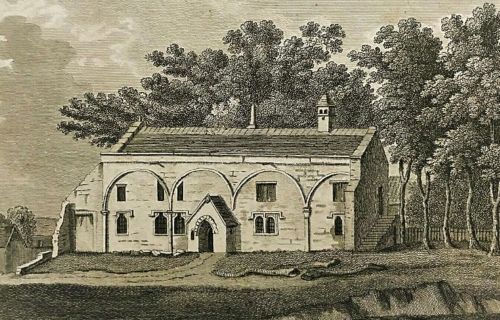
Pilgrimage depended on more than roads. It depended on welcome. A traveler who walked for days or weeks needed food, water, shelter, rest, medical care, directions, protection, and sometimes help crossing rivers, mountains, or dangerous stretches of road. No single institution supplied all of this, and no pilgrim could assume that every door would open. Yet medieval Christendom developed a broad culture of hospitality that made pilgrimage possible on a scale that private resources alone could never have sustained. Monasteries, hospitals, parish houses, urban charities, bridges, confraternities, and lay benefactors all formed part of a scattered but recognizable network of mercy. The road was hard because it exposed the body to hunger, weather, illness, and danger; hospitality mattered because it answered that exposure with Christian obligation.
Monasteries and abbeys occupied an important place in this culture because hospitality had long been tied to religious life. The Rule of Benedict famously required that guests be received as Christ, and although practice varied widely, the ideal had deep consequences for medieval travel. A monastery might offer bread, ale or wine, a place to sleep, a stable for animals, washing water, directions, or basic care for the sick and exhausted. It might also provide spiritual aid: prayers, confession, Mass, blessing, burial if the traveler died, or simply the reassurance that the pilgrim had entered a Christian house rather than an indifferent lodging place. Some houses were more generous than others, and treatment could depend heavily on status. Wealthy guests, clerics, nobles, and important travelers might receive better quarters, warmer rooms, separate dining, and more attentive service, while poor pilgrims might be housed more simply, collectively, or briefly. The monastic guesthouse could reproduce social hierarchy even while speaking the language of universal charity. Still, monastic hospitality helped make the Christian road morally intelligible. The pilgrim who arrived at a religious house was not merely a stranger seeking convenience; he or she was a test of charity, humility, and obedience to a sacred duty of welcome. The traveler’s need gave the monastery an opportunity to enact its own ideals, and the monastery’s welcome gave the pilgrim’s movement a place within the larger moral geography of Christendom.
Hospitals and hospices made that duty more specialized. Medieval hospitals were not hospitals in the modern clinical sense, though some did provide care for the sick. They were often mixed institutions of shelter, charity, prayer, nursing, and social management, serving the poor, elderly, infirm, orphaned, leprous, dying, or transient. Pilgrims fit naturally into this world because the road produced vulnerability. A person who set out healthy might arrive feverish, lame, hungry, filthy, injured, or too exhausted to continue. Hospices along pilgrimage routes could provide beds, food, washing, warmth, spiritual comfort, and time to recover. Their work reveals a crucial feature of pilgrimage: the journey was not sustained by heroic endurance alone. It was sustained by institutions that translated Christian mercy into beds, bread, bowls, blankets, and hands.
Canterbury offers a clear example of how pilgrimage could shape charitable infrastructure. The fame of Thomas Becket’s shrine drew large numbers of travelers, and the city’s institutions had to absorb the practical consequences of that devotion. Eastbridge Hospital, traditionally associated with hospitality for poor pilgrims, shows how a major shrine could generate not only offerings and commerce but also organized charity. Such institutions stood between the shrine and the road. They made arrival survivable for those who reached the city in poor condition, and they helped manage the flow of strangers into an urban community. Canterbury was not unusual in principle. Across medieval Europe, famous shrines encouraged the growth of lodging, food supply, medical care, and charitable foundations that served both the devotional economy and the Christian duty to assist the vulnerable.
Bridges also belonged to the history of pilgrimage hospitality. A bridge might seem like infrastructure rather than charity, but in medieval travel it could be an act of mercy. Rivers were dangerous, especially when swollen by rain or snowmelt, and ferries were not always safe, cheap, or available. A bridge shortened travel, reduced danger, encouraged trade, connected settlements, and protected travelers from the hazards of fords. Some bridges were built or maintained through pious gifts, confraternities, tolls, indulgences, or local obligations, and bridge-building could be understood as a work of Christian usefulness. To help pilgrims cross water was to help them continue their sacred journey. Like a hospital bed or loaf of bread, a bridge turned devotion into material support.
Charity on the road was never purely sentimental. It was organized through rules, resources, reputation, and hierarchy. Institutions had to decide who counted as deserving, how long a traveler could stay, whether a person was truly a pilgrim, and how to prevent abuse. False pilgrims, professional beggars, thieves, and able-bodied wanderers could all create suspicion, usually in towns and religious houses that saw strangers constantly passing through. A staff, scrip, cloak, or badge might invite help, but it could also be imitated; the very visibility that made pilgrimage recognizable made it vulnerable to fraud. Hosts had to balance mercy with discipline. A hospital that admitted everyone indefinitely could be overwhelmed; a monastery that refused the poor too harshly could betray its own ideals. Rules about length of stay, conduct, prayer, meals, gender separation, illness, and eligibility helped institutions manage this tension. Medieval charity did not erase social judgment. It classified need, tested sincerity, and often distinguished between the honorable poor, the sick poor, the local poor, the foreign poor, and the suspiciously mobile. The pilgrim’s dependence placed both traveler and host under scrutiny. The traveler had to appear worthy of assistance, and the host had to appear faithful to Christian mercy without allowing charity to become disorder.
The hospitality network that supported pilgrims reveals the social depth of medieval sacred travel. Pilgrimage was not only an individual’s vow or a shrine’s attraction. It was a collective undertaking distributed across a Christian landscape. Every monastery that gave bread, every hospital that offered a bed, every bridge that crossed a river, every donor who endowed a hospice, and every villager who pointed the way helped make holy movement possible. This network reminds us that pilgrimage depended on inequality. The poor needed charity more urgently than the rich, the sick needed care more desperately than the healthy, and strangers were always vulnerable to suspicion. Hospitality and mercy did not remove the dangers of the road, but they made those dangers survivable. They turned the pilgrim’s dependence into an occasion for Christian action.
The Business of Devotion

Pilgrimage was holy travel, but it was also paid travel. A pilgrim needed food, drink, shoes, lodging, candles, badges, ferry passage, guides, animal fodder, medical help, and sometimes written documents, translators, or ship contracts. Some of these needs could be met through charity by monasteries, hospitals, and hospices, but charity alone could not sustain the full movement of pilgrims across medieval Europe. Sacred travel created demand, and demand created business. Inns, taverns, markets, ferrymen, peddlers, badge-makers, cooks, brewers, hostelers, porters, money changers, and shrine officials all formed part of the material economy that surrounded devotion. The pilgrim road was not outside the marketplace. It passed directly through it.
Inns and taverns met needs that religious hospitality could not always satisfy. A monastery might offer shelter, but not always to everyone, not always comfortably, and not always for more than a brief stay. A hospital might care for the sick poor, but a healthy traveler with money might be expected to pay elsewhere. Inns offered beds, stabling, food, ale, wine, news, warmth, and company. They also offered a kind of social information that mattered on the road: rumors about unsafe stretches, advice about bridges or ferries, warnings about weather, news of prices, and the names of reliable guides or suspicious hosts farther along the route. For pilgrims traveling in unfamiliar regions, such knowledge could be nearly as valuable as a meal. Yet inns also carried a mixed reputation. They were useful, sociable, and sometimes indispensable, but they could be noisy, dirty, expensive, crowded, or morally suspect. Pilgrims might find fleas, bad bedding, watered wine, inflated prices, dishonest measures, theft, drunkenness, gambling, sexual temptation, or quarrels. The very things that made the inn attractive after a hard day (the fire, the drink, the crowd, the release from discipline) also made it morally ambiguous. A pilgrim could recover strength there, but could also be drawn into anger, excess, lust, or fraud. The inn was one of the road’s great ambivalent spaces: a place of relief after hardship, but also a place where vulnerability could be exploited.
Taverns and alehouses were important because drink was not an optional luxury on the medieval road. Travelers needed safe liquid, calories, and a place to rest. Ale, beer, wine, and cooked food connected pilgrimage to local production and trade. A pilgrim moving from town to town also moved through different foodways, prices, measures, dialects, and customs. The road widened experience not only through shrines but through markets and meals. Dried bread, cheese, fish, pottage, ale, wine, fruit, nuts, and whatever could be bought or begged along the way formed the bodily underside of holy movement. A pilgrim might pray toward a relic, but hunger turned the next cookshop or tavern into an immediate concern.
Markets clustered naturally around pilgrimage because crowds gathered where holiness drew them. A major shrine did not attract only the devout. It attracted sellers of food, candles, wax, cloth, devotional images, badges, ampullae, rosaries, belts, knives, shoes, and small goods useful to travelers. It also attracted people offering services: guides, interpreters, scribes, carriers, money handlers, lodging keepers, and transport providers. The more famous the shrine, the more predictable the flow of visitors, and the more attractive the site became for commerce. Pilgrimage helped turn sacred places into economic centers. Canterbury, Santiago, Rome, and Jerusalem were not simply destinations of prayer; they were also places where money changed hands constantly.
The sale of pilgrim badges and souvenirs shows the relationship between devotion and commerce clearly. A badge could be cheap, mass-produced, and sold in large numbers, but it was not spiritually empty. It marked arrival, carried the identity of the shrine, and allowed the pilgrim to return home with visible proof of contact. Ampullae filled with holy water, oil, or dust worked similarly, making sacred matter portable. These objects belonged to a world in which material things could mediate memory, blessing, protection, and status. A badge sewn onto a hat or cloak could announce not only where the pilgrim had been but what kind of sacred encounter the pilgrim claimed to have experienced. It made the completed journey readable to neighbors, hosts, confessors, and future travelers. Yet these objects also belonged to an economy of production and sale. Metalworkers, mold-makers, merchants, shrine authorities, and urban markets profited from the pilgrim’s desire to carry holiness away. The cheapness of many badges was part of their importance, because it allowed sacred memory to circulate beyond the wealthy. A pilgrim who could not endow an altar, commission a manuscript, or purchase a costly reliquary might still return with a small token that joined personal devotion to the wider fame of a shrine. The same object could be devotional token, social proof, protective charm, and commercial product at once.
Offerings at shrines added another layer to the business of devotion. Pilgrims gave coins, candles, wax, jewelry, crutches, clothing, images, written testimonies, or other gifts in gratitude, petition, or fulfillment of vows. These offerings sustained churches, clergy, building projects, liturgy, relic display, charity, and the prestige of the shrine. A miracle cult that drew pilgrims could enrich a cathedral or monastery, fund architectural expansion, and raise the standing of a city. But the economic success of a shrine could also provoke criticism. Were offerings signs of gratitude to God and the saints, or evidence that holiness was being monetized? Medieval observers did not all answer that question in the same way. Some saw wealth at shrines as fitting honor for sacred power; others worried about greed, fraud, manipulation, or the distraction of pilgrims from true repentance.
Pilgrimage commerce also depended on trust, and trust was fragile. A pilgrim far from home did not know local prices, honest measures, safe lodgings, reputable guides, or reliable routes. This created opportunities for exploitation. Innkeepers might overcharge; ferrymen might demand more than expected; guides might mislead; sellers might pass off ordinary objects as holy; false relics might circulate; and criminals might watch travelers who were carrying money for food, lodging, tolls, or offerings. Yet suspicion should not be allowed to swallow the whole picture. Most pilgrims could not have traveled without ordinary commercial exchange. The market was dangerous because it was necessary. Medieval pilgrimage depended on practical strangers, and every transaction required some act of judgment.
The business of devotion complicates any simple opposition between piety and profit. Medieval Christians knew that holy journeys required material support. Bread had to be baked, ale brewed, candles dipped, badges cast, beds supplied, animals fed, ferries operated, ships maintained, bridges repaired, and churches staffed. Commerce did not automatically corrupt pilgrimage; it made pilgrimage possible at scale. The problem was not that money touched devotion, because money touched nearly every institution that sustained medieval religious life. The problem was that sacred desire created predictable opportunities for profit, and profit could sharpen the temptation to exaggerate, overcharge, deceive, or exploit the vulnerable. Pilgrimage reveals a religious economy in which material exchange was both necessary and morally unstable. The pilgrim needed the market, but the market could also threaten the humility, sincerity, and penitential purpose that pilgrimage was supposed to cultivate. Charity and commerce were not separate worlds on the road; they overlapped at shrines, inns, hospitals, bridges, ports, and city gates. The pilgrim road was lined with both, and the shrine was both a holy destination and an economic engine. Pilgrimage reveals a medieval religious world in which salvation was imagined through the body, and the body always needed food, shelter, money, objects, and exchange.
Danger on the Road
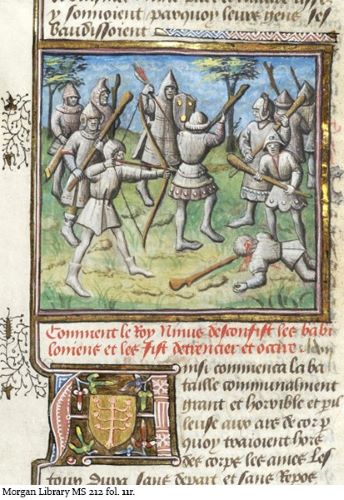
Pilgrimage made travel holy, but holiness did not make travel safe. The road exposed pilgrims to dangers that were physical, social, environmental, and psychological at once. A traveler might fear thieves, wild weather, swollen rivers, treacherous mountain passes, illness, hunger, exhaustion, predatory hosts, political violence, hostile officials, or simply losing the way. These threats were not imaginary embellishments added later by storytellers. They belonged to the practical experience of medieval mobility. The pilgrim left the familiar protections of household, parish, lordship, and neighborhood and entered a world where identity had to be performed before strangers, safety had to be negotiated daily, and survival depended on judgment as much as devotion.
Bandits and outlaws gave the road one of its most persistent fears. Pilgrims were attractive targets because they were mobile, often unfamiliar with local conditions, and likely to carry at least some money for food, lodging, tolls, ferries, offerings, badges, or emergencies. A poor pilgrim might not seem wealthy, but even a small purse, cloak, shoes, knife, badge, or pack could tempt theft. Wealthier pilgrims with animals, servants, better clothes, or visible goods, advertised more profitable targets. The danger was intensified by the fact that pilgrims often moved through liminal spaces: woods, heaths, mountain tracks, river crossings, roads between jurisdictions, and the outskirts of towns. These were places where local protection weakened and strangers could disappear. Fear of robbery encouraged pilgrims to travel in groups, attach themselves to larger companies, hire guides, follow established routes, and avoid being caught on the road after dark.
Weather could be just as dangerous as violence. Rain turned roads into mud, filled ruts, swelled streams, and made steep paths slick. Cold could numb hands and feet, soak clothing, and turn an ordinary night outdoors into a threat to life. Heat brought thirst, fatigue, spoiled provisions, insects, and sun exposure. Snow could conceal paths, block passes, and trap travelers far from shelter. Wind, fog, and darkness made direction uncertain. Medieval pilgrims did not travel through a landscape of predictable services and rapid rescue. A storm could mean missed lodging, lost companions, ruined food, injured animals, or a forced stop in a place where the traveler had no friends. Weather mattered not simply because it was uncomfortable, but because it could transform the moral courage of pilgrimage into immediate bodily peril.
Mountains gave these dangers a dramatic form. The Alps, Pyrenees, and other highland routes were not merely scenic obstacles on the way to Rome, Santiago, or other shrines. They were places where geography itself seemed to test the pilgrim. Steep climbs, narrow tracks, falling stones, snow, ice, sudden storms, thin shelter, and the difficulty of moving animals or carts through rough country could turn progress into ordeal. Mountain crossings also heightened dependence on local knowledge. Travelers needed to know which passes were open, where shelter might be found, whether guides were trustworthy, and how far they could safely go before night. Even smaller hills and uplands could be dangerous to the exhausted or poorly equipped. The mountain became a spiritual image because it was a practical reality: the pilgrim ascended through danger, vulnerability, and uncertainty before descending toward another stage of the sacred road.
Maps did not remove this uncertainty. Medieval people possessed maps, itineraries, route descriptions, portolan charts for maritime contexts, and practical geographic knowledge, but most pilgrims did not travel with anything like a modern road atlas. Much navigation depended on spoken directions, remembered routes, shrine networks, rivers, towns, bridges, mountain passes, crosses, churches, local guides, and the advice of earlier travelers. Written itineraries could list stages and distances, but the traveler still had to interpret them through mud, dialect, weather, fatigue, and rumor. The road was learned socially and bodily. Pilgrims asked, watched, followed, repeated, and remembered. This dependence created vulnerability. A bad guide, misunderstood instruction, false shortcut, closed road, flooded crossing, or hostile territory could turn a journey into confusion. Fear of being lost was not only fear of delay; it was fear of hunger, exposure, robbery, and death outside known protection.
Fear itself shaped pilgrimage. It disciplined behavior, strengthened group bonds, and intensified the religious meaning of arrival. A pilgrim who feared thieves might pray more urgently, stay closer to companions, or interpret survival as saintly protection. A traveler caught in storm or snow might vow an offering if delivered safely. A sick or exhausted pilgrim might understand the body’s weakness as part of penitential suffering. Yet fear could also produce suspicion. The stranger offering help might be a guide or a cheat; the crowded inn might be shelter or danger; the fellow pilgrim might be companion or thief in disguise. The signs of pilgrimage (staff, scrip, cloak, badge, vow) helped make the traveler legible, but they did not guarantee trust. Medieval roads required constant moral reading of people, places, and risks.
The dangers of pilgrimage did not stand outside its religious meaning. They helped create it. If the road had been safe, fast, and predictable, pilgrimage would have lost much of its penitential force. The uncertainty of travel made devotion visible through endurance. Bandits, weather, mountains, poor maps, and fear turned the journey into a trial in which the pilgrim’s body and intention were repeatedly tested. This does not mean danger was romantic or harmless. People were robbed, injured, deceived, stranded, sickened, and killed. But medieval pilgrimage absorbed those risks into a larger sacred interpretation. The road frightened pilgrims because it was genuinely dangerous, and it mattered spiritually because that danger made the journey more than movement. To reach the shrine was to have survived a world where the holy destination had to be earned through exposure, dependence, courage, and fear.
The Sea Road to Jerusalem

For pilgrims who set their hopes on Jerusalem, the road eventually became water. The Holy Land stood at the center of Christian sacred memory, but for much of the later Middle Ages it could not be reached by devotion alone. It required money, paperwork, maritime knowledge, patience, and the willingness to surrender one’s body to the sea. Pilgrims from northern and western Europe might walk, ride, or take river routes southward through the continent, but many eventually aimed for Italian ports such as Venice, where commercial shipping connected Latin Christendom to the eastern Mediterranean. The result was a striking fusion of the sacred and the mercantile. A pilgrim seeking Calvary, the Holy Sepulchre, Bethlehem, and the Mount of Olives first had to deal with shipmasters, brokers, port officials, crowded lodging, delayed departures, maritime contracts, and the anxious economics of passage.
Venice became important because it possessed the ships, routes, capital, and institutional experience to turn Holy Land pilgrimage into a semi-regular maritime enterprise. Its merchants and shipowners were not transporting pilgrims out of pure charity. They were selling passage within a wider Mediterranean economy of trade, diplomacy, war, convoy protection, and commercial risk. The city’s power rested on its ability to move goods and people through the eastern Mediterranean, and pilgrims became one more category of traffic within that system. They entered a world of docks, warehouses, counting houses, brokers, sailors, guards, cargo, rumors, and waiting. Pilgrims often had to remain in the city before departure, sometimes for weeks, spending money on lodging, food, equipment, and arrangements while trying to avoid being cheated or stranded. This waiting period could be spiritually productive, but it could also be financially draining and emotionally unsettling. The pilgrim who had left home to imitate humility or fulfill a vow now had to negotiate prices, judge shipmasters, secure space, and survive in a city famous for wealth, ceremony, and hard bargaining. Venice itself could become the first major test of the Jerusalem pilgrimage: a city of wonder and wealth, but also a place where the holy traveler became a customer. The pilgrim’s desire to reach the sacred landscape of Christ’s life was mediated by one of the most sophisticated commercial republics in Europe.
Contracts mattered because the sea journey was too expensive and dangerous to be left to vague promises. Pilgrims needed to know what passage included: space aboard ship, food, water, baggage allowance, stops, timing, return arrangements, and sometimes transportation between ports and holy places. Such agreements could still leave much uncertain. Weather delayed departures; captains changed plans; ships waited for cargo, convoy, or permission; and pilgrims might complain about provisions, crowding, or broken expectations. The written contract reveals a crucial truth about medieval pilgrimage: the most sacred journeys could depend on legal and financial instruments. A vow to visit Jerusalem did not place the pilgrim outside commerce. It bound spiritual intention to maritime capitalism, municipal regulation, and the practical need to survive the voyage.
Life aboard ship was often miserable. Pilgrims were not passengers on vessels designed for comfort. Many traveled on merchant galleys or other ships whose spaces were crowded, noisy, foul-smelling, and physically restrictive. The sea compressed social distance while magnifying bodily discomfort. Travelers endured seasickness, heat, cold, wet clothing, vermin, spoiled food, rancid water, fear of storms, lack of privacy, quarrels, and the inability to escape one another. A pilgrim who could walk away from a bad inn could not walk away from a bad ship. Religious discipline continued aboard: pilgrims prayed, confessed, listened to sermons, sang, feared death, and made vows in moments of danger. But the ship also exposed the body to humiliations that overland travel did not. The sea made even elite pilgrims dependent, cramped, sick, and powerless before weather and crew.
Piracy, shipwreck, and naval violence sharpened the danger. The Mediterranean was not an empty highway but a contested political and commercial world. Latin Christians, Byzantines, Mamluks, Turks, Genoese, Venetians, Catalans, and others moved through overlapping zones of trade, rivalry, raiding, and diplomacy. Pilgrims might fear pirates, hostile ships, storms, reefs, disease, or capture. Even the rumor of danger could alter routes and departures, because maritime movement depended on timing, intelligence, and the willingness of shipmasters to risk lives, cargo, and capital. A pilgrim could prepare spiritually for death, but preparation did not make storms less violent or pirates less interested in ransom and plunder. Shipwreck was terrifying because it left little room for human control. A broken mast, sudden squall, hidden shoal, or navigational error could turn a sacred voyage into panic within minutes. Capture brought its own terrors: imprisonment, ransom, forced delay, separation from companions, or the collapse of the pilgrimage altogether. Shipmasters had to weigh profit against safety, and pilgrims had to trust men whose interests were not identical to their own. Maritime pilgrimage made the traveler dependent on systems of protection that were only partly religious: convoys, armed vessels, treaties, port authorities, navigation, seasonal sailing knowledge, and the reputation of Venetian maritime power. The pilgrim’s faith did not replace these systems. It traveled inside them.
Arrival in the eastern Mediterranean did not end the complexity, because Jerusalem lay within a political world not governed by Latin Christians. After the fall of the crusader kingdom, later medieval pilgrims entered a Holy Land under Muslim rule, especially Mamluk authority. This did not make pilgrimage impossible, but it made access negotiated. Pilgrims might pass through ports such as Jaffa, depend on local guides and interpreters, pay fees, submit to officials, and move under restrictions that reminded them that sacred geography was politically controlled. The Franciscan presence in the Holy Land became important in helping Latin pilgrims navigate shrines, rituals, lodging, and access. The experience could produce anxiety, resentment, curiosity, admiration, and fear. Pilgrims came to see places sanctified by Christ, but they encountered those places through taxes, escorts, guards, bargaining, multilingual contact, and the practical authority of Mamluk Palestine.
The sea road to Jerusalem reveals medieval pilgrimage at its most ambitious and most compromised. No destination was holier for Latin Christians, yet no journey more clearly exposed the pilgrim’s dependence on money, law, trade, ships, politics, and non-Christian power. Venice, maritime contracts, merchant galleys, pirates, storms, ports, Mamluk officials, Franciscan guides, and local intermediaries all stood between the pilgrim and the Holy Sepulchre. That did not diminish the sacred force of Jerusalem pilgrimage; it intensified it. The difficulty of reaching the Holy Land made arrival feel even more charged. To kneel at the places of Christ’s passion after surviving the sea, the marketplace, the ship, the port, and the authorities was to experience sacred geography through dependence and vulnerability. The road to Jerusalem was holy not because it escaped the world, but because it passed through so much of it.
Disease, Exhaustion, and the Vulnerable Pilgrim Body
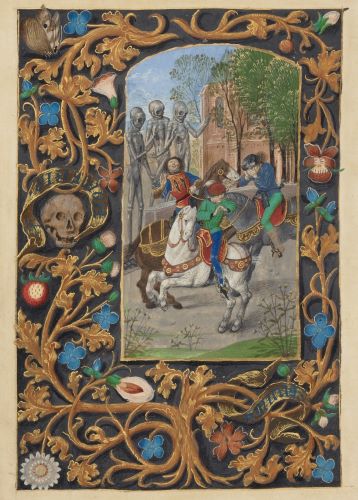
Pilgrimage exposed the body as much as it elevated the soul. The pilgrim might begin with a vow, a prayer, a penance, or a hope for healing, but the journey quickly became a sequence of bodily tests: sore feet, hunger, thirst, sleeplessness, cold, heat, rain, lice, bad food, foul water, strained muscles, infected cuts, and the slow weakening that came from moving day after day without reliable comfort. Medieval religious culture could interpret such suffering as spiritually meaningful, but meaning did not make the body invulnerable. The pilgrim’s body was the instrument of devotion, and also the thing most likely to fail. To travel toward a shrine was to place flesh, not merely intention, on the road.
Exhaustion was one of the most ordinary dangers because it accumulated quietly. A single day’s walk might be manageable, but pilgrimage demanded repetition. The traveler rose, packed, walked, searched for food, walked again, negotiated lodging, slept poorly, and began again. Little discomforts could become serious. A blister could become an open wound; damp clothes could bring fever; hunger could weaken judgment; lack of sleep could make a pilgrim careless on bad roads or vulnerable to exploitation. The elderly, children, the poor, the chronically ill, pregnant women, and those already weakened by grief, fasting, or disease faced special risks. Wealth could soften some dangers through better food, bedding, animals, servants, and the ability to rest, but even wealthy pilgrims remained dependent on weather, roads, water, and the limits of the body.
Disease traveled with pilgrims because pilgrimage gathered strangers into shared spaces. Roads, inns, hospitals, ships, shrines, markets, churches, and hostels brought together people from different towns and regions, often in crowded, unsanitary, and poorly ventilated conditions. Communal sleeping could spread lice, fleas, skin infections, respiratory illness, and intestinal disease. Bad water and contaminated food could produce diarrhea, dysentery, vomiting, fever, and dehydration. The very infrastructure that made pilgrimage possible could also make pilgrims vulnerable. A hospice bed, tavern bench, ship deck, crowded church floor, or shared blanket might offer survival one night and infection the next. Medieval people did not understand contagion in modern microbiological terms, but they knew from experience that foul smells, corrupted air, bad water, filth, crowding, and contact with the visibly sick could be dangerous. Pilgrims weakened by walking were vulnerable because the road left little time for recovery. A sick traveler might infect companions, be abandoned by a group, delay the party, or become dependent on a hospital or monastery already crowded with other vulnerable bodies. At great shrines, where the ill gathered precisely because they sought healing, the concentration of suffering could be intense. Pilgrimage was not only a search for healing; it could also be a mechanism by which illness moved.
The ship intensified these dangers. Overland pilgrims at least had the possibility of stopping, separating from companions, changing lodging, or seeking help in the next village. A pilgrim at sea had fewer choices. Crowded vessels compressed people, animals, baggage, food, waste, fear, and sickness into a confined space. Seasickness could leave travelers dehydrated and humiliated. Spoiled provisions and rancid water could produce intestinal illness. Vermin, filth, damp bedding, and lack of privacy made recovery difficult. Storms or delays could extend suffering beyond what passengers expected. On the sea road to Jerusalem, the body became doubly vulnerable: exposed to disease inside the ship and to weather outside it. The sacred destination remained Jerusalem, but the immediate world was a floating community of discomfort, dependence, and fear.
Medieval pilgrims did not experience illness only as a biological event. Sickness could be interpreted through sin, penance, divine testing, demonic attack, saintly discipline, or the mysterious will of God. A pilgrim who fell ill on the road might wonder whether the sickness was punishment, purification, warning, or trial. A recovery could be credited to prayer, relics, vows, confession, or the aid of a saint. This religious interpretation did not exclude practical care. Pilgrims still sought beds, food, warmth, herbs, bandages, rest, bleeding, washing, advice, and nursing. A person might pray before a relic and also ask for a poultice; confess sins and also need clean water; trust a saint and also depend on a nurse, monk, innkeeper, companion, or physician. Medieval healing was not divided cleanly between medicine and faith. A hospital could feed and shelter the sick while also praying for them; a shrine could promise divine aid while the traveler’s body still needed water, sleep, and treatment. Miracle stories themselves often show this overlap, because they begin with broken, fevered, paralyzed, blind, wounded, or desperate bodies and end by turning bodily change into religious testimony. The vulnerable pilgrim body stood at the crossing of medicine, charity, and devotion. Illness made the traveler needy, but it also made the possibility of grace visible.
The bodily weakness of pilgrims shaped the whole pilgrimage system. Roads needed hospitals; shrines needed spaces for the sick; monasteries needed guesthouses; ships needed rules for food and water; groups needed patience with the slow and unwell. The journey’s dangers were not accidental background conditions but central features of what pilgrimage meant. A pilgrim’s body made the vow visible by becoming tired, hungry, dirty, sore, and dependent. Yet that same body could also become evidence of grace if it endured, healed, reached the shrine, or returned home. Medieval pilgrimage promised contact with holiness, but it reached that promise through flesh under strain. The traveler sought salvation, healing, or pardon, but the road answered first through exhaustion.
The Road as Community
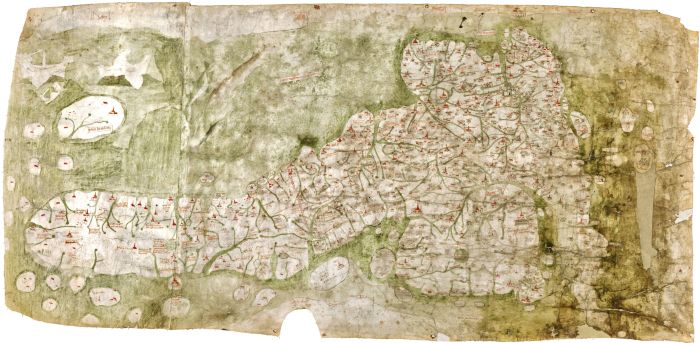
Pilgrimage was bodily labor, but it was rarely solitary labor. Even when a pilgrim began alone, the road drew travelers into temporary communities: small groups from the same parish, larger companies formed for safety, mixed bands met at inns or hospitals, passengers trapped together on ships, and crowds converging near major shrines. Companionship was practical before it was sentimental. A group could deter thieves, share directions, help an injured traveler, pool food, warn of dangerous stretches, and make the long rhythm of walking bearable. It could also provide witnesses, which mattered in a world where identity, vows, payments, illness, and accusations often depended on the testimony of others. A lone stranger was vulnerable to suspicion, but a recognized company of pilgrims was easier to place within the moral order of the road. Yet these practical bonds also created a social world of their own. The pilgrim road became a moving community, fragile and temporary, but real enough to shape memory, behavior, and religious experience. It was not a community of equals, and it could dissolve quickly under pressure, but for the duration of the journey it gave travelers a shared rhythm, shared fears, shared jokes, shared prayers, and shared dependence.
Food and drink helped hold that community together. Pilgrims shared bread, cheese, dried fish, fruit, nuts, ale, wine, pottage, and whatever could be purchased, begged, or carried. Meals on the road were not always comfortable, abundant, or clean, but they created pauses in the day when strangers could become companions. A bench in an inn, a bowl in a hospital, a meal outside a monastery, or a tavern table near a shrine could gather people who would never otherwise have eaten together. Ale and wine could warm, nourish, relax, and loosen speech, but they could also lead to quarrels, foolishness, or moral danger. The same drink that refreshed the exhausted pilgrim could blur the boundary between holy travel and ordinary revelry. This is one reason medieval pilgrimage so easily attracted both praise and satire: it mixed devotion with appetite.
Songs, prayers, and spoken rhythms also shaped the road. Pilgrims could sing hymns, chant psalms, recite prayers, invoke saints, repeat litanies, or sing more secular and folk songs when fatigue and sociability overtook solemn discipline. The soundscape of pilgrimage was mixed. Bells marked churches and towns; priests and companions led prayers; vendors cried goods near shrines; animals made noise; ships creaked; taverns roared; and travelers filled the road with complaint, laughter, bargaining, confession, and song. The holy journey did not require silence. Indeed, sound helped pilgrims endure distance. A sung prayer could turn walking into worship, while a shared song could make strangers move with a common pace.
Storytelling was perhaps the most famous social act of pilgrimage, largely because Geoffrey Chaucer made the road to Canterbury into one of the great literary stages of the Middle Ages. The Canterbury Tales should not be read as a simple documentary record of actual pilgrimage conversation, but its imaginative truth is powerful. Chaucer understood pilgrimage as a setting where people of different ranks, professions, ambitions, hypocrisies, and desires could be brought into temporary proximity. A knight, miller, prioress, merchant, clerk, wife, pardoner, summoner, monk, friar, and host could travel under the same broad religious excuse while revealing the tensions of the society from which they came. Pilgrimage provided the frame; the road released the voices.
Gossip and news were part of that release. Medieval travelers carried information across regions: reports of wars, prices, scandals, miracles, deaths, roads, rulers, diseases, dishonest innkeepers, dangerous forests, generous hospitals, and powerful shrines. Pilgrims did not merely consume stories; they transported them. A miracle heard at Canterbury might be repeated in a village far away. A warning about a bad crossing might pass from one company to another. A rumor about relics, indulgences, pardoners, corrupt clergy, or miraculous cures might travel faster than official messages. This circulation of talk mattered because pilgrimage routes connected local worlds that were otherwise separated by distance, dialect, jurisdiction, and custom. The road became an informal communications network, carrying practical knowledge and moral judgment together. A shrine’s reputation could grow through such talk, but so could suspicion about fraud, bad lodging, dangerous guides, or disappointing relics. Gossip could be frivolous, malicious, or morally suspect, but it was also a practical communication network. On the medieval road, talk was a form of navigation, protection, entertainment, and social exchange.
Mixed company made the pilgrim community exciting and unstable. Pilgrimage could place nobles, merchants, monks, friars, parish clergy, artisans, servants, widows, wives, students, beggars, and laborers within the same moving field. This did not abolish hierarchy. People still carried rank in their clothing, speech, mounts, servants, manners, and money. Yet the road could temporarily loosen ordinary boundaries. People who would not normally converse might share weather, danger, lodging, meals, jokes, songs, or stories. That looseness could be spiritually attractive because it suggested the common condition of all Christians as travelers toward judgment. But it could also be socially troubling. Mixed travel raised anxieties about sexual morality, deception, theft, disorder, false piety, and the conduct of clergy or women in public.
Women pilgrims reveal the tension clearly. Women traveled for many of the same reasons as men: penance, vows, healing, devotion, gratitude, curiosity, and sacred obligation. Yet their mobility was more easily scrutinized. A woman on pilgrimage might be admired as devout, but she might also be suspected of disobedience, sexual vulnerability, excessive independence, or emotional disorder. The very conditions that made pilgrimage communal (mixed lodgings, shared meals, public conversation, long absence from home, and dependence on strangers) could become grounds for suspicion when applied to women. Female pilgrims moved through a double landscape: the physical road toward the shrine and the moral road of reputation, where speech, clothing, tears, companions, and gestures could be judged by observers. Margery Kempe’s travels show how female pilgrimage could become a theater of conflict, where tears, clothing, speech, companions, and public behavior were repeatedly judged by others. Her case was unusual in its intensity, but the broader issue was ordinary: pilgrimage gave women a recognized religious reason to move, while also exposing them to intensified moral surveillance. The road offered access to holiness, but not equal freedom from suspicion.
The community of the road complicates any picture of pilgrimage as purely penitential solitude. Medieval pilgrims could be frightened, hungry, sick, prayerful, bored, amused, irritated, tempted, moved, and entertained all in the same journey. They sought saints, but they also encountered people. They performed devotion, but they also exchanged news, food, warnings, songs, jokes, and stories. This social life did not necessarily weaken pilgrimage’s sacred character. It made pilgrimage human. The road turned religious purpose into lived experience by placing bodies and voices together across distance. Medieval pilgrimage was a movement toward holy places, but it was also a temporary society made from shared hardship, mixed motives, spoken memory, and the noisy companionship of the way.
Arrival at the Shrine: When the Journey Became Proof
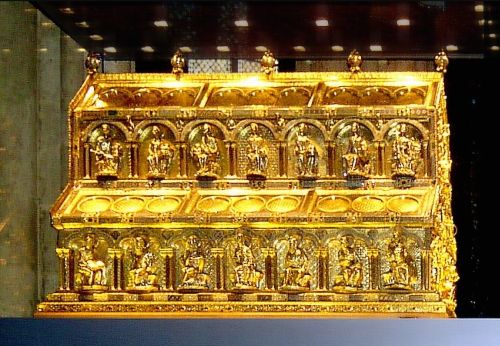
Arrival at the shrine was not simply the end of travel. It was the moment when distance, fatigue, fear, expense, and expectation converged in sacred space. A pilgrim who had walked for weeks, crossed water, slept badly, endured hunger, or risked thieves did not merely enter a church as a visitor. He or she entered as someone whose body had been shaped by the road and whose purpose now had to be fulfilled through ritual action. The final approach might involve bells, crowds, gates, processions, vendors, beggars, clergy, images, candles, incense, and the rising awareness that the holy place long imagined had become physically present. The shrine was the destination, but arrival was also a transformation. The pilgrim who had been on the way now stood before the saint, relic, tomb, image, or sacred site that had given the journey meaning.
Relics were central to this experience because they made holiness tangible. Medieval Christians did not understand the bones, clothing, blood, oil, dust, or possessions of saints as inert memorials. Relics were believed to carry a continuing relationship between heaven and earth. The saint was alive with God, but the saint’s body or associated objects remained available in the world as points of contact, intercession, memory, and power. To approach a relic was to approach a living spiritual presence through material means. The pilgrim might kneel, touch the shrine if permitted, pray before the tomb, offer wax or money, hear Mass, confess sins, ask for healing, or simply gaze upon the place where holiness had been concentrated. The relic gave the journey its logic: the body traveled because grace, memory, and intercession were believed to be located somewhere. Shrines organized this encounter through architecture, ritual, and controlled access. A famous shrine was not only a container for relics but a carefully managed sacred environment. Screens, altars, tombs, feretories, crypts, lamps, treasuries, reliquaries, and processional spaces shaped how pilgrims moved and what they could see. Clergy and shrine keepers mediated access, guarded offerings, interpreted miracles, managed crowds, and preserved the dignity of the holy place. At Canterbury, for example, the cult of Thomas Becket depended not only on the memory of his martyrdom but on the cathedral’s ability to receive pilgrims, display sacred presence, collect testimony, and sustain liturgical honor around the saint. The shrine made sanctity visible and repeatable. It turned a singular holy death, miracle, apparition, or relic into a continuing public institution.
The pilgrim’s actions at arrival varied according to place, purpose, and status. A sick pilgrim might seek healing; a penitent might confess and pray for pardon; a vowed pilgrim might give thanks for deliverance; a bereaved pilgrim might pray for the dead; a wealthy pilgrim might make a costly offering; a poor pilgrim might give a candle, a coin, a crutch, a lock of hair, or nothing more than tears and prayer. Some pilgrims left votive gifts that testified to healing or gratitude. Others took away contact relics, dust, water, oil, or small objects associated with the shrine. Arrival was reciprocal. The pilgrim brought devotion, suffering, money, wax, testimony, and need; the shrine offered access, intercession, memory, blessing, healing, status, and proof that the journey had not been meaningless.
Badges and ampullae made that proof portable. A badge of lead, tin, or other inexpensive metal could be purchased near a shrine and fixed to a hat, cloak, or bag. The scallop shell of Santiago, the signs of Canterbury, the keys of Rome, the palm of Jerusalem, and countless local badges declared where the pilgrim had been. Ampullae, small containers that could hold holy water, oil, dust, or other blessed substances, allowed the pilgrim to carry away not only a sign of the place but something imagined as materially connected to its power. These objects collapsed distance. They took the shrine back onto the road, then into the home, parish, marketplace, or burial context. A badge was visible memory; an ampulla was portable contact. Both allowed sacred geography to travel with the pilgrim after departure. Proof mattered because pilgrimage was social as well as devotional. A traveler might need to demonstrate that a vow had been fulfilled, a penance completed, or a distant shrine reached. The badge answered skepticism in a world where movement could be morally ambiguous and false pilgrims were a recognized problem. It also conferred prestige. A person who returned from Canterbury, Santiago, Rome, or Jerusalem carried more than an object; he or she carried a story of endurance, danger, and contact with holiness. The badge could speak before the pilgrim did. It told neighbors, hosts, clergy, and future companions that the wearer had entered a sacred elsewhere and returned marked by it. Multiple badges could eventually turn clothing into a kind of devotional map, displaying a life of journeys and saintly associations.
Arrival did not end pilgrimage so much as change its form. The pilgrim had reached the relic, shrine, tomb, or holy place, but the meaning of that arrival had to be carried forward through memory, testimony, objects, healing claims, fulfilled vows, and altered reputation. The road had brought the body to the saint; the badge or ampulla brought the saint’s place back with the body. Medieval pilgrimage depended on this movement in both directions. People traveled to holy places because sanctity was believed to dwell there with unusual force, but they returned with signs that holiness could be remembered, displayed, touched, and narrated elsewhere. The completed journey became visible not only in the pilgrim’s soul, but on the pilgrim’s clothing, in the pilgrim’s story, and in the small objects that made arrival endure.
Returning Home: How Pilgrimage Became Memory
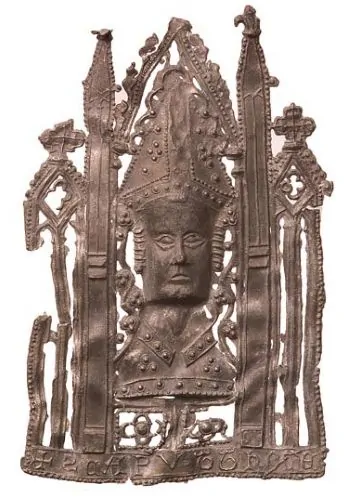
The return journey was not an afterthought. A pilgrimage was incomplete until the traveler came home, because the meaning of the journey had to be carried back into the community from which the pilgrim had departed. Departure had required recognition, permission, blessing, and social explanation; return required reintegration. The pilgrim came back altered by distance, hardship, danger, shrine ritual, and sacred contact, but also by absence. Fields, shops, marriages, debts, households, parish routines, and neighborhood expectations had continued while the traveler was gone. To return was to reenter ordinary life with an extraordinary claim: that one had crossed dangerous space, reached a holy destination, fulfilled a vow, sought pardon or healing, and brought back some trace of sanctity.
Reputation was one of the first things changed by return. A pilgrim who completed a difficult journey could gain honor, credibility, and a new place in local memory. The returned traveler might be admired for endurance, piety, courage, or obedience to a vow. In some cases, the journey could also repair reputation, especially when pilgrimage had been undertaken as penance for wrongdoing. A person who had left under suspicion, guilt, or public discipline could return having performed a visible act of contrition. The road could function as a public test: the sinner had not merely spoken repentance but had submitted the body to distance, discomfort, danger, and holy discipline. Yet reputation could move in the other direction as well. A pilgrim might return with stories of disorder, excessive drinking, suspicious companions, unpaid debts, or behavior that seemed more worldly than holy. Neighbors might ask whether the journey had been sincere, whether the vow had been fulfilled properly, whether the pilgrim had used pilgrimage as a cloak for wandering, commerce, escape, or pleasure. Completion did not automatically sanctify the traveler. It gave the traveler material with which to make a claim, but that claim still had to be received, believed, interpreted, and judged.
Badges, shells, ampullae, palms, and other tokens helped stabilize that claim. They made the invisible achievement of pilgrimage visible to others. A scallop shell from Santiago, a Canterbury badge, a palm associated with Jerusalem, or a small ampulla of holy water or oil could be shown, worn, touched, stored, or displayed. These objects did not merely say “I traveled.” They said that the traveler had reached a recognized sacred place and returned with proof. In a society where false pilgrims and fraudulent claims were possible, such proof mattered. It could satisfy family, neighbors, confessors, patrons, courts, or parish communities that a vow or penance had been fulfilled. It could also produce prestige. A hat or cloak marked with shrine signs turned the returned body into evidence of sacred geography crossed and spiritual labor completed.
Memory transformed the journey into narrative. Pilgrims returned with accounts of roads, storms, mountains, inns, dishonest hosts, generous monasteries, foreign languages, strange foods, crowded shrines, miraculous healings, shipboard misery, and the emotional shock of seeing a famous relic or holy place. These stories mattered because most people would never make the same journey themselves. The returned pilgrim became a carrier of distant holiness into local life. A village that had never seen Rome could hear Rome described. A parishioner who would never reach Jerusalem could imagine the Holy Sepulchre through another’s voice. A local community could become connected to Canterbury, Santiago, Walsingham, Rome, or Jerusalem through testimony, anecdote, gossip, and devotional memory. The road widened not only the pilgrim’s world but also the world of those who listened.
Relics and contact objects extended that widening into domestic and parish devotion. An ampulla, badge, bit of cloth, blessed token, holy water, dust, or image could be kept in a chest, sewn into clothing, hung near a bed, brought out in illness, buried with the owner, or shown to children and neighbors. Such objects allowed the shrine to remain present after the journey ended. They also blurred the boundary between official shrine devotion and household religion. A cathedral or great church might guard the saint’s relics, but a returned pilgrim could carry smaller signs of that sacred presence into ordinary rooms. The object’s value did not depend only on its material substance. It depended on memory, touch, story, and the claim that it had come from elsewhere, from a place where holiness was believed to dwell with special force. A badge or ampulla could become a family possession, a healing aid, a devotional prompt, a conversation piece, or a small archive of the journey. It could remind the pilgrim of vows made and fulfilled, while reminding others that sacred geography did not remain confined to great churches and distant shrines. The home became a place where the journey could be remembered, narrated, and reactivated through objects. Pilgrimage did not simply move people toward shrines; it helped move the meaning of shrines back into homes, streets, workshops, and parish communities.
Reintegration could still be difficult. A pilgrim who had been gone for months or years might return to changed household arrangements, strained finances, dead relatives, altered labor needs, or resentment from those who had carried burdens in the traveler’s absence. A woman pilgrim might face renewed scrutiny over obedience, chastity, and household duty. A poor pilgrim might return with prestige but no improved material condition. A sick pilgrim might return healed, partially improved, unchanged, or worse. The journey might also deepen spiritual identity in ways that did not easily fit local expectations. Margery Kempe’s life shows this problem sharply: travel, tears, white clothing, speech, and public devotion could produce not only admiration but conflict. The pilgrim who returned from the sacred road did not always settle comfortably back into ordinary silence.
The return home completed pilgrimage by turning movement into memory. The pilgrim’s body had gone out under a sacred identity, endured the road, reached the shrine, and come back marked by objects, stories, reputation, and perhaps healing or repentance. What had been a journey became testimony. What had been distance became local knowledge. What had been a badge or ampulla became proof, protection, and reminder. Medieval pilgrimage did not end when the traveler left the shrine, because the shrine’s meaning had to be carried back into the social world that made the journey intelligible in the first place. The pilgrim returned not simply as someone who had been elsewhere, but as someone who had made the elsewhere present at home.
Are We Making Medieval Pilgrimage Too Much Like Modern Travel?
The following video from “ASMR Historian” discusses the life of medieval pilgrims:
I realize that I risk making medieval pilgrimage sound too familiar. By emphasizing roads, inns, taverns, badges, souvenirs, mixed company, stories, food, drink, danger, gossip, and the prestige of return, we may seem to be describing a religious version of modern travel. Pilgrims did leave home, visit famous destinations, buy tokens, encounter strangers, endure bad lodging, tell stories, and return with proof of where they had been. Those similarities are real enough to be tempting. Yet they can also mislead. Medieval pilgrimage did not operate within a modern culture of leisure, tourism, self-discovery, consumer choice, or recreational mobility. It belonged to a world of sin, penance, vows, relics, saints, judgment, purgation, sacred obligation, and the hope of salvation. To call it “travel” is accurate; to make it too much like modern tourism is to flatten the religious world that gave it meaning.
This challenge matters because medieval pilgrims themselves did not always separate motives cleanly. Some were penitents; some were sick; some were fulfilling vows; some were seeking indulgences; some were curious; some enjoyed companionship; some no doubt relished the rare chance to leave home. But the presence of mixed motives does not make pilgrimage secular. A pilgrim could enjoy ale at an inn, laugh at a story, buy a badge, complain about a ship, bargain with a host, and still understand the journey as a serious religious act. Medieval Christianity did not require sacred experience to be disembodied or free of material exchange. On the contrary, pilgrimage assumed that bodies, objects, roads, relics, food, money, images, and places could participate in sacred meaning. The modern danger lies in assuming that commerce, pleasure, and sociability automatically dilute devotion. For medieval pilgrims, those things often existed inside devotion’s world rather than outside it.
A second version of the counterpoint comes from the sources themselves. Many of our most vivid accounts of pilgrimage come from literary texts, elite travelers, clerical observers, miracle collections, institutional records, and later antiquarian preservation. Chaucer’s pilgrims are unforgettable, but they are literary creations. Margery Kempe is extraordinarily revealing, but she was not typical. Felix Fabri and William Wey give valuable detail about Holy Land travel, but their experiences cannot stand for every poor, local, anonymous, or regional pilgrim. Miracle stories show what shrine communities wanted remembered, not simply what happened. Badges and ampullae survive as material evidence, but they do not tell us everything about the inner lives of the people who wore or carried them. The archive naturally favors the recorded, the unusual, the institutional, the collectible, and the narratively powerful. A responsible interpretation must avoid turning colorful evidence into universal experience.
This does not overturn my argument, but it sharpens it. Medieval pilgrimage should not be described as a primitive form of vacation, nor as a purely spiritual act untouched by the ordinary world. It was neither. It was sacred mobility: a religious journey made real through the conditions of medieval travel. The comparison to modern travel is useful only if it remains limited. It helps us notice the social and material dimensions of pilgrimage (the lodging, routes, souvenirs, crowds, markets, danger, and memory) but it becomes harmful if it makes salvation seem like sightseeing or badges seem like mere collectibles. The central point is not that medieval pilgrims were tourists before tourism. It is that pilgrimage gathered many things modern readers separate (devotion, hardship, commerce, social pleasure, fear, bodily pain, proof, and memory) into one recognized religious form.
The counterpoint strengthens the final interpretation by forcing a more careful balance. Medieval pilgrimage was not less religious because it was social, commercial, dangerous, and embodied. It was religious through those very conditions. The pilgrim’s holiness was not found by escaping the world but by moving through it under a sacred purpose. Roads, inns, ships, relics, badges, markets, songs, vows, and stories all belonged to the same devotional field. The modern analogy to travel can open the subject, but it cannot define it. Medieval pilgrimage must finally be understood on its own terms: as a journey in which movement became penance, distance became devotion, objects became memory, and the vulnerable body became the vehicle by which the soul sought healing, pardon, and contact with the holy.
Conclusion: The Road That Made the Pilgrim
Medieval pilgrimage was never only a matter of reaching a destination. The shrine mattered profoundly, whether Canterbury, Walsingham, Rome, Santiago, Jerusalem, or a smaller local holy place known mainly to nearby communities. Relics, tombs, badges, ampullae, vows, indulgences, miracles, and sacred architecture all gave pilgrimage its devotional center. Yet the meaning of pilgrimage was made along the road as much as at the shrine. The pilgrim became a pilgrim by leaving home under a recognized sacred identity, by enduring distance, by depending on strangers, by submitting the body to hardship, and by moving through a world where weather, illness, hunger, money, fear, and faith could not be separated. Pilgrimage was holy travel, but it was holy because travel itself became part of the religious act.
That religious act was deeply social. A pilgrim did not move through an empty landscape but through a network of parishes, families, lords, courts, monasteries, hospitals, hospices, bridges, inns, taverns, markets, ports, ships, guides, shrine keepers, and fellow travelers. Every stage of pilgrimage required negotiation with other people. Permission had to be secured or assumed; food and lodging had to be found; safety depended on company; memory depended on witnesses; return depended on recognition. The journey may have begun in private desire (a vow made in fear, a hope for healing, a burden of sin, a longing to touch relics) but it became real only when that desire entered the visible world of institutions, objects, roads, and relationships. Even solitude, when it occurred, was framed by social expectation. The staff, scrip, cloak, badge, and ampulla were not merely personal possessions. They were signs that allowed others to read the traveler’s body as devotional, vulnerable, disciplined, and worthy of charity or trust. The monastery that gave bread, the hospital that offered a bed, the innkeeper who sold ale, the shipmaster who carried pilgrims toward the eastern Mediterranean, the shrine official who managed access, and the neighbor who later listened to the story all helped define what pilgrimage meant. Pilgrimage turned private longing into a public form of movement.
The hardships of pilgrimage were not incidental obstacles to be overcome before the “real” religious experience began. They were part of the experience itself. Sore feet, poor sleep, bad roads, dangerous crossings, crowded ships, foul water, suspicious inns, illness, storms, bandits, and exhaustion all gave spiritual weight to the journey. To modern eyes, such hardships may look like the failures of premodern infrastructure, and in one sense they were. But for medieval Christians, they could also become penitential labor, proof of sincerity, imitation of humility, and preparation for contact with the sacred. The body that arrived at the shrine was not the same body that had departed. It had been tired, frightened, dirtied, weakened, sustained, and marked by the road. The journey gave devotion a physical history.
The medieval pilgrim stands at the intersection of mobility and salvation. Pilgrimage opened the world beyond the parish, but it did so through a Christian imagination that made places holy, objects powerful, roads meaningful, and bodies morally expressive. It allowed ordinary people, elites, penitents, the sick, the curious, the grateful, and the desperate to enter a wider sacred geography. It also carried that geography back home through stories, badges, relics, memories, reputations, and changed identities. Medieval pilgrimage was not simply travel with a religious purpose attached to it. It was a way of making movement itself sacred. The road did not merely lead to the pilgrim’s transformation. The road helped make the pilgrim.
Bibliography
- Bale, Anthony. A Travel Guide to the Middle Ages: The World Through Medieval Eyes. New York: W. W. Norton, 2024.
- Benedict of Nursia. The Rule of Saint Benedict. Edited and translated by Timothy Fry. Collegeville, MN: Liturgical Press, 1981.
- Benedict of Peterborough. The Miracles of Saint Thomas Becket. Translated by Rachel Koopmans. Suffolk: Boydell Press, 2025.
- Blick, Sarah, and Rita Tekippe, eds. Art and Architecture of Late Medieval Pilgrimage in Northern Europe and the British Isles. 2 vols. Leiden: Brill, 2004.
- Bracton, Henry de. Bracton on the Laws and Customs of England. Translated by Samuel E. Thorne. 4 vols. Cambridge, MA: Harvard University Press, 1968–77.
- Brett, Martin. The English Church Under Henry I. Oxford: Oxford University Press, 1975.
- Breydenbach, Bernhard von. Peregrinatio in Terram Sanctam. Mainz: Erhard Reuwich, 1486.
- Brown, Peter. The Cult of the Saints: Its Rise and Function in Latin Christianity. Chicago: University of Chicago Press, 1981.
- Carlin, Martha. Medieval Southwark. London: Hambledon Press, 1996.
- Chaucer, Geoffrey. The Canterbury Tales. Translated by Percy Mackaye. New York: Duffield & Company, 1914.
- Clay, Rotha Mary. The Mediaeval Hospitals of England. London: Methuen, 1909.
- Coleman, Simon, and John Elsner. Pilgrimage: Past and Present in the World Religions. Cambridge, MA: Harvard University Press, 1995.
- Craig, Leigh Ann. Wandering Women and Holy Matrons: Women as Pilgrims in the Later Middle Ages. Leiden: Brill, 2009.
- Di Stefano, Laura Grazia. “The Business of Pilgrimage in Fifteenth-Century Venice.” PhD diss., University of Nottingham, 2018.
- Dyas, Dee. Pilgrimage in Medieval English Literature, 700–1500. Cambridge: D. S. Brewer, 2001.
- Dyer, Christopher. Everyday Life in Medieval England. London: Hambledon and London, 1994.
- —-. Making a Living in the Middle Ages: The People of Britain 850–1520. New Haven: Yale University Press, 2002.
- Fabri, Felix. The Wanderings of Brother Felix Fabri. Translated by Aubrey Stewart. 2 vols. London: Palestine Pilgrims’ Text Society, 1892–93.
- Finucane, Ronald C. Miracles and Pilgrims: Popular Beliefs in Medieval England. New York: St. Martin’s Press, 1977.
- Geary, Patrick J. Furta Sacra: Thefts of Relics in the Central Middle Ages. Princeton: Princeton University Press, 1978.
- Harvey, Barbara. Living and Dying in England, 1100–1540: The Monastic Experience. Oxford: Clarendon Press, 1993.
- Harvey, P. D. A. Medieval Maps. Toronto: University of Toronto Press, 1991.
- Hayward, Paul Antony. “Demystifying the Role of Sanctity in Western Christendom.” In The Cult of Saints and the Virgin Mary in Medieval Scotland, edited by Steve Boardman and Eila Williamson, 115–42. Woodbridge: Boydell Press, 2010.
- Helmholz, R. H. The Spirit of Classical Canon Law. Athens: University of Georgia Press, 1996.
- The Hereford Breviary. Edited by Walter Howard Frere and Langton E. G. Brown. 3 vols. London: Henry Bradshaw Society, 1904–15.
- Hindle, Brian Paul. Medieval Roads. Aylesbury: Shire Publications, 1982.
- Horden, Peregrine. Hospitals and Healing from Antiquity to the Later Middle Ages. Aldershot: Ashgate, 2008.
- Howard, Deborah. “Venetian Galleys as Domestic and Ritual Space.” Artibus et Historiae 41:81 (2020), 63-78.
- Jacobus de Voragine. The Golden Legend: Lives of the Saints. Translated by William Caxton. 2 vols. Cambridge: Cambridge University Press, 1914.
- Jacoby, David. Commercial Exchange Across the Mediterranean: Byzantium, the Crusader Levant, Egypt and Italy. London: Routledge, 2005.
- Kempe, Margery. The Book of Margery Kempe. Translated by Geoffrey Cumberlege. London: Oxford University Press, 1936.
- Kieckhefer, Richard. Magic in the Middle Ages. Cambridge: Cambridge University Press, 1989.
- Kowaleski, Maryanne. Local Markets and Regional Trade in Medieval Exeter. Cambridge: Cambridge University Press, 1995.
- Legassie, Shayne Aaron. The Medieval Invention of Travel. Chicago: University of Chicago Press, 2017.
- Lepine, David, and Nicholas Orme, eds. Death and Memory in Medieval Exeter. Exeter: University of Exeter Press, 2003.
- Morris, Colin. The Sepulchre of Christ and the Medieval West: From the Beginning to 1600. Oxford: Oxford University Press, 2005.
- Morrison, Susan Signe. Women Pilgrims in Late Medieval England: Private Piety as Public Performance. London: Routledge, 2000.
- Murray, Alan V., ed. The Crusades: An Encyclopedia. 4 vols. Santa Barbara, CA: ABC-CLIO, 2006.
- Nicholas, David. The Later Medieval City, 1300–1500. London: Longman, 1997.
- Nilson, Ben. Cathedral Shrines of Medieval England. Woodbridge: Boydell Press, 1998.
- Ohler, Norbert. The Medieval Traveller. Translated by Caroline Hillier. Woodbridge: Boydell Press, 1989.
- Orme, Nicholas, and Margaret Webster. The English Hospital, 1070–1570. New Haven: Yale University Press, 1995.
- The Pilgrim’s Guide to Santiago de Compostela. Translated by William Melczer. New York: Italica Press, 1993.
- The Pontifical of the Roman Curia in the Thirteenth Century. Edited by Michel Andrieu. Vatican City: Biblioteca Apostolica Vaticana, 1940.
- Pryor, John H. Geography, Technology, and War: Studies in the Maritime History of the Mediterranean, 649–1571. Cambridge: Cambridge University Press, 1988.
- Rawcliffe, Carole. Medicine and Society in Later Medieval England. Stroud: Sutton Publishing, 1995.
- —-. Urban Bodies: Communal Health in Late Medieval English Towns and Cities. Woodbridge: Boydell Press, 2019.
- Reiss, Edmund. “The Pilgrimage Narrative and the ‘Canterbury Tales’.” Studies in Philology 67:3 (1970), 295-305.
- Rubin, Stanley. Medieval English Medicine. Newton Abbot: David and Charles, 1974.
- Schein, Sylvia. Gateway to the Heavenly City: Crusader Jerusalem and the Catholic West, 1099–1187. Aldershot: Ashgate, 2005.
- Siraisi, Nancy G. Medieval and Early Renaissance Medicine: An Introduction to Knowledge and Practice. Chicago: University of Chicago Press, 1990.
- Spencer, Brian. Pilgrim Souvenirs and Secular Badges. Medieval Finds from Excavations in London 7. London: Museum of London, 1998.
- Stopford, J. “Some Approaches to the Archaeology of Christian Pilgrimage.” World Archaeology 26:1 (1994), 57–72.
- Sumption, Jonathan. Pilgrimage: An Image of Mediaeval Religion. Totowa, NJ: Rowman and Littlefield, 1975.
- Turner, Victor, and Edith Turner. Image and Pilgrimage in Christian Culture: Anthropological Perspectives. New York: Columbia University Press, 1978.
- Tyerman, Christopher. God’s War: A New History of the Crusades. Cambridge, MA: Belknap Press of Harvard University Press, 2006.
- Webb, Diana. Medieval European Pilgrimage, c. 700–c. 1500. Basingstoke: Palgrave, 2002.
- —-. Pilgrimage in Medieval England. London: Hambledon and London, 2001.
- —-. Pilgrims and Pilgrimage in the Medieval West. London: I. B. Tauris, 1999.
- Wey, William. The Itineraries of William Wey. Edited by George Williams. London: Roxburghe Club, 1857.
Originally published by Brewminate, 06.30.2026, under the terms of a Creative Commons Attribution-NonCommercial-NoDerivatives 4.0 International license.
About the Author