Ancient Mesopotamian kings surrounded themselves with guards, walls, spies, soldiers, oaths, and rituals, yet those closest to the throne often posed the greatest danger.

By Matthew A. McIntosh
Public Historian
Brewminate
Introduction: The Most Powerful Man in Mesopotamia Was Never Safe
In 681 BCE, Sennacherib, ruler of the most extensive empire the Near East had yet witnessed, was killed by members of his own family and their supporters. His armies had crossed mountains, broken fortified cities, deported conquered populations, and carried Assyrian power from western Iran to the Mediterranean, but none of those achievements could protect him from enemies who already possessed access to the royal court. The assassination exposed a permanent contradiction at the heart of Mesopotamian kingship: command over territories and armies did not necessarily translate into control over the spaces and people immediately surrounding the ruler. Royal ideology presented the king as the chosen servant of the gods, the victorious shepherd of his people, and the indispensable guarantor of justice, prosperity, and cosmic order. In realistic terms, his authority depended upon relatives, courtiers, soldiers, servants, provincial officials, messengers, scholars, and priests whose loyalty could never be assumed without qualification. An attack upon the king’s body was more than an act of personal violence; it threatened the dynasty, disrupted government, invited rebellion, and raised the disturbing possibility that the gods had withdrawn their favor.
Danger could approach the throne from almost any direction. A king might be struck down in battle, captured while traveling, poisoned at his table, betrayed by his guards, challenged by a provincial governor, or overthrown by a rival prince with support inside the palace. Foreign invasion and popular rebellion were only the most visible threats, for the ruler was often most vulnerable among the people who knew his movements, habits, private chambers, and political anxieties. Mesopotamian understandings of danger also extended beyond human conspiracy: eclipses, illnesses, dreams, unusual births, and unfavorable divinatory signs could announce that the king’s life had become the object of supernatural hostility.
No single institution defended Mesopotamian rulers against this range of threats. Royal protection instead emerged from overlapping arrangements whose personnel and terminology varied across kingdoms and periods. Palace walls, controlled courtyards, guarded entrances, barred doors, and restricted residential quarters regulated physical movement toward the ruler, while gatekeepers, watchmen, entrance overseers, and lock masters decided who might proceed farther into the royal interior. Closer to the king stood armed attendants and officials such as the Neo-Assyrian qurbūtu and ša šēpē, although surviving records show that the men conventionally called bodyguards frequently acted as royal messengers, investigators, escorts, military officers, and representatives of the crown rather than simply remaining beside the king with weapons drawn. When the ruler left the palace, mounted guards, shield-bearers, chariot personnel, elite troops, provincial contingents, fortified camps, and the larger army created a moving defensive environment around him. Governors, scouts, diplomats, informants, merchants, and messengers supplied intelligence about enemy movements, disaffected populations, suspicious officials, and possible conspiracies, allowing the king to act before a threat reached the capital. Loyalty oaths transformed fidelity into a sacred obligation enforced by divine curses, while succession arrangements attempted to prevent the death of one ruler from producing a destructive competition for the throne. Diviners, astrologers, exorcists, and other ritual specialists addressed dangers that armed men could not confront, interpreting divine intentions and performing rites intended to transfer, neutralize, or avert an evil fate predicted for the king.
These arrangements should not be mistaken for a unified royal security agency designed according to a single administrative plan. Royal inscriptions celebrated divine favor and battlefield invincibility, whereas letters, legal documents, personnel lists, divinatory inquiries, and archaeological remains reveal a more anxious world of controlled audiences, guarded thresholds, confidential reports, loyalty tests, and repeated precautions. The evidence is also profoundly uneven: Neo-Assyrian archives illuminate the machinery of protection with exceptional detail, while earlier Mesopotamian kingdoms and Neo-Babylonian Babylonia must often be reconstructed from records created for different purposes. The inquiry that follows treats royal security as a protective ecology in which architecture, armed force, administrative surveillance, dynastic policy, and ritual knowledge converged without ever forming a perfectly integrated whole. Its central paradox is that protection required the king to grant exceptional access and authority to precisely those people who could most easily isolate, manipulate, betray, or murder him.
Reconstructing Royal Security from an Uneven Archive
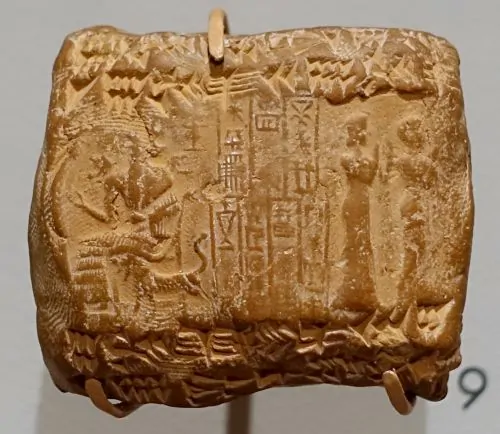
Reconstructing royal security in ancient Mesopotamia begins with an archival problem rather than a clearly defined institution. No surviving Mesopotamian treatise sets out a comprehensive chain of command for guarding the ruler, nor does any single archive explain how palace personnel, bodyguards, soldiers, intelligence gatherers, and ritual specialists were expected to cooperate. The relevant evidence instead stretches across more than two millennia, numerous cities and kingdoms, several administrative traditions, and radically different conditions of preservation. Most surviving documents were created to record particular transactions, communicate immediate problems, commemorate royal achievements, or obtain divine guidance rather than to describe institutions for the benefit of later historians. Even familiar expressions such as “bodyguard,” “spy,” “palace guard,” and “security system” are modern analytical labels applied to Akkadian and Sumerian titles whose meanings could change according to place, period, rank, and context. Any reconstruction must begin by asking not merely what a source says, but why it was created, where it was stored, how it survived, and what kinds of activity it was never designed to record.
Royal inscriptions and monumental art provide the most visible but also the most carefully controlled representations of kingship. Assyrian inscriptions placed the king and his gods at the center of victory, often reducing armies, commanders, logistical personnel, and guards to an indistinct supporting presence even when military success depended upon them. Palace reliefs show armored spearmen, shield-bearers, cavalrymen, chariot attendants, and other armed figures surrounding the ruler during campaigns, hunts, processions, and triumphal displays, but they do not consistently identify these men by the official titles found in administrative texts. Such sources reveal how royal protection was imagined and displayed, yet their silences cannot be treated as evidence that particular personnel or precautions did not exist.
The royal and administrative archives provide a different, far less polished perspective. Letters excavated at Nineveh and other Assyrian centers preserve reports from governors, generals, diplomats, scholars, priests, bodyguards, and provincial officials who warned the king about military movements, local disorder, disloyal subjects, suspicious colleagues, interrupted communications, or failures to obey royal commands. Legal records, ration lists, lodging assignments, witness lists, and personnel documents identify offices that royal inscriptions rarely mention and occasionally reveal where officials lived, what resources they received, and how closely they were connected to the court. These records make it possible to place the qurbūtu, ša šēpē, ša maṣṣarti, gatekeepers, chariot personnel, and other attendants within larger networks of palace service and imperial administration. Nevertheless, archival immediacy should not be confused with completeness or neutrality. Letters commonly survive because something had gone wrong, remained uncertain, required intervention, or threatened the interests of the sender; efficiently performed routines may have produced little correspondence worth preserving. An official bearing a title translated as “bodyguard” might appear in surviving documents while transporting goods, investigating a dispute, delivering orders, or supervising labor, leaving his presumed protective duties undocumented. The king’s answer is also frequently absent, preventing historians from knowing whether a warning was believed, a request granted, or an accusation exposed as malicious. Because the richest correspondence belongs to the Sargonid period and was recovered from a limited number of royal contexts, it provides an extraordinarily detailed view of particular reigns rather than a timeless model of Mesopotamian government.
The chronological imbalance becomes still greater when Assyria is compared with earlier and later states. Much of the purported correspondence of the kings of Ur survives in Old Babylonian school copies, where historical memory, scribal instruction, and literary reshaping are difficult to separate from authentic third-millennium communication. The palace archives of Mari preserve a remarkable second-millennium world of messengers, military reports, diplomatic intelligence, divination, and royal household administration, but Mari’s political geography and court organization cannot simply be treated as an early version of the Neo-Assyrian Empire. For Neo-Babylonian Babylonia, tens of thousands of tablets survive, yet the record remains dominated by temple institutions and private households rather than the central correspondence and administrative archives of the royal court. The disappearance or rarity of familiar Assyrian guard titles in Babylonian documentation may consequently reflect institutional change, differences in terminology, or the loss of the archives in which such personnel would most naturally have appeared.
A defensible reconstruction must proceed by triangulation. Claims are strongest when royal correspondence, administrative documents, architectural remains, palace reliefs, legal records, ritual texts, and official inscriptions illuminate the same practice from different directions. Where only a title, isolated image, later chronicle, or fragmentary letter survives, the distinction between evidence and inference must remain visible. The detailed Neo-Assyrian record will necessarily provide the evidentiary center of this investigation, while Ur III, Mari, earlier Assyria, and Babylonia will supply comparisons rather than stages in a simple evolutionary sequence. Differences among these societies will be treated as historically meaningful, but archival silence will not be converted automatically into institutional absence. What can be reconstructed is not a permanent Mesopotamian security service but a changing collection of practices through which courts attempted to control access, mobilize force, acquire information, secure succession, and protect the ruler from dangers both human and divine.
Dangers Around the Throne
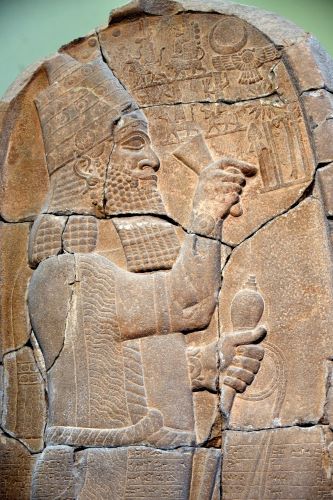
The dangers surrounding a Mesopotamian king did not fall into neatly separated categories. War could expose him to death abroad while weakening authority at home, and a military defeat could encourage governors, subject peoples, or rival members of the dynasty to rebel. Rebellion might begin in a distant province but become an immediate threat once commanders, courtiers, or royal relatives joined it. Assassination was often inseparable from a larger attempt to redirect the succession, while an unfavorable omen could transform an ordinary political crisis into evidence that the gods had condemned the ruler. Illness, rumor, military hesitation, and a disputed inheritance could become mutually reinforcing signs of royal weakness. Protecting the throne required courts to anticipate not one type of emergency but a chain of dangers in which physical vulnerability, political legitimacy, military loyalty, and divine favor continually affected one another.
Military campaigning created the most obvious opportunity for an enemy to reach the king. Royal inscriptions portrayed Assyrian rulers charging into hostile country under divine protection, but the actual king generally occupied a guarded position within a much larger formation of soldiers, chariots, cavalry, attendants, and officers. The death of Sargon II during a campaign in Anatolia in 705 BCE demonstrated that even the strongest available army could not eliminate battlefield risk. His corpse was not recovered, denying him the expected royal burial and prompting later reflection upon what religious offense might have caused the gods to abandon him so completely. The episode made clear that campaign security involved more than preventing immediate death: it also had to preserve the king’s body, maintain communications with the capital, secure the succession, and prevent military disaster from becoming a theological indictment of the entire reign.
Rebellion placed the ruler in a different kind of danger because it attacked the relationships that converted royal commands into effective power. Assyrian inscriptions characteristically described resistance as treachery against a legitimately appointed king, even when the rebels understood themselves as defending local autonomy, rejecting foreign rule, or supporting a rival claimant. A provincial revolt could cut roads, destroy garrisons, interrupt tribute, attract foreign assistance, and force the king to disperse forces that otherwise protected the imperial center. Succession was particularly hazardous because a new king needed military officers, governors, cities, temples, and palace institutions to recognize his authority almost simultaneously. After Sennacherib’s death, Esarhaddon had to defeat the forces supporting his brothers before he could occupy the throne securely, demonstrating that designation as heir was meaningful only when powerful institutions chose to honor it. The rebellion of Šamaš-šuma-ukīn against his brother Ashurbanipal between 652 and 648 BCE similarly transformed a dynastic arrangement into a prolonged civil war involving Babylonian cities, tribal communities, Assyrian forces, and foreign allies. The king’s safety depended less upon the men immediately surrounding him than upon the uncertain loyalty of an imperial network extending far beyond the palace.
Assassination brought danger into the spaces that were supposed to be most secure. Tukulti-Ninurta I was besieged and killed at his royal city during the late thirteenth century BCE by a coalition involving his own son and Assyrian officials, illustrating the antiquity of violence organized from within the ruling house. Centuries later, Sennacherib was killed in a dynastic coup after changes to the succession had alienated a former heir and divided members of the court, although the surviving evidence still permits disagreement about the precise planning and participation of individual conspirators. Both killings revealed the limitation of walls and armed guards: royal seclusion could stop strangers, but it could not exclude relatives, officers, attendants, and servants whose duties required legitimate access to the king.
Many threats survive in the record not because they succeeded but because the court feared that they might. Neo-Assyrian loyalty documents prohibited officials and subjects from supporting rival claimants, concealing seditious speech, withholding intelligence, or permitting harm to come to the designated heir. Esarhaddon’s succession treaty even forbade giving Ashurbanipal a deadly substance to eat, drink, or apply to his body, showing that poisoning belonged to the court’s recognized vocabulary of political danger whether or not a documented attempt had occurred. Divinatory queries asked whether royal relatives, magnates, bodyguards, palace personnel, foreign envoys, or entire population groups intended violence against the king. Reports and denunciations enabled the ruler to investigate dangers before they matured, but they also allowed rivals to present hostile rumor as loyal intelligence. The conspiracy associated with Sasî in 670 BCE, strengthened by a reported divine promise that he would become king, appears to have implicated significant members of the Assyrian governing elite and was followed by extensive executions. Surveillance could expose conspiracy, but a system that rewarded accusations also risked surrounding the king with contradictory reports, calculated panic, and politically useful suspicion.
Omens completed this landscape of danger because Mesopotamian government did not confine causation to visible human actions. Eclipses, planetary phenomena, unusual weather, abnormal births, dreams, illnesses, animal behavior, and irregularities discovered in sacrificial organs could indicate impending harm to the king, his family, his army, or his land. These signs were not generally treated as declarations of an unavoidable future; they were warnings whose meaning had to be established by trained specialists and whose predicted consequences might be limited, transferred, or averted. Scholars compared observations with inherited omen collections, diviners submitted carefully phrased questions to the gods, and ritual experts prescribed responses ranging from temporary restrictions upon royal activity to elaborate apotropaic ceremonies. A threatening eclipse might cause the ruler to withdraw from public life or, in exceptional circumstances, allow a substitute to assume the dangerous identity of king until the predicted period had passed. Human conspiracy and divine warning consequently belonged to the same field of royal risk, for an omen could expose an existing political weakness, identify a moment of vulnerability, or persuade frightened officials that a change of ruler had already received supernatural approval.
A Palace Built to Control Approach
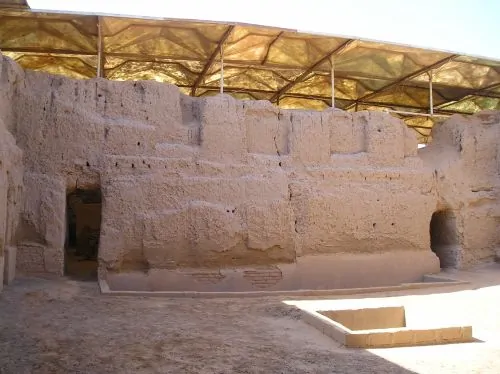
A Mesopotamian royal palace was not merely the king’s residence, nor was it simply a fortress enlarged to monumental proportions. It was an administrative center, treasury, archive, storehouse, ceremonial stage, and dwelling for a substantial courtly population. Its security depended upon more than thick walls: the palace had to admit officials, petitioners, messengers, soldiers, craftsmen, laborers, tribute bearers, and foreign representatives without allowing this traffic to become uncontrolled access to the ruler. Palace architecture answered that problem by regulating movement, visibility, and proximity. Walls separated categories of activity, gates reduced the number of available approaches, courtyards collected and redistributed visitors, and audience chambers placed the king at the end of an increasingly restricted route. The resulting system did not render the monarch unreachable but transformed reaching him into a supervised process whose stages could be delayed, redirected, or stopped.
At the largest Neo-Assyrian capitals, this regulation began well before a visitor reached the palace doorway. The royal residences at Kalhu, Dur-Sharrukin, and Nineveh occupied elevated citadels enclosed within heavily fortified cities, so city gates, defensive walls, streets, ramps, and citadel entrances formed successive outer barriers. Their commanding locations also improved surveillance and physically distinguished the royal precinct from the ordinary urban environment below. Yet these palaces were not isolated castles designed only to withstand siege: they remained connected to temples, arsenals, administrative buildings, service quarters, and the wider capital. The king’s security rested partly upon fortified distance, but equally upon the state’s ability to control the roads and institutional spaces through which people approached him.
Within the palace, sequences of courtyards, narrow passages, doorways, suites, and transverse rooms divided movement into manageable stages. Earlier scholarship often described Neo-Assyrian palaces through a sharp distinction between an outer or public sector, conventionally associated with the Akkadian term bābānu, and an inner or private sector identified as the bētānu. That distinction captures a real tendency toward increasingly restricted space, but surviving plans do not support a simple division between an accessible administrative half and a sealed residential half. Rooms were grouped into suites with different functions and degrees of accessibility, while the use of particular spaces could change according to the king’s location, the occasion, and the identities of those present. Large courtyards allowed incoming groups to be assembled, observed, and separated before they advanced farther. Smaller courts and connecting chambers could divert officials toward offices, storerooms, workshops, kitchens, or residential suites without bringing them near the royal person. The throne-room suite usually stood near the crucial interface between the palace’s outward-facing functions and its more restricted interiors, rather than at the deepest point in the building. This position enabled the king to receive large numbers of people while preserving controlled routes to the court behind him. Palace security consequently resulted from a hierarchy of possible movements: many people could enter the complex, fewer could reach the principal court, fewer still could cross the throne-room threshold, and only a closely supervised minority could proceed into spaces associated with the ruler’s household and daily life.
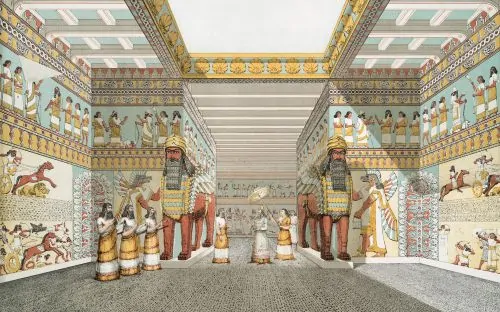
An audience transformed that architectural hierarchy into political theater. In the Neo-Assyrian palaces, the visitor commonly approached the throne room from a major courtyard and entered a long, richly decorated chamber whose proportions directed attention toward the royal dais. Monumental gateways, colossal protective figures, inscribed thresholds, and carved stone reliefs made the route visually overwhelming while also marking the points at which movement could be checked. Inside the throne room, the visitor had to cross a considerable distance under the observation of courtiers and attendants before coming near the enthroned king. The arrangement placed the monarch at the commanding end of an asymmetric field of vision: he could watch the approach, while the approaching subject encountered the king only after passing through spaces saturated with images of divine favor, military victory, tribute, and royal order. Such decoration was not a substitute for guards or doors, but it reinforced their work by teaching visitors how power was organized and what consequences resistance might bring. An audience joined security to ideology, making controlled physical approach an enactment of submission to the ruler.
Architecture could accomplish this only because doors were closed, thresholds monitored, and audiences scheduled. Palace correspondence indicates that admission to the king was not necessarily automatic even for high officials or members of the royal family. A gate or corridor became an effective security boundary when authorized personnel knew who might pass, when passage was permitted, and where the entrant was supposed to go. The palace plan established the bottlenecks; court protocol and human supervision turned them into an operating system.
The underlying principle was older and geographically broader than the Neo-Assyrian examples. At the Old Babylonian palace of Zimri-Lim at Mari, visitors moved through a large and complicated complex in which turning approaches, courtyards, reception rooms, cultic spaces, offices, stores, and residential apartments created graduated zones of access. The great court and adjacent audience areas could accommodate formal encounters, but reaching them required movement along routes that separated the palace interior from an uncontrolled approach from the city. More than a millennium later, Nebuchadnezzar II’s South Palace at Babylon likewise organized diverse functions around five principal courtyards, with the monumental throne room opening from the largest ceremonial court. Its position beside the city wall, the Euphrates, and the Processional Way connected the royal residence to Babylon’s defenses and ceremonial geography, while its internal courts distinguished storage, administration, reception, and residence. These similarities should not be treated as evidence for a single unchanged blueprint transmitted across Mesopotamian history. Mari, the Assyrian capitals, and Babylon belonged to different political systems and architectural traditions, and each palace was altered by local terrain, inherited buildings, court size, and royal ambition. Nevertheless, all confronted the same structural problem: the palace had to be open enough to govern a kingdom while remaining closed enough to protect the person through whom that kingdom was represented.
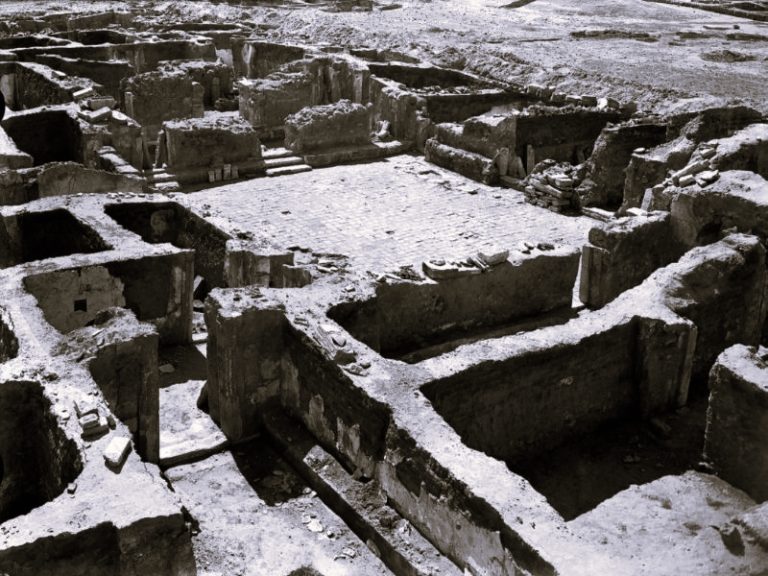
The surviving ground plans reveal the logic of this protection only incompletely. Mudbrick walls often remain at foundation level, while upper stories, wooden doors, curtains, furnishings, stairs, guard stations, and temporary partitions have largely disappeared. Room labels such as “throne room,” “harem,” “guardroom,” or “administrative office” are modern interpretations based on architecture, decoration, artifacts, and texts rather than an intact ancient directory. A plan shows where movement was physically possible, not precisely who used each route on an ordinary day or how access changed during a festival, conspiracy, military emergency, or royal illness. The same architecture that impeded an unknown attacker could do less against a courtier, servant, prince, or guard already entitled to enter, and increasingly restricted routes could give extraordinary influence to those who controlled the remaining thresholds. Palace design should consequently be understood neither as an impregnable shell nor as scenery for royal ceremony, but as a flexible technology for converting dangerous proximity into graded, visible, and politically meaningful access.
At the Door and in the Corridor
The palace’s walls and courtyards created the physical conditions for security, but they could not decide who was entitled to pass through them. At every important threshold, royal protection depended upon officials who interpreted orders, recognized authorized persons, supervised doors, and prevented people or objects from moving without permission. Neo-Assyrian records identify gatekeepers, watchmen, entrance overseers, palace managers, and lock masters, although their responsibilities sometimes overlapped. These titles should not be treated as exact equivalents of modern guards, security supervisors, or locksmiths, because palace offices frequently combined practical, administrative, ceremonial, and household duties. Most of the detailed evidence comes from seventh-century BCE legal documents, administrative lists, and royal correspondence preserved at Nineveh, Kalhu, and Assur. The resulting picture is clearest for the late Neo-Assyrian court, but it reveals the basic human organization required to make restricted palace space effective.
The most visible official at a palace entrance was the atuʾu, conventionally translated as “gatekeeper.” The title occurs frequently in Neo-Assyrian documentation and appears in both palace and temple contexts, institutions that possessed valuable property and restricted internal spaces. Gatekeepers watched doors, regulated passage, and presumably opened or closed entrances according to the orders of their superiors. At Nineveh, the existence of several chief gatekeepers suggests a hierarchy suited to an enormous palace with numerous gateways, internal divisions, and different categories of traffic. A visitor arriving with an official purpose could not assume that social prominence or royal service guaranteed immediate admission. One scholar anticipating a visit to Nineveh worried that the palace personnel might refuse him entry and requested an authorization bearing the royal seal. Such an order converted a visitor’s claim into verifiable royal permission, limiting the gatekeeper’s need, or opportunity, to make an independent judgment. Game boards carved into the bases of monumental figures at palace gateways also hint at the long, repetitive hours spent by personnel stationed there, reminding us that a system represented as vigilant and imposing was operated by human beings performing routine shifts.
The ša maṣṣarti, literally “one of the guard” and commonly translated as “watchman,” performed a somewhat different service. Surviving letters show watchmen assigned temporarily to protect particular people, valuable objects, ritual materials, or work crews rather than permanently attached to a single doorway. Officials requested them when property was endangered or when laborers had to be supervised inside a palace. A watchman could reinforce gate personnel when circumstances required, but the evidence does not justify imagining every corridor occupied continuously by a fixed military sentry.
Above or alongside these attendants stood officials concerned with the administration of entry. The ša pān nērebi, the “one in front of the entrance” or entrance overseer, appears in palace contexts and is listed with gatekeepers and lock masters in several legal records. His title might suggest a man standing physically before a doorway, but comparison with similar Assyrian administrative titles indicates a supervisory responsibility. He probably organized entrance duty, coordinated subordinate personnel, and ensured that palace rules were applied across different shifts or gateways. The palace manager, or rab ekalli, possessed still broader authority over the movement of people and goods. Middle Assyrian palace decrees describe the palace manager inspecting courtiers and palace personnel, granting admission to authorized officials, and checking what members of the household carried when leaving. A later Neo-Assyrian memorandum addressed to a palace manager lists individuals recognized as “enterers,” apparently identifying people who enjoyed permission to pass into a restricted area. Admission was not merely a question of recognizing a familiar face: it involved status, documented privilege, the purpose of the visit, the visitor’s destination, and sometimes an inspection of whatever the entrant brought into or removed from the palace.
Physical locking provided another layer of control. Remains or descriptions of elaborate locks have been recovered from the palaces of Nineveh, Dur-Sharrukin, and Kalhu, while door jambs preserve fittings for barriers capable of securing major gateways. One Neo-Assyrian mechanism employed a transverse bar held by a smaller bar and movable bolt-pins, which could be raised with an appropriate key. The official called the rab sikkāte (literally the master of the sikkatu, or bolt-pin) has consequently been interpreted as a “lock master.” Lock masters appear with gatekeepers and entrance officials, and some were assigned specifically to the households of the queen, the crown prince, or an individual palace. Their office was not necessarily that of a craftsman who manufactured locks; it more probably entailed custody, supervision, and responsibility for the locking system within an assigned institution. Possession of the means to secure or open a door carried political significance because the official controlling a key or bolt could determine whether an architectural barrier remained closed.
The proliferation of entrance offices during the seventh century BCE may represent a deliberate response to dynastic violence. Lock masters and entrance overseers are not securely attested before Ashurbanipal’s reign, although the absence may result partly from the uneven survival of records. Karen Radner has proposed that their appearance followed the assassination of Sennacherib by his sons in 681 BCE and the conspiracy associated with Sasi during Esarhaddon’s reign. Under this interpretation, dividing entrance control among gatekeepers, overseers, palace managers, and lock masters reduced the authority concentrated in any single official. The reform would have created overlapping responsibilities in which one officer admitted a visitor, another supervised the entrance, and another controlled the physical mechanism by which the door was secured.
Such redundancy reveals both the sophistication and the vulnerability of palace security. A locked door was useless if its custodian opened it improperly, while an attentive gatekeeper could still be deceived by a forged authorization, pressured by a superior, or compromised by a conspirator already inside the court. Multiple officials made collusion more difficult, created witnesses to disputed movements, and allowed responsibility to be assigned when procedures failed. They also generated a hierarchy of gatekeeping power in which access to the ruler depended heavily upon intermediaries capable of delaying messages, excluding rivals, and favoring particular petitioners. The men at the door were not peripheral servants but participants in the political ordering of the palace. Their work protected the king by controlling the transition from legitimate presence to dangerous proximity, even though the final corridors nearest the ruler required another kind of protection: trusted attendants and armed guards whose own authorized closeness created risks that locks could not resolve.
Those Who Stood Closest
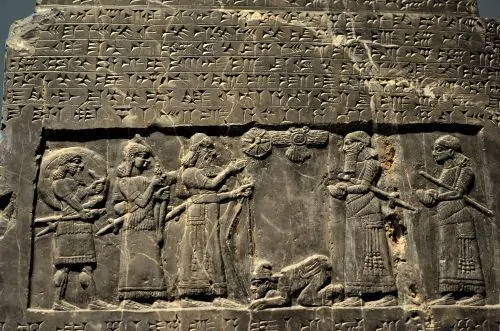
Beyond the gatekeepers and corridor watchmen stood a smaller category of men whose security function arose from their permitted closeness to the ruler. Assyrian records contain no single office corresponding precisely to a modern royal protection service. Instead, different military and administrative personnel guarded the king in the palace, during public appearances, while traveling, and on campaign. Two titles conventionally translated as “bodyguard” are important: qurbūtu, also written ša qurbūte, and ša šēpē. Both could describe officials associated with the king’s immediate entourage, but the titles did not identify interchangeable members of one uniform corps. Royal protection was distributed among overlapping groups whose responsibilities changed with the setting and whose privileged proximity often brought political authority as well as protective duty.
The qurbūtu was the most prominent and extensively documented of these officials. Its name derived from the Akkadian verb qerēbu, “to be near” or “to approach,” emphasizing an authorized relationship of closeness to the ruler rather than one specific military task. More than a hundred named holders of the office appear in surviving Neo-Assyrian records, together with many additional unnamed examples, indicating an established category of royal service rather than a handful of personal attendants. Some qurbūtu officials were associated directly with the king, while others served the crown prince, the queen mother, or another royal household. They could accompany envoys, prisoners, conscripts, valuable materials, royal gifts, or confidential communications, lending the king’s authority and protection to whatever they escorted. They were also dispatched to investigate disputes, enforce labor demands, supervise building materials, examine suspected misconduct, and communicate royal decisions to provincial officials. In some cases, the arrival of a qurbūtu allowed the king to intervene in a distant city without appearing there himself. His protective function extended beyond shielding the monarch’s body: by safeguarding communications, enforcing commands, and reporting conditions, he defended the king’s ability to rule across the empire. The qurbūtu was simultaneously a bodyguard, courier, inspector, military officer, and mobile representative of the crown.
The ša šēpē, literally “one of the feet,” appears to have remained more closely connected to personal protection. The expression should not be reduced to “foot soldier,” since men bearing the title could be associated with infantry, cavalry, or chariot units. Its central implication was attendance at the king’s feet or alongside his vehicle, especially when the ruler traveled or entered dangerous ground. Such guards may have carried shields and weapons while keeping pace with the royal chariot, forming the closest moving barrier between the king and an attacker. Unlike the qurbūtu, the ša šēpē is not well attested performing judicial, diplomatic, or provincial administrative assignments.
Royal bodyguards were most conspicuous when the king left the controlled interior of his palace. Assyrian reliefs show armored spearmen, shield-bearers, cavalrymen, and chariot escorts near the ruler during military campaigns, triumphal processions, sieges, and royal lion hunts. These figures often move before or beside the king, screening his route while leaving him visible as the dominant participant in the scene. Sennacherib’s inscriptions describe him advancing with selected or “perfect” bodyguards and combat troops, while other evidence suggests that an Assyrian king usually occupied a protected position within the army rather than exposing himself at its foremost edge. Bodyguards could be divided into infantry, cavalry, and chariot-associated formations, and some units appear to have been arranged to the king’s right and left. Although men from the Assyrian heartland remained important, the imperial expansion of the eighth and seventh centuries BCE brought Arameans, Chaldeans, Judeans, Israelites, Medes, and other conquered or deported peoples into Assyrian military service. Their inclusion did not necessarily make them foreign mercenaries in the later sense, because the empire sought to transform incorporated populations into Assyrian subjects and servants of the crown. The reliefs nevertheless cannot be matched securely to particular administrative titles, so an armored figure beside the king should not automatically be identified as either a qurbūtu or a ša šēpē.
The selection of bodyguards presented a political paradox. The men best positioned to intercept an attacker were also close enough to become attackers, conspirators, or accomplices themselves. Esarhaddon and Ashurbanipal submitted divinatory inquiries asking whether members of the court, army, and royal bodyguard intended rebellion or violence, revealing that official appointment did not eliminate suspicion. Royal promotion created personal dependence upon the king, but it could also give a guard weapons, information, contacts, and authority that might be abused. Letters complain of royal bodyguards appropriating property, assisting coercive officials, exceeding their instructions, or claiming royal authorization that recipients wished to verify. Dividing guards into different offices and formations supplied the king with overlapping protection, but it also allowed each group to observe and potentially restrain the others.
The surviving evidence supports the existence of royal bodyguards without revealing a single permanent formation that protected every Mesopotamian king in every circumstance. Neo-Assyrian archives are unusually informative because they preserve letters and administrative documents from royal centers, whereas the Neo-Babylonian record comes predominantly from temples and private households. In Babylonia, the Assyrian titles largely disappeared, and the ṭābīḫu and his commander, the rab ṭābīḫī, appear to have served as the closest equivalents, although their precise relationship to the king remains less visible. Even in Assyria, records more often show a “bodyguard” carrying messages, enforcing commands, or conducting investigations than physically defending the ruler from attack. That apparent contradiction reflects the breadth of the office: those trusted to protect the royal body were also trusted to embody the king’s authority when sent beyond his presence. The strongest royal guard was consequently not just an armed man standing nearby, but a loyal agent whose service connected personal security to the everyday exercise of imperial power.
Guarding a Dynasty
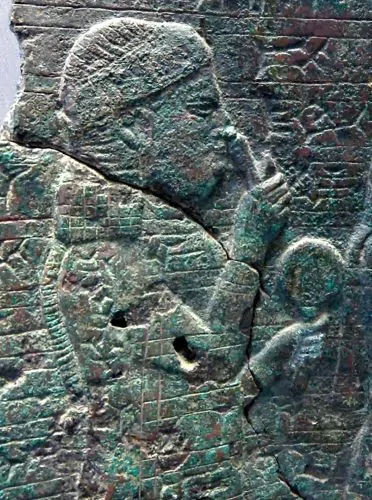
Protecting a Mesopotamian king meant little if his death immediately plunged the state into a succession war. Royal security extended beyond the reigning monarch to the dynasty, particularly the designated heir, the queen or queen mother, and the households through which royal power would survive a transition. A crown prince had to remain visible enough to acquire experience and recognition, yet protected enough to prevent rivals from eliminating him before his accession. Other royal sons could not simply be ignored, because their ancestry, wealth, military connections, and household followings made them potential alternatives to the chosen successor. Royal women could preserve continuity between generations, but their own influence depended upon extensive staffs, estates, communications, and controlled access. Dynastic security was consequently a system for managing an entire family whose unity was essential to the state but whose internal rivalries could be fatal.
The institutional protection of the heir was clearest in the Neo-Assyrian “House of Succession,” the bīt redûti. The ordinary title mār šarri meant “prince” or “son of the king” and did not invariably identify the heir, whereas the fuller expression “prince of the House of Succession” designated a formal relationship to succession. In Sargonid Nineveh, the House of Succession was also a physical palace in which the heir could establish his household before becoming king. Ashurbanipal later described it as the place where he received scribal instruction, learned courtly responsibilities, and trained in riding, archery, chariotry, and other royal skills. The heir’s establishment included scribes, treasurers, cohort commanders, chariot personnel, servants, advisers, and officials responsible for his property. Crown princes also possessed their own qurbūtu and ša šēpē bodyguards, creating a protective entourage separate from the reigning king’s immediate attendants. This household prepared the prince to govern and allowed him to participate in administration, correspondence, military affairs, and intelligence gathering. Yet it also gave him an independent institutional base whose personnel might become a competing faction if relations within the dynasty deteriorated.
Formal designation did not extinguish the claims of other royal sons. Sennacherib’s probable first heir, Aššur-nādin-šumi, disappeared after being carried into Elam in 694 BCE and was likely killed there. Another prominent son, Arda-Mulissu, was subsequently displaced when Sennacherib selected the younger Esarhaddon, leaving a former heir with supporters, experience, and reasons for resentment. Sennacherib’s assassination in 681 BCE and the ensuing attempted coup demonstrate how princes and their military retainers could penetrate protections designed to exclude ordinary enemies.
Esarhaddon’s experience of violent accession profoundly shaped his efforts to secure the next generation. In 672 BCE he designated Ashurbanipal to succeed him in Assyria while assigning another son, Šamaš-šumu-ukin, to rule Babylonia. The arrangement attempted to satisfy competing dynastic and regional expectations while preserving Ashurbanipal’s senior authority within the empire. Esarhaddon reinforced it through exceptionally elaborate succession treaties imposed upon courtiers, officials, military personnel, provincial governors, vassal rulers, and other groups. Those sworn were required not only to accept the designated heirs but also to protect them, reject rival claimants, disclose treasonous speech, and report conspiracies rather than remaining silent. The treaty turned loyalty into a distributed security obligation: every oath-taker was theoretically both a supporter of the succession and an informant against anyone attempting to overturn it. After Esarhaddon died while campaigning in 669 BCE, his mother Naqia-Zakutu issued a further loyalty pact binding the royal family, palace personnel, magnates, and Assyrians to Ashurbanipal. The transition succeeded without the immediate civil war that had followed Sennacherib’s murder, suggesting that institutional preparation, household support, and repeated oaths had real political value. Nevertheless, Šamaš-šumu-ukin eventually rebelled against his brother in 652 BCE, showing that even a carefully negotiated division of royal authority could postpone dynastic conflict without eliminating it.
The prominence of Naqia-Zakutu reveals why the king’s mother could become one of the most important guardians of continuity. Her origins and early status remain debated, but her position as Esarhaddon’s mother connected the reign of Sennacherib to those of Esarhaddon and Ashurbanipal. Evidence suggests that she supported her son during his struggle for the throne and subsequently accumulated extensive property, wealth, and institutional influence. She commissioned construction, maintained her own household, and operated through officials capable of administering estates and conveying orders. As queen mother, she occupied a position from which she could protect the designated succession without appearing as a rival king in her own right. Her pact after Esarhaddon’s death was an extraordinary exercise of dynastic authority, making loyalty to her grandson a public obligation shared by the royal family and the state’s governing elite. It would be excessive to portray Naqia as secretly ruling the empire, but her documented actions demonstrate that royal women could actively secure transfers of power.
The households of queens and queen mothers were themselves substantial institutions rather than secluded collections of dependents. A female administrator called the šakintu managed personnel, property, production, and transactions associated with the queen’s establishment, commanding both women and men. Separate lock masters, scribes, guards, craftspeople, and estate officials could be attached to these households in different palaces. Such organization protected royal women and children while also securing storerooms, archives, valuables, and economic resources essential to their rank. The so-called women’s quarters should be understood as guarded centers of household administration and dynastic power, not merely as an ancient equivalent of the stereotyped “harem.”
The wider royal household contained the dynasty’s most necessary servants and its most dangerous possible intermediaries. Eunuchs, chamber officials, nurses, tutors, scribes, guards, charioteers, cooks, physicians, and personal attendants possessed forms of access that no outsider could easily obtain. Their loyalty protected royal children, maintained daily routines, carried confidential information, and preserved government when the king was absent or incapacitated. Princes could recruit supporters from these personnel, and guards loyal to a particular family member might follow their patron into rebellion. The assassination of Sennacherib and the later war between Ashurbanipal and Šamaš-šumu-ukin exposed the limits of treating blood relationship as a guarantee of political loyalty. A dynasty was safest when its members, households, and officials accepted a clear distribution of status, resources, and future authority, but those same arrangements gave potential challengers the means to organize. Guarding the royal household required a difficult balance between nurturing capable successors and preventing any protected branch of the family from becoming an alternative center of kingship.
More Than Bodyguards
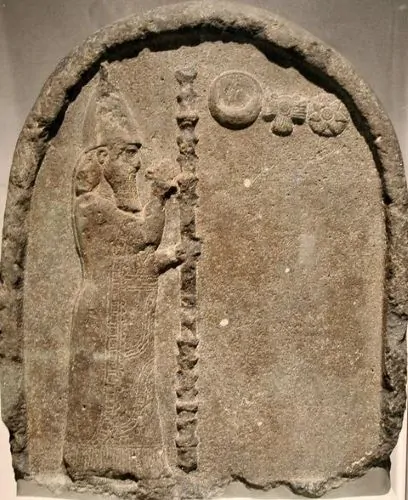
The king could not remain personally present in every province, fortress, temple, and contested district of a Mesopotamian empire. His security depended upon trusted agents who extended his awareness and authority beyond the palace. Some of these men held titles conventionally translated as “bodyguard,” but their surviving assignments rarely involved standing beside the royal person. They delivered commands, inspected officials, escorted travelers, guarded valuable cargo, supervised labor, and returned with information. Their ability to act in the king’s name protected him from the dangers of unnecessary travel while allowing him to intervene at a distance. Royal protection operated geographically as well as physically: the safer the king remained at the center, the more dependable his representatives had to be at the edges.
Communication formed the foundation of this mobile protection. The Neo-Assyrian state maintained a privileged network of royal roads, dispatch riders, post stations, and mules that could carry official correspondence across great distances with remarkable speed. Particularly urgent letters could be passed through relays of riders, while sensitive or complicated messages might be entrusted to one agent who completed the entire journey. A qurbūtu could carry a royal command, transmit its contents orally, and return with the recipient’s answer or an independent account of local conditions. His presence gave the message added authority because he was known to have access to the king and could represent himself as speaking from direct instruction. Seals supplied another form of authentication, distinguishing authorized state correspondence from ordinary communication and identifying the office responsible for an order. Bureau seals allowed royal authority to be delegated without requiring the king to impress every tablet personally, while sealed royal orders could resolve doubts about whether an individual had permission to act. Bodyguards and other agents also used the mule express and requisitioned fresh animals from state stations when their assignments demanded speed. The communication system protected the ruler by shrinking the time between a provincial disturbance, the palace’s receipt of information, and the dispatch of a response.
Escorting was equally important because people and property moving through the empire were vulnerable to robbery, escape, abduction, or political interference. Royal agents accompanied foreign envoys, tributary rulers, prisoners, deportees, military conscripts, laborers, and individuals summoned to appear before the king. They also guarded horses, precious metals, jewels, diplomatic gifts, cult objects, and official documents whose loss could damage royal prestige or disrupt administration. One bodyguard might escort foreign representatives into an Assyrian ceremonial setting, while another ensured that captives or deserters reached the authority entitled to judge them. Petitioners sometimes requested a qurbūtu when local threats made travel unsafe, and officials could refuse to surrender disputed persons without both a sealed order and an authorized escort. The agent’s protective value rested partly upon his weapons and attendants, but even more upon the political consequences of obstructing someone visibly acting for the king.
Royal agents also entered provinces as investigators whose arrival warned local authorities that the palace was watching. A qurbūtu could be sent to settle lawsuits, verify testimony, investigate stolen property, examine irregular conduct, or determine whether an official had disobeyed royal instructions. When a governor allegedly opened a temple treasury without authorization, the proposed response was to send a royal bodyguard to investigate and enforce punishment. Other agents supervised temple construction, inspected deliveries, demanded accounts of livestock and offerings, or confirmed claims that required materials were unavailable. Their involvement could give a local proceeding the force of royal adjudication even when the king remained hundreds of miles away. In one case, accused men brought before bodyguards and a deputy governor chose to admit guilt rather than travel to Nineveh for judgment by the empire’s highest legal authorities. The agent could resolve a problem locally, but his effectiveness depended upon the possibility that he would report resistance and bring more formidable intervention. Investigation, enforcement, and intimidation were closely connected aspects of delegated royal power.
These assignments made royal agents contributors to intelligence even when they were not covert spies. A bodyguard returning from a disputed province could report troop movements, official misconduct, public unrest, or the reliability of local testimony. Because he had observed conditions directly and was personally known at court, his account might carry greater weight than a self-interested letter from the governor under investigation. The steady circulation of such reports allowed the king to compare provincial claims and identify dangers before they reached the capital.
Delegation nevertheless created serious opportunities for abuse. A royal agent could exaggerate his instructions, appropriate animals or property, intimidate local officials, or claim powers that the king had never granted. Surviving letters occasionally ask whether a bodyguard’s startling demand genuinely represented the royal will, showing that proximity to the king did not guarantee honest conduct. Some complaints accuse bodyguards of assisting governors in coercion, seizing goods, or participating in actions that harmed the very subjects whom royal authority was supposed to protect. Sealed orders, written records, duplicate reports, and direct confirmation from the palace limited such behavior by separating authentic commands from an agent’s personal assertions. Governors and temple officials could also appeal to the king, turning correspondence into a check upon the representative standing before them. The system relied upon a continual exchange of commands and reports in which the agent watched the province, the province reported on the agent, and the palace judged between their competing accounts.
The Neo-Assyrian archives reveal this system most clearly because large collections of royal correspondence survived at Nineveh, but the underlying practice was not uniquely Assyrian. Earlier Mesopotamian kings used messengers, commissioners, escorts, and inspectors, while Neo-Babylonian rulers likewise depended upon agents to communicate with temples, cities, military forces, and provincial authorities. The Babylonian state correspondence is largely lost, so its organization must often be reconstructed indirectly from administrative letters and local archives. This difference in preservation can make Neo-Babylonian government appear less centralized and less communicative than it actually was. What the Assyrian evidence demonstrates is that the categories of guard, courier, investigator, and administrator were never rigidly separate. A trusted official protected the king not only by intercepting physical danger, but also by ensuring that orders arrived, valuables moved safely, disputes were examined, and threatening information reached the palace. Royal security was consequently embedded in the ordinary circulation of people, objects, messages, and verified knowledge upon which Mesopotamian imperial government depended.
Beyond the Palace Walls
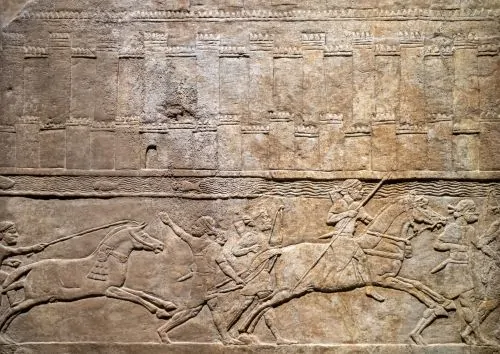
A king who never left his palace might remain physically secure, but he would struggle to perform the religious, military, and ceremonial duties expected of Mesopotamian kingship. Rulers had to appear before gods and subjects, inspect armies, receive tribute, celebrate victories, travel between royal cities, hunt dangerous animals, and sometimes accompany campaigns. Every departure replaced the palace’s fixed walls and controlled gates with a shifting perimeter of guards, vehicles, attendants, and advance preparations. The king also became more visible to crowds whose membership and movements could not be regulated as completely as those of a formal palace audience. Outside security required personnel capable of turning streets, roads, hunting grounds, and encampments into temporary controlled environments. The layers of palace protection did not disappear when the king moved; they were reorganized around his person.
Religious processions and triumphal entries brought the ruler into some of the largest gatherings he encountered. During an akītu festival or another major cultic observance, the king might travel between a palace, temple, city gate, and extramural ceremonial building along a route invested with religious meaning. Victory celebrations similarly required the ruler to enter a city publicly, display captives or booty, acknowledge the gods, and receive acclaim. These movements followed planned sequences in which priests, standards, musicians, soldiers, officials, tribute bearers, and the royal vehicle occupied recognizable positions. Gates and narrow streets created natural checkpoints, while troops and attendants could line the route, control intersections, and separate spectators from participants. The ordered procession displayed hierarchy so clearly that an unfamiliar or improperly positioned person would have been more conspicuous than in an unstructured crowd. Armed protection nevertheless had to remain compatible with ceremony, since a ruler surrounded by a disorderly mass of anxious guards would undermine the confidence that the event was intended to communicate. Processional security depended upon transforming public exposure into a choreographed demonstration that the king, the gods, the army, and the capital remained in harmonious order.
The royal hunt presented danger under more controlled conditions. Assyrian ideology treated the king’s defeat of lions as proof that he could overcome forces threatening cultivated land and human society. Ashurbanipal’s reliefs show captured lions released into a bounded arena where soldiers formed barriers with shields, handlers restrained dogs, and armed attendants remained near the royal chariot. The king delivered the decisive blow, but guards could intercept an animal that escaped its intended path or came dangerously close to him. This arrangement preserved enough risk to demonstrate courage while reducing the possibility that an uncontrolled encounter would end the reign. The hunt was neither an entirely spontaneous contest nor an empty performance: its political meaning depended upon carefully managed danger appearing as royal mastery.
Long-distance travel required a broader security apparatus. The Neo-Assyrian royal road connected the capitals with provinces, border regions, military outposts, and vassal territories, allowing state personnel to prepare routes before the king or army arrived. Advance parties could inspect river crossings, arrange bridges or boats, gather provisions, obtain fresh animals, and determine whether roads remained passable. Governors and local officials were expected to secure their jurisdictions, supply escorts, and report unrest, enemy movements, or failures of infrastructure. Fortresses and road stations offered protected stopping places where royal travelers, messengers, and military personnel could obtain shelter and supplies. Mounted agents moving ahead of the royal party carried instructions, while reports traveling back toward the king allowed him to alter his route or summon reinforcements. The traveling ruler would have been surrounded by bodyguards and a larger military escort, with scouts operating beyond the visible procession and baggage personnel following behind. Even so, a road passing through mountains, forests, river valleys, or recently conquered territory could never be controlled as completely as a palace corridor. Its safety depended upon local loyalty, timely intelligence, reliable logistics, and the ability to respond rapidly when conditions changed.
On campaign, the royal camp became a portable version of the court and palace. Mesopotamian armies had long required guarded encampments, but Neo-Assyrian reliefs provide the clearest visual evidence for their internal organization. Sennacherib’s sculptors represented camps as enclosed oval or elliptical spaces divided into functional sectors by broad internal bands. Within them appear tents or shelters, the king’s quarters, soldiers, animals, supplies, domestic workers, ritual specialists, and activities necessary to feed and maintain a large force. The enclosure distinguished the protected interior from hostile territory, while controlled entrances restricted the flow of soldiers, captives, messengers, laborers, and provisions. The king’s area could be placed within another layer of attendants and elite troops, reproducing the graduated access of the palace on a temporary site. Priests performed rituals, scribes recorded events, craftsmen repaired equipment, cooks prepared food, and engineers maintained bridges, roads, fortifications, or siege works. Such personnel were essential to security because hunger, damaged equipment, contaminated supplies, or a failed river crossing could endanger the king as effectively as an enemy attack. The reliefs should not be read as exact architectural plans, but their repeated distinction between perimeter, internal divisions, and royal space indicates that Assyrians conceived the military camp as an ordered and defensible environment.
Royal inscriptions often depicted the king leading his forces, yet practical evidence suggests that he usually occupied a guarded position within the army rather than exposing himself at the front line. One fragmentary letter advises the king to remain on elevated ground and allow his magnates to conduct the battle, invoking the conduct of earlier rulers as precedent. When the king advanced in a chariot, bodyguards, shield-bearers, infantry, cavalry, and divine standards could protect his front, sides, and rear. His placement balanced military visibility against survival: close enough to be recognized as commander, but sufficiently enclosed that the army did not risk collapse from a single arrow or sudden charge.
No mobile arrangement could reproduce the palace’s stability completely. Processions exposed the king to dense crowds, hunts brought him within striking distance of powerful animals, roads created opportunities for ambush, and camps placed him among large numbers of armed men whose loyalty could change. Accidents, disease, weather, exhaustion, and disrupted supplies added dangers that bodyguards could not defeat with weapons. The surviving reliefs and royal inscriptions minimize these vulnerabilities because they were designed to show movement as disciplined and the king as perpetually victorious. Yet the repeated presence of escorts, shield-bearers, scouts, fortified enclosures, road stations, and advance communications reveals the practical anxiety beneath that ideal image. A ruler outside his palace remained protected only so long as thousands of coordinated actions preserved a secure space around him. Royal mobility was not a suspension of the Mesopotamian security system, but its most difficult and revealing test.
The King at War
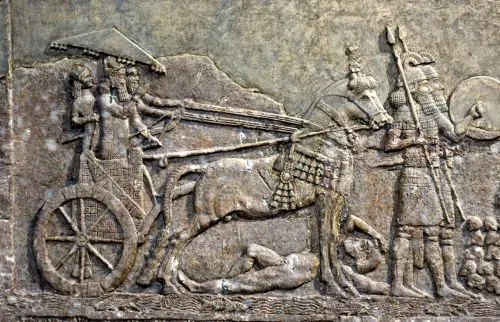
Mesopotamian kings presented themselves as warriors, but the most important military contribution to their survival was made by the thousands of men positioned between them and the enemy. The army protected the kingdom’s territory, suppressed rebellion, secured roads and camps, and prevented hostile forces from approaching the royal capital. On campaign, it also became a moving defensive structure around the ruler. Royal inscriptions often compressed this collective labor into the figure of the conquering king, portraying him as personally scattering armies and storming cities. Yet most fighting had to occur at a distance from the royal person, directed by commanders and performed by specialized troops. The army was both the king’s principal instrument of conquest and the largest shield ever placed around his body.
The Neo-Assyrian army was not a single homogeneous standing force. Its most dependable core was the kiṣir šarrūti, the royal contingent composed of full-time or otherwise closely controlled troops attached to the crown. This force included elite infantry, cavalry, chariot personnel, city units, and elements associated with the royal bodyguard. It was reinforced by “king’s men” stationed in the provinces, contingents commanded by governors and magnates, seasonal levies, auxiliary forces, deported soldiers, and troops supplied by vassal rulers. Light infantry could scout, skirmish, guard roads, and pursue fleeing enemies, while regular infantry provided numbers for sieges, garrisons, and battle lines. Heavy infantry wore armor and carried substantial shields, allowing it to withstand direct combat and protect archers or important positions. Cavalry supplied speed on the flanks and during pursuit, while chariots retained command, transport, ceremonial, and specialized military functions even as mounted troops became more prominent. This combination placed several distinct bodies of armed men between the ruler and an enemy capable of reaching him.
Closest to the king were troops whose tactical function overlapped with personal bodyguard service. The qurbūtu and ša šēpē could accompany the royal vehicle, while cavalry bodyguards and armored spearmen guarded its sides and approaches. A tašlīšu, or “third man,” rode in a chariot as a shield-bearer and assistant, protecting the archer or other high-status occupant while also carrying messages or weapons. Palace reliefs show shields, spears, horses, and human bodies forming a dense defensive environment around the king during marches, sieges, hunts, and battles. These images cannot be matched conclusively to every title known from administrative texts, and they undoubtedly idealize the orderliness of combat. They nevertheless demonstrate that royal protection on the battlefield was integrated into formations rather than entrusted to one heroic guard.
Commanders provided another protective layer by allowing the king to exercise military authority without directing every engagement personally. The turtānu, commonly translated as commander-in-chief, could lead major campaigns in the ruler’s place and stood among the highest officials of the empire. The rab ša rēši, or chief eunuch, also exercised substantial military command, including authority over important elements of the royal corps. Governors, royal princes, and other magnates assembled provincial contingents, supervised musters, distributed supplies, and led forces assigned to particular fronts. Beneath them, cohort commanders and other officers converted royal orders into movements by cavalry, chariotry, infantry, engineers, and auxiliary units. Delegated command enabled the king to remain on a protected hill, in a guarded chariot, or within the central body of the army while experienced officers conducted assaults. It also allowed simultaneous operations in different regions without requiring the monarch to expose himself on every frontier. Yet a commander with troops, wealth, and repeated victories could acquire an independent reputation and a following that complicated the king’s supremacy. The hierarchy that kept the ruler away from immediate combat protected him physically while creating powerful intermediaries whose loyalty had to be monitored.
Logistics were as important to the royal shield as armor. Soldiers unable to obtain grain, water, weapons, horses, replacement equipment, or safe crossings could not maintain a protective formation around anyone. Scouts, guides, engineers, scribes, veterinarians, craftsmen, and supply officers consequently contributed to the king’s security even when they never carried a weapon near him. The army remained a shield only while the administrative system behind it kept that shield fed, informed, mobile, and intact.
The army also protected the throne against domestic rebellion, but it could not be separated from dynastic politics. Princes and magnates commanded troops of their own, while garrisons near capitals and royal residences could determine which claimant controlled the strategic center. Military personnel appear to have participated in, supported, or been courted by factions surrounding Sennacherib’s assassination in 681 BCE. During the conflict that followed, Esarhaddon’s status as designated heir became effective only when soldiers abandoned his rivals and accepted his claim. Later kings used loyalty oaths, intelligence reports, divinatory inquiries, divided commands, and personal appointments to test or reinforce military allegiance. The same troops that crushed provincial revolts could support a palace coup if their officers changed sides. An army’s protective value depended not simply upon its weapons and training, but upon whether its members understood loyalty to the reigning king as more compelling than loyalty to a commander, prince, city, or household.
The death of Sargon II in battle in 705 BCE exposed the ultimate limit of military protection. He was killed during a campaign in Anatolia, and the failure to recover his body transformed a battlefield defeat into a religious, political, and dynastic trauma. The event showed that even the ruler of the most formidable army in western Asia could be isolated and destroyed when formations broke down or an operation went disastrously wrong. Later depictions of invulnerable kings should be read against that possibility, for their insistence upon royal victory answered an outcome that Assyrians knew could occur. Delegating combat, surrounding the royal vehicle, positioning the king within the army, and maintaining protected camps all reduced the danger without eliminating it. The army was the strongest component of royal security, but it was not an impersonal wall: it consisted of commanders with ambitions, soldiers with shifting loyalties, and logistical systems vulnerable to disruption. It shielded the king only so long as its many parts continued to move, fight, and obey as one.
The Eyes and Ears of the Crown
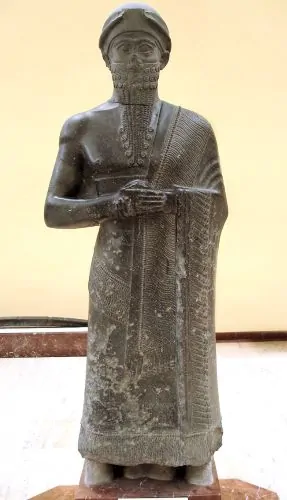
Physical barriers and armed guards could protect the king only from dangers that had already drawn near. Long before a hostile army reached the capital or a conspiracy entered the palace, royal security depended on acquiring credible information about distant places, uncertain loyalties, and developing threats. Letters from Old Babylonian Mari and the capitals of the Neo-Assyrian Empire reveal rulers receiving reports from commanders, governors, diplomats, scouts, merchants, and other travelers whose knowledge could influence royal decisions. This activity should not be mistaken for the work of a permanent intelligence service organized like a modern government agency. Information gathering was dispersed among offices and individuals whose principal responsibilities might be military, diplomatic, commercial, or administrative. Security began with a reporting culture that transformed observation into written or oral intelligence and directed it toward the throne.
The most recognizable intelligence personnel were scouts and patrollers sent to observe terrain, roads, settlements, and enemy forces. Neo-Assyrian letters employ the term dayyālu for figures who could serve as scouts, watchers, or covert observers, although the precise nature of their work varied with the assignment. They monitored movement through strategic corridors and the gates of hostile cities, counted troops when circumstances permitted, and sought indications that an enemy was concentrating forces or preparing to march. In advance of an Assyrian army, scouts could examine routes, locate water, identify obstacles, and determine whether mountain passes or river crossings remained open. Some missions required close observation of fortified places, while others involved following messengers, tracing fugitives, or testing reports brought by local guides. Reconnaissance also protected the king against geographical uncertainty, since an army entering unfamiliar territory could be endangered by inadequate supplies, concealed roads, sudden flooding, or ambush. Scouts did not need to discover an elaborate conspiracy to be useful; a timely warning that a road was blocked or an enemy contingent had changed position could preserve the royal column. Their reports were valuable precisely because Assyrian warfare depended on coordinated movement across great distances, where even a powerful army could become vulnerable if commanders acted on old or inaccurate information. The field observer served as an outer layer of royal protection, extending the king’s awareness beyond what he and his immediate entourage could see.
Much useful information came from people who held no permanent intelligence title. Merchants, caravan leaders, refugees, deserters, captured couriers, and inhabitants of border communities carried news across political boundaries and could describe troop movements, harvest conditions, factional disputes, or changes in local allegiance. Such testimony was indispensable but inherently difficult to evaluate because an informant might exaggerate a danger, conceal his own interests, or repeat rumor as fact. Governors and commanders attempted to compare independent accounts, question travelers about specific details, and confirm human testimony through direct observation.
Diplomatic missions provided another channel through which the crown learned about foreign powers. An envoy delivered messages and negotiated on the king’s behalf, but his journey also allowed him to observe roads, fortifications, military preparations, court ceremonies, and the disposition of foreign officials. Time spent awaiting an audience could reveal which advisers possessed influence, whether rival factions were competing for access, and whether a foreign ruler appeared confident or afraid. Conversations with interpreters, servants, merchants, and subordinate officials might disclose matters that were absent from formal declarations. Envoys returning to Assyria could supplement the written message they carried with an oral report about the mood and capabilities of the court they had visited. This overlap between diplomacy and intelligence does not mean that every envoy was a spy, for representatives required recognized status and some measure of protection if interstate communication was to function. Nevertheless, ancient diplomacy rarely separated negotiation from observation as sharply as modern institutional categories might suggest. Foreign envoys entering Assyrian territory were likewise watched, guided, and sometimes restricted because they too could study defenses, cultivate contacts, or carry messages to disaffected subjects. Escorting an embassy was consequently both an act of hospitality and a means of controlling what its members saw, whom they met, and how freely they traveled.
The most continuous stream of political intelligence came from provincial governors, military commanders, vassal rulers, and royal magnates. Their letters reported the condition of forts, movements across borders, recruitment of troops, disputes among local elites, appearances of fugitives, and signs that a neighboring ruler was preparing for war. Conventional assurances that the king’s land and forts were well should not be dismissed as meaningless politeness; they established that the official remained vigilant and that no immediate breakdown had occurred within his jurisdiction. Such reassurances were frequently followed by descriptions of shortages, suspicious movements, or local conflicts requiring royal attention. A governor’s responsibility was not merely to announce a completed rebellion but to identify conditions from which rebellion might grow, including competition between powerful families, unpaid troops, interference by neighboring states, or resistance to royal demands. Crown princes could participate in this reporting network before their accession, as Sennacherib did while communicating provincial and military information to Sargon II. Reports arriving from several provinces gave the palace a broader picture than any single observer could provide, although they also exposed the king to contradictions among officials defending their reputations or competing for resources. Provincial correspondence was both administration and surveillance: it enabled the crown to monitor territories while simultaneously judging the competence and loyalty of those entrusted with governing them.
Information became protective only when it could be transmitted, assessed, and converted into action. The Assyrian road and relay system accelerated the movement of sealed correspondence, while trusted messengers could convey sensitive details orally when writing was considered unsafe or insufficient. At court, scribes and senior officials received, sorted, summarized, and sometimes copied incoming reports so that related accounts could be compared. A military warning could prompt reinforcement of a frontier, detention of a suspected intermediary, alteration of a route, or a formal query to the sun god concerning the danger and the proposed response. Intelligence and divination were not rival methods of decision-making, because observed developments described the political situation while divinatory consultation addressed the uncertainties that observation could not eliminate.
This elaborate flow of information did not make the Mesopotamian king omniscient. Reports were delayed by distance and weather, scouts could be captured or deceived, and provincial officials had strong incentives to minimize their failures while magnifying dangers that justified requests for troops or supplies. Enemy governments could circulate false news, display misleading military preparations, or exploit the crown’s distrust of its own subordinates. The surviving archive further distorts the picture because it preserves only a fraction of royal correspondence and is particularly abundant for the Sargonid courts of the late eighth and seventh centuries BCE. Silence in the record may indicate successful secrecy, accidental loss, or simply the routine nature of an activity that did not require permanent documentation. What emerges is consequently not a single intelligence bureau but a distributed system joining reconnaissance, diplomacy, provincial government, military command, communications, and court administration. Its effectiveness rested on the crown’s ability to compare imperfect witnesses rather than place unquestioning faith in one favored agent. The king’s “eyes and ears” were numerous and widely scattered, but their ultimate protective value depended on whether the palace could recognize a credible warning before rumor hardened into rebellion or an unseen army appeared at the frontier.
Loyalty Made Sacred
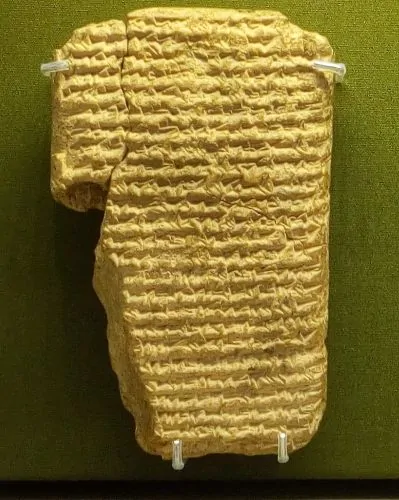
In ancient Mesopotamia, loyalty was not merely expected as a political virtue; it could be imposed as a sacred obligation witnessed and enforced by the gods. Dynastic succession made such obligations important because the death or incapacity of a king could release rival princes, senior officials, military commanders, and provincial governors from the restraints that had held them together. Since Mesopotamian monarchy did not consistently follow an automatic rule of primogeniture, the reigning king ordinarily had to designate an heir and persuade the political elite to accept his choice. An oath transformed that choice from a royal preference into a binding commitment whose violation constituted both treason and sacrilege. It joined practical duties (obedience, protection, disclosure, and military support) to the threat of supernatural punishment. The security of the chosen successor consequently rested not only on guards surrounding his person but also on a community made collectively responsible for preserving his claim.
Oath taking already possessed a long history in Mesopotamian law, diplomacy, military service, and administration before it became visible in the succession arrangements of the Neo-Assyrian kings. Officials swore by the gods and the reigning monarch when accepting duties, parties invoked divine witnesses when concluding agreements, and subordinate rulers pledged obedience through ceremonies that defined the consequences of disloyalty. In the Neo-Assyrian evidence, the Akkadian term adê denotes binding arrangements commonly described as treaties or loyalty oaths, although its meanings should not be reduced to a single modern legal category. Such agreements could bind foreign rulers, imperial officials, soldiers, palace personnel, and other dependents to obligations established by the Assyrian crown. Their security value lay in making loyalty explicit: participants could not easily claim that they had misunderstood whom they were required to obey, what conduct constituted betrayal, or what they were expected to do after discovering a conspiracy.
The most extensive surviving example arose from Esarhaddon’s attempt to secure the succession of his son Ashurbanipal in 672 BCE. Esarhaddon had gained the throne only after a violent conflict with his brothers, and his father Sennacherib had been assassinated by members of the royal family, leaving him acutely aware that designation alone could not prevent a disputed succession. He arranged a divided inheritance in which Ashurbanipal would become king of Assyria while another son, Šamaš-šuma-ukīn, would occupy the Babylonian throne. Representatives of the empire were assembled and bound through adê-agreements to recognize Ashurbanipal, protect him, and preserve the settlement chosen by his father. The surviving provisions demanded more than passive obedience after the prince became king. Those under oath were required to reject competing claimants, resist efforts to alter the succession, report hostile words or concealed plots, and communicate any threat they discovered rather than discussing it privately or remaining silent. They were also forbidden to conceal fugitives, cooperate with conspirators, or accept declarations allegedly issued by Esarhaddon if those declarations contradicted the established succession. Some obligations extended beyond the original participants to their families and descendants, thereby attempting to reproduce loyalty across households and generations. Copies discovered far from the Assyrian heartland, including the treaty tablet from Tell Tayinat, show that the settlement was projected into provincial territories rather than confined to a ceremony among courtiers at the capital. Esarhaddon was effectively creating a distributed security compact in which many subjects became watchers over one another and every oath taker assumed responsibility for transmitting knowledge of danger toward the throne.
The terrifying curses attached to these agreements were central rather than ornamental. Oath breakers were threatened with disease, madness, famine, military defeat, sterility, the destruction of their families, and the obliteration of their names, while ritual images and symbolic actions could demonstrate the fate awaiting anyone who betrayed the designated heir. These provisions addressed the practical difficulty of policing an enormous empire because the gods were imagined as witnesses even where royal agents were absent. Fear of divine punishment could not eliminate political ambition, but it raised the moral, familial, and cosmic cost of joining a conspiracy.
The succession oath also enabled members of the royal household to intervene directly in imperial security. After Esarhaddon’s death in 669 BCE, his mother Naqiʾa, also known by the Akkadian name Zakūtu, imposed another loyalty agreement supporting Ashurbanipal. The so-called Zakūtu Treaty bound members of the royal family, senior officials, governors, military personnel, and other Assyrian subjects to protect the new king and his descendants. Its provisions commanded participants to love Ashurbanipal, maintain his kingship, oppose his enemies, and report any rebellious speech or activity that came to their attention. The document is striking because the queen mother appears as the authority establishing the obligations, demonstrating that dynastic women could become active guardians of succession when their status, wealth, and household connections gave them exceptional political influence. Her intervention did not create Ashurbanipal’s claim, which had already been defined by Esarhaddon, but it renewed and reinforced that claim at the moment when the deceased king could no longer compel obedience personally. The ceremony also reduced the opportunity for officials to postpone commitment while waiting to see which prince or faction would prevail. Sacred loyalty helped bridge the dangerous interval between one reign and the next, when uncertainty itself could encourage rebellion.
Oaths nevertheless remained instruments of security rather than guarantees of political harmony. Esarhaddon faced a conspiracy in 670 BCE despite the sacred obligations surrounding his kingship, and Šamaš-šuma-ukīn eventually rebelled against Ashurbanipal in 652 BCE even though their father’s arrangements had attempted to regulate relations within the dynasty. Participants could violate an oath, reinterpret its demands, or conclude that military success would protect them from both earthly and divine punishment. The texts also present loyalty from the crown’s perspective, making obedience appear unanimous while revealing less about the doubts, coercion, and private calculations of those compelled to swear. Yet these limitations clarify why the oaths belonged to the royal security system: they identified the legitimate successor, prescribed specific responses to conspiracy, extended reporting duties through the empire, and gave officials a common basis for acting before a rival consolidated support. Their curses enlisted divine authority where surveillance and military force could not reach, while their public performance made neutrality difficult during a contested transfer of power. Loyalty was made sacred because succession was never inherently safe, and because the survival of the chosen king depended on convincing thousands of people that protecting him was an obligation to gods, dynasty, and empire alike.
Threats No Soldier Could Stop
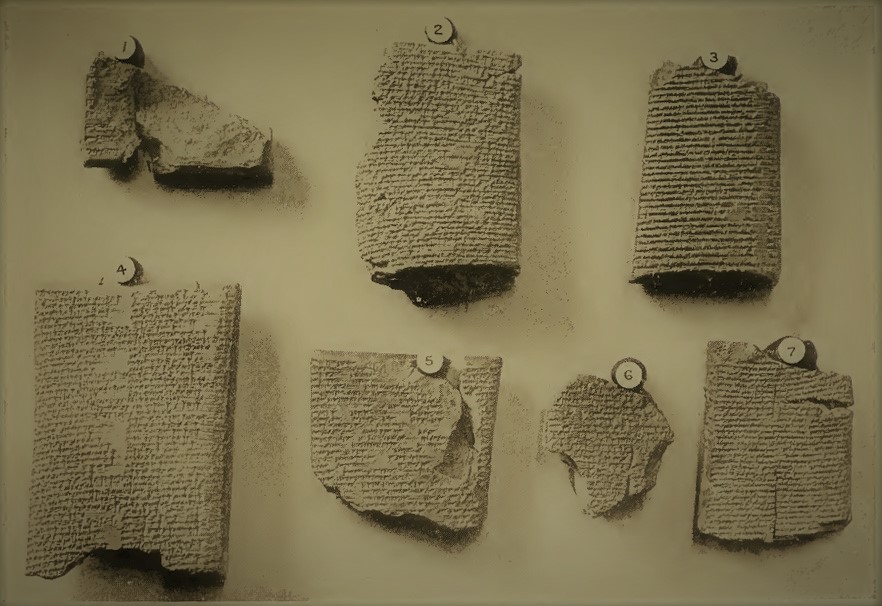
A guard could intercept an assassin, but he could not repel an eclipse, reverse a malignant omen, or prevent divine anger from withdrawing protection from the king. Mesopotamian courts treated such dangers as genuine components of royal security because political events and divine intentions belonged to the same intelligible universe. A celestial disturbance might announce rebellion, invasion, epidemic, or the approaching death of the ruler without identifying the human agents through whom the prediction would be fulfilled. Because the king embodied the order and prosperity of the realm, an omen directed against him could also threaten the army, harvest, temples, and population. Divination supplied advance warning by interpreting signs, while ritual specialists attempted to divert or neutralize the predicted evil. Ritual protection guarded a supernatural perimeter beyond the reach of palace walls and weapons.
The court maintained several specialized routes for discovering what the gods had communicated. Celestial diviners trained in the series Enūma Anu Enlil observed the moon, sun, planets, stars, clouds, storms, and other atmospheric phenomena, interpreting variations according to inherited collections of precedents. Extispicers, known as bārûs, inspected the organs of sacrificial animals and addressed carefully formulated questions to the sun god Šamaš, especially when the king needed guidance about an immediate political or military decision. Exorcists, or āšipus, diagnosed ominous occurrences and prescribed rituals against the evil they portended, while dreams, prophecies, unusual births, and abnormal animal behavior could provide additional channels of warning. Omen collections did not function as simple lists of unalterable predictions, since the meaning of a sign might depend on its timing, direction, color, duration, or relationship to other observations. Scholars transmitted reports to the palace, cited authoritative series, noted uncertainties, and sometimes reassured the king that an alarming phenomenon did not correspond precisely to a dangerous omen. Their interpretations could disagree because observation was imperfect and the scholarly tradition allowed competing readings. Rather than depending on one seer’s intuition, the crown could consult several learned specialists and compare different forms of divination before deciding how seriously to treat a warning.
Among the most dramatic responses was the substitute king ritual, employed when an eclipse or another exceptional sign appeared to threaten the reigning monarch. Lunar eclipses were particularly alarming because their position, timing, and direction could associate the predicted evil with a specific land or king. If specialists concluded that the danger applied to Assyria, the court could install a temporary substitute on the throne so that the divine judgment would attach itself to him instead of the genuine ruler. The real king relinquished his visible insignia, adopted the designation “farmer,” and withdrew from ordinary public kingship while continuing to receive information through carefully controlled channels. The substitute, sometimes chosen from a marginal or already condemned person, wore royal clothing, received ceremonial service, and was provided with a substitute queen. His authority was symbolic rather than governmental, since officials remained loyal to the concealed monarch and continued to administer the empire in his name. At the conclusion of the prescribed period, the substitute and his consort were normally put to death and given funerary rites, carrying the foretold evil with them. Modern observers may perceive the ceremony chiefly as the sacrifice of a powerless person, and its violence should not be obscured by describing it only as religious pageantry. Within Assyrian ritual reasoning, the substitute provided a new target for a judgment that had already been announced and could not simply be ignored. Esarhaddon’s repeated resort to substitution demonstrates how seriously the royal court treated celestial threats and how extensively government could be reorganized around the temporary concealment of the king.
Less spectacular dangers could be addressed through rituals called namburbûs, designed to avert the evil announced by a particular omen. These rites might involve prayers, offerings, purification with water, the manipulation or destruction of symbolic objects, and commands directing the threatened misfortune away from the king or petitioner. Their purpose was not to deny that the omen possessed meaning but to petition the gods to dissolve the connection between sign and consequence. Divination revealed a possible future, while ritual action sought to prevent that future from becoming inevitable.
Royal purification furnished another important defense against supernatural contamination. The elaborate bīt rimki, or “house of washing,” ritual led the king through a sequence of purifications, prayers, incantations, offerings, and symbolic stations intended to remove evil and restore his proper relationship with the gods. Washing did more than cleanse the body, because ritual impurity could obstruct divine favor and leave the ruler exposed to consequences that no military escort could prevent. The king repeatedly denied responsibility for unknown offenses, appealed to the great gods, and sought release from witchcraft, curses, ominous signs, and the effects of accidental transgression. Protective figurines and deposits placed beneath palace floors or near vulnerable entrances similarly confronted demonic intrusion by establishing supernatural guardians within the architecture. Amulets, incantations, sacred plants, fumigation, and consecrated water could protect the royal body and the spaces through which it moved. Ritual experts also regulated timing, since an otherwise proper action performed on an unfavorable day might expose the ruler to danger. The palace consequently required ritual maintenance as well as armed vigilance, with specialists continually repairing the relationship between the king, his environment, and the divine world.
Divinatory knowledge also shaped practical decisions about threats that were recognizably human. Extispicy queries asked whether named officials were plotting rebellion, whether an army should enter a particular region, whether an enemy would attack, whether a proposed official could be trusted, or whether the king could travel safely on a specified day. Intelligence from scouts and governors could supply the factual circumstances behind such questions, but it did not eliminate uncertainty about hidden intentions or future outcomes.
Conversely, an ominous answer might prompt the court to delay a campaign, alter an itinerary, replace a commander, intensify surveillance, or order additional additional rituals. Scholars occupied a delicate position because their reports could frighten the king, contradict influential officials, or appear negligent if a danger materialized without warning. Their letters combined technical interpretation with reassurance, qualification, and careful explanations of why a particular sign did or did not endanger the crown. Divination expanded the security process by forcing uncertain choices into explicit questions that could be debated before irreversible action was taken.
The surviving texts do not permit historians to measure how strongly every king personally believed each interpretation, and ritual activity could carry political purposes beyond its stated supernatural objective. Concealment during a substitute kingship restricted access to the ruler, purification ceremonies publicly restored his legitimacy, and scholarly consultations demonstrated that the court was responding methodically to a crisis. Rituals also created opportunities for delay, coordination, and renewed declarations of loyalty while officials awaited a dangerous period’s conclusion. Yet reducing them to cynical theater would impose a separation between religion and politics that Mesopotamian royal culture did not recognize. Omens were treated as warnings rather than mechanically fixed destinies, which is precisely why expert interpretation and preventive action were considered worthwhile. Soldiers, guards, and fortifications protected the king against visible force, while diviners and ritual specialists confronted dangers believed to operate through divine anger, impurity, witchcraft, and fate. Together they made royal security a defense of both the ruler’s physical body and the cosmic order upon which his authority depended.
When the Inner Circle Turned
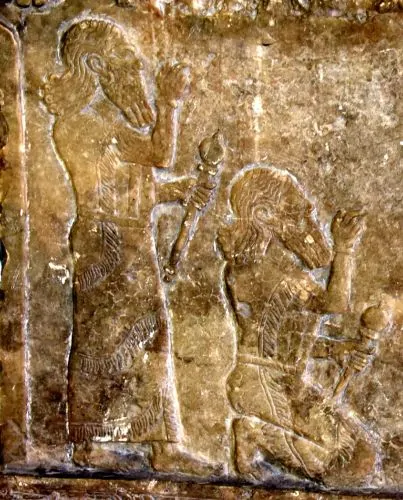
The most dangerous enemy of a Mesopotamian king was often not the stranger attempting to enter the palace but the relative, official, or guard already permitted to stand near him. Members of the royal household possessed physical access, while princes, magnates, and military commanders controlled the human and material resources required to turn murder into a change of government. Their familiarity with palace routines could reveal when the ruler was isolated, which entrances were weakly guarded, and which servants might be bribed or recruited. A conspiracy formed within the court could also disguise itself as ordinary administration until its participants were ready to act. The king faced a structural paradox: effective government required him to delegate authority to people who might use that authority against him. Royal security depended upon intimacy and trust, yet intimacy and trust created the conditions in which betrayal could become lethal.
The violent end of Tukultī-Ninurta I in the late thirteenth century BCE demonstrates that this danger long predated the exceptionally detailed Sargonid archives. A Babylonian chronicle reports that his son and Assyrian dignitaries rebelled, removed him from power, confined him, and killed him in the royal city of Kār-Tukultī-Ninurta. Whatever uncertainties remain about the identities and sequence of the participants, the episode was not an attack launched by an external enemy against a defended capital. It was a coalition between a dynastic challenger and members of the governing elite who already commanded access, personnel, and political influence. The king’s own palace or royal foundation became his prison, showing how quickly protective architecture could be turned against its intended occupant once those controlling it changed allegiance.
The best-documented royal assassination in Mesopotamian history was the murder of Sennacherib in 681 BCE. Assyrian, Babylonian, and biblical sources agree on the essential fact that one or more of his sons killed him, although they differ in their descriptions of the perpetrators and setting. The principal conspirator is generally identified as Arda-Mulissu, an elder son who had once held the position of crown prince before Sennacherib replaced him with Esarhaddon. That displacement gave Arda-Mulissu a powerful grievance as well as time to cultivate allies among courtiers, military personnel, and other members of the royal family. Sennacherib’s death was connected to succession politics rather than an isolated act of personal violence. The murderers could reach their father because they belonged to the dynasty and moved within spaces from which ordinary subjects were excluded. Killing the king did not automatically make the assassination politically successful. Esarhaddon, who was away from the immediate center of danger, advanced toward the capital, defeated the forces of his brothers, and secured the throne after a short civil conflict. His victory suggests that the conspirators had achieved access to Sennacherib without acquiring universal recognition from the army, provincial administration, or wider imperial elite. The episode exposed the difference between murdering a ruler and controlling the state he had governed.
Esarhaddon’s own reign remained haunted by the political conditions that had brought him to power. His inscriptions presented his victory as divinely ordained, while his succession arrangements, loyalty oaths, intelligence networks, and repeated inquiries about the intentions of officials reveal persistent concern about internal treason. In 670 BCE, a major conspiracy gathered around a man named Sasî, whose royal aspirations reportedly received support from prophetic declarations. The movement appears to have attracted people within the administration, demonstrating how religious messages, personal rivalries, and dissatisfaction at court could converge around an alternative claimant. Reports of suspicious conversations and concealed affiliations reached the palace through officials who understood that failure to disclose treason could make them participants in it. Esarhaddon responded with investigations, arrests, and executions that removed numerous officials and probably reshaped the upper levels of government. The severity of the repression may indicate the seriousness of the plot, but the surviving evidence largely reflects the victorious king’s understanding of events and cannot reveal the guilt of every person punished. The conspiracy showed that an inner circle could be penetrated not only by a royal prince but also by a claimant whose supporters believed, or professed to believe, that the gods had transferred legitimacy elsewhere.
Royal fear should not be treated simply as a private psychological weakness. Surveillance, restricted access, loyalty oaths, repeated divinatory queries, and demands that officials report forbidden speech were rational responses to documented assassinations and rebellions. Yet a security system built upon suspicion allowed courtiers to denounce rivals, exaggerate dangers, or present disagreement as disloyalty. Purges might save a king from one conspiracy while frightening capable officials, disrupting administration, and encouraging others to conceal their true opinions more carefully.
The evidence for conspiracy is also shaped by the political purposes of those who preserved it. Royal inscriptions emphasized divine selection and the punishment of traitors, whereas chronicles and letters retained fragments of uncertainty that official narratives attempted to suppress. Successful prevention usually left less dramatic evidence than assassination, while failed plots were reconstructed through accusations produced by interrogations, informants, and victorious factions. Nevertheless, the repeated involvement of sons, brothers, generals, eunuchs, governors, scholars, and palace servants demonstrates that royal danger increased with access to the ruler and proximity to the instruments of government. Guards could screen strangers, but they could not easily exclude everyone capable of organizing a coup without making kingship itself impossible. Mesopotamian rulers consequently tried to divide authority, compare reports, rotate personnel, bind elites by oath, and make every trusted insider responsible for revealing the disloyalty of another. These measures protected the throne, but they also institutionalized the knowledge that the people closest to the king were those best positioned to destroy him. Royal fear was neither pure paranoia nor proof of omnipresent conspiracy; it was the political consciousness produced by a system in which affection, kinship, service, and betrayal occupied the same guarded rooms.
After Assyria: Royal Protection in Neo-Babylonian Babylonia
The destruction of Nineveh in 612 BCE and the collapse of the Assyrian Empire did not bring an end to the institutions through which Mesopotamian rulers protected themselves. The Neo-Babylonian kings inherited traditions of fortified capitals, palace administration, military mobilization, sacred kingship, controlled audiences, and communication across provincial territories. Their evidence differs markedly from the abundant Neo-Assyrian correspondence that identifies scouts, governors, scholars, and court officials reporting directly to the crown. Neo-Babylonian archives are dominated by temple, commercial, legal, and administrative records, while royal inscriptions concentrate on building, piety, and legitimate rule. Named bodyguard formations and palace-security procedures consequently remain difficult to reconstruct. The silence reflects the composition of the surviving archive rather than the absence of guards, surveillance, or protective routines.
The monumental rebuilding of Babylon under Nebuchadnezzar II made the capital itself the most visible expression of royal protection. Massive inner and outer fortifications, defensive moats, strengthened embankments, and controlled gates enclosed a city whose capture would have required overcoming several physical obstacles. The Ishtar Gate regulated the northern approach to the ceremonial center, while the Processional Way channeled movement between high walls decorated with divine and royal imagery. Nebuchadnezzar’s Southern Palace stood beside the fortifications and contained a succession of courtyards, halls, passages, storerooms, and residential sectors. Its enormous walls and limited connecting doorways separated public or administrative areas from increasingly restricted interior spaces. The throne room opened from a major ceremonial courtyard, allowing royal appearances to occur within an environment where the direction and composition of an approaching audience could be controlled. Not every thick wall should be interpreted as a response to assassination, since storage, climate, elevation, monumentality, and traditional construction also shaped the complex. Nevertheless, the palace organized proximity spatially, ensuring that access to the king occurred through a sequence of thresholds rather than through an open gathering place.
Administrative texts provide glimpses of the large and diverse population sustained by the palace. Ration lists record officials, artisans, foreign captives, dependent workers, and displaced rulers such as Jehoiachin of Judah, demonstrating that royal institutions maintained close control over provisions and status. Such documents are not guard rosters, but they reveal the bureaucratic supervision required to manage people who lived or worked near royal property. Armed retainers, gate personnel, messengers, and military officers must have protected the king and his establishments, although their organization cannot be recovered with the precision possible for the Neo-Assyrian court. Beyond Babylon, the army remained the principal shield against invasion and revolt, while governors, temple authorities, and local elites helped preserve order and transmit resources to the center.
The succession crises following Nebuchadnezzar’s death in 562 BCE show how quickly these protective structures could become instruments of conspiracy. His son Amēl-Marduk occupied the throne for only about two years before he was killed in a coup led by Neriglissar, a powerful official apparently connected to the dynasty through marriage. Neriglissar’s ability to seize power suggests that standing within the court, support among influential officials, and access to military resources could outweigh the hereditary claim of a reigning king. When Neriglissar died in 556 BCE, his young son Lâbâši-Marduk inherited the throne but survived only a few months before conspirators removed and killed him. The plotters then elevated Nabonidus, an experienced figure at court who lacked an uncontested hereditary right to the Babylonian kingship. Later accounts rationalized these killings by portraying the victims as unfit, but such judgments largely reproduce the justifications of successful usurpers. The rapid sequence demonstrates that a palace guard could preserve daily order without preventing coordinated action by the officials who controlled access, commands, and information. It also reveals the fragility of dynastic legitimacy when several elite groups had to agree that a particular heir should rule. Within six years of Nebuchadnezzar’s death, two kings had been murdered and a new royal house had taken power, not because Babylon lacked formidable defenses but because the decisive threats arose inside them.
Nabonidus attempted to govern this unstable political environment through religious policy, military authority, administrative appointments, and the delegation of extensive power to his son Belshazzar. During the king’s prolonged residence at Tayma in Arabia, Belshazzar commanded forces and directed affairs in Babylonia, although he did not assume the full royal title or perform every ritual reserved for the king. This arrangement protected continuity by leaving a trusted dynastic representative at the center, but it also divided royal presence between an absent monarch and a crown prince exercising exceptional authority. When Cyrus of Persia invaded in 539 BCE, Babylon’s massive fortifications did not decide the outcome. After the Babylonian army was defeated at Opis and Sippar fell without sustained resistance, Persian forces entered Babylon without a major battle inside the city and captured Nabonidus.
The available sources do not prove a simple story in which every priest and official betrayed the king, especially because Cyrus’s inscriptions deliberately represented the conquest as a divinely approved liberation. They do show that walls could not preserve a monarchy once its field army had failed and enough institutional cooperation existed for a new ruler to assume control of the capital. Neo-Babylonian experience confirms the central problem of Mesopotamian royal security: architecture, troops, household administration, and sacred legitimacy protected the king only while the people operating those systems continued to recognize him.
Did Mesopotamia Really Have a “Royal Security System”?
The following video from History Time discusses early imperial Mesopotamia:
The term “royal security system” may be an anachronistic label imposed upon institutions that ancient Mesopotamians never understood as a unified organization. No surviving text presents a comprehensive security hierarchy connecting palace guards, scouts, governors, diviners, messengers, military commanders, and royal relatives beneath a single official responsible for protecting the king. The individuals assigned protective duties usually possessed broader political, military, ceremonial, or household responsibilities. A gatekeeper controlled entrances, but he did not necessarily belong to the same administrative structure as a scout observing an enemy city or a scholar interpreting an eclipse. Calling their activities a system risks creating coherence that exists primarily in the historian’s reconstruction.
The surviving archive intensifies this problem because its distribution is extraordinarily uneven. Neo-Assyrian royal correspondence provides exceptional evidence for reports, escorts, conspiracies, military intelligence, and court scholarship, whereas documentation from many earlier and later periods is fragmentary or concerned with different subjects. Palace ruins preserve walls and doorways but seldom reveal who guarded them, what regulations governed passage, or whether a particular architectural feature was intended to deter assassins. Royal inscriptions exaggerate order and loyalty, while letters usually survive accidentally and often concern moments when ordinary procedures had failed. Administrative titles can also change meaning across centuries, making it hazardous to combine evidence from Ur III, Old Babylonian, Middle Assyrian, Neo-Assyrian, and Neo-Babylonian settings as though each belonged to one continuous institution. What appears to be a Mesopotamian system may be a Neo-Assyrian pattern projected backward and forward across very different kingdoms.
The effectiveness of this supposed system is equally open to doubt. Tukultī-Ninurta I and Sennacherib were killed by members of their own dynasties, Esarhaddon confronted a serious conspiracy, and the Neo-Babylonian court experienced repeated coups after the death of Nebuchadnezzar II. Loyalty oaths did not prevent rebellion, divination did not make royal decisions infallible, and massive fortifications could not save a ruler abandoned or defeated by the people controlling them. Some measures may even have produced additional insecurity by concentrating power in privileged insiders, encouraging denunciations, or provoking fear among officials vulnerable to purges. If a security system is defined as a centralized and consistently effective institution, ancient Mesopotamia did not possess one.
Yet complete centralization is not necessary before coordinated protection can be described as systemic. Mesopotamian courts repeatedly combined controlled access, armed proximity, intelligence gathering, rapid communication, military force, loyalty obligations, succession planning, and ritual intervention around the survival of the ruler. Letters show governors sending warnings toward the palace, messengers carrying royal orders outward, scholars responding to the same political emergencies as commanders, and officials being required to disclose plots rather than merely refrain from joining them. Palace architecture created successive zones of access, while titles and ceremonial precedence identified who could enter those zones and approach the royal body. These arrangements crossed administrative boundaries, but they converged upon a recognizable objective: preserving the king as the governing, military, dynastic, and sacred center of the state. Their failures do not prove that no protective order existed any more than a successful assassination proves that guards, intelligence, and precautions were absent.
This requires modification of my central terminology. Mesopotamian royal protection should not be imagined as a permanent secret service, a specialized police agency, or a bureaucratic department possessing exclusive jurisdiction over the king’s safety. It was better understood as a flexible security regime assembled from the palace household, army, provincial government, communications network, scholarly establishment, religious institutions, and royal family. Its components did not always cooperate, and the people responsible for defending the throne could become its most dangerous enemies. The system was strongest when information moved reliably, officials accepted the designated succession, military commanders remained obedient, and ritual authority reinforced political legitimacy; it fractured when those relationships failed. “Royal security system” remains useful if it describes this interdependence without suggesting modern institutional uniformity. The king was protected not by one organization but by an unstable network whose overlapping safeguards reveal both the sophistication of Mesopotamian monarchy and the permanent vulnerability at its center.
Conclusion: The Guarded King and the Dangerous Logic of Proximity
The Mesopotamian king stood at the center of government, warfare, justice, diplomacy, dynastic continuity, and communication with the gods, but that centrality made his survival a matter of persistent uncertainty. Royal protection consequently extended far beyond the armed men stationed near his body. Palace walls and guarded gates controlled approach, officials regulated audiences, scouts and provincial governors reported distant threats, messengers carried warnings, and armies prevented hostile forces from reaching the capital. Oaths bound subjects to defend the succession, while diviners and ritual specialists confronted dangers believed to arise from omens, impurity, witchcraft, or divine anger. These practices belonged to different institutions and were never consolidated into a single security department. They nevertheless formed overlapping layers intended to keep danger away from the ruler, identify it before it matured, and preserve government if prevention failed.
At the heart of this protective order lay the dangerous logic of proximity. The king required servants to manage his rooms, guards to accompany him, generals to command his forces, relatives to continue his dynasty, and advisers to translate information into decisions. Each trusted person reduced one vulnerability while creating another. A bodyguard could stop an unknown attacker but could himself be recruited into a conspiracy; a crown prince could stabilize the succession but also attract dissatisfied officials seeking an alternative ruler. Governors protected the frontiers while acquiring troops, wealth, and regional influence that might support rebellion. Envoys and messengers extended royal knowledge but could distort, conceal, or redirect the information entrusted to them. Scholars warned the king about divine danger, yet their interpretations could affect military plans, political appointments, and the treatment of suspected enemies. Palace architecture restricted movement, but doors remained useful only while those holding their keys obeyed the throne. The same networks that made kingship possible gave insiders the access and resources required to undermine it.
Mesopotamian rulers responded by distributing trust rather than placing absolute confidence in one protective institution. Reports were compared, access was divided among officials, loyalty was reinforced through oaths, and military authority was balanced by household, administrative, and sacred obligations. Such precautions did not prevent assassination, conspiracy, civil war, or conquest, as the deaths of Tukultī-Ninurta I, Sennacherib, Amēl-Marduk, and Lâbâši-Marduk demonstrate. Their failures instead expose the fundamental limit of royal protection: no ruler could be defended without empowering other people, and no method could ensure that those people would remain loyal.
Ancient Mesopotamia possessed a royal security regime, although not a security service in the modern bureaucratic sense. Its operation depended upon relationships among the palace household, military command, provincial administration, communications network, scholarly court, temples, royal family, and gods. The system was most effective when those relationships produced reliable information, disciplined access, coordinated force, recognized succession, and confidence in the ruler’s legitimacy. It weakened when fear overwhelmed judgment, factions captured the flow of information, commanders withheld support, or relatives converted privileged access into rebellion. Mesopotamian kings displayed their power through monumental palaces, conquering armies, elaborate ceremonies, and claims of divine favor, but the machinery surrounding them reveals how fragile that power remained. Every additional guard, oath, wall, messenger, and ritual acknowledged a danger that kingship could never completely remove. The most powerful man in Mesopotamia was guarded so extensively because power placed him within reach of enemies whom he could neither govern without nor safely trust.
Bibliography
Affiliate disclosure: Amazon links on this site are paid links. As an Amazon Associate I earn from qualifying purchases.
- Baker, Heather D. “From Street Altar to Palace: Reading the Built Environment of Urban Babylonia.” In The Oxford Handbook of Cuneiform Culture, edited by Karen Radner and Eleanor Robson, 533-566. Oxford: Oxford University Press, 2011.
- Beaulieu, Paul-Alain. The Reign of Nabonidus, King of Babylon, 556–539 B.C. New Haven, CT: Yale University Press, 1989.
- Bottéro, Jean. Mesopotamia: Writing, Reasoning, and the Gods. Translated by Zainab Bahrani and Marc Van De Mieroop. Chicago: University of Chicago Press, 1992.
- Da Riva, Rocío. The Inscriptions of Nabopolassar, Amel-Marduk and Neriglissar. Studies in Ancient Near Eastern Records 3. Berlin: De Gruyter, 2013.
- —-. The Neo-Babylonian Royal Inscriptions: An Introduction. Guides to the Mesopotamian Textual Record 4. Münster: Ugarit-Verlag, 2008.
- Dalley, Stephanie, and J. Nicholas Postgate. The Tablets from Fort Shalmaneser. Cuneiform Texts from Nimrud 3. London: British School of Archaeology in Iraq, 1984.
- Dalley, Stephanie M., and Luis R. Siddall. “A Conspiracy to Murder Sennacherib? A Revision of SAA 18 100 in the Light of a Recent Join.” Iraq 83 (2021), 45–56.
- Dewar, Ben. “Rebellion, Sargon II’s ‘Punishment’ and the Death of Aššur-nādin-šumi in the Inscriptions of Sennacherib.” Journal of Ancient Near Eastern History 3:1 (2017), 25–38.
- Dezső, Tamás. The Assyrian Army I: The Structure of the Neo-Assyrian Army as Reconstructed from the Assyrian Palace Reliefs and Cuneiform Sources. 1, Infantry. Budapest: Eötvös University Press, 2012.
- —-. “The Reconstruction of the Neo-Assyrian Army as Depicted on the Assyrian Palace Reliefs, 745–612 BC.” Acta Archaeologica Academiae Scientiarum Hungaricae 57 (2006), 87–130.
- Dietrich, Manfried. The Babylonian Correspondence of Sargon and Sennacherib. State Archives of Assyria 17. Helsinki: Helsinki University Press, 2003.
- Dubovský, Peter. Hezekiah and the Assyrian Spies: Reconstruction of the Neo-Assyrian Intelligence Services and Its Significance for 2 Kings 18–19. Biblica et Orientalia 49. Rome: Pontifical Biblical Institute, 2006.
- —-. “Neo-Assyrian Military Intelligence.” In Krieg und Frieden im Alten Vorderasien, edited by Hans Neumann et al., 221–35. Alter Orient und Altes Testament 401. Münster: Ugarit-Verlag, 2014.
- Fales, Frederick Mario, and J. Nicholas Postgate. Imperial Administrative Records, Part I: Palace and Temple Administration. State Archives of Assyria 7. Helsinki: Helsinki University Press, 1992.
- —-. Imperial Administrative Records, Part II: Provincial and Military Administration. State Archives of Assyria 11. Helsinki: Helsinki University Press, 1995.
- Fales, Frederick Mario, and Monica Rigo. “Everyday Life and Food Practices in Assyrian Military Encampments.” In Paleonutrition and Food Practices in the Ancient Near East: Towards a Multidisciplinary Approach, edited by Lucio Milano and Francesca Bertoldi, 413–437. Padua: S.A.R.G.O.N. Editrice e Libreria, 2014.
- Frahm, Eckart. Assyria: The Rise and Fall of the World’s First Empire. New York: Basic Books, 2023.
- —-. “The Neo-Assyrian Royal Inscriptions as Text: History, Ideology, and Intertextuality.” In Writing Neo-Assyrian History: Sources, Problems, and Approaches, edited by Giovanni B. Lanfranchi, Raija Mattila, and Robert Rollinger, 139–159. State Archives of Assyria Studies 29. Helsinki: Neo-Assyrian Text Corpus Project, 2019.
- Frame, Grant. The Royal Inscriptions of Sargon II, King of Assyria (721–705 BC). Royal Inscriptions of the Neo-Assyrian Period 2. University Park, PA: Eisenbrauns, 2021.
- Fuchs, Andreas. “Assyria at War: Strategy and Conduct.” In The Oxford Handbook of Cuneiform Culture, edited by Karen Radner and Eleanor Robson, 380–401. Oxford: Oxford University Press, 2011.
- Fuchs, Andreas, and Simo Parpola. The Correspondence of Sargon II, Part III: Letters from Babylonia and the Eastern Provinces. State Archives of Assyria 15. Helsinki: Helsinki University Press, 2001.
- Gates, Marie-Henriette. “The Palace of Zimri-Lim at Mari.” Biblical Archaeologist 47:2 (1984), 70–87.
- George, Andrew R. Babylonian Topographical Texts. Orientalia Lovaniensia Analecta 40. Leuven: Peeters, 1992.
- Glassner, Jean-Jacques. Mesopotamian Chronicles. Edited by Benjamin R. Foster. Writings from the Ancient World 19. Atlanta: Society of Biblical Literature, 2004.
- Grayson, A. Kirk. Assyrian and Babylonian Chronicles. Texts from Cuneiform Sources 5. Locust Valley, NY: J. J. Augustin, 1975.
- —-. Assyrian Rulers of the Early First Millennium BC I (1114–859 BC). Royal Inscriptions of Mesopotamia, Assyrian Periods 2. Toronto: University of Toronto Press, 1991.
- Grayson, A. Kirk, and Jamie Novotny. The Royal Inscriptions of Sennacherib, King of Assyria (704–681 BC), Part 1. Royal Inscriptions of the Neo-Assyrian Period 3/1. Winona Lake, IN: Eisenbrauns, 2012.
- Gross, Melanie, and David Kertai. “Becoming Empire: Neo-Assyrian Palaces and the Creation of Courtly Culture.” Journal of Ancient History 7:1 (2019), 1–31.
- Heimpel, Wolfgang. Letters to the King of Mari: A New Translation, with Historical Introduction, Notes, and Commentary. Mesopotamian Civilizations 12. Winona Lake, IN: Eisenbrauns, 2003.
- Hunger, Hermann. Astrological Reports to Assyrian Kings. State Archives of Assyria 8. Helsinki: Helsinki University Press, 1992.
- Joannès, Francis. “Women and Palaces in the Neo-Assyrian Period.” Orient 51 (2016), 29–46.
- Jones, Christopher W. “Failed Coup: The Assassination of Sennacherib and Esarhaddon’s Struggle for the Throne, 681–680 B.C.” Journal of Ancient Near Eastern History 10:2 (2023), 293–369.
- Jursa, Michael. “The Lost State Correspondence of the Babylonian Empire as Reflected in Contemporary Administrative Letters.” In State Correspondence in the Ancient World: From New Kingdom Egypt to the Roman Empire, edited by Karen Radner, 94–111. Oxford: Oxford University Press, 2014.
- Kertai, David. The Architecture of Late Assyrian Royal Palaces. Oxford: Oxford University Press, 2015.
- —-. “The Queens of the Neo-Assyrian Empire.” Altorientalische Forschungen 40:1 (2013), 108–124.
- Koch, Ulla Susanne. Mesopotamian Divination Texts: Conversing with the Gods—Sources from the First Millennium BCE. Guides to the Mesopotamian Textual Record 7. Münster: Ugarit-Verlag, 2015.
- Kwasman, Theodore, and Simo Parpola. Legal Transactions of the Royal Court of Nineveh, Part I: Tilgath-Pileser III through Esarhaddon. State Archives of Assyria 6. Helsinki: Helsinki University Press, 1991.
- Lanfranchi, Giovanni B., and Simo Parpola. The Correspondence of Sargon II, Part II: Letters from the Northern and Northeastern Provinces. State Archives of Assyria 5. Helsinki: Helsinki University Press, 1990.
- Langdon, Stephen. Die neubabylonischen Königsinschriften. Vorderasiatische Bibliothek 4. Leipzig: J. C. Hinrichs’sche Buchhandlung, 1912.
- Lauinger, Jacob. “Esarhaddon’s Succession Treaty at Tell Tayinat: Text and Commentary.” Journal of Cuneiform Studies 64 (2012), 87–123.
- Leichty, Erle. The Royal Inscriptions of Esarhaddon, King of Assyria (680–669 BC). Royal Inscriptions of the Neo-Assyrian Period 4. Winona Lake, IN: Eisenbrauns, 2011.
- Liverani, Mario. “The Ideology of the Assyrian Empire.” In Power and Propaganda: A Symposium on Ancient Empires, edited by Mogens Trolle Larsen, 297–317. Mesopotamia 7. Copenhagen: Akademisk Forlag, 1979.
- Luukko, Mikko, and Greta Van Buylaere. The Political Correspondence of Esarhaddon. State Archives of Assyria 16. Helsinki: Helsinki University Press, 2002.
- Mattila, Raija. The King’s Magnates: A Study of the Highest Officials of the Neo-Assyrian Empire. State Archives of Assyria Studies 11. Helsinki: Neo-Assyrian Text Corpus Project, 2000.
- —-. Legal Transactions of the Royal Court of Nineveh, Part II: Assurbanipal through Sin-sarru-iskun. State Archives of Assyria 14. Helsinki: Helsinki University Press, 2002.
- Maul, Stefan M. Zukunftsbewältigung: Eine Untersuchung altorientalischen Denkens anhand der babylonisch-assyrischen Löserituale (Namburbi). Baghdader Forschungen 18. Mainz am Rhein: Philipp von Zabern, 1994.
- Melville, Sarah C. The Campaigns of Sargon II, King of Assyria, 721–705 B.C. Campaigns and Commanders 55. Norman: University of Oklahoma Press, 2016.
- —-. The Role of Naqia/Zakutu in Sargonid Politics. State Archives of Assyria Studies 9. Helsinki: Helsinki University Press, 1999.
- Micale, Maria Gabriella, and Davide Nadali. “The Shape of Sennacherib’s Camps: Strategic Functions and Ideological Space.” Iraq 66 (2004), 163–175.
- Michalowski, Piotr. The Correspondence of the Kings of Ur: An Epistolary History of an Ancient Mesopotamian Kingdom. Winona Lake, IN: Eisenbrauns, 2011.
- Millard, Alan R. The Eponyms of the Assyrian Empire, 910–612 BC. State Archives of Assyria Studies 2. Helsinki: Neo-Assyrian Text Corpus Project, 1994.
- Novotny, Jamie, and Joshua Jeffers. The Royal Inscriptions of Ashurbanipal (668–631 BC), Aššur-etel-ilāni (630–627 BC), and Sîn-šarra-iškun (626–612 BC), Kings of Assyria, Part 1. Royal Inscriptions of the Neo-Assyrian Period 5/1. University Park, PA: Eisenbrauns, 2018.
- Oates, Joan, and David Oates. Nimrud: An Assyrian Imperial City Revealed. London: British School of Archaeology in Iraq, 2001.
- Parker, Bradley J. “The Construction and Performance of Kingship in the Neo-Assyrian Empire.” Journal of Anthropological Research 67:3 (2011), 357-386.
- —-. The Mechanics of Empire: The Northern Frontier of Assyria as a Case Study in Imperial Dynamics. Helsinki: Neo-Assyrian Text Corpus Project, 2001.
- Parpola, Simo. The Correspondence of Sargon II, Part I: Letters from Assyria and the West. State Archives of Assyria 1. Helsinki: Helsinki University Press, 1987.
- —-. Letters from Assyrian and Babylonian Scholars. State Archives of Assyria 10. Helsinki: Helsinki University Press, 1993.
- —-. “The Murderer of Sennacherib.” In Death in Mesopotamia: Papers Read at the XXVIe Rencontre Assyriologique Internationale, edited by Bendt Alster, 171–82. Mesopotamia 8. Copenhagen: Akademisk Forlag, 1980.
- —-. “The Substitute King Ritual in Assyria.” In Death in Mesopotamia: Papers Read at the XXVIe Rencontre Assyriologique Internationale, edited by Bendt Alster, 57–60. Mesopotamia 8. Copenhagen: Akademisk Forlag, 1980.
- Parpola, Simo, and Kazuko Watanabe. Neo-Assyrian Treaties and Loyalty Oaths. State Archives of Assyria 2. Helsinki: Helsinki University Press, 1988.
- Pedersén, Olof. Babylon: The Great City. Münster: Zaphon, 2021.
- Pongratz-Leisten, Beate. Herrschaftswissen in Mesopotamien: Formen der Kommunikation zwischen Gott und König im 2. und 1. Jahrtausend v. Chr. State Archives of Assyria Studies 10. Helsinki: Neo-Assyrian Text Corpus Project, 1999.
- —-. Ina šulmi īrub: Die kulttopographische und ideologische Programmatik der akītu-Prozession in Babylonien und Assyrien im 1. Jahrtausend v. Chr. Baghdader Forschungen 16. Mainz am Rhein: Philipp von Zabern, 1994.
- —-. Religion and Ideology in Assyria. Studies in Ancient Near Eastern Records 6. Berlin: De Gruyter, 2015.
- Radner, Karen. “The Delegation of Power: Neo-Assyrian Bureau Seals.” In L’archive des fortifications de Persépolis: état des questions et perspectives de recherches, edited by Pierre Briant, Wouter F. M. Henkelman, and Matthew W. Stolper, 481–515. Persika 12. Paris: De Boccard, 2008.
- —-. “Gatekeepers and Lock Masters: The Control of Access in Neo-Assyrian Palaces.” In Your Praise Is Sweet: A Memorial Volume for Jeremy Black from Students, Colleagues and Friends, edited by Heather D. Baker, Eleanor Robson, and Gábor Zólyomi, 269–280. London: British Institute for the Study of Iraq, 2010.
- —-. “An Imperial Communication Network: The State Correspondence of the Neo-Assyrian Empire.” In State Correspondence in the Ancient World: From New Kingdom Egypt to the Roman Empire, edited by Karen Radner, 64–93. Oxford: Oxford University Press, 2014.
- —-. “Revolts in the Assyrian Empire: Succession Wars, Rebellions against a False King and Independence Movements.” In Revolt and Resistance in the Ancient Classical World and the Near East: In the Crucible of Empire, edited by John J. Collins and J. G. Manning, 41–54. Culture and History of the Ancient Near East 85. Leiden: Brill, 2016.
- —-. “The Trials of Esarhaddon: The Conspiracy of 670 BC.” Isimu 6 (2003), 165–83.
- Reade, Julian E. “The Neo-Assyrian Court and Army: Evidence from the Sculptures.” Iraq 34:2 (1972), 87–112.
- Reynolds, Frances. The Babylonian Correspondence of Esarhaddon and Letters to Assurbanipal and Sîn-šarru-iškun from Northern and Central Babylonia. State Archives of Assyria 18. Helsinki: Helsinki University Press, 2003.
- Richardson, Seth. “Early Mesopotamia: The Presumptive State.” Past & Present 215:1 (2012), 3–49.
- Rochberg, Francesca. Aspects of Babylonian Celestial Divination: The Lunar Eclipse Tablets of Enūma Anu Enlil. Archiv für Orientforschung Beiheft 22. Horn, Austria: Ferdinand Berger & Söhne, 1988.
- —-. The Heavenly Writing: Divination, Horoscopy, and Astronomy in Mesopotamian Culture. Cambridge: Cambridge University Press, 2004.
- Roth, Martha T., trans. Law Collections from Mesopotamia and Asia Minor. 2nd ed. Atlanta: Scholars Press, 1997.
- Russell, John Malcolm. Sennacherib’s Palace Without Rival at Nineveh. Chicago: University of Chicago Press, 1991.
- Sasson, Jack M. From the Mari Archives: An Anthology of Old Babylonian Letters. Winona Lake, IN: Eisenbrauns, 2015.
- Schaudig, Hanspeter. Die Inschriften Nabonids von Babylon und Kyros’ des Großen samt den in ihrem Umfeld entstandenen Tendenzschriften. Alter Orient und Altes Testament 256. Münster: Ugarit-Verlag, 2001.
- Starr, Ivan. Queries to the Sungod: Divination and Politics in Sargonid Assyria. State Archives of Assyria 4. Helsinki: Helsinki University Press, 1990.
- Svärd, Saana. Women and Power in Neo-Assyrian Palaces. State Archives of Assyria Studies 23. Helsinki: Neo-Assyrian Text Corpus Project, 2015.
- Tadmor, Hayim, and Shigeo Yamada. The Royal Inscriptions of Tiglath-pileser III (744–727 BC) and Shalmaneser V (726–722 BC), Kings of Assyria. Royal Inscriptions of the Neo-Assyrian Period 1. Winona Lake, IN: Eisenbrauns, 2011.
- Tenney, Jonathan S. “Babylonian Populations, Servility, and Cuneiform Records.” Journal of the Economic and Social History of the Orient 60:6 (2017), 715-787.
- Teppo, Saana. “The Role and Duties of the Neo-Assyrian Šakintu in the Light of Archival Evidence.” State Archives of Assyria Bulletin 16 (2007), 257–272.
- Turner, Geoffrey. “The State Apartments of Late Assyrian Palaces.” Iraq 32:2 (1970), 177–213.
- Van De Mieroop, Marc. Cuneiform Texts and the Writing of History. London: Routledge, 1999.
- —-. A History of the Ancient Near East, ca. 3000–323 BC. 3rd ed. Malden, MA: Wiley-Blackwell, 2003.
- Watanabe, Kazuko. Die adê-Vereidigung anlässlich der Thronfolgeregelung Asarhaddons. Baghdader Mitteilungen Beiheft 3. Berlin: Gebr. Mann, 1987.
- Weissert, Elnathan. “Royal Hunt and Royal Triumph in a Prism Fragment of Ashurbanipal (82-5-22, 2).” In Assyria 1995: Proceedings of the 10th Anniversary Symposium of the Neo-Assyrian Text Corpus Project, edited by Simo Parpola and Robert M. Whiting, 339–358. Helsinki: Neo-Assyrian Text Corpus Project, 1997.
- Winter, Irene J. “‘Idols of the King’: Royal Images as Recipients of Ritual Action in Ancient Mesopotamia.” Journal of Ritual Studies 6:1 (1992), 13-42.
- —-. “Royal Rhetoric and the Development of Historical Narrative in Neo-Assyrian Reliefs.” Studies in Visual Communication 7:2 (1981): 2–38.
- Wiseman, Donald J. Chronicles of Chaldaean Kings (626–556 B.C.) in the British Museum. London: Trustees of the British Museum, 1956.
- —-. Nebuchadrezzar and Babylon. Oxford: Oxford University Press, 1985.
- —-. The Vassal-Treaties of Esarhaddon. London: British School of Archaeology in Iraq, 1958.
- Yoffee, Norman. Myths of the Archaic State: Evolution of the Earliest Cities, States, and Civilizations. Cambridge: Cambridge University Press, 2005.
- —-. “Political Economy in Early Mesopotamian States.” Annual Review of Anthropology 24 (1995), 281-311.
- Zaia, Shana. “My Brother’s Keeper: Assurbanipal versus Šamaš-šuma-ukīn.” Journal of Ancient Near Eastern History 6:1 (2019), 19–52.
- —-. “Protecting the King in Mesopotamia in the First Millennium BCE: Perspectives from the Neo-Assyrian and Neo-Babylonian Empires.” In Brill’s Companion to Bodyguards in the Ancient Mediterranean, edited by Mark Hebblewhite and Conor Whately, 31–58. Leiden: Brill, 2022.
Originally published by Brewminate, 08.17.2026, under the terms of a Creative Commons Attribution-NonCommercial-NoDerivatives 4.0 International license.
About the Author