Modern states learned to govern by counting, classifying, and documenting people, turning identity into administrative knowledge that enabled both welfare and control.

By Matthew A. McIntosh
Public Historian
Brewminate
Introduction: Counting as Power
The modern state did not simply learn to govern by passing laws, raising armies, or collecting taxes; it learned to govern by counting. Between the late eighteenth century and the early twentieth, censuses, registers, identity documents, statistical offices, and classification systems transformed populations into objects of administrative knowledge. People became legible through categories such as age, sex, occupation, language, religion, race, nationality, household status, and place of birth. These categories appeared neutral on the surface, but they carried political force. To count a population was to define it, to arrange it, and to make it available for action by the state.
This transformation marked a decisive shift in the relationship between government and society. Earlier rulers had long counted subjects for taxation, military service, landholding, and labor obligations, but modern states developed more ambitious and standardized systems of knowledge. They sought not merely to know how many people lived within their borders but to classify what kinds of people they were. The census became one of the central instruments of this process, creating official representations of society that could guide policy, representation, welfare, policing, colonial administration, and national identity. The census was not a passive mirror held up to society; it was an active tool through which society was rendered visible, simplified, and governed.
The act of identification also reshaped the people it described. Once a state classified individuals by race, language, caste, ethnicity, religion, occupation, or citizenship, those categories acquired administrative weight and social consequence. They could determine political representation, access to benefits, exposure to surveillance, eligibility for rights, or vulnerability to exclusion. Classification could foster recognition, but it could also harden boundaries, flatten complex identities, and turn fluid social realities into rigid bureaucratic facts. The birth of modern identification was not simply a technical achievement. It was a profound exercise of power, one that linked knowledge to authority and made identity itself a matter of governance.
Between roughly 1800 and 1939, modern identification systems became central to the making of state power. Through censuses, civil registration, passports, racial categories, colonial enumeration, police files, biometric practices, and welfare administration, states increasingly transformed human beings into documented and classified subjects. These systems helped deliver services, organize representation, and manage public health, but they also enabled surveillance, exclusion, racial hierarchy, and coercive control. To understand the birth of identification is to recognize that the modern state did not merely discover populations as they were. It helped produce the categories through which populations came to be known, governed, and, at times, divided against themselves.
Before Modern Identification: Local Knowledge and Fragmented Records

Before the rise of modern identification systems, states and communities certainly recorded people, but they did so unevenly, locally, and usually for specific administrative purposes rather than through comprehensive national systems. Parish registers, tax rolls, military lists, poor law records, manorial surveys, guild records, and household counts all served as mechanisms for tracking certain populations under particular conditions. These records could identify births, marriages, deaths, property obligations, labor duties, or eligibility for relief, but they rarely formed a unified picture of the whole population. Identification was fragmented, depending on local institutions, customary authority, and the practical needs of governance in a given place.
In much of early modern Europe, identity was often mediated through proximity and reputation rather than standardized documentation. People were known through parish membership, family lineage, occupation, residence, and participation in local networks of obligation. A person’s identity was not usually something proved through a portable file or national registry, but something recognized by neighbors, clergy, employers, landlords, or local officials. This form of knowledge could be intimate and effective within small communities, where social memory helped distinguish insiders from outsiders and made reputation a practical tool of governance. Yet its usefulness depended on continuity: people had to remain visible within the same networks that recognized them. It depended on memory, familiarity, and social visibility, making it vulnerable to mobility, migration, urban growth, and the limits of local recordkeeping. Once individuals moved beyond the places where they were known, identity became harder to verify, and the absence of standardized documents exposed the weakness of systems built primarily on recognition rather than registration.
Local records also reflected the priorities and inequalities of the societies that produced them. Parish registers made religious membership and life-cycle events visible, while tax lists emphasized property, wealth, and obligation. Poor law records identified those deemed eligible or ineligible for assistance, often distinguishing the “settled” poor from outsiders who could be removed or denied relief. Military and militia lists counted men as potential instruments of state power, while land surveys and cadastral records treated households and property as units of fiscal administration. Such systems did not count everyone equally or for the same reasons. They made people visible according to the needs of church, landlord, parish, crown, or municipality, rather than according to a universal principle of citizenship.
The limitations of these older systems became increasingly apparent as societies grew more mobile and economically complex. A person moving from one parish, town, or region to another could become harder to classify, trace, or authenticate. Local knowledge lost authority once individuals moved beyond the community where they were known, and written records were often inconsistent in spelling, format, category, and completeness. Names could vary, ages could be approximate, occupations could shift, and officials might record the same person differently across contexts. These inconsistencies did not matter as much in a world governed through local relationships, but they posed growing problems for states seeking broader administrative reach. Expanding cities, wage labor, military recruitment, public assistance, policing, and taxation all required more reliable ways to identify people who could no longer be assumed to be locally known. The older patchwork of records could support limited governance, but it could not easily sustain the demands of a modernizing state that needed information to move across offices, jurisdictions, and regions with consistency.
The modern transformation of identification began from a world that already possessed many forms of recordkeeping but lacked standardized, centralized, and comparable systems of population knowledge. Earlier states could count soldiers, taxpayers, parishioners, paupers, or landholders, but they struggled to see society as a single administrative field. The movement toward modern identification did not emerge from nothing; it reorganized existing practices into more systematic forms. What changed after the late eighteenth century was not the mere existence of records, but the ambition to integrate them, standardize them, and use them to make entire populations legible to state power.
The Statistical State Emerges: Population, Taxation, and Administration

The emergence of the statistical state in the late eighteenth and nineteenth centuries marked a decisive transformation in the relationship between knowledge and governance. Population was no longer understood only as a collection of subjects, households, taxpayers, or local communities, but increasingly as an aggregate reality that could be measured, compared, and managed. Governments began to treat demographic information as essential to administration, linking numbers to taxation, military capacity, public order, economic planning, and national strength. This did not mean that earlier states had lacked interest in counting people, but modern states developed a new ambition: to gather information systematically, standardize it across territories, and use it as the basis for policy.
This shift was closely connected to the growth of state bureaucracy and the expansion of administrative reach. As governments assumed broader responsibilities, they required more reliable information about the populations under their authority. Taxation demanded knowledge of property, income, occupation, and household structure; military conscription required information about age, sex, residence, and physical eligibility; poor relief and public welfare required distinctions between the deserving and undeserving, the settled and unsettled, the dependent and productive. Public health, urban planning, and labor regulation added further demands, requiring officials to identify where people lived, how they worked, what risks they faced, and how they could be reached by administrative action. In each case, counting became a practical instrument of governance. Statistical knowledge allowed officials to transform scattered local realities into administrative categories that could be acted upon from the center. It also enabled comparison across districts, regions, and social groups, creating a new form of bureaucratic vision in which society could be imagined as a field of measurable problems and manageable populations.
The development of political arithmetic and later statistical reasoning gave intellectual legitimacy to this transformation. Population totals, mortality rates, occupational distributions, and birth and death registers came to be seen not merely as records but as evidence of social order. Numbers promised a form of objectivity that personal observation, local reputation, and anecdotal knowledge could not provide. They allowed officials, reformers, and political economists to compare regions, identify patterns, and diagnose social problems with an authority that appeared scientific and impartial. Statistical tables could turn poverty, disease, crime, literacy, employment, and migration into visible patterns, making them available for debate, reform, and intervention. Yet this apparent neutrality was always bound to the purposes for which the numbers were gathered. The statistical state did not simply reveal society; it selected which aspects of society mattered and converted them into measurable forms. It transformed administrative priorities into categories of knowledge, making the state’s needs appear as objective descriptions of social reality.
Population statistics also became increasingly tied to the idea of national capacity. A large and healthy population could signify labor power, military strength, productive potential, and imperial ambition. A diseased, impoverished, or declining population could be interpreted as a sign of administrative failure or social disorder. Demographic knowledge became a language through which states assessed themselves and competed with others. Census figures, mortality tables, and economic statistics were not merely bureaucratic tools; they became part of how nations understood their vitality, efficiency, and place in the world. The population became a resource to be cultivated, disciplined, protected, and mobilized.
The rise of the statistical state intensified the tension between administration and lived identity. The categories used to organize population data often simplified complex social realities, reducing people to occupations, households, ages, regions, religions, languages, or legal statuses. Such simplifications made governance possible, but they also shaped the terms through which people were officially recognized. Those who did not fit existing categories could be misclassified, ignored, or treated as administrative problems. The promise of statistical knowledge was inseparable from its danger: it made society more visible to the state, but only by translating human complexity into forms that bureaucracy could process.
By the nineteenth century, the statistical state had become a foundation of modern governance. Its power rested not only in the ability to collect information but in the authority to define what counted as meaningful information. Population, once known primarily through local institutions and fragmented records, was increasingly imagined as a national field of measurable facts. This transformation made possible more effective taxation, public administration, military organization, welfare policy, and public health, but it also expanded the state’s capacity to classify, monitor, and intervene. The birth of modern identification began within this statistical imagination, where counting people became inseparable from governing them.
The Census as a Tool of Modern Statecraft

The modern census became one of the most important instruments through which states translated population into administrative knowledge. Unlike older household counts, tax lists, or parish records, the nineteenth-century census increasingly aimed to produce a systematic and comprehensive portrait of society at regular intervals. It gathered information not only about the number of people within a territory but about their distribution, occupations, ages, family structures, birthplaces, literacy, religion, language, race, and nationality. The census transformed the population into a visible field of governance, allowing officials to compare regions, allocate resources, plan institutions, regulate labor, and define the social body in increasingly precise terms.
The census was never a neutral act of enumeration. Every census required decisions about what questions to ask, which categories to recognize, how households would be defined, how ambiguous identities would be recorded, and what forms of difference mattered to the state. These decisions reflected political priorities and administrative assumptions, often presenting themselves as technical necessities while carrying deep social consequences. To count people by language, religion, race, caste, occupation, or nationality was to elevate those classifications into official knowledge. The census did not merely observe society from a distance; it organized society through the categories by which it chose to see.
This made the census central to the construction of political power. In representative systems, population figures could determine electoral districts, parliamentary seats, taxation formulas, and claims to public resources. In centralized states, they informed military conscription, public health programs, education policy, poor relief, and urban planning. In imperial contexts, they provided colonial officials with tools for managing subject populations and distinguishing between groups in ways that often reinforced hierarchy. Because census data could justify the distribution of representation, revenue, policing, schools, hospitals, and infrastructure, it became a practical language through which states decided who mattered administratively and how resources should be directed. The census functioned as both a statistical instrument and a political technology, connecting the act of counting to the distribution of authority, recognition, and material advantage. To be counted was not merely to be noticed; it was to be placed within a system of state action, where numbers could authorize intervention, neglect, inclusion, or exclusion.
The regularity of census-taking also mattered. By repeating enumeration at fixed intervals, states created a temporal rhythm through which society could be monitored, compared, and interpreted. Population growth, migration, mortality, urbanization, occupational change, and shifting demographic patterns became measurable trends rather than isolated observations. This gave officials and reformers a new language of social diagnosis, allowing them to identify problems, claim progress, or justify intervention. The census helped produce the modern idea that society could be known through statistical comparison, and that effective governance required the continuous accumulation of population data.
Yet the power of the census lay precisely in its double character: it could support welfare, representation, and reform while also enabling surveillance, exclusion, and control. People counted by the state could become eligible for services, rights, and recognition, but they could also become targets of regulation or suspicion. Official categories could empower groups by making them visible, but they could also fix identities in ways that reduced complexity and hardened social boundaries. A classification created for administrative convenience could become a political reality, shaping how communities understood themselves and how others understood them. Groups that appeared in official tables could mobilize around recognition, while those omitted, merged, or mislabeled could find their claims weakened or erased. As a tool of modern statecraft, the census reveals the central paradox of identification: the same systems that made populations administratively visible also made them more available to power.
Making Society Legible: Simplification, Standardization, and Bureaucratic Vision
The expansion of modern identification depended on the state’s ability to make society “legible,” reducing complex local realities into forms that could be recorded, compared, and administered. Legibility did not mean complete knowledge. Rather, it meant producing a simplified version of society that officials could understand from a distance and act upon through bureaucratic systems. Villages, households, occupations, languages, property boundaries, names, and legal statuses had to be translated into standardized categories. This process allowed states to govern more effectively, but it also required the compression of human complexity into administrative forms that often failed to capture lived reality.
Standardization was central to this process. Local naming practices, shifting occupations, customary land rights, informal residence patterns, and fluid social identities posed problems for states seeking consistent records. Bureaucracies preferred fixed names, stable addresses, clear occupations, defined households, mapped properties, and regularized legal identities. Such categories made people easier to locate, tax, conscript, educate, police, or assist. Yet the very act of standardization changed the relationship between individuals and the state. People were increasingly expected to fit the forms through which they were recorded, making identity less a matter of local recognition and more a matter of administrative classification.
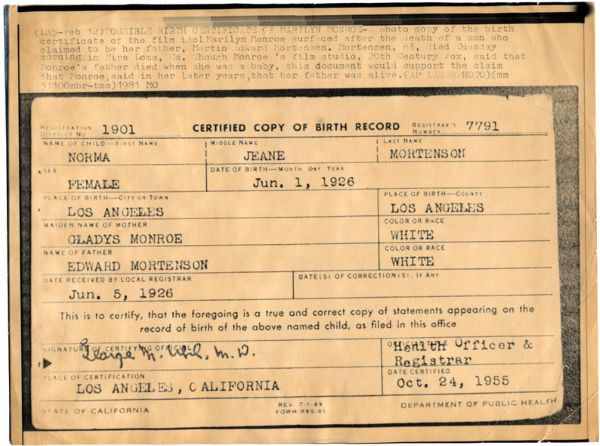
Civil registration became one of the most important tools in this transformation. The systematic recording of births, marriages, and deaths created a continuous bureaucratic account of individual existence, linking people to families, communities, legal status, and the state itself. Unlike a census, which captured a population at intervals, civil registration followed individuals across the life cycle, generating records that could be used for inheritance, citizenship, schooling, military service, public health, and welfare administration. These records helped states establish who existed, when they were born, whom they were connected to, and when they died. They also created durable links between personal identity and official documentation, making recognition increasingly dependent on the presence of a record rather than on local knowledge alone. Birth certificates, marriage records, and death registers became more than administrative conveniences; they became evidence through which individuals could claim rights, prove status, access services, or be held accountable to state requirements. Registration transformed identity into a documented sequence of official events, embedding the individual within a bureaucratic narrative that stretched from birth to death.
Property registration and cadastral surveys performed a similar function for land and households. By mapping territory, defining boundaries, and assigning ownership or tax responsibility, states converted local landscapes into administrative grids. Land that had been understood through custom, memory, seasonal use, or communal rights was increasingly represented through maps, titles, and fiscal categories. This made taxation and planning more efficient, but it also privileged forms of ownership that could be documented and recognized by the state. Those whose claims did not fit official categories could find themselves displaced, ignored, or rendered legally invisible. Legibility often produced winners and losers, especially when administrative clarity overrode local practice.
The same logic applied to language, occupation, ethnicity, religion, and household structure. Bureaucratic systems required people to be sorted into categories that could be tabulated and compared, even when those categories simplified identities that were plural, situational, or contested. A multilingual person might be assigned one “mother tongue,” a complex religious affiliation might be reduced to one label, and a flexible livelihood might be compressed into a single occupation. Household arrangements that varied by custom, migration, labor patterns, or kinship practice could be made to appear uniform through administrative definitions that privileged certain family structures over others. These classifications helped officials produce statistical order, but they also shaped the categories through which people came to be recognized. Once recorded, such labels could influence schooling, military service, taxation, legal status, welfare eligibility, and political representation, giving bureaucratic categories consequences far beyond the form on which they appeared. The state’s need for clarity could turn ambiguity into error, hybridity into suspicion, and fluid identity into fixed administrative fact.
The pursuit of legibility reveals both the power and danger of bureaucratic vision. By simplifying society, states gained the capacity to administer populations more efficiently, extend services, collect taxes, plan infrastructure, and impose law across wide territories. The simplifications that made governance possible could distort the realities they claimed to describe. Modern identification emerged from this tension: the state needed people to be visible, classifiable, and comparable, but human life rarely fit neatly into the categories designed to capture it. The result was a new form of power, one that did not merely rule over people but redefined them through the administrative systems that made them legible.
Classification and the Creation of Social Categories

Classification was one of the most powerful consequences of modern identification because it did more than arrange information; it helped create the social categories it claimed merely to record. When states asked people to identify by race, ethnicity, caste, tribe, religion, language, nationality, occupation, or household position, they converted complex and often fluid forms of belonging into fixed administrative labels. These labels appeared as neutral descriptors within census schedules and official registers, but they carried the authority of the state. Once recorded, tabulated, and repeated, categories acquired durability, becoming part of how institutions recognized people and how people understood their place within society.
This process was especially significant because identities rarely existed in the stable, bounded form preferred by bureaucracy. Many communities understood belonging through overlapping ties of kinship, region, livelihood, religion, language, and political allegiance, none of which could always be reduced to a single official category. A person might speak multiple languages, participate in more than one cultural world, hold a shifting occupational role, or identify differently depending on context. State classification systems struggled with this ambiguity, often resolving it by forcing people into singular categories that could be entered into tables, compared across regions, and used for administrative decisions. They converted identities that had been negotiated through everyday life into identities that appeared fixed because they were officially recorded. The result was not simply simplification but transformation, as administrative necessity turned flexible identities into standardized forms and gave those forms a power that extended beyond the moment of enumeration.
Once official categories existed, they began to shape social and political life beyond the census itself. Groups that were named by the state could mobilize around recognition, claiming rights, representation, resources, or protection on the basis of their official status. Groups that were omitted, merged with others, or classified in derogatory terms could find themselves marginalized or made invisible. Classification created incentives for political organization, as communities learned that being counted in a particular way could affect access to power. Official recognition could become a basis for collective identity, while exclusion from recognized categories could become a source of grievance and mobilization. The state’s categories could influence how communities described themselves, how they made claims against authority, and how they competed with other groups for resources or legitimacy. Census categories did not merely reflect identity politics; they helped produce the terrain on which identity politics developed.
The creation of social categories was also deeply connected to hierarchy. States rarely classified populations without ranking them, implicitly or explicitly, according to assumptions about civilization, productivity, loyalty, morality, race, or fitness for citizenship. Occupational categories could distinguish productive from dependent populations; racial categories could define rights and exclusions; colonial categories could separate rulers from subjects; and national categories could mark insiders and outsiders. Even when classification appeared descriptive, it often carried judgments about value and belonging. The administrative act of naming could become a mechanism for sorting people into unequal political and social positions.
The authority of classification was strengthened by repetition. A category appearing once on a census form might seem minor, but when repeated across censuses, schools, courts, welfare offices, military records, police files, immigration documents, and employment systems, it became embedded in everyday life. People encountered their official identities in paperwork, law, institutions, and public debate, gradually learning to navigate the categories through which the state saw them. This repetition gave bureaucratic classifications a kind of social reality, making them difficult to escape even when they poorly matched lived experience. The state’s categories became part of the social world they claimed only to describe.
The birth of modern identification involved a profound act of social construction. Classification made populations governable by dividing them into recognizable groups, but it also altered the meaning of identity itself. It transformed belonging into evidence, difference into data, and social complexity into administrative order. This process could enable recognition and collective claims, but it could also harden divisions, legitimize inequality, and make exclusion appear natural or objective. It also created lasting administrative habits, as later institutions inherited categories first developed for census-taking, policing, taxation, colonial rule, or welfare management. Once embedded in bureaucracy, these classifications could persist long after the original political or administrative reason for their creation had faded. The history of classification reveals that the power to count was inseparable from the power to name, and the power to name was inseparable from the power to govern.
Nation-State Building: Census, Language, and National Identity

The rise of modern identification was closely tied to the rise of the nation-state, which required not only territory and administration but a population that could be imagined as a coherent national community. Censuses helped create this imagined unity by translating diverse peoples, dialects, regions, and local affiliations into national categories. Through enumeration, states could represent themselves as possessing a defined people with measurable characteristics, geographic distribution, and shared political significance. The census did not merely count those who already understood themselves as members of a nation; it helped produce the national population as an object of knowledge, policy, and identity.
Language became one of the most important categories in this process because it appeared to offer a measurable sign of national belonging. In multilingual societies, census questions about mother tongue, spoken language, or official language could turn linguistic difference into political evidence. States could use such data to support claims about national unity, identify minorities, justify schooling policies, or strengthen demands over contested territories. Yet language was rarely as simple as census categories suggested. Many people lived in bilingual or multilingual environments, spoke dialects that did not fit official classifications, or shifted language use depending on family, market, school, or administration. By forcing linguistic identity into fixed categories, censuses helped transform flexible practices into political boundaries.
National identity was also shaped through the connection between enumeration and representation. Population statistics could determine electoral districts, parliamentary seats, taxation claims, military obligations, and public investment, making demographic numbers central to political legitimacy. A group that could be counted as part of the nation could claim recognition and resources, while a group classified as foreign, minority, colonial, or marginal could be treated as administratively separate. The census helped define not only who lived within a state but who belonged to it. These distinctions mattered because modern citizenship increasingly depended on documentary and statistical recognition, linking political membership to categories that could be recorded and verified. When demographic data became the basis for public policy, the act of classification shaped how communities were represented in law, administration, and public imagination. National identity was not simply inherited or expressed; it was organized through the categories by which the state recorded its population.
The relationship between census and nation-building was especially powerful in states seeking to integrate regional diversity into a centralized political order. Schools, conscription, civil registration, standardized maps, official languages, and national statistics worked together to reshape local identities into national ones. The state’s bureaucratic vision encouraged people to understand themselves through categories that could be counted, mapped, and governed from the center. This did not mean that local loyalties disappeared, but it did mean they were increasingly interpreted through national frameworks. The repeated experience of being classified, educated, taxed, conscripted, and represented as part of a national population helped make the nation feel administratively real.
Yet this process carried deep tensions. The same systems that strengthened national unity could also expose and sharpen divisions within the state. By naming minorities, mapping linguistic boundaries, and measuring demographic strength, censuses could turn difference into a political claim or a perceived threat. National identity became both inclusive and exclusionary, capable of binding people together while marking others as not fully belonging. The census played a central role in the modern politics of identity, transforming population into nation while also revealing the conflicts embedded in that transformation.
Colonial Enumeration: Race, Caste, Tribe, and Imperial Control
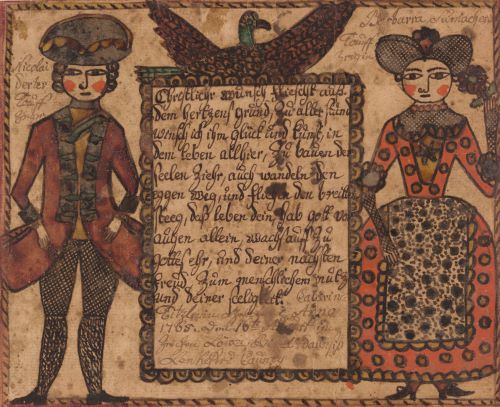
Colonial enumeration gave the modern census one of its most coercive and consequential forms. In imperial settings, counting was rarely limited to demographic description; it was a technique of rule used to divide, rank, and manage subject populations. Colonial officials faced societies whose languages, kinship structures, religious practices, political loyalties, and forms of authority often did not fit European administrative expectations. The census offered a way to impose order on this complexity by translating local identities into categories that could be recorded, compared, taxed, policed, and governed. Colonial identification did not simply make populations visible to imperial power; it reorganized them through the categories that empire needed to rule.
British India became one of the most important examples of this process, particularly through the classification of caste, religion, language, and tribe. Colonial administrators did not invent social difference, but they often hardened and systematized distinctions that had previously operated with greater regional variation and contextual flexibility. By requiring people to be counted within official categories, the colonial state transformed fluid and locally negotiated identities into entries in administrative tables. Caste became a field of bureaucratic knowledge, as officials attempted to rank, define, and organize communities according to schemes that reflected both Indian social realities and British assumptions about hierarchy. The resulting classifications carried consequences far beyond the census, shaping recruitment, legal administration, political representation, and access to resources.
The classification of “tribe” in colonial contexts followed a similar logic, especially in regions of Africa and Asia where imperial authorities sought to identify stable units of governance. Colonial officials often treated communities as bounded ethnic or tribal groups with fixed customs, territories, and leaders, even when local identities were more flexible, overlapping, or politically contingent. This practice made indirect rule easier by allowing colonial administrations to govern through recognized chiefs or officially designated authorities. Yet it also reshaped local politics by empowering some leaders, marginalizing others, and turning administrative categories into claims about authenticity and tradition. What appeared as ethnographic description often became a tool for restructuring power.
Race occupied an especially central place in settler and imperial systems of enumeration. Colonial censuses distinguished Europeans from Indigenous peoples, enslaved or formerly enslaved populations, mixed communities, migrant laborers, and other groups whose status was tied to the racial logic of empire. These classifications helped determine rights, mobility, taxation, labor obligations, land access, and legal standing. In many colonial settings, racial enumeration gave bureaucratic form to inequality, making hierarchy appear as an administrative fact rather than a political choice. By recording racial difference as though it were stable and self-evident, colonial states naturalized distinctions that served imperial authority and settler privilege.
Colonial enumeration also shaped how subject populations understood and mobilized around identity. Once categories appeared in censuses, legal records, schools, employment systems, and political reforms, they could become the basis for collective claims. Communities sometimes adapted to official categories strategically, seeking recognition, protection, representation, or advantage within the colonial system. Others resisted or contested classifications that misrepresented them or subordinated them to rival groups. These responses reveal that colonial classification was never simply received passively; it entered into local politics, social rivalries, and struggles over status. Groups learned that the way they were counted could affect taxation, land rights, access to education, labor obligations, or eligibility for political representation, making census categories matters of direct practical consequence. In some cases, communities petitioned to be renamed, reclassified, or ranked differently, demonstrating how bureaucratic labels could become objects of organized political action. This reveals the double nature of colonial identification: it was imposed from above, but it also became a field of negotiation from below. The census created categories of control, but those categories could also become tools through which colonized people made claims against the state.
The legacy of colonial enumeration endured long after formal empire. Categories produced for administrative convenience or imperial control often survived into postcolonial politics, shaping debates over representation, rights, minority status, land, citizenship, and national belonging. The colonial census illustrates the broader argument of modern identification with particular force: classification does not merely describe society; it intervenes in society, organizing people into durable political forms. In colonial contexts, this power was intensified by domination, as the state’s authority to count was inseparable from its authority to rule. The result was a lasting transformation of identity, in which race, caste, tribe, and ethnicity became not only social realities but bureaucratic facts with profound political consequences.
Race and Enumeration in the United States
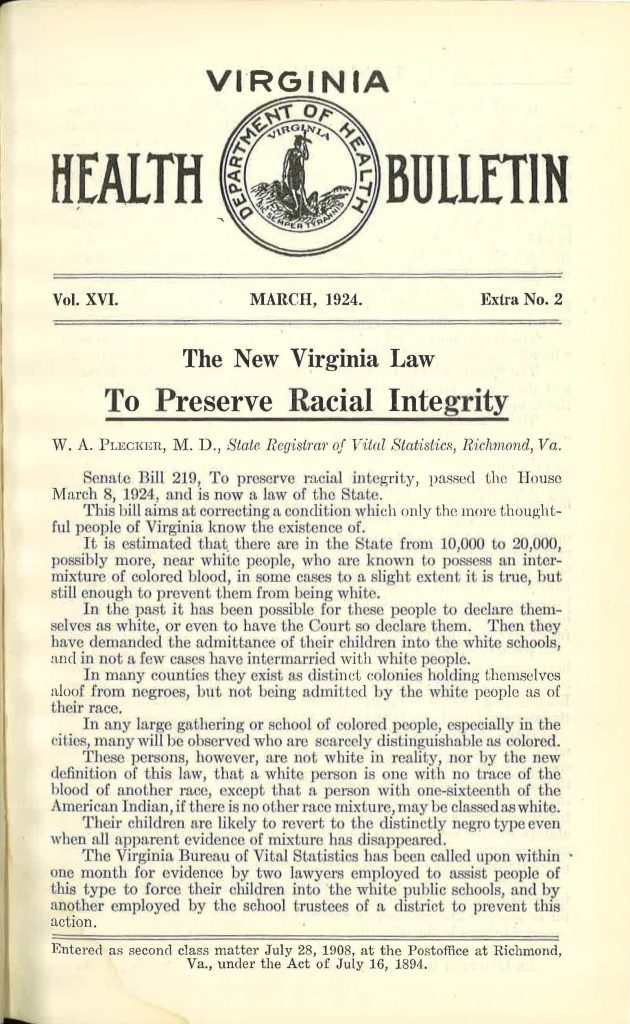
In the United States, enumeration was central to the construction of political power from the founding of the republic. The federal census, mandated by the Constitution, was not merely a mechanism for counting inhabitants but a tool for allocating representation, taxation, and authority among states. From its beginning, the census counted people through racial and legal distinctions that reflected the structure of slavery and citizenship. The infamous Three-Fifths Clause tied enumeration directly to political power by allowing enslaved people to increase southern representation while denying them political rights. This arrangement revealed the central contradiction of American enumeration: the state counted Black people as population while excluding them from full personhood and citizenship.
The early censuses made racial classification part of the machinery of federal governance. Categories distinguishing free white persons, enslaved people, and free people of color did not simply describe social reality; they organized it through official recognition. These categories shaped representation in Congress, taxation debates, and the balance of political power between slaveholding and non-slaveholding states. The census became a site where race, law, and political economy converged. To be counted in a particular category was to be placed within a legal and social order that determined rights, vulnerability, and access to power. Racial enumeration helped make hierarchy administratively visible and politically actionable.
As the nineteenth century progressed, census categories became more elaborate, reflecting the state’s growing interest in racial classification and the ideology of racial hierarchy. Terms such as “mulatto,” and later more granular labels in some census contexts, attempted to divide populations according to supposed degrees of ancestry. These classifications were not neutral demographic tools but expressions of a society preoccupied with racial boundary-making. They gave bureaucratic form to ideas about blood, descent, status, and social order, translating racial ideology into official data. The increasing specificity of racial categories also reflected broader anxieties about slavery, emancipation, migration, citizenship, and the maintenance of social boundaries in a changing society. By assigning people to categories that appeared measurable and official, the census gave racial thinking a veneer of administrative objectivity, even as those categories remained unstable and politically constructed. The census thereby helped normalize the assumption that race was a stable, measurable attribute, even though racial categories shifted over time according to political needs, social anxieties, and administrative decisions.
After the Civil War, enumeration took on new significance in the context of emancipation, citizenship, and Reconstruction. Formerly enslaved people entered federal records as free persons, and the census became one of the ways the state documented the transformation of legal status. Yet formal emancipation did not eliminate the racial logic embedded in American governance. Census categories continued to mark racial difference, while political struggles over representation, voting rights, segregation, and labor continued to shape the meaning of being counted. The same state that recognized Black freedom through law also recorded race in ways that could sustain systems of exclusion. Enumeration could serve both recognition and control, depending on how the resulting categories were used.
Immigration and the expansion of the United States further complicated the relationship between race and enumeration. As the country incorporated Indigenous peoples, Mexican Americans, Asian immigrants, and new European immigrant groups into its political and administrative systems, census categories became tools for defining belonging and exclusion. Native peoples were counted inconsistently for much of the nineteenth century, often reflecting their contested relationship to federal authority, sovereignty, and citizenship. Chinese immigrants and other Asian populations were classified within a broader climate of exclusion and restriction, while debates over whiteness shaped the status of European immigrants and Mexican-origin populations. The census did not merely record these distinctions; it participated in the national argument over who counted as American, who could belong, and who remained outside the full boundaries of citizenship.
The history of race and enumeration in the United States shows how counting can become a powerful instrument of hierarchy. Census categories helped allocate representation, define legal status, reinforce racial boundaries, and provide administrative language for inequality. Enumeration could also create visibility that later supported claims for rights, recognition, and redress. This double character has made the census both a tool of domination and a field of political struggle. In the American case, race was not simply measured by the state; it was repeatedly produced, revised, and contested through the categories by which the state chose to count its people.
Identification Documents: Passports, Papers, and the Individual as a File
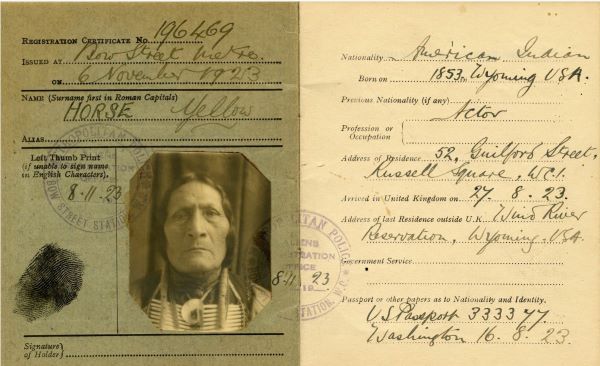
As modern states expanded their administrative reach, identification increasingly moved from collective enumeration toward individual documentation. The census classified populations in aggregate, but passports, internal papers, residence permits, birth certificates, police files, and work documents made identity portable, inspectable, and tied to specific persons. This shift changed the meaning of recognition. Individuals were no longer identified only by local reputation, community standing, or household membership; they were increasingly required to prove who they were through documents issued, recognized, or demanded by the state. Identity became less a matter of being known and more a matter of being recorded.
Passports illustrate this transformation with particular clarity. Although documents authorizing travel existed long before the modern era, the nineteenth and early twentieth centuries saw the gradual consolidation of passport systems as tools of border control, citizenship, and state surveillance. As migration increased and states became more concerned with security, labor movement, and national belonging, the passport became a mechanism for linking the individual body to an official legal identity. It did not simply permit movement; it made movement conditional upon documentation. The traveler became legible through name, nationality, age, physical description, signature, and, eventually, photograph, allowing authorities to distinguish legitimate mobility from suspicious movement. Passports also helped states define the boundary between citizen and foreigner, making mobility dependent on legal belonging as well as administrative recognition. The document transformed travel from a personal or commercial act into a regulated encounter with state authority, where the right to cross borders increasingly depended on the ability to present an acceptable bureaucratic self.
Internal documentation systems followed a similar logic. Residence permits, work papers, poor relief records, police registers, and civil certificates helped states track people within their own territories as well as across borders. These documents were especially important for populations considered mobile, marginal, dependent, or potentially dangerous, including migrants, vagrants, laborers, criminal suspects, political radicals, colonial subjects, and refugees. The demand for papers created a new administrative relationship between the individual and the state, one in which rights, movement, employment, assistance, and legal recognition could depend on possession of the proper document. To lack papers was increasingly to become vulnerable, not because one did not exist, but because one could not prove existence in the required bureaucratic form.
This development also transformed the individual into what might be called a file. A person’s identity could be assembled from multiple records: birth registration, marriage certificate, employment history, military service, criminal record, tax file, immigration document, school record, and welfare application. Each document captured only part of a life, yet together they produced an administrative profile that could follow an individual across institutions. The file made identity cumulative, preserving traces of past actions and statuses that could shape future opportunities. It enabled continuity and accountability, but it also created new forms of dependency on bureaucratic accuracy, since errors, omissions, or hostile classifications could become durable obstacles. A mistaken name, incorrect age, disputed birthplace, missing certificate, or adverse police notation could travel through institutions and affect employment, movement, access to relief, or claims to citizenship. The file did not merely record identity; it participated in producing the administrative reality through which a person was recognized, trusted, questioned, or excluded.
The expansion of personal documentation carried both enabling and disciplinary consequences. Documents could protect rights, confirm citizenship, secure inheritance, support claims to public assistance, and make individuals visible to systems of welfare and legal recognition. Documentation could restrict movement, expose people to surveillance, mark them as undesirable, or separate those entitled to protection from those excluded from it. The same certificate that allowed one person to claim a right could be used to deny another person access. Modern papers operated within the central paradox of identification: they could empower individuals by recognizing them, while also subjecting them to deeper forms of administrative control.
By the early twentieth century, the individual as a documented subject had become a defining feature of modern governance. States increasingly expected people to carry, produce, or be traceable through official records, making identity something that could be inspected and verified beyond the local community. This did not eliminate older forms of recognition, but it subordinated them to documentary proof. The modern person became legible not only as part of a counted population but as a distinct administrative object, attached to papers, records, and files. In this shift, identification became more precise, more portable, and more powerful, turning the state’s knowledge of individuals into a central instrument of citizenship, mobility, surveillance, and control.
Policing, Crime, and the Biometric Turn

Policing accelerated the development of modern identification by making the problem of individual recognition urgent and practical. As cities expanded, populations became more mobile, and criminal justice systems grew more bureaucratic, authorities increasingly needed methods for distinguishing one person from another beyond name, reputation, or local knowledge. Repeat offenders, aliases, forged papers, and movement across jurisdictions exposed the weakness of older systems of recognition. Police departments required techniques that could attach identity to the body itself, creating records that would remain stable even when individuals changed names, moved locations, or attempted to evade detection. Criminal identification became one of the most important laboratories for the modern state’s effort to make persons permanently legible.
Photography played a crucial role in this transformation. The police photograph, especially the mug shot, turned the face into an administrative object that could be stored, compared, and circulated. Unlike written descriptions, which were often vague or inconsistent, photographs appeared to offer a direct visual record of the individual. Yet even this apparent objectivity depended on systems of classification, filing, and interpretation. A photograph had value only if it could be organized, retrieved, and matched to a person or record. Police photography did more than capture appearance; it helped produce a new form of identity in which the body became part of a bureaucratic archive. The face, once recognized primarily by acquaintances, could now be preserved as evidence for institutions.
Anthropometry represented an even more systematic attempt to fix identity through bodily measurement. Developed by Alphonse Bertillon in late nineteenth-century France, the Bertillon system used measurements of the head, limbs, and other physical features, combined with photographs and descriptive records, to identify individuals believed to have prior criminal histories. Its appeal lay in the promise that the body could provide stable, measurable markers of identity that were less vulnerable to deception than names or documents. Measurements could be entered into files, sorted according to standardized categories, and compared against existing records, giving police a method for identifying repeat offenders across time and place. The system reflected the broader nineteenth-century confidence in measurement, classification, and scientific administration, especially the belief that social problems could be managed through precise observation and ordered data. It also revealed the danger of that confidence, since bodily data could be treated as objective while still being embedded in social assumptions about criminality, deviance, and the populations most subject to police scrutiny. The body became not merely evidence but a field of administrative interpretation, read through categories that claimed neutrality while serving the needs of policing and social control.
Fingerprinting eventually displaced anthropometry because it was simpler, more reliable, and easier to standardize across institutions. By the early twentieth century, fingerprints had become central to criminal identification in Britain, India, the United States, and elsewhere, offering a method that appeared to bind identity to the body with unprecedented precision. The fingerprint could be recorded, classified, stored, and compared, making it an ideal tool for bureaucratic policing. Its spread also reflected imperial and administrative networks, as techniques developed or refined in colonial contexts moved into metropolitan policing. The biometric turn was not merely a technological development but part of a wider system of state and imperial knowledge, linking bodies, records, and authority across vast administrative spaces.
The biometric turn marked a critical stage in the history of identification because it shifted the basis of recognition from social knowledge to bodily evidence. Names could be changed, documents forged, and reputations obscured, but fingerprints, measurements, and photographs promised a more durable connection between person and record. These techniques strengthened policing and helped solve genuine problems of fraud and misidentification, but they also expanded the state’s capacity to surveil, archive, and classify individuals. Criminal identification normalized the idea that identity could be extracted from the body, stored in files, and used by institutions to make judgments about a person’s past and future. The path from census categories to biometric records reveals a deepening logic of modern identification: the state did not only count populations; it learned to read bodies.
Welfare, Public Health, and Social Regulation
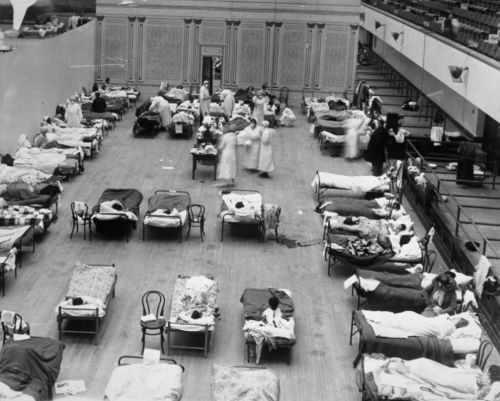
The expansion of identification systems was not driven solely by policing, taxation, or surveillance; it was also shaped by the growth of welfare, public health, labor regulation, and social administration. As modern states assumed greater responsibility for the well-being of their populations, they needed more reliable ways to determine who was entitled to assistance, who was subject to regulation, and how public resources should be distributed. Poor relief, pensions, schooling, vaccination campaigns, housing reform, workplace inspection, and public health programs all required forms of registration and classification that could connect individuals to administrative systems. Identification became a practical tool for delivering benefits and managing risk, linking the expansion of state responsibility to the expansion of state knowledge.
This development reveals the double character of modern identification with particular clarity. On one hand, documentation and registration could protect vulnerable people by establishing claims to aid, confirming eligibility, and making needs visible to public authorities. Birth records could support access to schooling or inheritance; residence records could determine eligibility for poor relief; health registers could help track disease and coordinate public intervention. These systems could make people visible in ways that expanded access to rights and services, especially for those who might otherwise be ignored by informal or local forms of authority. On the other hand, the same systems could be used to distinguish the deserving from the undeserving, the healthy from the diseased, the settled from the mobile, and the compliant from the troublesome. Welfare administration often required moral and behavioral judgments, meaning that identification did not merely record need but helped define which forms of need were legitimate. The result was a system in which recognition and discipline were closely linked, as the ability to receive assistance often depended on being classified correctly and behaving in ways that satisfied administrative expectations.
Public health strengthened this connection between identification and regulation. Epidemics, urban crowding, sanitation crises, and industrial hazards encouraged states and municipalities to gather information about births, deaths, disease, housing, occupation, and movement. Statistical knowledge made patterns of illness visible and enabled collective responses that would have been impossible through local observation alone. Yet health administration also expanded the authority of the state over bodies and households, especially when disease control required inspection, quarantine, vaccination, or compulsory reporting. The population became both an object of care and a field of intervention, governed through records that connected individual lives to collective risk.
By the early twentieth century, welfare and public health had helped normalize the idea that modern governance required continuous information about individuals and populations. Identification systems could make rights more accessible and public administration more effective, but they also deepened the state’s capacity to monitor behavior, classify dependency, and regulate everyday life. The same bureaucratic tools that allowed governments to protect life could also discipline those deemed disorderly, unproductive, or dangerous. This was one of the central paradoxes of the modern identification state: its humanitarian ambitions and its regulatory powers grew together, each depending on the ability to know, classify, and act upon the population.
The Interwar State: Registration, Surveillance, and the Road to 1939
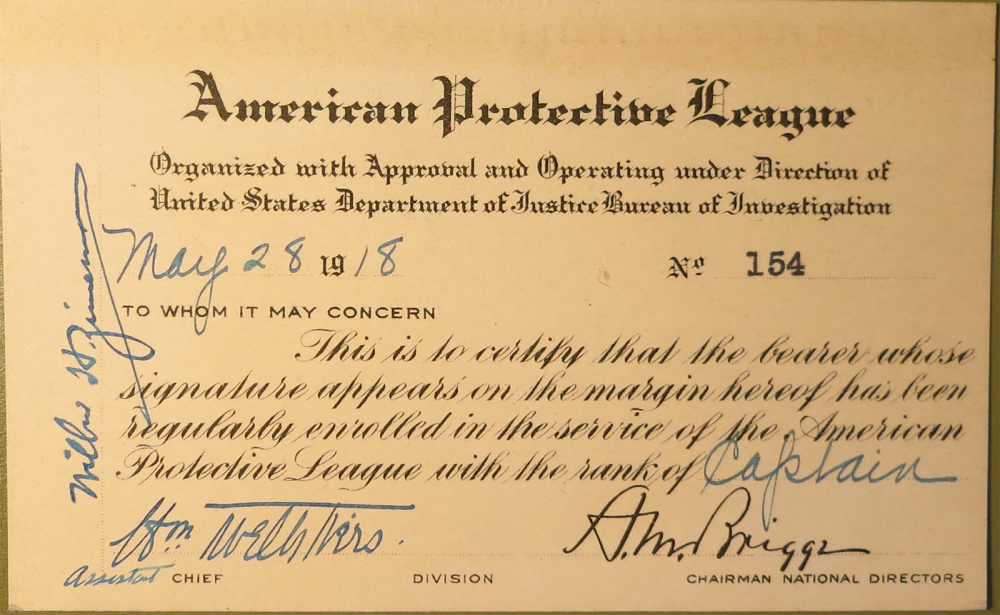
The interwar period marked a decisive acceleration in the history of identification, as the administrative practices developed during the nineteenth century were intensified by war, displacement, border control, and political instability. The First World War had expanded state authority over movement, labor, military service, rationing, policing, and citizenship, leaving behind bureaucratic habits that did not disappear with the return of peace. Governments increasingly treated identity as something that had to be documented, verified, and continuously managed. Registration became more than a tool of administration; it became a means of stabilizing political order in a world reshaped by collapsed empires, new states, mass migration, and ideological conflict.
Passports and border documents became especially important after the war. Before 1914, international movement had often been less tightly regulated, but wartime controls normalized the expectation that travelers should carry papers proving nationality, identity, and permission to cross borders. In the postwar settlement, new frontiers and new citizenship regimes made documentation even more central. Refugees, stateless persons, displaced minorities, and former imperial subjects often found themselves caught between legal categories, dependent on papers that could determine whether they were recognized, admitted, excluded, or left without protection. Documentation became a practical condition of survival as well as mobility, since the absence of recognized papers could leave people unable to cross borders, secure work, claim protection, or establish legal belonging. The passport became a practical symbol of modern state power, linking mobility to citizenship and making movement conditional on bureaucratic recognition. In a world of newly drawn boundaries and unstable political identities, papers increasingly determined whether a person could move through the international system or be trapped outside its protections.
The collapse of multinational empires also intensified the political importance of classification. New and reconfigured states faced populations divided by language, religion, ethnicity, nationality, and legal status, and administrative systems were used to sort these differences into official forms. Minority registration, citizenship laws, population statistics, and border controls became tools for defining who belonged within the nation and who remained suspect, foreign, or conditional. The interwar state was not simply counting people for administrative convenience; it was using registration to draw political boundaries within society. Identification helped transform populations unsettled by war into categories that could be governed, monitored, or excluded.
Surveillance expanded alongside these systems of registration. Police files, political watchlists, residence records, employment documents, and immigration controls allowed states to monitor individuals and groups considered dangerous or unstable. Labor radicals, ethnic minorities, migrants, refugees, political opponents, and suspected criminals were often subject to intensified scrutiny. The growth of authoritarian and fascist movements gave this tendency especially severe consequences, as identification systems could be turned toward ideological policing and exclusion. Records that might once have served routine administrative purposes could be repurposed for repression when political conditions changed. The danger lay not only in the existence of data but in the capacity of the state to connect records, categories, and coercive power. Once linked across police, welfare, border, employment, and citizenship systems, administrative information could follow individuals through multiple institutions, narrowing the space for anonymity or escape. Surveillance in this period depended not only on secret policing but on the ordinary paperwork of modern governance, which made people easier to locate, classify, and act upon.
The interwar period also revealed how welfare, citizenship, and surveillance could become intertwined. States that expanded social programs needed to determine eligibility, residence, employment history, family status, and legal membership, while states concerned with internal security used similar records to monitor and discipline populations. The same documentary systems that helped people claim pensions, relief, housing, or employment protections could also expose them to exclusion or control. Identification became embedded in both the protective and punitive functions of the modern state. By making individuals more visible to administration, it made them more accessible to assistance, but also more vulnerable to inspection.
By 1939, the modern identification state had acquired tools far more powerful than those available a century earlier. Censuses, civil registers, passports, police files, biometric records, welfare documents, and minority classifications had produced a dense administrative environment in which individuals and groups could be traced, sorted, and acted upon with growing precision. These systems did not determine the catastrophes that followed, but they helped create the bureaucratic capacity through which modern states could organize inclusion, exclusion, protection, surveillance, and persecution. The road to 1939 demonstrates that identification was never merely technical. It was a structure of power, capable of serving ordinary governance in one moment and coercive state violence in another.
The Political Consequences of Classification
The political consequences of classification emerged from the fact that official categories did not remain confined to forms, tables, and administrative reports. Once states named groups, counted them, and attached legal or political significance to their numbers, classification became part of the struggle over power itself. Categories could determine representation, resource distribution, eligibility for rights, exposure to regulation, and recognition within the state. What appeared as a technical act of enumeration could become a political act with lasting consequences, shaping how communities understood themselves and how they were positioned within systems of authority.
Official recognition could empower groups by making them visible within state structures. A community counted as a distinct language group, religious minority, racial category, caste, tribe, or nationality could use that recognition to demand schools, representation, protections, land claims, welfare benefits, or political autonomy. Numbers gave political claims a new kind of force, allowing groups to argue not only from tradition or moral right but from demographic evidence. Once a category appeared in official records, it could become a platform for collective action, giving communities a recognized vocabulary through which to address the state. The census and related systems of identification helped create the conditions for modern identity politics, as communities learned to organize around the categories through which the state already saw them. Classification could convert administrative visibility into political leverage, making the act of being counted an important step toward claiming authority, recognition, and material support.
Classification could produce competition between groups. When political power, representation, or resources were tied to official categories, demographic numbers became stakes in broader struggles over recognition and advantage. Groups could contest how they were named, who belonged within their boundaries, and whether they should be counted separately or merged with others. These disputes reveal that classification was never merely descriptive. It created incentives for communities to define themselves strategically, sometimes emphasizing difference to secure recognition, or stressing unity to increase political weight. The administrative category became a political arena.
Those excluded from official categories faced a different but equally consequential problem. People who did not fit recognized classifications could become invisible to policy, denied resources, or treated as exceptions to the normal order of citizenship. Ambiguous identities, mixed affiliations, mobile populations, stateless persons, and communities whose social organization did not match bureaucratic expectations were especially vulnerable. To be uncounted, mislabeled, or placed in an inferior category could weaken claims to rights and expose people to heightened control. Classification shaped not only inclusion but exclusion, determining whose existence was administratively meaningful and whose remained marginal.
The political consequences of classification reveal the deeper power of modern identification systems. By naming groups, assigning them numbers, and embedding them within law and administration, states helped structure the field of political possibility. Classification could enable recognition, mobilization, and reform, but it could also harden divisions, produce rivalry, and legitimize inequality. Categories that began as administrative tools could become enduring political identities, shaping institutions, movements, and conflicts long after their original bureaucratic purpose had faded. The categories created to simplify governance became tools through which people claimed power, resisted authority, and contested their place in society. Modern identity politics did not arise outside the state’s classificatory systems; it was often shaped within them, as people learned to speak the language of the categories that governed them.
The Limits and Dangers of Legibility
The following video from “Professor Dave Explains” covers fingerprinting history:
The effort to make society legible gave modern states extraordinary administrative power, but it also revealed the dangers of reducing human life to simplified categories. Legibility required abstraction: names had to be standardized, addresses fixed, occupations labeled, identities classified, and populations arranged into tables that could be compared and acted upon. These processes made taxation, public health, welfare, policing, schooling, and representation more efficient, but they also stripped away the complexity of lived experience. The administrative need for clarity often favored what could be easily recorded over what was socially meaningful, privileging fixed categories over relationships, movement, ambiguity, and local knowledge. A person or community could be rendered visible in one sense while being misunderstood in another, because the state’s version of recognition depended on what its forms, offices, and statistical systems were prepared to see. People whose identities, livelihoods, or communities did not fit the available categories could be misread by the state, not because they were unknowable, but because bureaucratic systems were designed to recognize only certain kinds of information.
The danger was especially acute when administrative simplification became fused with coercive power. A census category, identity document, police file, or racial classification did not merely describe a person; it could shape where they could live, whether they could move, what rights they could claim, and how they were treated by institutions. Errors and biases in classification could become materially consequential, turning paperwork into a mechanism of exclusion or control. The more dependent individuals became on official recognition, the more vulnerable they became to the consequences of being mislabeled, omitted, or placed in a stigmatized category. Bureaucratic legibility promised order, but it also created new forms of dependency on systems that could be inaccurate, biased, or deliberately oppressive.
Legibility also encouraged states to mistake administrative categories for social reality. Because standardized records made society appear orderly, comparable, and measurable, officials could come to treat the simplified version as more authoritative than the people and communities it supposedly represented. Fluid identities became fixed labels, informal economies became irregularities, communal land claims became legal ambiguities, and cultural hybridity became administrative confusion. This tendency was particularly dangerous in colonial and racial contexts, where classifications often hardened hierarchy and gave inequality the appearance of objective fact. Once embedded in law, schools, welfare offices, police systems, and political representation, these categories could persist long after their original purpose had faded.
The limits of legibility lie in the gap between human complexity and bureaucratic vision. Modern identification systems made states more capable, but not necessarily more just. They enabled recognition, planning, and public administration, yet they also expanded the reach of surveillance, exclusion, and coercion. The central danger was not that states counted people, but that they claimed the authority to define what counted about people. In that authority rested the power to recognize, erase, rank, discipline, and govern, making legibility one of the defining achievements and defining hazards of modern statecraft.
Conclusion: The State’s Mirror and the People It Made
Between roughly 1800 and 1939, modern states transformed identification from a patchwork of local records into a central instrument of governance. Censuses, civil registers, passports, police files, biometric systems, welfare records, and racial classifications allowed states to see populations with unprecedented reach and precision. These systems did not merely gather information; they reorganized social reality into categories that could be counted, compared, administered, and acted upon. The modern population became visible through the state’s mirror, but that mirror did not simply reflect society as it was. It framed, simplified, and reshaped the people it claimed to describe.
This transformation brought genuine administrative power and practical benefit. Identification systems helped states allocate resources, organize representation, manage public health, regulate labor, protect legal rights, and deliver forms of welfare that depended on knowing who people were and where they belonged. Civil registration could secure inheritance or citizenship claims; census data could reveal poverty, disease, migration, or educational need; identity documents could confirm legal status and protect access to services. These systems also made large-scale public planning possible, allowing governments to identify needs that might otherwise remain invisible within fragmented local records. Population data could support the building of schools, hospitals, sanitation systems, housing programs, and public health responses, while personal documentation could give individuals evidence through which to claim recognition from the state. Yet these same systems also expanded surveillance, exclusion, coercion, and hierarchy. The tools that made populations legible enough to be assisted also made them legible enough to be disciplined, sorted, and controlled.
The central lesson of modern identification is that classification is never merely technical. Categories such as race, caste, tribe, language, nationality, occupation, and citizenship acquired power because they were embedded in institutions that governed real lives. They shaped representation, welfare, policing, mobility, belonging, and vulnerability. Once repeated across censuses, documents, schools, courts, borders, and administrative offices, these categories gained social force, influencing how communities understood themselves and how they were treated by others. The state’s classifications could recognize identity, but they could also harden difference, erase ambiguity, and make inequality appear natural.
The birth of identification reveals one of the defining paradoxes of modern statecraft: to govern populations, states first had to make them knowable, but the act of knowing them changed what they became. By counting, naming, documenting, and classifying people, modern states helped produce the social order they claimed only to measure. The legacy of this transformation remains visible in contemporary databases, biometric systems, digital identity platforms, facial recognition tools, and algorithmic classification. The question that emerged in the nineteenth century has not disappeared. It has become more urgent: who has the authority to name human identity, and what happens when being recognized by power becomes inseparable from being ruled by it?
Bibliography
Affiliate disclosure: Amazon links on this site are paid links. As an Amazon Associate I earn from qualifying purchases.
- Anderson, Benedict. Imagined Communities: Reflections on the Origin and Spread of Nationalism. Revised ed. London: Verso, 1983.
- Anderson, Margo J. The American Census: A Social History. 2nd ed. New Haven, CT: Yale University Press, 2015.
- Appadurai, Arjun. “Number in the Colonial Imagination.” In Orientalism and the Postcolonial Predicament: Perspectives on South Asia, edited by Carol A. Breckenridge and Peter van der Veer, 314–339. Philadelphia: University of Pennsylvania Press, 1993.
- Bowker, Geoffrey C., and Susan Leigh Star. Sorting Things Out: Classification and Its Consequences. Cambridge, MA: MIT Press, 1999.
- Breckenridge, Keith, and Simon Szreter, eds. Registration and Recognition: Documenting the Person in World History. Oxford: Oxford University Press, 2012.
- Caplan, Jane, and John Torpey, eds. Documenting Individual Identity: The Development of State Practices in the Modern World. Princeton, NJ: Princeton University Press, 2001.
- Cohn, Bernard. Colonialism and Its Forms of Knowledge. Princeton: Princeton University Press, 1996.
- Cole, Simon A. Suspect Identities: A History of Fingerprinting and Criminal Identification. Cambridge, MA: Harvard University Press, 2001.
- Desrosières, Alain. The Politics of Large Numbers: A History of Statistical Reasoning. Translated by Camille Naish. Cambridge, MA: Harvard University Press, 1998.
- Dirks, Nicholas B. Castes of Mind: Colonialism and the Making of Modern India. Princeton, NJ: Princeton University Press, 2001.
- Ewald, François. “Insurance and Risk.” In The Foucault Effect: Studies in Governmentality, edited by Graham Burchell, Colin Gordon, and Peter Miller, 197–210. Chicago: University of Chicago Press, 1991.
- Finn, Jonathan M. Capturing the Criminal Image: From Mug Shot to Surveillance Society. Minneapolis: University of Minnesota Press, 2009.
- Foucault, Michel. Security, Territory, Population: Lectures at the Collège de France, 1977–1978. Edited by Michel Senellart. Translated by Graham Burchell. New York: Palgrave Macmillan, 2004.
- Groebner, Valentin. Who Are You? Identification, Deception, and Surveillance in Early Modern Europe. Translated by Mark Kyburz and John Peck. New York: Zone Books, 2007.
- Hacking, Ian. The Taming of Chance. Cambridge: Cambridge University Press, 1990.
- Higgs, Edward. The Information State in England: The Central Collection of Information on Citizens since 1500. Basingstoke: Palgrave Macmillan, 2004.
- Hobsbawm, Eric. Nations and Nationalism since 1780. Cambridge: Cambridge University Press, 1990.
- Hochschild, Jennifer L., and Brenna Marea Powell. “Racial Reorganization and the United States Census 1850–1930: Mulattoes, Half-Breeds, Mixed Parentage, Hindoos, and the Mexican Race.” Studies in American Political Development 22:1 (2008), 59–96.
- Jenkins, Richard. Social Identity. 3rd ed. London: Routledge, 2008.
- Kertzer, David I., and Dominique Arel, eds. Census and Identity: The Politics of Race, Ethnicity, and Language in National Censuses. Cambridge: Cambridge University Press, 2002.
- Loveman, Mara. National Colors: Racial Classification and the State in Latin America. Oxford: Oxford University Press, 2014.
- Mamdani, Mahmood. Citizen and Subject: Contemporary Africa and the Legacy of Late Colonialism. Princeton, NJ: Princeton University Press, 1996.
- Marrus, Michael R. The Unwanted: European Refugees in the Twentieth Century. New York: Oxford University Press, 1985.
- Nobles, Melissa. Shades of Citizenship: Race and the Census in Modern Politics. Stanford, CA: Stanford University Press, 2000.
- Noiriel, Gérard. The French Melting Pot: Immigration, Citizenship, and National Identity. Translated by Geoffroy de Laforcade. Minneapolis: University of Minnesota Press, 1996.
- Patriarca, Silvana. Numbers and Nationhood: Writing Statistics in Nineteenth-Century Italy. Cambridge: Cambridge University Press, 1996.
- Porter, Dorothy. Health, Civilization and the State: A History of Public Health from Ancient to Modern Times. London: Routledge, 1999.
- Porter, Theodore M. Trust in Numbers: The Pursuit of Objectivity in Science and Public Life. Princeton, NJ: Princeton University Press, 1995.
- Schor, Paul. Counting Americans: How the US Census Classified the Nation. Translated by Lys Ann Weiss. Oxford: Oxford University Press, 2017.
- Scott, James C. Seeing Like a State: How Certain Schemes to Improve the Human Condition Have Failed. New Haven, CT: Yale University Press, 1998.
- Sekula, Allan. “The Body and the Archive.” October 39 (Winter 1986), 3–64.
- Skerry, Peter. Counting on the Census? Race, Group Identity, and the Evasion of Politics. Washington, DC: Brookings Institution Press, 2000.
- Szreter, Simon. “The Right of Registration: Development, Identity Registration, and Social Security: A Historical Perspective.” World Development 35:1 (2007), 67–86.
- Torpey, John. The Invention of the Passport: Surveillance, Citizenship and the State. Cambridge: Cambridge University Press, 2000.
- Weindling, Paul. Health, Race and German Politics between National Unification and Nazism, 1870–1945. Cambridge: Cambridge University Press, 1989.
Originally published by Brewminate, 05.06.2026, under the terms of a Creative Commons Attribution-NonCommercial-NoDerivatives 4.0 International license.
About the Author