Before refrigeration, medieval people used salt, smoke, drying, fermentation, cellars, and barrels to turn seasonal abundance into survival.

By Matthew A. McIntosh
Public Historian
Brewminate
Introduction: Food Before Refrigeration
Before refrigeration, food preservation was not a minor household convenience but one of the central technologies of survival. Medieval people lived inside a food year defined by ripening, slaughter, fasting, scarcity, spoilage, and storage. Harvest did not become security simply because grain had been cut, fruit had been gathered, or animals had been slaughtered. Food had to be dried, salted, smoked, fermented, sealed, buried, hung, cooled, guarded, counted, and watched. A failed harvest could bring hunger, but so could a leaking roof over stored grain, a damp cellar, a bad barrel, a contaminated sack of flour, or meat insufficiently cured before winter. The medieval problem was not only how to produce food, but how to stretch the brief abundance of one season across the long vulnerability of the next.
Modern habits can make this world difficult to see clearly. Refrigerators and freezers hide the environmental labor that once surrounded almost every form of food. Cold now appears as a switch, a sealed appliance, and a monthly electric bill; in the medieval world it was a condition to be found, built around, or imitated. A cellar used the earth’s thermal stability. A springhouse used moving water. A granary used elevation, dryness, and airflow. A smokehouse used heat, suspended meat, and controlled exposure. A salted fish barrel used mineral extraction, trade networks, and microbial inhibition long before anyone described it in such language. Medieval preservation joined architecture, climate, chemistry, ecology, labor, and custom into a practical system of delaying decay.
That system was never uniform. A coastal town, an upland village, a Mediterranean estate, a northern monastery, and an urban household all confronted different storage problems. Grain had to be protected from damp, rodents, insects, fire, and theft. Dairy had to be transformed quickly into butter or cheese. Meat often followed the seasonal rhythm of autumn slaughter, when animals that could not be fed through winter were killed, salted, smoked, or made into sausages. Fish became one of the great preserved foods of medieval Europe because fasting rules, urban demand, and long-distance trade turned herring, cod, stockfish, and salted fish into staples far beyond the shoreline. Fruit, herbs, legumes, cabbage, onions, garlic, wine, ale, vinegar, honey, oil, and cheese each belonged to its own preservation logic. Medieval storage was not one invention but a whole repertoire of techniques adjusted to place, status, season, and need.
Medieval food storage should be understood as a technological system, but not in the narrow modern sense of machinery or scientific theory. Medieval people did not understand bacteria, water activity, or pH in modern microbiological terms. Their knowledge was experiential, sensory, inherited, and often local: they knew what smelled wrong, what texture warned of danger, what cellar stayed cool, what brine was strong enough, what grain needed turning, what cheese could age, and what had to be eaten immediately. Their larders, cellars, barns, crocks, barrels, rafters, smokehouses, and granaries were not primitive substitutes for electricity. They were the material infrastructure through which medieval households, monasteries, armies, markets, and cities negotiated time itself, turning perishable abundance into survivable stores.
Ancient and Early Medieval Inheritance: Storage Before the Middle Ages

Medieval food storage did not begin as a medieval invention. It emerged from a long inheritance of ancient household practice, agricultural management, imperial logistics, monastic discipline, and local experimentation. Long before the castles, manor houses, village barns, and urban cellars of medieval Europe, ancient communities had already learned that food security depended on more than production. Grain had to be kept dry; wine and oil had to be stored in vessels that could survive transport; fish and meat had to be salted, dried, smoked, or otherwise transformed; fruit had to be dried or preserved; and surplus had to be protected from damp, insects, rodents, thieves, and war. The medieval larder, in other words, rested on older Mediterranean, Near Eastern, Roman, Germanic, Celtic, and monastic foundations. What changed was not the basic problem of perishability, but the social worlds in which storage occurred: the Roman estate gave way to the monastery, the villa to the manor, the imperial supply network to regional trade, and the ancient city to the medieval town.
The Roman world left one of the clearest institutional legacies. Roman agriculture depended heavily on granaries, barns, cellars, presses, storerooms, amphorae, barrels, pits, and estate-based storage. Writers such as Cato, Varro, Columella, and Palladius treated storage as part of proper agricultural management, not as an afterthought. Grain required dry and well-ventilated storage; wine needed vessels, cellars, and controlled handling; olives became oil that could be stored and traded; grapes became wine; fish could be salted into durable products; pork could be cured; fruit could be dried, boiled down, or kept in honey. Roman food systems were not “modern,” but they were deeply attentive to the conversion of seasonal abundance into stable supplies. Medieval people inherited many of these techniques directly in regions once governed by Rome and indirectly through texts, customs, monasteries, and material practice.
Late antiquity and the early Middle Ages did not simply preserve Roman habits unchanged. The political fragmentation of the western empire altered the scale and reliability of storage technologies. Long-distance trade contracted in some regions, expanded or continued in others, and local self-sufficiency became more important for many rural communities. Yet the basic preservation repertoire remained familiar: drying, salting, fermenting, smoking, brewing, cheesemaking, and careful grain storage. Early medieval households and estates depended on foods that could bridge the uncertain months between harvests: cereals, legumes, hard cheeses, ale, wine where available, salted pork, preserved fish, dried fruits, nuts, onions, garlic, and cabbage. In this world, preservation was not a specialized science separated from ordinary life. It was part of farming, cooking, animal husbandry, seasonal slaughter, brewing, baking, dairying, and estate management.
Monastic communities became especially important custodians of storage knowledge because they combined literacy, landholding, discipline, and institutional continuity. Monasteries required dependable food supplies for resident communities, guests, workers, dependents, travelers, and the poor, and they had to manage those supplies across both ordinary seasons and exceptional crises. They stored grain from their own lands and from rents or tithes, maintained barns and cellars, managed vineyards and orchards, brewed ale or beer, made cheese, preserved fish, kept fishponds, slaughtered livestock at seasonally appropriate moments, and organized the movement of food from field to kitchen to refectory. The monastic cellarer was not merely a keeper of provisions but a manager of survival, hospitality, discipline, and charity. His responsibilities joined accounting to ethics: he had to know what the community possessed, what could be spared, what had to be guarded, what would spoil first, and what must be held for winter, Lent, guests, or almsgiving. Benedictine rules and later monastic customs made food storage part of moral order: enough had to be kept, waste had to be avoided, fasting had to be observed, and hospitality had to be sustained. This gave preservation a spiritual as well as practical dimension. A well-managed cellar was not only evidence of administrative competence; it was a sign that the community had ordered material life according to discipline, moderation, and obligation. The monastery carried forward ancient storage practices while giving them a new institutional logic, one in which the preservation of food supported prayer, labor, charity, hierarchy, and the continuity of the house itself.
By the early medieval period, then, Europe possessed no single food storage system, but it did possess a broad inherited grammar of preservation. Mediterranean communities leaned heavily on oil, wine, vinegar, dried fruit, olives, legumes, salted fish, and sun-drying. Northern and upland communities relied more on grain barns, ale, dairy products, smoked meats, salted pork, dried peas and beans, root storage, and later intensified forms of fish preservation. Coastal regions turned the sea into a preserved food economy; inland estates turned fields, herds, orchards, and cellars into seasonal reserves. The medieval achievement was not the invention of preservation from nothing, but the adaptation of ancient and early medieval techniques to new climates, economies, institutions, and social hierarchies. Food storage before the Middle Ages gave medieval society its first great lesson in survival: abundance mattered only when it could be kept.
Grain, Granaries, and the Foundation of Survival
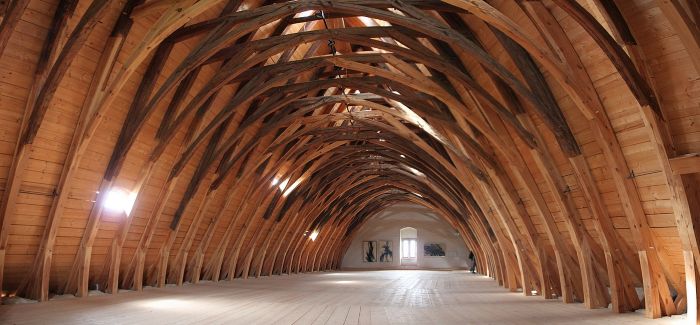
Grain stood at the center of medieval food security because it was the food most capable of becoming time. Meat spoiled quickly unless transformed, dairy demanded constant attention, fruit vanished with the season, and vegetables depended on weather, cellar space, and local custom. Grain, by contrast, could feed households for months or years if it was harvested well, dried properly, stored carefully, and defended from its many enemies. Wheat, rye, barley, oats, millet, spelt, and other cereals varied by region, soil, status, and climate, but the basic problem remained the same everywhere: grain had to be kept dry, ventilated, clean, and safe. Bread, pottage, ale, gruel, porridge, and animal fodder all depended on cereal storage. Medieval society did not merely eat grain; it organized labor, rent, taxation, charity, market regulation, and political obligation around it.
The first requirement of grain preservation was moisture control. Damp grain could heat, mold, sprout, rot, attract insects, or become dangerous to eat. Medieval farmers had to think about storage before storage began. Harvest timing mattered. Sheaves had to dry in the field or under cover. Threshing, winnowing, and cleaning separated edible grain from straw, chaff, weed seeds, dirt, and insects. Once stored, grain needed containers and buildings that encouraged dryness rather than trapped humidity. Barns, lofts, bins, sacks, chests, granaries, and tithe barns were all part of this system. Raised floors, stone footings, timber construction, tight roofing, airflow, and separation from damp ground were not decorative choices. They were preservation technologies. The granary was a machine without moving parts, using architecture to resist water, mold, pests, and loss.
Rodents, birds, insects, and thieves were as serious a problem as moisture. A medieval grain store was an invitation to every hungry creature in the neighborhood, human and nonhuman alike. Rats and mice could eat, foul, and scatter grain; insects could infest it; birds could invade exposed storage; and dishonest workers, neighbors, officials, or soldiers could turn stored food into private profit. This made storage a matter of surveillance as much as construction. Grain had to be counted, guarded, inspected, moved, and sometimes turned. Cats, traps, sealed bins, raised storage, locked doors, and household accounting all belonged to the politics of preservation. In larger estates and religious institutions, grain storage required a bureaucracy of measurement: bushels, quarters, rents, tithes, inventories, accounts, and allowances. To store grain was to create a record of obligation, because stored grain represented rent owed, wages paid, bread baked, ale brewed, animals fed, alms distributed, and seed reserved for the next planting.
The distinction between seed grain and food grain was especially important. A hungry household might be tempted to eat what should have been saved for sowing, but consuming seed threatened the future harvest and could turn one bad season into several. Estate managers, peasants, and monastic officers all had to balance immediate need against future production. This was one reason famine was never only a matter of weather. A poor harvest, badly stored grain, exhausted seed reserves, war damage, market manipulation, heavy rents, or transport failure could all intensify scarcity. Grain storage linked the household to the village, the village to the manor, the manor to the monastery or lordship, and the countryside to the town. Urban survival was especially dependent on stored and circulating grain. Towns did not feed themselves from their own streets; they relied on hinterlands, markets, mills, bakers, merchants, and authorities who tried, with varying success, to keep grain moving and bread available.
The granary was one of the quiet foundations of medieval civilization. It did not possess the drama of the feast, the symbolism of the Eucharistic loaf, or the sensory power of the kitchen hearth, but it made all of them possible. Stored grain became bread on ordinary tables, ale in cups, porridge in bowls, feed in mangers, seed in fields, rent in account rolls, and charity at monastery gates. Its failure could produce hunger, disease, unrest, migration, or revolt. Its success allowed households to plan, lords to collect, monks to feed, towns to grow, and armies to move. If medieval food preservation is understood as the art of delaying decay, grain storage was its central discipline: the long, anxious effort to keep the harvest alive until the earth could produce again.
Cellars, Caves, and Cool Earth: Architecture as Preservation Technology
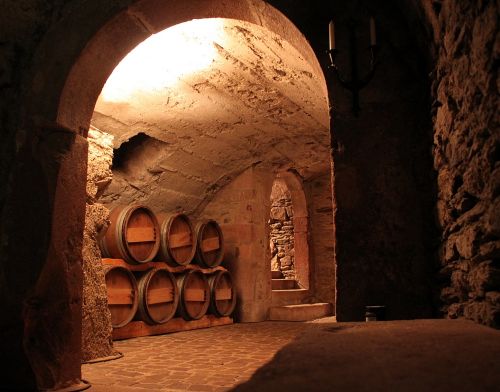
If the granary preserved food by keeping it dry, the cellar preserved food by borrowing time from the earth. Medieval people did not need thermometers to understand that underground and semi-underground spaces behaved differently from exposed rooms above ground. Beneath a house, hall, monastery, castle, shop, or storehouse, temperature shifted more slowly, light was reduced, air could remain cooler, and humidity could be steadier. These conditions did not stop decay, but they slowed it, moderated it, and made some foods more manageable across the year. A cellar was not merely a room below stairs. It was an architectural response to perishability, a space where soil, stone, darkness, shade, and thickness of wall became part of the food system.
Cellars varied widely in form and status. Some were simple pits, sunken rooms, or rough storage spaces beneath peasant or urban houses, shaped as much by local soil, water table, and building material as by any formal architectural plan. Others were vaulted undercrofts beneath elite residences, monasteries, taverns, merchants’ houses, and castles, built with stone, brick, timber, or packed earth in ways that moderated temperature and shielded provisions from sunlight and sudden weather changes. Caves, where available, offered naturally cool spaces that could be adapted for storage, aging, and protection, especially in regions where geology provided dry rock chambers or slopes that could be cut into usable rooms. Root cellars and earth-covered storage spaces helped keep turnips, onions, carrots, parsnips, beets, cabbages, apples, pears, and other hardy produce usable beyond the harvest season. Such spaces required careful management: too much damp invited mold and rot, too much dryness shriveled roots and fruit, too much warmth hastened decay, and too much freezing could destroy texture and usefulness. Straw, sand, wooden bins, shelves, baskets, crocks, and barrels helped separate foods from one another and from the wet floor, while regular inspection allowed households to remove spoiled items before they contaminated the rest. The aim was not freezing but stability: a cool, dark, protected space where stored foods did not swing wildly between heat and chill, wet and dry, exposure and frost. In northern climates especially, where winter could damage as well as preserve, the cellar helped protect food from both summer heat and winter extremes. In towns, where space was crowded and access to gardens or outbuildings could be limited, underground rooms also allowed shopkeepers, taverners, brewers, and householders to extend storage downward, turning the buried part of the building into an essential extension of the kitchen, pantry, and marketplace.
These cool spaces were especially important for foods that changed while being stored. Cheese needed air, time, and a tolerable environment in which to mature rather than spoil. Wine and ale needed cellars not only for storage but also for controlled keeping, racking, tapping, and service. Apples and pears could be stored carefully in cool spaces, sometimes separated or inspected to prevent one rotting fruit from damaging many others. Salted meat, fish, butter, lard, and other fats benefited from darkness and coolness, even when they had already been preserved by salt, curing, or rendering. Medieval preservation often layered techniques. A ham might be salted, smoked, and hung; cheese might be pressed, salted, aged, and kept cool; fish might be salted in a barrel stored below ground; fruit might be dried or preserved and then placed in a protected storeroom. The cellar was rarely a single-method solution. It was a multiplier that made other methods more reliable.
In elite and institutional settings, the cellar also became a place of office, hierarchy, and accounting. Great households and monasteries assigned responsibility for food and drink to specialized officers whose work depended on storage architecture. The cellarer, butler, pantler, larderer, cook, brewer, and steward all participated in a world where provisions had to be received, recorded, guarded, distributed, and replenished. Beneath the visible rituals of the hall lay an infrastructure of barrels, bins, racks, jars, crocks, salted stores, drink casks, cheeses, roots, fruits, and preserved meats. Castles required such spaces for ordinary residence, hospitality, military readiness, and siege. Monasteries required them for daily meals, fasting seasons, guests, laborers, and almsgiving. Urban merchants used cellars to hold wine, grain, salted fish, spices, oils, and other commodities moving through trade. In all these cases, the cellar was not simply domestic storage. It was an economic and administrative zone where architecture made provisioning governable.
The importance of cellars and caves also reminds us that medieval food technology was environmental before it was mechanical. Preservation depended on knowing where coolness lived: under the ground, beside a spring, inside thick masonry, beneath shade, in a north-facing room, below a merchant’s shop, or within a natural cave. This knowledge was practical rather than theoretical, accumulated through repeated use, local memory, household instruction, and institutional recordkeeping. Yet its effects were technological in the fullest sense. Medieval people shaped built spaces to control heat, damp, light, air, pests, access, and time. The cellar transformed earth into storage, darkness into protection, and architecture into a quiet form of refrigeration before refrigeration existed.
Ice, Snow, and Seasonal Cold: Elite Refrigeration Before Electricity

Ice and snow occupied a different place in medieval food storage from cellars, granaries, salting, drying, or smoking. They were powerful but uneven resources: seasonal, labor-intensive, geographically dependent, and often associated with elite households, courts, monasteries, urban luxury, or regions where winter ice and mountain snow could be harvested in quantity. Medieval people certainly understood that cold slowed spoilage and refreshed food and drink but storing cold itself required planning. Ice had to be cut or gathered in winter, transported before it melted, packed into pits or chambers, insulated with straw, reeds, brushwood, or earth, and protected from sunlight, waterlogging, and warm air. Snow had to be gathered from mountains or winter fields and similarly shielded. Ice storage was not simply “natural refrigeration.” It was seasonal architecture: the attempt to capture winter and spend it slowly through spring and summer.
The best-known forms of this practice were ice pits, snow pits, and later more elaborate icehouses, though the evidence varies significantly by region and period. A deep, shaded pit could be lined, drained, filled with compacted ice or snow, and covered with insulating material. Drainage mattered because meltwater accelerated loss; shade mattered because sunlight made storage futile; depth mattered because earth moderated temperature. In some elite estates, castles, and manorial settings, such structures helped keep select perishables cool, preserve delicate foods briefly, or chill drinks for display and comfort. They were not refrigerators in the modern domestic sense. They did not sit in every kitchen, they did not preserve all food equally, and they did not remove the need for salting, drying, fermenting, or cellar storage. Their value lay in extending the usefulness of winter cold for those with the labor, land, and authority to command it.
The Mediterranean world gives the clearest example of snow and ice as luxury as well as preservation. In warmer climates, snow from mountains could become a traded commodity, brought down to cities, courts, and wealthy households for cooling drinks, preparing medicinal treatments, or preserving foods temporarily. Classical and late antique writers already associated chilled drinks and snow-cooled luxuries with refinement, medicine, excess, or moral suspicion, and medieval Islamic, Byzantine, and Mediterranean societies continued to develop sophisticated practices around sherbets, syrups, chilled beverages, fruit preparations, and medical cooling. In the Islamic world especially, the use of snow and ice intersected with courtly cuisine, urban provisioning, pharmacy, and the larger culture of refinement that surrounded perfumed drinks, fruit syrups, rosewater, sugar, and carefully balanced bodily states. Cold could be understood not only as pleasure but as therapy, since humoral medicine treated foods and drinks according to qualities such as hot, cold, moist, and dry. A snow-cooled drink, then, was never merely a sensory novelty. It belonged to a medical and cultural vocabulary in which temperature had meaning. Byzantine and Mediterranean elites likewise inherited older Roman habits of cooling wine or water, while also participating in wider eastern Mediterranean exchanges of ingredients, techniques, and tastes. The movement of snow from highlands to cities required laborers, pack animals, storage points, and buyers wealthy enough to make the effort profitable. This matters because the history of ice before electricity was not only a northern story of frozen ponds and winter cutting. It was also a southern story of mountains, trade routes, elite demand, physicians, cooks, and urban consumers who valued cold precisely because it was difficult to obtain.
In northern Europe, winter ice was more accessible in some years but still not automatically useful. A frozen pond or river did not become summer cold without labor and storage. Ice had to be harvested at the right moment, moved quickly, packed densely, and protected from thaw. The work required servants, tenants, hired laborers, or institutional organization, which helps explain why large-scale ice storage was more available to the wealthy than to ordinary rural households. Peasants and townspeople could make use of winter cold when it arrived, and winter itself aided slaughtering, transport, and short-term storage, but maintaining ice into warm months was another matter. For most people, the ordinary cold technologies remained cellars, shaded rooms, wells, springs, packed earth, and seasonal timing. Ice storage sharpened rather than erased social difference: everyone experienced winter, but not everyone could own winter in July.
The uses of stored ice and snow also need to be understood with precision. They could cool wine, ale, water, fruit, dairy, fish, or prepared dishes; they might help preserve highly perishable foods briefly; and they could serve medical and culinary purposes in elite contexts. But most medieval food security did not depend on ice. Salt fish, dried peas, hard cheese, smoked meat, grain, ale, wine, vinegar, oil, onions, legumes, and stored roots mattered far more to everyday survival. Ice was spectacular partly because it was exceptional. It belonged to the same broad technological world as cellars and springhouses, but it occupied a narrower social and practical niche. Where a granary protected the staple food of whole communities, an ice pit often protected privilege, delicacy, display, or temporary freshness.
Even so, ice and snow reveal something essential about medieval preservation. Medieval food technology was not limited to transforming food chemically; it also transformed environments. People preserved food by changing the conditions around it: reducing moisture, excluding air, adding salt, encouraging acidity, hanging meat in smoke, burying roots in earth, sealing jars under fat, or storing winter cold in an insulated pit. Ice storage made that environmental imagination visible in dramatic form. It showed that medieval elites and institutions could treat climate as a resource to be harvested, transported, stored, rationed, and consumed. The result was not modern refrigeration, but it was a recognizable ancestor of refrigeration’s central idea: that food could be protected by controlling the temperature of the world immediately around it.
Springs, Streams, and Water-Cooled Storage
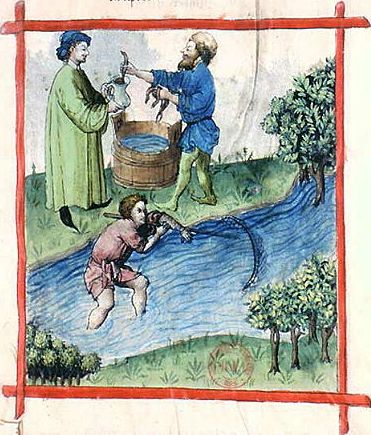
Between the cellar and the ice pit lay another cold technology: flowing water. Springs, streams, wells, and channels offered medieval households and institutions a form of cooling that was humbler than elite ice storage but often more practical where local geography allowed it. Moving water, especially spring water, could remain cool and relatively steady in temperature even when the air warmed above ground. Medieval people used that stability to delay spoilage, chill containers, rinse and hold foods, and manage dairy, fish, butter, ale, and other perishables. Like the cellar, water-cooled storage did not stop decay. It bought time. But in a world where even a few extra hours or days could matter, the ability to keep milk from souring too quickly or fish from turning before it reached the kitchen was a meaningful form of preservation.
The springhouse was the clearest architectural expression of this principle. Built directly over or beside a natural spring, it enclosed a small stream of cold water within a shaded structure, often of stone, timber, or later masonry. Shelves, ledges, crocks, pans, bowls, and covered vessels could be arranged so that food remained near or partly surrounded by cold flow without being damaged by it. Dairy work especially benefited from such places. Milk, cream, butter, soft cheeses, and fresh curds were among the most vulnerable foods in any premodern household, and cool water helped extend their usefulness before they spoiled, separated badly, or turned unsafe. The same principle could apply to jars of drink, fish kept briefly before preparation, or other foods needing short-term cooling rather than long preservation. A springhouse was less a replacement for salting or smoking than a pause in the race against decay.
Where formal springhouses were absent, medieval people could still exploit water for cooling. Containers might be lowered into wells, placed in shaded streams, set in stone basins, or rested in troughs through which cold water passed. Wells were especially valuable because their depth could provide cooler conditions than the surrounding air, though access, cleanliness, and contamination had to be managed carefully. A suspended bucket or sealed vessel lowered into a well could chill drink, dairy, or other short-lived foods without requiring a purpose-built cooling structure, but the same arrangement demanded caution because the household water source could not be fouled without threatening everyone who depended on it. Streams and channels could cool vessels, but they also posed risks: flooding, silt, animals, runoff, human waste, and stagnant edges could turn water from protector into pollutant. Urban water was particularly complicated. A stream that served one household as a cooling resource might also receive waste from another, and crowded towns often struggled to separate clean water, industrial use, animal traffic, and refuse. Rural settings were not automatically safe either, since livestock, manure, seasonal floods, and muddy banks could contaminate water used too casually. The usefulness of water-cooled storage depended on motion, cleanliness, shade, and judgment. A fast, cold, clean spring was a very different resource from a muddy ditch or a crowded urban watercourse.
Water-cooled storage also belonged to the world of medieval dairying, and dairying belonged heavily to daily labor. Milk could not wait in the way grain could. It had to be consumed, skimmed, churned, soured, curdled, salted, or made into cheese and butter. Cooling helped control the interval between milking and transformation. It gave household workers time to separate cream, gather enough milk for a batch, harden butter, or hold soft dairy products before sale or service. In peasant households, this knowledge was practical and intimate; in larger estates and monasteries, it could become part of organized provisioning. Dairy rooms, cool pantries, springhouses, and water sources formed a small but crucial infrastructure around one of the most unstable parts of the food supply.
Fish also benefited from water-cooled holding, although here the distinction between keeping something alive and keeping it cool matters. Monasteries, estates, and some elite households maintained fishponds, stew ponds, and controlled waters where fish could be kept alive until needed, especially in societies shaped by fasting rules and demand for non-meat foods. This was preservation by delayed death rather than by curing. Fishponds were a living larder, turning water management into food storage by postponing the moment when preservation became urgent. They also reflected status and institutional planning, since ponds required land, water rights, maintenance, stocking, protection from poaching, and knowledge of seasonal fish management. Once fish were caught and dead, they spoiled quickly unless cooked, eaten, salted, dried, smoked, or cooled for a short time. Springs, wells, and running water could help bridge the gap between catch and kitchen, market and table, but they could not solve the larger problem of long-distance fish supply. A trout held in a monastery pond, an eel kept in a controlled watercourse, or a fresh fish cooled briefly in spring water belonged to a different preservation world from barrels of salted herring or dried cod moving through trade. That role belonged to salt, drying, smoking, and commerce. Water cooling was immediate and local; salted fish was durable and mobile.
The importance of springs and streams shows again that medieval preservation was ecological. People did not impose one universal technology on every landscape. They used what the local environment made available: cool earth, shade, moving water, winter ice, dry wind, salt marsh, mountain snow, smokeable fuel, or stone-lined underground rooms. A springhouse made sense only where a spring existed and could be protected. A well-cooled crock worked only where water was clean enough and access was secure. These limitations do not make water-cooled storage insignificant. They make it revealing. Medieval food storage was a patchwork of environmental opportunities, each one extending time in a different way. Flowing water preserved by movement, coolness, and delay, turning the landscape itself into a temporary refrigerator.
Salt, Brine, and the Medieval Preservation Economy
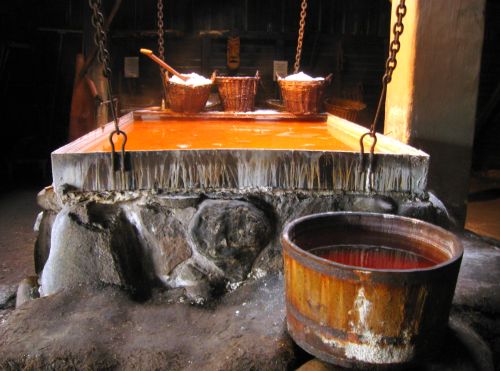
Salt was one of the indispensable materials of medieval survival. It seasoned food, but its deeper power was preservative: it drew moisture from flesh, slowed decay, inhibited many forms of microbial growth, and turned perishable meat and fish into provisions that could be stored, transported, taxed, sold, and eaten long after slaughter or catch. In a world without mechanical refrigeration, salt allowed food to cross both time and distance. A pig killed in autumn could become bacon, ham, sausage, or salted pork for winter and spring. Fish caught at sea could become inland food. Cheese could be stabilized, butter could be kept longer, and brines could protect vegetables or meats from rapid spoilage. Salt also made preservation scalable. A single household might salt enough pork for winter, but a monastery, ship, army, castle, or town might require barrels, contracts, transport, storage rooms, and accounting systems built around salted supplies. This gave salt a dual identity. It belonged to the most ordinary kitchen work, where hands packed meat, turned fish, skimmed brine, and judged smell and texture, but it also belonged to the larger world of mines, salt pans, tolls, merchants, ports, and rulers. Salt was not a mere kitchen ingredient. It was a strategic resource, a household necessity, a commercial commodity, and a foundation of medieval provisioning.
The basic techniques were simple in principle but required skill in practice. Dry salting packed meat or fish directly in salt, drawing out liquid and creating an environment hostile to spoilage. Brining submerged food in a strong salt solution, allowing salt to penetrate more evenly. Some foods were salted briefly before drying or smoking; others remained in barrels of brine for storage and transport. The strength of the salt, the size of the pieces, the freshness of the food, the cleanliness of the vessel, the temperature of the storage space, and the length of curing all mattered. Too little salt invited rot; too much could make food harsh, expensive, or difficult to eat without soaking. Medieval cooks and household managers often had to reverse part of the preservation process before serving: salted fish or meat might be rinsed, soaked, boiled, or combined with sharp, sweet, or aromatic ingredients to make it palatable. Preservation did not end at storage. It shaped cooking itself.
Meat preservation was especially tied to the seasonal rhythm of animal husbandry. Many animals could not be kept through winter without costly fodder, so autumn and early winter became important slaughtering seasons. Pigs were particularly valuable because they converted woodland mast, scraps, and agricultural byproducts into fat and meat, and because pork took well to salting, smoking, and sausage-making. Beef, mutton, and other meats could also be salted, though status, region, herd structure, and household resources shaped what was preserved and how. Salted meat was not always a delicacy. It could be tough, intensely salty, and repetitive, but it represented security. A household with salted pork, bacon, lard, dried peas, grain, onions, and ale possessed a practical defense against the lean months. In castles, monasteries, ships, and armies, salted provisions carried even greater importance because they could support groups who needed food beyond the ordinary reach of fresh markets.
Fish made salt’s economic importance even more visible. Medieval Christian fasting rules restricted meat consumption on many days, creating enormous demand for fish, while urbanization increased the need for food that could move from coast to market without spoiling. Salted herring, salted cod, stockfish, and other preserved fish became staples of medieval trade. Herring fisheries in the North Sea and Baltic, cod fisheries in northern waters, and dried or salted fish routes linked fishermen, merchants, coopers, salt producers, port towns, inland markets, monasteries, and consumers. Some fish were dried in cold air with little or no salt, as with stockfish in northern regions, while others depended heavily on salt barrels. Either way, preserved fish broke the narrow geography of freshness. It allowed people far from the sea to eat marine protein, observe fasting rules, provision ships, feed towns, and support commercial networks that reached across Europe.
Salt itself had to be produced and moved, which made preservation dependent on geography and power. Some regions had coastal salt pans where seawater could be evaporated. Others had brine springs, inland salt wells, or mines. Production required fuel, labor, vessels, rights, and transport. Evaporation was not free simply because seawater or brine was available; boiling brine could consume large amounts of wood, peat, or other fuel, while solar evaporation depended on climate, landscape, and season. Inland saltworks required control of wells, furnaces, pans, workers, and roads. Mining demanded capital, specialized labor, and access rights. Because salt was essential and unevenly distributed, rulers, lords, cities, monasteries, and merchants often treated it as a source of revenue and control. Tolls, taxes, monopolies, rents, and trade privileges could gather around salt because everyone needed it and not everyone lived near it. Salt roads, river routes, pack animals, carts, ships, and market towns became part of the preservation chain long before food reached the household table. The price of salt affected more than flavor. It shaped whether fish could be cured profitably, whether meat could be stored affordably, whether dairy could be stabilized, and whether poor households could preserve enough food to endure seasonal scarcity. The preservation economy connected the household crock to the mine, the fish barrel to the coastal pan, and the winter larder to roads, rivers, ports, carts, ships, markets, and political authority. When salt was scarce, expensive, or poorly distributed, preservation became harder; when it was available, it multiplied the usefulness of slaughter, catch, and dairy production.
Salt also shows why medieval food storage cannot be reduced to domestic ingenuity alone. A peasant woman salting pork, a monastery buying barrels of herring for Lent, a merchant shipping fish inland, a castle storing salted meat against siege, and a ruler taxing salt all belonged to the same larger system. Salt made food durable, but it also made food governable. It allowed surplus to be accumulated, moved, priced, rationed, and commanded. Yet its power had limits. Salted food could still spoil if badly prepared or stored; it could become rancid, worm-eaten, contaminated, or unbearable to eat; and heavy reliance on preserved foods could mark hardship as well as security. Still, among all medieval preservation materials, salt may have been the most economically transformative. It did not merely delay decay. It turned perishability into commerce, seasonality into supply, and local catches or slaughtered animals into provisions capable of sustaining households, cities, monasteries, ships, and armies.
Drying: Sun, Wind, Smokehouse Heat, and Stillroom Labor
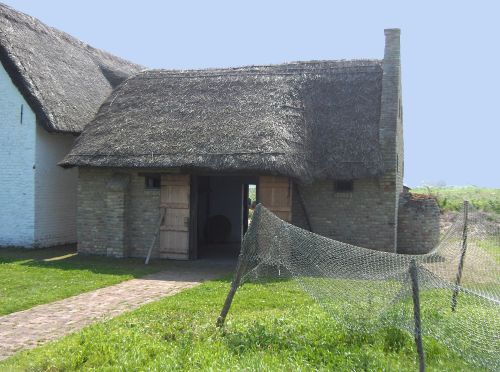
Drying was one of the oldest and most widespread methods of food preservation because it attacked decay at one of its simplest points: moisture. Many foods spoil quickly because water allows molds, yeasts, insects, and bacteria to flourish. Remove enough moisture, and the food changes character. It becomes lighter, harder, more concentrated, less hospitable to spoilage, and easier to store or transport. Medieval people used this principle across an enormous range of foods: fruits, herbs, mushrooms, peas, beans, fish, meat, grains, medicinal plants, and sometimes even prepared pastes or cakes of food. Drying did not require a single specialized invention. It could be done on racks, mats, roofs, branches, lines, lofts, trays, ovens, hearths, or open ground. Yet this simplicity should not be mistaken for carelessness. Successful drying required timing, weather judgment, clean handling, protection from insects and animals, and careful storage afterward. A badly dried food could mold from within; a well-dried one could carry the taste of summer into winter.
Climate shaped the possibilities of drying more directly than almost any other preservation method. In warm, dry, sunny regions, the sun and wind could do much of the work. Grapes became raisins, figs and dates could be dried, herbs could be hung or spread, fish could be laid out in coastal air, and sliced fruit could be preserved with relatively little fuel. The Mediterranean world, with its long traditions of dried fruit, dried herbs, legumes, salted and dried fish, and sun-assisted preservation, made weather into a storage technology. In southern Europe and the wider Mediterranean, drying also worked closely with other durable food systems: oil, wine, vinegar, salt, and ceramic storage. Dried fruits could travel north as luxury or semi-luxury ingredients, while dried legumes and herbs belonged to more ordinary kitchens. The reliability of sun mattered because it reduced dependence on fuel, and fuel itself was never a neutral resource. Wood, charcoal, brush, peat, and straw all had competing uses in cooking, heating, brewing, baking, metalworking, and industry. Where the climate could dry food without constant fire, the environment saved labor and fuel. Northern Europe required different strategies. There, damp air and unreliable sunshine made open-air drying more difficult, especially in autumn when many foods had to be preserved. People adapted by using indoor warmth, lofts, hearths, ovens after baking, smoke, and enclosed spaces where heat could be managed. A bread oven cooling after use could become a temporary drying chamber; rafters above a hearth could hold herbs, meat, or fish; lofts could expose foods to warmer rising air while keeping them away from animals. But these adaptations also carried risks. Too much smoke altered flavor; too much heat cooked rather than dried; too little airflow encouraged mold; and damp weather could undo days of work. The same basic method looked different across Europe. Drying was not simply a technique; it was a negotiation with local climate.
Fruit drying reveals the domestic precision behind what can seem like a rustic process. Apples, pears, plums, cherries, grapes, figs, and other fruits could be dried whole, halved, sliced, strung, spread, or placed near controlled heat. The goal was to remove enough moisture to prevent rapid rot without burning, dirtying, or over-hardening the food. Dried fruit then served several purposes. It sweetened pottages, sauces, meat dishes, Lenten foods, medicinal preparations, and festive cookery. It supplied calories and flavor when fresh fruit was unavailable. It also moved through trade, especially in the case of raisins, figs, dates, currants, and other southern products valued in northern kitchens. Herbs and medicinal plants followed a similar logic. They had to be gathered at the right season, dried before they blackened or molded, and stored in bundles, bags, jars, or boxes. Kitchen, garden, and infirmary overlapped here. A dried herb might season a dish, treat an illness, scent a room, or enter a devotional or household remedy.
Drying also belonged to the preservation of protein, though it often worked together with salt, smoke, or cold air. Fish could be dried on racks, beaches, poles, or wooden frames, especially in regions with steady wind and cool temperatures. Stockfish, famously associated with northern waters, showed how drying could turn a highly perishable catch into a hard, transportable commodity. Meat could be dried as well, though in many European contexts it was more often salted, smoked, or cured in combination with drying. Thin cuts, sausages, and hams could lose moisture gradually while hanging in moving air or warm smoke. The point was not merely to desiccate food into lifeless matter, but to guide a transformation. Texture, saltiness, smell, color, and firmness all told experienced handlers whether preservation was proceeding safely. Drying, like fermentation, required trust in sensory knowledge. Medieval people may not have described water activity in modern scientific terms, but they understood that dampness was dangerous and that dryness, properly achieved, extended the life of food.
The labor of drying was often quiet, repetitive, and easily underestimated. Foods had to be gathered, washed or trimmed, cut, spread, turned, watched, protected, brought indoors during rain, moved closer to or farther from heat, and stored once ready. In larger households, monasteries, and later elite domestic settings, specialized rooms or workspaces could support these tasks, especially for herbs, fruits, medicinals, preserves, and household preparations. The “stillroom” in its fully developed early modern sense belongs somewhat later, but its medieval antecedents lay in the same cluster of practices: drying, distilling, preserving, storing, and managing the useful products of garden, orchard, dairy, and kitchen. Much of this work fell within gendered household labor, especially in domestic contexts where women managed dairying, brewing, garden produce, herbs, and small-scale preservation. Drying shows medieval preservation at its most ordinary and most sophisticated. It used sun, wind, smokehouse heat, hearth warmth, oven residue, and human patience to convert fragile foods into stores, medicines, flavors, and trade goods that could outlast the season that produced them.
Smoke, Fire, and the Preserved Animal Body
Smoking occupied a middle ground between drying, cooking, curing, and architecture. It preserved by removing moisture, discouraging insects, altering the surface of meat or fish, and depositing compounds from wood smoke that slowed decay and changed flavor. Like drying, it depended on air, time, and careful exposure; like salting, it often worked best as part of a sequence rather than as a single act. Meat or fish might be salted first, hung to drain, exposed to cool smoke, and then kept in a cellar, pantry, smokehouse, loft, or kitchen rafter. The result was not simply food that had been “cooked.” Smoked meat and fish were transformed animal bodies, made firmer, darker, saltier, more aromatic, and more durable. In a world where fresh meat was seasonal, expensive, and fragile, smoke gave flesh a second life.
The medieval hearth made smoking both practical and complicated. In many houses, especially before chimneys became widespread in domestic architecture, smoke moved through interior space before escaping through openings in the roof, walls, or eaves. This could make the upper parts of a building useful for hanging foods, particularly hams, bacon, sausages, fish, herbs, and sometimes cheeses. Rafters, hooks, cords, poles, and beams turned vertical space into preservation infrastructure. Smoke-blackened interiors were not merely signs of discomfort or poor ventilation; they also testify to a built environment in which heat, fumes, drying air, and suspended food shared the same space. The household that hung meat above or near the hearth was using the building itself as a slow preservative chamber, taking advantage of warmth that already existed for cooking and heating. This mattered in economies where fuel, labor, and space could not be wasted. One fire might cook the meal, warm the room, dry damp clothing, cure herbs, discourage insects, and help preserve meat overhead. Yet this arrangement required judgment. Too much heat could cook or spoil the outside before the inside was safe; too much damp could encourage mold; too much smoke could make food acrid; too little exposure could leave it vulnerable. The position of the food mattered, as did the height of the hanging place, the steadiness of the fire, the kind of fuel used, the dampness of the weather, and the length of exposure. A medieval kitchen could contain several zones of heat and smoke, some suited to cooking, some to drying, some to keeping food away from animals, and some to slow curing. The kitchen was not only a place of preparation but also a managed atmosphere.
Smokehouses and dedicated smoking spaces offered greater control, especially in larger households, estates, fishing communities, and regions with established traditions of cured meat or fish. A low, slow fire could produce smoke without intense flame, allowing foods to dry and absorb smoke gradually over days or weeks. Fuel mattered. Hardwood, brush, peat, straw, herbs, or other local materials produced different heat, smoke, and flavor. The choice of fuel reflected ecology as much as taste: wooded regions, peatlands, coastal settlements, and upland farms did not all smoke food in the same way. Smoking was regional, sensory, and environmental. It depended on what animals were slaughtered, what fish were caught, what fuel was available, what buildings existed, and how humid or cold the surrounding climate was. The preserved animal body carried the marks of its landscape.
Pork was especially suited to this world of smoke and salt. Medieval pigs could be fattened on mast, scraps, and byproducts, then slaughtered when winter fodder became scarce. Their flesh and fat lent themselves to bacon, hams, sausages, lard, and other preparations that could be salted, smoked, rendered, or hung. A smoked ham or side of bacon represented more than flavor. It was stored labor: woodland rights, animal feeding, slaughter, butchery, salt purchase, fuel gathering, hanging space, and weeks of household attention condensed into a durable food. The autumn pig slaughter was one of the great preservation moments of the rural year, turning an animal that could not easily be carried through winter into a sequence of future meals. Blood might be used quickly in puddings or sausages, fat rendered into lard, intestines cleaned for casings, shoulders and sides salted, hams hung, and smaller scraps cooked, potted, or worked into mixtures that stretched meat across time. Smoke helped stabilize this abundance, but it also organized it. Different cuts could receive different treatments depending on their size, fat content, intended use, and expected storage life. Fish followed a similar logic in coastal and riverine communities, though its preservation usually had to happen quickly after catch. Smoked fish could feed local markets, households, monasteries, and travelers, while salted and dried fish traveled more widely. The timing was crucial: fish began to decline almost immediately once dead, so cleaning, salting, hanging, smoking, or drying had to follow the catch with little delay. In both cases, smoke allowed animal protein to move beyond the brief moment of freshness. It transformed slaughter and catch from events into reserves.
The cultural meaning of smoked food was double. On one hand, it could mark security, thrift, and competence: the household that had meat hanging from the rafters possessed a reserve against hunger. On the other hand, preserved meat and fish could also signal necessity, monotony, or distance from elite freshness. Medieval cuisine valued fresh, tender, well-sauced, and carefully prepared dishes when status allowed, yet it also depended constantly on cured, smoked, salted, and dried ingredients. Smoke belonged to this tension between survival and taste. It made food last, but it also changed what food was. It turned flesh into memory, season into substance, and the animal body into a storehouse of future meals. As a preservation technology, smoking shows medieval ingenuity at its most elemental: fire disciplined into patience, air turned into chemistry, and the kitchen itself transformed into an engine against decay.
Pickling, Fermentation, and the Controlled Work of Microbes
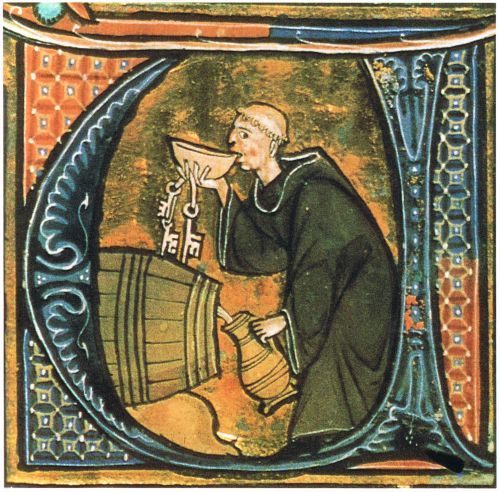
Pickling and fermentation complicate the simple idea that medieval preservation was only a war against decay. Salting, drying, smoking, and cooling often worked by making food less hospitable to spoilage, but fermentation depended on a more subtle principle: some transformations were useful, desirable, and protective. Medieval people did not possess modern microbiology, but they knew that certain sour, bubbling, curdling, alcoholic, or briny processes could make food safer, more durable, more flavorful, and more digestible. A cabbage submerged in brine, milk turned into cheese, grain transformed into ale, grapes into wine, apples into cider, honey into mead, or dough into sour bread all belonged to this world of managed change. The goal was not sterile preservation. It was controlled transformation, in which desired forms of souring, culturing, curdling, and fermentation outcompeted uncontrolled rot. This makes fermentation one of the most revealing medieval food technologies because it joined risk and trust so closely. The same household that feared spoiled meat or moldy grain could also welcome sourness in bread, sharpness in vinegar, bubbling in ale, rind formation on cheese, or the tang of brined vegetables. Preservation here was not a refusal of change but a disciplined acceptance of it. Food was allowed to become something else before decay could claim it entirely.
Vinegar pickling was one of the clearest examples of preservation through acidity. Foods placed in vinegar or sour liquid entered an environment hostile to many spoilage organisms, while also acquiring sharpness useful in medieval cookery. Onions, herbs, fruits, vegetables, fish, and other ingredients could be preserved or flavored through acidic storage, though the exact practices varied by region, status, and household resources. Vinegar itself was a product of fermentation, usually made from wine, ale, cider, or other alcoholic liquids that had soured. This gave medieval preservation a layered quality: one transformed food or drink could become the preserving medium for another. Vinegar also fitted well into medieval taste, where sharp sauces, verjuice, wine, sour fruit, and aromatic spices often balanced the heaviness of meat or the monotony of preserved foods. Pickling was not only defensive. It created flavors that medieval cooks valued.
Brine fermentation occupied a related but distinct place. When vegetables such as cabbage were packed with salt or submerged in brine, the salt drew out moisture and encouraged a souring process that could preserve the food for winter. Cabbage preservation is especially important because leafy vegetables were otherwise difficult to keep fresh for long periods, and fermented cabbage-like preparations offered a durable source of sharpness, bulk, and nourishment in colder climates. Similar principles could apply to cucumbers, roots, olives, capers, and other foods, though regional differences mattered greatly. In Mediterranean settings, olives required curing or brining to become edible, while capers and other small preserved foods entered trade and cookery as sharp, salty accents. In northern and central Europe, cabbage and other vegetables could become important winter foods. Brine was both barrier and environment: it restrained some forms of spoilage while permitting a useful souring process to take hold.
Dairy fermentation was even more central to everyday survival. Fresh milk spoiled quickly, but milk transformed into butter, cheese, curds, whey, or soured dairy could last longer and serve different purposes. Cheesemaking was one of the great preservation arts of the medieval world because it converted unstable milk into a more durable, transportable, and storable food. Rennet, souring, heating, pressing, salting, drying, and aging all worked together to separate curds from whey and guide the cheese toward stability. Some cheeses were eaten fresh; others were aged in cool rooms, cellars, caves, or dairies. Butter, too, could be salted or clarified to extend its usefulness. These processes were not merely culinary. They allowed households and estates to store the productivity of animals beyond the day of milking. A cow, ewe, or goat produced a perishable fluid; fermentation and dairying turned that fluid into food that could be counted, traded, gifted, rented, or carried. This mattered especially because dairy animals produced unevenly across the year, and because milk demanded immediate decisions. It could be drunk fresh, left to sour, skimmed for cream, churned into butter, curdled into cheese, or fed into another household process, but it could not simply be ignored. Cooling helped, but transformation was the real answer. Dairy preservation compressed a whole rural economy into daily labor: pasture, fodder, milking, vessels, heat, salt, drainage, cloth, presses, shelves, cellars, and market exchange. The cheese stored in a cool room was not just preserved milk. It was preserved pasture, preserved animal labor, and preserved human attention.
Alcoholic fermentation was another foundation of medieval storage, sanitation, and daily consumption. Ale, beer, wine, cider, and mead were not simply beverages in the modern recreational sense. They were ways of preserving grain, grapes, apples, honey, and other carbohydrates in liquid form. Brewing converted malted grain into ale or beer; winemaking converted grapes into a storable drink; cider did the same for apples and pears in regions suited to orchard agriculture; mead preserved honey’s sweetness as alcohol. Fermented drinks could spoil, sour, or weaken, and they required barrels, cellars, vessels, skill, and monitoring. Yet they extended the life of harvests and created commodities central to household economies, monastic provisioning, urban trade, taverns, inns, and hospitality. In many places, brewing was a routine household activity before becoming more specialized or commercialized. Like baking and dairying, it belonged to the daily technologies through which medieval people managed grain, water, heat, vessels, yeast, time, and taste.
Fermentation reveals medieval preservation at its most intellectually challenging because it worked by cooperation with invisible life. Medieval people could not see yeasts, lactic acid bacteria, or the microbial ecology of cheese rinds and sourdough starters, but they could read signs: foam, smell, sourness, firmness, gas, curd formation, surface growth, taste, and time. They knew that some vessels carried good results, that some batches failed, that warmth could hasten change, that cold could slow it, that salt could guide it, and that cleanliness mattered even when understood through practice rather than germ theory. Pickling and fermentation strengthen the larger argument. Medieval food storage was not primitive because it lacked modern science. It was a practical knowledge system built from observation, repetition, inherited technique, and environmental control. In fermentation, medieval people did not simply halt decay. They redirected it, turning the dangerous instability of food into sourness, alcohol, cheese, bread, and stores that could survive beyond the moment of harvest.
Sugar, Honey, Syrups, and Elite Sweet Preservation
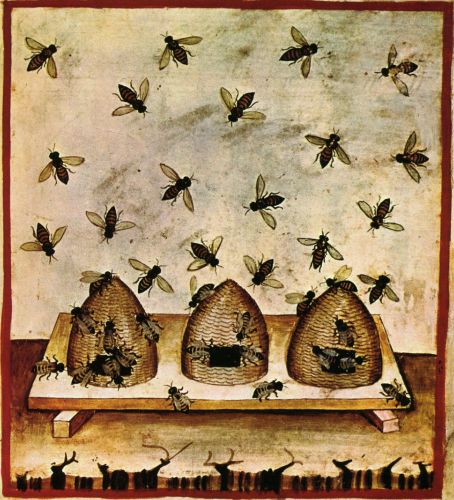
Sweet preservation worked by another kind of environmental control. Like salt, sugar and honey made food less hospitable to spoilage by binding available moisture and creating a dense medium in which many organisms struggled to grow. Medieval people did not describe this process in modern chemical language, but they knew the practical result: fruits, flowers, nuts, spices, peels, herbs, and medicinal ingredients could be kept longer when submerged, boiled, coated, candied, or sealed in concentrated sweetness. Honey was the older and more widely familiar substance, present in European foodways long before cane sugar became common. Sugar, by contrast, entered medieval European kitchens through Mediterranean, Islamic, Byzantine, crusading, and commercial networks, and for much of the Middle Ages it remained expensive enough to mark status, medicine, and refinement. Sweet preservation belonged both to household practicality and to luxury culture, but not equally for everyone.
Honey’s preservative power rested partly in its thickness, sweetness, acidity, and resistance to ordinary spoilage. It could be used to preserve fruits, nuts, flowers, and herbs, but it also belonged to a wider world of mead, sauces, medicines, confections, and religious symbolism. In rural households, honey was not necessarily cheap, since beekeeping required hives, skill, seasonal management, and protection from loss, but it was more deeply rooted in older European practice than imported sugar. Bees supplied sweetness in a world where most ordinary diets were not saturated with sweeteners, and the same hives could also provide wax for candles, seals, writing tablets, devotional use, and household work. This made beekeeping part of a broader rural economy, especially for monasteries and estates that required both honey and wax. Honeyed fruits and medicinal preparations made use of sweetness as both flavor and barrier. A fruit placed in honey did not become immortal, but it was transformed into something less exposed to air, less watery, and more durable than the fresh fruit itself. Honey also linked preservation to healing. Medieval medicine frequently blurred the line between food, remedy, and strengthening preparation, and honey could carry herbs, spices, and other ingredients into syrups, electuaries, and soothing compounds. Its texture made it useful as a medium; its sweetness made bitter or pungent ingredients more acceptable; and its durability made it suitable for preparations intended to sit in a household chest, monastic infirmary, or apothecary stock. Honey preserved more than fruit. It preserved seasonal plants, medicinal knowledge, sensory pleasure, and the labor of bees and household workers in a form that could be drawn upon later.
Cane sugar changed the cultural meaning of sweet preservation because it arrived as a costly imported product before becoming more widely available in later centuries. In the medieval Mediterranean, especially through Islamic agricultural and culinary traditions, sugar was cultivated, refined, traded, and incorporated into syrups, confections, fruit preparations, perfumed drinks, and medicinal recipes. From there, sugar moved through commercial and cultural channels into European elite kitchens and apothecaries. Its expense mattered. To preserve fruit in sugar was not the same social act as drying apples in the sun or hanging herbs from a rafter. Sugared preserves displayed access to trade, wealth, refined taste, and medical knowledge. They also connected medieval Europe to wider Afro-Eurasian systems of agriculture and exchange, including the movement of cane cultivation, refining techniques, spices, citrus, rosewater, and other ingredients associated with courtly and urban luxury. Sugar’s path into medieval Europe was not simply a culinary story but a story of empire, climate, labor, commerce, medicine, and aspiration. It was grown in particular environments, refined through specialized processes, transported through ports and merchant networks, and consumed most visibly by those who could afford to treat sweetness as more than rare pleasure. Once in elite hands, sugar became a tool for transforming fragile ingredients into stable, beautiful, and socially meaningful objects: translucent syrups, spiced comfits, candied seeds, preserved peels, rose conserves, and fruit pastes. It allowed cooks and apothecaries to make preservation decorative. A salted herring or smoked ham announced durability; a sugared quince paste or candied citrus peel announced durability refined into elegance.
Syrups, conserves, comfits, candied peels, and fruit preserves show how closely elite food preservation overlapped with medicine. Medieval and late medieval recipe traditions often placed sweet preparations near remedies, strengthening foods, digestive aids, and confections served at the end of meals. Sugar and honey could carry spices thought to warm, comfort, balance, or aid digestion. Fruits might be boiled with sweeteners into thick preparations; flowers such as roses could enter syrups or conserves; citrus peels, ginger, anise, fennel, coriander, nuts, and seeds could be candied or coated. Such foods were pleasurable, but they were not only “dessert” in the modern sense. They belonged to a world in which taste, health, digestion, humoral balance, hospitality, and display were intertwined. Sweet preservation made fragile ingredients durable, but it also made them meaningful: concentrated, costly, aromatic, and appropriate to elite tables, sickrooms, apothecaries, and gift exchange.
Fruit was the most obvious beneficiary of sweet preservation because fresh fruit was so seasonal and vulnerable. Apples, pears, quinces, cherries, plums, berries, figs, dates, citrus, and other fruits could be dried, cooked down, stored in honey, preserved in syrup, or incorporated into pastes and confections. Quince pastes and fruit cheeses, for example, belong to a broader tradition of reducing fruit with sweetener into a dense, sliceable, durable form. These preparations intensified flavor while extending the harvest. They also reveal the layering of preservation methods: fruit might first be cooked to reduce water, then sweetened to stabilize it, then stored in a vessel and sealed against air. Cooking mattered because it concentrated the fruit, softened fibers, released pectin-like thickening qualities, and allowed the preparer to remove scum, impurities, skins, seeds, or excess liquid. Sweetening then changed both taste and keeping quality, while storage in a crock, jar, box, or covered vessel protected the finished preparation from damp, insects, dust, and handling. The resulting food could move between ordinary nourishment and special occasion. A dried apple might belong to winter pottage; a preserved quince or sugared cherry could belong to hospitality, invalid care, or the end of a meal. Imported fruits intensified this hierarchy. Dates, figs, raisins, currants, citrus, and other southern products were already preserved or semi-preserved through drying, sugaring, or thick skins before they reached northern consumers, and their presence in elite kitchens reminded diners that preservation could also be a form of distance made edible. In humbler contexts, drying or fermenting might be more realistic than sugar preserving; in wealthier contexts, sugar could turn the orchard into a refined store of sauces, sweetmeats, medicinal preserves, and feast-day delicacies.
Sweet preservation illuminates the social hierarchy of medieval food storage. Grain storage, salting, drying, smoking, and fermentation were basic to survival across much of society, though access to materials and space varied sharply. Sugar preservation, by contrast, often signaled privilege. Honey stood between these worlds: practical, old, medicinal, and symbolically rich, yet still limited by supply. Together, honey and sugar show that preservation was not only about avoiding hunger. It could also create luxury, memory, medicine, and distinction. The same fundamental problem, how to keep fragile food beyond its season, could produce peasant dried fruit, monastic syrups, apothecary electuaries, courtly confections, and imported sweetmeats. Sweetness slowed decay, but it also transformed preservation into status, turning perishability into refinement.
Containers, Seals, and the Battle Against Air, Damp, and Pests
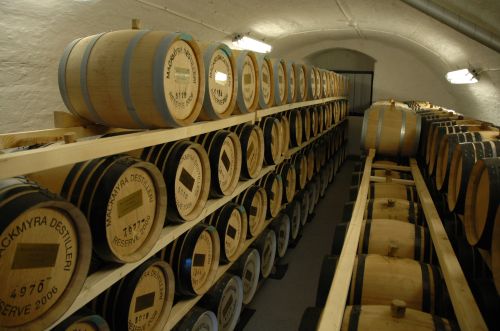
Food preservation did not end when meat was salted, fruit dried, grain cleaned, cheese pressed, or vegetables submerged in brine. Once transformed, food still had to be protected from air, damp, insects, rodents, dust, handling, theft, and accidental contamination. Containers were not passive objects. They were preservation technologies in their own right, mediating between food and the surrounding world. A barrel, crock, sack, basket, chest, jar, pot, tub, or bin shaped how long food lasted, how easily it could be moved, how well it resisted pests, and how safely it could be counted, sealed, stored, and opened. Medieval people preserved food not only by changing the food itself but by changing the boundary around it.
The range of medieval containers reflected the diversity of foods and storage environments. Grain could be kept in bins, sacks, chests, barns, lofts, or granaries; wine, ale, vinegar, and salted fish relied heavily on barrels, casks, tubs, and vats; pickled vegetables, preserves, sauces, fats, and dairy products could be kept in ceramic jars, glazed earthenware, crocks, bowls, and covered pots. Baskets and wickerwork were useful for carrying, drying, sorting, and temporary storage, though less suited to foods needing protection from air or moisture. Leather bags, cloth sacks, wooden boxes, and metal vessels all had their place depending on cost, purpose, and local craft traditions. The container had to match the food. A breathable basket might help with drying herbs or carrying apples, but it would fail as a brine vessel. A barrel could hold salted fish, wine, or ale, but its hoops, staves, pitch, and seams had to remain sound. A ceramic crock might protect pickles or preserves, but only if it was clean, stable, and properly covered.
Sealing techniques were especially important because exposure invited trouble. Lids, cloth coverings, wooden plugs, wax, pitch, leather, parchment, stretched animal bladder, oil, fat, clarified butter, and lard could all be used to close or protect food containers. A layer of fat over potted meat or cooked food reduced contact with air; oil could help protect certain foods from exposure; wax or pitch could help seal vessels; cloth could keep out dust and insects while allowing some airflow where needed. Animal bladders and skins, stretched and tied over the mouths of jars or pots, offered flexible covers in a world before modern rubber seals and screw-top lids. These coverings were not incidental household improvisations but part of a long tradition of making perishables less vulnerable after preparation. The mouth of a vessel was often its weakest point, the place where air, flies, damp, fingers, and dirt could enter. Closing that opening well could determine whether a store survived for weeks or failed within days. Some foods needed firm exclusion; others needed protection without suffocation. Cheese, for example, might require air and turning, while a preserve or potted preparation needed a more defensive seal. This meant that medieval sealing was not one technique but a range of judgments about the food’s condition, intended duration, storage place, and expected use. These methods were not perfect, and they had to be watched. A cracked seal, torn cover, leaking barrel, damp cloth, or disturbed fat layer could turn stored food vulnerable again. Preservation was continuous. The seal was not a final act but a condition that had to hold.
Damp was one of the great enemies of stored food, and containers were often designed or chosen to resist it. Grain stored in a damp sack, fruit packed in a wet basket, salt exposed to moisture, or flour kept near a sweating wall could quickly become spoiled or unusable. Wooden vessels could swell, shrink, split, or mold; ceramic pots could protect contents from some forms of moisture but might still allow contamination if badly covered or poorly fired; cloth and leather could absorb damp and odors; barrels could leak or sour their contents. Storage spaces and containers had to work together. A well-made crock in a flooded cellar was not enough. A good barrel in a hot room might fail. A sealed jar could protect preserves, but only if insects, mice, servants, children, and household traffic did not disturb it. Medieval storage was a system of nested defenses: preserved food inside a vessel, vessel inside a pantry or cellar, cellar inside a household, household inside a community of labor, rules, and vigilance.
Pests forced medieval households to think vertically, materially, and defensively. Rodents could gnaw sacks, foul grain, invade bins, and reach foods left near the floor. Insects could enter flour, dried fruit, herbs, grain, cheese, meat, and stored legumes. Birds, dogs, cats, pigs, and other animals could also become storage threats if food was exposed. Hanging storage helped keep sausages, hams, cheeses, onions, garlic, herbs, and fish away from the ground and out of easy reach. Raised platforms, shelves, hooks, rafters, locked rooms, chests, traps, cats, and careful sweeping all belonged to the battle against pests. Even smell mattered. Strong-smelling foods could attract animals; damp, rot, or leakage could announce vulnerability. A medieval storage room was not a silent archive of food. It was a watched space, requiring repeated inspection, cleaning, turning, airing, and removal of anything that threatened the rest.
Containers also made food administratively visible. In great households, monasteries, manors, ships, inns, and urban shops, food had to be measured, inventoried, issued, sold, rationed, or reserved. Barrels of fish, sacks of grain, crocks of butter, cheeses on shelves, jars of preserves, and casks of ale could become units of accounting as much as units of storage. This mattered because preservation created long-term value. A sealed barrel could represent Lenten meals, market profit, siege readiness, monastic hospitality, rent payment, ship provision, or winter survival. The same object could carry several meanings at once: a physical container, a unit of measure, a promise of future consumption, and a sign of managerial competence. In large households, knowing what was stored was almost as important as storing it in the first place. A forgotten crock, a miscounted sack, a leaking cask, or an unrecorded barrel could mean loss, waste, fraud, or shortage. This is why storage and writing so often belonged together in institutional settings. Account rolls, household ordinances, estate treatises, and provisioning records turned preserved food into entries, quantities, obligations, and expectations. Containers made that value portable, countable, defensible, and sometimes taxable. The medieval vessel was both practical and economic: it protected food from air, damp, and pests, but it also made preserved food legible to household managers, merchants, stewards, cooks, and officials. In the long struggle against decay, the container was the thin wall between abundance and loss.
Hanging, Aging, and the Vertical Kitchen
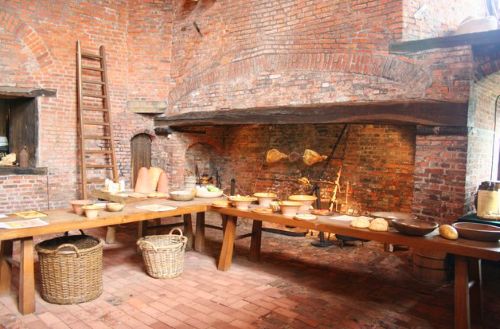
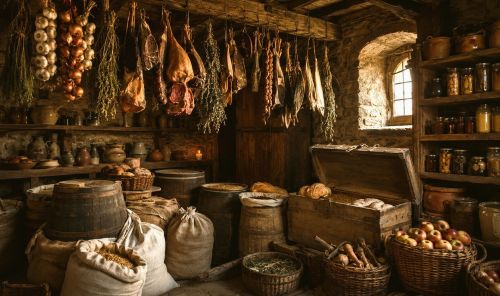
Medieval kitchens were not only horizontal workspaces of tables, hearths, pots, and floors. They were vertical environments, organized upward as well as outward. Rafters, beams, hooks, cords, poles, shelves, lofts, and chimney spaces allowed food to be lifted away from damp ground, household traffic, dogs, pigs, rodents, and careless hands. Hanging was one of the simplest and most adaptable storage techniques, but it was also one of the most revealing. It turned architecture into preservation by using height, airflow, smoke, warmth, darkness, and visibility. A suspended ham, string of onions, bunch of herbs, wheel of cheese, line of sausages, or smoked fish was not merely being put somewhere convenient. It was being placed inside a managed atmosphere where food could dry, age, firm, smoke, or remain safe until needed.
This vertical use of space mattered especially because many preserved foods required continued exposure rather than complete enclosure. A salted ham sealed too tightly might spoil; a cheese left unattended in a damp corner might rot; herbs packed before fully dry might blacken or mold; onions and garlic needed air; sausages required careful drying; fish might need smoke or circulation. Hanging allowed the household to keep these foods accessible but protected, watched but out of the way. It also used the ordinary physics of the kitchen. Warm air rose, smoke drifted upward, rafters stayed drier than floors, and suspended foods were less likely to be reached by animals. In houses where the hearth dominated daily life, the space above the fire became a slow-working preservation zone. Even after chimneys and more specialized kitchen arrangements became common in elite settings, hanging remained practical because it made use of space that would otherwise be empty.
Aging was not the same as mere storage. Some foods improved, stabilized, or became usable only through time. Cheese ripened; sausages firmed; hams lost moisture; smoked fish developed texture; herbs dried into concentrated flavor; onions and garlic cured after harvest; and some fruits mellowed in storage before use. Medieval households had to distinguish between foods that were simply waiting and foods that were still becoming. This required sensory judgment. Color, smell, firmness, surface texture, weight, dryness, and the presence or absence of mold all mattered. A cheese that looked alive in one context might be maturing properly, while a similar surface change on meat or fruit might warn of danger. A ham that lost moisture slowly could become durable and desirable; one exposed to damp or insects could become a household loss. Sausages had to firm without souring into corruption. Herbs had to dry while retaining useful scent and color. Onions and garlic needed curing that toughened their outer layers without rotting their centers. Even fruit required sorting and attention, since one damaged apple or pear could hasten the decay of those around it. The same process that produced a desirable aged cheese or cured ham could become dangerous if the conditions shifted. Too much damp, too little air, excessive heat, insects, smoke imbalance, or contamination could turn aging into spoilage. Hanging made inspection easier because food remained visible, reachable, and open to touch, smell, and adjustment. The vertical kitchen was not a place of neglect but of repeated attention, where household workers read food as it changed and intervened before preservation crossed into loss.
The hanging kitchen also exposed the social life of preserved food. In a modest household, food hanging overhead represented thrift, planning, and hope: future meals physically present in the room where daily labor occurred. In a large household, castle, inn, monastery, or urban cookshop, the same principle operated on a larger scale, with storerooms, larders, rafters, hooks, and specialized spaces holding meat, fish, cheese, herbs, poultry, game, and other supplies. The sight and smell of suspended food would have been part of the sensory world of work. Servants moved beneath provisions; cooks selected from them; household officers counted them; animals sought them; smoke touched them; damp threatened them. Hanging storage made food both secure and visible, turning preservation into a daily reminder of abundance, scarcity, discipline, or hierarchy. What hung from the beams could say much about a household’s wealth, season, region, and prospects.
The vertical kitchen brings together many central themes. Medieval preservation did not rely on one miracle device but on dozens of small environmental decisions. Food might be salted, smoked, dried, wrapped, sealed, shelved, buried, barreled, or cooled, but it might also simply be hung in the right place at the right height for the right length of time. This was not primitive clutter. It was spatial intelligence. The kitchen became a chamber of suspended futures, where fire, air, smoke, time, and watchfulness worked together. Hanging food above the ground made the architecture of the household participate in survival, transforming beams and rafters into tools against decay.
Medieval Households, Gender, and the Labor of Preservation
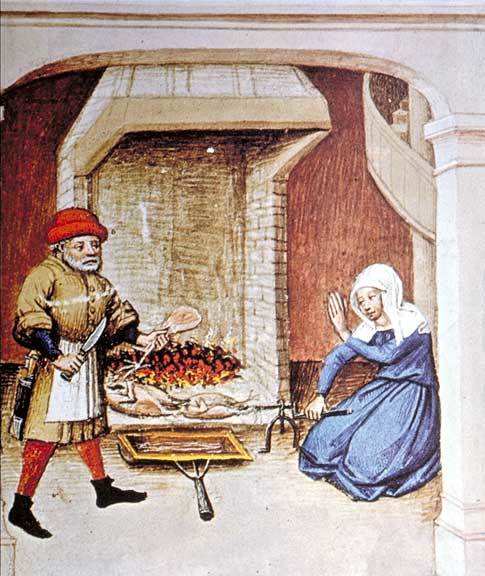
Food preservation was never only a matter of techniques or storage spaces. It was labor: repeated, seasonal, skilled, and often physically demanding labor. Medieval food did not preserve itself once salted, dried, smoked, fermented, sealed, or hung. Someone had to cut fruit, turn grain, skim milk, clean vessels, watch brines, tend fires, move barrels, hang sausages, inspect cheese, protect stores from pests, and decide what could still be eaten. This labor was easy to overlook because it often occurred in kitchens, dairies, yards, gardens, cellars, barns, and storerooms rather than in the more visible spaces of feasting, plowing, hunting, or market exchange. Yet without it, harvests would have spoiled, slaughtered animals would have been wasted, milk would have soured uselessly, and winter stores would have failed. Preservation turned food production into food security, and that transformation depended on human attention.
In peasant and urban households, much of this work was embedded in ordinary domestic routine and was often gendered. Women’s labor was central to dairying, brewing, baking, garden produce, poultry, herbs, small livestock, household storage, and the daily management of food. This does not mean that men were absent from preservation. Men slaughtered animals, carted grain, built storage spaces, fished, brewed commercially, coopered barrels, traded salt, and managed estate agriculture. But within the household, women frequently bore responsibility for the fragile interval between production and consumption: milk after milking, dough before baking, ale before souring, herbs before mold, fruit before rot, meat after slaughter, and leftovers before waste. The skill lay partly in timing. A household manager had to know what needed immediate transformation, what could wait, what should be eaten first, what could be sold, what should be dried, and what must be saved for winter. This labor was not simply “domestic” in the diminished modern sense of private, informal, or secondary work. It was economic labor, because it determined whether the household’s resources retained value or disappeared into spoilage. A woman who brewed ale successfully, managed cheese well, dried herbs at the right moment, preserved fruit, or kept stored food from pests contributed directly to household survival and sometimes to household income. In towns, women’s brewing, baking, dairying, huckstering, and small-scale food sales could connect domestic preservation to market life. In villages, preservation work helped determine whether rents could be met, workers could be fed, children could survive lean seasons, and seed or livestock could be protected from desperate consumption. The household was not merely the place where preservation happened; it was one of the primary institutions through which medieval preservation knowledge was organized.
Dairy work shows this labor with particular clarity. Milk was among the least patient medieval foods. It demanded decisions within hours, not months. It could be drunk fresh, skimmed for cream, churned into butter, soured, curdled, made into cheese, fed to animals, sold, or used in cooking. Each path required tools, vessels, cleanliness, temperature judgment, and experience. Butter had to be churned, washed, salted, shaped, cooled, and protected. Cheese required curdling, cutting, draining, pressing, salting, turning, and aging. A cheese was not “made” in a single moment; it required repeated handling over time. This made dairy preservation a form of accumulated attention, especially in regions where cows, sheep, or goats supplied an important part of the household economy. A failed batch did not merely mean inconvenience. It meant lost pasture, lost animal labor, lost human labor, and lost future food.
Brewing and baking also reveal how preservation labor crossed the boundary between household necessity and specialized production. Ale and beer preserved grain in liquid form, but brewing required malting, mashing, boiling or heating, fermenting, cooling, storing, and judging when the drink was ready or failing. In many medieval communities, women brewed for household use and sometimes for sale, though brewing became increasingly commercialized and regulated in many towns. Bread depended on grain storage, milling, flour quality, dough management, leavening, oven access, and timing. Even when bread itself was not a long-term preserved food, the systems around it were used for preservation: stored grain, dried fuel, sourdough cultures, flour bins, ovens, and regulated baking. Medieval households constantly converted unstable materials into more usable forms, and this work required embodied knowledge that rarely appears in formal theory but shaped everyday survival.
Elite households and monasteries organized preservation labor through office, hierarchy, and recordkeeping. The great household did not depend on one housewife watching a crock or one peasant family turning cheese. It depended on a chain of specialized workers: stewards, cellarers, butlers, pantlers, larderers, cooks, brewers, bakers, dairy workers, gardeners, porters, carters, and servants. These workers received, counted, guarded, issued, prepared, and stored food on a scale that required administrative discipline. The cellarer in a monastery or great household had to think in terms of seasons, fast days, feast days, guests, servants, alms, emergencies, and future purchases. The larder had to contain enough meat, fish, fats, and preserved foods; the cellar had to supply drink; the pantry had to manage bread; the dairy had to convert milk; the granary had to reserve grain for food, brewing, baking, and seed. Preservation at this level became bureaucracy as well as craft. Written accounts did not replace sensory knowledge, but they extended it into administration. A cheese still had to be smelled and turned, a barrel still had to be checked, and grain still had to be guarded against damp, but those acts now entered a larger system of tallies, inventories, offices, purchases, deliveries, and allowances. In a large household, preservation failures could ripple through the entire institution: a spoiled store of fish might disrupt Lent; weak ale might affect servants’ rations; lost grain could endanger bread supply; poorly managed meat could embarrass hospitality or weaken provisioning during travel. The more complex the household, the more preservation required both hands-on skill and managerial memory.
This labor was also social because preserved food encoded authority and inequality. The person who controlled the store controlled access to future meals. A locked cellar, counted barrel, measured grain bin, or sealed crock represented power over distribution. In a peasant household, this might mean careful rationing between children, workers, animals, seed, and sale. In a monastery, it meant balancing communal discipline, hospitality, charity, and obedience. In a manor or castle, it meant provisioning retainers, guests, soldiers, and servants according to rank. The labor of preservation did not merely sustain bodies. It organized relationships. Who ate fresh meat and who ate salted leftovers, who drank better ale and who received weaker drink, who had access to sugar preserves and who relied on dried peas, who controlled the keys and who waited for rations, all of these distinctions made storage a social institution. Gender sharpened these dynamics rather than simplifying them. Women might perform much of the labor that made stores usable, yet formal authority over major stores, rents, accounts, and institutional distribution often belonged to male household heads, stewards, cellarers, or lords. Widows, alewives, dairywomen, market women, servants, and mistresses of households could exercise real practical authority over food flows, especially where skill and daily access mattered more than written title. Preservation was a field of both dependence and power. It reveals how medieval households relied on labor that could be undervalued precisely because it was constant, familiar, and necessary.
To describe medieval preservation as technology, then, is also to describe the people who made that technology work. Salt, smoke, cellars, crocks, barrels, and rafters mattered only because human beings used them intelligently and repeatedly. Much of that intelligence was practical, local, and transmitted through apprenticeship, household instruction, seasonal repetition, and correction after failure. It was knowledge held in hands, noses, eyes, backs, and memories: how heavy a cheese should feel, how strong a brine should taste, how damp grain smelled, how butter changed under the churn, how long herbs needed to hang, how to pack apples, how to stretch meat after slaughter, and when to throw something away. Medieval food preservation was not hidden chemistry alone. It was skilled labor made durable, the daily work by which households turned vulnerability into stores.
Markets, Towns, Ships, and Armies: Preservation Beyond the Household

Food preservation began in households, barns, dairies, kitchens, and cellars, but it did not remain there. Once food could be salted, dried, smoked, barreled, pressed, brewed, or otherwise stabilized, it could move. Preservation made markets larger, towns more viable, ships more independent, armies more mobile, and institutions less dependent on immediate local harvests. A fresh fish was tied to the shore and the hour of its catch; a salted fish could travel inland. Fresh meat depended on slaughter and rapid consumption; salted meat could provision a castle or ship. Grain could be stored, milled, sold, taxed, and transported. Cheese, wine, ale, dried fruit, legumes, salt fish, smoked meats, and hard biscuits all show how preservation changed the geography of food. It turned local production into regional and long-distance supply.
Towns depended especially on this preserved and transported food. Unlike villages, towns could not usually feed themselves from their own fields. Their survival required a constant flow of grain, ale, wine, fish, meat, dairy, vegetables, fuel, salt, and market goods from surrounding hinterlands and distant trade routes. Fresh food certainly entered towns, but preserved food helped stabilize supply when distance, season, weather, or crowding made freshness unreliable. Urban consumers needed grain that had survived storage, fish that could be sold far from the coast, cheese that could travel, wine and ale that could be casked, and legumes that could be dried and stored in bulk. Towns also intensified the risks of spoilage and fraud. Crowded markets, variable storage conditions, and the pressure to sell could encourage adulteration, short measure, stale goods, watered drink, or spoiled meat disguised for sale. Preservation made urban food supply possible, but it also made regulation necessary.
Market regulation became part of the preservation system. Medieval towns and authorities attempted, with uneven success, to control weights, measures, bread quality, ale strength, meat inspection, fish freshness, and the sale of corrupt or dangerous food. Bakers, brewers, butchers, fishmongers, millers, vintners, poulterers, and hucksters all operated within networks of custom, guild oversight, civic ordinance, manorial right, or royal regulation. The assize of bread and ale, for example, linked grain prices, loaf weight, and public order, while local market officials could inspect goods and punish some forms of fraud. These rules did not eliminate abuse, but they show that food preservation had a public dimension. A spoiled barrel of fish or a short-weight loaf was not only a private disappointment. It threatened trust in the market and, in times of scarcity, could become a political problem. Urban regulation also reveals how difficult it was to draw a clean line between preservation and deception. A preserved food might be perfectly legitimate, but preservation could also mask age, conceal poor quality, or extend sale beyond safe limits. Salt might stabilize fish, but it could also hide deterioration; spices and sauces might improve flavor, but they could also disguise staleness; ale could be sold too weak, too sour, or in false measure; bread could be underweight even when technically edible. The public market required more than supply. It required credibility. Civic authorities, guild officers, and consumers all had a stake in making sure that preserved and stored foods remained trustworthy enough to sustain urban life.
Ships made the importance of preservation even more obvious. At sea, fresh food disappeared quickly unless a vessel hugged the coast and resupplied often. Mariners needed provisions that could endure damp, motion, salt air, cramped storage, rats, leakage, and long intervals between ports. Shipboard food relied heavily on durable staples: biscuit or hard bread, salted meat, salted fish, dried peas and beans, cheese, butter, oil, vinegar, wine, ale, and water stored in casks. These foods were not luxurious, and they could become monotonous, wormy, stale, rancid, or foul, but they made travel possible. A ship’s hold was a storage environment under stress. Barrels had to remain tight, biscuit had to stay dry, water had to be guarded, and rations had to be calculated against distance, crew size, weather, and delay. Preservation at sea was logistics with no margin for sentiment.
Armies faced similar problems on land. A medieval army could devastate the countryside partly because moving large numbers of people and animals required enormous quantities of food. Soldiers, servants, horses, pack animals, and camp followers consumed grain, fodder, meat, drink, and fuel at a rate that local communities often struggled to absorb. Fresh supply depended on foraging, purchase, requisition, plunder, or organized transport, but preserved foods gave commanders and garrisons a crucial reserve. Salted meat, dried fish, hard bread, grain, flour, cheese, legumes, and casked drink could support marches, sieges, and castle defense. A fortress stocked with grain, salted meat, fish, cheese, ale, wine, and fuel could withstand pressure longer than one dependent on daily supply. Conversely, a failed storehouse could make even strong walls vulnerable. In siege warfare, preservation became a military technology. The difference between endurance and surrender could lie in barrels, bins, cellars, and granaries as much as in towers or walls. Defenders needed food that could survive confinement; attackers needed supplies that could move with them or be seized from the surrounding countryside. Horses and pack animals complicated the problem further, since they required fodder and water on a scale that could quickly exhaust local resources. Campaigning transformed preservation into strategy. Commanders had to think not only about roads, weapons, and enemies, but also about flour, biscuit, salt meat, grazing, carts, mills, ovens, rivers, and the timing of harvest. An army without reliable food became a danger to itself as well as to civilians, while a well-stocked castle or town could turn stored provisions into resistance.
Monasteries, hospitals, universities, inns, and great households also depended on preserved food beyond the scale of ordinary domestic storage. They fed communities with predictable rhythms and unpredictable guests. A monastery had to observe fast days, feed monks, servants, visitors, laborers, and sometimes the poor. An inn had to serve travelers when fresh supply was uncertain. A university town had to feed students and masters who depended on market provisioning. Great households traveled, entertained, and displayed rank through food, which required advance purchasing, storage, and transport. Preserved foods allowed these institutions to plan. They could accumulate barrels of fish for Lent, store wine for hospitality, keep cheese for service, hold grain for bread and ale, and maintain reserves against disruption. The more complex the institution, the more preservation became administrative.
Long-distance trade in preserved foods also shaped medieval taste. Northern stockfish, Baltic and North Sea herring, salted cod, Mediterranean dried fruits, raisins, figs, dates, almonds, sugar, spices, wine, olive oil, and hard cheeses did more than fill stomachs. They connected local meals to distant waters, orchards, ports, islands, mountains, and trade routes. A Lenten table in an inland town might depend on fish caught far away. An elite sauce might combine dried fruit, vinegar, wine, spices, and sugar from multiple regions. Preserved foods carried geography into the mouth. They made distance edible. This does not mean that medieval diets were cosmopolitan for everyone in the same way. Access varied enormously by wealth, region, and season. But preservation made it possible for foods to circulate beyond their immediate ecological zones, widening the medieval palate and deepening dependence on trade.
Preservation beyond the household reveals the larger infrastructure hidden inside ordinary foods. A barrel of salted herring contained fishers, salt workers, coopers, merchants, ships, port officials, fasting rules, market sellers, and household cooks. A ship biscuit contained grain fields, mills, ovens, storage rooms, sacks, sailors, and rationing systems. A cask of wine contained vineyards, presses, barrels, cellars, carts, ships, taverns, and taxes. Preserved food was never only a technical achievement. It was a social network made durable. By extending the life of food, preservation extended the reach of medieval society itself. It enabled towns to grow beyond their fields, ships to sail beyond easy resupply, armies to campaign beyond local harvests, and markets to join regions that would otherwise have remained seasonally isolated.
Religion, Fasting, and the Preserved Food Calendar

Medieval food preservation followed the seasons, but it also followed the Church calendar. The medieval food year was not simply divided by harvest, slaughter, Lent, winter, and summer scarcity; it was structured by feast days, fast days, vigils, Advent, Lent, Ember Days, Fridays, saints’ days, and local customs of abstinence. These rhythms shaped what kinds of food had to be stored, purchased, prepared, and avoided. A household could not think only in terms of what was available. It also had to think in terms of what was permitted. Meat might be abundant after slaughter, but it could not be eaten on certain days. Fish, legumes, bread, ale, wine, oil, dairy, dried fruits, nuts, and preserved vegetables could become more important when religious discipline restricted flesh meat or demanded simpler fare. Preservation helped medieval Christians convert theology into practice. The larder was not only seasonal; it was liturgical.
Fish became the most obvious example of this preserved religious food system. Because Christian fasting rules often restricted the eating of meat from land animals, demand for fish expanded far beyond coastal freshness. Fresh fish remained desirable when available, especially for wealthy households, monasteries, and towns with access to rivers, ponds, or fast transport, but preserved fish made large-scale abstinence possible. Salted herring, dried cod, stockfish, smoked fish, eels, and other preserved aquatic foods allowed inland communities to observe fasts without depending entirely on local waters. Monasteries, manor houses, towns, and urban markets could stock barrels or bundles of fish in advance of Lent and other fasting periods. This meant that fasting did not merely change what people ate on a given day; it shaped fisheries, trade routes, storage practices, purchasing schedules, and market demand across the year. Coastal economies could profit from inland discipline, while merchants, coopers, salt producers, and carters all participated in the movement of religiously useful food. The fish barrel became a bridge between theology and commerce. It carried the catch of distant waters into refectories, taverns, urban stalls, manor kitchens, and peasant households. Preserved fish was more than a trade commodity. It was religious infrastructure. It allowed rules about the body, appetite, and spiritual discipline to be enacted across distance, class, and season, though never equally for everyone. The wealthy could seek variety and quality; the poor might endure monotony, saltiness, or inferior goods. Yet both participated in a food culture where preservation made abstinence practical.
Monastic communities made the link between preservation and religious time especially clear. The Rule of St. Benedict and later monastic customs treated food as part of discipline, moderation, obedience, hospitality, and communal order. Monks ate according to regulated rhythms, with distinctions between ordinary days, fasts, feasts, illness, labor, and guests. This required dependable storage. Grain had to be held for bread and ale; fish had to be available for abstinence; wine or ale had to be managed; cheese, eggs, legumes, garden produce, and preserved foods had to be distributed according to rule, season, and office. The cellarer’s work was both material and spiritual. He had to prevent waste, supply the refectory, support hospitality, provide for the sick, and make sure that discipline did not collapse into either shortage or indulgence. A well-ordered storehouse helped make a well-ordered religious life possible.
Fasting also shaped household strategy outside the monastery. Laypeople did not always observe dietary rules with the same intensity as monks, and practice varied by region, wealth, enforcement, and individual circumstance, but the calendar still mattered. Lent arrived when winter stores were already under strain and before the renewal of spring abundance. This made preserved foods crucial. Dried peas and beans, onions, cabbage, bread, ale, wine, oil where available, nuts, dried fruit, and fish helped carry households through a spiritually charged but materially difficult season. The timing mattered: Lent was not only a symbolic period of restraint but also a practical point in the agricultural year when many fresh foods were scarce. Religious fasting and seasonal scarcity could reinforce one another, turning preserved food into the bridge between winter exhaustion and spring renewal.
Feast days created a different preservation problem. If fasts demanded restraint, feasts demanded preparation, abundance, and display. Preserved foods helped households and institutions meet these expectations as well. A feast might require stored grain for bread, ale, or pastry; salted or smoked meats brought out for special use; dried fruits and spices for sauces; preserved fruits or sweetmeats for elite tables; cheeses aged to the proper point; wine stored in casks; or fish held for elaborate service. Some feast foods depended on advance planning weeks or months before the celebration itself. Animals might be fattened, slaughter timed, ale brewed, wines secured, spices purchased, fruit dried, cheeses selected, and preserved delicacies reserved for the proper occasion. The point was not simply to have food available, but to have the right foods available at the right sacred moment. This gave storage an element of ceremonial timing. A preserved ingredient might sit quietly in a cellar or pantry until the calendar transformed it from reserve into display. The religious calendar did not simply reduce consumption through fasting. It redistributed consumption across time, concentrating certain foods on days of celebration and forbidding others on days of discipline. Preservation made that redistribution possible. It allowed households to save, reserve, transform, and stage food according to sacred time.
The preserved food calendar reveals how deeply medieval storage joined body, soul, economy, and environment. Food was not merely fuel, and preservation was not merely a technical solution to spoilage. The same barrel of herring could be a merchant’s commodity, a monk’s Lenten meal, a town dweller’s Friday dinner, a lord’s provisioning purchase, and a sign of obedience to ecclesiastical discipline. The same dried fruit might appear in a medicinal preparation, a fasting dish, or a festive sauce. The same stored grain might become daily bread, ale for laborers, alms for the poor, or feast-day loaves. Religious time gave preserved foods moral and social meaning. By keeping food beyond its natural season, medieval people also kept obligations: to fast, to feast, to host, to give, to obey, and to survive.
Regional Worlds of Preservation: Climate, Ecology, and Local Ingenuity
There was no single medieval system of food preservation. The techniques discussed so far (salting, drying, smoking, cooling, fermenting, sealing, hanging, and storing) appeared across many regions, but they did not appear in the same proportions or with the same meanings everywhere. Preservation was shaped by climate, soil, rainfall, altitude, fuel, water, animals, crops, trade routes, religious customs, and access to salt. A community’s storage technologies were ecological as much as cultural. People preserved what their environment produced, and they preserved it by using what their environment made available: sun, wind, frost, smokeable wood, peat, springs, caves, salt marshes, mountain snow, dry air, cold seas, or thick-walled cellars. Medieval ingenuity was rarely abstract. It was local, adaptive, and practical.
In northern Europe, preservation often centered on grain storage, ale, dairy, salted meat, smoked pork, dried peas and beans, root vegetables, cabbage, onions, and fish that had been salted, dried, or smoked. Damp weather complicated sun-drying, so households and institutions relied more heavily on barns, lofts, hearths, smoke, ovens, cellars, and careful ventilation. Pigs fit well into many northern rural economies because they could be fattened on mast and scraps, then slaughtered before winter and transformed into bacon, ham, sausage, lard, and salted pork. Cabbage, peas, beans, oats, rye, barley, and root crops helped sustain ordinary diets when wheat was expensive or less reliable. Dairying, too, was central in many regions, with butter and cheese converting unstable milk into more durable food. In this world, the preservation system was often one of smoke, salt, cool earth, fermentation, and winter planning, built around the challenge of wetness as much as hunger.
The Mediterranean offered a different preservation logic. Sun and dry air made drying more reliable, while olive oil, wine, vinegar, salt, legumes, dried fruit, hard cheeses, and salted fish occupied central places in food storage. Grapes could become raisins, wine, vinegar, must, or syrups; olives became oil or brined food; figs, dates, and other fruits could be dried; fish could be salted along coasts; and herbs could be dried in abundance. Ceramic storage, amphora traditions, jars, oil vessels, and wine casks tied preservation to older Mediterranean material cultures. Sweet preservation, perfumed syrups, candied fruits, and sugar-based preparations were more available in elite and Islamic-influenced Mediterranean contexts than in much of northern Europe, though still marked by cost and status. Here, preservation often worked through concentration, acidity, oil, sun, and trade. The same basic goal, keeping food beyond its season, produced a different sensory world: sharper, oilier, sweeter, more aromatic, and more dependent on long traditions of Mediterranean exchange.
Coastal and maritime regions formed another distinct world of preservation. Their central challenge was abundance that spoiled almost immediately. Fish could be plentiful at the moment of catch and worthless soon afterward unless cleaned, salted, dried, smoked, barreled, or sold quickly. This urgency shaped coastal labor, architecture, trade, and diet. Northern stockfish production depended on cold air, wind, seasonal fishing, and drying conditions that could turn cod into a hard, transportable product. Herring fisheries relied heavily on salt, barrels, coopers, ports, merchants, and inland demand. The work required coordination at speed: fish had to be gutted, sorted, washed, salted or hung, packed, inspected, and moved before warmth and decay destroyed their value. Preservation structured whole coastal economies, from the making of barrels and the boiling or mining of salt to the scheduling of fleets, market days, and inland transport. Mediterranean salted fish and older traditions of fish sauces, brined seafood, and coastal salt production connected marine preservation to ancient patterns of commerce. In some places, fisheries became seasonal engines of employment, drawing laborers, merchants, and suppliers into temporary but intense circuits of production. Coastal preservation also blurred the line between local subsistence and international trade. A fish caught by a local crew might feed a nearby household, enter a monastery’s Lenten stores, provision a ship, or travel inland as part of a commercial network. Coastal people did not merely “have fish”; they had to transform fish into time before decay erased the catch. The sea provided abundance, but preservation made that abundance usable beyond the shore.
Mountain, upland, and pastoral regions developed still other strategies. Altitude could provide cool air, caves, snow, seasonal grazing, and conditions favorable to cheese-making, drying, and cured meats. Herding economies often turned milk into cheese because cheese carried the productivity of pasture into winter and across distance. Hard cheeses were portable, storable, and tradable, especially when salted, pressed, aged, and kept in cool spaces. Upland communities might dry meat, use smoke from available fuel, store roots in earth, or exploit cold cellars and caves where geology allowed. Seasonal movement of animals between lowlands and uplands also shaped preservation schedules: milk abundance at one moment had to become cheese for later, while slaughter and curing followed the realities of fodder, pasture, and winter. Preservation was inseparable from altitude, animal management, and the rhythm of transhumance or local grazing.
Urban regions created hybrid preservation worlds because towns gathered foods from many ecologies at once. A city or large town might consume local grain, inland ale, coastal fish, imported wine, dried fruits from the south, spices from long-distance trade, cheese from pastoral districts, salted meat from nearby estates, and fresh produce from market gardens. Urban preservation depended on warehouses, cellars, shops, barrels, market rules, guild oversight, and constant supply chains. It also depended on inequality. Wealthy consumers could buy imported dried fruit, sugar preserves, spices, better wine, fresher fish, and finer cheeses, while poorer households relied more heavily on bread, ale, legumes, onions, cabbage, cheap fish, and whatever preserved foods could be obtained affordably. The medieval town did not escape ecology. It concentrated multiple ecologies into one marketplace. Regional preservation systems met there, collided there, and became visible in the unequal diets of those who could purchase distance and those who could not.
Failure, Risk, and the Limits of Medieval Storage
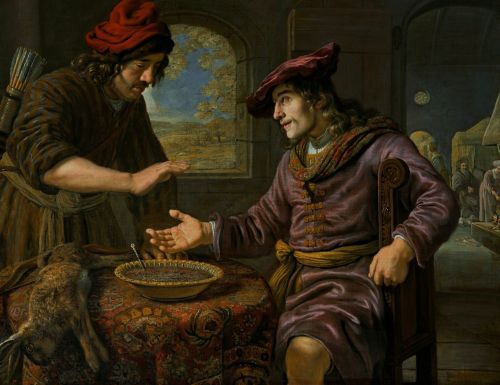
Medieval food storage was ingenious, but it was never secure in the modern sense. Every preservation method bought time under particular conditions, and every one of those conditions could fail. Grain could mold in a damp barn; salted meat could turn rancid; fish could rot inside a barrel; cheese could crack, dry badly, or become infested; fruit could spoil one piece at a time until the whole store was threatened; ale could sour; wine could turn; butter could go rancid; roots could freeze, sprout, or decay in the cellar. Preservation was not a guarantee but a wager against time, weather, pests, human error, and scarcity. Medieval people lived with the knowledge that stored food remained alive to danger even after it had been harvested, cured, sealed, hung, or hidden underground. The larder was not a place where risk ended. It was a place where risk was managed.
Grain failure was especially dangerous because grain was the foundation of survival. A wet harvest could enter storage already compromised, and damp conditions after storage could make matters worse. Mold, sprouting, heating, insects, rodents, and contamination could destroy the value of a grain supply before anyone opened the bin for milling or baking. Ergot, the fungal disease associated especially with rye, added another danger because contaminated grain could poison those who consumed it, producing convulsions, hallucinations, burning pain, gangrene, or death. Medieval people did not understand ergot in modern mycological terms, but they knew that grain could become dangerous as well as scarce. The danger was intensified by the structure of medieval dependence itself. Grain was not one food among many; it was bread, ale, porridge, pottage thickener, animal feed, rent, seed, and sometimes wages. If grain failed in storage, the loss rippled through the entire food system. Damaged grain might mean less bread, weaker ale, fewer animals maintained through winter, less seed for the next sowing, and fewer resources with which to meet rents or obligations. The problem was particularly severe because hunger could force people to eat grain they might otherwise reject. In ordinary times, spoiled grain might be discarded, fed to animals, or treated with suspicion. In years of shortage, the boundary between food and poison narrowed. Bad grain could become bread not because it was trusted, but because there was nothing better. This is one of the most brutal limits of preservation: scarcity could compel people to consume precisely what experience warned them to avoid.
Animal foods carried their own hazards. Meat and fish were rich, desirable, and highly perishable, which made them both valuable and risky. Salt, smoke, drying, and cool storage could slow decay, but none of these methods erased the dangers of poor preparation, inadequate salt, uneven drying, dirty vessels, warm weather, insects, or delay before curing. A barrel of fish might look like provision but conceal spoilage beneath the top layer. A ham might appear preserved while rotting near the bone. Sausages, because they combined chopped meat, fat, casings, salt, spices, and drying, required especially careful handling. Butter, lard, and other fats could turn rancid, while cheeses could shift from ripening into corruption if stored in the wrong conditions. The medieval nose, eye, and tongue were tools of survival. Smell, color, texture, firmness, surface growth, and taste helped people decide whether preserved animal foods remained usable, but those judgments were never infallible.
Storage also failed because the built environment failed. Roofs leaked, cellars flooded, barrels cracked, sacks tore, jars broke, seals loosened, pests invaded, and fires destroyed barns or houses. A granary was only as good as its roof, floor, ventilation, and security. A cellar was only useful if it remained cool without becoming waterlogged. A springhouse depended on clean flow. A smokehouse depended on controlled fire. A sealed crock depended on a seal that stayed intact. Even successful storage could create new vulnerabilities by concentrating value in one place. A barn full of grain, a cellar full of wine, or a storehouse full of salted fish attracted thieves, soldiers, officials, animals, and desperate neighbors. War and violence magnified these dangers. Armies seized stores, burned barns, disrupted harvests, blocked roads, and turned preservation infrastructure into military targets. Food kept for the future could be lost in a night.
Markets added further risk because preserved food could be adulterated, disguised, diluted, or misrepresented. Grain might be mixed with inferior material; flour could be stretched; ale could be weak or sour; fish might be stale beneath salt; meat could be sold after its best condition had passed; spices and sauces could mask age or poor quality. Civic ordinances and market inspections existed because buyers could not always trust what storage and preservation appeared to promise. Preservation created distance between production and consumption, and that distance opened room for fraud. A person buying salted fish inland did not see the catch, the salting, the barrel packing, or the journey. A town dweller buying bread could not easily know whether the flour had been clean, whether the loaf was full weight, or whether inferior grain had been mixed into the batch. A traveler buying ale could judge taste and strength only after purchase, while a household buying preserved meat had to trust the seller’s handling, the condition of the container, and the reputation of the market. Preserved food, by its nature, concealed its own history. It had passed through time, hands, vessels, roads, storage rooms, and sometimes long-distance trade before reaching the consumer. Trust had to pass through merchants, containers, seals, weights, measures, reputation, and regulation. When those systems failed, preservation became not protection but concealment. The very techniques that made food durable could also make bad food marketable for a little longer.
The limits of medieval storage matter because they prevent a romantic reading of premodern ingenuity. Medieval people possessed impressive practical knowledge, but they lived close to the edge of loss. A good larder could soften winter, but it could not cancel famine. A well-stocked monastery could feed guests and the poor, but only while its lands, rents, markets, and stores held. A household might preserve pork, peas, grain, onions, and cheese, yet still face hunger if harvests failed, rents rose, war passed through, disease struck animals, or stored food spoiled. Medieval preservation was powerful precisely because decay was so relentless. Its history is not a story of simple mastery over nature. It is a story of partial victories: food kept a little longer, moisture held at bay, winter stretched into spring, rot delayed, hunger postponed, and survival made possible but never certain.
Are We Calling Survival Habits “Technology” Too Easily?
The following video from “Medieval Secrets That Modern Life Forgot” discusses medieval food preservation:
I do not intend here to make medieval food storage sound more systematic, intentional, and technologically coherent than it really was. To call a cellar, brine barrel, smoke-blackened rafter, drying rack, or sealed crock a “technology” can risk imposing a modern analytical vocabulary on practices that medieval people may have understood simply as custom, household routine, necessity, or common sense. Most medieval preservers did not think in terms of microbial inhibition, water activity, pH, thermal mass, or oxygen exclusion. They inherited practices, repeated what worked, adjusted to local circumstances, and learned through failure. A peasant salting pork, a dairywoman turning cheese, a monk counting barrels of fish, or a cook hanging herbs from a beam was not necessarily “designing a preservation system” in any formal sense. They were trying to keep food usable because hunger, waste, and obligation left them little choice.
This objection matters because modern language can flatter the past in misleading ways. It is easy to look backward from refrigeration, microbiology, and food science and reinterpret every older practice as if it were a conscious anticipation of modern knowledge. Salt inhibits microbial growth; smoke deposits preservative compounds; sugar binds water; fermentation selects for useful organisms; cellars exploit thermal stability. All of that is true from a modern explanatory standpoint, but it was not necessarily how medieval people explained what they were doing. They might speak instead in terms of dryness, sweetness, sourness, corruption, humoral qualities, household thrift, divine provision, good order, experience, smell, season, or inherited practice. This should not turn practical survival habits into a falsely rationalized science, making medieval people appear like modern food technologists without laboratories.
There is also a social danger in overusing the word “technology.” Many preservation practices were not elegant systems but desperate compromises. A poor household did not dry peas, stretch grain, eat salted fish, or save inferior food because it possessed a sophisticated ecological philosophy. It did so because fresh food was unavailable, money was limited, rents were due, winter was long, and hunger was close. Likewise, the presence of storage spaces or preserved foods did not mean security. A cellar could flood, a brine could fail, grain could mold, fish could stink, and famine could break through every household defense. Calling these practices “technologies” might unintentionally smooth over anxiety, monotony, inequality, and failure. For many medieval people, preservation was not a celebration of ingenuity but a daily confrontation with scarcity.
Yet this challenge does not overturn the main argument; it sharpens it. Technology need not mean modern machinery, scientific theory, or guaranteed success. A technology can be a repeatable material practice for solving a recurring problem. By that definition, medieval food storage clearly qualifies. A granary was designed to keep grain dry and defensible. A cellar used earth and architecture to moderate temperature. A smokehouse controlled fire, airflow, and hanging space. A barrel made salted fish portable. A cheese press, drying rack, brine crock, wax seal, hanging hook, and springhouse all organized matter, labor, and environment toward a practical end. Medieval people did not need modern microbiology to know that damp grain was dangerous, that salt helped fish last, that coolness slowed spoilage, that cheese required turning, or that a torn seal invited loss. Their knowledge was not laboratory science, but it was knowledge embedded in things.
The better conclusion, then, is not that medieval food storage was “technology” in spite of being customary, but that custom itself could be technological. Medieval preservation was a world of embodied, inherited, local intelligence: hands judging texture, noses detecting rot, eyes reading mold, tongues testing brine, backs carrying sacks, and household memory recalling what had failed before. Its limits were real, and its inequalities were severe, but its achievements were also real. The term “technology” should not make medieval storage sound clean, modern, or triumphant. It should make us notice the material intelligence hidden inside ordinary survival. The medieval larder was not a refrigerator waiting to be invented. It was a different kind of technological world, one built from salt, smoke, earth, wood, water, vessels, labor, and time.
Conclusion: The Medieval Larder as an Engine of Civilization
The history of medieval food storage is the history of people trying to make time negotiable. A harvest came once, but hunger returned daily. Animals fattened in season, but winter consumed fodder. Fish arrived in sudden abundance, but decay began almost immediately. Milk demanded attention within hours, fruit within days, grain across months, and salted stores across seasons. Medieval preservation answered these pressures through a web of techniques rather than a single invention: granaries, cellars, caves, springhouses, ice pits, brines, smoke, drying racks, fermentation vessels, sugar syrups, honey, crocks, barrels, seals, hooks, rafters, and guarded storehouses. Each method worked imperfectly, but together they turned fleeting abundance into something that could be managed, transported, shared, sold, taxed, rationed, and remembered.
The medieval larder was more than a domestic storage space. It was an engine of household survival, institutional order, and economic expansion. Stored grain fed villages, towns, monasteries, armies, and ships. Salted fish connected coastal labor to inland fasting. Cheese preserved pasture. Ale and wine preserved harvests in drinkable form. Dried fruit and spices brought distant climates into elite kitchens. Barrels, sacks, crocks, and casks made food portable and countable. Cellars, rafters, and barns made architecture part of nourishment. Markets, monasteries, castles, inns, universities, and ports all depended on food that could survive beyond the moment of production. Without preservation, towns would have been smaller, travel more fragile, armies less mobile, monasteries less stable, and seasonal hunger more devastating.
Yet the medieval larder was never a place of total mastery. It was a place of vigilance. Damp, rot, mold, insects, rodents, rancidity, fraud, war, bad weather, and hunger threatened every store. Preservation did not abolish risk; it organized a struggle against it. This is why medieval food storage must be understood as both technological and human. Its tools were material, but its success depended on labor, memory, judgment, hierarchy, gendered work, market trust, and local ecological knowledge. A brine was only as useful as the person who judged its strength. A cheese cave required inspection. A granary required dryness and defense. A barrel of fish required salt, coopers, merchants, roads, and buyers willing to trust what they could not see. The larder was full of things, but it was also full of decisions.
To see medieval preservation clearly is to see civilization from below: not only through kings, cathedrals, battles, and manuscripts, but through the stored foods that made ordinary continuity possible. Medieval people did not possess refrigeration, but they possessed an intricate culture of delay. They slowed decay with salt, smoke, sourness, sweetness, dryness, coolness, darkness, vessels, and watchfulness. They made the earth cool their roots, the rafter dry their meat, the barrel carry their fish, the cellar steady their drink, and the calendar organize their hunger and abundance. The medieval larder was a quiet infrastructure of survival. It held not just food, but winter, labor, faith, commerce, fear, hope, and the future itself.
Bibliography
Affiliate disclosure: Amazon links on this site are paid links. As an Amazon Associate I earn from qualifying purchases.
- Adamson, Melitta Weiss. Food in Medieval Times. Westport, CT: Greenwood Press, 2004.
- Apicius. Apicius: Cookery and Dining in Imperial Rome. Edited and translated by Joseph Dommers Vehling. Chicago: Walter M. Hill, 1936.
- Ateneo of Naucratis. The Learned Banqueters. Edited and translated by S. Douglas Olson. 8 vols. Cambridge, MA: Harvard University Press, 2006–2012.
- Banham, Debby. Food and Drink in Anglo-Saxon England. Stroud: Tempus, 2004.
- Barrett, James H., and David C. Orton, eds. Cod and Herring: The Archaeology and History of Medieval Sea Fishing. Oxford: Oxbow Books, 2016.
- Benedict of Nursia. The Rule of Saint Benedict. Edited and translated by Timothy Fry. Collegeville, MN: Liturgical Press, 1981.
- Bennett, Judith M. Ale, Beer, and Brewsters in England: Women’s Work in a Changing World, 1300–1600. New York: Oxford University Press, 1996.
- Berman, Constance Hoffman. “Medieval Agriculture, the Southern French Countryside, and the Early Cistercians. A Study of Forty-Three Monasteries.” Transactions of the American Philosophical Society 76:5 (1986), i-xiv+1-179.
- Bond, James. Monastic Landscapes. Stroud: Tempus, 2004.
- Campbell, Bruce M. S. English Seigniorial Agriculture, 1250–1450. Cambridge: Cambridge University Press, 2000.
- —-. The Great Transition: Climate, Disease and Society in the Late-Medieval World. Cambridge: Cambridge University Press, 2016.
- Campbell, Bruce M. S. and Cormac Ó Gráda. “Harvest Shortfalls, Grain Prices, and Famines in Preindustrial England.” The Journal of Economic History 71:4 (2011), 859-886.
- Carlin, Martha, and Joel T. Rosenthal, eds. Food and Eating in Medieval Europe. London: Hambledon Press, 1998.
- Cato the Elder. On Agriculture. In Cato and Varro: On Agriculture, translated by W. D. Hooper and Harrison Boyd Ash. Cambridge, MA: Harvard University Press, 1934.
- Columella, Lucius Junius Moderatus. On Agriculture. Translated by E. S. Forster and Edward H. Heffner. 3 vols. Cambridge, MA: Harvard University Press, 1941–1955.
- Curtis, Robert I. Garum and Salsamenta: Production and Commerce in Materia Medica. Leiden: Brill, 1991.
- Davidson, Alan. The Oxford Companion to Food. 2nd ed. Edited by Tom Jaine. Oxford: Oxford University Press, 2006.
- Davis, James. “Baking for the Common Good: A Reassessment of the Assize of Bread in Medieval England.” The Economic History Review 57:3 (2004), 465-502.
- Dyer, Christopher. Everyday Life in Medieval England. London: Hambledon and London, 1994.
- —-, ed. The Self-Contained Village? The Social History of Rural Communities, 1250–1900. Hatfield: University of Hertfordshire Press, 2007.
- —-. Standards of Living in the Later Middle Ages: Social Change in England c.1200–1520. Cambridge: Cambridge University Press, 1989.
- Edgerton, David. The Shock of the Old: Technology and Global History since 1900. Oxford: Oxford University Press, 2006.
- Flandrin, Jean-Louis, and Massimo Montanari, eds. Food: A Culinary History from Antiquity to the Present. Translated by Albert Sonnenfeld. New York: Columbia University Press, 1999.
- The Forme of Cury: A Roll of Ancient English Cookery. Edited by Samuel Pegge. London: J. Nichols, 1780.
- Freedman, Paul. Out of the East: Spices and the Medieval Imagination. New Haven, CT: Yale University Press, 2008.
- Goldberg, P. J. P. Women, Work, and Life Cycle in a Medieval Economy: Women in York and Yorkshire c.1300–1520. Oxford: Clarendon Press, 1992.
- The Goodman of Paris: A Treatise on Moral and Domestic Economy by a Citizen of Paris, c. 1393. Translated by Eileen Power. London: George Routledge & Sons, 1928.
- Grewe, Rudolf, and Constance B. Hieatt, eds. Libellus de arte coquinaria: An Early Northern Cookery Book. Tempe, AZ: Arizona Center for Medieval and Renaissance Studies, 2001.
- Hammond, P. W. Food and Feast in Medieval England. Stroud: Sutton Publishing, 1993.
- Hanawalt, Barbara A. The Ties That Bound: Peasant Families in Medieval England. New York: Oxford University Press, 1986.
- Henisch, Bridget Ann. Fast and Feast: Food in Medieval Society. University Park: Pennsylvania State University Press, 1976.
- Hoffmann, Richard C. Fisher’s Craft and Lettered Art: Tracts on Fishing from the End of the Middle Ages. Toronto: University of Toronto Press, 1997.
- Ibn Sayyār al-Warrāq. Annals of the Caliphs’ Kitchens: Ibn Sayyār al-Warrāq’s Tenth-Century Baghdadi Cookbook. Translated by Nawal Nasrallah. Leiden: Brill, 2007.
- Jordan, William Chester. The Great Famine: Northern Europe in the Early Fourteenth Century. Princeton, NJ: Princeton University Press, 1996.
- Komlos, John and Richard Landes. “Anachronistic Economics: Grain Storage in Medieval England.” The Economic History Review 44:1 (1991), 36-45.
- Kowaleski, Maryanne. Local Markets and Regional Trade in Medieval Exeter. Cambridge: Cambridge University Press, 1995.
- Kurlansky, Mark. Salt: A World History. New York: Walker, 2002.
- Langdon, John. Mills in the Medieval Economy: England, 1300–1540. Oxford: Oxford University Press, 2004.
- Langland, William. Piers Plowman: A New Annotated Edition of the C-Text. Translated by George Economou. Philadelphia: University of Pennsylvania Press, 1996.
- Latour, Bruno. Science in Action: How to Follow Scientists and Engineers through Society. Cambridge, MA: Harvard University Press, 1987.
- Masschaele, James. Peasants, Merchants, and Markets: Inland Trade in Medieval England, 1150–1350. New York: St. Martin’s Press, 1997.
- McGee, Harold. On Food and Cooking: The Science and Lore of the Kitchen. Rev. ed. New York: Scribner, 2004.
- Mennell, Stephen. All Manners of Food: Eating and Taste in England and France from the Middle Ages to the Present. 2nd ed. Urbana: University of Illinois Press, 1995.
- Mintz, Sidney W. Sweetness and Power: The Place of Sugar in Modern History. New York: Viking, 1985.
- Montanari, Massimo. The Culture of Food. Translated by Carl Ipsen. Oxford: Blackwell, 1993.
- —-. Medieval Tastes: Food, Cooking, and the Table. Translated by Beth Archer Brombert. New York: Columbia University Press, 2015.
- Palladius. Agricultura: The Work of Farming. Edited and translated by J. C. Schmitt. Boston: Boston College Library, 1888.
- Plat, Hugh. Delights for Ladies. London: R. Y., 1632.
- Pliny the Elder. Natural History. Translated by H. Rackham et al. Cambridge, MA: Harvard University Press, 1938–1962.
- Prestwich, Michael. Armies and Warfare in the Middle Ages: The English Experience. New Haven: Yale University Press, 1996.
- Scully, Terence. The Art of Cookery in the Middle Ages. Woodbridge: Boydell Press, 1995.
- —-, ed. and trans. The Viandier of Taillevent: An Edition of All Extant Manuscripts. Ottawa: University of Ottawa Press, 1988.
- Thorold Rogers, James E., ed. A History of Agriculture and Prices in England. 7 vols. Oxford: Clarendon Press, 1866–1902.
- Toussaint-Samat, Maguelonne. A History of Food. Translated by Anthea Bell. 2nd ed. Malden, MA: Wiley-Blackwell, 2008.
- Two Fifteenth-Century Cookery-Books. Edited by Thomas Austin. London: Early English Text Society, 1888.
- Unger, Richard W. “The Netherlands Herring Fishery in the Late Middle Ages: The False Legend of Willem Beukels of Biervliet.” Viator 9 (1978), 335–356.
- Varro, Marcus Terentius. On Agriculture. Translated by W. D. Hooper and Harrison Boyd Ash. Loeb Classical Library. Cambridge, MA: Harvard University Press, 1934.
- Walter of Bibbesworth. Le Tretiz. In Feminae: Medieval Women and Gender Index. Edited and translated selections in pedagogical and household contexts.
- Walter of Henley. Walter of Henley and Other Treatises on Estate Management and Accounting. Edited by Dorothea Oschinsky. Oxford: Clarendon Press, 1971.
- Wilson, C. Anne. Food and Drink in Britain: From the Stone Age to Recent Times. Chicago: Academy Chicago Publishers, 1973.
- Woolgar, C. M. The Culture of Food in England, 1200–1500. New Haven, CT: Yale University Press, 2016.
- —-. The Great Household in Late Medieval England. New Haven, CT: Yale University Press, 1999.
Originally published by Brewminate, 06.10.2026, under the terms of a Creative Commons Attribution-NonCommercial-NoDerivatives 4.0 International license.
About the Author