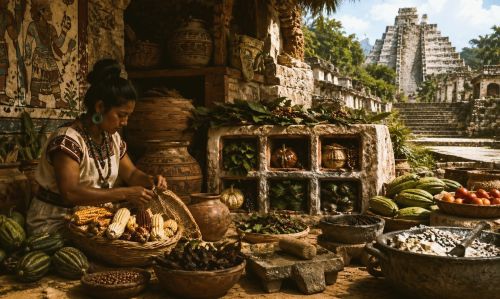
Maya and Aztec food preservation was more than survival. Preservation and storing food helped sustain households, cities, trade, ritual life, and imperial power across Mesoamerica.

By Matthew A. McIntosh
Public Historian
Brewminate
Introduction: Food Preservation as Infrastructure
Food preservation in Mesoamerica was not a minor domestic convenience but one of the quiet infrastructures that made settled life, urban growth, trade, ritual obligation, and imperial power possible. Maya, Mexica, and other Mesoamerican peoples lived within environments of abundance and uncertainty: rainy seasons followed dry seasons, harvests could be generous or fragile, tropical humidity threatened stored foods, and cities required a dependable flow of staples from surrounding landscapes. To preserve food was to extend the harvest beyond the field, the fishing catch beyond the shore, and the political reach of households, merchants, temples, and rulers beyond the immediate moment of production. Drying maize, beans, chiles, seeds, and fruits; salting and smoking fish or meat; fermenting cacao, maguey sap, and maize-based preparations; and storing grain in household or institutional spaces all formed part of a larger technology of survival. These were empirical practices, refined by observation rather than laboratory theory, but they were no less sophisticated for being ordinary.
The central crop in this story is maize, but maize alone does not explain Mesoamerican civilization. Its importance depended on processing, storage, labor, and social organization. Dried maize could be kept, transported, ground, cooked, soaked, and transformed into tortillas, tamales, atole, and other forms that sustained daily life. Nixtamalization, the alkaline processing of maize with lime or ash, improved maize’s nutritional value and culinary usefulness, while also fitting into a broader system that made stored grain flexible and dependable. Chiles, beans, squash seeds, amaranth, cacao, honey, salt, fish, turkey, and game expanded that system. Preservation transformed foods into portable calories, concentrated flavor, ritual substances, tribute goods, and market commodities. In that sense, the Mesoamerican larder was not merely a place where food waited. It was a mechanism by which societies managed time.
Here I treat the Maya and Aztec worlds together, but not as if they were the same society or belonged to a single unchanging tradition. The Maya world developed across many centuries and many landscapes, from lowland forests and river systems to highlands, coasts, and cities whose histories differed sharply from one another. The Aztec world, more precisely the Mexica and their allies within the Late Postclassic imperial order of central Mexico, belonged to a later political formation whose food system was shaped by tribute, urban markets, chinampa agriculture, warfare, and the immense demands of Tenochtitlan. Chronology matters because techniques of preservation did not exist outside history. They were adapted to household economies, changing trade routes, regional ecologies, elite consumption, market exchange, religious calendars, and imperial extraction. The continuity lay not in a single centralized structure but in a shared practical problem: how to make perishable abundance last long enough to feed people, move goods, honor gods, and sustain power.
The argument that follows is that Mesoamerican food preservation should be understood as infrastructure: not monumental like pyramids, not textual like codices, and not always visible in the archaeological record, but foundational all the same. Its importance appears in the daily work of households, the movement of salt and cacao through exchange networks, the storage of maize and tribute goods, the provisioning of cities and armies, and the ritual transformation of food into sacred matter. Yet preservation also had limits. It did not abolish famine, spoilage, inequality, ecological stress, or the coercive burdens of tribute. Stored food could protect households, but it could also be seized by rulers; preserved goods could support markets, but they could also expose communities to extraction. To study how Maya and Aztec peoples preserved and stored food is to study more than technique. It is to study how Mesoamerican societies carried harvests into the future, and how that future was distributed, defended, consumed, and contested.
Before Cities: Agriculture, Seasonality, and the Problem of Surplus
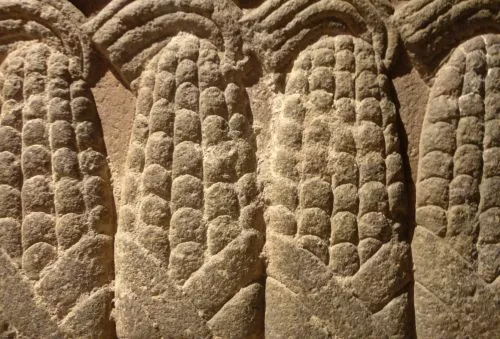
Before Mesoamerican cities rose into monumental landscapes of temples, plazas, palaces, markets, reservoirs, and causeways, food preservation began with a simpler but more demanding problem: how to carry life across time. Agriculture created abundance, but abundance was never evenly distributed. Harvests came in pulses. Rain fell seasonally. Some foods ripened all at once, while others were vulnerable to insects, mold, drought, flood, heat, and human conflict. The emergence of farming did not solve the problem of survival by itself; in some ways, it sharpened it. A hunting, fishing, and gathering community could draw from many changing resources, but a farming village depended heavily on whether cultivated crops could be harvested, processed, guarded, and kept edible long after they left the field. The earliest Mesoamerican food systems rested not only on domestication, but on storage. Seeds had to be saved for planting. Grain had to be dried enough to resist rot. Chiles, beans, squash seeds, and other foods had to be managed so that seasonal plenty did not vanish into seasonal hunger.
The domestication and spread of maize transformed this problem. Maize became the central crop of Mesoamerican civilization not simply because it was productive, but because it could be made durable. Ears could be dried on the stalk or after harvest, stored in household spaces, shelled when needed, ground into meal, cooked into gruels, shaped into dough, wrapped into tamales, or combined with other foods. Its usefulness depended on this ability to pass through multiple states: plant, cob, kernel, meal, dough, drink, bread-like cake, offering, ration, and tribute. Yet maize was never alone. Beans provided protein and could be dried for long storage. Squash offered flesh, vessels, and seeds rich in fat and calories. Chiles could be dried into compact reservoirs of flavor, heat, and medicinal or symbolic potency. Amaranth, fruits, maguey, cacao, and other regional foods expanded this larger pattern. Early Mesoamerican agriculture was not a single-crop system but a web of plants whose survival value depended on their suitability for drying, storing, transporting, and recombining.
Seasonality shaped every part of this world. Much of Mesoamerica was governed by wet and dry cycles that determined when fields could be prepared, when crops could be planted, when harvests came in, and when households had to rely on what had already been stored. The dry season could be a friend to preservation, allowing foods to be sun-dried, aired, and hardened against spoilage. The rainy season could be a threat, bringing humidity, pests, and the danger that poorly stored crops would decay before they could fulfill their purpose. In tropical lowlands, storage demanded vigilance. Food could not simply be gathered and forgotten. It required containers, platforms, baskets, granaries, storage pits, protected rooms, smoke, shade, dryness, and constant inspection. Different landscapes offered different possibilities. Highland zones could provide cooler or drier storage conditions, while coastal and riverine environments offered fish, salt, and aquatic resources that could be dried or cured but also exposed food to dampness. Forested regions supplied fruits, game, honey, and gathered foods, yet they also intensified the battle against insects and mold. The art of preservation was also an art of environmental reading. Mesoamerican farmers had to know not only when to plant and harvest, but when a kernel was dry enough, when a chile could be strung or spread in the sun, when beans were safe to store, and when dampness might destroy months of labor. This knowledge was local, seasonal, and cumulative. It rested on watching weather, feeling texture, smelling spoilage, judging airflow, choosing storage places, and understanding which foods could last for months and which had to be consumed, transformed, exchanged, or ritually used before they failed.
Surplus was the hinge between household survival and social complexity. A family that could preserve enough maize, beans, seeds, and chiles could endure a lean interval; a village that could coordinate surplus could support craft specialists, ritual specialists, leaders, traders, builders, and seasonal labor beyond the immediate demands of farming. This does not mean that storage automatically produced hierarchy, or that every surplus was controlled by elites. Much food preservation began at the household level, where domestic labor transformed fragile crops into future meals. But once food could be accumulated, counted, guarded, exchanged, and redistributed, it became socially powerful. Stored food allowed obligations to be met after harvest, feasts to be staged, marriages and alliances to be supported, travelers to be fed, and ritual calendars to be supplied. The earliest preserved foods were already political. They made promises possible: the promise of tomorrow’s meal, the promise of seed for next year’s field, the promise of hospitality, the promise of tribute, and eventually the promise of urban life.
The earliest villages of Mesoamerica must be understood as places of processing as much as production. Grinding stones (metate), hearths, storage vessels, baskets, drying areas, and refuse from repeated food preparation point toward daily routines that were both ordinary and technically complex. Much of this work was likely carried by women, whose labor in grinding, cooking, drying, sorting, soaking, and storing made agricultural dependence viable. Such labor was not merely “domestic” in the narrow modern sense, as if it belonged outside the serious history of economy and power. It was the work that made farming dependable. A field of maize did not become food security until it had been harvested at the right time, dried properly, protected from moisture, guarded from animals, processed with skill, and rationed with an eye toward the next season. Beans had to be cleaned and kept dry; squash seeds had to be separated, dried, and stored; chiles had to be harvested, spread, smoked, or strung before they rotted; seed grain had to be distinguished from grain meant for eating. These choices required judgment, and judgment required experience. The later grandeur of Maya cities or the vast provisioning systems of the Aztec Empire can obscure this fact: Mesoamerican civilization rested on repetitive domestic expertise. The hand that selected seed maize, dried chiles, protected beans from pests, or judged whether stored grain had spoiled was participating in a technology as essential as irrigation, architecture, or calendrics. The household larder was a small institution of risk management, and its knowledge was transmitted not through written manuals but through practice, memory, and embodied skill.
Long before imperial storehouses and famous markets, then, food preservation gave Mesoamerican agriculture its historical force. Domesticated crops mattered because they could be moved through seasons; surplus mattered because it could be protected from decay; storage mattered because it turned biological growth into social possibility. The earliest preserved foods did not merely prevent hunger. They allowed people to plan, gather, specialize, exchange, worship, and build. The later Maya and Aztec worlds would elaborate these principles on a larger scale, connecting household stores to marketplaces, salt works, cacao exchange, tribute registers, military provisioning, and ritual calendars. But the foundation was older and more intimate: a farmer’s harvest drying in the sun, maize stored against the rains, beans saved against scarcity, chiles preserved for flavor and medicine, and seed kept alive for a future field.
Maize, Nixtamalization, and the Making of a Storable Staple
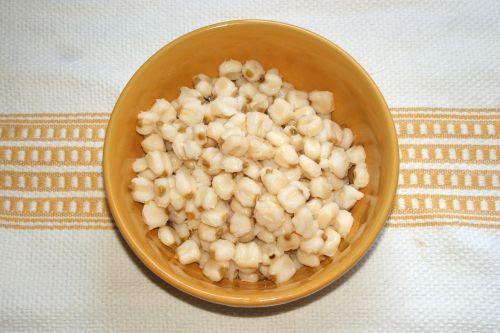
Maize became the central food of Mesoamerican life not because it was simple, but because it was transformable. Its power lay in the fact that it could move through time, labor, and form: dried on the cob, shelled into kernels, stored in household spaces, parched for travel, soaked and cooked, ground on a metate, shaped into dough, wrapped into tamales, thinned into atole, or offered in ritual contexts as a substance dense with sacred meaning. A fresh crop was only the beginning. For maize to become a dependable staple, it had to be dried, protected, processed, and continually remade. This gave maize a special place in Mesoamerican food preservation. It was not preserved through a single technique alone, but through a chain of practices that began in the field and extended into the home, the marketplace, the temple, and eventually the tribute storehouse. Its durability made it practical; its adaptability made it civilizational. Unlike a fresh fruit, a fish, or a piece of meat, maize could be held in a suspended state of possibility, waiting to become whatever the moment required. It could be humble daily food, emergency reserve, ritual substance, seed stock, taxable surplus, or portable provision. That flexibility helps explain why maize became more than a crop. It became a temporal technology, a way of storing sunlight, rainfall, labor, and land in a form that could be reopened by human hands months later.
Drying was the first great step in maize preservation. Mature ears could be left to harden, harvested, husked, dried further, and stored until needed. Once dried, maize could remain edible far longer than many fresh foods, provided it was protected from dampness, insects, rodents, and mold. This was especially important in climates where rainy seasons created constant danger for stored grain. The dry kernel was a compact unit of stored energy, but it was also a future possibility: it could feed a household, seed a field, provision a traveler, or become part of a ritual meal. Storage required choices. Some maize had to be set aside for consumption; some had to be protected for planting; some might be exchanged, paid as obligation, or delivered as tribute. Dried maize carried both biological and social futures. A kernel in storage was never just food. It was security, debt, labor, memory, and promise.
Nixtamalization transformed this stored grain into one of the most important food technologies in the ancient Americas. By cooking or soaking maize in an alkaline solution made with lime, ash, or similar materials, Mesoamerican peoples changed the grain chemically and materially. The process loosened the hull, made the kernels easier to grind, improved texture and flavor, and increased the availability of essential nutrients, especially niacin. Without such processing, heavy dependence on maize can produce serious nutritional deficiencies; with nixtamalization, maize became a far more reliable foundation for daily life. This technique also made possible the masa that lay behind tortillas, tamales, and many other foods. It was a preservation technology in the broad sense not because it magically made cooked maize last indefinitely, but because it allowed stored dry grain to be converted efficiently into nourishing, flexible, portable, and culturally meaningful food. The crucial fact is that maize could be kept dry for long periods and then activated through nixtamalization when needed. Preservation and processing were inseparable.
This also helps explain why maize processing belonged so deeply to household labor. Nixtamalization was not a rare or elite technique. It was repetitive, embodied knowledge: measuring grain, choosing alkaline materials, judging heat, rinsing, grinding, kneading, cooking, and knowing when the texture was right. The metate and comal were tools of civilization as surely as the calendar stone or causeway, because they turned stored grain into daily sustenance. Much of this work was gendered, with women’s labor forming the practical center of maize culture across Mesoamerica. The time required to process maize was enormous, and its repetition made household labor one of the main engines of food security. A city could possess fields, tribute lists, markets, and storehouses, but none of those systems mattered unless maize could be transformed into edible food day after day. The grandeur of Mesoamerican civilization rested, in part, on the sound of grinding.
The storable quality of maize also made it politically useful. In Maya communities, stored maize helped households manage seasonality, support ritual obligations, and survive periods of uncertainty. In the Aztec world, maize could be counted, moved, taxed, stored, redistributed, and consumed at imperial scale. Tribute maize and other staples helped feed nobles, warriors, laborers, priests, and urban populations. Yet the political strength of maize depended on the same material vulnerabilities that shaped household storage: moisture, pests, spoilage, theft, transport, and human conflict. Stored grain could sustain a city, but it could also become a target. It could represent abundance, but also extraction. A ruler who controlled maize controlled more than calories; he controlled the stored labor of farmers, the timing of feasts, the provisioning of armies, the reliability of urban life, and the ability to reward supporters or punish enemies. This dependence could become dangerous. If tribute routes failed, if storehouses were seized, if drought reduced harvests, or if commoner households were overburdened, the same grain structure that supported power could expose its fragility. Maize preservation reveals the double character of Mesoamerican food systems. The dry kernel made civilization more resilient, but once accumulated in quantity, it also became an instrument of hierarchy and power. Nixtamalization completed that transformation, turning stored grain into the daily food through which bodies, households, cities, and empires reproduced themselves.
Classic Maya Storage: Households, Cities, and the Challenge of the Tropical Lowlands
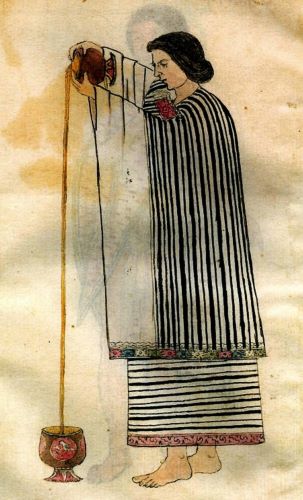
The Classic Maya world sharpened the problem of food storage because many of its great cities flourished in landscapes where preservation was both essential and difficult. The southern lowlands, with their seasonal rains, heat, humidity, forests, bajos, wetlands, and uneven soils, did not offer the easy security that later myths of tropical abundance sometimes imply. Food could grow richly, but it could also spoil quickly. Maize, beans, squash, chiles, fruits, cacao, honey, fish, game, and gathered foods all had to be fitted into cycles of ripening, drying, transport, consumption, and storage. The Classic Maya did not face one single food-storage problem; they faced many regional versions of it. A household near a river, a farming community on upland soils, a settlement near wetlands, and an elite court in a major city all lived within different balances of abundance and risk. Storage was never just a container or a room. It was an adaptive strategy for living in an environment where the difference between surplus and scarcity could turn on rainfall, pests, warfare, labor, and political obligation.
At the household level, storage likely remained the most immediate defense against uncertainty. Maya families needed to keep dried maize, beans, seeds, chiles, and other durable foods through the parts of the year when fields were not yet producing. This required not only physical storage but constant maintenance. Food had to be kept off damp ground, protected from rodents and insects, separated from moisture, and inspected for spoilage. Much of this labor leaves faint archaeological traces because baskets, wooden platforms, thatch, cordage, and many stored foods decay in tropical environments. Yet the absence of spectacular remains should not be mistaken for the absence of technique. Household storage may have depended on perishable materials and practiced routines rather than massive facilities. Jars, bins, raised surfaces, storage rooms, suspended bundles, drying racks, and protected interior spaces would all have belonged to the practical world of food security. The Maya household was not merely a place where food was eaten; it was where harvests were sorted, transformed, guarded, and made to last.
The tropical lowlands made moisture the great enemy of stored food. Dried maize could sustain a family only if it stayed dry enough to resist mold and rot. Chiles could be preserved only if they were adequately dried or smoked before humidity reclaimed them. Beans and seeds had to be shielded from dampness as well as pests. This meant that preservation was closely tied to architecture, seasonality, and daily judgment. Floors, platforms, hearth smoke, airflow, roofing, and storage placement all mattered. Smoke from hearths may have helped discourage insects and dry certain foods, while raised or enclosed spaces could reduce exposure to water and animals. The skill lay in knowing where and when to store. A technique that worked well during a dry interval could fail under prolonged rains. A food safe in one microenvironment might spoil in another. Preservation was never passive. The stored harvest had to be continually defended.
Classic Maya cities added another layer to the problem. Urban centers such as Tikal, Calakmul, Copán, Palenque, Caracol, and others were not simply ceremonial places floating above the agricultural world. They required food, labor, fuel, water, and materials from surrounding landscapes, and their populations could not live on royal symbolism alone. Their rulers depended on the ability of households and communities to produce enough surplus to sustain elites, artisans, builders, ritual specialists, visitors, and political retainers. Yet Maya urban provisioning appears to have been distributed rather than entirely centralized. They likely combined household production, garden cultivation, managed forests, local exchange, tribute-like obligations, elite storage, and market activity in varying proportions. In some places, farmers near urban centers may have supplied staples through obligations to elites; in others, exchange and marketplace activity may have played a larger role. House gardens, orchards, forest management, and nearby fields could soften the boundary between “city” and “countryside,” making Maya urbanism less like a city separated from agriculture and more like a dense political and ritual center embedded in a productive landscape. This matters because it cautions against imagining Classic Maya storage as a single state-run granary system. The resilience of Maya cities probably depended on many smaller nodes of production and storage, even when royal courts claimed ideological authority over fertility, maize, rain, and abundance. Their strength was partly decentralized: a city could draw on dispersed household stores, nearby cultivation, regional exchange, and elite accumulation rather than one monolithic supply depot.
The relationship between storage and political power was nevertheless real. Maya rulers presented themselves as mediators of cosmic order, agricultural fertility, and ancestral continuity. The ability to sponsor feasts, receive tribute or offerings, redistribute food, and stage ceremonies had political significance. Food storage helped make these performances possible. Feasting required accumulation before consumption; ritual calendars required specific foods to be available at specific times; elite hospitality required surplus that could be mobilized beyond ordinary household need. Stored maize, cacao, salt, honey, tamales, fermented drinks, and other foods or ingredients could all become part of the material language of rank and obligation. A ruler did not need to control every household storehouse to benefit from preservation. It was enough that preserved and stored foods made periodic concentration possible: food gathered for a feast, presented as offering, redistributed to followers, or consumed in ceremonies that made hierarchy visible.
Salt was one of the clearest bridges between preservation, exchange, and Maya regional diversity. Along coasts and lagoons, especially in the Maya area, salt production created a commodity that was valuable both as a seasoning and as a preservative. Salt could help cure fish and meat, but it was also a necessity that inland communities needed and coastal producers could supply. This made salt a powerful example of how preservation linked ecology to economy. A coastal environment produced something that extended the life of other foods and circulated through trade networks far beyond its place of origin. Salt-making sites, brine boiling, trade routes, and inland demand show that the Maya food system cannot be understood only through maize fields. It also depended on specialized products that moved across environmental zones. Preserved food was not always the thing being traded; sometimes the preservative itself was the trade good.
Cacao presents a different but equally important case. Unlike maize, cacao was not an everyday staple for most people, but its processing required fermentation, drying, storage, and transport. The fresh cacao pod was perishable and local, tied to particular growing environments; the dried cacao bean, by contrast, could move through landscapes, courts, markets, and networks of obligation. Cacao beans moved through Maya and broader Mesoamerican exchange systems as elite food, ritual substance, and in some contexts a medium of value. Its preservation was not primarily about preventing famine; it was about transforming a perishable fruit into a durable, desirable, and socially charged commodity. Once dried, cacao could travel and accumulate meaning as it moved. It connected tropical production zones to courts, ceremonies, and long-distance exchange. The labor of fermentation and drying did more than make cacao usable. It detached cacao from the tree and made it available to politics, ritual, and prestige. A ruler could consume it ceremonially, offer it diplomatically, store it as wealth, or use it to mark social distinction. Maya storage involved more than survival staples. It also made prestige economies possible. The same broad logic that allowed maize to pass through seasons allowed cacao to pass through status hierarchy: a biological product became a stored social object.
The Classic Maya challenge was not simply how to store enough food, but how to build resilient food systems in landscapes where preservation was constantly tested. Household skill, drying, smoking, salting, seed storage, garden production, managed forests, market exchange, and elite accumulation all formed overlapping answers to that challenge. These practices did not make Maya society immune to shortage, environmental stress, warfare, or political breakdown. Indeed, the difficulty of storage in humid lowland environments may have made flexibility especially important. The strength of the system lay in its distributed intelligence: many households, communities, specialists, and exchange networks each preserving different foods in different ways. Classic Maya civilization rested not only on kings, glyphs, temples, and astronomy, but on the quieter labor of keeping maize dry, beans safe, salt moving, cacao stored, and seasonal abundance from disappearing before it could become social life.
Drying, Smoking, and Salting: Preserving Fish, Meat, Chiles, Fruits, and Seeds
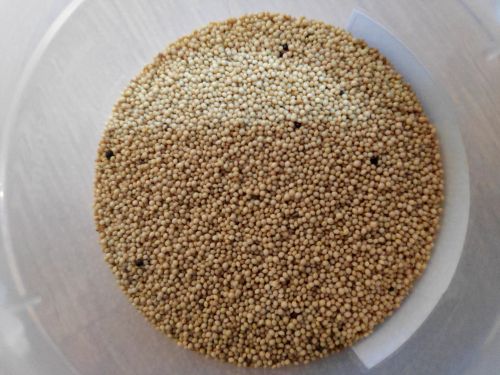
Drying was the most basic and probably the most widespread preservation technique in ancient Mesoamerica because it worked with rather than against the seasonal environment. The sun, wind, hearth, and dry-season air could all be used to remove moisture from foods that would otherwise spoil quickly. This mattered because spoilage is not simply decay in the abstract; it is a material race between food, climate, microbes, insects, animals, and human need. By reducing moisture, Mesoamerican peoples slowed that race and converted fragile abundance into durable supply. Maize, beans, chiles, squash seeds, amaranth, fruits, fish, and strips of meat could all be made more stable through drying or related techniques. The result was not only longer-lasting food but food that was lighter, smaller, easier to move, easier to store, and easier to combine with other ingredients. Drying stood at the border between preservation and transportation. It turned local harvests into things that could survive distance.
Chiles offer one of the clearest examples of how drying transformed food culturally as well as materially. Fresh chiles are seasonal and perishable, but dried chiles can be stored, traded, ground, rehydrated, toasted, smoked, and blended into sauces or seasonings. Their importance in Mesoamerican cuisine was not limited to heat. Different varieties carried different flavors, colors, aromas, and culinary uses, from bright and fruity to deep, earthy, and smoky. Drying concentrated these qualities and made them available beyond the harvest. A dried chile was compact flavor, medicine, identity, and regional ecology all at once. It could season a household meal, enliven a maize-based diet, mark regional taste, or become part of the goods moving through local and long-distance exchange. The same preservation process that protected chiles from decay also multiplied their culinary possibilities: a chile could be toasted to deepen its flavor, ground into powder, steeped into sauce, or combined with cacao, tomato, herbs, seeds, or other ingredients. In Aztec markets, Spanish observers encountered an astonishing abundance of foodstuffs, including chiles in various forms, and although such descriptions must be read carefully, they point toward a culinary world in which preserved plant foods were not marginal. They were part of everyday taste and commercial life. The dried chile made preservation visible not as deprivation, but as refinement. It shows that preservation did not simply hold food in reserve for hard times; it created a richer cuisine by allowing flavor to be stored, intensified, and recombined.
Smoking extended the logic of drying by adding heat, airflow, and chemical changes from smoke itself. Fish, turkey, game, and other meats were highly perishable in warm climates, and preserving them required rapid action. Hanging foods over low fires, exposing them to smoke, or drying them near hearths reduced moisture while also discouraging insects and slowing spoilage. Smoking did not make meat eternal, and its effectiveness depended on thickness, humidity, salt use, airflow, and storage conditions. Still, it could turn a fresh catch or kill into provisions that lasted long enough for travel, trade, ritual consumption, or household reserve. This was important because animal foods were often unevenly available. Hunting and fishing could produce sudden abundance, but abundance became waste unless it could be consumed quickly or transformed. Smoked and dried foods allowed people to stretch moments of success across longer intervals.
Salting added another powerful method, particularly in coastal, lagoon, and lake environments where fish and aquatic foods could be processed close to where they were caught. Salt draws moisture from food and helps create conditions less favorable to spoilage. Salting often worked together with drying or smoking rather than as a completely separate technique. Fish could be salted and dried; meat could be salted and smoked; salt could make other preservation methods more reliable. This helps explain why salt was so important in Mesoamerican exchange. It was not merely a seasoning, though seasoning mattered greatly. It was a preservative, a physiological necessity, a trade good, and a tool that allowed other foods to become trade goods. In the Maya world, coastal salt production shows how a preservative could become the basis for specialized labor and regional exchange. Inland communities needed salt, but they could not always produce it locally; coastal and lagoon communities could supply it, turning geography into economic advantage. Salt linked environments that produced different foods and faced different storage problems. A fisherman with salt could preserve a catch; an inland household with salt could season and stabilize food; a trader with salt could carry a commodity whose value reached far beyond taste. Maya salt production along coastal zones and salt exchange across inland networks show that preservation could begin with a mineral rather than a crop. Salt moved because it made other movement possible. It was a small white infrastructure of preservation.
Fish deserves special attention because it reveals the geographical range of Mesoamerican preservation. Coastal peoples, lake communities, riverine settlements, and wetland communities all had access to aquatic resources that differed from inland agricultural staples. Fresh fish spoils rapidly, especially in heat, but drying, salting, smoking, or combinations of these techniques could turn it into a transportable commodity. In the Maya area, coastal salt production and marine resources linked shorelines to inland communities. Salted or dried fish could move from coasts, lagoons, rivers, and wetlands toward settlements whose daily diets were otherwise anchored in maize, beans, squash, and chiles. In central Mexico, the lakes of the Basin of Mexico provided fish, waterfowl, algae, insects, amphibians, and other aquatic foods that entered the urban food system in fresh and preserved forms. Tenochtitlan’s food supply depended not only on fields and chinampas, but on the edible productivity of water. Canoes could bring fresh foods rapidly, but preservation made aquatic foods less dependent on immediate consumption and widened their reach. Dried or salted fish could be stored, sold, carried, and eaten after the moment of capture had passed. The provisioning of large cities depended on this diversity. Preserved fish and lake products could supplement maize-based diets, support market exchange, and give inland consumers access to foods from environments they did not directly inhabit. Preservation expanded the edible geography of Mesoamerica. It allowed coast, lake, river, and wetland to enter the diets of people who lived beyond them.
Seeds and fruits show the quieter side of this same process. Squash seeds, amaranth, and other small foods could be dried and stored as concentrated sources of calories, fat, protein, and ritual meaning. Amaranth, especially in central Mexico, could be stored and later transformed into ritual foods, offerings, and festival substances. Fruits were more variable, because not all fruits dried equally well in humid climates, but where drying was possible it offered a way to extend seasonal sweetness. Honey, though not a dried food, also belonged to the preserved-food world because it could be stored, traded, fermented, and used as a sweetener with ritual and culinary significance. These foods remind us that preservation was not only about staples or emergency rations. It also preserved pleasure, flavor, texture, sweetness, and sacred association. A society’s stored foods reveal not just how it survived, but what it valued enough to carry forward.
The difficulty for historians is that many of these preserved foods leave only indirect traces. Dried chiles, smoked meats, salted fish, baskets, cords, racks, and household storage devices often disappear archaeologically, especially in humid regions. Evidence must be assembled from botanical remains, residues, tools, ethnohistoric accounts, tribute lists, iconography, settlement patterns, salt-production sites, and careful comparison with later Indigenous and traditional practices. This demands caution. Not every modern or colonial-era preservation practice can be projected backward unchanged into the Classic Maya or preconquest Aztec worlds. Yet the broad pattern is clear enough: Mesoamerican peoples developed overlapping methods for removing moisture, controlling decay, concentrating value, and moving food across time and space. Drying, smoking, and salting did not stand outside agriculture, trade, or religion. They were the techniques that allowed crops, catches, hunts, flavors, and ritual substances to survive long enough to become part of a larger civilization.
Fermentation and Transformation: Pulque, Cacao, Pozol, and the Border Between Food and Drink
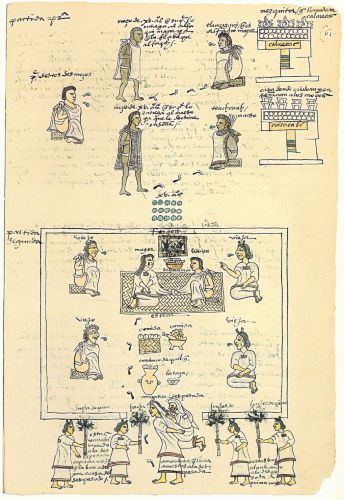
Fermentation complicates the story of food preservation because it does not always preserve food in the same straightforward way as drying, smoking, or salting. Instead of simply slowing change, fermentation directs change. It allows human beings to guide decay, sweetness, acidity, bitterness, foam, aroma, intoxication, digestibility, and social meaning toward desirable ends. In Mesoamerica, this mattered because many important foods and drinks existed at the boundary between nourishment, medicine, ritual, pleasure, and prestige. Pulque, cacao beverages, maize drinks, and fermented or semi-fermented maize preparations were not merely ways to keep calories from spoiling. They were techniques for transforming perishable substances into culturally powerful ones. Fermentation turned sap, pod, dough, and grain into social media in the older sense: substances through which people gathered, exchanged, worshiped, celebrated, healed, and marked difference.
Pulque, the fermented sap of the maguey plant, was important in central Mexico. Maguey itself was one of the great utility plants of Mesoamerica, providing fibers, thorns, food, medicine, construction materials, and drink. When the plant’s sap was collected and allowed to ferment, it became pulque, a mildly alcoholic beverage with ritual, medicinal, social, and sometimes morally contested meanings. Unlike dried maize or salted fish, pulque was not a long-storage food in the strictest sense; it was perishable and had to be consumed within a limited period. Yet it still belongs in the history of preservation because it transformed a flowing, fragile sap into a drink that could be ritually managed, socially distributed, and nutritionally significant. It also reveals an important distinction: preservation was not always about indefinite storage. Sometimes it was about extending usefulness just long enough for a substance to enter ceremony, feasting, exchange, or controlled consumption. In Aztec society, pulque was surrounded by rules, restrictions, and sacred associations, especially in relation to age, ritual intoxication, fertility, and the gods of maguey and drunkenness. Fermentation here was not merely biochemical. It was moral and religious technology.
Cacao offers a different path from perishability to durable value. The fresh cacao pod is local, seasonal, and fragile; the cacao bean, once fermented, dried, and stored, becomes transportable, exchangeable, and socially charged. The fermentation of cacao pulp around the beans was an essential step in developing the flavor and usability of cacao, after which the beans could be dried, moved, stored, roasted, ground, and prepared as beverages. This process mattered because cacao’s prestige depended on a successful sequence of transformations. A pod growing in a humid tropical zone had to be opened, its beans and pulp managed through fermentation, the beans dried enough to travel without spoiling, and then later roasted, ground, mixed, and frothed into a beverage worthy of elite consumption. Among the Maya and later among other Mesoamerican peoples, cacao occupied a world of elite consumption, ritual performance, diplomatic exchange, and in some settings monetary value. Its preservation did not feed the masses in the way maize did, but it converted a tropical crop into a durable object of prestige. A cacao bean could travel far beyond the tree that produced it. It could appear in feasts, offerings, marriage negotiations, tribute systems, market exchange, and elite drinking vessels. Its value depended not only on rarity or taste, but on the fact that preservation allowed it to detach from its place of origin while retaining the aura of that origin. Cacao carried the tropical lowlands into courts and markets elsewhere, making distant ecology available as luxury. Cacao shows that preservation was not only a subsistence strategy. It could also be a way of concentrating status, moving wealth, and turning a perishable fruit into a political and ritual currency.
The preparation of cacao also blurs the line between food and drink. Mesoamerican cacao was commonly consumed as a beverage, often frothed, flavored, mixed, colored, or combined with ingredients such as chile, maize, flowers, honey, or other aromatics depending on region and period. It was drunk, but it was not “just a drink” in the modern sense. It carried calories, stimulant properties, flavor, luxury value, ritual power, and social distinction. The labor that made cacao usable (fermentation, drying, roasting, grinding, mixing, pouring, and foaming) was a chain of transformations. Each stage moved cacao farther from perishable fruit and closer to a cultivated social object. In Maya art and texts, cacao could be associated with elite vessels, courtly consumption, and sacred abundance. In central Mexico, cacao became deeply embedded in tribute and market systems. The preserved bean made this possible. Without fermentation and drying, cacao would have remained geographically constrained; with them, it became one of the great long-distance foods of Mesoamerica.
Maize-based drinks and doughs further complicate the boundary between preservation, food, and liquid sustenance. Atole, made from maize, could serve as a nourishing drink, while other maize preparations could be thick, portable, diluted, fermented, or consumed as both food and beverage depending on context. Pozol, known especially from later Mesoamerican and Indigenous traditions, offers a useful but cautious example of maize as portable food-drink. Made from cooked maize dough that can be mixed with water, consumed during travel or labor, and sometimes allowed to sour or ferment, pozol shows how maize could be carried not simply as dry grain but as a prepared substance ready to become nourishment with the addition of water. The chronology and regional specificity of such practices must be handled carefully; later continuities cannot be treated automatically as direct proof for all Classic Maya or preconquest contexts. Even so, the broader principle is well grounded: Mesoamerican food systems frequently moved across the categories modern observers separate as solid food, beverage, ration, medicine, and ritual substance. Maize could be stored dry, processed into masa, shaped into tamales, thinned into atole, or carried as a dough-like provision. Its usefulness lay partly in this ability to change state.
Fermentation and transformation reveal that preservation was not always about freezing food in time. Sometimes it was about guiding food through time into a more useful, more meaningful, or more valuable condition. Pulque turned maguey sap into a sacred and regulated intoxicant. Cacao fermentation and drying turned a perishable tropical fruit into an elite beverage base, exchange good, and prestige object. Maize preparations crossed between grain, dough, drink, ration, and offering. These processes show the sophistication of Mesoamerican food knowledge because they required timing, sensory judgment, environmental awareness, and social rules. A fermented drink could nourish, intoxicate, heal, pollute, sanctify, or distinguish rank depending on who consumed it, when, and why. The preserved or transformed food was never merely material. It carried relationships: between humans and plants, households and markets, farmers and rulers, bodies and gods. At the border between food and drink, Mesoamerican preservation becomes not only a technology of survival, but a technology of meaning.
Postclassic Markets and Regional Exchange: Preserved Food as Trade Good
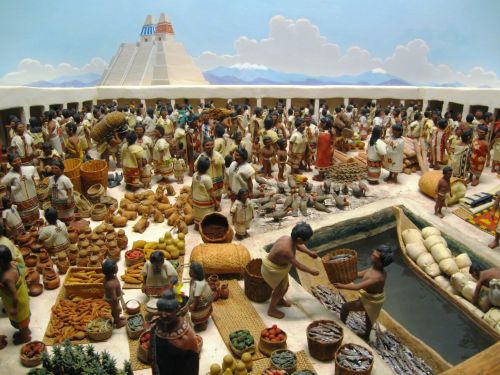
By the Postclassic period, preservation had become inseparable from the movement of goods across Mesoamerica. Markets, tribute routes, merchant networks, canoe traffic, porters, coastal exchange, and highland-lowland trade all depended on foods that could survive beyond the moment of harvest, catch, or slaughter. Fresh foods certainly moved, especially over short distances, but the broader regional economy favored items that were compact, durable, valuable, and recognizable. Dried chiles, cacao beans, salt, amaranth, stored maize, dried fish, smoked meats, honey, seeds, and other preserved or semi-preserved goods could cross ecological zones and enter communities far from their place of origin. Preservation did more than protect food from decay. It converted local abundance into exchangeable value.
This mattered because Mesoamerica was not one ecological world. Highlands, lowlands, coasts, river valleys, lakes, forests, volcanic basins, and dry zones produced different resources and different risks. A community with salt could trade with one that had maize; a cacao-producing region could supply elites far from the humid zones where cacao trees flourished; lake communities could send aquatic foods into urban markets; farmers with surplus chiles or amaranth could move concentrated flavor and nutrition through exchange networks. Preservation allowed these differences to become economic relationships. The more durable the food, the farther it could travel, and the farther it traveled, the more it could acquire meanings beyond subsistence: regional identity, luxury, tribute obligation, ritual value, or market prestige. Preserved food was one of the ways Mesoamericans made geography portable. It allowed a coast to appear inland as salt or dried fish, a tropical grove to appear in a highland court as cacao, and a local harvest to become part of a broader commercial world. This was not simply a matter of convenience. In a region without draft animals or wheeled transport for heavy cargo, preservation reduced weight, concentrated value, and made human porterage and canoe transport more practical. A good that spoiled in a day remained trapped near its source; a good that could last for weeks or months could enter the circuits of merchants, households, festivals, and political tribute. Preservation turned distance from an obstacle into an economic opportunity.
Markets were central to this process. By the Late Postclassic, central Mexican markets, especially the great market at Tlatelolco, impressed Spanish observers with their scale, order, specialization, and variety. Such accounts are shaped by conquest and comparison, but they remain important evidence for the density of exchange. Preserved foods were ideal market goods because they could be accumulated, displayed, weighed or counted, transported, and sold without the immediate urgency attached to highly perishable foods. Dried chiles, salt, cacao, beans, seeds, and fish could sit within commercial routines in ways that fresh produce could not always do. This did not make fresh foods unimportant; the markets of central Mexico also depended on rapid movement of vegetables, fruits, prepared foods, lake products, and cooked dishes. But preservation gave markets temporal depth. It allowed vendors to bridge the gap between harvest cycles and daily demand.
The pochteca, the long-distance merchants of the Aztec world, represent the most famous Postclassic example of trade as specialized social power. They moved luxury goods, intelligence, diplomatic messages, and politically significant commodities across regions, and their activities linked commerce to imperial expansion. Not all preserved foods were pochteca goods, and not every market exchange should be folded into an Aztec imperial model, but the pochteca make clear how durable commodities could become politically important. Cacao, for instance, could move as a prestige good and medium of value. Salt could travel from production zones into regions that needed it. Dried or otherwise durable foods could accompany merchants as provisions or merchandise. In this setting, preservation supported both the practical logistics of travel and the symbolic economy of wealth. A food that could last long enough to be carried could become a food that carried status. This was especially true when durability overlapped with scarcity. Cacao beans, for example, were valuable not only because they were desirable, but because they could be dried, counted, stored, and transported from particular growing zones into places where they could not easily be produced. Salt likewise moved as a necessity whose value increased with distance from production areas. The merchant’s pack, then, was not just a bundle of goods; it was a mobile archive of regional specialization. Preserved commodities made distant places legible and consumable, allowing political centers to taste, display, and command resources from beyond their immediate ecological reach.
The Maya Postclassic world also shows the importance of regional exchange, though in forms that differed from central Mexico. Coastal trade routes, canoe movement, salt production, obsidian exchange, cacao circulation, and market activity connected communities across the Yucatán Peninsula, the Gulf Coast, the Caribbean, the highlands, and the lowlands. Salt was especially important because it linked preservation to specialized production. Coastal salt makers produced a substance needed inland, while inland communities supplied other goods in return. Cacao moved from suitable growing regions into elite and commercial settings where its value exceeded ordinary nutrition. Dried fish and other marine products could move beyond the shore. These exchanges remind us that “Maya food storage” was not only a household matter and not only a Classic-period problem. In the Postclassic, preserved food and preservatives helped sustain a mobile, commercially active world in which coastal and inland economies were mutually dependent. Canoes could carry goods along shorelines and through riverine routes, while overland porters connected inland communities to coastal products. This movement mattered because Maya political life in the Postclassic was often organized through networks of towns, ports, pilgrimage centers, markets, and regional powers rather than through a single imperial structure like that of the Mexica. Preservation fit this world well. It allowed smaller communities and specialized producers to participate in exchange without requiring massive centralized storage. A salt-producing community, a cacao-growing zone, a fishing settlement, or a farming village could each contribute goods that lasted long enough to circulate through wider networks. The durability of these foods helped create a commercial geography that was flexible, regional, and deeply ecological.
Tribute further changed the meaning of preserved food. In the Aztec imperial system, goods collected from subject communities had to be transportable, countable, and storable. Tribute lists preserved in sources such as the Codex Mendoza show the imperial appetite for commodities that could be gathered, recorded, delivered, and redistributed. Food tribute could include staples and valued products, while nonfood goods such as textiles, feathers, and precious materials circulated alongside them. Preservation mattered because an empire could not live only on goods that spoiled before they reached the center. Dried, stored, or otherwise durable foods made extraction possible over distance. Yet tribute also transformed preservation into coercion. A household’s reserve, a community’s surplus, or a region’s specialty product could be drawn into imperial obligations. What protected local survival in one context could support imperial power in another.
The Postclassic trade in preserved food reveals a wider truth about Mesoamerican economies: preservation created mobility, and mobility created new forms of value. A chile dried in one region could season a meal elsewhere; cacao fermented and dried in a humid zone could become an elite beverage far away; salt from a coast could preserve fish, flavor maize, and mark exchange relationships deep inland; dried fish could carry aquatic environments into urban diets; amaranth and seeds could move as compact nutrition and ritual material. These goods were small, but their effects were large. They connected households to markets, markets to merchants, merchants to rulers, and rulers to tribute networks. Preserved food was not a background detail of Mesoamerican commerce. It was one of the material conditions that made regional exchange possible at all.
Aztec Imperial Storage: Tribute, Granaries, and the Feeding of Power
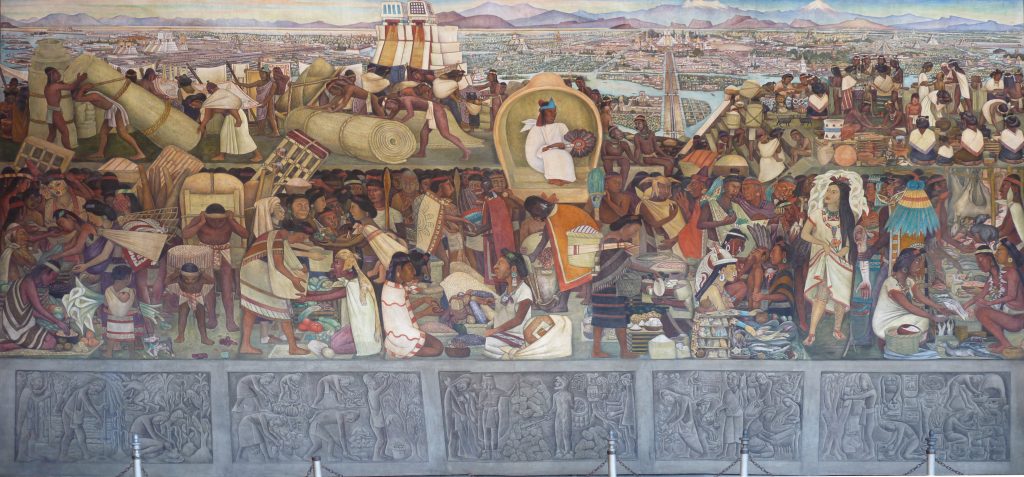
By the time the Mexica and their allies built the Aztec Empire, food storage had become inseparable from rule. Tenochtitlan was not only a city of temples, canals, causeways, marketplaces, and royal compounds; it was also a city that had to be fed every day. Its population, nobility, priests, warriors, artisans, laborers, visitors, and dependent institutions required a constant stream of food from chinampas, nearby fields, lake systems, tribute provinces, and market networks. Preservation and storage made that stream governable. Fresh produce could arrive quickly from the Basin of Mexico, but the imperial structure also depended on durable staples and commodities: maize, beans, chiles, amaranth, salt, cacao, dried fish, seeds, and other goods that could be counted, carried, stockpiled, redistributed, and consumed after the moment of production had passed. This distinction between fresh abundance and stored abundance is crucial. The city’s daily markets displayed astonishing variety, but behind that visible plenty stood a slower infrastructure of dried, cured, counted, and stored foods that made urban life less vulnerable to a single day’s harvest or a single canoe’s arrival. Tenochtitlan’s power depended simultaneously on immediacy and delay: fresh vegetables, fish, prepared foods, and lake products moved quickly through markets, while durable goods accumulated in households, merchant stores, temple spaces, elite compounds, and tribute systems. Aztec power was not sustained by conquest alone. It was sustained by the capacity to transform regional surplus into stored imperial food.
Tribute gave storage its political edge. The Aztec Empire did not rule every subject community by direct administration in the modern bureaucratic sense. Much of its power rested on the extraction of goods, labor, military support, and symbolic submission from conquered or subordinate regions. Tribute lists, especially those preserved in the Codex Mendoza, reveal an imperial world organized around regular deliveries of textiles, costumes, feathers, precious goods, military equipment, and foodstuffs. Food tribute mattered because it tied the reproductive life of subject communities to the demands of the imperial center. Maize, beans, chiles, amaranth, cacao, salt, and other consumable goods were not simply “taxes” in a neutral sense. They were the stored labor of farmers, fishers, salt makers, traders, and households, redirected toward Tenochtitlan and its ruling order. A sack of maize or a measure of cacao represented land, rainfall, labor, processing, transport, and submission.
Granaries and storehouses made this extraction visible and useful. Stored food could feed palace dependents, support priests and temple personnel, sustain workers on public projects, supply warriors, and provide material for feasts and redistributive ceremonies. The Mexica state did not need refrigeration because its most important staples had already been adapted to storage. Dried maize and beans could be accumulated; chiles could be dried and stored; amaranth seeds could be kept for later ritual and culinary use; cacao beans could be dried, transported, and held as prestigious consumables and units of value. The storehouse was more than a warehouse. It was a political organ. It gathered time into one place. Harvests from different regions and seasons could be brought under elite control, held until needed, and released in ways that displayed authority. To store food was to command the future, at least temporarily.
This system also depended on measurement, record, and transport. Tribute goods had to be assessed, delivered, received, and remembered. Painted manuscripts, trained officials, local intermediaries, porters, canoes, roads, and market institutions all helped make extraction workable. The absence of draft animals in Mesoamerica gave preservation special importance, because goods moved by human carriers or water transport had to justify their weight. Durable, compact, high-value foods traveled better than bulky perishables. Cacao was especially suited to this world because it was portable, countable, desirable, and associated with status. Chiles, salt, amaranth, beans, and dried fish likewise carried more than their physical weight; they carried regional specialization into the imperial center. A preserved food could be converted into an administrative object because it could be bundled, tallied, stored, and demanded again in regular cycles. That regularity mattered. Empire depended not merely on taking goods once, but on making delivery predictable enough that rulers could plan feasts, campaigns, construction, temple consumption, and political display around future arrivals. Transport made this even more complex. Porters could carry only so much; canoes could move goods efficiently through lake and canal systems, but overland routes still required human bodies, relay points, and coordinated obligations. Preservation reduced some of that pressure by allowing goods to travel more slowly, wait longer, and retain value after arrival. Food storage linked material technique to administrative imagination. The empire had to think in units: loads, bundles, baskets, measures, quotas, deliveries, and cycles. Preservation made food legible enough to be governed.
Yet imperial storage also exposed the coercive nature of Aztec power. What looked like abundance in Tenochtitlan could mean burden elsewhere. Subject communities had to produce beyond local need, meet scheduled obligations, and absorb the risks of harvest failure, transport demands, and elite exactions. Preservation made tribute possible, but it also made extraction more efficient. A fresh crop might spoil before it could serve imperial purposes; a dried or stored crop could be taken, counted, and moved. This meant that the same techniques that protected households against scarcity could also make households vulnerable to political appropriation. Food preservation was morally double. It could sustain community resilience, but once captured by tribute systems, it could deepen hierarchy. The stored maize that fed a city might have been the surplus a village needed against drought. The cacao that marked elite refinement might have come from laboring communities far from the palace where it was consumed.
The feeding of Aztec power, then, rested on a layered food network in which household storage, market exchange, chinampa production, tribute extraction, and imperial redistribution overlapped. No single mechanism fed Tenochtitlan. The city’s strength lay in the coordination of many flows: fresh produce from nearby agricultural zones, aquatic foods from the lakes, prepared foods from markets, durable staples from households and provinces, and prestige goods from distant ecologies. Preservation was essential because it gave those flows continuity. It allowed goods to pause without disappearing, to accumulate without immediate consumption, and to be mobilized for war, ritual, labor, and display. But this same continuity made it politically vulnerable. Storehouses could be emptied, tribute routes interrupted, subject peoples alienated, harvests damaged, and imperial claims resisted. Aztec storage was both an achievement and a dependency: a powerful means of feeding empire, and a reminder that empire itself lived from food gathered, preserved, carried, and controlled by others.
Tenochtitlan and the Urban Food Machine

Tenochtitlan was the most dramatic expression of preserved and circulating food in late preconquest Mesoamerica because it joined intensive local production, lake ecology, market exchange, tribute, and imperial storage into one urban food machine. Built on an island in the Basin of Mexico, the city depended on movement. Food came by canoe across the lakes, across causeways from surrounding settlements, from chinampa fields near the city, from markets that gathered regional goods, and from tribute networks that reached far beyond the valley. This urban food network was not based on preservation alone. Freshness mattered deeply. Vegetables, flowers, fish, waterfowl, fruits, prepared foods, and daily meals moved rapidly through the city’s canals and marketplaces. Yet preservation gave the system continuity. Dried maize, beans, chiles, amaranth, salt, cacao, dried fish, seeds, and stored tribute goods helped stabilize an urban world whose daily needs were too large to depend only on immediate harvests.
The chinampas of the southern Basin of Mexico are essential to this story because they supplied Tenochtitlan with an extraordinary flow of fresh produce. These raised fields, built in shallow lake environments, used rich mud, canals, careful planting, and intensive labor to produce crops near the city. They made the lake itself productive, turning wetland into an agricultural engine. But chinampa abundance did not remove the need for preservation; it changed its role. A city with access to fresh vegetables and herbs still needed stored maize. A market filled with perishable foods still needed salt, dried chiles, cacao beans, and durable staples. Chinampa agriculture fed the city’s appetite for freshness, while preserved foods gave the city depth against seasonality, delay, and interruption. The genius of Tenochtitlan’s food supply lay in this combination: the fresh and the stored, the nearby and the distant, the watery and the dry, the daily and the reserve. Chinampas could produce intensively, but they still belonged to ecological cycles of planting, labor, water management, frost risk, lake conditions, and political control. Their output had to be harvested, moved, sold, cooked, consumed, or combined with stored staples. Fresh greens or flowers could not replace the security of dry maize; herbs and vegetables enriched the diet, but they did not eliminate the need for durable calories. Chinampa agriculture and preservation were not opposing systems. They were complementary parts of the same urban metabolism. The chinampas kept Tenochtitlan supplied with immediacy, while preserved foods gave the city endurance.
The market at Tlatelolco, famously described by Spanish observers, stood at the visible center of this network. It was not merely a place where food was sold; it was a mechanism for sorting the edible world. Fresh produce, prepared meals, tortillas, tamales, chiles, beans, cacao, salt, fish, birds, game, herbs, medicines, and many other goods circulated through market exchange. Preserved foods were especially suited to this environment because they could be accumulated and displayed without the same urgency as fresh foods. Dried chiles could appear in many varieties. Cacao beans could be counted and exchanged. Salt could move as a seasoning, necessity, and preservative. Dried fish or other aquatic foods could carry the lake or coast into household cooking beyond the moment of capture. The market compressed geography and time. In one urban space, consumers could encounter the fresh produce of nearby chinampas, the aquatic abundance of the lakes, and the durable goods of distant regions. Its order also mattered. Vendors, inspectors, judges, and specialized areas helped turn food exchange into an organized civic institution rather than a random crowd of sellers. Preservation made that order easier to sustain because durable goods could be handled in regular quantities, stored by vendors, transported repeatedly, and compared by quality. A fresh vegetable might announce the morning’s harvest; a dried chile or cacao bean announced a longer chain of production, processing, movement, and valuation. Tlatelolco was not simply a marketplace of appetite. It was a marketplace of time: some foods had arrived that morning, some had been prepared the day before, some had been dried weeks earlier, and some had traveled from regions far beyond the lakes.
Tenochtitlan’s lake environment made aquatic food especially important. The Basin of Mexico was not simply scenery around the imperial capital; it was a productive food landscape. Fish, waterfowl, frogs, salamanders, algae, aquatic insects, and other lake resources entered the city’s diet in forms that ranged from fresh to dried or otherwise preserved. Canoe transport allowed many fresh goods to arrive quickly, but preservation expanded their usefulness. Aquatic foods could be dried, salted where salt was available, smoked, or otherwise prepared for storage and exchange. This mattered because urban food security depended on diversity. Maize remained central, but no city of Tenochtitlan’s scale could be understood through maize alone. Lake products supplemented diet, supported market specialization, and connected food production to the city’s watery infrastructure. The same canals that carried people, tribute, flowers, and building materials also carried food. Tenochtitlan was fed not only by fields, but by water.
Preserved foods also linked Tenochtitlan to empire. Tribute deliveries and regional exchange brought durable goods into the capital, where they could be stored, consumed, redistributed, or transformed into markers of status. Cacao from warmer regions, salt from production zones, dried chiles from specialized growers, amaranth seeds for food and ritual, beans and maize from agricultural communities, and other goods all entered the imperial center as part of a larger political economy. This made the city’s abundance a display of reach. To eat in Tenochtitlan was, for elites especially, to consume geography: tropical cacao, regional chiles, lake fish, chinampa greens, stored maize, and tribute goods drawn from subject peoples. Preservation made this imperial appetite practical. Without drying, salting, fermenting, storing, and transporting, many of these goods would have remained local. With preservation, they became urban commodities and political symbols. The capital could present itself as a place where the wider world gathered, not only in the form of captives, tribute cloth, precious feathers, and ritual objects, but also as food. A cup of cacao, a sauce made with dried chiles, a ritual preparation of amaranth, or a meal seasoned with salt from elsewhere all testified to networks of production and obligation. For commoners, preserved goods widened the range of what could be bought, cooked, and eaten. For elites, they dramatized command over distance. The city’s food supply became a map of power, one that could be tasted as much as seen.
Yet the urban food machine was also vulnerable because its power depended on coordination. Tenochtitlan needed markets to function, canoes to move, chinampas to produce, tribute to arrive, storehouses to hold, and households to process food daily. Disrupt one part, and abundance could become anxiety. Siege, drought, political resistance, disease, broken tribute routes, or conflict around the lake could threaten supply. Preservation reduced vulnerability but could not eliminate it. Stored maize, dried chiles, cacao, salt, and other durable goods bought time; they did not make the city independent of its hinterland. Tenochtitlan’s food system was both astonishingly sophisticated and deeply relational. It was powerful because it connected field, lake, market, storehouse, household, and empire. It was fragile for the same reason. The city ate through networks, and preservation was one of the chief technologies that kept those networks edible.
War, Travel, and Portable Food

War and long-distance travel forced Mesoamerican food organizations to solve a problem different from household storage or urban provisioning: food had to move with the body. Merchants, messengers, pilgrims, migrants, soldiers, porters, and diplomatic parties all needed provisions that were compact, durable, and useful away from the hearth. In a world without draft animals, wheeled freight transport for practical cargo, or pack animals equivalent to those used in Eurasia, this mattered enormously. Food moved by canoe where water allowed, but overland movement depended heavily on human carriers. Every load had a cost in labor and endurance. A food that was too wet, bulky, fragile, or perishable could not travel far without becoming a burden. Preservation became a technology of mobility. Dried maize, toasted grain, tamales, beans, dried chiles, salt, cacao, smoked meat, dried fish, amaranth, and prepared maize doughs all belonged to a broader world in which food had to endure distance.
For travelers, maize was the obvious foundation, but not always in the same form. Dry kernels could be carried, but they required processing, cooking, and equipment. Prepared foods were more convenient when movement was urgent or when travelers could not count on settled kitchens. Tamales, already wrapped and portable, were especially well suited to movement because they enclosed maize dough and fillings in a protective covering. They could be prepared in advance, carried in bundles, distributed to workers or travelers, and eaten without the full sequence of grinding, soaking, cooking, and serving required by less prepared forms of maize. Toasted or parched maize could provide compact sustenance. Maize doughs or drinkable maize preparations could be reconstituted with water, depending on region and circumstance. Chiles, salt, and seeds added flavor and nutrition without much weight. This mattered because travel food had to satisfy more than hunger. It had to be manageable under conditions of fatigue, heat, uncertain water access, and limited cooking time. A small amount of dried chile could make a bland maize ration palatable; salt could restore flavor and bodily need; seeds could add fat and density; cacao could serve as both valuable commodity and energizing drink for those with access to it. The point is not that every traveler carried the same standard ration, but that Mesoamerican food knowledge offered multiple ways to convert staple crops into travel foods. Portability required transformation. A field crop had to become something that could be carried in a bundle, basket, canoe, or merchant pack.
Military movement intensified these demands. Armies had to eat while moving through friendly territory, contested zones, and enemy regions. Campaigns required planning not only for weapons and warriors but for provisions, porters, routes, water, camp organization, and access to local supplies. The Aztec imperial structure, with its tribute networks and political alliances, could draw on subject communities, market systems, and stored food to support military activity, but an army still faced the practical limits of distance and supply. Dried and preserved foods helped extend operational reach. They could be carried in advance, consumed on the march, or delivered by porters. Stored tribute goods could be mobilized for campaigns, while conquered or allied towns might be expected to provide food. Military power rested partly on preserved calories. The battlefield began long before combat, in the ability to assemble food that would not spoil before warriors reached their destination.
The Maya world also connected food preservation to travel and conflict, though not through a single imperial logistics system like that of Late Postclassic central Mexico. Classic and Postclassic Maya polities fought wars, sent emissaries, sponsored pilgrimages, exchanged goods, and maintained regional connections across difficult landscapes. Movement through forest, wetland, upland, river, and coastal zones required flexible provisioning. Dried maize, beans, chiles, salt, cacao, smoked or dried fish, and other durable foods could support journeys between settlements, courts, markets, shrines, and ports. These foods were useful not only because they lasted, but because they could cross the uneven political geography of Maya life. A traveler might pass from one polity’s territory to another, from inland settlement to coastal landing, from a royal court to a pilgrimage place, or from a farming community into a market town. Portable food reduced dependence on uncertain hospitality and gave travelers some control over delay. Canoe travel along coasts and rivers allowed heavier or bulkier goods to move more efficiently, but preservation still mattered because travel was uncertain. Weather, warfare, political boundaries, and seasonal conditions could delay movement. Coastal routes could be interrupted by storms; inland paths could be slowed by mud, forest, or conflict; political relations could determine whether provisions were offered, traded, demanded, or withheld. A durable food was a buffer against uncertainty. It allowed merchants and travelers to cross space without depending entirely on immediate local hospitality or fresh supplies. In Maya settings, as in central Mexico, preservation supported both practical movement and the social relationships that movement created.
Portable food also belonged to commerce. Long-distance merchants needed provisions for themselves, but they also dealt in goods that survived travel. Cacao beans, salt, dried chiles, dried fish, honey, amaranth, and other durable commodities could be merchandise as well as sustenance. This doubled the importance of preservation: it fed the person who moved and created the goods worth moving. The merchant’s world depended on foods that could withstand handling, counting, bundling, storage, and delay. Cacao could be carried as a prestige good and medium of value. Salt could be transported as necessity and preservative. Dried chiles could carry regional flavor into distant kitchens. Preserved foods traveled with stories attached to them: where they came from, who produced them, what status they signaled, and what relationships made their movement possible. In commercial travel, preserved food was not merely practical. It was a carrier of geography, identity, and trust.
War and travel reveal the same principle from different angles: preservation extended human reach. It allowed people to leave the field, the kitchen, the lakeshore, or the marketplace and carry part of their food system with them. It supported armies, merchants, messengers, pilgrims, porters, and political envoys. It made distance negotiable. Yet portable food also exposed social inequality and coercion. Porters bore the physical weight of empire and exchange. Subject communities could be required to provision armies. Preserved tribute goods could feed campaigns that threatened other peoples. Mobility was not automatically freedom; it could be the mobility of merchants, but also the mobility of conquest. Mesoamerican portable foods remind us that preservation was never only about storage in place. It was also about motion: maize carried on the back, cacao moving through trade routes, salt crossing ecological boundaries, and armies fed by the stored labor of communities they ruled or sought to rule.
Ritual Calendars, Fasting, Feasting, and Preserved Foods
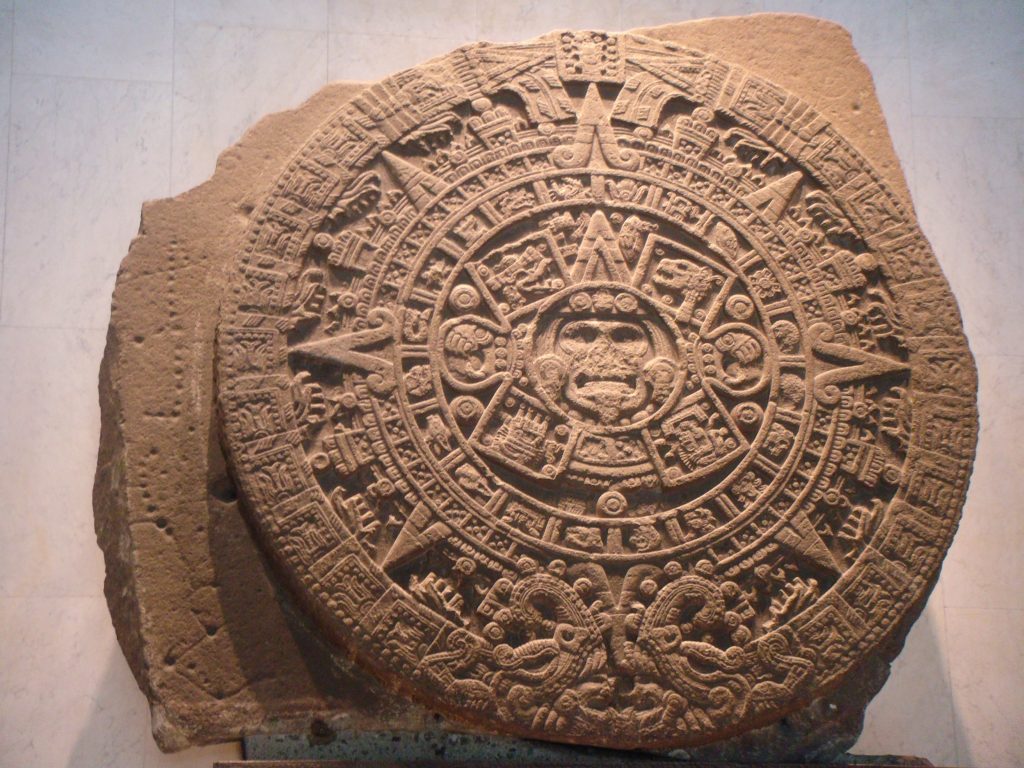
Mesoamerican food preservation was never only a matter of calories. Food belonged to sacred time as much as to household survival, and ritual calendars required communities to make particular substances available at particular moments. A festival could not depend entirely on what happened to be fresh that day. Offerings, feasts, fasts, temple distributions, elite banquets, and household ceremonies all depended on ingredients that had been grown, gathered, dried, stored, fermented, transported, and prepared in advance. Preserved food helped synchronize agriculture with religion. It allowed the harvest to reappear in ceremony months later, and it allowed perishable abundance to be transformed into ritual substance. In societies where maize, cacao, amaranth, maguey, salt, chiles, tamales, and blood all carried symbolic weight, storage was not spiritually neutral. To preserve food was also to preserve the possibility of obligation: to feed gods, ancestors, rulers, guests, and communities at the proper time.
The Maya world placed maize at the center of cosmic thought. Maize was not simply the crop that sustained bodies; it was tied to creation, regeneration, ancestry, rulership, and the very form of human life. Classic Maya imagery and later textual traditions make clear that maize carried meanings far beyond subsistence, and those meanings depended on the material reality that maize could be stored, processed, and ritually transformed. A dried kernel could become seed, meal, dough, drink, offering, or feast food. Its passage through these forms echoed larger patterns of death, burial, emergence, and renewal. The agricultural cycle gave maize its sacred rhythm, but preservation allowed human communities to extend that rhythm into ceremonies not bound to the exact moment of harvest. Stored maize made it possible to stage ritual abundance even when fields were not producing. In that sense, the Maya sacred world did not float above practical food systems. It rested on them. The godly power of maize was inseparable from the human labor that kept maize alive across seasons. This is especially important because Maya religion repeatedly linked agricultural fertility to political legitimacy. Rulers did not merely govern people; they performed relationships with ancestors, gods, rain, earth, and maize. Their ceremonies drew authority from the visible transformation of food and the promise that cosmic order would be renewed. Stored maize helped make that promise tangible. It could be brought out, prepared, offered, consumed, and displayed as proof that the community’s relationship with the living earth had not failed. The sacredness of maize depended not on abstraction alone, but on the daily success of drying, protecting, grinding, cooking, and sharing it.
Aztec ritual life made the connection between preservation and sacred time especially visible because the Mexica calendar was filled with festivals that required specific foods, offerings, abstentions, and acts of consumption. Fasting and feasting were not opposites so much as paired disciplines. Fasting marked restraint, purification, mourning, preparation, or ritual danger; feasting marked completion, abundance, redistribution, divine presence, or political display. Both required food management. To fast, one had to know what foods were restricted, when, and for whom. To feast, one had to gather enough food in advance to feed participants, honor gods, and dramatize communal or imperial abundance. Preserved foods made these shifts possible. Dried maize, stored beans, chiles, amaranth, cacao, salt, and prepared foods could be mobilized according to ritual schedule. Religion, in other words, organized appetite in time, and preservation gave that organization material reliability.
Amaranth offers one of the most striking examples of preserved food becoming sacred matter. In central Mexico, amaranth seeds could be stored and later combined with sweeteners or other substances to form ritual foods and divine images, especially in relation to deities whose bodies were materially fashioned, honored, divided, and consumed. The importance of amaranth lay partly in its durability. Small seeds could be gathered, kept, measured, and transformed when the calendar required. This made amaranth especially suited to ritual embodiment: it could pass from agricultural product to stored seed to sacred figure to communal consumption. Such practices unsettle modern categories. Was the ritual amaranth image food, sculpture, offering, divine body, or political theater? It was all of these at once. Preservation made that ambiguity possible because it held the seed in readiness until ritual action changed its status. The stored seed became a god by passing through human hands at the appointed time. This ritual transformation also reveals how food could collapse the distance between material and divine presence. A seed normally associated with agriculture, storage, and nourishment could become a body that was treated as sacred, then broken, distributed, and eaten. Consumption did not simply end the ritual object; it completed its movement through the community. The preserved seed made possible a drama of making, animating, dividing, and internalizing divine substance. Amaranth shows that preservation was not only preparatory. It was part of the sacred logic itself, because the seed’s ability to wait in storage made its later transformation into god-food ritually powerful.
Cacao also belonged to the ritual calendar, though in a different register. Because cacao beans could be fermented, dried, stored, and transported, they could circulate as elite beverage, offering, diplomatic gift, and luxury good. Among the Maya, cacao appears in courtly and ritual contexts, often associated with vessels, feasting, and status. In central Mexico, cacao was embedded in tribute, market exchange, and elite consumption. Its preservation allowed it to appear where cacao trees did not grow and to be consumed in settings charged with rank and ceremony. Cacao’s ritual importance depended precisely on this combination of distance, labor, and transformation. A cacao beverage was not simply a drink prepared from a bean; it was the end point of a long chain of cultivation, fermentation, drying, movement, grinding, mixing, pouring, and foaming. By the time it reached a feast or offering, cacao carried with it the prestige of distant ecologies and specialized knowledge. Preservation turned it from fruit into ceremonial wealth.
Fasting and feasting also reveal the social politics of stored food. Public abundance was rarely innocent. When rulers sponsored feasts, distributed food, or presided over ceremonies, they displayed their ability to gather surplus and convert it into sacred generosity. But that surplus often came from the labor of farmers, tribute payers, cooks, porters, market vendors, and household processors. Preserved food made elite spectacle possible because it could be accumulated before the event. Stored maize could become tamales for a feast; cacao could be held for courtly drinking; amaranth could be reserved for ritual images; salt and chiles could season foods served to participants. The religious moment compressed months of labor into a single public display. Feasting could create solidarity, but it could also reinforce hierarchy. Those who controlled stored food controlled not only material supply but the timing of abundance, deciding when scarcity would give way to plenty and who would be seen as the giver.
Preserved foods helped bind Mesoamerican ritual life to agricultural reality without reducing religion to economics. The sacred calendar required crops, but crops had to be made calendrical through drying, storing, fermenting, grinding, cooking, and offering. Maize could become a sign of creation because people knew how to keep it alive between harvest and planting. Amaranth could become divine substance because it could be stored until ritual transformation. Cacao could become elite and sacred drink because fermentation and drying freed it from the tree and let it circulate through courts and temples. Even fasting depended on the management of food, since abstention has meaning only within a world where eating is structured by rule and expectation. Preservation carried food across more than time. It carried food across states of being: from crop to staple, from seed to god, from bean to prestige, from household reserve to public feast, from ordinary nourishment to sacred obligation. This is why preserved food belongs at the center of Mesoamerican religious history rather than at its margins. Temples, calendars, myths, and ceremonies required material support, and that support came from harvests made durable enough to meet sacred deadlines. The gods were fed by food systems as much as by belief. The ritual calendar transformed stored foods into offerings, bodies, drinks, and feasts, but storage made the transformation possible in the first place. The sacred future had to be prepared in advance.
Household Labor, Gender, and the Daily Management of Stored Food
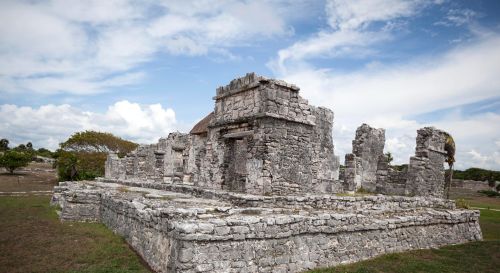
Food preservation in Mesoamerica was not only a matter of fields, markets, tribute, or empire. It was also a daily discipline of the household. The stored foods that sustained Maya and Aztec communities did not remain edible by accident. Maize had to be dried, shelled, protected, soaked, ground, cooked, and rationed. Beans had to be cleaned and kept dry. Chiles had to be harvested, strung, smoked, dried, or ground. Seeds had to be separated and stored. Fish or meat had to be consumed quickly or transformed before heat and decay took hold. These tasks belonged to the ordinary rhythm of domestic life, but their ordinariness should not make them seem simple. The household was the first institution of preservation, the place where agricultural abundance became meals, reserves, offerings, travel provisions, and future seed.
Much of this labor was gendered, especially around maize. Across Mesoamerica, women’s work in grinding, preparing masa, making tortillas or tamales, cooking stews and sauces, managing hearths, and feeding families formed the practical center of food security. Nixtamalization required knowledge of timing, heat, alkaline materials, rinsing, grinding texture, dough consistency, and cooking surfaces. Dry storage required judgment about dampness, pests, spoilage, and household need. Such expertise was not abstractly “domestic” in the sense of being separate from political economy. It was the labor that allowed political economy to exist. A ruler could command tribute maize, a market could sell grain, and a merchant could carry provisions, but maize still had to be transformed into edible food by skilled hands. The metate, hearth, basket, storage jar, and comal were not minor household objects. They were instruments through which Mesoamerican societies reproduced themselves every day.
The time required for this work was immense. Grinding maize by hand was physically demanding and repetitive, and because maize was eaten daily, the work returned daily. This matters for how we understand preservation. Stored maize was not a finished food waiting passively for consumption; it was a raw possibility that demanded labor every time it reentered the meal cycle. The same was true of many preserved foods. Dried chiles had to be toasted, soaked, ground, or combined into sauces. Beans had to be soaked and cooked. Dried fish or meat had to be prepared for eating. Cacao had to be roasted, ground, mixed, and frothed. The household was a place of repeated transformation, where preserved goods crossed back from storage into nourishment. Preservation extended the life of food, but labor restored its immediacy.
Household storage also required planning. Families had to decide how much maize to eat, how much to save for seed, how much to exchange, how much to reserve for ritual obligations, and how much could be spared for tribute or community demands. Such decisions were not merely technical; they were moral and social. Food stores measured the household’s ability to care for children, elders, guests, ancestors, and gods. A well-managed reserve could mean survival through a lean interval, dignity in hosting, or readiness for a festival. A failed reserve could bring hunger, dependence, shame, or debt. Women’s labor, where women were principally responsible for food preparation and household provisioning, carried the weight of these expectations. To manage stored food was to manage risk, obligation, and reputation. It required attention not only to the contents of the storage space but to the calendar, the weather, the field, the market, and the household’s place within a larger web of duties.
In Maya households, archaeology has increasingly shown the importance of domestic space as a setting of memory, production, and social identity. Houses were not merely shelters; they were places where kinship, ancestor veneration, craft activity, food preparation, and agricultural life intersected. Stored food belonged within that world. Maize and other staples connected living households to ancestors, fields, and future descendants. Seed grain carried the next agricultural cycle; ritual foods connected the household to sacred obligations; daily meals reproduced kinship through shared consumption. Because many storage containers and tools were made of perishable materials, much of this world is archaeologically elusive. But its significance can be inferred from the centrality of grinding stones, hearths, domestic refuse, house compounds, and the organization of household space. Maya storage was not only about keeping food from spoiling. It was about keeping the household continuous across seasons and generations. A stored crop linked past labor to future life: the ancestors who cleared land or established a house, the present household that guarded and processed the food, and the children or descendants who would inherit both seed and obligation. Food stores also helped define the house as a social unit. They marked who belonged, who ate together, who contributed labor, who controlled reserves, and who could call upon the household in times of need. Storage was part of domestic memory. It held more than calories. It held claims of kinship, continuity, inheritance, and responsibility.
In the Aztec world, household labor was similarly embedded in larger hierarchies of class, gender, and state demand. Commoner households produced, processed, and stored food for their own survival, but they also faced obligations to nobles, temples, markets, and tribute systems. Elite households, by contrast, could command more labor, more varied foods, and better access to prestige goods such as cacao, fine chiles, amaranth preparations, and elaborate feasting foods. The difference was not simply what people ate, but how food labor was organized. In a commoner home, preservation and preparation were matters of household endurance. In elite contexts, stored foods could become instruments of display, hospitality, and rank. Yet even elite consumption depended on labor that was often socially invisible: women grinding maize, servants preparing sauces, workers carrying tribute, farmers producing surplus, vendors handling market goods, and specialists transforming preserved ingredients into refined meals. The higher the status of the feast, the more labor stood behind it.
Seeing household labor clearly changes the interpretation of Mesoamerican food preservation. It prevents the story from becoming only a tale of clever techniques, impressive markets, or imperial logistics. Drying, salting, smoking, fermenting, nixtamalizing, and storing were not free-floating technologies. They were embedded in bodies, routines, gender roles, household spaces, and unequal social relations. The stored maize kernel became civilization only when someone protected it from dampness, someone carried it, someone soaked it, someone ground it, someone cooked it, and someone decided when and for whom it would be eaten. This does not diminish the achievements of Maya and Aztec food systems; it makes them more concrete. Preservation was infrastructure, but its foundation was intimate: hands sorting grain, smoke curing food above a hearth, chiles drying in the sun, women grinding maize before dawn, and households measuring the future one meal at a time. It also means that the history of preservation must be written from the bottom up as well as from the top down. Imperial tribute storehouses, market stalls, military provisions, and ritual feasts all depended on countless acts of domestic judgment that rarely entered official records. The great networks of Mesoamerican food supply were made possible by people whose names are mostly lost: those who knew when maize was dry enough, when beans were safe from dampness, when chiles had cured properly, when a reserve could be opened, and when it had to remain untouched. Their knowledge was not ornamental. It was the daily intelligence that kept society alive between harvests.
Failure, Spoilage, Famine, and the Limits of Preservation
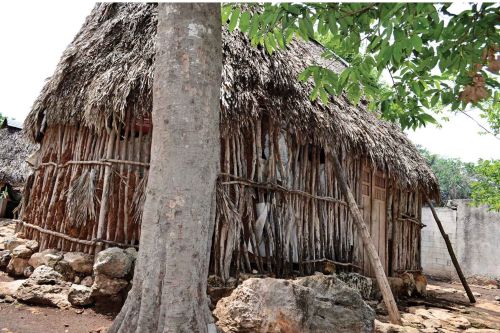
Food preservation made Mesoamerican societies more resilient, but it did not make them invulnerable. Drying, smoking, salting, fermenting, nixtamalizing, and storing all extended the usefulness of food, yet each technique depended on conditions that could fail. Maize that was not dried properly could mold. Beans and seeds could be ruined by dampness. Chiles could rot before they cured. Fish and meat could spoil if drying, smoking, or salting were incomplete. Cacao beans could be damaged by humidity, pests, or careless storage. Storehouses could burn, leak, be raided, or become targets in war. Preservation was never a guarantee. It was a struggle against time, weather, insects, animals, microbes, and violence. The same food that represented security in one season could become loss in another if the environment turned against it or if human systems failed to protect it.
The tropical lowlands of the Maya world made these limits especially clear. Heat and humidity complicated long-term storage, and seasonal rains could threaten foods that needed dryness to remain safe. A household might know how to store maize, beans, chiles, and seeds, but knowledge could not remove every risk. Prolonged wet conditions, flooding, pests, or roof failure could ruin stores at precisely the moment when they were most needed. Larger environmental pressures intensified the danger. Drought could reduce harvests before storage even began, while soil exhaustion, deforestation, warfare, and political instability could reduce a community’s ability to produce or protect surplus. Even when communities diversified production through gardens, managed forests, wetlands, hunting, fishing, and exchange, those strategies still depended on functioning ecological and social relationships. A drought that lowered water availability, a war that displaced farmers, or a breakdown in local authority could weaken several layers of resilience at once. In humid environments, the window between abundance and loss could be narrow. A harvest that looked successful in the field still had to survive drying, storage, pests, and consumption. The history of Classic Maya resilience and collapse cannot be reduced to a single food-storage failure, but food storage belonged to the larger context of vulnerability. A society that depended on careful timing between rainfall, planting, harvest, storage, and ritual obligation could absorb some shocks, but not all shocks indefinitely. Preservation helped stretch abundance, but it could not create abundance where fields, water systems, labor networks, and political cooperation had already broken down.
Famine was not simply the absence of food; it was the breakdown of relationships that normally moved food across time and space. A household might suffer hunger because its own stores failed, but wider famine required more than one empty granary. It could result from drought, war, tribute pressure, market disruption, blocked routes, crop disease, labor shortages, or elite demands that pulled food away from local subsistence. Preservation helped communities resist such crises by creating reserves, but reserves could be exhausted. Stored maize could carry people through a lean interval, but not through repeated harvest failures. Dried fish, chiles, beans, seeds, and other durable foods could supplement diet, but they could not replace the entire agricultural cycle. Preservation bought time. It did not abolish dependence on rainfall, land, labor, and political stability. The strength of Mesoamerican food systems lay in layering strategies, but their weakness lay in the fact that every layer could be strained at once.
The Aztec imperial structure showed another kind of limit: the danger of successful extraction. Tribute, markets, and storehouses helped feed Tenochtitlan and support imperial power, but they also redistributed risk unevenly. The capital’s abundance depended on the ability of subject communities to keep producing, processing, storing, and delivering goods. When harvests were good and routes were secure, the network could appear almost inexhaustible. But when communities were overburdened, when political resentment deepened, when transport was disrupted, or when war cut off supply, stored food became a sign of dependency as much as strength. Imperial preservation systems concentrated food, but concentration created targets. Storehouses could be seized; tribute routes could be interrupted; subject peoples could withhold cooperation or ally with enemies. The very durability of tribute goods made them useful to empire, but it also made them politically visible. A sack of maize, a delivery of beans, a measure of cacao, or a load of salt was not merely food in motion. It was evidence of power, and evidence of what could be resisted. This was especially important because imperial storage did not erase the local origins of food. Every preserved good had come from somewhere, and that somewhere had its own needs, risks, and resentments. A central storehouse could turn many local harvests into one imperial reserve, but it could not remove the political memory of extraction. The more the empire depended on stored goods from subject communities, the more its food security depended on compliance beyond the capital. Preservation made imperial logistics possible, but it also tied the empire to a wide field of potential disruption. In that sense, stored abundance could conceal fragility. It gave rulers the appearance of control and distance, while leaving them dependent on farmers, porters, salt makers, market actors, and conquered communities whose cooperation could never be reduced to storage alone.
Spoilage also had social consequences because the loss of stored food was rarely distributed equally. Elite households, temples, and rulers often had better access to surplus, labor, storage space, and exchange networks than commoner families. A poor household’s failed maize store might mean immediate hunger; an elite household might compensate through tribute, market purchase, dependents, or stored reserves elsewhere. This inequality mattered during crisis. Preservation could protect a community, but it could also expose the unevenness of protection. Who had enough food to store? Who controlled the driest rooms, safest containers, or strongest labor force? Who had access to salt, cacao, market exchange, or tribute goods? Who had to surrender surplus before knowing whether the next harvest would succeed? The limits of preservation were not only technical. They were social. Food could spoil in a basket, but food security could also spoil through hierarchy, coercion, and unequal access to stored abundance.
The limits of Mesoamerican preservation should not lead us to underestimate its sophistication. Rather, failure reveals how much these societies were asking preservation to do. Stored food had to bridge seasons, feed households, provision travelers, supply markets, support rituals, sustain cities, and serve imperial demands. No preservation system could remove all uncertainty from such a world. The more complex the society, the more food had to move through overlapping constructs of household management, regional exchange, political extraction, and ceremonial obligation. Mesoamerican peoples responded with remarkable flexibility: dried staples, smoked and salted foods, fermented substances, portable rations, market goods, tribute stores, and ritual reserves. Yet preservation remained a technology of probability rather than certainty. It improved the odds of survival, mobility, and abundance, but it did not conquer fragility. The stored larder was powerful precisely because hunger was always possible.
Are We Turning Ordinary Food Habits into “Technology” Too Easily?
The following video from “Ancient Americas” discusses the importance of maize:
I do not intend to make ordinary food habits sound intentional or technologically coherent than they were. Drying chiles, storing maize, smoking fish, salting meat, fermenting cacao, or carrying tamales on a journey may not have felt to Maya or Aztec people like “technology” in the grand sense. These were daily practices, inherited routines, and common-sense responses to the obvious fact that food spoils. To describe them as “infrastructure” might appear to inflate domestic labor into an analytical category too large for the evidence. Temples, canals, chinampas, roads, marketplaces, tribute records, and imperial storehouses can be seen and mapped more clearly as systems. A household drying maize or a vendor selling salt may seem less like infrastructure than like ordinary life.
This critique is important because it warns against imposing modern categories too casually on the past. “Technology” often evokes machines, formal engineering, written plans, or centralized design, none of which adequately describes most Mesoamerican food preservation. These practices were distributed, local, seasonal, and often unwritten. They varied by region, household, class, gender, ecology, and political setting. The evidence is also uneven. Dried foods, baskets, racks, cords, perishable containers, household routines, and many prepared foods rarely survive archaeologically, especially in humid lowland environments. Ethnohistoric sources are powerful but filtered through conquest, translation, Christian moral judgment, and colonial curiosity. Modern Indigenous and rural continuities can illuminate possibilities, but they cannot simply be projected backward as proof. A responsible interpretation must avoid pretending that all Maya and Aztec food preservation formed one integrated, self-conscious system.
The counterpoint also complicates the relationship between household practice and political power. Not every dried chile was part of imperial logistics. Not every stored maize reserve was a political act. Not every fermented drink should be read primarily through ritual or state authority. People preserved food because they needed to eat, because they liked certain flavors, because their parents and grandparents had taught them how, because a harvest came in, because a fish catch was too large to consume at once, or because a journey required provisions. Much of preservation belonged to practical life before it belonged to markets, temples, armies, or rulers. If everything becomes “infrastructure,” the word risks losing its sharpness. The historian must leave room for the ordinary, the local, the improvised, and the habitual.
Yet this challenge modifies rather than overturns the argument. The fact that preservation was ordinary is precisely why it mattered so much. Infrastructure does not have to be monumental to be foundational. A road is infrastructure because repeated movement depends on it; a store of maize, a technique for drying chiles, a method of making cacao beans transportable, or a household routine for protecting seed grain can be infrastructural in the same sense. These practices extended the reach of agriculture across seasons, made markets more reliable, allowed ritual calendars to be supplied, supported travel and war, and gave cities some protection against daily uncertainty. They were not one centrally planned system, but they formed a distributed infrastructure: many small acts, repeated across households and regions, creating large social consequences. Their power lay not in novelty but in recurrence.
The better conclusion, then, is not that Maya and Aztec peoples possessed a single unified “food preservation system” in the modern bureaucratic sense. They possessed a layered field of practical technologies: empirical, embodied, ecological, and socially embedded. Calling these practices technology does not diminish their domestic or habitual character; it recognizes the intelligence inside that habit. It also helps correct an older bias that treats pyramids, writing, warfare, and rulership as more historically serious than the preservation of food. Mesoamerican civilization depended on spectacular achievements, but it also depended on quieter ones: knowing when maize was dry enough, how to keep beans safe from dampness, how to turn cacao into a durable prestige good, how to move salt inland, how to make a portable meal, and how to hold a harvest until the gods, the market, the household, or the army required it. The counterpoint strengthens the final interpretation by making it more precise. Preservation was not technology because it was dramatic. It was technology because life depended on it.
Conclusion: Preservation, Power, and the Stored Future
Food preservation in Maya and Aztec societies was never merely a practical answer to spoilage. It was one of the basic ways Mesoamerican peoples organized time. Drying, smoking, salting, fermenting, nixtamalizing, storing, and transporting food allowed harvests to outlast seasons, catches to survive beyond the shoreline, cacao to travel beyond tropical groves, salt to move inland, and maize to become the daily foundation of household, city, ritual, and empire. These techniques were empirical, local, and often domestic, but their consequences were expansive. They made it possible for food to become more than immediate nourishment. Preserved food could become seed, ration, tribute, offering, market commodity, prestige drink, military provision, household reserve, or sacred substance. To preserve food was to give society a future it could carry, store, count, exchange, and consume.
The Maya world shows how preservation worked within ecological diversity and environmental uncertainty. In humid tropical lowlands, uplands, coasts, river systems, and cities, storage demanded constant adaptation. Households protected maize, beans, seeds, chiles, and other foods against dampness, insects, animals, and decay. Coastal salt producers supplied a preservative that linked shorelines to inland diets and exchange networks. Cacao growers and processors transformed a perishable fruit into a durable prestige good. Classic Maya cities depended not on a single centralized food-storage system but on overlapping household practices, local production, managed landscapes, exchange, elite accumulation, and ritual demand. This made Maya preservation less visible than a state granary or imperial warehouse, but no less important. Its power lay in dispersion: many households drying, guarding, grinding, storing, and preparing food; many communities drawing on different ecological niches; many exchange routes moving salt, cacao, fish, and other goods across regional boundaries. The same flexibility that helped Maya societies endure seasonal uncertainty also made their food systems difficult to reduce to one model. Lowland households faced humidity and pests; coastal producers turned salt and marine resources into exchange goods; elites accumulated foods for feasting and ritual; farmers balanced subsistence needs with social obligation. Their food systems were resilient because they were distributed, but that resilience had limits. Preservation could stretch abundance, but it could not abolish drought, warfare, spoilage, political stress, or environmental vulnerability.
The Aztec world reveals preservation as a technology of scale and power. Tenochtitlan’s food machine depended on the union of fresh and stored abundance: chinampa produce, lake foods, market exchange, tribute deliveries, household processing, and imperial storehouses. Dried maize, beans, chiles, amaranth, cacao, salt, dried fish, and other durable goods could be counted, moved, accumulated, and redistributed. This made preservation politically potent. The same methods that protected household survival could also enable tribute extraction, military provisioning, elite feasting, and imperial display. Stored food gave rulers the appearance of command and separation, but it also exposed dependency. The capital’s abundance rested on farmers, porters, salt makers, market vendors, cooks, household laborers, and subject communities whose work made imperial consumption possible.
The final lesson is that civilization is built not only from monuments, armies, scripts, and kingship, but from quieter technologies that make life repeatable. The Mesoamerican larder was one of those technologies. It held dried chiles waiting to become flavor, maize waiting to become masa, cacao waiting to become ceremony, salt waiting to preserve or season, seed waiting to become another crop, and stored surplus waiting to become feast, tribute, or survival. Preservation did not remove hunger, inequality, or fragility from Maya and Aztec life, but it gave people ways to negotiate them. It carried food across seasons, landscapes, social boundaries, and sacred calendars. In that sense, the stored future of Mesoamerica was not an abstraction. It was tangible: a kernel, a bean, a chile, a salted fish, a cacao seed, a basket in a house, a load on a porter’s back, and the accumulated knowledge that made tomorrow edible.
Bibliography
Affiliate disclosure: Amazon links on this site are paid links. As an Amazon Associate I earn from qualifying purchases.
- Aoyama, Kazuo. Ancient Maya State, Urbanism, Exchange, and Craft Specialization: Chipped Stone Evidence of the Copán Valley and the La Entrada Region, Honduras. Pittsburgh: University of Pittsburgh Memoirs in Latin American Archaeology, 1999.
- Atwood, Roger. “Maya Roots.” Archaeology 62:4 (2009), 18, 58-60, 65-66.
- Beach, Timothy, et.al. “Ancient Maya Impacts on the Earth’s Surface: An Early Anthropocene Analog?” Quaternary Science Reviews 124 (2015), 1–30.
- Berdan, Frances F. The Aztecs of Central Mexico: An Imperial Society. 2nd ed. Belmont, CA: Wadsworth, 2004.
- Berdan, Frances F. and Patricia Rieff Anawalt. The Codex Mendoza. 4 vols. Berkeley: University of California Press, 1992.
- Berdan, Frances F., et.al. Aztec Imperial Strategies. Washington, DC: Dumbarton Oaks Research Library and Collection, 1996.
- Blanton, Richard E., et.al. Ancient Mesoamerica: A Comparison of Change in Three Regions. 2nd ed. Cambridge: Cambridge University Press, 1999.
- Boone, Elizabeth Hill. Incarnations of the Aztec Supernatural: The Image of Huitzilopochtli in Mexico and Europe. Philadelphia: American Philosophical Society, 1989.
- —-. Stories in Red and Black: Pictorial Histories of the Aztecs and Mixtecs. Austin: University of Texas Press, 2000.
- Bruman, Henry J. Alcohol in Ancient Mexico. Salt Lake City: University of Utah Press, 2000.
- Brumfiel, Elizabeth M. “Aztec Hearts and Minds: Religion and the State in the Aztec Empire.” In Empires: Perspectives from Archaeology and History, edited by Susan E. Alcock, Terence N. D’Altroy, Kathleen D. Morrison, and Carla M. Sinopoli, 283–310. Cambridge: Cambridge University Press, 2001.
- —-. “Aztec Women: Capable Partners and Cosmic Enemies.” In Indian Women of Early Mexico, edited by Susan Schroeder, Stephanie Wood, and Robert Haskett, 31–54. Norman: University of Oklahoma Press, 1997.
- —-. “Weaving and Cooking: Women’s Production in Aztec Mexico.” In Engendering Archaeology: Women and Prehistory, edited by Joan M. Gero and Margaret W. Conkey, 224–251. Oxford: Blackwell, 1991.
- Calnek, Edward E. “Settlement Pattern and Chinampa Agriculture at Tenochtitlán.” American Antiquity 37:1 (1972), 104–115.
- Carrasco, David. “Cosmic Jaws: We Eat the Gods and the Gods Eat Us.” Journal of the American Academy of Religion 63:3 (1995), 429-463.
- —-. Religions of Mesoamerica: Cosmovision and Ceremonial Centers. 2nd ed. Long Grove, IL: Waveland Press, 2014.
- Carrasco, Pedro. The Tenochca Empire of Ancient Mexico: The Triple Alliance of Tenochtitlan, Tetzcoco, and Tlacopan. Norman: University of Oklahoma Press, 1999.
- Coe, Sophie D. America’s First Cuisines. Austin: University of Texas Press, 1994.
- Coe, Sophie D., and Michael D. Coe. The True History of Chocolate. 3rd ed. London: Thames & Hudson, 2013.
- Culbert, T. Patrick, ed. The Classic Maya Collapse. Albuquerque: University of New Mexico Press, 1973.
- Dahlin, Bruce H., et.al. “In Search of an Ancient Maya Market.” Latin American Antiquity 18:4 (2007), 363–384.
- Demarest, Arthur A. Ancient Maya: The Rise and Fall of a Rainforest Civilization. Cambridge: Cambridge University Press, 2004.
- Díaz del Castillo, Bernal. The True History of the Conquest of New Spain. Translated by Alfred Percival Maudslay. London: The Hakluyt Society, 1910.
- Dunning, Nicholas, Timothy Beach, and Sheryl Luzzadder-Beach. “Kax and Kol: Collapse and Resilience in Lowland Maya Civilization.” Proceedings of the National Academy of Sciences 109:10 (2012), 3652–3657.
- Flannery, Kent V., ed. The Early Mesoamerican Village. New York: Academic Press, 1976.
- Gill, Richardson B. The Great Maya Droughts: Water, Life, and Death. Albuquerque: University of New Mexico Press, 2000.
- Hassig, Ross. Aztec Warfare: Imperial Expansion and Political Control. Norman: University of Oklahoma Press, 1988.
- —-. Trade, Tribute, and Transportation: The Sixteenth-Century Political Economy of the Valley of Mexico. Norman: University of Oklahoma Press, 1985.
- Hastorf, Christine A. The Social Archaeology of Food: Thinking About Eating from Prehistory to the Present. Cambridge: Cambridge University Press, 2016.
- Henderson, John S., et.al. “Chemical and Archaeological Evidence for the Earliest Cacao Beverages.” Proceedings of the National Academy of Sciences 104:48 (2007), 18937–18940.
- Hendon, Julia A. Houses in a Landscape: Memory and Everyday Life in Mesoamerica. Durham: Duke University Press, 2010.
- Hirth, Kenneth G. The Aztec Economic World: Merchants and Markets in Ancient Mesoamerica. Cambridge: Cambridge University Press, 2016.
- Houston, Stephen, and Takeshi Inomata. The Classic Maya. Cambridge: Cambridge University Press, 2009.
- Houston, Stephen, David Stuart, and Karl Taube. The Memory of Bones: Body, Being, and Experience among the Classic Maya. Austin: University of Texas Press, 2006.
- Joyce, Rosemary A. Gender and Power in Prehispanic Mesoamerica. Austin: University of Texas Press, 2000.
- Katz, Solomon H., Mary L. Hediger, and Linda A. Valleroy. “Traditional Maize Processing Techniques in the New World.” Science 184:4138 (1974), 765–773.
- Lucero, Lisa J. Water and Ritual: The Rise and Fall of Classic Maya Rulers. Austin: University of Texas Press, 2006.
- Marx, Jean L. “Speaking of Science: Amaranth: A Comeback for the Food of the Aztecs?” Science 198:4312 (1977), 40.
- Masson, Marilyn A., and David A. Freidel, eds. Ancient Maya Political Economies. Walnut Creek, CA: AltaMira Press, 2002.
- McAnany, Patricia A. Living with the Ancestors: Kinship and Kingship in Ancient Maya Society. Rev. ed. Austin: University of Texas Press, 2014.
- McAnany, Patricia A., and Norman Yoffee, eds. Questioning Collapse: Human Resilience, Ecological Vulnerability, and the Aftermath of Empire. Cambridge: Cambridge University Press, 2010.
- McGovern, Patrick E. Ancient Brews: Rediscovered and Re-created. New York: W. W. Norton, 2017.
- McKillop, Heather. Salt: White Gold of the Ancient Maya. Gainesville: University Press of Florida, 2002.
- McNeil, Cameron L., ed. Chocolate in Mesoamerica: A Cultural History of Cacao. Gainesville: University Press of Florida, 2006.
- Miller, Mary, and Karl Taube. An Illustrated Dictionary of the Gods and Symbols of Ancient Mexico and the Maya. London: Thames & Hudson, 1993.
- Mundy, Barbara E. The Death of Aztec Tenochtitlan, the Life of Mexico City. Austin: University of Texas Press, 2015.
- Parsons, Jeffrey R. “The Role of Chinampa Agriculture in the Food Supply of Aztec Tenochtitlan.” In Cultural Change and Continuity: Essays in Honor of James Bennett Griffin, edited by Charles E. Cleland, 233–257. New York: Academic Press, 1976.
- Pilcher, Jeffrey M. Planet Taco: A Global History of Mexican Food. New York: Oxford University Press, 2012.
- Piperno, Dolores R., and Deborah M. Pearsall. The Origins of Agriculture in the Lowland Neotropics. San Diego: Academic Press, 1998.
- Pohl, Mary E. D., ed. Ancient Maya Subsistence. New York: Academic Press, 1985.
- Robin, Cynthia. Everyday Life Matters: Maya Farmers at Chan. Gainesville: University Press of Florida, 2012.
- Rojas Rabiela, Teresa. La agricultura chinampera: Compilación histórica. Chapingo, Mexico: Universidad Autónoma Chapingo, 1983.
- Sahagún, Bernardino de. Florentine Codex: General History of the Things of New Spain. Translated and edited by Arthur J. O. Anderson and Charles E. Dibble. 12 vols. Santa Fe, NM: School of American Research and University of Utah, 1950–1982.
- Sharer, Robert J., and Loa P. Traxler. The Ancient Maya. Stanford: Stanford University Press, 2006.
- Smith, Bruce D. The Emergence of Agriculture. New York: Scientific American Library, 1995.
- Smith, Michael E. The Aztecs. 3rd ed. Malden, MA: Wiley-Blackwell, 2011.
- Staller, John E., Robert H. Tykot, and Bruce F. Benz, eds. Histories of Maize: Multidisciplinary Approaches to the Prehistory, Linguistics, Biogeography, Domestication, and Evolution of Maize. Burlington, MA: Academic Press, 2006.
- Tainter, Joseph A. The Collapse of Complex Societies. Cambridge: Cambridge University Press, 1988.
- Taube, Karl A. The Major Gods of Ancient Yucatan. Washington, DC: Dumbarton Oaks, 1992.
- Tringham, Ruth. “Households with Faces: The Challenge of Gender in Prehistoric Architectural Remains.” In Engendering Archaeology: Women and Prehistory, edited by Joan M. Gero and Margaret W. Conkey, 93–131. Oxford: Blackwell, 1991.
- Twiss, Katheryn C., ed. The Archaeology of Food and Identity. Carbondale: Southern Illinois University Press, 2007.
- White, Christine D., ed. Reconstructing Ancient Maya Diet. Salt Lake City: University of Utah Press, 1999.
- Wilken, Gene C. “Food-Producing Systems Available to the Ancient Maya.” American Antiquity 36:4 (1971), 432-448.
- Wright, Lori E., ed. The Ancient Maya of Mexico: Reinterpreting the Past of the Northern Maya Lowlands. Sheffield: Equinox, 2012.
Originally published by Brewminate, 06.10.2026, under the terms of a Creative Commons Attribution-NonCommercial-NoDerivatives 4.0 International license.
About the Author