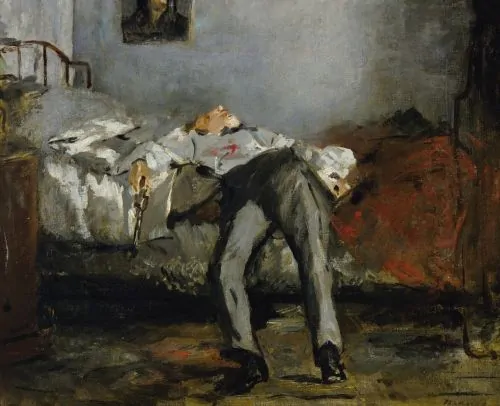
Victorian Britain inherited suicide as felo de se, a felony against the self, God, and society. Sympathy transformed self-destruction from a punished crime into a tragic event.

By Matthew A. McIntosh
Public Historian
Brewminate
Introduction: Suicide between Crime, Sin, Madness, and Sympathy
In Victorian Britain, suicide stood at the crossroads of law, theology, medicine, family honor, and public feeling. The old legal phrase felo de se, the “felon of himself,” carried with it an entire moral world in which self-killing was not merely a private tragedy but an offense against God, the Crown, the community, and the social order. English common law had long treated suicide as a species of self-murder, and the consequences could extend beyond the grave: dishonored burial, forfeiture of goods, and lasting stigma for the surviving household. Yet the Victorian period inherited this harsh framework at the very moment when its most punitive features were becoming increasingly difficult to defend. A society that still prized Christian endurance, moral discipline, and self-command also became less willing to punish grieving families or desecrate the bodies of the dead.
The result was not a clean transition from condemnation to compassion, but a long and uneasy rearrangement of blame. Suicide remained entangled with sin and crime, but coroners, juries, clergy, doctors, journalists, and relatives increasingly found ways to soften the verdict. The language of non compos mentis, temporary insanity, melancholia, nervous disease, hereditary weakness, and social distress allowed the dead to be mourned rather than simply condemned. Such language did real humanitarian work. It could spare families from disgrace, preserve property, permit more ordinary burial, and make room for sympathy where older legal categories had demanded punishment. But it also came at a cost: the suicidal person often had to be imagined as deprived of full reason before compassion could be safely extended.
Victorian views of suicide were defined by this tension between moral judgment and expanding sympathy. Legal reforms in the nineteenth century gradually stripped away the most visible punishments attached to felo de se, while medical writers and alienists increasingly interpreted self-destruction through insanity, bodily disorder, environment, and social pressure. Popular culture turned suicide into a powerful spectacle. Newspapers, sensation fiction, moral essays, and poems lingered over images of fallen women, ruined men, desperate servants, river deaths, railway deaths, and the lonely despair of modern urban life. The Victorian public was fascinated by suicide not because it had ceased to be shocking, but because it seemed to reveal the fragility of will, faith, family, respectability, and social order.
The history of Victorian suicide is not simply the story of progress from cruelty to kindness. It is the story of a culture learning to pity what it still feared, to medicalize what it still moralized, and to protect families while continuing to judge the act itself. By the end of the century, the corpse of the suicide was no longer treated with the ritual humiliation associated with earlier law, and the estate was no longer automatically sacrificed to legal doctrine. But the deeper question remained unresolved: was self-inflicted death a sin, a crime, a symptom, a social failure, an act of despair, or some unstable combination of them all? Victorian Britain never answered that question with one voice. Its answer was instead a contested vocabulary (crime, sin, madness, sympathy) through which the dead were condemned, excused, mourned, studied, and remembered.
Felo de Se before Victoria: The Inheritance of Self-Murder

Long before the Victorian era softened the public treatment of suicide, English law had treated self-killing as a peculiar and troubling kind of felony. The phrase felo de se, literally “felon of himself,” gave legal form to a moral assumption: that the person who took his or her own life had committed an offense not only against the self, but against God, the king, and the community. Suicide was understood as self-murder, and because the culprit was dead, punishment had to be displaced onto the corpse, the estate, and the memory of the deceased. This made felo de se one of the strangest categories in English criminal law. It prosecuted no living defendant, yet it produced real consequences for the dead person’s family, property, burial, and reputation. The very awkwardness of the category reveals how deeply older society struggled with voluntary death. Suicide seemed to break the normal machinery of justice, since the offender could not be tried, imprisoned, hanged, reconciled, or publicly repentant. The law answered symbolically and materially, marking the body and household as the remaining sites where punishment could still be enacted.
The religious foundation of this view was older than the common law itself. Medieval and early modern Christian teaching generally held that life belonged to God, not to the individual, and that to destroy oneself was to usurp divine authority over death. Suicide could be interpreted as a refusal of providence, a collapse of hope, and a final act committed without the possibility of repentance. In a culture where the manner of death mattered spiritually as well as socially, dying by one’s own hand created profound anxiety. It raised questions about salvation, confession, burial, and the boundary between despair and damnation. Yet Christian tradition was not entirely without ambiguity. Martyrdom, ascetic self-denial, and heroic willingness to die could be praised, while direct self-killing was condemned. This distinction mattered because it showed that the moral problem was not simply death chosen knowingly, but death chosen in a way that appeared to reject divine order and communal obligation. By the time English law hardened the category of felo de se, it was drawing on centuries of theological reflection that treated despair as spiritually dangerous and self-destruction as an offense against the sacred ownership of life.
The penalties attached to felo de se were meant to express disgrace as much as to administer justice. A person judged to have died feloniously by suicide could be denied ordinary Christian burial, and older custom associated such deaths with burial at a crossroads or highway, sometimes with a stake driven through the body. The purpose was not merely disposal. It was exclusion. The suicide was removed from the ordinary sacred geography of the parish, denied the comforting ritual of Christian burial, and placed instead in a marginal, public, and symbolically polluted space. Crossroads burial has often attracted sensational attention, but its deeper meaning lay in separation from the community of the dead. In parish society, burial was not only a practical matter; it confirmed belonging. The churchyard gathered generations into a visible community of memory, kinship, and Christian expectation. To be refused that space was to be marked as one whose final act had broken the bond between household, parish, and God. The stake, too, has to be understood less as a gothic flourish than as part of a broader language of containment, dishonor, and warning. It fixed the body in a place of shame, transforming the dead from a mourner’s charge into a public sign of moral danger. To be buried outside consecrated ground, without ceremony, and in a place associated with passage rather than rest was to be denied the final reintegration that death usually brought. The body became a warning, and the burial site became a statement about the moral danger of self-murder.
The other major penalty was forfeiture. Because suicide was classed as felony, the goods and chattels of the deceased could be seized by the Crown, leaving surviving relatives to suffer the economic consequences. This punishment reveals the deeply social character of the offense. Suicide was not imagined as a private psychological act in the modern sense, but as a rupture in the household and political order. The deceased had deprived the monarch of a subject, the community of a member, and the family of its expected continuity. Forfeiture functioned as both penalty and deterrent, but it also made the injustice of the system painfully visible. The dead could not feel the punishment; the living could. Widows, children, dependents, and creditors might bear the burden of a verdict they had neither caused nor deserved. This fact helps explain why, long before Parliament removed the penalty, local communities and juries often looked for ways around it. A finding of insanity or lack of sound mind could protect the estate and soften the disgrace, even while leaving the formal doctrine of felo de se intact.
By the eighteenth and early nineteenth centuries, this older structure had begun to appear increasingly unstable. Enlightenment moral philosophy, changing legal sensibilities, Protestant pastoral concern, and the growing authority of medical explanations all placed pressure on the inherited treatment of suicide. Yet the shift was slow because the older meanings did not simply disappear. Many still regarded suicide as a grave sin and a sign of moral collapse. Others saw it as evidence of madness, melancholy, bodily disorder, or overwhelming distress. The same death might be read through several languages at once. A suicide could be condemned in a sermon, pitied by neighbors, excused by a coroner’s jury, and sensationalized in a newspaper. This layered response did not begin with the Victorians, but the Victorians inherited it in a particularly concentrated form. They received a legal tradition that still imagined suicide as felony, a religious tradition that still feared despair, and a growing humanitarian discomfort with punishing corpses and impoverishing families. They also inherited a culture in which the boundaries between moral choice and mental incapacity were already contested. The question was rarely whether suicide mattered, but how it should be named: sin, crime, frenzy, melancholy, temptation, illness, or misfortune. That uncertainty created space for mercy without requiring a full repudiation of condemnation. By the time Victoria came to the throne, the old law remained recognizable, but its moral confidence had weakened. Its penalties survived in memory and statute, yet their application increasingly depended on negotiation, evasion, and local judgment.
The Victorian era did not begin with a blank slate. It inherited a centuries-old moral and legal apparatus that had already become difficult to administer consistently. Felo de se survived as a formal category, but its older rituals of disgrace were increasingly out of step with a society that was becoming more sensitive to grief, domestic respectability, and mental disturbance. The crucial point is that reform did not arise because suicide had ceased to trouble the moral imagination. It arose because the inherited punishments had begun to trouble it as well. The spectacle of the dishonored body, the denial of ordinary burial, and the transfer of punishment to innocent survivors made the law itself seem cruel, even to people who still condemned the act. Victorian changes would grow from a contradiction already present before Victoria: suicide remained morally horrifying, but the old public language of desecration, forfeiture, and exclusion no longer seemed adequate to a culture increasingly drawn toward sympathy.
Reform without Decriminalization: 1823, 1870, and 1882
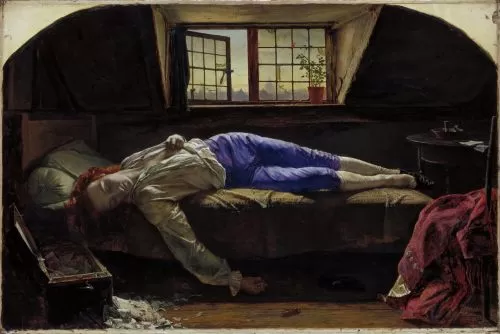
The nineteenth-century reform of suicide law in Britain did not begin by declaring suicide innocent, understandable, or even noncriminal. It began more cautiously, by dismantling the most visibly punitive consequences of felo de se while leaving the inherited moral category largely intact. This distinction is essential. Victorian and late Georgian reformers did not immediately abolish the idea that self-killing was a grave offense. Instead, they altered what the law could do to the body, the burial, and the property of the dead. The result was a pattern characteristic of nineteenth-century legal reform: condemnation survived in theory while punishment was softened. Suicide remained within the shadow of felony, sin, and public shame, but the state became increasingly reluctant to dramatize that shame through desecrated burial or economic ruin. Reform proceeded not as a sudden act of secular enlightenment, but as a piecemeal retreat from penalties that had come to appear excessive, embarrassing, and cruel to the innocent living.
The first major statutory change came with the Burial of Suicides Act of 1823, passed before Victoria’s reign but crucial to the legal world she inherited. The Act ended the older practice of burying those found felo de se in a highway or crossroads, and it removed the most notorious associated ritual humiliations. Yet the reform was deliberately limited. The body could now be buried in a churchyard or other authorized burial ground, but the burial was still to take place between the hours of nine at night and midnight, and without the rites of Christian burial. This compromise reveals the moral hesitation of the law. Parliament could no longer defend the full spectacle of exclusion, but it was not yet prepared to treat suicide like other deaths. The suicide was admitted into ordinary burial space, but only under restrictions that preserved the mark of difference. Night burial without religious service softened cruelty while retaining stigma. The reform acknowledged that the old treatment had become unacceptable, yet it continued to insist that self-murder could not be ritually normalized. It also shows how reform could be humanitarian without being egalitarian. The dead person was no longer abandoned to the road, but neither was he or she restored fully to the ceremonial community of the dead. The hours of burial mattered because they preserved secrecy and discomfort; the absence of the service mattered because it withheld the public language of consolation. Families gained relief from the older spectacle, but they still encountered law at the graveside as a reminder that this death remained different from others. In that sense, the 1823 Act did not erase the stigma of felo de se so much as move it into a quieter, more controlled form. The punishment became less theatrical, less physically degrading, and less exposed to public view, but the moral distinction remained legible in the timing, silence, and ritual incompleteness of burial.
The next decisive change concerned property. Under the older law, a finding of felo de se could lead to forfeiture of the deceased’s goods and chattels to the Crown. By the nineteenth century, this penalty had become one of the most morally troubling features of suicide law because it punished survivors more directly than the dead. The Forfeiture Act of 1870 abolished forfeiture for felony and treason, thereby removing the material penalty that had long made a suicide verdict disastrous for widows, children, creditors, and dependents. Its importance for the history of suicide lies not merely in financial relief, but in the changing emotional logic of punishment. The law no longer insisted that the household must bear the economic burden of the dead person’s act. This did not mean that suicide was stripped of shame, but it did mean that one of the strongest practical reasons for juries to avoid a felo de se verdict had been weakened. Before 1870, a compassionate verdict of insanity could protect property; after 1870, the urgency of that protection diminished. The shift changed not only inheritance but also the social function of the coroner’s court, where law, sympathy, family interest, and medical language had long converged.
The final major Victorian reform came with the Interments (felo de se) Act of 1882, which removed the remaining burial disabilities attached to a finding of felo de se. After 1882, those who had died by suicide could be buried in the usual manner, at ordinary hours, and with the religious rites otherwise available to the dead. This was a profound symbolic change. The suicide was no longer forced into the half-belonging created by the 1823 settlement: admitted to burial ground but denied daylight, service, and ritual equality. The 1882 Act did not make suicide lawful in the modern sense, nor did it settle theological arguments about self-destruction. But it did mark the collapse of the older public theater of posthumous disgrace. The body was no longer the site upon which law displayed its condemnation. What remained was more interior, bureaucratic, medical, and moral: the verdict, the family’s grief, the doctor’s explanation, the newspaper report, the clergyman’s judgment, and the community’s whispered interpretation.
The reforms of 1823, 1870, and 1882 show how nineteenth-century Britain moved away from punishing suicide without fully abandoning the inherited concept of self-murder. This was reform without decriminalization. The criminal category survived even as its harshest consequences were stripped away. That survival matters because it reveals the layered character of Victorian attitudes: suicide could be pitied, medicalized, and quietly accommodated while still being regarded as a moral catastrophe. The law became less willing to dishonor the corpse or impoverish the family, but it did not yet recognize self-inflicted death as outside the realm of criminal meaning. In that gap between formal condemnation and practical mercy, Victorian society found one of its most revealing compromises. It could preserve the language of felo de se while increasingly refusing to act on its oldest cruelties. The dead were not fully absolved, but they were gradually restored to burial, family, and mourning.
The Coroner’s Court and the Compassionate Verdict
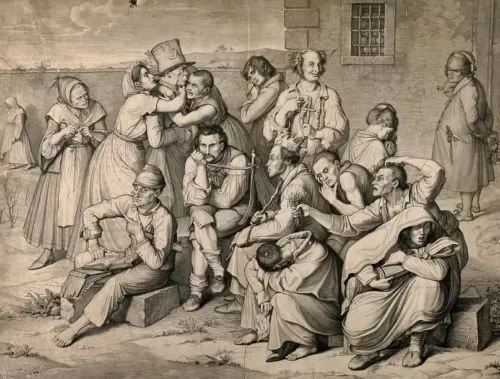
If Parliament slowly weakened the formal penalties attached to felo de se, the coroner’s court supplied a more immediate and flexible mechanism of mercy. Long before suicide law was fully modernized, coroners and juries could shape the social meaning of a death through the verdict they returned. A finding of felo de se carried disgrace, and before the abolition of forfeiture it could carry serious economic consequences for the family. A finding of non compos mentis, by contrast, placed the death under the language of unsound mind. That distinction mattered enormously. It could preserve property, soften burial restrictions, protect surviving relatives from public humiliation, and allow neighbors to speak of tragedy rather than crime. The coroner’s court became one of the places where the harsh legal inheritance of self-murder was negotiated. Its work was not merely bureaucratic. It translated a body, a wound, a note, a rumor, and a family’s grief into an official explanation.
The verdict of insanity did not always mean what a modern reader might assume. Coroners’ juries were not necessarily making precise psychiatric diagnoses, nor were they always relying on expert medical testimony in the later professional sense. They were often making a moral, social, and practical judgment about how a death should be absorbed by the community. The phrase non compos mentis could cover a wide range of conditions: long-standing madness, sudden frenzy, drink, fever, grief, delusion, melancholy, religious despair, domestic shock, or the vague but useful notion that no rational person would willingly destroy himself. In that sense, the insanity verdict could function as both explanation and escape. It allowed the jury to acknowledge the death while avoiding the full cruelty of the older law. It also reflected a wider cultural assumption that suicide was so dreadful an act that it almost required some disturbance of reason. To say the deceased was not of sound mind was often to say that the community wished not to treat the act as fully deliberate self-murder. The language was elastic enough to serve many needs at once. It could absorb evidence of real mental illness, but it could also dignify panic, shame, poverty, bereavement, intoxication, exhaustion, or sudden emotional collapse without forcing jurors to declare that the deceased had acted wickedly. This elasticity made the verdict powerful precisely because it was not too exact. It created a space between guilt and innocence, between crime and accident, between moral responsibility and human frailty. In that middle space, Victorian communities could express sympathy while still preserving the idea that suicide, when committed by a truly responsible person, remained morally terrible.
This compassionate verdict was important because the consequences of felo de se fell so heavily on the innocent. A suicide verdict did not merely classify the dead; it could damage a widow’s livelihood, a child’s prospects, a family’s name, a household’s standing, and a burial’s dignity. The inquest was surrounded by pressures that were not strictly evidentiary. Relatives had every reason to emphasize strange behavior, sleeplessness, nervous agitation, bodily illness, religious excitement, recent disappointment, or any sign that the deceased had not been fully responsible. Neighbors might cooperate out of pity or shared interest. Jurors, drawn from the local community, were not detached observers of an abstract legal problem. They knew that a harsh verdict could add punishment to bereavement. The result was a legal culture in which mercy often took the form of interpretation. A confused word, a melancholy habit, an illness, a financial worry, or a sudden change of temper could become evidence that the dead person had acted under mental disturbance rather than criminal intention.
The compassionate verdict should not be romanticized as pure kindness. It protected families, but it often did so by denying the agency of the dead. The person who had taken his or her own life could be spared condemnation only by being represented as irrational, disordered, overwhelmed, or temporarily alienated from the self. This was a powerful cultural bargain. Victorian society could pity suicide when suicide could be explained as something other than a fully conscious moral choice. The dead were forgiven, but at the price of being classified as unsound. That classification could be humane, particularly in cases of evident mental suffering, but it also narrowed the range of acceptable meanings. Despair over poverty, shame, illness, domestic violence, debt, or isolation might be transformed into madness because madness was safer than saying that social life itself had become unbearable. The coroner’s court both softened the law and helped discipline interpretation. It made suicide mournable by making it medically, morally, or mentally exceptional. This bargain also protected the moral order from the implications of the death. If the suicide could be attributed to temporary derangement, then the community did not have to confront quite as directly the possibility that ordinary social conditions (hunger, humiliation, sexual disgrace, unemployment, old age, chronic pain, or domestic cruelty) could rationally appear intolerable. The insanity verdict could be both merciful and evasive. It shielded the family, but it could also shield society from indictment. It turned a potentially accusatory death into a pathological one, making the act less threatening to public morality because it located the decisive failure inside the sufferer’s mind rather than in the structures around them.
The changing legal landscape altered the function of these verdicts. Before 1870, when forfeiture remained a possible consequence, the insanity verdict had a clear material purpose. It could save a family’s property from seizure and prevent the dead person’s act from spreading ruin among survivors. After the Forfeiture Act removed that penalty, the verdict still mattered, but its emphasis shifted more decisively toward stigma, burial, reputation, and moral explanation. Likewise, after the Interments Act of 1882 removed the remaining burial disabilities attached to felo de se, the practical stakes of the verdict changed again. Yet the language of insanity did not disappear, because it had never been only a loophole. It had become part of the Victorian grammar of suicide. Coroners, doctors, families, and newspapers continued to use mental disturbance as the most acceptable explanation for self-inflicted death. The law had retreated from its older punishments, but the culture still needed a language that could distinguish tragedy from guilt.
The coroner’s court reveals the central paradox of Victorian suicide: compassion advanced through categories that could also constrain understanding. The verdict of non compos mentis was merciful because it protected the living and softened judgment on the dead. But it also showed how difficult it remained to imagine suicide as a meaningful act of despair without translating it into unsoundness of mind. The court did not simply record Victorian attitudes; it produced them. Each inquest helped decide whether a death would be remembered as crime, sin, madness, misfortune, or sorrow. It stood between the old world of felo de se and the emerging world of medicalized suicide. It did not abolish condemnation, but it made condemnation avoidable. It did not fully secularize suicide, but it gave families and communities a practical way to move from disgrace toward mourning.
Sin, Providence, and the Religious Problem of Self-Destruction
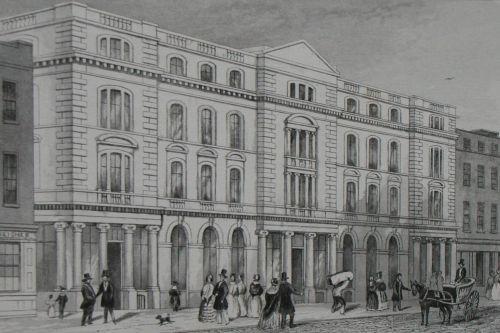
The religious problem of suicide in Victorian Britain rested on a claim older than the Victorian era itself: human life was not finally self-owned. Within the inherited Christian moral imagination, life belonged to God, and death came properly through divine providence rather than private decision. To kill oneself was not merely to commit violence against the body, but to trespass against the order of creation. It was often described as self-murder, a term that joined theology and law in a single moral category. The suicide destroyed the very person whom God had made, deprived family and community of a life entrusted to them and appeared to reject the duty to endure suffering within a providential world. For Victorians steeped in biblical language, sermon culture, and assumptions about duty, self-command, and spiritual discipline, suicide could still appear as a profound rebellion against divine sovereignty.
Yet the religious condemnation of suicide was never simply a matter of abstract doctrine. It was intensified by the fact that suicide seemed to occur at the most dangerous possible spiritual moment. Christian teaching placed great weight on repentance, confession, preparation, and the hope of a good death. A death by one’s own hand raised the terrifying possibility that the final act had been one of despair, and despair had long been understood as a grave spiritual danger. Unlike other sins, which might be repented before death, suicide seemed to close the door upon repentance by making the sin and the death coincide. This was one reason it carried such force in religious imagination. It appeared not only as an act of violence, but as a last act of refusal: refusal of hope, refusal of providence, refusal of the endurance through which suffering might be spiritually redeemed.
Victorian Christianity also contained powerful countercurrents of pastoral sympathy. The same religious culture that condemned self-destruction also surrounded death with mourning, consolation, and care for the bereaved. Evangelical piety, Anglican pastoral practice, Nonconformist moral seriousness, and Catholic sacramental sensibilities did not always produce identical responses, but all had to confront the emotional reality of families left behind after a suicide. A minister might condemn the act from the pulpit and still pity the widow, the mother, the child, or even the dead person whose suffering had preceded the act. The growing use of insanity verdicts also gave clergy and families a religiously usable language of mercy. If the deceased had not been of sound mind, then the death could be treated less as a deliberate rejection of God than as the consequence of a mind overthrown by illness, grief, or delusion. In that way, the medical and religious languages of the nineteenth century did not merely oppose each other; they often cooperated in making compassion possible.
The burial question made this tension visible in ritual form. Christian burial was not only a ceremony but a public sign of belonging: to family, parish, community, and the community of the dead. Older exclusions from ordinary burial had expressed the belief that the suicide had placed himself or herself outside the moral order. The reforms of 1823 and 1882 did not abolish theological unease, but they changed how that unease could be displayed. After 1823, the suicide could be buried in authorized ground, though still at night and without the ordinary service; after 1882, the remaining disabilities were removed, permitting burial in the usual manner. These reforms mattered because they shifted the religious meaning of the corpse. The dead body was no longer made to carry the full public burden of condemnation. Even where clergy and communities continued to regard suicide as sinful, the ritual treatment of the dead increasingly acknowledged the claims of grief, kinship, and Christian pity. Burial reform marked not simply a legal adjustment, but a change in the emotional theology of mourning. It altered the scene at which doctrine met family sorrow. Under the older regime, the denial of ordinary burial had forced relatives to experience the law’s judgment in the very moment when they sought consolation. The grave became an instrument of public theology, declaring that this death could not be folded easily into the Christian story of rest, resurrection, and communal remembrance. By easing those restrictions, nineteenth-century reform did not make suicide religiously unproblematic, but it reduced the power of the burial itself to humiliate. It allowed mourning to become more private, less punitive, and less visibly marked by ecclesiastical refusal. This meant that the family’s grief increasingly competed with, and sometimes displaced, the older impulse to make the suicide’s body a moral example.
The religious problem of suicide also intersected with Victorian ideals of character. The age prized endurance: the capacity to bear pain, poverty, disappointment, illness, temptation, and grief without surrendering moral self-command. This ethic could be stern when applied to the poor, the mentally ill, women facing sexual disgrace, or men crushed by debt and unemployment. Suicide was often interpreted as defeat in the struggle of the will, a failure to remain steadfast under providential trial. Such language did not necessarily imply cruelty; many Victorians sincerely believed that moral discipline, prayer, work, family duty, and religious hope were safeguards against despair. But the emphasis on endurance could also sharpen judgment. If suffering was a test, then self-destruction could appear as refusal of the test. The suicidal person became not only a victim of anguish, but someone whose final act seemed to challenge the central Victorian virtues of perseverance, responsibility, and restraint. This was one reason suicide proved so disturbing to a culture that placed heavy moral weight on self-government. The person who died by suicide appeared to collapse the boundary between inner suffering and outward duty, between private despair and public obligation. For men, this could be interpreted through the language of failed breadwinning, dishonor, debt, or loss of masculine steadiness. For women, it was often filtered through anxieties about chastity, dependency, domestic vulnerability, or emotional excess. In both cases, religious judgment did not operate separately from gender and class expectations. It helped translate social failure into moral failure, while also making room for pity when suffering seemed sufficiently overwhelming. The doctrine of providential endurance could console, but it could also accuse.
Still, the very intensity of Victorian mourning complicated this severity. A culture that built elaborate rituals around death could not easily respond to suicide with only condemnation. The dead were remembered through keepsakes, funeral practices, obituary notices, mourning dress, memorial objects, and domestic grief. When suicide entered that world, it created a painful conflict between doctrine and affection. Families wanted to mourn, not to see the deceased reduced to a warning. Friends and neighbors might prefer silence, euphemism, or insanity to blunt accusation. Religious consolation often depended on leaving ultimate judgment to God rather than pronouncing damnation from the grave. This did not make Victorian religion permissive toward suicide, but it did make its response more flexible than the older legal phrase “self-murder” might suggest. The more intimate the dead person was, the harder it became to speak in purely punitive terms.
For that reason, the Victorian religious history of suicide is best understood as a struggle between inherited condemnation and expanding mercy. Suicide remained a theological scandal because it seemed to violate divine ownership of life, reject providential endurance, and endanger the soul at the very moment of death. Yet Victorian religious practice increasingly made room for grief, uncertainty, mental disturbance, and compassion for survivors. The question was not whether suicide was troubling; nearly all major religious voices agreed that it was. The question was how far judgment should go, and whether human beings could confidently read the spiritual meaning of a death marked by anguish. In that uncertainty lay one of the century’s most important shifts. The suicide was still feared as a sinner but increasingly mourned as a sufferer; still associated with moral danger, but less often excluded from the rituals by which Christian society gathered its dead back into memory.
From Moral Failure to Mental Disease: Alienists, Insanity, and the Medicalization of Suicide
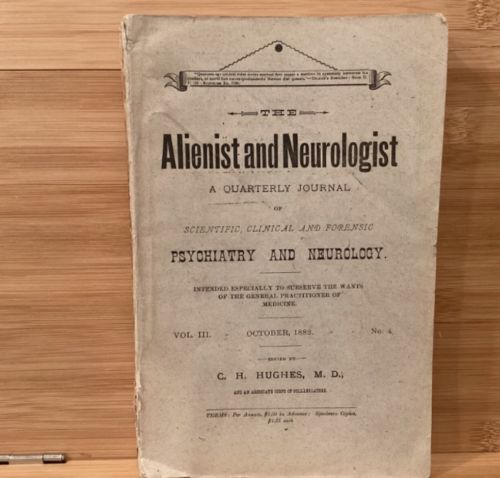
The medicalization of suicide in Victorian Britain did not arrive as a sudden replacement for religious condemnation or legal judgment. It developed gradually, unevenly, and often in partnership with older moral assumptions. Physicians, asylum doctors, and alienists increasingly argued that self-destruction could be understood through mental disease, hereditary predisposition, nervous disorder, melancholia, bodily disturbance, alcoholism, fever, puerperal illness, senility, or temporary derangement. Yet they did not simply announce a modern psychiatric understanding of suicide and sweep away the older language of sin. Instead, they added another interpretive layer to an already crowded field. Suicide could still be called wicked, cowardly, criminal, or spiritually dangerous, but it could also be described as symptomatic, pathological, impulsive, or produced by a mind no longer properly governed by reason. The result was a hybrid Victorian vocabulary in which moral failure and mental disease often coexisted rather than excluded one another.
Alienists, the nineteenth-century specialists in insanity who helped form the early profession of psychiatry, played a particularly important role in this shift. Their authority grew from the expanding asylum system, medico-legal testimony, and the broader Victorian faith that human conduct could be classified, observed, and managed scientifically. To alienists, suicide was often not an isolated act but a sign within a pattern: melancholic withdrawal, delusional fear, religious mania, hereditary weakness, nervous exhaustion, or moral insanity. The suicidal person became legible as a patient before death and as evidence after death. This mattered because it redirected attention from the final act to the mental condition that supposedly produced it. A death by poison, drowning, hanging, cutting, or railway injury was no longer interpreted only by method, motive, and moral responsibility. It could be read as the outcome of a diseased mind whose symptoms had perhaps been visible earlier to relatives, physicians, employers, or clergy. This encouraged a more retrospective style of explanation. After a suicide, observers could search backward for signs: sleeplessness, strange remarks, withdrawal from family, religious terror, sudden calm, extravagant spending, silence, irritability, refusal of food, or unusual attention to wills and debts. What might previously have seemed ordinary sorrow or eccentric conduct could be rearranged after death into a medical narrative. Alienist writing helped create a new kind of biographical scrutiny, in which the life before suicide was combed for symptoms that would make the death intelligible. The act itself became less a moral thunderbolt and more the final episode in a hidden pathology.
This medical turn could be genuinely compassionate. By treating suicide as connected to mental suffering, doctors and reformers helped weaken the assumption that self-killing was always a deliberate act of moral rebellion. The suicidal person might be imagined as afflicted rather than depraved, overwhelmed rather than willfully sinful, ill rather than criminal. This interpretation gave families a way to grieve without accepting the full burden of disgrace, and it gave coroners’ juries a language that could justify merciful verdicts. It also encouraged the possibility of prevention. If suicide arose from identifiable states of mind or body, then it might be anticipated, treated, supervised, or interrupted. The medicalization of suicide shifted attention from punishment after death to management before death, from the dishonored corpse to the endangered patient. That was one of the most important changes in the nineteenth-century history of self-destruction.
But medicalization was never purely liberating. It softened blame by narrowing agency. To describe suicide as the product of insanity was to protect the sufferer from moral condemnation, but it also placed the sufferer under the authority of doctors, families, asylums, and legal officials. Compassion and control moved together. The suicidal person could be watched, restrained, confined, deprived of ordinary autonomy, or treated as incapable of judgment. This was significant in an age when the boundary between mental illness and moral disorder was often unstable. Alienists sometimes described suicide in terms that blended pathology with character: weak will, defective self-control, hereditary taint, intemperance, religious excitement, sexual shame, or moral degeneracy. The language of disease could carry moral assumptions inside it. A medical label did not necessarily erase stigma; it could translate stigma into professional vocabulary. This was true where doctors linked suicidal tendency to habits or identities already morally suspect. Drink, sexual irregularity, idleness, poverty, religious enthusiasm, and nervous sensitivity could all be treated as both causes and symptoms, making it difficult to separate illness from blame. The medical gaze could be sympathetic, but it could also be disciplinary, notably when directed at women, the poor, servants, prisoners, paupers, and asylum inmates. A person judged suicidal might be protected from self-harm, but also removed from ordinary decision-making and placed under institutional authority. The medicalization of suicide did not simply free the sufferer from moral judgment; it relocated judgment within systems of diagnosis, supervision, and social management.
The relationship between medical experts and coroners was also complicated. Doctors might present suicide as evidence of insanity, but coroners’ juries had long been capable of merciful verdicts without sophisticated medical theory. Local communities did not need alienists to tell them that grief, poverty, fever, drink, shame, or despair could overthrow judgment. Medicalization frequently formalized and professionalized assumptions that laypeople already used. A family that wanted to protect the deceased’s reputation might emphasize sleeplessness, nervousness, strange conduct, or bodily illness; a doctor might convert those observations into evidence of mental disturbance. The rise of medical explanation should not be treated as a simple story of experts educating a superstitious public. It was a negotiation. Medical men gained authority because their language served legal and social needs, while juries and families embraced that language when it helped convert disgrace into tragedy.
The medical interpretation of suicide also expanded over the course of the century. Earlier discussions often emphasized insanity in a broad and relatively moralized sense: madness, frenzy, derangement, or a mind no longer under rational command. By the mid- and later nineteenth century, alienists and social observers increasingly linked suicidal behavior to bodily systems, heredity, nervous exhaustion, urban pressure, alcoholism, reproductive health, poverty, and environmental strain. Suicide became part of a wider Victorian concern with nervous modernity. The same age that worried about overwork, degeneration, urban anonymity, railway shock, industrial discipline, and the pressures of competition could read suicide as a symptom of a society placing unbearable stress on vulnerable minds. This did not mean that Victorians abandoned individual responsibility, but it did mean that the causes of self-destruction were increasingly sought beyond the isolated soul. The suicidal act became a point where body, mind, household, city, economy, and morality met.
The medicalization of suicide changed Victorian attitudes less by abolishing older judgments than by making those judgments harder to sustain in their old form. Once suicide could be imagined as disease, derangement, nervous collapse, or social pathology, the older language of simple self-murder no longer seemed adequate. Yet the medical model did not fully resolve the problem. It raised new questions about responsibility, confinement, heredity, prevention, and the authority to define mental disorder. The suicidal person became more pitiable, but also more scrutinized; less a felon, but more a patient; less visibly punished after death, but more closely interpreted before and after the act. Victorian medicalization was both a humanitarian advance and a new regime of explanation. It helped move suicide out of the crossroads and the criminal estate, but it placed it inside the asylum, the inquest, the case history, and the diagnostic imagination.
Social Causes: Poverty, Urban Life, Gender, Alcohol, Work, and Shame
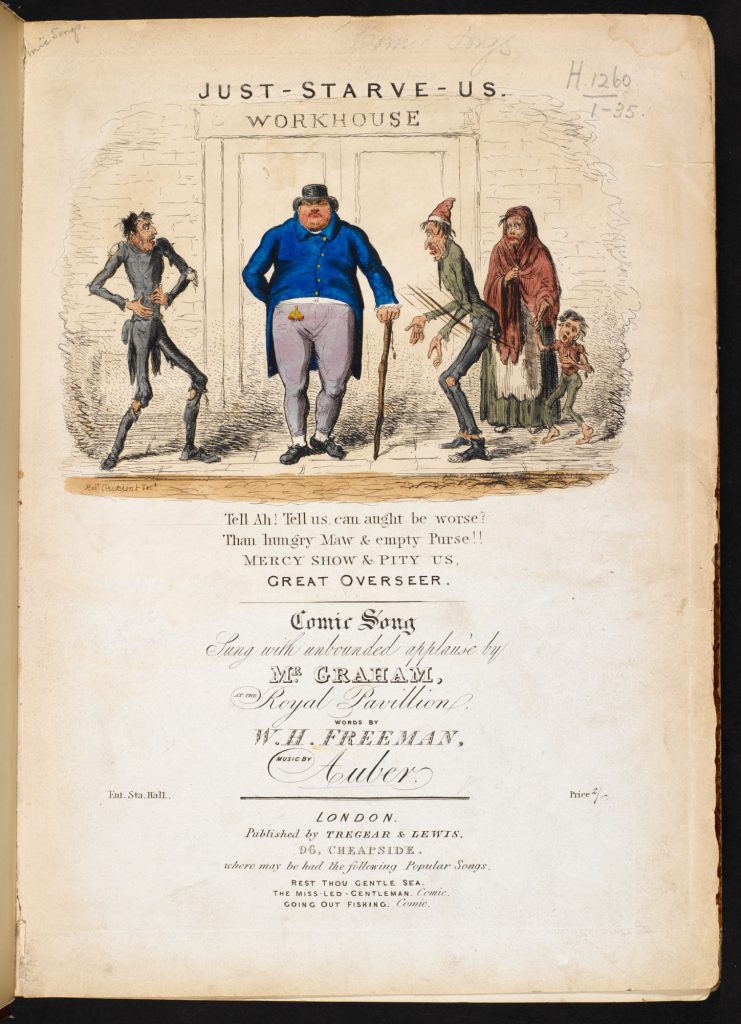
As Victorian writers, doctors, reformers, and coroners increasingly interpreted suicide through insanity and mental suffering, they also widened the field of causes beyond the individual soul. Self-destruction could still be condemned as sin or explained as disease, but it was also read as a symptom of social pressure. Poverty, unemployment, debt, alcoholism, domestic violence, sexual disgrace, chronic illness, old age, and urban isolation all appeared in nineteenth-century discussions as circumstances that could push fragile minds toward despair. This did not mean Victorian society abandoned moral judgment. Rather, social explanation became another layer in the same interpretive struggle. The suicidal person might be judged, pitied, medicalized, and socially situated all at once. A death could be blamed on weak will, melancholia, drink, unemployment, shame, and the cruelty of modern life without any one explanation fully displacing the others.
Poverty was one of the most persistent and troubling causes invoked in Victorian accounts of suicide. The poor lived close to the edge of catastrophe, and the loss of wages, illness of a breadwinner, eviction, debt, hunger, or the collapse of credit could make life feel suddenly unmanageable. In this setting, suicide was not always imagined as a philosophical rejection of existence, but as a desperate response to humiliation, dependency, and the fear of becoming a burden. Victorian moralists often warned against despair among the poor, but the social reality was difficult to ignore. Workhouses, pawnshops, casual labor, overcrowded lodging houses, and unstable employment formed the material background to many deaths. The language of insanity could soften judgment, but poverty forced a harder question: if a person’s choices were narrowed by hunger, debt, and shame, where exactly did moral responsibility begin? Victorian culture rarely answered that question consistently. It preferred to individualize despair, but the recurrence of poverty in suicide narratives made social causation impossible to dismiss.
Urban life sharpened these anxieties. London and other industrial cities offered employment, anonymity, mobility, and spectacle, but they also produced loneliness, crowding, temptation, and a terrifying sense of being lost among strangers. The Victorian city made suicide visible in new ways. Rivers, bridges, railway stations, lodging houses, tenements, factories, prisons, and hospitals became recurring settings in reports of self-destruction. A body recovered from the Thames or discovered in a rented room could be read as evidence of personal tragedy, but also as a sign of urban disorder. The city seemed to gather vulnerable people while weakening the older bonds of parish, kinship, and neighborhood surveillance. It created the conditions for both concealment and exposure: a person could disappear into the crowd, yet the death itself might become public through the press, police, inquest, and rumor. Suicide became one of the dark symbols of Victorian modernity, suggesting that progress, commerce, and metropolitan energy carried hidden costs. This was true because urban suicide often appeared at the points where modern infrastructure met human despair. Bridges were feats of engineering and movement yet also became sites of imagined or actual self-destruction. Railways embodied speed, connection, and industrial triumph, yet railway deaths could be read as horrifying collisions between the vulnerable body and the machinery of progress. Lodging houses promised temporary shelter, but they also represented anonymity, rootlessness, and the absence of domestic protection. The city’s very modernity made suicide seem newly legible as a social phenomenon. It was not simply that more deaths occurred in cities, but that the city supplied the scenery, technology, and publicity through which suicide could be understood as part of modern life itself.
Gender shaped both the causes assigned to suicide and the sympathy granted afterward. Men were often discussed in relation to work, debt, business failure, criminal accusation, military disgrace, alcoholism, and the inability to fulfill the role of provider. Male suicide could appear as the collapse of breadwinning identity, the failure of self-command, or the unbearable exposure of public shame. Women’s suicides, by contrast, were frequently narrated through domestic suffering, seduction, abandonment, pregnancy, prostitution, servant life, marital cruelty, or emotional vulnerability. These patterns did not simply reflect statistical reality; they reflected Victorian expectations about masculinity and femininity. A man’s death was often interpreted through public responsibility and economic honor, while a woman’s death was placed within the language of sexual reputation, dependency, and feeling. The result was a sharply gendered moral imagination. Male despair was more likely to be framed as ruin, disgrace, or failed duty; female despair as fallenness, betrayal, helplessness, or sentimental tragedy. These distinctions shaped the evidence people noticed and the stories they told after death. A man’s unpaid debts, dismissed employment, forged signature, failed shop, or public accusation might become the explanatory center of an inquest or newspaper report. A woman’s pregnancy, broken engagement, quarrel with a lover, dismissal from service, or fear of exposure could be made to bear a similar interpretive weight. In both cases, Victorian observers looked for causes that matched the social role the dead person was expected to occupy. Suicide became a commentary on gendered obligation: men were expected to withstand the pressures of provision and public honor, while women were expected to remain sexually respectable, emotionally governed, and domestically protected. When those expectations collapsed, the death seemed to confirm the fragility of the very roles Victorian society claimed were natural.
The gendered imagination of suicide was visible in the figure of the “fallen woman.” Victorian culture repeatedly returned to images of young women who drowned themselves after seduction, abandonment, pregnancy, poverty, or loss of reputation. Such narratives appeared in poetry, journalism, visual art, social reform writing, and sensation fiction. They could be deeply sympathetic, portraying the woman as a victim of male exploitation and social cruelty. But they could also be voyeuristic, transforming female despair into moral spectacle. The woman’s body, often when imagined in water, became a symbolic site where anxieties about sexuality, class, purity, urban danger, and social hypocrisy converged. This fixation could distort reality, since men were more likely than women to die by suicide in Victorian Britain. Yet the cultural power of the female suicide lay not in numerical accuracy but in symbolic usefulness. She allowed Victorians to mourn innocence, condemn seduction, dramatize shame, and imagine society as both morally stern and emotionally tender.
Alcohol added another layer of explanation and judgment. Drink appeared in suicide narratives as cause, symptom, temptation, and moral failure. Intoxication could be used to explain impulsive self-destruction in cases where the deceased had quarreled, suffered a sudden disappointment, or acted violently toward the self without long evidence of melancholy. Chronic drunkenness, meanwhile, was often linked to poverty, domestic misery, unemployment, crime, and mental deterioration. Temperance reformers used such cases as evidence that alcohol destroyed not only bodies but wills, households, and souls. Yet drink also complicated responsibility. If a person killed himself while intoxicated, was the act deliberate, diseased, sinful, or the result of temporary derangement? Victorian observers could answer differently depending on class, gender, reputation, and circumstance. A respectable man overcome by drink might be pitied as temporarily unbalanced; a habitual drunkard might be treated as morally degraded. Alcohol exposed the unstable boundary between compassion and condemnation that ran through the entire Victorian treatment of suicide.
Work and economic identity were equally central. Industrial and commercial Britain placed heavy pressure on productivity, discipline, punctuality, solvency, and reputation. Employment was tied to honor, independence, and household authority. Bankruptcy, dismissal, professional disgrace, failed business ventures, accusations of theft, or inability to provide could become existential crises. But work-related despair was not limited to middle-class men. Servants faced dismissal and accusations that could destroy their prospects; laborers endured insecurity, injury, and seasonal unemployment; clerks and shopworkers navigated precarious respectability on low wages; soldiers and sailors lived under hierarchical discipline and public shame. Victorian social commentary often praised work as a moral safeguard against idleness and vice, but work could also become a source of crushing pressure. When suicide followed dismissal, debt, or occupational disgrace, it revealed the darker side of a culture that treated economic usefulness as a measure of character. In this respect, suicide exposed the emotional violence hidden inside the language of respectability. A person who lost work did not merely lose income; he or she might lose standing, routine, future prospects, housing, marriageability, credit, and the confidence of kin. Victorian ideals of independence could make dependency feel like humiliation, while the moral prestige attached to labor made unemployment appear not only unfortunate but shameful. This was devastating in a society where poverty was often interpreted through character. The unemployed man, the dismissed servant, the bankrupt tradesman, or the clerk accused of dishonesty could find themselves trapped between economic disaster and moral suspicion. Suicide was not simply a reaction to material loss, but to the collapse of a social identity built around usefulness, trustworthiness, and self-command.
Shame may have been the most powerful social cause of all, because it connected external circumstance to inner collapse. Victorian society was intensely concerned with reputation: sexual reputation, financial reputation, religious reputation, professional reputation, and domestic respectability. A person who lost reputation could experience social death before physical death. Public exposure, scandal, illegitimacy, accusation, failed courtship, bankruptcy, arrest, or family disgrace could make continued life seem unbearable. Shame also explains why some suicides were concealed, euphemized, or softened through insanity verdicts. Families feared not only the death but the story that would attach to it. The coroner’s court, newspaper column, funeral, and neighborhood conversation could extend the crisis beyond the grave. In that sense, suicide was both a response to shame and a producer of further shame. The Victorian compassionate verdict was often an attempt to interrupt that cycle by replacing disgrace with illness, misfortune, or sorrow.
By the later nineteenth century, social explanations did not eliminate religious, legal, or medical interpretations; they made them more complicated. Poverty could be treated as a material cause, but also as a test of moral endurance. Urban isolation could be described as modern social pathology, but also as a danger to weak minds. Alcohol could be disease or vice. Sexual shame could inspire sympathy or condemnation. Work could dignify life or crush it. The Victorian understanding of suicide developed as a network of overlapping causes rather than a single theory. What changed most was the willingness to look outward from the individual act toward the circumstances that made despair intelligible. Suicide remained morally disturbing, but it increasingly appeared as a social fact: a death shaped by class, gender, labor, reputation, family pressure, bodily suffering, and the new vulnerabilities of modern life.
The Public Imagination: Newspapers, Sensation Fiction, and the Romance of Despair

Victorian suicide was not only investigated by coroners, explained by doctors, and judged by clergy; it was also imagined by the public. Newspapers, broadsides, novels, poems, melodramas, and visual art transformed self-destruction into a subject of fascination, warning, pity, and fear. The same culture that increasingly softened the legal treatment of suicide also consumed stories of suicide with intense curiosity. This was not simply prurience, though it could certainly become that. Suicide seemed to offer a dramatic key to hidden suffering. A body in a river, a pistol in a locked room, poison beside a bed, a note left on a table, or a fall from a bridge promised access to the concealed world beneath respectable surfaces. The public imagination made suicide legible as both private anguish and social revelation. It allowed readers to ask what pressures, secrets, sins, or injustices had driven a person to the final act.
Newspapers were central to this transformation. The expanding Victorian press reported inquests, police discoveries, missing persons, letters left behind, last sightings, medical testimony, and verdicts of insanity or felo de se. These reports could be brief and formulaic, but they could also be vivid, moralizing, and emotionally charged. In the newspaper column, suicide became a narrative event. A death was arranged into a sequence: the deceased had been melancholy, had quarreled with a spouse, had lost employment, had been drinking, had feared disgrace, had spoken strangely, had purchased poison, had walked toward the river, had been found too late. Such details gave readers the illusion of explanation. They also turned ordinary lives into public dramas. The inquest supplied the official frame, but journalism supplied the atmosphere. Even when newspapers warned against the horror of self-destruction, they often gave the act a narrative force that made it memorable, repeatable, and emotionally available to readers.
This visibility produced anxiety about imitation. Victorian commentators worried that detailed newspaper accounts might encourage vulnerable readers to copy methods, locations, or gestures. Such fears were not irrational within the period’s own assumptions about nerves, impressionability, and moral contagion. If the mind could be unsettled by shock, grief, drink, or overexcitement, then sensational accounts of suicide might themselves become dangerous stimuli. Reports of deaths at bridges, rivers, railways, monuments, or well-known urban sites could make those places seem charged with fatal association. The press occupied an ambiguous moral position. It claimed to inform, warn, and instruct, but it also profited from drama. It could condemn suicide while reproducing the very details that made it compelling. This tension between moral warning and sensational attraction became one of the defining features of the Victorian public treatment of self-destruction. Editors and reporters could frame their accounts as cautionary tales, yet the caution often depended on precisely the details that gave the story its power: the note, the final words, the route taken, the means chosen, the discovery of the body, the grief of relatives, the shocked testimony of witnesses. The more vividly a report demonstrated the horror of suicide, the more fully it risked turning that horror into spectacle. This problem was intensified by the competitive newspaper market, in which emotional intensity, novelty, and recognizable narrative patterns helped sell copy. The suicide report stood at the uneasy border between public morality and commercial sensation. It instructed readers in pity and warning, but it also invited them to linger over despair.
Sensation fiction and melodrama drew upon the same energy. Mid- and late-Victorian readers were drawn to plots involving secrets, madness, bigamy, seduction, inheritance, murder, wrongful confinement, and hidden disgrace. Suicide fit naturally into this imaginative world because it could appear as the final eruption of a concealed history. A character’s self-destruction might reveal guilt, expose social cruelty, preserve honor, escape shame, punish a betrayer, or dramatize the unbearable pressure of respectability. In fiction, suicide often performed narrative labor that real suicide could not: it made hidden meanings visible and gave emotional closure to tangled moral plots. The death might be condemned, but it also possessed tragic grandeur. The reader was invited not merely to judge, but to reconstruct the path of suffering that led to the act. In that reconstruction, suicide became less a legal category than a dramatic language for secrets that society had failed to contain.
The romance of despair was especially gendered. Victorian public culture repeatedly returned to the image of the young woman who throws herself into water after seduction, abandonment, pregnancy, poverty, or social disgrace. Poems such as Thomas Hood’s “The Bridge of Sighs,” paintings of drowned or fallen women, and journalistic accounts of women recovered from rivers all drew upon a sentimental grammar in which female suicide exposed the cruelty of sexual double standards. These representations could be genuinely critical of male exploitation and social hypocrisy, but they also risked aestheticizing female suffering. The dead woman became beautiful in despair, purified by death, and useful as a moral emblem. Her body carried meanings about innocence, fallenness, urban danger, and pity. Meanwhile, the more common male suicide, linked statistically and socially to work, debt, drink, illness, or disgrace, often received less romantic treatment. Men’s deaths might be reported as failures of nerve, business, sobriety, or responsibility; women’s deaths were more easily transformed into sentimental tragedy. This gendered contrast reveals how representation could convert social anxiety into aesthetic pattern. The drowned woman could stand for the dangers of the city, the hypocrisy of respectability, the cruelty of seduction, the fragility of female reputation, and the pathos of innocence destroyed. Her death made society appear both guilty and compassionate: guilty because it had helped produce her ruin, compassionate because it could weep over her afterward. Yet this sentimental form of pity was not always liberating. It often required the woman to be passive, beautiful, repentant, victimized, and dead before she could become fully sympathetic. Living women who resisted, accused, demanded support, or violated sexual norms were harder to romanticize. Death could purify what life had made socially difficult.
This discrepancy between representation and reality is crucial. Victorian Britain did not imagine suicide in proportion to its demographic patterns. It imagined suicide through the figures that best expressed its anxieties. The fallen woman, the ruined gentleman, the desperate clerk, the dishonored soldier, the servant accused of theft, the abandoned mother, the intoxicated laborer, and the elderly sufferer all became recognizable types. These types helped readers process the unsettling fact of self-destruction by placing it within familiar moral stories. Yet typology could also flatten experience. A person’s death was made intelligible by being fitted into an expected narrative of gender, class, sin, madness, or shame. The public imagination expanded sympathy while narrowing possibility. It taught readers to pity certain suicides intensely, but often only when those deaths conformed to established scripts of sentimental despair, social ruin, or temporary insanity.
By the end of the nineteenth century, suicide had become a public symbol through which Victorians debated modern life itself. It appeared in discussions of journalism, urban anonymity, sexual morality, work, heredity, nervous disease, alcoholism, poverty, and the fragility of self-command. The public imagination did not simply reflect changing attitudes toward suicide; it helped create them. Newspapers made suicide visible. Sensation fiction made it narratively charged. Poetry and art made it emotionally resonant. Reform writing made it socially accusatory. Medical commentary made it pathological. Together, these forms transformed suicide from a hidden sin or legal offense into one of the century’s most troubling spectacles of suffering. Yet spectacle did not mean understanding. Victorian culture often looked at suicide intensely while still requiring it to become a lesson, a warning, a diagnosis, or a romance before it could be endured.
Literature and the Defeated Will: Endurance, Melancholy, and Moral Struggle

Victorian literature did not treat suicide merely as an event, but as a test of character, society, faith, and feeling. In novels, poems, melodrama, and moral prose, self-destruction often appeared at the point where endurance failed or where the burden placed on the individual became impossible to bear. The period inherited Romantic traditions that sometimes gave voluntary death a tragic grandeur, but Victorian writing more often approached suicide through conflict: between sympathy and judgment, despair and duty, inner anguish and outward responsibility. A character who contemplated or enacted suicide was rarely allowed to stand outside morality altogether. Instead, the suicidal crisis became a literary scene in which readers were asked to measure the pressures of poverty, disgrace, frustrated love, guilt, madness, or spiritual desolation against the Victorian demand for perseverance.
This demand for endurance was central to the age’s moral imagination. Victorian culture repeatedly praised the disciplined will: the capacity to work, suffer, wait, resist temptation, and remain useful even under grief or disappointment. Literature absorbed this ethic deeply. Characters were often tested by loss, illness, social humiliation, unrequited love, religious doubt, or economic failure, and their moral worth was measured partly by how they bore the test. Suicide became a disturbing literary possibility because it seemed to mark the defeat of will. It suggested that the self could collapse under pressure, that duty could be overwhelmed by feeling, and that the inward life might be stronger than the public virtues meant to govern it. Yet Victorian literature was rarely content with simple condemnation. Its power lay in making the reader feel how suffering might narrow the imagination until death appeared not as rebellion but as release, escape, punishment, or silence. The defeated will was frightening precisely because it exposed the limits of the very moral habits Victorian society celebrated. A culture could preach self-command, but novels and poems could show how self-command frayed under hunger, disgrace, loneliness, illness, or grief. This did not necessarily make suicide admirable; often it made it more tragic. The reader was invited to see the act as wrong or disastrous while also understanding the inner pressure that made the wrong seem thinkable. Literature became one of the places where Victorian moral discipline encountered its own shadow: the possibility that endurance, though praised as virtue, could become unbearable when demanded without mercy.
Thomas Hood’s “The Bridge of Sighs” offers one of the most influential examples of this sympathetic moral vision. The poem presents the drowned woman not as a criminal or theological abstraction, but as a figure of social sorrow whose death exposes the cruelty of judgment. Hood’s speaker asks readers to look on the dead woman with pity, not contempt, and the poem’s emotional force depends on the contrast between her social fall and her human vulnerability. Yet even this sympathy is shaped by Victorian assumptions about gender, purity, and repentance. The woman is most fully pitied once she is dead, silent, and removed from the difficult moral disorder of life. Her suicide becomes legible because it fits a sentimental pattern: shame, abandonment, water, death, and posthumous tenderness. The poem challenges harshness, but it also shows how Victorian compassion often required the suffering person to become an emblem before society could forgive. The drowned woman can be reclaimed because she no longer speaks, desires, accuses, or disrupts. Her body becomes the surface on which others write pity, social guilt, and moral reflection. This is why Hood’s poem is so revealing: it pleads for mercy, but the mercy it imagines is inseparable from aesthetic transformation. The woman’s despair is made beautiful enough to be mourned, and her death allows the reader to feel compassion without having to confront the full disorder of her living circumstances. The poem stands at the center of Victorian suicide representation, where sympathy could be radical in tone yet still constrained by the sentimental forms that made it acceptable.
The novel, with its long attention to motive and consequence, gave Victorian writers another way to explore suicide as moral struggle. In fiction, the suicidal impulse often emerges not as a sudden isolated act but as the culmination of pressures built across chapters: debt, secrecy, seduction, illness, isolation, spiritual torment, or the failure of social belonging. George Eliot’s moral psychology, for example, repeatedly examines the difficulty of living with guilt, limitation, and disappointed desire, even when suicide itself is not always the central action. Her fiction tends to resist melodramatic simplification by showing how character is shaped through habit, sympathy, memory, and responsibility. Self-destruction is not merely a plot device but a moral crisis in the relation between the self and others. The question is not only why a person might wish to die, but what obligations, affections, and consequences bind the suffering individual to life.
Thomas Hardy pushed this crisis into darker territory. In Hardy’s tragic worlds, individuals often find themselves caught between desire and law, body and respectability, social judgment and private need. Suicide, or the wish for annihilation, appears less as a failure of religious endurance than as an indictment of a social order that makes endurance cruel. Hardy’s characters are frequently crushed not by one sin or one weakness, but by systems of class, marriage, sexual morality, economic precarity, and public opinion that offer little room for repair. This does not mean Hardy simply glorifies self-destruction. Rather, he makes it difficult to treat despair as purely individual. The defeated will in Hardy is often a will defeated by circumstance as much as by temperament. His fiction belongs to the late-Victorian widening of suicide’s meaning: from personal sin toward social tragedy, from moral collapse toward a bleak recognition of how institutions and conventions can make life unlivable.
Melancholy also gave literature a language between madness and ordinary sorrow. Victorian writers were fascinated by states of inward heaviness: grief that would not lift, religious doubt, nervous exhaustion, disappointment hardened into resignation, and the quiet estrangement of the individual from the world. Melancholy could be noble, pathological, morally dangerous, or aesthetically compelling depending on the context. It allowed writers to represent suffering that had not yet become insanity but had already exceeded ordinary sadness. This was important because much Victorian suicide writing depended on thresholds. A character might not be mad in any dramatic sense; he or she might simply be worn down, ashamed, isolated, or unable to imagine a future. Literature gave form to that gray zone. It could show how despair accumulated, how silence deepened, how social expectations trapped the sufferer, and how death could appear as the only remaining act of control. This literary melancholy was not always loud or theatrical. Often it appeared as fatigue, numbness, repetition, withdrawal, or a gradual loosening of attachment to ordinary life. That made it powerful, because it brought suicide close to everyday forms of suffering rather than reserving it for obvious madness or melodramatic catastrophe. Victorian literature could dwell in the slow interior weather before the act: the delayed letter, the sleepless night, the humiliating encounter, the unbearable memory, the room that feels smaller, the walk that becomes a drift toward danger. In representing these thresholds, literature helped readers imagine suicide not as an inexplicable rupture but as the last point in a process of narrowing hope.
The literary treatment of suicide both reflected and complicated Victorian moral culture. It preserved the language of endurance, duty, and defeated will, but it also trained readers in sympathy. It asked them to see suicide not only as sin, crime, or madness, but as the visible end of hidden suffering. Literature often aestheticized despair when it framed female suicide as beautiful, passive, watery, and redemptive. This made Victorian writing powerful but morally unstable. It could expose social cruelty while turning suffering into spectacle; it could challenge condemnation while relying on sentimental conventions; it could pity the dead while leaving the structures that harmed them intact. In that instability lies its historical value. Victorian literature did not solve the problem of suicide. It dramatized the very conflict that shaped the age: the belief that one must endure, and the growing recognition that some forms of suffering made endurance seem impossible.
Gender, Respectability, and the Unequal Sympathy of Suicide

Victorian sympathy for suicide was never simple, and it was never equally available to everyone. The century’s movement away from the harshest legal penalties of felo de se created more room for pity, but pity still passed through powerful filters of gender, class, reputation, religion, and family standing. The same act could be interpreted as tragedy, illness, sin, weakness, scandal, or social indictment depending on who had died and what story could be built around the death. A respectable man ruined by debt, a young woman abandoned after seduction, an elderly sufferer in chronic pain, a mother overwhelmed by childbirth, a servant dismissed in disgrace, and a habitual drunkard might all die by their own hand, yet Victorian observers did not read them in the same way. Compassion depended on whether the death could be made morally legible. The suicidal person had to be fitted into a recognizable narrative before society could safely mourn.
For men, that narrative often centered on work, solvency, public honor, and self-command. Victorian masculinity was deeply tied to the ability to govern oneself and sustain others. A man was expected to work, provide, restrain emotion, meet obligations, and preserve the household from disgrace. When men died by suicide after bankruptcy, dismissal, business collapse, professional scandal, criminal accusation, or public humiliation, their deaths were often interpreted as the final breakdown of masculine steadiness. Sympathy could be strong when the man appeared overwhelmed by external pressures: a commercial downturn, an unjust accusation, sudden bereavement, incurable illness, or nervous collapse. Yet condemnation remained close at hand if the death seemed connected to fraud, drink, gambling, violence, or the abandonment of dependents. In those cases, suicide could look not only like suffering but like failed duty. The dead man might be mourned as ruined but also judged for leaving others to bear the consequences of his collapse.
Women’s suicides were framed through a different moral language. Victorian femininity was imagined through ideals of modesty, chastity, emotional sensitivity, domestic dependence, and moral influence. Those assumptions could make women’s suffering highly visible and intensely sentimentalized, particularly when the death followed seduction, abandonment, pregnancy, domestic cruelty, poverty, or grief. The abandoned woman who drowned herself, the pregnant servant who feared exposure, the wife trapped in misery, or the girl ruined by a faithless lover could become an object of public pity. But this sympathy was conditional. It often required the woman to appear passive, deceived, repentant, vulnerable, and essentially innocent. Women whose lives did not fit that script (women associated with prostitution, drunkenness, anger, sexual autonomy, neglect of children, or open defiance) were harder to absorb into sentimental compassion. Victorian culture could pity the “fallen” woman, but it usually preferred her fallen in a particular way: wronged, sorrowful, and silent enough to become a moral emblem.
Respectability shaped the verdicts around both men and women. Suicide was frightening not only because someone had died, but because the death could expose private disorder to public scrutiny. The coroner’s inquest might reveal debts, quarrels, illegitimate pregnancies, mental instability, drinking habits, abuse, accusations of theft, religious anxiety, or family conflict. Newspapers could then carry those details into a wider public world. For survivors, the danger was double: bereavement and reputational damage. A verdict of temporary insanity, a quiet burial, careful wording in a report, or communal discretion could help protect the family from lasting disgrace. Respectability was not simply an abstract moral ideal; it was a form of social survival. Families needed the death to be understood in a way that did not stain the living. Suicide was never only about the individual. It threatened to pull the whole household into public judgment.
Class made these distinctions sharper. Middle-class suicides were more likely to be described through overwork, nervous strain, financial anxiety, grief, mental disturbance, or honorable ruin. These explanations could preserve dignity even when the act itself remained disturbing. Working-class suicides could also receive sympathy, especially when poverty, hunger, illness, or exploitation was obvious, but they were more vulnerable to harsher explanations: drink, improvidence, domestic disorder, criminality, or moral weakness. Servants occupied a precarious position because they lived within other people’s households while depending on reputation for employment. A servant accused of theft, dismissed while pregnant, or exposed to shame had few protections against social ruin. Yet even here sympathy depended on narrative. The innocent servant betrayed or falsely accused could become tragic; the servant represented as dishonest, sexually forward, drunken, or disobedient might receive far less pity. The unequal sympathy of suicide reflected the unequal resources people possessed for being interpreted generously. Respectable families could mobilize doctors, clergy, employers, legal phrasing, and newspaper discretion to shape a gentler account. Poorer families, by contrast, often had less control over the public story and fewer protections against a hostile reading of motive. This did not mean working-class suicides were never mourned with tenderness, but it did mean that pity could be more fragile when the dead person’s life was already associated with instability or dependency. The coroner’s court might still return a merciful verdict, but the surrounding narrative could remain classed: the middle-class sufferer was overstrained, the poor sufferer was improvident; the gentleman was ruined, the laborer degraded; the lady was nervous, the servant suspect. These distinctions were not absolute, but they reveal how social rank shaped the emotional vocabulary of suicide.
Maternal suicide exposed the limits of Victorian compassion with particular force. Motherhood was idealized as self-sacrificing, tender, morally redemptive, and almost sacred in domestic culture. A mother who killed herself seemed to violate one of the period’s most cherished images of womanhood. Yet motherhood also provided one of the clearest routes into medical sympathy, particularly through the language of puerperal insanity, nervous exhaustion, grief, poverty, or bodily collapse after childbirth. If a mother’s suicide could be interpreted as the result of illness or derangement, she could be mourned as a sufferer rather than condemned as a woman who had abandoned her children. But this mercy again depended on diminished agency. Victorian observers found it easier to forgive the suicidal mother when she was imagined as “not herself,” temporarily overthrown by bodily or mental disorder. It was more difficult to acknowledge that ordinary domestic burdens (pregnancy, childcare, poverty, marital cruelty, isolation, and exhaustion) might themselves become unbearable without requiring the mother to be classified as mad.
Sexual reputation may have been the most powerful filter of all. A woman’s sexual standing could determine whether her death was treated as tragedy, warning, scandal, or moral lesson. Seduction, illegitimate pregnancy, abandonment, prostitution, and fear of exposure recurred in Victorian stories of female suicide because sexual shame could destroy a woman’s prospects with devastating speed. Reformers could point to such deaths as evidence of social hypocrisy and male irresponsibility, while moralists could use them as warnings against sexual transgression. The dead woman became a site of argument: was she sinner, victim, patient, or sacrifice? Men, too, could be ruined by sexual scandal, but the consequences were not symmetrical. A man’s sexual misconduct might damage reputation; a woman’s could define her entirely. This imbalance helped create the sentimental power of female suicide, but it also narrowed the forms of sympathy available. Victorian compassion often arrived only after the woman had been transformed into a cautionary and mournable figure.
The unequal sympathy of suicide reveals the deeper structure of Victorian moral life. The age did become more willing to pity the suicidal dead, but it rarely did so without conditions. Compassion was shaped by gender ideals, class assumptions, sexual reputation, sobriety, domestic role, economic usefulness, and the family’s ability to protect its public name. Suicide became mournable when it could be translated into a story the culture already knew how to tell: the ruined gentleman, the betrayed girl, the overburdened mother, the desperate servant, the melancholic invalid, the temporarily deranged sufferer. Those stories could be humane, and they often shielded families from cruelty. But they also disciplined grief by deciding which kinds of despair deserved tenderness and which remained close to shame. Victorian sympathy did not abolish judgment. It redistributed it. It softened the old legal and religious harshness but then reattached moral meaning through the categories of respectability, gender, and class. This is why the same century that recoiled from crossroads burial and forfeiture could still treat some suicides as morally legible tragedies and others as evidence of vice or disorder. The movement toward compassion was real, but it was structured by inequality. The dead were increasingly allowed to be mourned, yet not all were mourned in the same language, with the same generosity, or under the same assumptions about what had made life unbearable.
Prevention, Policing, and the Late Victorian Turn toward Social Management

By the late Victorian period, suicide was increasingly treated not only as a death to be judged after the fact, but as a risk to be anticipated, interrupted, and managed. This marked an important change in emphasis. Older responses had centered on sin, felony, burial, forfeiture, and the moral interpretation of the corpse. The newer language of prevention shifted attention toward the living person before the act: the melancholic patient, the overworked clerk, the drunken laborer, the abandoned woman, the pauper in distress, the prisoner under watch, the asylum inmate, the elderly sufferer, or the person known to have spoken of self-destruction. Suicide did not cease to be morally troubling, but it became increasingly thinkable as something that families, doctors, police, clergy, and institutions might prevent. This preventive imagination belonged to a wider Victorian culture of social management, in which danger was to be classified, supervised, and reduced before it erupted into scandal or death.
The police occupied a visible place in this changing world. In cities, officers encountered suicidal distress in streets, bridges, riversides, railway spaces, lodging houses, prisons, and crowded domestic neighborhoods. Their role was not simply punitive. They recovered bodies, summoned medical assistance, testified at inquests, watched known danger points, intervened in public crises, and sometimes physically prevented people from carrying out acts of self-destruction. This practical work placed police at the border between criminal law and welfare. Suicide remained entangled with illegality, yet the person attempting it could also be treated as endangered rather than wicked. The officer who stopped a desperate person was not only enforcing order; he was preserving life, protecting public space from spectacle, and preventing the scandal that would follow an inquest. Late Victorian policing helped transform suicide from a purely moral or legal offense into a problem of urban administration. This was true in a metropolis where bridges, embankments, docks, railway lines, and crowded thoroughfares made private despair publicly visible. Police intervention could be compassionate, but it was also a way of protecting the city from disorderly scenes of suffering. A person rescued from a river or restrained at a bridge might be treated as pitiable, but also as someone whose crisis had disrupted public space and required official handling. The police report, like the coroner’s inquest, converted anguish into an administrative record. In that conversion lay a distinctly Victorian mixture of mercy and management: the state reached the suicidal person before death, but it did so through the same machinery that watched poverty, disorder, drunkenness, vagrancy, and urban danger.
Institutions extended this logic of supervision. Asylums, workhouses, hospitals, prisons, and charitable refuges all confronted people considered vulnerable to self-harm, though they did so in very different ways. The asylum made suicide central to questions of observation, restraint, classification, and medical responsibility. The workhouse and infirmary encountered the suicidal poor, the elderly, the chronically ill, and those whose despair was inseparable from destitution. Prisons faced the problem of shame, fear, punishment, and confinement. Charitable institutions and rescue homes, especially those concerned with women, prostitution, poverty, or moral reform, treated despair as something that might be redirected through religious discipline, work, shelter, and supervision. These institutions did not always respond gently. Protection could mean surveillance; care could mean confinement; moral rescue could mean discipline. Yet they shared a growing assumption that suicidal people belonged within systems of intervention, not merely within posthumous condemnation.
Doctors and alienists strengthened this preventive turn by arguing that suicide often had warning signs, causes, and treatable conditions. If self-destruction arose from melancholia, nervous exhaustion, alcoholism, puerperal insanity, hereditary tendency, delusion, fever, or bodily disease, then it could be medically anticipated. This made families responsible in new ways. Relatives were encouraged to notice changes of mood, speech, sleep, appetite, conduct, religious anxiety, or social withdrawal. Doctors might recommend rest, removal from stress, institutional care, supervision, moral management, or treatment for underlying illness. Such advice could be compassionate, but it also placed the sufferer under intensified scrutiny. The suicidal person became someone whose gestures, silences, habits, and domestic surroundings could be interpreted as symptoms. Prevention enlarged the medical gaze. Suicide was no longer only the final fact investigated by a coroner; it became a possible future around which households and institutions were expected to organize vigilance. This expectation could weigh heavily on families. The household became the first site of surveillance, where relatives were asked to distinguish ordinary sadness from dangerous melancholy, eccentric behavior from delusion, and temporary distress from suicidal intent. The very intimacy of domestic life made this both possible and burdensome. A wife, parent, sibling, employer, or servant might be expected to remember every unusual remark after the death and wonder whether it had been a warning. Medical prevention carried an implicit moral pressure: someone should have seen the signs. This did not always produce blame, but it did create a new retrospective anxiety around suicide, one in which the past was searched for missed symptoms and failed interventions.
This emphasis on prevention also intersected with Victorian reform movements. Temperance advocates treated alcohol as a destroyer of household stability and mental self-command. Poverty investigators and social reformers pointed to unemployment, overcrowding, hunger, casual labor, and the shame of dependency. Campaigners concerned with prostitution and sexual exploitation treated some women’s suicides as indictments of social hypocrisy. Religious workers emphasized pastoral care, prayer, repentance, moral rescue, and hope. These reformers did not agree on a single theory of suicide, but they shared the belief that self-destruction revealed preventable failure somewhere in the social order: in drink, housing, labor, family life, sexual morality, urban anonymity, or spiritual neglect. Suicide became a diagnostic event. It seemed to expose places where Victorian society had failed to regulate conduct, protect the vulnerable, or sustain moral community. The death of one person could be turned into an argument about the reform of many. This gave suicide a political and moral usefulness that earlier legal categories had not fully possessed. A death by drowning could become an argument about seduction and abandonment; a death after unemployment could become evidence of economic insecurity; a death linked to drink could become a temperance lesson; a death in a workhouse or prison could become a criticism of institutional neglect. Reformers did not always agree about what needed to change, but they increasingly treated suicide as a signal that some form of social bond had failed. In that sense, prevention was not only medical or police work. It was a claim about the responsibility of society to make despair less likely.
Yet the late Victorian turn toward prevention should not be mistaken for simple humanitarian progress. It did make suicide more likely to be treated as a crisis requiring aid rather than as a crime deserving punishment. It encouraged intervention before death, sympathy for mental suffering, and attention to social causes. But it also expanded the power of institutions to define, monitor, and control vulnerable people. The suicidal person was increasingly rescued from the old disgrace of felo de se, only to enter the newer world of police reports, asylum notes, medical certification, charitable supervision, and administrative concern. This was the final Victorian transformation of suicide before the modern era: from corpse to case, from sin to risk, from public punishment to managed vulnerability. The change was real and often merciful, but it remained deeply shaped by class, gender, respectability, and authority. Victorian society learned to prevent suicide partly because it had learned to see despair as something to be governed.
Are We Mistaking Legal and Medical Change for Compassion?
The following video from “Timeline – World History Documentaries” discusses the Victorian obsession with death:
A challenge to my argument may be that the Victorian movement away from older punishments may look more humane than it actually was. The abolition of crossroads burial, the easing of burial restrictions, the end of forfeiture, the spread of insanity verdicts, and the growth of medical explanation all suggest a culture becoming more compassionate toward suicide. Yet these changes can also be read less generously. Perhaps Victorian society did not truly learn to understand the suicidal dead; perhaps it merely found less visibly brutal ways to contain them. The corpse was no longer degraded at the crossroads, but the death was still investigated, classified, moralized, pathologized, and often exposed in the press. The family might be spared the harshest legal consequences, but only if the death could be translated into acceptable categories: temporary insanity, nervous collapse, feminine shame, drunken impulse, hereditary weakness, or social misfortune. What looks like compassion may have been a change in technique rather than a change in moral imagination.
This challenge is strong because the Victorian reforms did not fully decriminalize suicide. They removed penalties that had become embarrassing, inconsistent, or cruel to survivors, but they left the deeper assumption of wrongful self-destruction largely intact. The Burial of Suicides Act of 1823 softened the treatment of the body, but still marked the suicide as ritually different. The Forfeiture Act of 1870 protected property, but did not declare the act morally or legally innocent. The Interments (felo de se) Act of 1882 restored ordinary burial, but did not end the criminal shadow surrounding suicide. Even the compassionate verdict of non compos mentis can be read as evasive rather than liberating. It allowed families and communities to avoid the old cruelty, but it often did so by denying that the deceased had acted with full reason. In other words, Victorian mercy frequently depended on removing agency. The dead could be forgiven if they could first be made mad.
The medicalization of suicide raises a similar difficulty. Alienists, physicians, and reformers helped shift suicide from the language of sin and felony toward the language of disease, nervous disorder, heredity, melancholia, and social strain. That shift could protect sufferers from condemnation, and it encouraged prevention rather than punishment. Yet medical explanation also brought new forms of authority. The suicidal person became a case to be watched, interpreted, confined, certified, rescued, or morally managed. Doctors and institutions did not simply free the suicidal from religious and legal stigma; they placed them within new regimes of diagnosis and supervision. Medical language often carried older moral judgments inside it. Terms such as weak will, moral insanity, degeneration, intemperance, hysteria, hereditary taint, or defective self-control could pathologize conduct while still blaming character. The vocabulary changed, but the pressure to discipline the sufferer remained.
The same caution applies to public sympathy. Victorian newspapers, poems, novels, and reform writings often invited readers to pity the suicidal dead, but that pity was selective and shaped by narrative convention. The drowned “fallen woman,” the overworked clerk, the ruined gentleman, the bereaved mother, and the melancholic invalid could become figures of tragedy. Others were less easily mourned: the habitual drunkard, the violent husband, the prostitute who did not fit sentimental ideals, the poor person described as improvident, the criminal suspect, or anyone whose death appeared defiant rather than pitiable. Sympathy was real, but it was filtered through respectability, gender, class, sexuality, and usefulness. Victorian culture did not simply become kinder; it became more skilled at distinguishing between those whose despair could be safely sentimentalized and those whose despair remained morally suspect.
This counterpoint does not overturn the main argument, but it does sharpen it. The Victorian transformation of suicide should not be described as a straightforward march from cruelty to compassion. It was a movement from public punishment toward managed pity, from desecration toward classification, from felony toward pathology, and from theological certainty toward uneasy interpretation. That was a real change, and for many families it mattered profoundly. Bodies were no longer treated with the full violence of older custom; estates were no longer forfeited; burial became more humane; insanity verdicts could soften stigma; medical and social explanations made room for sorrow. But compassion remained conditional. Victorian Britain learned to pity suicide most readily when it could explain it as madness, illness, shame, social pressure, or temporary defeat of the will. The result was not the end of judgment, but its relocation into softer, more modern forms.
Conclusion: The Long Death of Felo de Se
The Victorian history of suicide is best understood as the long death of felo de se, not its sudden abolition. The old phrase remained useful because it named an inherited world in which self-killing was a crime against the self, God, the Crown, the family, and the moral community. Yet across the nineteenth century, that world became increasingly difficult to sustain. Burial at the crossroads gave way to restricted burial, restricted burial gave way to ordinary interment, and forfeiture disappeared as a punishment visited upon the living. Coroners’ juries found ways to protect families through verdicts of unsound mind, while doctors and alienists increasingly described suicide through melancholia, nervous illness, heredity, bodily disorder, temporary insanity, and social strain. The legal category survived, but its emotional and ritual force weakened. What had once been staged as public disgrace became increasingly handled as tragedy, pathology, family sorrow, and administrative concern.
This shift was real, and it mattered. To the bereaved family, the difference between desecrated burial and ordinary mourning was not an abstraction. The difference between forfeiture and inheritance, between felo de se and non compos mentis, between scandal and sorrow, could determine how a household survived the death. Victorian society became more willing to imagine the suicidal person as afflicted rather than simply wicked, overwhelmed rather than wholly culpable, and socially wounded rather than merely sinful. It also became more willing to ask what poverty, shame, work, drink, urban isolation, gendered vulnerability, mental illness, and domestic distress had to do with self-destruction. In that sense, the century’s movement toward compassion was not imaginary. It softened real cruelties and expanded the range of explanations available to the dead and their survivors.
Yet this compassion remained uneasy and conditional. The suicidal dead were most safely pitied when their deaths could be translated into acceptable Victorian categories: temporary insanity, feminine shame, ruined respectability, nervous collapse, maternal derangement, drunken impulse, hereditary weakness, or social misfortune. Sympathy often depended on diminished agency. The dead could be forgiven if they were first understood as not fully themselves. Medicalization and prevention brought new forms of supervision, classification, and institutional power. The person once condemned as a felon of himself became a patient, a case, a risk, a warning, a newspaper story, or a social symptom. That was a more humane world than the crossroads, but it was not a world free of judgment. It relocated judgment into softer and more modern forms.
The long death of felo de se reveals one of the central patterns of Victorian moral change. The age did not simply abandon older religious and legal condemnations; it layered them with sympathy, medicine, social explanation, and reform. Suicide remained frightening because it challenged the ideals of providence, endurance, self-command, domestic duty, and social order. But it also became pitiable because Victorians increasingly recognized how grief, illness, poverty, shame, and mental suffering could make endurance collapse. The result was neither full liberation nor mere hypocrisy, but a conflicted transformation. Victorian Britain learned to mourn the suicide more fully, even while struggling to explain, contain, and morally manage the act. Felo de se did not disappear all at once. It faded through a century of compromises, leaving behind a culture in which self-inflicted death was no longer punished in the old ways, but still demanded interpretation before it could be forgiven.
Bibliography
Affiliate disclosure: Amazon links on this site are paid links. As an Amazon Associate I earn from qualifying purchases.
- Altick, Richard D. Victorian Studies in Scarlet: Murders and Manners in the Age of Victoria. New York: W. W. Norton, 1970.
- Anderson, Olive. “Did Suicide Increase with Industrialization in Victorian England?” Past & Present 86 (1980), 149-173.
- Anderson, Olive. Suicide in Victorian and Edwardian England. Oxford: Clarendon Press, 1987.
- Bailey, Victor. “This Rash Act”: Suicide across the Life Cycle in the Victorian City. Stanford: Stanford University Press, 1998.
- Bartlett, Peter. The Poor Law of Lunacy: The Administration of Pauper Lunatics in Mid-Nineteenth-Century England. London: Leicester University Press, 1999.
- Blackstone, William. Commentaries on the Laws of England. Vol. 1. Oxford: Clarendon Press, 1765.
- Booth, Charles. Life and Labour of the People in London. 17 vols. London: Macmillan, 1889–1903.
- Bucknill, John Charles, and Daniel Hack Tuke. A Manual of Psychological Medicine. London: John Churchill, 1858.
- Burial of Suicides Act 1823, 4 Geo. IV c. 52.
- Burn, Richard. The Justice of the Peace and Parish Officer. London: A. Strahan, 1869.
- Conolly, John. An Inquiry concerning the Indications of Insanity: Suggestions for the Better Protection and Care of the Insane. London: John Taylor, 1830.
- Davidoff, Leonore, and Catherine Hall. Family Fortunes: Men and Women of the English Middle Class, 1780–1850. London: Hutchinson, 1987.
- Diamond, Michael. Victorian Sensation: Or, the Spectacular, the Shocking and the Scandalous in Nineteenth-Century Britain. London: Anthem Press, 2003.
- Eliot, George. The Mill on the Floss. Edinburgh: William Blackwood and Sons, 1860.
- —-. Romola. London: Smith, Elder, 1863.
- Engels, Friedrich. The Condition of the Working Class in England. Translated by W. O. Henderson and W. H. Chaloner. Stanford: Stanford University Press, 1958.
- Esquirol, Jean-Étienne Dominique. Mental Maladies: A Treatise on Insanity. Translated by E. K. Hunt. Philadelphia: Lea and Blanchard, 1845.
- Forbes, Winslow. The Anatomy of Suicide. London: Henry Renshaw, 1840.
- Forfeiture Act 1870, 33 & 34 Vict. c. 23.
- Gates, Barbara T. “Victorian Attitudes Toward Suicide and Mr. Tennyson’s ‘Despair’.” Tennyson Research Bulletin 3:3 (1979), 101-110.
- —-. Victorian Suicide: Mad Crimes and Sad Histories. Princeton: Princeton University Press, 1988.
- Hardy, Thomas. Jude the Obscure. London: Osgood, McIlvaine, 1895.
- —-. The Mayor of Casterbridge. London: Smith, Elder, 1886.
- Harrison, Brian. Drink and the Victorians: The Temperance Question in England, 1815–1872. Pittsburgh: University of Pittsburgh Press, 1971.
- Hood, Thomas. “The Bridge of Sighs.” Punch, 1844.
- Houston, R. A. Punishing the Dead? Suicide, Lordship, and Community in Britain, 1500–1830. Oxford: Oxford University Press, 2010.
- Interments (felo de se) Act 1882, 45 & 46 Vict. c. 19.
- Jansson, Åsa. “From Statistics to Diagnostics: Medical Certificates, Melancholia, and ‘Suicidal Propensities’ in Victorian Psychiatry.” Journal of Social History 46:3 (2013), 716-731.
- Jervis, John. The Office and Duties of Coroners. London: Henry Butterworth, 1829.
- Kushner, Howard I. “Suicide, Gender, and the Fear of Modernity in Nineteenth-Century Medical and Social Thought.” Journal of Social History 26:3 (1993), 461-490.
- Laragy, Georgina. “‘A Peculiar Species of Felony’: Suicide, Medicine, and the Law in Victorian Britain and Ireland.” Journal of Social History 46:3 (2013), 732–743.
- Ledger, Sally. The New Woman: Fiction and Feminism at the Fin de Siècle. Manchester: Manchester University Press, 1997.
- MacDonald, Michael. “The Medicalization of Suicide in England: Laymen, Physicians, and Cultural Change, 1500–1870.” The Milbank Quarterly 67:1 (1989), 69–91.
- —-. “The Secularization of Suicide in England, 1660–1800.” Past & Present 119 (1988): 158-165.
- MacDonald, Michael, and Terence R. Murphy. Sleepless Souls: Suicide in Early Modern England. Oxford: Clarendon Press, 1990.
- Matus, Jill L. Shock, Memory and the Unconscious in Victorian Fiction. Cambridge: Cambridge University Press, 2009.
- Mayhew, Henry. London Labour and the London Poor. Vol. 1. London: Griffin, Bohn, and Company, 1861.
- Micale, Mark S. Approaching Hysteria: Disease and Its Interpretations. Princeton: Princeton University Press, 1995.
- Minois, Georges. History of Suicide: Voluntary Death in Western Culture. Translated by Lydia G. Cochrane. Baltimore: Johns Hopkins University Press, 1995.
- Murray, Alexander. Suicide in the Middle Ages. Vol. 1, The Violent against Themselves. Oxford: Oxford University Press, 1998.
- —-. Suicide in the Middle Ages. Vol. 2, The Curse on Self-Murder. Oxford: Oxford University Press, 2000.
- Pickering, W. S. F., and Geoffrey Walford, eds. Durkheim’s Suicide: A Century of Research and Debate. London: Routledge, 2000.
- Poovey, Mary. Uneven Developments: The Ideological Work of Gender in Mid-Victorian England. Chicago: University of Chicago Press, 1988.
- Prochaska, F. K. Women and Philanthropy in Nineteenth-Century England. Oxford: Clarendon Press, 1980.
- Pykett, Lyn. The Nineteenth Century Sensation Novel. Plymouth: Northcote House, 1994.
- Scull, Andrew. Most Solitary of Afflictions: Madness and Society in Britain, 1700–1900. New Haven: Yale University Press, 1993.
- Shanley, Mary Lyndon. Feminism, Marriage, and the Law in Victorian England, 1850–1895. Princeton: Princeton University Press, 1989.
- Showalter, Elaine. The Female Malady: Women, Madness, and English Culture, 1830–1980. New York: Pantheon Books, 1985.
- Shpayer-Makov, Haia. The Making of a Policeman: A Social History of a Labour Force in Metropolitan London, 1829–1914. Aldershot: Ashgate, 2002.
- Shuttleworth, Sally. Charlotte Brontë and Victorian Psychology. Cambridge: Cambridge University Press, 1996.
- —-. George Eliot and Nineteenth-Century Science: The Make-Believe of a Beginning. Cambridge: Cambridge University Press, 1984.
- Sprott, S. E. The English Debate on Suicide from Donne to Hume. La Salle, IL: Open Court, 1961.
- Thomas, Keith. Religion and the Decline of Magic. London: Penguin Books, 1971.
- Tosh, John. A Man’s Place: Masculinity and the Middle-Class Home in Victorian England. New Haven: Yale University Press, 1999.
- Tuke, Daniel Hack. Illustrations of the Influence of the Mind upon the Body in Health and Disease. London: J. & A. Churchill, 1872.
- Vrettos, Athena. Somatic Fictions: Imagining Illness in Victorian Culture. Stanford: Stanford University Press, 1995.
- Walkowitz, Judith R. City of Dreadful Delight: Narratives of Sexual Danger in Late-Victorian London. Chicago: University of Chicago Press, 1992.
- —-. Prostitution and Victorian Society: Women, Class, and the State. Cambridge: Cambridge University Press, 1980.
- Winslow, Forbes. The Anatomy of Suicide. London: Henry Renshaw, 1840.
- Wright, Charlotte L. “The English Canon Law Relating to Suicide Victims.” Ecclesiastical Law Journal 19:2 (2017), 164–189.
Originally published by Brewminate, 06.16.2026, under the terms of a Creative Commons Attribution-NonCommercial-NoDerivatives 4.0 International license.
About the Author