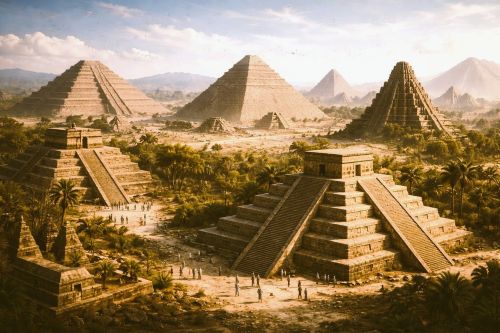
Across continents and civilizations, pyramids emerged as powerful expressions of belief, authority, and memory, revealing a shared human drive to build upward, endure, and be remembered.

By Matthew A. McIntosh
Public Historian
Brewminate
Introduction: Rethinking the Pyramid as a Global Form
The pyramid is among the most recognizable architectural forms in human history, yet its meaning has been too often confined to the sands of Egypt. The monumental silhouettes at Giza have come to dominate both scholarly and popular imagination, shaping an assumption that pyramids are inherently Egyptian creations tied exclusively to pharaonic ambition and funerary ritual. This narrow framing obscures a broader and more complex reality. Across multiple continents and over several millennia, societies separated by vast distances constructed structures that shared the essential geometry of the pyramid while expressing distinct cultural, religious, and political priorities. To understand pyramids as a global phenomenon is not to diminish Egypt’s achievements but to situate them within a wider human pattern of monumental expression. Such a reframing also challenges long-standing habits of historical interpretation, in which visibility and preservation have too often dictated significance. The Egyptian pyramids endure in stone and scale, but they are only one chapter in a far more expansive architectural story, one that spans deserts, jungles, river valleys, and highland plains, each contributing its own variation on a shared structural idea.
When examined comparatively, pyramids emerge as a recurring architectural solution to a set of shared challenges and aspirations. The form itself offers structural stability, allowing builders to achieve impressive height with relatively simple engineering principles. Its upward-sloping sides naturally evoke elevation, hierarchy, and transcendence, making it particularly suited to religious and political symbolism. Whether serving as tombs, temple platforms, or ceremonial centers, pyramidal structures often functioned as mediators between earthly and divine realms. This convergence of practical and symbolic advantages helps explain why cultures with no known contact with one another arrived at similar architectural forms, each adapted to local materials, technologies, and cosmologies.
The global distribution of pyramids underscores the diversity of their meanings. In Mesopotamia, ziggurats elevated temples toward the heavens, emphasizing proximity to the gods rather than burial of the dead. In Mesoamerica, stepped pyramids formed the focal points of ritual landscapes, hosting ceremonies that intertwined cosmology, astronomy, and public performance, often involving large populations in carefully orchestrated acts of devotion and spectacle. In the Andes, early urban societies constructed platform mounds that anchored administrative and ceremonial life, integrating architecture into broader systems of governance, economy, and social organization. Meanwhile, in Nubia and West Africa, pyramidal forms reflected localized traditions of kingship and sacred space, demonstrating both continuity with and divergence from neighboring cultural influences. These examples do not represent imitations of a single origin but rather independent developments shaped by distinct historical trajectories. The pyramid is less a cultural signature than a shared architectural language spoken in many dialects, each one encoding the values, hierarchies, and cosmological understandings of the society that produced it.
Reframing the pyramid as a global form also invites a reconsideration of how history assigns credit and significance. The privileging of Egyptian examples reflects not only their scale and preservation but also the legacy of early archaeological exploration and Eurocentric narratives that elevated certain civilizations while marginalizing others. A more inclusive perspective reveals a richer and more interconnected story of human ingenuity, one in which the impulse to build upward, to monumentalize belief, and to inscribe authority onto the landscape transcends regional boundaries. By shifting the analytical lens from singular origin to global pattern, the pyramid becomes not merely an icon of ancient Egypt but a testament to the shared ambitions and diverse expressions of complex societies throughout the ancient world.
Egypt as Benchmark: Monumentality, Kingship, and Afterlife

If the pyramid is a global architectural form, Egypt remains its most influential and enduring expression, providing a benchmark against which all others are often measured. The scale, precision, and preservation of Egyptian pyramids have elevated them to a unique position in both scholarship and popular imagination. Yet their significance lies not merely in their size or engineering sophistication, but in the ideological system they embodied. Egyptian pyramids were not simply structures of stone; they were carefully constructed statements of divine kingship, cosmic order, and the promise of eternal life. Their form and function cannot be separated from the religious and political framework that produced them.
The development of pyramid construction in Egypt reflects a gradual architectural evolution rooted in earlier funerary practices. Before the appearance of pyramids, elite burials were marked by mastabas, flat-topped rectangular structures built over subterranean tombs. The transition from mastaba to pyramid is most clearly seen in the Step Pyramid of Djoser at Saqqara, designed by the architect Imhotep during the Third Dynasty. This structure represents a conceptual leap as much as an architectural one, stacking successive mastaba forms to create a monumental, ascending shape. It established the pyramid as a symbolic pathway between the earthly realm and the divine, a theme that would define Egyptian monumental architecture for centuries.
By the Fourth Dynasty, pyramid construction reached its zenith with the true pyramids of Giza, including those built for Khufu, Khafre, and Menkaure. These monuments exhibit remarkable geometric precision and organizational complexity, reflecting the administrative capacity of the Egyptian state. Contrary to older assumptions of slave labor, current scholarship indicates that these pyramids were constructed by a rotating workforce of laborers supported by the state, demonstrating a high degree of logistical coordination and social mobilization. Workers were housed in purpose-built settlements, provisioned with food, medical care, and tools, suggesting not only organization but also a degree of state responsibility toward laborers. Quarrying, transport, and placement of massive stone blocks required careful planning across seasons, integrating agricultural cycles with construction demands. The pyramids stand not only as tombs but as material evidence of centralized authority and the ability of the state to marshal resources on an unprecedented scale, transforming human labor into a permanent statement of royal power.
The religious significance of pyramids is inseparable from their architectural form. Egyptian kings were regarded as divine or semi-divine beings whose successful transition to the afterlife was essential for maintaining cosmic order, or ma’at. The pyramid functioned as both tomb and resurrection device, designed to facilitate the king’s ascent to the heavens and his transformation into an eternal being associated with the sun god Ra. Internal chambers, passageways, and burial goods were carefully arranged to support this journey, while the pyramid’s shape itself may have symbolized the primordial mound of creation or the rays of the sun. The pyramid becomes not merely a grave but a cosmological instrument.
The placement of pyramids within the landscape further reinforces their symbolic importance. The Giza plateau, situated on the west bank of the Nile, aligns with the setting sun, traditionally associated with death and the afterlife. Pyramid complexes included not only the central structure but also temples, causeways, and subsidiary tombs, forming integrated ceremonial and administrative centers. These complexes linked the living and the dead, the earthly and the divine, embedding royal burial within a broader ritual and political framework. Processional routes connected valley temples near the Nile to mortuary temples adjacent to the pyramids, allowing for ongoing ritual activity long after the king’s burial. The orientation of structures, the alignment with celestial bodies, and the careful placement within the desert margin all contributed to a landscape that was both symbolic and functional. The landscape itself became part of the architectural expression, reinforcing the king’s role as mediator between worlds and ensuring that the memory of his reign remained embedded in both geography and ritual practice.
Despite their uniqueness, Egyptian pyramids should not be understood in isolation but as one manifestation of a broader human impulse to monumentalize authority and belief. What distinguishes Egypt is the degree to which this impulse was formalized, standardized, and sustained. The pyramid became a durable symbol of kingship and cosmic order, replicated and refined across dynasties. Its influence extended beyond Egypt’s borders, shaping neighboring cultures while also standing as a point of comparison for independent developments elsewhere. Egypt provides both a foundation for understanding pyramidal architecture and a reminder that even the most iconic forms are part of a larger, shared human story.
Mesopotamia: Ziggurats and the Sacred Platform

While Egyptian pyramids are most closely associated with royal tombs and the afterlife, the monumental architecture of Mesopotamia took a markedly different form in the construction of ziggurats. These massive, stepped structures dominated the skylines of ancient cities such as Ur, Uruk, and Babylon, serving as elevated platforms for temples dedicated to the gods. Unlike the smooth-sided pyramids of Egypt, ziggurats were composed of receding terraces, creating a tiered appearance that emphasized ascent through successive levels. This architectural distinction reflects a fundamental difference in purpose. Where Egyptian pyramids were designed to house and transform the dead, Mesopotamian ziggurats were built to elevate the living space of the divine, physically and symbolically separating sacred ground from the ordinary world below.
The ziggurat’s function as a sacred platform is central to understanding its role within Mesopotamian society. At the summit stood a shrine or temple, often dedicated to the patron deity of the city, such as Nanna in Ur or Marduk in Babylon. These elevated sanctuaries were not intended for mass public access but were instead reserved for priests and select ritual participants, reinforcing a hierarchy of religious authority. The structure itself acted as a bridge between heaven and earth, embodying the Mesopotamian conception of the cosmos as a layered reality in which gods resided above and humans below. By raising the temple above the city, the ziggurat made this cosmological relationship visible, transforming architecture into a direct expression of theological belief. The ascent itself, whether by stairway or ramp, carried symbolic meaning, representing a controlled and ritualized movement toward the divine that was restricted to those authorized to mediate between the two realms. Access to the uppermost spaces was not only physically limited but ideologically charged, reinforcing distinctions between sacred and profane, elite and common.
The construction of ziggurats also reflects the environmental and material conditions of Mesopotamia. Unlike Egypt, which had abundant stone resources, Mesopotamian builders relied primarily on mudbrick, a material that required constant maintenance and periodic rebuilding. Ziggurats were not static monuments but evolving structures, often expanded or restored by successive rulers seeking to demonstrate piety and legitimacy. The use of baked brick for outer layers and decorative elements added both durability and visual impact, while bitumen was employed as a binding agent. These construction techniques reveal a pragmatic adaptation to local resources while still achieving monumental scale, underscoring the ingenuity of Mesopotamian engineering. The necessity of continual restoration also ensured that ziggurats remained active components of urban life rather than relics of a distant past, tying each generation of rulers to an ongoing tradition of renewal. The ziggurat was both a physical structure and a process, its maintenance embodying the sustained relationship between ruler, city, and deity.
Beyond their religious function, ziggurats were deeply embedded in the political and social fabric of Mesopotamian city-states. Their construction required coordinated labor, administrative oversight, and the mobilization of resources, making them visible symbols of state power and organizational capacity. Rulers frequently sponsored the building or restoration of ziggurats as acts of devotion to the gods, but also as assertions of authority and legitimacy. Inscriptions and dedicatory texts often emphasize the ruler’s role as a servant of the deity, tasked with maintaining the divine dwelling. This dual function, both religious and political, parallels the role of pyramids in Egypt, though expressed through a different architectural and ideological framework.
The most well-known example, the Ziggurat of Ur, illustrates many of these features. Originally constructed during the Third Dynasty of Ur under King Ur-Nammu and later restored by subsequent rulers, the structure rose in multiple tiers connected by monumental staircases. Its imposing form dominated the surrounding urban landscape, reinforcing the centrality of religion in civic life. The alignment, scale, and visibility of the ziggurat ensured that it functioned not only as a place of worship but also as a constant reminder of the relationship between the city, its ruler, and its divine patron. The structure’s prominence within the city plan further underscores its role as both a religious and administrative focal point.
Despite their differences from Egyptian pyramids, ziggurats share important conceptual similarities that justify their inclusion in a broader discussion of pyramidal architecture. Both forms emphasize elevation, monumentality, and the relationship between human and divine realms, even as they diverge in function and symbolism. The ziggurat, with its stepped ascent and elevated sanctuary, represents an alternative expression of the same fundamental impulse to build upward, to create structures that mediate between worlds, and to inscribe religious and political meaning into the landscape. Its differences are equally instructive, demonstrating that similar forms can arise from distinct cultural logics and serve different institutional needs. The comparison underscores the importance of resisting overly narrow definitions of pyramidal architecture, instead recognizing a spectrum of related forms that reflect both shared human concerns and local adaptations. Mesopotamian ziggurats contribute to a global understanding of pyramid-like architecture as a recurring solution to enduring questions of power, belief, and transcendence.
Mesoamerica: Ritual Landscapes and Cosmic Geometry
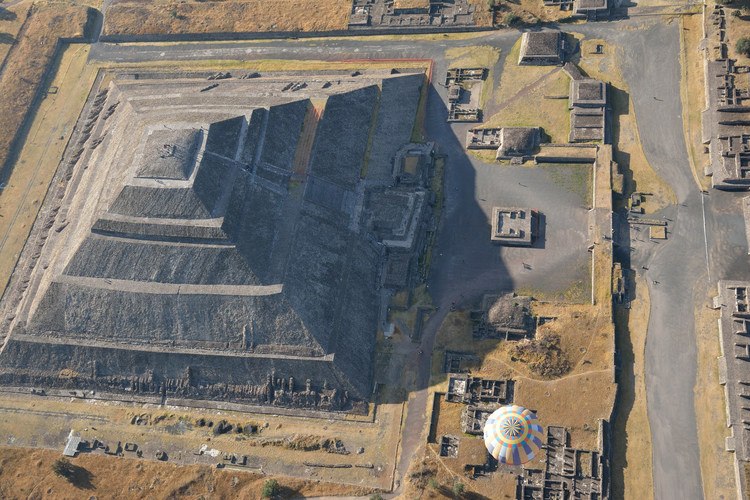
In Mesoamerica, pyramid construction reached a scale and complexity that rivals, and in some respects surpasses, that of Egypt, yet its meaning and function were fundamentally different. Rather than serving primarily as tombs, Mesoamerican pyramids operated as elevated platforms for temples and ritual activity, forming the ceremonial heart of urban centers. Civilizations such as the Olmec, Maya, and Mexica (Aztec) developed stepped pyramids that rose in terraces, often crowned by shrines where priests conducted ceremonies central to religious and political life. These structures were not isolated monuments but integral components of carefully planned cities, embedded within broader landscapes that expressed cosmological order through architecture, orientation, and spatial arrangement. Their placement within expansive plazas and along major processional routes ensured that they functioned as focal points of communal life, where political authority and religious meaning converged in highly visible and symbolically charged settings. The pyramid was not simply a building but a central node in a larger network of urban design, ritual practice, and social organization.
The relationship between pyramid form and cosmology is particularly striking in Mesoamerica. These structures were frequently aligned with celestial events, including solstices, equinoxes, and planetary movements, reflecting a sophisticated understanding of astronomy. The pyramid became a physical representation of the cosmos, with its ascending levels symbolizing layers of the universe and its summit serving as a point of contact between human and divine realms. At sites such as Teotihuacan, the layout of the city itself appears to encode cosmological principles, with major pyramids positioned along a central axis that structures both movement and meaning. This alignment was not incidental but deliberate, embedding astronomical observation within the built environment and linking celestial cycles to ritual calendars and agricultural rhythms. The pyramid functioned as both a spatial and temporal marker, organizing not only physical space but also the experience of time, reinforcing the idea that human activity was deeply intertwined with cosmic order.
The Pyramid of the Sun at Teotihuacan stands as one of the most imposing examples of this tradition. Constructed in the first centuries CE, it dominates the city’s central avenue and exemplifies the scale and ambition of Mesoamerican pyramid building. Its massive base and stepped form create a visual and experiential journey upward, culminating in a platform that likely supported ritual structures. Unlike Egyptian pyramids, which conceal their most significant spaces within, Mesoamerican pyramids emphasize external ascent, drawing participants and observers into a shared ritual experience. The act of climbing the pyramid was itself a form of engagement with the sacred, reinforcing the connection between physical movement and spiritual meaning.
Among the Maya, pyramids took on additional layers of historical and political significance. Structures such as the Temple of the Great Jaguar at Tikal served not only as ritual spaces but also as commemorative monuments tied to specific rulers and events. Hieroglyphic inscriptions and associated stelae recorded dynastic histories, linking the physical structure to narratives of power, legitimacy, and divine sanction. Maya pyramids were often built in successive phases, with new layers encasing earlier ones, creating a stratified record of architectural and political development. This practice of superimposition reflects a conception of time and authority that is cumulative rather than linear, embedding the past within the present in both material and symbolic form. Each expansion reaffirmed the legitimacy of current rulers by physically incorporating the achievements of their predecessors, creating monuments that were both historical archives and active instruments of political messaging. The layering of structures also altered the visual and spatial dynamics of the city over time, reinforcing the evolving nature of power and memory within the Maya world.
Ritual activity at Mesoamerican pyramids frequently involved public ceremonies that reinforced social hierarchy and religious belief. Offerings, processions, and, in some cases, human sacrifice were conducted atop these structures, making them focal points of communal experience. The visibility of these rituals, performed at elevated heights and within open plazas, ensured that they were witnessed by large segments of the population, transforming religious practice into a shared spectacle. This contrasts sharply with the more restricted and concealed nature of Egyptian funerary practices, highlighting different relationships between monumentality, visibility, and participation. In Mesoamerica, the pyramid was not only a sacred space but also a stage upon which power and belief were enacted before the community.
Despite their distinct cultural contexts, Mesoamerican pyramids share with other pyramid traditions a commitment to monumentality, elevation, and symbolic expression. Their stepped forms, astronomical alignments, and integration into urban planning demonstrate a sophisticated interplay between architecture, environment, and ideology. Their emphasis on ritual performance and public engagement underscores the diversity of meanings that pyramidal structures could assume across different societies. The Mesoamerican example reinforces the broader argument that pyramids are not a singular cultural invention but a recurring architectural response to shared human concerns, adapted to local cosmologies and social structures. It expands the understanding of pyramid building beyond Egypt, revealing a rich and varied tradition of monumental architecture in the ancient Americas.
Andean Civilizations: Early Monumentality and Urban Organization
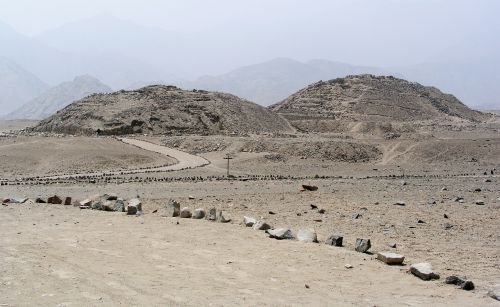
In the Andean region of South America, pyramid-like structures emerged within some of the earliest complex societies in the Americas, reflecting a distinct trajectory of monumental architecture tied to urban organization and social coordination. Unlike the sharply defined geometric pyramids of Egypt or the stepped temple platforms of Mesoamerica, Andean constructions often took the form of platform mounds built from stone and adobe, integrated into broader civic and ceremonial complexes. These structures were not isolated monuments but components of carefully organized urban landscapes, where architecture, open space, and movement were orchestrated to reflect social hierarchy and communal activity. The Andean example demonstrates that pyramid-like forms could arise not only as symbols of divine kingship or cosmological ascent but also as instruments of social integration and administrative control.
The site of Caral, located in the Supe Valley of present-day Peru and dating to around 2500 BCE, offers one of the earliest known examples of such monumental construction in the Americas. As part of the Caral-Supe civilization, often considered one of the world’s earliest urban societies, the site includes multiple large platform mounds arranged around open plazas. These structures served as focal points for communal gatherings, ritual activity, and governance, suggesting a complex social system capable of organizing labor on a significant scale. The absence of clear evidence for warfare or fortification at Caral has led some scholars to emphasize the role of cooperation and shared religious practice in sustaining its development, with monumental architecture acting as a unifying force within the society.
Andean pyramid-like structures also reveal a close relationship between architecture and environmental adaptation. Built in regions characterized by seismic activity and limited access to durable stone in some areas, these constructions relied heavily on locally available materials such as adobe and river stone. Techniques such as the use of flexible fill materials and layered construction helped mitigate the impact of earthquakes, demonstrating an advanced understanding of local conditions. Builders often employed alternating layers of compacted earth and stone, creating structures capable of absorbing seismic shocks rather than resisting them rigidly. The scale of these platforms, combined with their careful engineering, reflects a balance between monumentality and practicality, allowing societies to create enduring structures despite environmental challenges. These methods were not incidental but the result of accumulated knowledge passed through generations, suggesting a long-term engagement with landscape, climate, and risk. Andean builders developed solutions that were both regionally specific and architecturally sophisticated, embedding resilience into the very fabric of their monumental constructions.
Later developments in the Andean world, such as the Huaca Pucllana in the Lima region, further illustrate the integration of pyramid-like forms into administrative and ceremonial life. Constructed by the Lima culture between approximately 200 and 700 CE, Huaca Pucllana consists of a large adobe platform pyramid surrounded by courtyards, storage areas, and spaces for ritual activity. The site appears to have functioned as both a political and religious center, where elites coordinated economic activities and conducted ceremonies that reinforced social hierarchy. The use of “bookshelf” style adobe bricks, arranged vertically with spaces between them, provided both structural stability and resistance to seismic forces, highlighting the continued refinement of building techniques in the region.
The Andean examples expand the definition of pyramid construction beyond rigid geometric forms and funerary contexts, emphasizing instead the role of monumentality in shaping early urban life. These structures were not primarily tombs nor exclusively temples but multifunctional spaces that facilitated governance, ritual, and social cohesion. Their integration into urban planning and their adaptation to environmental conditions underscore the diversity of meanings that pyramid-like architecture could assume. Rather than serving a single, narrowly defined purpose, these platforms functioned as dynamic centers of activity, evolving alongside the societies that built and maintained them. Their presence within early cities reflects a broader pattern in which architecture was used to organize space, direct movement, and reinforce authority in subtle but persistent ways. In the broader global context, the Andean tradition reinforces the idea that the impulse to build upward and create monumental forms is a shared human response to the challenges of organizing society, expressing belief, and asserting authority within the landscape.
Nubia (Sudan): Royal Power and Cultural Exchange
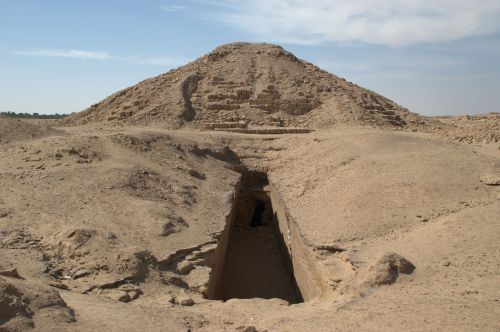
In the region of Nubia, south of Egypt along the Nile, pyramid construction took on a distinctive form that reflects both cultural exchange and local innovation. While often overshadowed by their Egyptian counterparts, the pyramids of Nubia, particularly those associated with the Kingdom of Kush, represent one of the most prolific traditions of pyramid building in the ancient world. Concentrated in sites such as el-Kurru, Nuri, and Meroë, these structures served as royal tombs for Nubian kings and queens, embodying a synthesis of Egyptian architectural influence and indigenous political identity. Their presence challenges the tendency to treat Egypt as the sole center of pyramid construction, revealing instead a dynamic cultural landscape in which ideas were adapted, transformed, and reinterpreted.
The Nubian pyramids differ significantly in form from those of Egypt, characterized by their steep angles, smaller bases, and more compact proportions. These structures often rise at a sharper incline, creating a visually striking silhouette that distinguishes them from the broader, more gradual slopes of Egyptian pyramids. Built primarily during the Napatan and Meroitic periods, they were constructed using stone masonry and frequently accompanied by small chapels at their eastern base, where offerings and rituals were conducted. The burial chambers themselves were typically located beneath the pyramid rather than within it, accessed by stairways cut into the bedrock. This variation in design reflects both practical considerations and evolving funerary practices, demonstrating that the pyramid form could be adapted to different cultural contexts while retaining its symbolic association with royal authority and the afterlife.
The adoption of pyramid construction in Nubia is closely tied to the region’s long and complex relationship with Egypt. Periods of Egyptian domination and cultural influence introduced architectural and religious ideas that were later reinterpreted by Nubian rulers. During the 25th Dynasty, when Kushite kings ruled over Egypt, this exchange intensified, creating a bidirectional flow of cultural practices. Nubian elites adopted elements of Egyptian religion, including beliefs about the afterlife and divine kingship, but integrated them into their own traditions. The result was not a simple imitation but a hybrid form that reflected both continuity and divergence, illustrating how architectural forms can serve as sites of cultural negotiation and identity formation.
At Meroë, the later capital of the Kushite kingdom, pyramid construction reached its greatest concentration, with more than two hundred pyramids built over several centuries. This remarkable density of monuments underscores the importance of pyramidal architecture within Nubian royal ideology. The pyramids of Meroë were part of larger funerary complexes that included chapels adorned with reliefs depicting both Egyptian and indigenous motifs, offering insight into the evolving religious and artistic landscape of the region. The repetition of the pyramid form across generations suggests a sustained commitment to monumental burial as a means of asserting legitimacy, continuity, and connection to both ancestral and divine realms.
The Nubian example complicates any straightforward narrative of pyramid development by highlighting the role of cultural exchange in shaping architectural traditions. While clearly influenced by Egyptian models, Nubian pyramids are not mere replicas but distinct expressions of a regional identity that engaged with, rather than simply absorbed, external influences. Their variation in form, construction, and symbolism demonstrates the flexibility of the pyramid as an architectural concept, capable of being reshaped to meet different social and ideological needs. In the broader global context, the pyramids of Nubia reinforce the idea that monumental architecture emerges not only through independent innovation but also through processes of interaction, adaptation, and reinterpretation, revealing a more interconnected ancient world than traditional narratives often suggest.
West Africa: The Nsude Pyramids and Indigenous Religious Architecture
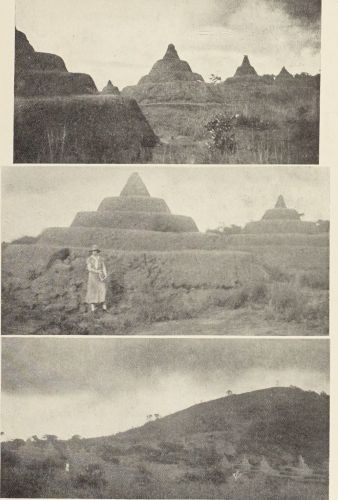
In West Africa, pyramid-like structures emerged within a very different environmental and cultural context, yet they nonetheless reflect a comparable impulse toward sacred monumentality. Among the most notable examples are the Nsude pyramids of southeastern Nigeria, attributed to the Igbo people and constructed prior to the colonial period. Unlike the stone-built pyramids of Egypt or Nubia, the Nsude structures were composed of mud and clay, materials shaped by both local availability and climatic conditions. Their existence challenges the assumption that pyramid construction required advanced stone masonry, demonstrating instead that monumental forms could be achieved through diverse building traditions. Though far less well known and largely eroded today, the Nsude pyramids stand as a significant testament to indigenous African architectural innovation.
The form of the Nsude pyramids differs markedly from the angular geometry of other pyramid traditions. Rather than smooth-sided or stepped structures, they consisted of circular, tiered mounds that rose in successive levels, often described as conical or stepped towers. Each level decreased in diameter as it ascended, creating a tapering effect that, while not strictly pyramidal in the geometric sense, nonetheless embodied the same principle of upward progression. At their peak, these structures were adorned with symbolic elements, including staffs or other ritual markers, further emphasizing their sacred function. The construction likely involved careful layering of compacted earth, shaped and maintained through communal effort, reflecting both technical knowledge and social organization. Their rounded contours and earthen composition also suggest an architectural aesthetic that emphasized continuity with the landscape rather than domination over it, blending monumentality with environmental integration. The visual and structural differences highlight the adaptability of monumental forms, suggesting that the concept of the pyramid can encompass a broader range of architectural expressions than is typically acknowledged.
The Nsude pyramids were closely associated with religious practice, particularly the worship of the earth deity Ala, a central figure in Igbo cosmology. These structures functioned as temples or shrines rather than tombs, serving as focal points for ritual activity and communal gathering. Offerings, ceremonies, and acts of devotion would have been conducted at or around these mounds, reinforcing their role as intermediaries between the human and spiritual worlds. The Nsude pyramids share with other pyramid traditions a fundamental connection to sacred space and the elevation of ritual above the ordinary environment, even as their specific religious meanings remain rooted in local belief systems.
The relative fragility of the materials used in their construction has contributed to the limited preservation of the Nsude pyramids, complicating efforts to study and interpret them. Unlike stone monuments, which can endure for millennia, mud and clay structures are highly susceptible to erosion, weathering, and neglect. Much of what is known about the Nsude pyramids derives from early colonial accounts and limited archaeological investigation, raising important questions about documentation, interpretation, and the uneven survival of the archaeological record. This disparity in preservation has played a significant role in shaping global perceptions of ancient architecture, often privileging regions where durable materials ensured visibility over those where monumental traditions have largely disappeared.
The Nsude pyramids occupy a crucial place in the broader history of pyramid-like architecture, not because of their scale or preservation, but because of what they reveal about diversity in form, function, and cultural context. They demonstrate that the impulse to construct elevated, sacred structures is not confined to any single region or technological tradition but is instead a widespread human response to the desire to organize space, express belief, and engage with the divine. Their relative obscurity in global narratives reflects broader historiographical imbalances, in which African architectural achievements outside of Egypt have often been marginalized or overlooked. By incorporating the Nsude pyramids into a global framework, the study of pyramidal architecture becomes more inclusive, acknowledging a wider range of human creativity and cultural expression.
Convergence or Coincidence? Explaining Global Pyramid Building

The widespread appearance of pyramid-like structures across geographically and culturally distinct societies raises a central question: were these developments connected through diffusion, or did they emerge independently as parallel solutions to shared challenges? For much of the nineteenth and early twentieth centuries, diffusionist theories dominated, proposing that monumental architectural forms such as pyramids spread outward from a single point of origin, often assumed to be Egypt. These interpretations, shaped by limited archaeological knowledge and Eurocentric assumptions, sought to impose a linear narrative on what is now understood to be a far more complex and decentralized process. As archaeological evidence expanded and methodologies improved, the plausibility of independent development gained increasing support, challenging earlier claims of direct cultural transmission across vast distances without clear intermediary evidence.
One of the strongest arguments for independent convergence lies in the structural logic of the pyramid form itself. The pyramid, broadly defined, is one of the most stable ways to build vertically using premodern materials and technologies. By distributing weight downward and outward, it allows for the construction of large, durable structures without requiring advanced engineering techniques. This makes it an accessible solution for societies seeking to create monumental architecture with limited resources. Whether constructed from stone, mudbrick, or earth, the basic principles remain consistent, suggesting that different cultures could arrive at similar forms through experimentation and practical necessity rather than direct imitation. The pyramid may be understood as an architectural inevitability under certain conditions.
Beyond structural considerations, symbolic and social factors also contributed to the recurrence of pyramid-like forms. Across cultures, elevation has been associated with power, divinity, and transcendence, making upward-oriented structures particularly effective for expressing religious and political authority. The act of building vertically transforms the landscape, creating visible markers of hierarchy and control that can be seen from great distances. Pyramids, in their various forms, often served as focal points for ritual activity, reinforcing social cohesion while simultaneously emphasizing distinctions between rulers, priests, and the broader population. These structures also functioned as stages for ceremonial performance, where the elevation of participants physically and symbolically separated them from the audience below, reinforcing systems of authority through spatial arrangement. In many societies, the construction and maintenance of such monuments required coordinated labor, further embedding them within systems of governance and economic organization. This shared symbolic vocabulary, rooted in human perception and experience, helps explain why similar architectural solutions emerged in societies with no known contact, reflecting not imitation but parallel responses to comparable social and ideological needs.
It is important not to dismiss entirely the role of cultural interaction and exchange. In regions where contact did occur, such as between Egypt and Nubia, architectural forms were clearly transmitted, adapted, and reinterpreted. These cases demonstrate that diffusion and convergence are not mutually exclusive but can operate simultaneously, with ideas spreading across regions while also being independently reinvented elsewhere. The challenge for historians and archaeologists lies in distinguishing between these processes, recognizing when similarities reflect shared origins and when they arise from parallel development. This requires careful attention to chronology, material evidence, and cultural context, rather than reliance on superficial resemblance. Trade networks, migration, and political expansion all played roles in facilitating the movement of ideas, yet these influences were always mediated by local traditions and needs, producing outcomes that were rarely uniform. Even when external models were adopted, they were often reshaped to align with existing cultural frameworks, resulting in hybrid forms that complicate any simple narrative of transmission.
The global distribution of pyramidal architecture reflects a combination of practical, symbolic, and social dynamics that transcend individual cultures. The recurrence of this form across continents suggests that it addresses fundamental human concerns related to stability, visibility, and meaning. Rather than seeking a single origin or explanation, it is more productive to view pyramid building as a pattern of convergent development shaped by local conditions and universal impulses. The study of pyramids moves beyond questions of priority and influence toward a broader understanding of how human societies construct, interpret, and inhabit monumental spaces.
Historiography: Egypt-Centrism and the Global Narrative
The prominence of Egyptian pyramids in both scholarly discourse and public imagination has long shaped the historiography of monumental architecture, often to the exclusion of equally significant traditions elsewhere. From the earliest days of modern archaeology, Egypt occupied a privileged position, its monumental remains capturing the attention of European explorers, scholars, and collectors. The scale and preservation of sites such as Giza, combined with the decipherment of hieroglyphs in the nineteenth century, positioned Egypt as a foundational civilization in narratives of human development. Pyramids became almost synonymous with Egypt itself, reinforcing a perception that obscured the existence of comparable structures across Africa, the Americas, and beyond. This dominance was further amplified through museums, travel literature, and early academic institutions, all of which circulated images of Egyptian monuments as defining symbols of antiquity. This repetition solidified an interpretive framework in which Egypt was treated not simply as one example among many, but as the central reference point for understanding all pyramidal architecture, narrowing the scope of inquiry and shaping expectations about what such structures should represent.
This Egypt-centric framework was not merely a product of archaeological visibility but was deeply intertwined with broader intellectual and cultural currents. European colonial expansion played a decisive role in shaping early archaeological priorities, directing resources and attention toward regions that were more accessible or aligned with Western historical interests. Egypt, situated at the crossroads of Africa and the Mediterranean world, was often treated as an extension of classical antiquity, making it more legible within existing frameworks of historical understanding. In contrast, the monumental traditions of sub-Saharan Africa and the pre-Columbian Americas were frequently marginalized, misunderstood, or dismissed, their architectural achievements interpreted through reductive or speculative lenses.
The consequences of this imbalance are evident in the ways pyramid-building cultures have been represented and compared. Egyptian pyramids have often been treated as the standard against which all others are measured, with deviations framed as lesser or derivative forms. This approach not only distorts the unique cultural contexts of other traditions but also reinforces a hierarchical model of historical development in which certain civilizations are implicitly privileged. In the case of Mesoamerica and the Andes, early interpretations frequently underestimated the complexity and autonomy of local societies, attributing their achievements to external influence rather than recognizing them as independent centers of innovation. Such perspectives have gradually been challenged, but their legacy continues to shape popular and, at times, academic understandings.
Modern scholarship has increasingly sought to correct these imbalances by adopting more comparative and globally inclusive approaches. Advances in archaeology, anthropology, and historical methodology have made it possible to reconstruct the development of complex societies in regions once considered peripheral. Detailed excavations, improved dating techniques, and interdisciplinary research have revealed the sophistication of architectural traditions across the world, from the platform mounds of the Andes to the earthen pyramids of West Africa. These findings have prompted a reevaluation of long-standing assumptions, encouraging scholars to move beyond diffusionist models and to recognize the multiplicity of pathways through which monumental architecture emerged. This shift has also been accompanied by greater collaboration with local scholars and communities, whose knowledge and perspectives contribute to more accurate and culturally grounded interpretations. The narrative of pyramid building is increasingly understood as plural rather than singular, shaped by diverse trajectories rather than a single dominant tradition.
Historiographical revision has involved not only the inclusion of new data but also a critical reassessment of the frameworks through which that data is interpreted. Postcolonial scholarship has highlighted the ways in which power, access, and perspective influence the construction of historical narratives, drawing attention to the voices and traditions that have been overlooked or misrepresented. In the context of pyramid studies, this has meant questioning why certain structures are celebrated while others remain obscure, and how factors such as preservation, visibility, and academic focus shape collective understanding. The goal is not to diminish the significance of Egyptian pyramids but to situate them within a broader and more balanced global narrative.
Reframing the historiography of pyramidal architecture allows for a more nuanced and comprehensive understanding of the ancient world. By moving beyond Egypt-centrism, scholars can better appreciate the diversity of forms, functions, and meanings that pyramids have embodied across different cultures. This shift does not erase Egypt’s central role but rather places it alongside other traditions in a shared field of human creativity and innovation. The study of pyramids becomes not a story of singular achievement but a complex, interconnected narrative that reflects the varied ways societies have sought to express power, belief, and permanence through monumental form.
Conclusion: Monumentality, Memory, and Human Ambition
Across continents and millennia, the pyramid emerges not as the possession of a single civilization but as a recurring architectural response to the deepest concerns of human society. From the stone giants of Egypt to the stepped temples of Mesoamerica, the platform mounds of the Andes, and the earthen structures of West Africa, these monuments reveal a shared impulse to shape the landscape in ways that reflect power, belief, and continuity. Their forms differ, their functions vary, and their meanings are rooted in distinct cultural traditions, yet they are united by a common logic of elevation, visibility, and permanence. The pyramid, in this broader sense, becomes a universal language through which societies articulate their relationship to the cosmos and to one another.
What distinguishes these structures is not merely their scale but their capacity to organize human experience across time. Pyramids are not passive remnants of the past; they are active participants in the construction of memory. Built through coordinated labor and sustained by ongoing ritual or symbolic significance, they anchor collective identity in physical form. Whether serving as tombs, temples, or administrative centers, they encode social hierarchies and cosmological beliefs into the very fabric of their construction. They transform abstract ideas into tangible realities, ensuring that the authority and values they represent endure long after the societies that created them have changed or disappeared.
The global distribution of pyramidal architecture also underscores the importance of viewing ancient societies within a comparative framework. By examining these structures across regions, it becomes possible to identify both shared patterns and meaningful differences, revealing the diverse ways in which human communities have responded to similar challenges. This perspective challenges narratives that privilege singular origins or linear development, replacing them with a more complex understanding of convergence, adaptation, and exchange. It also highlights the need to recognize and incorporate traditions that have been historically marginalized, ensuring that the study of the ancient world reflects the full breadth of human creativity and achievement.
The pyramid stands as a testament to human ambition in its most enduring form. It represents the desire to transcend the limitations of the present, to assert control over space and time, and to leave a lasting mark upon the world. Whether rising in stone, brick, or earth, these structures embody the intersection of practical ingenuity and symbolic expression, demonstrating how architecture can serve as both a tool and a statement. By situating pyramids within a global context, their meaning expands beyond any single culture, revealing a shared human endeavor to build not only for the present but for memory, meaning, and eternity.
Bibliography
- Arnold, Dieter. Building in Egypt: Pharaonic Stone Masonry. New York: Oxford University Press, 1991.
- Atwood, Roger. “Deconstructing a Maya Pyramid.” Archaeology 59:5 (2006), 30-35.
- Badawy, Alexander. “The Civic Sense of Pharaoh and Urban Development in Ancient Egypt.” Journal of the American Research Center in Egypt 6 (1967), 103-109.
- Baines, John, and Jaromir Málek. Atlas of Ancient Egypt. Oxford: Phaidon, 1946.
- Burger, Richard L. Chavín and the Origins of Andean Civilization. London: Thames & Hudson, 1992.
- Carrasco, Davíd. Quetzalcoatl and the Irony of Empire: Myths and Prophecies in the Aztec Tradition. Rev. ed. Chicago: University of Chicago Press, 1982.
- —-. Religions of Mesoamerica: Cosmovision and Ceremonial Centers. 2nd ed. Long Grove, IL: Waveland Press, 2014.
- Childe, V. Gordon. Man Makes Himself. London: Watts & Co., 1936.
- Coe, Michael D., and Rex Koontz. Mexico: From the Olmecs to the Aztecs. 7th ed. London: Thames & Hudson, 2013.
- Crawford, Harriet. Sumer and the Sumerians. 2nd ed. Cambridge: Cambridge University Press, 2004.
- Díaz-Andreu, Margarita. A World History of Nineteenth-Century Archaeology: Nationalism, Colonialism, and the Past. Oxford: Oxford University Press, 2007.
- Edwards, David N. The Nubian Past: An Archaeology of the Sudan. London: Routledge, 2004.
- Fagan, Brian M. Ancient Lives: An Introduction to Archaeology and Prehistory. New York: Routledge, 2004.
- —-. People of the Earth: An Introduction to World Prehistory. 15th ed. New York: Routledge, 2018.
- George, Andrew. The Babylonian Gilgamesh Epic: Introduction, Critical Edition and Cuneiform Texts. Oxford: Oxford University Press, 2003.
- Haas, Jonathan, Winifred Creamer, and Alvaro Ruiz. “Power and the Emergence of Complex Polities in the Peruvian Preceramic.” Archaeological Papers of the American Anthropological Association 14:1 (2004), 37–52.
- Hawass, Zahi. Mountains of the Pharaohs: The Untold Story of the Pyramid Builders. Cairo: American University in Cairo Press, 2006.
- Isichei, Elizabeth. A History of the Igbo People. London: Macmillan, 1976.
- Kostof, Spiro. A History of Architecture: Settings and Rituals. 2nd ed. New York: Oxford University Press, 1995.
- Kramer, Samuel Noah. History Begins at Sumer: Thirty-Nine Firsts in Recorded History. Philadelphia: University of Pennsylvania Press, 1956.
- Lehner, Mark. The Complete Pyramids: Solving the Ancient Mysteries. London: Thames & Hudson, 1997.
- Lewis, James R. “Excavating Tradition: Alternative Archaeologies as Legitimation Strategies.” Numen 59:2/3 (2012), 202-221.
- Manzanilla, Linda, and Claude Chapdelaine, eds. Domestic Life in Prehispanic Capitals: A Study of Specialization, Hierarchy, and Ethnicity. Ann Arbor: University of Michigan Press, 2009.
- Meskell, Lynn, ed. Archaeology under Fire: Nationalism, Politics and Heritage in the Eastern Mediterranean and Middle East. London: Routledge, 1998.
- Moseley, Michael E. The Incas and Their Ancestors: The Archaeology of Peru. London: Thames & Hudson, 1992.
- Oates, Joan. Babylon. Rev. ed. London: Thames & Hudson, 1986.
- Onwuejeogwu, M. A. An Igbo Civilization: Nri Kingdom and Hegemony. London: Ethnographica, 1981.
- Pollock, Susan. Ancient Mesopotamia. Cambridge: Cambridge University Press, 1999.
- Renfrew, Colin, and Paul Bahn. Archaeology: Theories, Methods, and Practice. 7th ed. London: Thames & Hudson, 2016.
- Sarro, Patricia Joan. “The Role of Architectural Sculpture in Ritual Space at Teotihuacan, Mexico.” Ancient Mesoamerica 2:2 (1991), 249-262.
- Scarborough, Vernon L. The Flow of Power: Ancient Water Systems and Landscapes. Santa Fe: School for Advanced Research Press, 2003.
- Shady, Ruth, Jonathan Haas, and Winifred Creamer. “Dating Caral, a Preceramic Site in the Supe Valley on the Central Coast of Peru.” Science 292:5517 (2001), 723–726.
- Sharer, Robert J., and Loa P. Traxler. The Ancient Maya. 6th ed. Stanford: Stanford University Press, 2005.
- Shinnie, P. L. Ancient Nubia. London: Kegan Paul International, 1996.
- Smith, Claire, and H. Martin Wobst, eds. Indigenous Archaeologies: Decolonizing Theory and Practice. London: Routledge, 2005.
- Smith, Michael E. The Aztecs. 3rd ed. Malden, MA: Wiley-Blackwell, 2011.
- Sugiyama, Saburo. Human Sacrifice, Militarism, and Rulership: Materialization of State Ideology at the Feathered Serpent Pyramid, Teotihuacan. Cambridge: Cambridge University Press, 2005.
- Török, László. The Kingdom of Kush: Handbook of the Napatan-Meroitic Civilization. Leiden: Brill, 1997.
- Trigger, Bruce G. A History of Archaeological Thought. 2nd ed. Cambridge: Cambridge University Press, 2006.
- —-. Nubia under the Pharaohs. London: Thames & Hudson, 1976.
- —-. Understanding Early Civilizations: A Comparative Study. Cambridge: Cambridge University Press, 2003.
- Verner, Miroslav. The Pyramids: The Mystery, Culture, and Science of Egypt’s Great Monuments. New York: Grove Press, 2001.
- Welsby, Derek A. The Kingdom of Kush: The Napatan and Meroitic Empires. London: British Museum Press, 1996.
Originally published by Brewminate, 04.16.2026, under the terms of a Creative Commons Attribution-NonCommercial-NoDerivatives 4.0 International license.
About the Author